| Citation: | WU Di,SONG Fanyue,YOU Fuhua,et al. Structural superimposed halo model of vein-type ore bodies and deep prospecting prediction of the Daping gold deposit in Yunnan Province[J]. Bulletin of Geological Science and Technology,2026,45(2):78-90 doi: 10.19509/j.cnki.dzkq.tb20240495

|
The Daping gold deposit is an economically significant vein-type gold deposit in the Ailaoshan metallogenic belt, with cumulative gold reserves exceeding 55 t. Due to years of mining, the recoverable reserves of the mine have been decreasing continously, making it essential to conduct in-depth prospecting research in the mining area to guide future exploration efforts.
To investigate the deep metallogenic potential of the Daping gold deposit, research on the structural superimposed halo was conducted on the main ore body of the V8 vein-type ore body in Baishapo mining area.
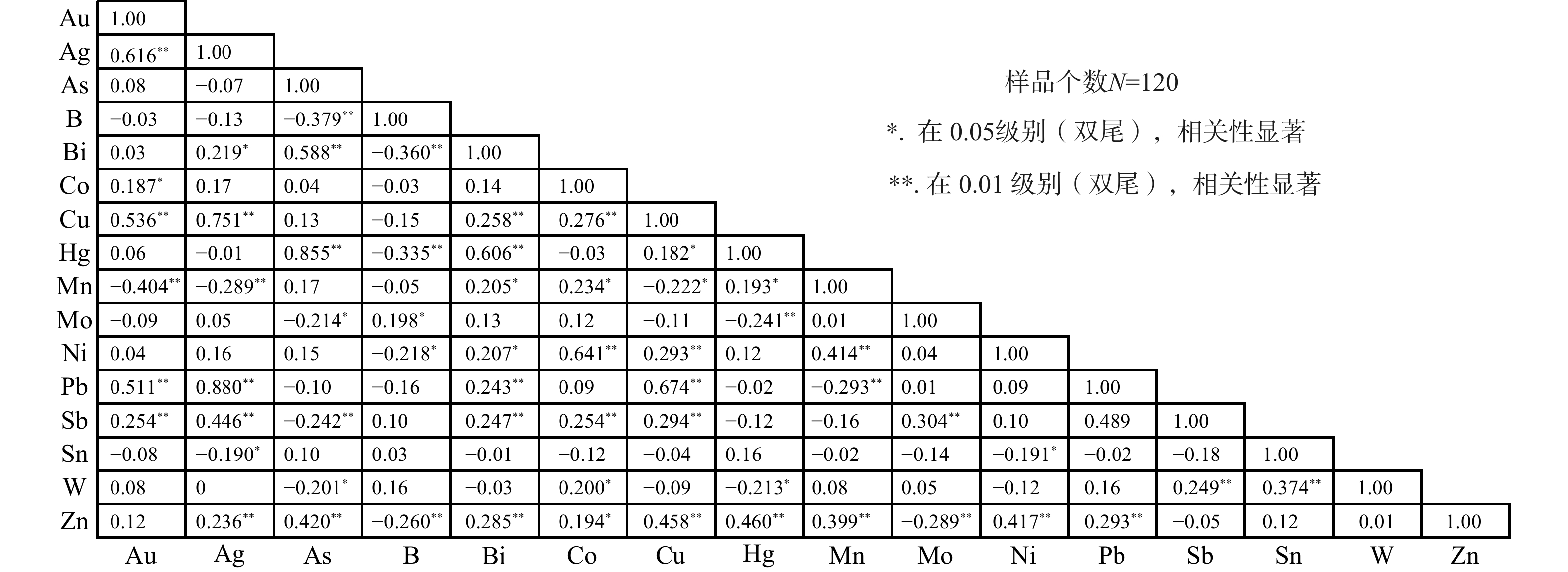
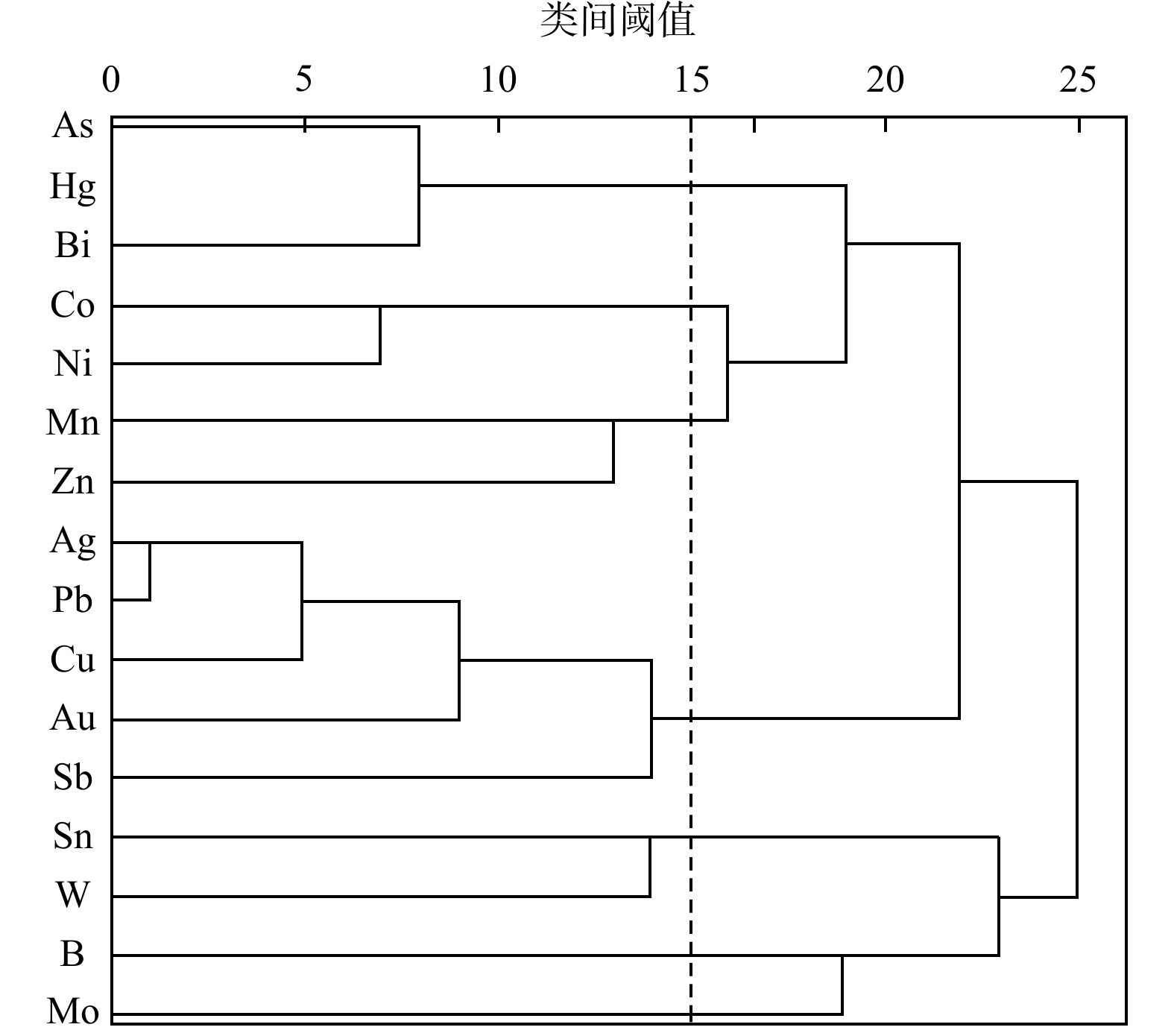
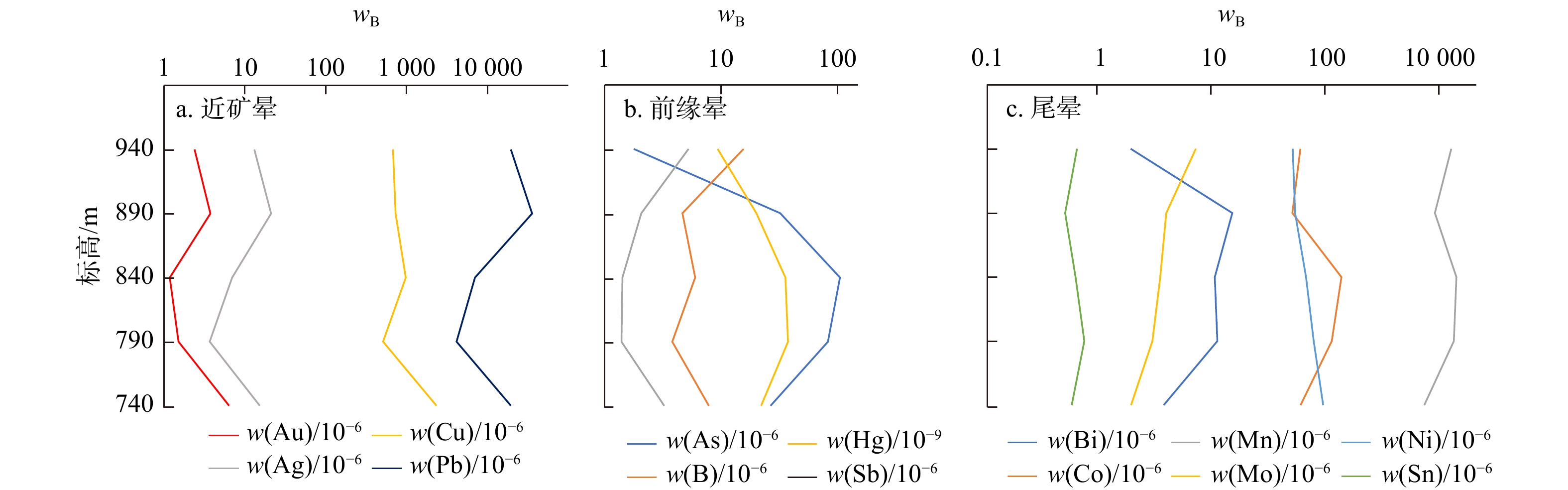
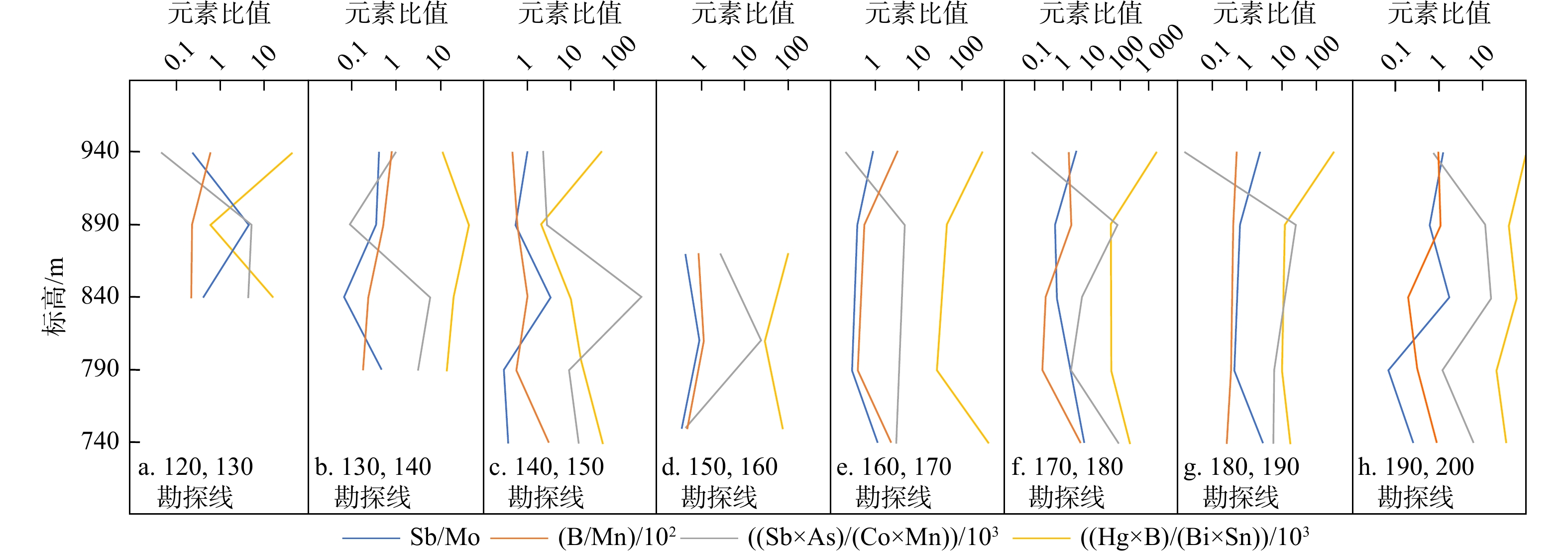
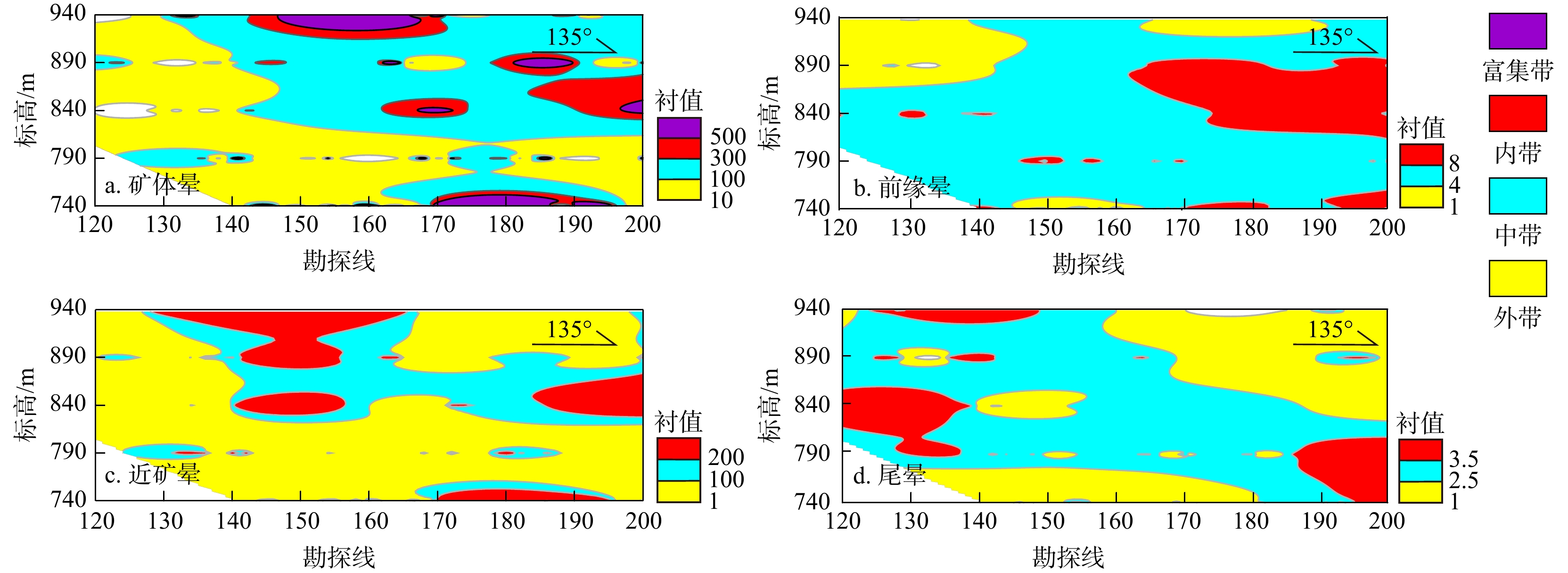
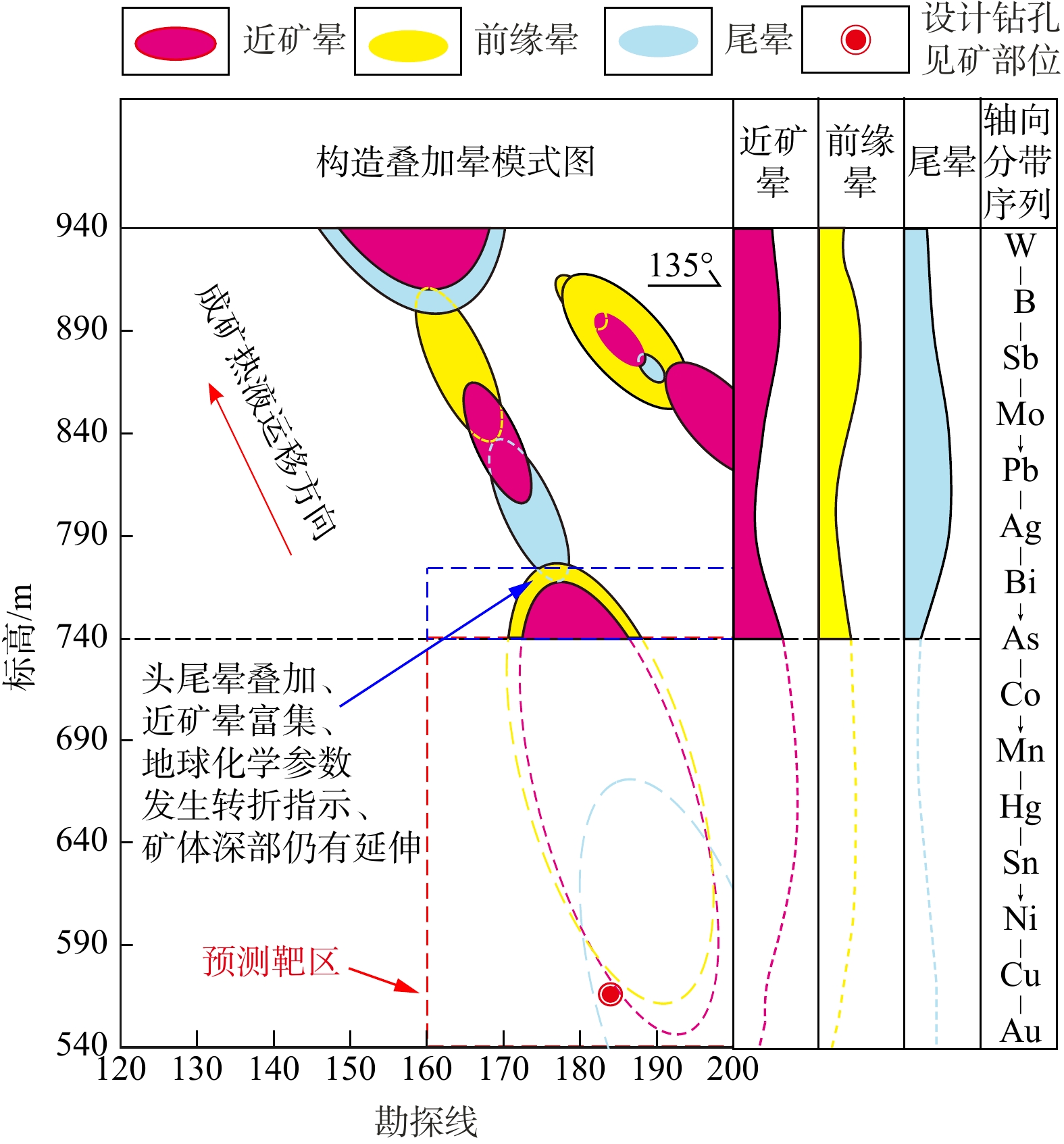
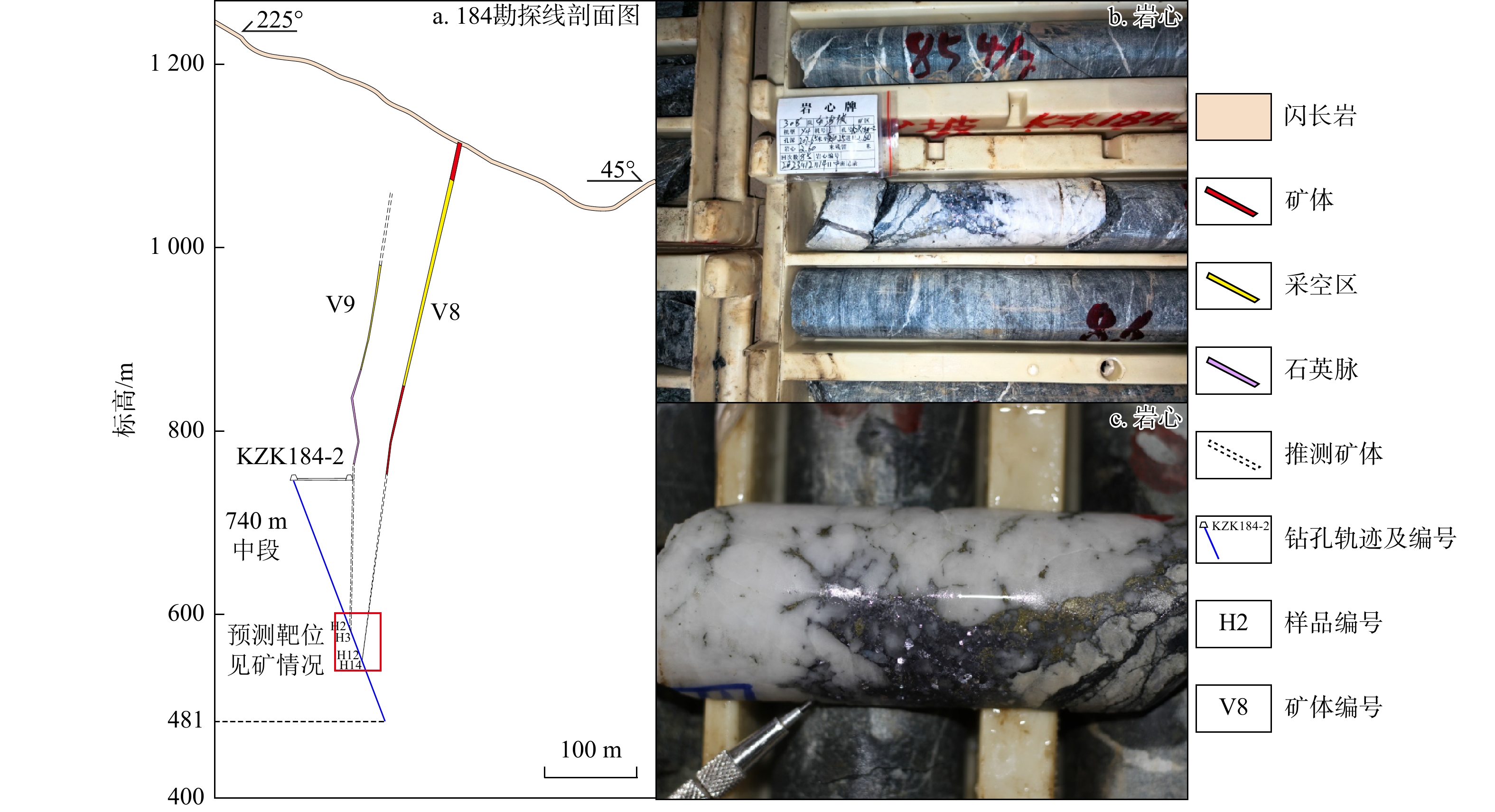
The results showed a close association between Ag, Cu, Pb, and Au mineralization in the Daping gold deposit. These elements (Au, Ag, Cu, Pb) served as the characteristic indicators for the near-ore halo of the Daping gold deposit. By applying an improved Grigoryan zoning index method, the axial zoning sequences of each exploration line were obtained. It was observed that the axial zoning sequences of each exploration line exhibited "reverse zoning" characteristics, indicating multi-period and multi-stage superimposed mineralization. Combined with the axial variation of trace elements and geochemical parameters, it was found that the deep part of the 160−200 exploration lines in the southeast direction demonstrated a head-tail halo superposition feature, suggesting possible deep ore body extensions in this region. A contrast halo zoning map generated through Kriging interpolation indicated that the ore body plunges towards the deep southeastern direction. Based on the spatial distribution of ore bodies, geochemical properties, and element spatial distribution patterns, a structural superimposed halo exploration model for the vein-type ore bodies in the Daping gold deposit is established. This model suggests that favorable metallogenic spaces exist in the deep part of the 160−200 exploration lines. Prospecting targets are delineated accordingly, and subsequent drilling verification successfully intersects ore.
Thus, the successful application of this approach demonstrates that the structural superimposed halo method remains an effective tool for current deep prospecting in vein-type gold deposits, thereby providing a reference for deep prospecting prediction in mining areas.

| [1] |
王庆飞, 邓军, 赵鹤森, 等. 造山型金矿研究进展: 兼论中国造山型金成矿作用[J]. 地球科学, 2019, 44(6): 2155-2186.
WANG Q F, DENG J, ZHAO H S, et al. Review on orogenic gold deposits[J]. Earth Science, 2019, 44(6): 2155-2186. (in Chinese with English abstract
|
| [2] |
王京彬, 王玉往, 李庆哲, 等. 造山型金矿容矿建造分类、成矿模式及找矿勘查[J]. 地质学报, 2024, 98(3): 898-919.
WANG J B, WANG Y W, LI Q Z, et al. Classification of host rock formation, metallogenic model, and exploration of orogenic gold deposits[J]. Acta Geologica Sinica, 2024, 98(3): 898-919. (in Chinese with English abstract
|
| [3] |
GROVES D I, GOLDFARB R J, GEBRE-MARIAM M, et al. Orogenic gold deposits: A proposed classification in the context of their crustal distribution and relationship to other gold deposit types[J]. Ore Geology Reviews, 1998, 13(1/5): 7-27. doi: 10.1016/s0169-1368(97)00012-7
|
| [4] |
WANG C Y, WEI B, TAN W, et al. The distribution, characteristics and fluid sources of lode gold deposits: An overview[J]. Science China Earth Sciences, 2021, 64(9): 1463-1480.
|
| [5] |
邵军. 中国石英脉型金矿床地质特征[J]. 贵金属地质, 1998, 7(3): 172-179.
SHAO J. Geological character of quartz vein type gold deposits in China[J]. Geology and Resources, 1998, 7(3): 172-179. (in Chinese with English abstract
|
| [6] |
李惠, 禹斌, 马久菊, 等. 构造叠加晕预测侧伏矿体深部盲矿的方法及实用模型[J]. 矿产勘查, 2016, 7(6): 971-977.
LI H, YU B, MA J J, et al. Method of structural superimposed halo and practical model for the prediction of deep concealed lateral plunged ore bodies[J]. Mineral Exploration, 2016, 7(6): 971-977. (in Chinese with English abstract
|
| [7] |
庞振山, 薛建玲, 程志中, 等. 成矿地质体找矿预测理论与方法在矿产勘查中的应用[J]. 地质通报, 2023, 42(6): 883-894.
PANG Z S, XUE J L, CHENG Z Z, et al. Application of the prospecting prediction theory and method of metallogenic geological body in mineral exploration[J]. Geological Bulletin of China, 2023, 42(6): 883-894. (in Chinese with English abstract
|
| [8] |
严光生, 叶天竺, 庞振山, 等. 成矿地质体找矿预测理论与方法[J]. 地质通报, 2023, 42(6): 857-882.
YAN G S, YE T Z, PANG Z S, et al. Introduction of the theory and method of prospecting prediction of metallogenic geological body[J]. Geological Bulletin of China, 2023, 42(6): 857-882. (in Chinese with English abstract
|
| [9] |
薛建玲, 庞振山, 程志中, 等. 深部找矿基本问题及方法[J]. 地质通报, 2020, 39(8): 1125-1136.
XUE J L, PANG Z S, CHENG Z Z, et al. Basic problems and methods of deep mineral exploration[J]. Geological Bulletin of China, 2020, 39(8): 1125-1136. (in Chinese with English abstract
|
| [10] |
张维康, 张青, 张成, 等. 基于地球化学数据的斑岩型矿床蚀变矿物提取与综合成矿预测[J]. 地质科技通报, 2024, 43(5): 105-116. doi: 10.19509/j.cnki.dzkq.tb20230274
ZHANG W K, ZHANG Q, ZHANG C, et al. Alteration mineral identification and metallogenic prediction of porphyry deposits based on geochemical data[J]. Bulletin of Geological Science and Technology, 2024, 43(5): 105-116. (in Chinese with English abstract doi: 10.19509/j.cnki.dzkq.tb20230274
|
| [11] |
YANG L, WANG Q F, GROVES D I, et al. Mineral assemblages, fluid inclusions, pyrite trace elements, and S-O isotopes of gold ores from the Cenozoic Daping deposit, SW China: Implications for the genesis of complex orogenic lode gold systems[J]. Economic Geology 2023, 118(4): 903-926.
|
| [12] |
YANG X, WU J, XU D R, et al. Application of integrated geological and structural investigations to the discovery of new mineral zones related to the Daping gold deposit, Southwest China[J]. Ore Geology Reviews, 2023, 158: 105519. doi: 10.1016/j.oregeorev.2023.105519
|
| [13] |
YANG L, WANG Q F, GROVES D I, et al. Multiple orogenic gold mineralization events in a collisional orogen: Insights from an extruded terrane along the southeastern margin of the Tibetan Plateau[J]. Journal of Structural Geology, 2021, 147: 104333. doi: 10.1016/j.jsg.2021.104333
|
| [14] |
AN W T, CHEN J P, LI Y C, et al. The superposition characteristics of primary halo in the Daping gold deposit, Yunnan Province, China and its significance for exploration[J]. Journal of Geochemical Exploration, 2021, 228: 106809. doi: 10.1016/j.gexplo.2021.106809
|
| [15] |
辛未. 云南省哀牢山-红河成矿带新生代金铜钼成矿作用研究[D]. 长春: 吉林大学, 2019.
XIN W. Research on Cenozoic Au-Cu-Mo metallogenesis in Ailaoshan-Honghe metallogenic belt, Yunnan Province[D]. Changchun: Jilin University, 2019. (in Chinese with English abstract
|
| [16] |
杨林. 西南特提斯哀牢山构造演化与金成矿作用[D]. 北京: 中国地质大学(北京), 2018.
YANG L. Tectonic evolution and gold mineralization in the Southwest Tethyan Ailaoshan belt[D]. Beijing: China University of Geosciences(Beijing), 2018. (in Chinese with English abstract
|
| [17] |
卜星辰. 云南元阳大坪金矿床构造变形及其控矿特征研究[D]. 北京: 中国地质大学(北京), 2017.
BU X C. The study on tectonic deformation and its ore-controlling features in Daping gold deposit, Yuanyang, Yunnan Province[D]. Beijing: China University of Geosciences(Beijing), 2017. (in Chinese with English abstract
|
| [18] |
QI X X, ZENG L S, ZHU L H, et al. Zircon U-Pb and Lu-Hf isotopic systematics of the Daping plutonic rocks: Implications for the Neoproterozoic tectonic evolution of the northeastern margin of the Indochina block, Southwest China[J]. Gondwana Research, 2012, 21(1): 180-193.
|
| [19] |
曹原, 何小虎, 谈树成, 等. 云南大坪金矿新元古代成矿事件: 来自热液锆石和闪长岩U-Pb年代学及Hf同位素的约束[J]. 岩石矿物学杂志, 2021, 40(2): 411-428. doi: 10.3969/j.issn.1000-6524.2021.02.016
CAO Y, HE X H, TAN S C, et al. Neoproterozoic mineralization event of the Daping gold deposit in Yunnan Province: Constraints from U-Pb geochronology and Hf isotope of hydrothermal zircons and diorites[J]. Acta Petrologica et Mineralogica, 2021, 40(2): 411-428. (in Chinese with English abstract doi: 10.3969/j.issn.1000-6524.2021.02.016
|
| [20] |
黎彤. 地壳元素丰度的若干统计特征[J]. 地质与勘探, 1992, 28(10): 1-7.
LI T. The statistical characteristics of the abundance of chemical elements in the earth's crust[J]. Geology and Prospecting, 1992, 28(10): 1-7. (in Chinese with English abstract
|
| [21] |
张宇, 王勇军, 黄鑫, 等. 胶东牟乳成矿带金青顶矿床构造叠加晕研究[J]. 矿产勘查, 2024, 15(1): 92-106. doi: 10.20008/j.kckc.202401009
ZHANG Y, WANG Y J, HUANG X, et al. Study on tectonic superimposed halo of the Jinqingding deposit in Mouru metallogenic belt, Jiaodong[J]. Mineral Exploration, 2024, 15(1): 92-106. (in Chinese with English abstract doi: 10.20008/j.kckc.202401009
|
| [22] |
魏江, 安文通, 张之武, 等. 山东乳山唐家沟金矿构造叠加晕研究及深部预测[J]. 地质找矿论丛, 2023, 38(4): 532-540. doi: 10.6053/j.issn.1001-1412.2023.04.015
WEI J, AN W T, ZHANG Z W, et al. Study on tectonic overprinting halo in Tangjiagou Au deposit, Rushan County, Shandong Province and the deep ore prediction[J]. Contributions to Geology and Mineral Resources Research, 2023, 38(4): 532-540. (in Chinese with English abstract doi: 10.6053/j.issn.1001-1412.2023.04.015
|
| [23] |
王斌, 宋伊圩, 孙彪, 等. 甘肃寨上金矿南矿带构造叠加晕实用模型及深部找矿预测[J]. 现代地质, 2021, 35(6): 1504-1514. doi: 10.19657/j.geoscience.1000-8527.2021.112
WANG B, SONG Y W, SUN B, et al. Structural superimposing halo practical modeling and deep prospecting prediction of Zhaishang gold deposit in the Gansu Province[J]. Geoscience, 2021, 35(6): 1504-1514. (in Chinese with English abstract doi: 10.19657/j.geoscience.1000-8527.2021.112
|
| [24] |
温佳伟, 史鹏亮, 刘彦兵, 等. 辽宁二道沟金矿构造叠加晕特征及深部找矿预测[J]. 现代地质, 2020, 34(6): 1291-1302. doi: 10.19657/j.geoscience.1000-8527.2020.06.17
WEN J W, SHI P L, LIU Y B, et al. Characteristics of structural superimposed halos and deep prospecting prediction in Erdaogou gold deposit, Liaoning Province[J]. Geoscience, 2020, 34(6): 1291-1302. (in Chinese with English abstract doi: 10.19657/j.geoscience.1000-8527.2020.06.17
|
| [25] |
严子清, 石文杰, 张鹏涛, 等. 胶东大尹格庄金矿成矿流体时空演化及矿床成因: 来自流体包裹体、成矿元素和H-O-S-Pb同位素证据[J]. 地质科技通报, 2024, 43(2): 156-174. doi: 10.19509/j.cnki.dzkq.tb20220507
YAN Z Q, SHI W J, ZHANG P T, et al. Ore genesis and vertical variations of ore-forming fluids in the Dayingezhuang gold deposit, Jiaodong Peninsula: Constraints from fluid inclusions, ore forming elements, and H-O-S-Pb isotopes[J]. Bulletin of Geological Science and Technology, 2024, 43(2): 156-174. (in Chinese with English abstract doi: 10.19509/j.cnki.dzkq.tb20220507
|
| [26] |
俞炳, 曾庆栋, 夏凡, 等. 辽宁五龙金矿构造叠加晕研究[J]. 地质与勘探, 2020, 56(5): 898-914. doi: 10.12134/j.dzykt.2020.05.002
YU B, ZENG Q D, XIA F, et al. Structural superimposed halo of the Wulong gold deposit in Liaoning Province[J]. Geology and Exploration, 2020, 56(5): 898-914. (in Chinese with English abstract doi: 10.12134/j.dzykt.2020.05.002
|
| [27] |
WANG K X, ZHAI D G, LIU J J, et al. LA-ICP-MS trace element analysis of pyrite from the Dafang gold deposit, South China: Implications for ore genesis[J]. Ore Geology Reviews, 2021, 139: 104507. doi: 10.1016/j.oregeorev.2021.104507
|
| [28] |
DING T, TAN T T, WANG J, et al. Trace-element composition of pyrite in the Baoshan Cu-Mo-Pb-Zn deposit, southern Hunan Province, China: Insights into the ore genesis[J]. Ore Geology Reviews, 2022, 147: 104989.
|
| [29] |
胡宝群, 高海东, 申玉科, 等. 玲珑金矿大开头矿区Bi特征及指示意义[J]. 物探与化探, 2014, 38(6): 1134-1139.
HU B Q, GAO H D, SHEN Y K, et al. Bi anomaly of the Dakaitou ore district in the Linglong gold mine and its indication significance[J]. Geophysical and Geochemical Exploration, 2014, 38(6): 1134-1139. (in Chinese with English abstract
|
| [30] |
陈富荣. 安徽宁墩地区金钨地球化学异常找矿远景[J]. 物探与化探, 2010, 34(2): 150-153.
CHEN F R. Ore-search prospects of gold and tungsten geochemical anomalies in Ningdun area, Anhui Province[J]. Geophysical and Geochemical Exploration, 2010, 34(2): 150-153. (in Chinese with English abstract
|
| [31] |
ZUO R G, XIA Q L, WANG H C. Compositional data analysis in the study of integrated geochemical anomalies associated with mineralization[J]. Applied Geochemistry, 2013, 28: 202-211. doi: 10.1016/j.apgeochem.2012.10.031
|
| [32] |
ZUO R G. Identification of geochemical anomalies associated with mineralization in the Fanshan District, Fujian, China[J]. Journal of Geochemical Exploration, 2014, 139: 170-176. doi: 10.1016/j.gexplo.2013.08.013
|
| [33] |
WANG C M, CARRANZA E J M, ZHANG S T, et al. Characterization of primary geochemical haloes for gold exploration at the Huanxiangwa gold deposit, China[J]. Journal of Geochemical Exploration, 2013, 124: 40-58. doi: 10.1016/j.gexplo.2012.07.011
|
| [34] |
李惠, 张国义, 王支农, 等. 构造叠加晕法在预测金矿区深部盲矿中的应用效果[J]. 物探与化探, 2003, 27(6): 438-440.
LI H, ZHANG G Y, WANG Z N, et al. The effect of applying structural superimposed halos to the prognosis of deep blind orebodies in the gold ore district[J]. Geophysical and Geochemical Exploration, 2003, 27(6): 438-440. (in Chinese with English abstract
|
| [35] |
李惠, 禹斌, 魏江, 等. 热液型矿床深部盲矿预测的构造叠加晕实用理想模型及其意义[J]. 地质与勘探, 2020, 56(5): 889-897.
LI H, YU B, WEI J, et al. A new practical ideal model of structural superimposed halos for prediction of deep blind hydrothermal deposits and its significance[J]. Geology and Exploration, 2020, 56(5): 889-897. (in Chinese with English abstract
|
| [36] |
李惠, 禹斌, 李德亮, 等. 构造叠加晕找盲矿法及研究方法[J]. 地质与勘探, 2013, 49(1): 154-161.
LI H, YU B, LI D L, et al. Prediction of blind ore bodies using structural superimposed halo and research methods[J]. Geology and Exploration, 2013, 49(1): 154-161. (in Chinese with English abstract
|
| [37] |
李惠, 禹斌, 李德亮, 等. 不同类型金矿深部盲矿预测的构造叠加晕模型[J]. 矿产与地质, 2015, 29(5): 648-653.
LI H, YU B, LI D L, et al. Structural superimposed halo model of different type gold deposit for deep blind ore prediction[J]. Mineral Resources and Geology, 2015, 29(5): 648-653. (in Chinese with English abstract
|
| [38] |
李惠, 李德亮, 禹斌, 等. 构造叠加晕新方法在小秦岭金矿带深部盲矿预测的应用[J]. 黄金科学技术, 2010, 18(5): 1-6.
LI H, LI D L, YU B, et al. The application of new stuctural superimposed halo method in deep blind ore prediction of Xiaoqinling gold metallogenic belt[J]. Gold Science and Technology, 2010, 18(5): 1-6. (in Chinese with English abstract
|
| [39] |
王建新, 臧兴运, 郭秀峰, 等. 格里戈良分带指数法的改良[J]. 吉林大学学报(地球科学版), 2007, 37(5): 884-888. doi: 10.3969/j.issn.1671-5888.2007.05.006
WANG J X, ZANG X Y, GUO X F, et al. The improved Gregorian's zoning index calculating method[J]. Journal of Jilin University (Earth Science Edition), 2007, 37(5): 884-888. (in Chinese with English abstract doi: 10.3969/j.issn.1671-5888.2007.05.006
|
| [40] |
李成禄, 符安宗, 徐文喜, 等. 黑龙江多宝山地区永新金矿床构造叠加晕特征及深部找矿预测[J]. 现代地质, 2023, 37(3): 674-689. doi: 10.19657/j.geoscience.1000-8527.2023.012
LI C L, FU A Z, XU W X, et al. Characteristics of structural superimposed halo and deep prospecting prediction of Yongxin gold deposit, Duobaoshan area, Heilongjiang Province[J]. Geoscience, 2023, 37(3): 674-689. (in Chinese with English abstract doi: 10.19657/j.geoscience.1000-8527.2023.012
|
| [41] |
王双, 张声桃, 魏俊浩, 等. 基于地球化学数据的多图幅台阶效应与试验校正的多种方法优选[J]. 地质科技通报, 2023, 42(3): 350-364.
WANG S, ZHANG S T, WEI J H, et al. Multiple-map step effect and optimization of various experimental correction methods based on geochemical data[J]. Bulletin of Geological Science and Technology, 2023, 42(3): 350-364. (in Chinese with English abstract
|
| [42] |
李惠, 禹斌, 魏江, 等. 矿区深部盲矿预测新突破: 构造叠加晕找盲矿法[J]. 矿产勘查, 2019, 10(12): 3070-3073.
LI H, YU B, WEI J, et al. New breakthrough in the prediction of deep blind ore in mining area: Structural superimposed halo for blind ore method[J]. Mineral Exploration, 2019, 10(12): 3070-3073. (in Chinese with English abstract
|
Supported by:
Beijing Renhe Information Technology Co., Ltd.


 Submission System


 DownLoad: