| Citation: | YU Xiaoying,XU Weiwei,ZHOU Jinlong,et al. Characteristics of changes in annual runoff volume of karez in the Turpan Basin over the past 30 years[J]. Bulletin of Geological Science and Technology,2025,44(6):259-269 doi: 10.19509/j.cnki.dzkq.tb20240094

|
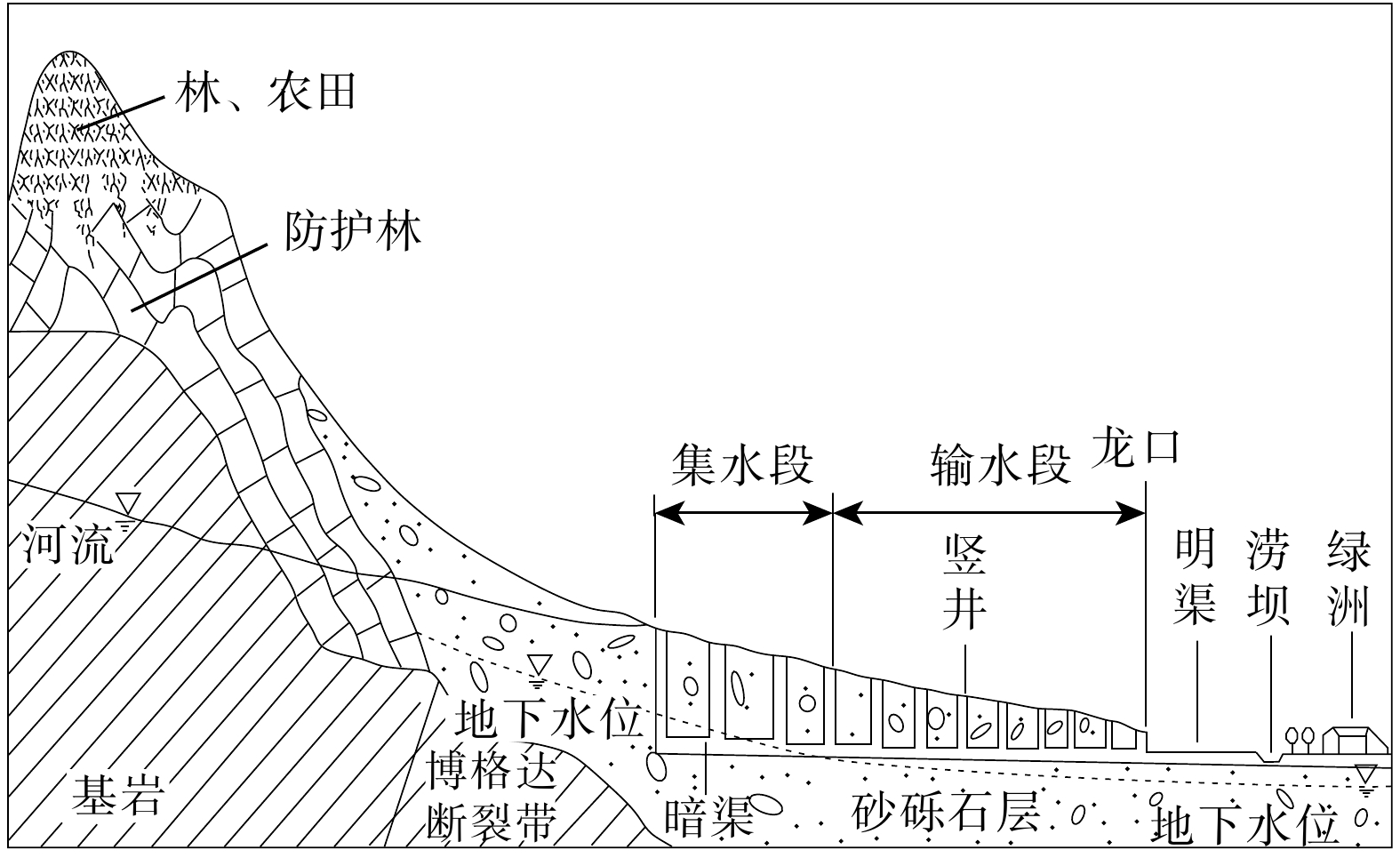
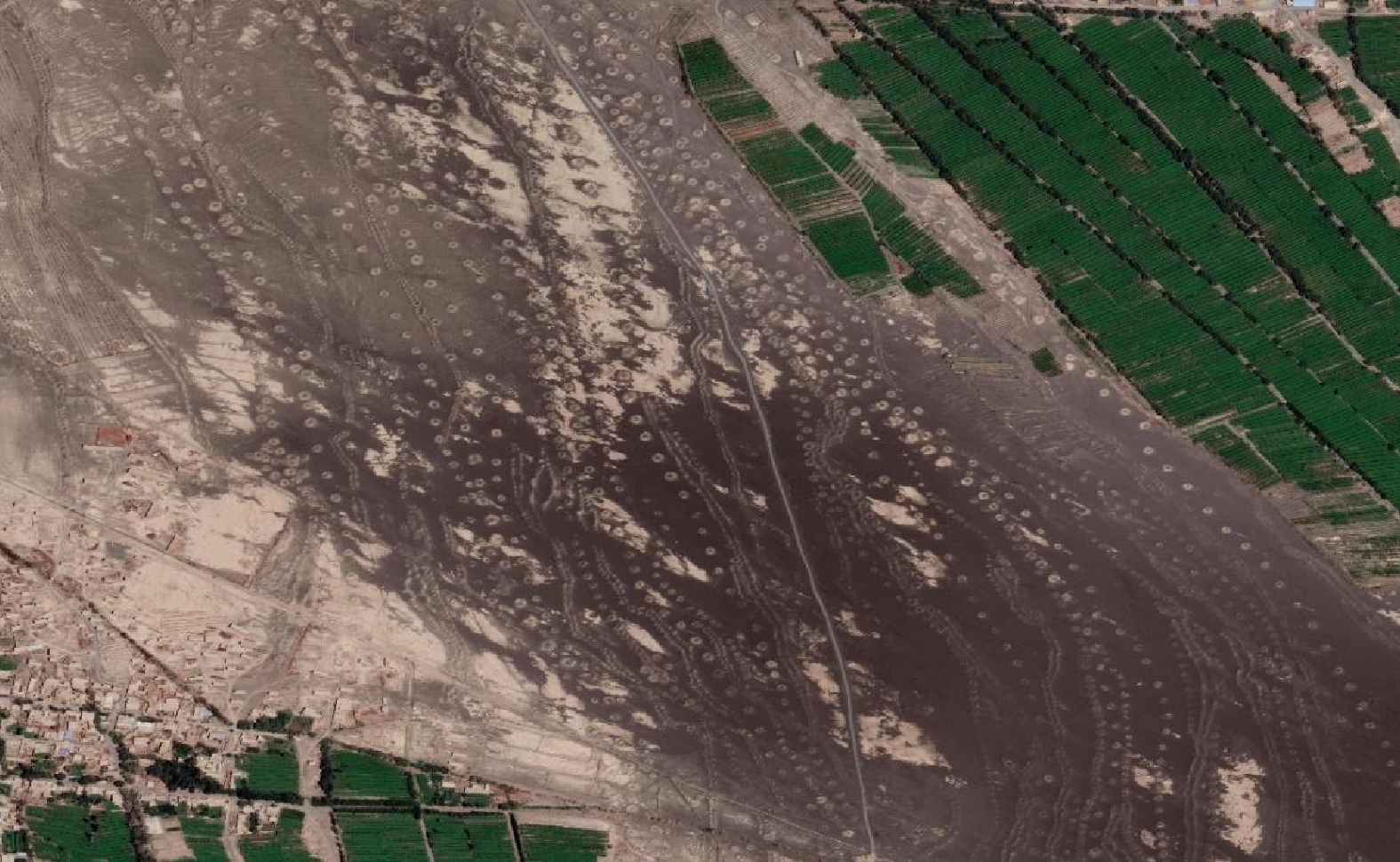
Karez is an important water conservancy facility in the Turpan Basin.
This study aims to mitigate the ongoing decline of karez by analyzing the characteristics of changes in their annual runoff volume over the past 30 years, which is of great significance for agricultural irrigation, cultural heritage preservation, tourism development and so on.
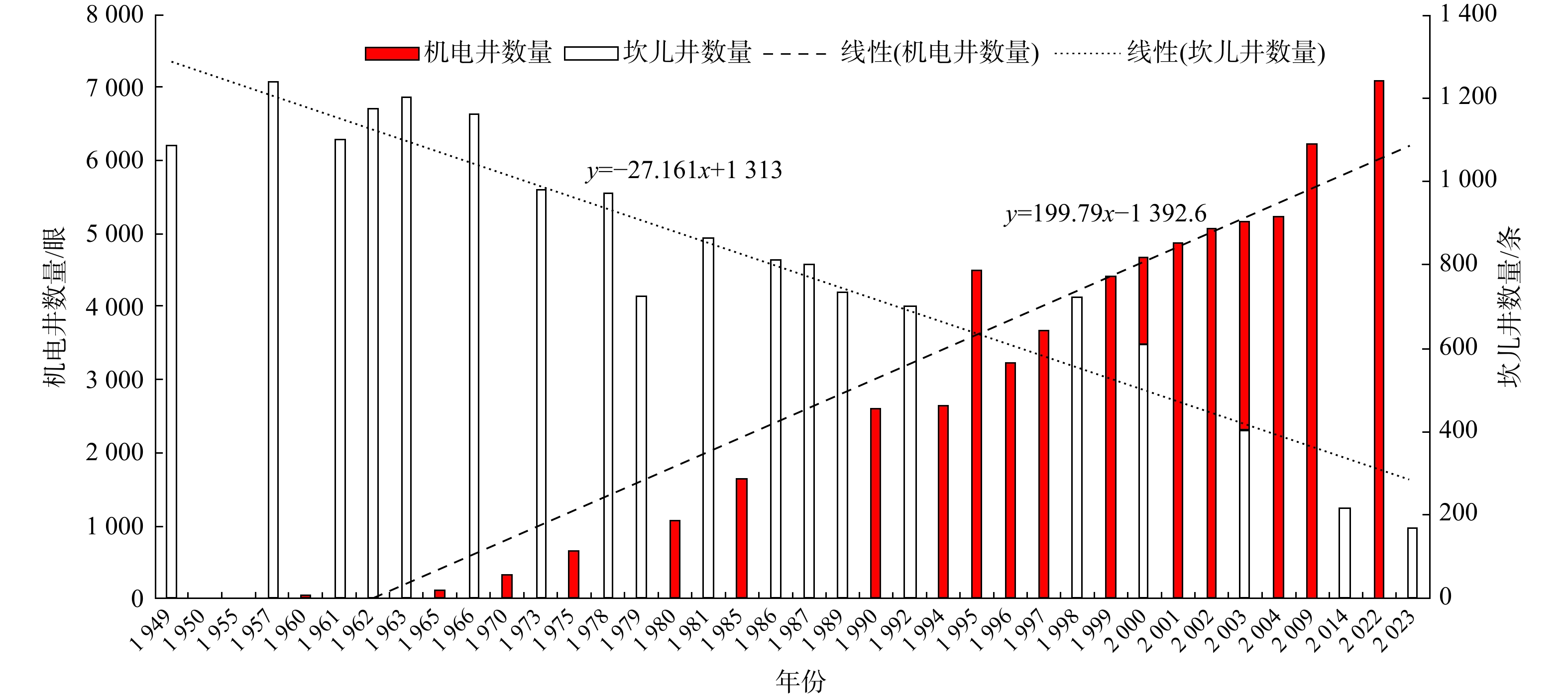
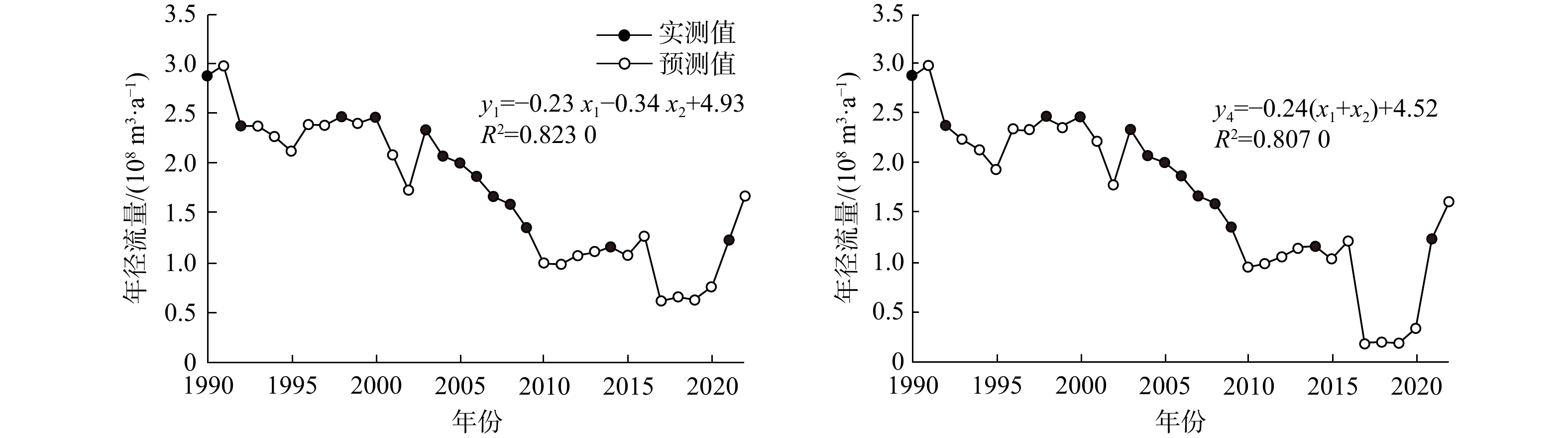
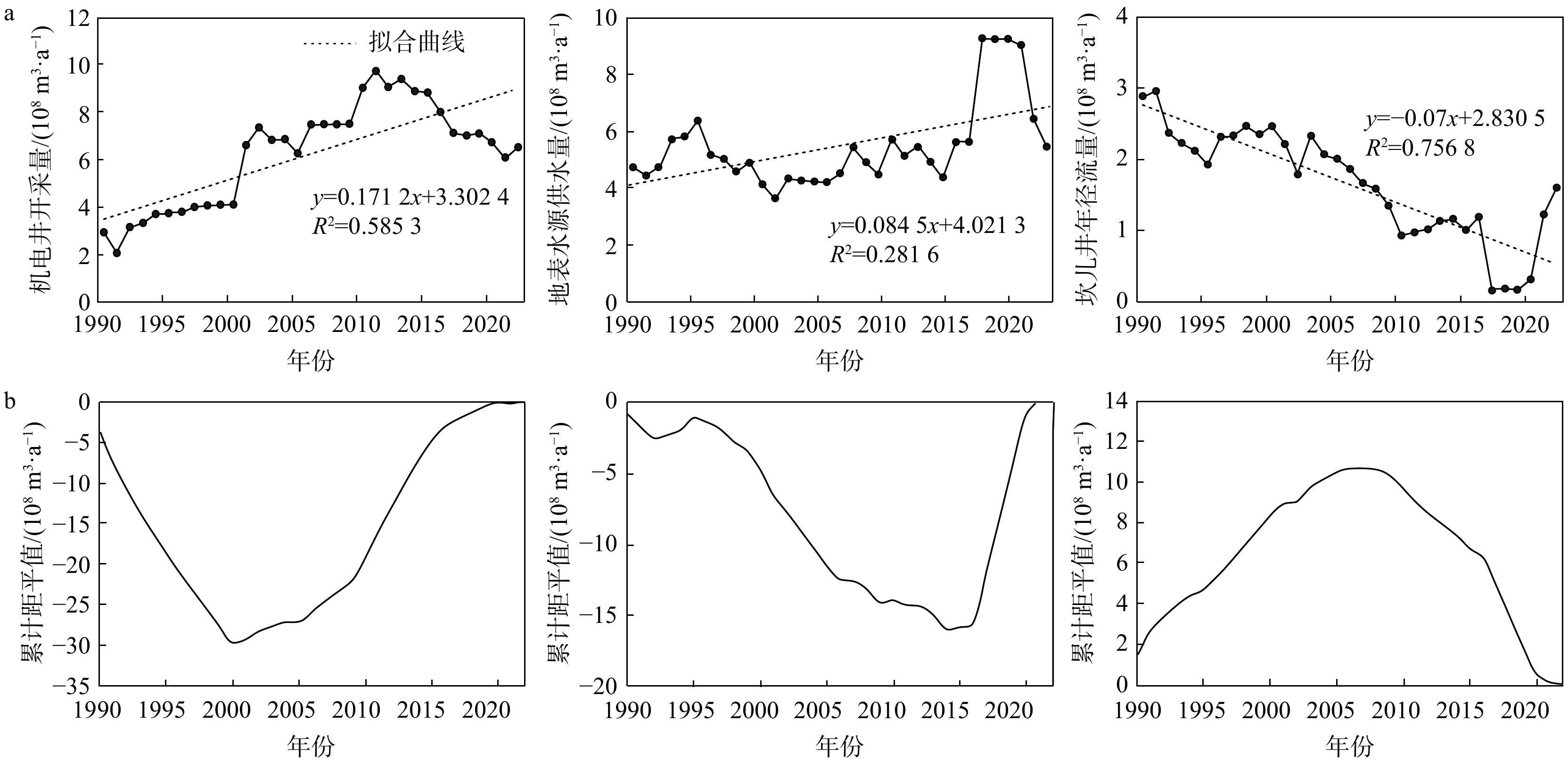
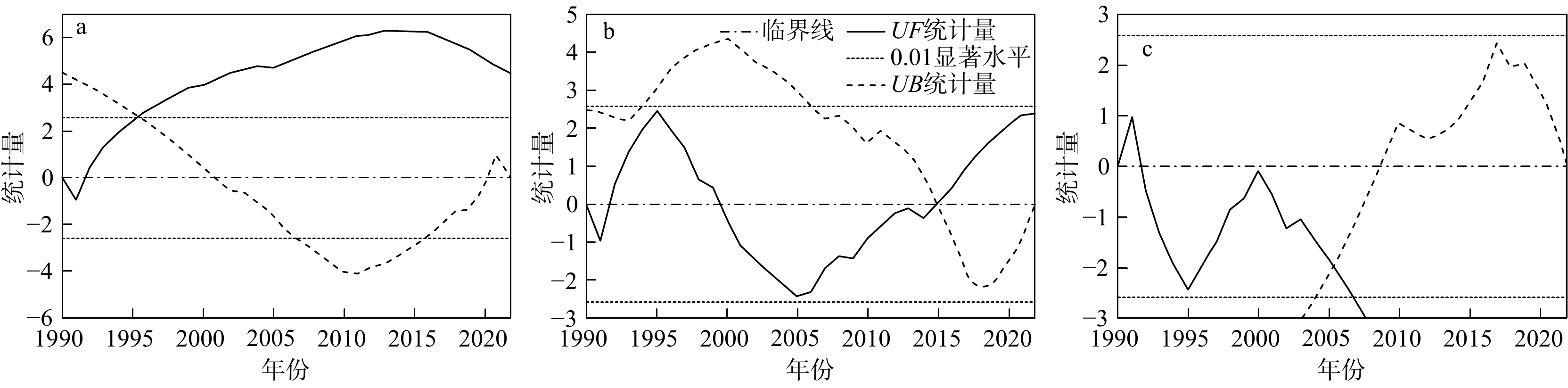
Based on 13 years of discontinuous annual karez runoff data in the study area for the period 1990−2022, combined with year-by-year data on the exploitation of electro-mechanical wells and water supply from surface water sources, statistical analyses were performed using SPSS 20 to interpolate missing data, and trend and mutation analyses were used to determine their change curves and mutation years.
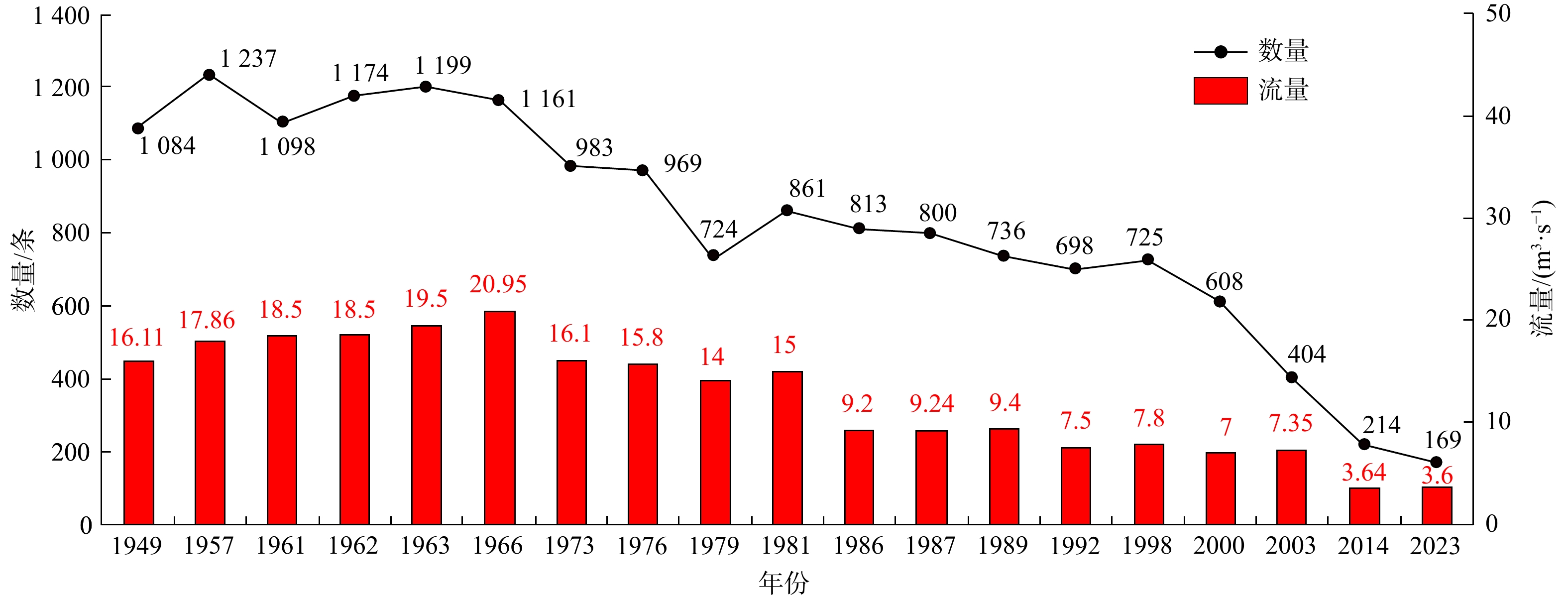
The results show that between 1949 and 2023 the number of karez decreased from
Therefore, in view of the important cultural and engineering value of karez, greater efforts should be made in the future to protect them and thereby promote the sustainable use of water resources and high-quality development in the Turpan Basin.

| [1] |
邢义川, 张爱军, 王力, 等. 坎儿井地下水资源涵养与保护措施研究[J]. 中国水利水电科学研究院学报, 2016, 14(2): 129-137.
XING Y C, ZHANG A J, WANG L, et al. Study on underground water resources conservation and protection measures for Karez[J]. Journal of China Institute of Water Resources and Hydropower Research, 2016, 14(2): 129-137. (in Chinese with English abstract
|
| [2] |
黄文房, 阚耀平. 新疆坎儿井的历史、现状和今后发展[J]. 干旱区地理, 1990, 13(3): 33-37.
HUANG W F, KAN Y P. Xinjiang karez and it history, presence and future[J]. Arid Land Geography, 1990, 13(3): 33-37. (in Chinese with English abstract
|
| [3] |
古丽夏提·哈力克, 艾里西尔·库尔班. 吐鲁番盆地坎儿井现状及衰败的影响因素分析[J]. 安徽农业科学, 2017, 45(11): 207-209+253.
GULIXIATI H, ALISHIR K. Analysis on the present status of karez in Turpan Depression and the influencing factors to its decline[J]. Journal of Anhui Agricultural Sciences, 2017, 45(11): 207-209. (in Chinese with English abstract
|
| [4] |
盛玉香, 韦东, 吴彬, 等. 坎儿井衰减与地下水补排系统响应关系[J]. 灌溉排水学报, 2016, 35(3): 86-90.
SHENG Y X, WEI D, WU B, et al. Response relationship between karez decreasing and variation of groundwater recharge and discharge[J]. Journal of Irrigation and Drainage, 2016, 35(3): 86-90. (in Chinese with English abstract
|
| [5] |
关东海, 张胜江, 吾甫尔·努尔丁. 新疆坎儿井水资源保护与可持续利用研究[J]. 水资源保护, 2008, 24(5): 94-98.
GUANG D H, ZHANG S J, GOFUR N. Protection and sustainable utilization of water resources in Xinjiang karezes[J]. Water Resources Protection, 2008, 24(5): 94-98 (in Chinese with English abstract
|
| [6] |
张锦辉, 耿曙萍. 哈密地区坎儿井动态监测分析及其保护对策[J]. 地下水, 2009, 31(5): 37-39.
ZHANG J H, GENG S P. Dynamic monitor analysis and protection countermeasure on karez in Hami area[J]. Ground Water, 2009, 31(5): 37-39. (in Chinese with English abstract
|
| [7] |
爱斯卡尔·买买提. 吐鲁番地区坎儿井的保护与利用[D]. 西安: 长安大学, 2010.
AISIKAR M. Protection and utilization of karez in Turpan[D]. Xi'an: Changan University, 2010. (in Chinese with English abstract
|
| [8] |
JOMEHPOUR M. Qanat irrigation systems as important and ingenious agricultural heritage: Case study of the qanats of Kashan, Iran[J]. International Journal of Environmental Studies, 2009, 66(3): 297-315. doi: 10.1080/00207230902752629
|
| [9] |
AN P, CHEN H, SUN B W, et al. A minimally invasive method for reinforcing the karez tunnel in Turpan based on the high mole ratio potassium silicate[J]. Bulletin of Engineering Geology and the Environment, 2022, 81(4): 138. doi: 10.1007/s10064-022-02633-y
|
| [10] |
YOUSEFIAN N, SHAHNOUSHI FOROUSHANI N, FIROZZARE A, et al. Prioritizing the effects of sustainable development of reviving the qanat in Fariman-Torbat Jam Plain: The eastern of Iran[J]. Groundwater for Sustainable Development, 2025, 28: 101365. doi: 10.1016/j.gsd.2024.101365
|
| [11] |
杨贝贝, 阿不都沙拉木·加拉力丁, 马桂, 等. 吐鲁番市坎儿井空间分布格局的影响因子探析[J]. 中国农村水利水电, 2017, (12): 198-203.
YANG B B, ABUDUSHALAMU J, MA G, et al. An analysis of the influencing factors of spatial distribution pattern of karez in Turpan City[J]. China Rural Water and Hydropower, 2017(12): 198-203. (in Chinese with English abstract
|
| [12] |
吴彬, 杜明亮, 杨鹏年, 等. 近60年鄯善县地下水补排量演变与坎儿井流量衰减关系[J]. 农业工程学报, 2016, 32(16): 102-108.
WU B, DU M L, YANG P N, et al. Relationship between groundwater recharge, discharge evolution and karez flow attenuation in Shanshan County in nearly 60 years[J]. Transactions of the Chinese Society of Agricultural Engineering, 2016, 32(16): 102-108. (in Chinese with English abstract
|
| [13] |
LI Q, GUO H D, LUO L, et al. Impact analysis of land use and land cover change on karez in Turpan Basin of China[J]. Remote Sensing, 2023, 15(8): 2146. doi: 10.3390/rs15082146
|
| [14] |
MAGHREBI M, NOORI R, SADEGH M, et al. Anthropogenic decline of ancient, sustainable water systems: Qanats[J]. Groundwater, 2023, 61(1): 139-146. doi: 10.1111/gwat.13248
|
| [15] |
SAMANI S, VADIATI M, KISI O, et al. Qanat discharge prediction using a comparative analysis of machine learning methods[J]. Earth Science Informatics, 2024, 17(5): 4597-4618. doi: 10.1007/s12145-024-01409-0
|
| [16] |
李玥宏. 水资源约束下的乡土聚落景观营造策略研究: 以新疆乡土聚落为例[D]. 西安: 西安建筑科技大学, 2011.
LI Y H. Research on creation strategy of vernacular settlement landscape in the perspective of water resource under the constraints: Case study of vemacular settlement in Xinjiang[D]. Xi'an: Xi'an University of Architecture and Technology, 2011. (in Chinese with English abstract
|
| [17] |
邓铭江. 干旱区坎儿井与山前凹陷地下水库[J]. 水科学进展, 2010, 21(6): 748-756.
DENG M J. Kariz wells in arid land and mountain-front depressed ground reservoir[J]. Advances in Water Science, 2010, 21(6): 748-756. (in Chinese with English abstract
|
| [18] |
唐蕴, 王研, 唐克旺. 吐鲁番市浅层地下水功能区划分[J]. 水资源保护, 2017, 33(2): 16-21.
TANG Y, WANG Y, TANG K W. Functional division of shallow groundwater in Turpan City[J]. Water Resources Protection, 2017, 33(2): 16-21. (in Chinese with English abstract
|
| [19] |
白凡, 周金龙, 曾妍妍. 吐鲁番盆地平原区地下水水化学特征及水质评价[J]. 干旱区研究, 2022, 39(2): 419-428.
BAI F, ZHOU J L, ZENG Y Y. Hydrochemical characteristics and quality of groundwater in the plains of the Turpan Basin[J]. Arid Zone Research, 2022, 39(2): 419-428. (in Chinese with English abstract
|
| [20] |
商佐. 吐鲁番盆地地下水动态特征及控制性水位分析[D]. 北京: 中国地质大学(北京), 2020.
SHANG Z. Dynamic characteristics of groundwater and analysis of controlling water level in Turpan Basin[D]. Beijing: China University of Geosciences (Beijing), 2020. (in Chinese with English abstract
|
| [21] |
日孜万古力·艾山. 新疆吐鲁番坎儿井饮用水水质分析及其微生物多样性研究[D]. 乌鲁木齐: 新疆师范大学, 2021.
HASAN R. Analysis of drinking water quality and microbial diversity in karejing, Turpan, Xinjiang[D]. Urumqi: Xinjiang Normal University, 2021. (in Chinese with English abstract
|
| [22] |
王毅萍, 周金龙, 郭晓静. 新疆坎儿井现状及其发展[J]. 地下水, 2008, 30(6): 49-52.
WANG Y P, ZHOU J L, GUO X J. Present situation and its development of the kaner well in the Xinjiang[J]. Ground Water, 2008, 30(6): 49-52. (in Chinese with English abstract
|
| [23] |
FANG S F, PEI H, LIU Z H, et al. Water resources assessment and regional virtual water potential in the Turpan Basin, China[J]. Water Resources Management, 2010, 24(13): 3321-3332. doi: 10.1007/s11269-010-9608-x
|
| [24] |
拜建军, 徐伟伟, 李春艳. 吐鲁番地区水权改革做法及成效[J]. 中国水利, 2016(4): 17-19.
BAI J J, XU W W, LI C Y. Practice and achievement of water rights system reformation in promoting sustainable utilization of water resources in Turpan Prefecture[J]. China Water Resources, 2016(4): 17-19. (in Chinese with English abstract
|
| [25] |
肖丽萍. 生态文明建设视域下的新疆坎儿井保护对策研究[D]. 北京: 北京林业大学, 2019.
XIAO L P. Study on the protection of karez in Xinjiang from the perspective of ecological civilization construction[D]. Beijing: Beijing Forestry University, 2019. (in Chinese with English abstract
|
| [26] |
新疆坎儿井研究会. 新疆坎儿井研究论文集[C]. 乌鲁木齐: 新疆人民出版社, 2015.
Karez Research Association in Xinjiang. Proceedings of the Xinjiang Karez Study[C]. Urumqi: Xinjiang People's Publishing House, 2015.
|
| [27] |
孙静, 唐蕴, 王宇博. 河北省广平县浅层地下水水位控制指标研究[J]. 河北工程大学学报(自然科学版), 2021, 38(4): 86-93.
SUN J, TANG Y, WANG Y B. Research on the control index of shallow groundwater level in Guangping County of Hebei Province[J]. Journal of Hebei University of Engineering (Natural Science Edition), 2021, 38(4): 86-93. (in Chinese with English abstract
|
| [28] |
葛石冰, 宋晓君, 陈润, 等. 近30年天山北坡改进型遥感生态指数时空变化及其驱动因素[J]. 生态与农村环境学报, 2024, 40(7): 865-876.
GE S B, SONG X J, CHEN R, et al. The spatiotemporal changes and driving factors of ERSEI on the northern slope of Tianshan Mountains in the past 30 years[J]. Journal of Ecology and Rural Environment, 2024, 40(7): 865-876. (in Chinese with English abstract
|
| [29] |
田小靖, 赵广举, 穆兴民, 等. 水文序列突变点识别方法比较研究[J]. 泥沙研究, 2019, 44(2): 33-40.
TIAN X J, ZHAO G J, MU X M, et al. Comparison study on hydrological time series change-point testing methods[J]. Journal of Sediment Research, 2019, 44(2): 33-40. (in Chinese with English abstract
|
| [30] |
张宇, 吴计生, 刘洪超, 等. 西辽河流域典型河流径流变化趋势及突变分析[J]. 中国水土保持, 2023(8): 43-47.
ZHANG Y, WU J S, LIU H C, et al. Variation trends and abrupt changes of runoff in typical rivers of Xiliao River Basin[J]. Soil and Water Conservation in China, 2023(8): 43-47. (in Chinese with English abstract
|
| [31] |
彭豪, 张金棚, 陈希. 沂河径流变化趋势的Mann-Kendall分析[J]. 治淮, 2024(12): 4-5.
PENG H, ZHANG J P, CHEN X. Mann-Kendall analysis of runoff variation trend in Yi River[J]. Harnessing the Huaihe River, 2024(12): 4-5. (in Chinese with English abstract
|
| [32] |
曹进军, 马海华. 气候和土地利用变化对石羊河流域自然径流的影响[J]. 中国农业气象, 2024, 45(11): 1290-1301.
CAO J J, MA H H. Climate and land use change effect on natural runoff in Shiyang River Basin[J]. Chinese Journal of Agrometeorology, 2024, 45(11): 1290-1301. (in Chinese with English abstract
|
| [33] |
周长乐, 种法政, 闫林, 等. 新疆石城子河流域径流量变化规律研究[J]. 水利科学与寒区工程, 2024, 7(12): 70-78.
ZHOU C L, ZHONG F Z, YAN L, et al. Study on the variation law and forecast of runoff in Shichengzi River Basin of Xinjiang[J]. Hydro Science and Cold Zone Engineering, 2024, 7(12): 70-78. (in Chinese with English abstract
|
| [34] |
李群, 徐红剑, 杨金, 等. 基于Pearson卡方检验算法评价指标优选的波密-墨脱地区泥石流易发性评价[J]. 地质科技通报, 2025, 44(4): 316-329.
LI Q, XU H J, YANG J, et al. Evaluation of debris flow susceptibility in Bomi-Motuo area using Pearson Chi-square test algorithm based indicator optimization[J]. Bulletin of Geological Science and Technology, 2025, 44(4): 316-329. (in Chinese with English abstract
|
| [35] |
汪泉娟, 孙敬锋, 杨英杰, 等. 克里金方法与深度学习方法用于浅层地下水位估计的对比研究: 以深汕特别合作区为例[J]. 地质科技通报, 2024, 43(4): 291-301.
WANG Q J, SUN J F, YANG Y J, et al. A comparative study of Kriging and deep learning methods for shallow groundwater level estimation: A case study of the Shenzhen-Shanwei Special Cooperation Zone[J]. Bulletin of Geological Science and Technology, 2024, 43(4): 291-301. (in Chinese with English abstract
|
| [36] |
SEDGHI M M, ZHAN H B. On the discharge variation of a qanat in an alluvial fan aquifer[J]. Journal of Hydrology, 2022, 610: 127922. doi: 10.1016/j.jhydrol.2022.127922
|
| [37] |
刘玉姣, 戴恒, 李跃东, 等. 层级制全局敏感性分析方法及其在地下水模型中的应用[J]. 地质科技通报, 2024, 43(5): 216-224.
LIU Y J, DAI H, LI Y D, et al. Method of hierarchical global sensitivity analysis and its application in groundwater models[J]. Bulletin of Geological Science and Technology, 2024, 43(5): 216-224. (in Chinese with English abstract
|
| [38] |
SAMANI S, VADIATI M, DELKASH M, et al. A hybrid wavelet–machine learning model for qanat water flow prediction[J]. Acta Geophysica, 2023, 71(4): 1895-1913.
|
Supported by:
Beijing Renhe Information Technology Co., Ltd.


 Submission System


 DownLoad: