| Citation: | WANG Yanxin,JIANG Shu,HU Fan,et al. Orthogonal experiment optimization and economic evaluation of multi-parameter coupled simulation of a concentrated solar power-geothermal energy storage system[J]. Bulletin of Geological Science and Technology,2026,45(3):1-14 doi: 10.19509/j.cnki.dzkq.tb20250526

|
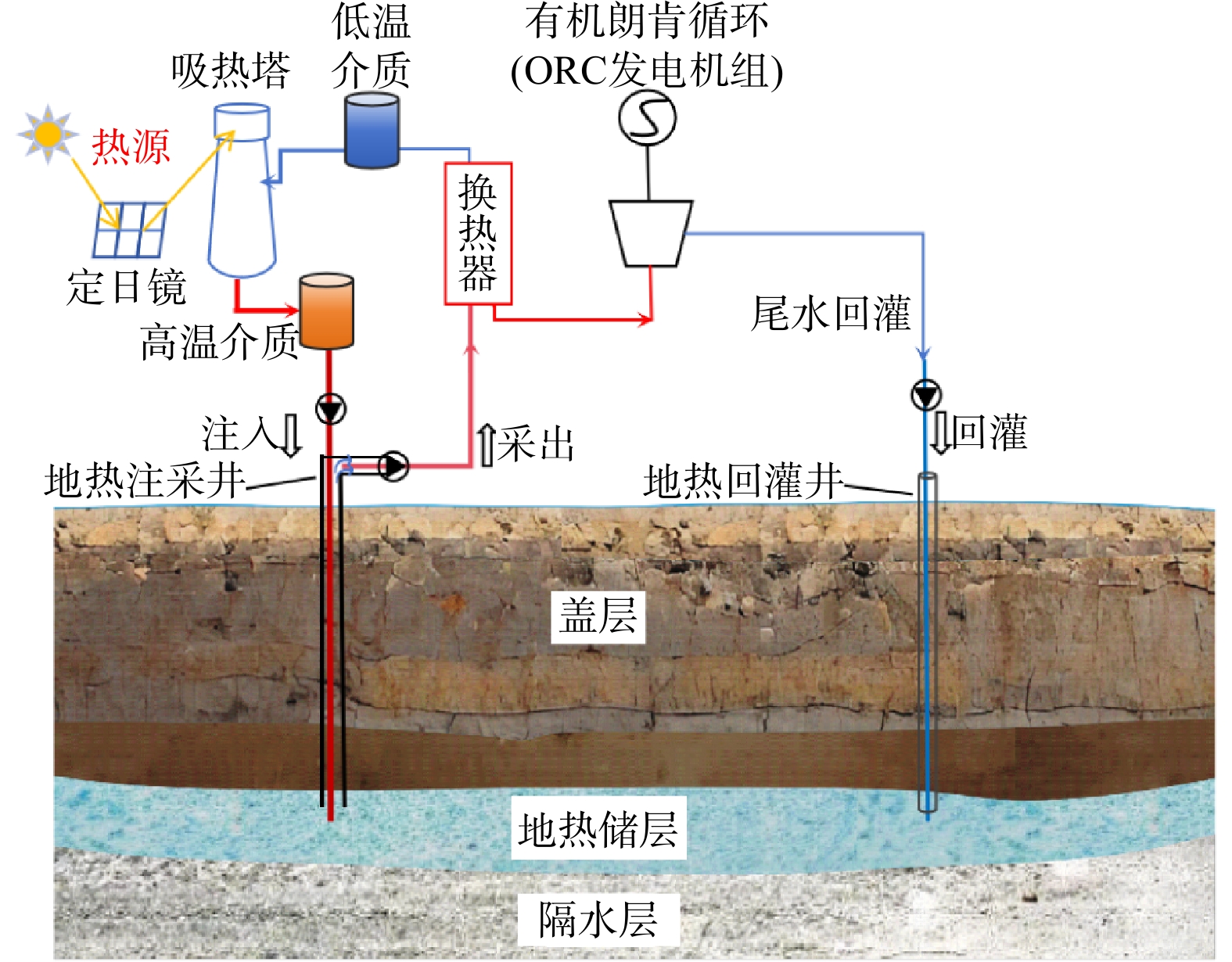
This study employs numerical simulation methods and orthogonal experimental design to conduct preliminary a priori research on a novel concentrated solar power-geothermal (GEO-CSP) long-duration energy storage system (LDES), aiming to comprehensively evaluate system parameter performance and economic feasibility. The new system utilizes concentrated solar power to heat a working fluid to high temperatures and injects the thermal energy into underground reservoirs via injection wells, thereby enhancing thermal storage capacity.
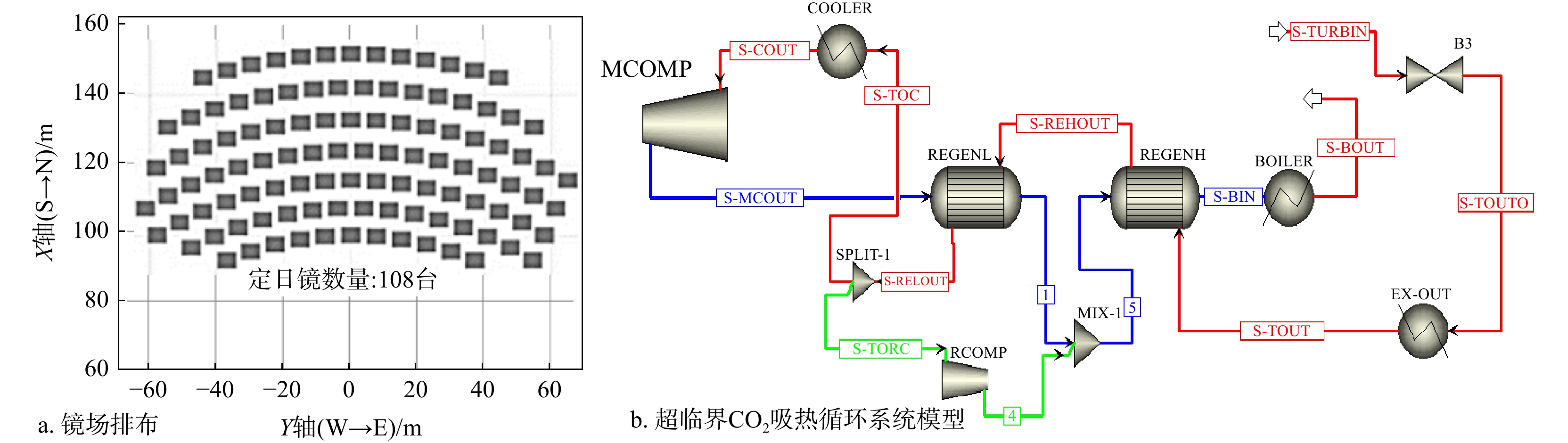
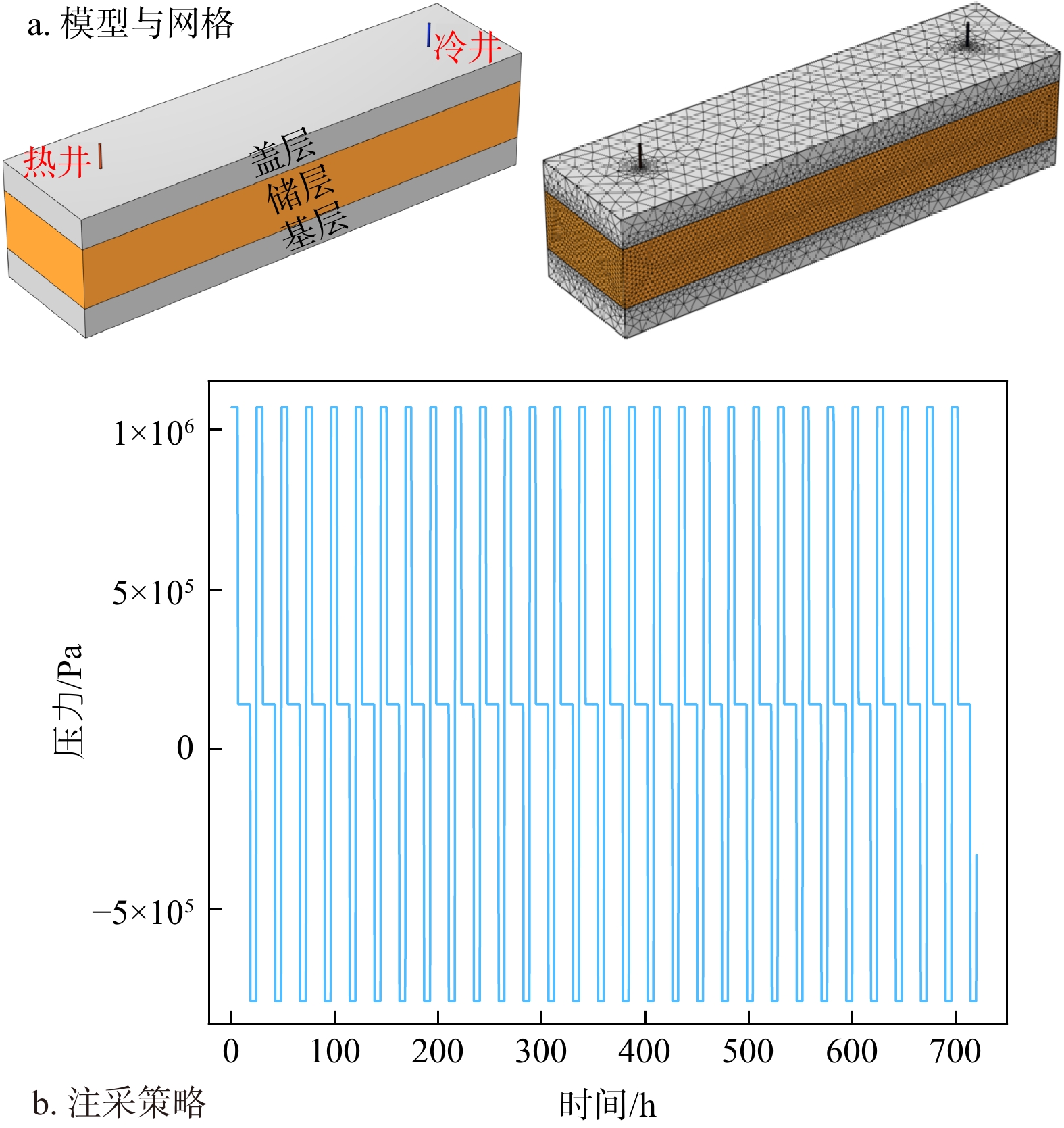
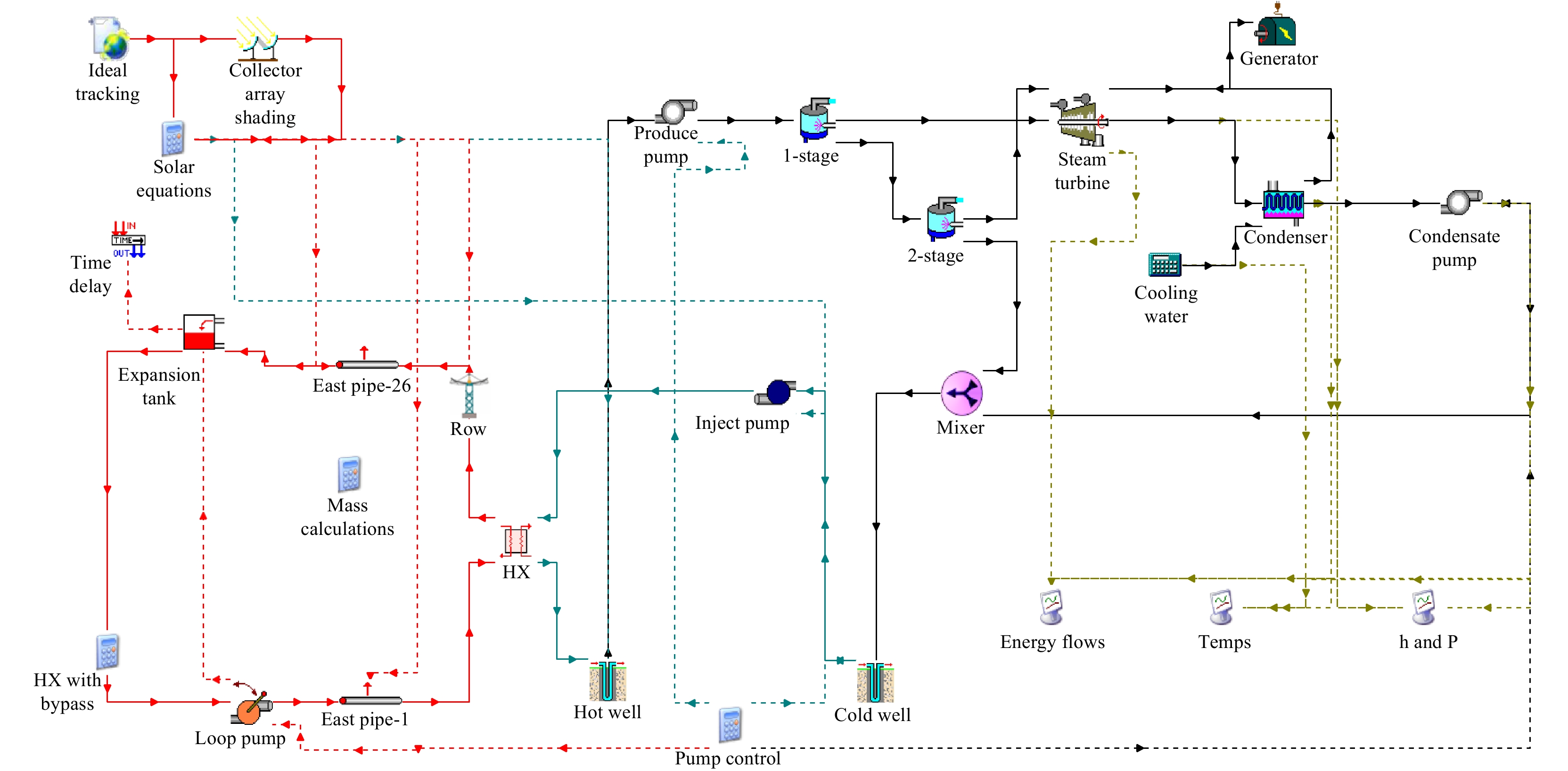
A multi-software coupled simulation approach was adopted. The SG-Tower software was used to calculate heliostat field heat collection performance via ray tracing. A COMSOL multiphysics model was used to simulate thermal-fluid coupled heat transfer in underground reservoirs, analyzing the effects of injection temperature, injection flow rate, and reservoir characteristics on thermal storage efficiency. A MATLAB/Simulink model was developed to simulate a two-stage flash power generation process.
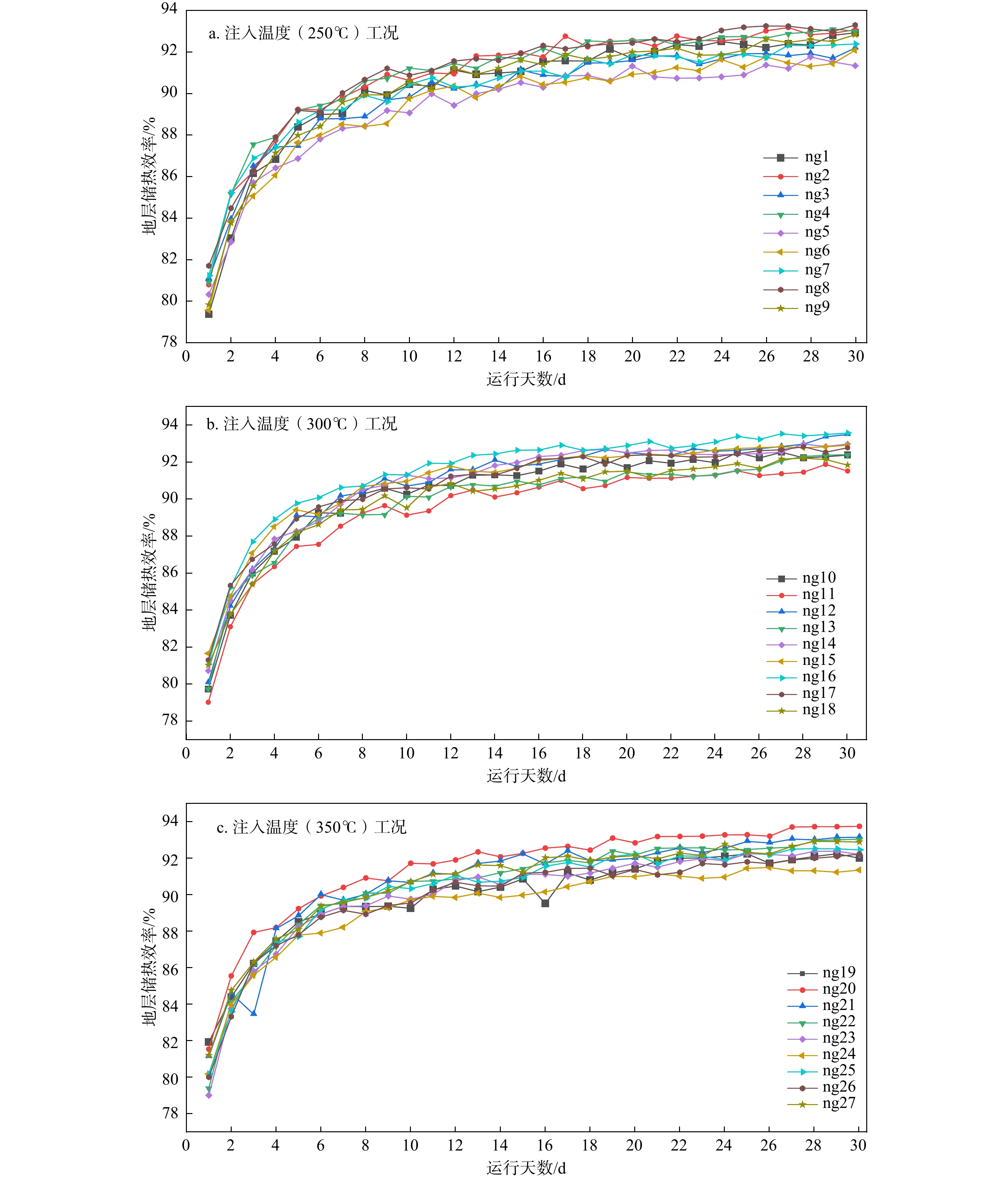
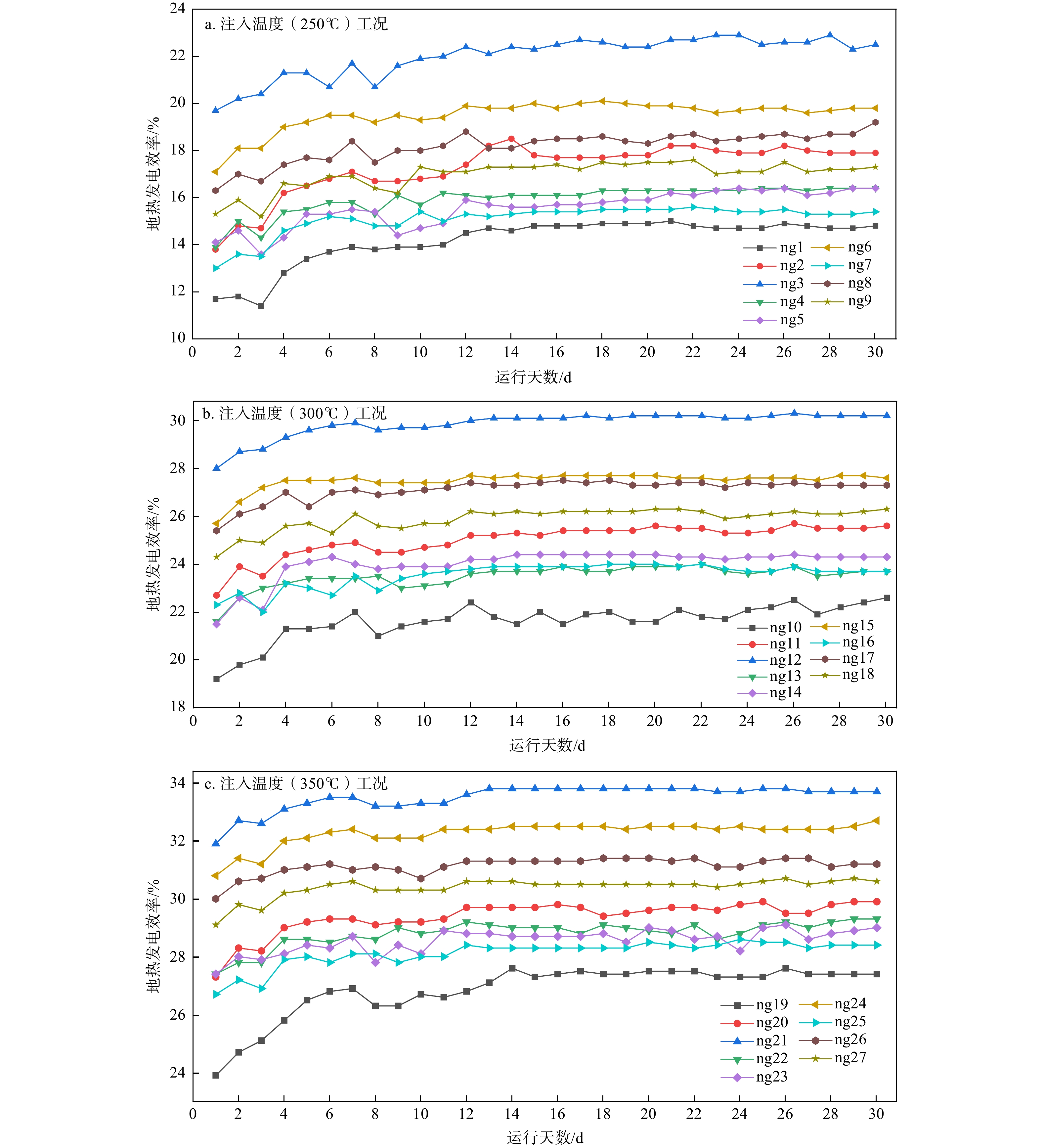
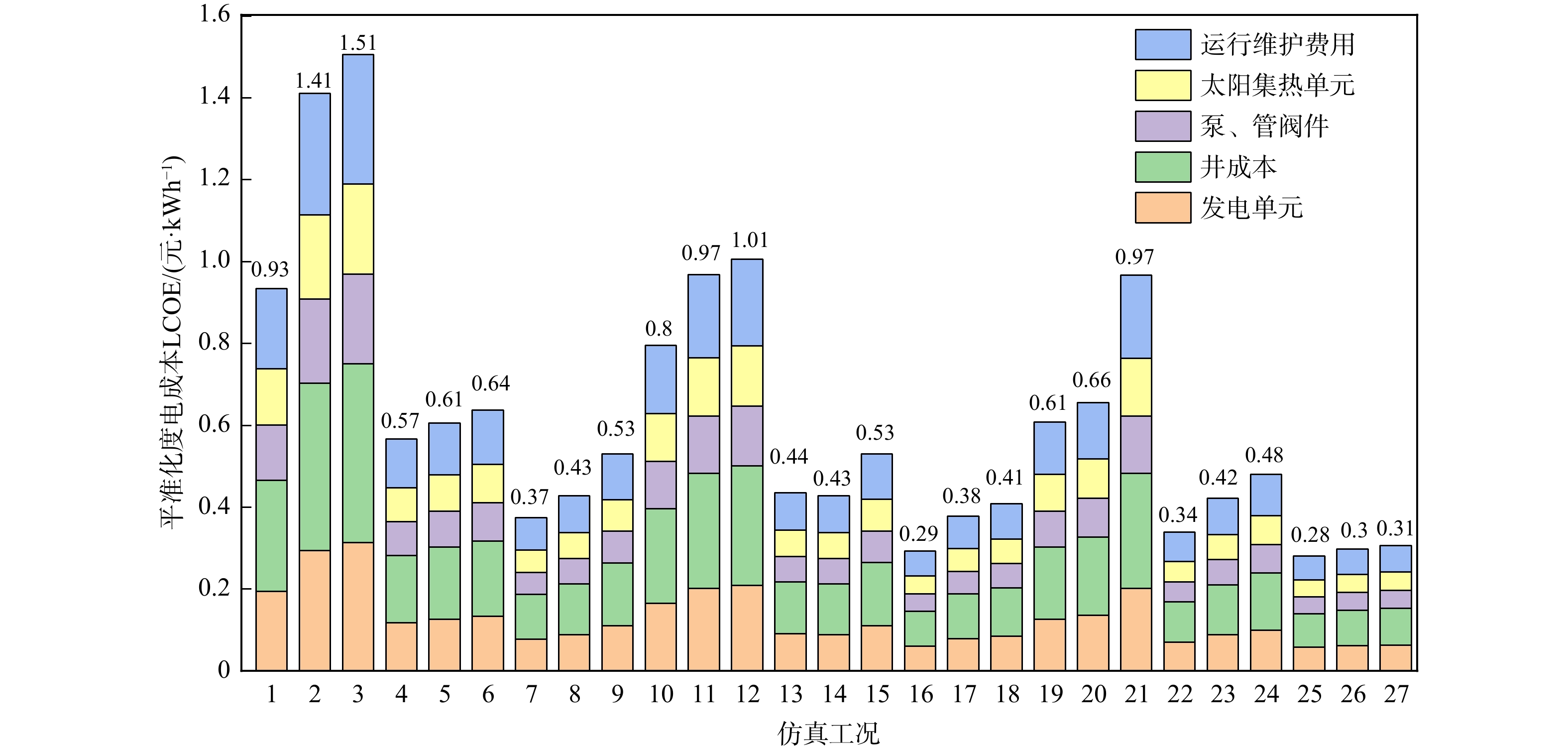
Based on the analysis of 27 sets of orthogonal experimental designs, the results indicated that under optimal operating conditions (e.g., injection temperature of 350 ℃ and injection flow rate of 100 m3/h), geothermal storage efficiency reached 93.6% and power generation efficiency reached 33.5%. Parameter sensitivity analysis revealed that injection temperature and injection flow rate were the primary controlling factors affecting system performance (with contribution rates of 78.3% and 14.0%, respectively). Under typical operating conditions, a reservoir thickness of approximately 100 meters balanced heat exchange efficiency and heat loss, achieving optimal overall system performance. Economic analysis indicated that in depleted oil and gas reservoir conversion scenarios, the investment payback period was reduced to less than 5 years, and the cumulative net profit of one well pair reached
This priori study provides a theoretical basis for parameter optimization and engineering applications of solar-geothermal coupled energy storage and power generation systems, offers important insights for promoting the development of long-duration renewable energy storage technologies.

| [1] |
RAIMI D, ZHU Y, NEWELL R G, et al. Global energy outlook 2023: Sowing the seeds of an energy transition[J]. Resources for the Future, 2023, 1(1): 1-44.
|
| [2] |
SHARAN P, KITZ K, WENDT D, et al. Using concentrating solar power to create a geological thermal energy reservoir for seasonal storage and flexible power plant operation[J]. Journal of Energy Resources Technology, 2021, 143: 010906. doi: 10.1115/1.4047970
|
| [3] |
徐琼辉, 龚宇烈, 骆超, 等. 太阳能−地热能联合发电系统研究进展[J]. 新能源进展, 2016, 4(5): 404-410.
XU Q H, GONG Y L, LUO C, et al. Research progress on hybrid solar-geothermal power generation[J]. Advances in New and Renewable Energy, 2016, 4(5): 404-410. (in Chinese with English abstract
|
| [4] |
MCTIGUE J D, ZHU G, AKINDIPE D, et al. Geological thermal energy storage using solar thermal and carnot batteries: Techno-economic analysis[R]. Golden, United States: National Renewable Energy Laboratory (NREL), 2023.
|
| [5] |
ALIBABA M, POURDARBANI R, MANESH M H K, et al. Thermodynamic, exergo-economic and exergo-environmental analysis of hybrid geothermal-solar power plant based on ORC cycle using emergy concept[J]. Heliyon, 2020, 6(4): e03758. doi: 10.1016/j.heliyon.2020.e03758
|
| [6] |
FLEUCHAUS P, GODSCHALK B, STOBER I, et al. Worldwide application of aquifer thermal energy storage: A review[J]. Renewable and Sustainable Energy Reviews, 2018, 94: 861-876. doi: 10.1016/j.rser.2018.06.057
|
| [7] |
MAALI R, KHIR T, ARICI M. Energy and exergy optimization of a combined solar/geothermal organic Rankine cycle power plant[J]. Journal of Central South University, 2023, 30(11): 3601-3616. doi: 10.1007/s11771-023-5328-2
|
| [8] |
陈浩, 张彦, 王鑫煜. 太阳能−地热复合供热系统设计优化与运行特性分析[J]. 节能, 2023, 42(6): 26-28.
CHEN H, ZHANG Y, WANG X Y. Design optimization and operation characteristics analysis of solar-geothermal composite heating system[J]. Energy Conservation, 2023, 42(6): 26-28. (in Chinese with English abstract
|
| [9] |
WENDT D S, HUANG H, ZHU G D, et al. Flexible geothermal power generation utilizing geologic thermal energy storage: Final seedling project report[R]. Idaho Falls, ID (United States): Idaho National Laboratory (INL), 2019.
|
| [10] |
DOBOS A, NEISES T, WAGNER M. Advances in CSP simulation technology in the system advisor model[J]. Energy Procedia, 2014, 49: 2482-2489. doi: 10.1016/j.egypro.2014.03.263
|
| [11] |
USLU G. Modeling and thermo-economic analysis of a photovoltaic-battery grid hybrid energy system: A case study in yenikale geothermal heat center[D]. Izmir, Turkey: Izmir Institute of Technology , 2023.
|
| [12] |
段云星, 杨浩. 增强型地热系统采热性能影响因素分析[J]. 吉林大学学报(地球科学版), 2020, 50(4): 1161-1172. doi: 10.13278/j.cnki.jjuese.20190041
DUAN Y X, YANG H. Analysis of influencing factors on heat extraction performance of enhanced geothermal system[J]. Journal of Jilin University (Earth Science Edition), 2020, 50(4): 1161-1172. (in Chinese with English abstract doi: 10.13278/j.cnki.jjuese.20190041
|
| [13] |
代钊恺, 杨现禹, 解经宇, 等. 纳米流体地热循环换热实验研究[J]. 地质科技通报, 2024, 43(3): 48-58.
DAI Z K, YANG X Y, XIE J Y, et al. Experimental study of recirculating heat transfer in geothermal wells with nanofluids[J]. Bulletin of Geological Science and Technology, 2024, 43(3): 48-58. (in Chinese with English abstract
|
| [14] |
高海涛, 明智源, 赵丹. 储热技术研究展望[J]. 能源与环保, 2024, 46(8): 134-139. doi: 10.19912/j.0254-0096.tynxb.2024-0506
GAO H T, MING Z Y, ZHAO D. Research prospect of heat storage technology[J]. China Energy and Environmental Protection, 2024, 46(8): 134-139. (in Chinese with English abstract doi: 10.19912/j.0254-0096.tynxb.2024-0506
|
| [15] |
周治, 张思远, 杨根本, 等. 塔式太阳能热发电站不同镜场布置方法分项效率研究[J]. 太阳能学报, 2025, 46(8): 531-536. doi: 10.19912/j.0254-0096.tynxb.2024-0631
ZHOU Z, ZHANG S Y, YANG G B, et al. Sub-item efficiency research on layout methods of different heliostat field for solar thermal power tower stations[J]. Acta Energiae Solaris Sinica, 2025, 46(8): 531-536. (in Chinese with English abstract doi: 10.19912/j.0254-0096.tynxb.2024-0631
|
| [16] |
NAIK N C K, PRIYA R K, AĞBULUT Ü, et al. Experimental and numerical analysis of the thermal performance of pebble solar thermal collector[J]. Heliyon, 2024, 10(2): e24218. doi: 10.1016/j.heliyon.2024.e24218
|
| [17] |
WU M, LIU Z B, QIN Y, et al. Thermal property of reservoir rocks at thermal: Mechanical coupled conditions and resultant impact on performance of geothermal systems[J]. Rock Mechanics and Rock Engineering, 2025, 58(8): 8773-8798. doi: 10.1007/s00603-025-04587-5
|
| [18] |
刘先录, 胡光明, 肖红平, 等. 松辽盆地重点油区水热型砂岩地热储层评价[J]. 地质科技通报, 2025, 44(4): 185-200. doi: 10.19509/j.cnki.dzkq.tb20240530
LIU X L, HU G M, XIAO H P, et al. Hydrothermal sandstone geothermal-reservoir evaluation of the key oilproducing area in the Songliao Basin[J]. Bulletin of Geological Science and Technology, 2025, 44(4): 185-200. (in Chinese with English abstract doi: 10.19509/j.cnki.dzkq.tb20240530
|
| [19] |
SUN L, TANG X H, ABOAYANAH K R, et al. Coupled hydro-mechanical two-phase flow model in fractured porous medium with the combined finite-discrete element method[J]. Engineering with Computers, 2024, 40(4): 2513-2535. doi: 10.1007/s00366-023-01932-6
|
| [20] |
BEAR J. Dynamics of fluids in porous media[M]. New York: American Elsevier, 1972.
|
| [21] |
SONG X Z, SHI Y, LI G S, et al. Numerical simulation of heat extraction performance in enhanced geothermal system with multilateral wells[J]. Applied Energy, 2018, 218: 325-337. doi: 10.1016/j.apenergy.2018.02.172
|
| [22] |
王天堃, 刘天野, 乔加飞, 等. 超临界二氧化碳混合工质布雷顿循环研究进展[J]. 发电技术, 2025, 46(3): 617-626. doi: 10.12096/j.2096-4528.pgt.23170
WANG T K, LIU T Y, QIAO J F, et al. Research progress on supercritical CO2-based mixture brayton cycle[J]. Power Generation Technology, 2025, 46(3): 617-626. (in Chinese with English abstract doi: 10.12096/j.2096-4528.pgt.23170
|
| [23] |
李太禄, 李学龙, 谢迎春, 等. 有机朗肯−单级闪蒸循环发电性能优化研究[J]. 可再生能源, 2022, 40(6): 773-780.
LI T L, LI X L, XIE Y C, et al. Optimization study on the power generation performance of organic rankine single-stage flash cycle[J]. Renewable Energy Resources, 2022, 40(6): 773-780. (in Chinese with English abstract
|
| [24] |
肖鑫, 杨耿, 王云峰. 基于TRNSYS的太阳能梯级蓄热热泵系统模拟[J]. 化工学报, 2025, 76(增刊1): 393-400. doi: 10.11949/0438-1157.20241197
XIAO X, YANG G, WANG Y F. Simulation of solar heat pump system integration of cascade latent heat thermal energy storage based on TRNSYS[J]. CIESC Journal, 2025, 76(S1): 393-400. (in Chinese with English abstract doi: 10.11949/0438-1157.20241197
|
| [25] |
蒋红斌, 张凯, 杨永安, 等. 正交实验在环境监测和分析中的研究进展[J]. 四川环境, 2016, 35(2): 149-152.
JIANG H B, ZHANG K, YANG Y A, et al. Application progress of orthogonal test in environmental monitoring and analysis[J]. Sichuan Environment, 2016, 35(2): 149-152. (in Chinese with English abstract
|
| [26] |
YU L K, WU X T, HASSAN N M S, et al. Modified zipper fracturing in enhanced geothermal system reservoir and heat extraction optimization via orthogonal design[J]. Renewable Energy, 2020, 161: 373-385. doi: 10.1016/j.renene.2020.06.143
|
| [27] |
GUPTA H K, ROY S. Geothermal energy: An alternative resource for the 21st century[EB/OL]. Amsterdam: Elsevier, 2006[2025-12-30]. https://doi.org/10.1016/S1279-6459(06)00001-X.
GUPTA H K, ROY S. Geothermal energy: An alternative resource for the 21st century[EB/OL]. Amsterdam: Elsevier, 2006[2025-12-30]. https://doi.org/10.1016/S1279-6459(06)00001-X.
|
| [28] |
孔彦龙, 庞忠和, 邵亥冰, 等. 面向成本的中深层地热储群井采灌优化布局研究[J]. 科技促进发展, 2020, 16(3): 316-322. doi: 10.11842/chips.20200510005
KONG Y L, PANG Z H, SHAO H B, et al. Cost-oriented optimization on the multi-well layout for geothermal production and reinjection[J]. Science & Technology for Development, 2020, 16(3): 316-322. (in Chinese with English abstract doi: 10.11842/chips.20200510005
|
| [29] |
王轲, 刘明亮, 师红杰, 等. 西藏卡吾地热水地球化学特征及其成因机制[J]. 地质科技通报, 2025, 44(4): 142-153. doi: 10.19509/j.cnki.dzkq.tb20240477
WANG K, LIU M L, SHI H J, et al. Geochemical characteristics and genesis mechanisms of Kawu geothermal water in Tibet[J]. Bulletin of Geological Science and Technology, 2025, 44(4): 142-153. (in Chinese with English abstract doi: 10.19509/j.cnki.dzkq.tb20240477
|
| [30] |
BUNDSCHUH J, ARRIAGA M C S. Introduction to the numerical modeling of groundwater and geothermal systems[M]. Boca Raton: CRC Press, 2010: 217-284.
|
| [31] |
MONTGOMERY D C. Design and analysis of experiments[M]. New York: Wiley, 1976.
|
| [32] |
ALDERSEY-WILLIAMS J, BROADBENT I D, STRACHAN P A. Better estimates of LCOE from audited accounts: A new methodology with examples from United Kingdom offshore wind and CCGT[J]. Energy Policy, 2019, 128(C): 25-35. doi: 10.1016/j.enpol.2018.12.044
|
| [33] |
刘亚从, 蔺峰, 芦啸, 等. 兰州大成敦煌熔盐线性菲涅尔式光热发电项目示范作用研究[J]. 发展, 2023(8): 40-44. doi: 10.3969/j.issn.1004-8863.2023.08.012
LIU Y C, LIN F, LU X, et al. Study on demonstration effect of Lanzhou Dacheng Dunhuang molten salt linear Fresnel solar thermal power generation project[J]. Developing, 2023(8): 40-44. (in Chinese with English abstract doi: 10.3969/j.issn.1004-8863.2023.08.012
|
| [34] |
SANTEN W V, BLOM M. ORC power plants for thermal energy harvesting: Aspects related to policy, finance and the job market[R]. Holland: CE Delft, 2023.
|
| [35] |
孔维臻, 余瑞祥, 陈宁. 基于净现值法的地热供暖项目投资分析[J]. 中国矿业, 2012, 21(9): 8-11. doi: 10.3969/j.issn.1004-4051.2012.09.003
KONG W Z, YU R X, CHEN N. Study on investment of geothermal heating project based on NPV[J]. China Mining Magazine, 2012, 21(9): 8-11. (in Chinese with English abstract doi: 10.3969/j.issn.1004-4051.2012.09.003
|
| [36] |
FLEUCHAUS P, SCHÜPPLER S, BLOEMENDAL M, et al. Risk analysis of high-temperature aquifer thermal energy storage (HT-ATES)[J]. Renewable and Sustainable Energy Reviews, 2020, 133: 110153. doi: 10.1016/j.rser.2020.110153
|
| [37] |
ZHANG K, JIANG S, CHEN Z X, et al. Geothermal development associated with enhanced hydrocarbon recovery and geological CO2 storage in oil and gas fields in Canada[J]. Energy Conversion and Management, 2023, 288: 117146. doi: 10.1016/j.enconman.2023.117146
|
| [38] |
HIGGINS B, PRATSON L, PATIÑO-ECHEVERRI D. Techno-economic assessment of repurposing oil & gas wells for enhanced geothermal systems: A New Mexico, USA feasibility study[J]. Energy Conversion and Management, 2024, 24: 100811. doi: 10.1016/j.ecmx.2024.100811
|
| [39] |
王沣浩, 蔡皖龙, 王铭, 等. 地热能供热技术研究现状及展望[J]. 制冷学报, 2021, 42(1): 14-22. doi: 10.3969/j.issn.0253-4339.2021.01.014
WANG F H, CAI W L, WANG M, et al. Current status and prospects of geothermal heating technology research[J]. Journal of Refrigeration, 2021, 42(1): 14-22. (in Chinese with English abstract doi: 10.3969/j.issn.0253-4339.2021.01.014
|
| [40] |
李根生, 黄中伟, 史怀忠, 等. 柔性钻具侧钻短半径双分支水平井成井−压裂关键技术[J]. 中国石油大学学报(自然科学版), 2025, 49(2): 16-27. doi: 10.3969/j.issn.1673-5005.2025.02.002
LI G S, HUANG Z W, SHI H Z, et al. Key technologies for well completion and fracturing of side-drilled short-radius dual-branch horizontal wells using flexible drilling tools[J]. Journal of China University of Petroleum (Edition of Natural Science), 2025, 49(2): 16-27. (in Chinese with English abstract doi: 10.3969/j.issn.1673-5005.2025.02.002
|
| [41] |
王延欣. 枯竭油气藏储集库储热供暖耦合CO2封存性能分析[J]. 地质科技通报, 2024, 43(3): 12-21. doi: 10.19509/j.cnki.dzkq.tb20230628
WANG Y X. Performance analysis of thermal energy storage for space heating and CO2 sequestration in depleted oil and gas reservoirs[J]. Bulletin of Geological Science and Technology, 2024, 43(3): 12-21. (in Chinese with English abstract doi: 10.19509/j.cnki.dzkq.tb20230628
|
| [42] |
AGENCY I E. Global hydrogen review 2021[R]. Paris: OECD Publishing, 2021.
|
| [43] |
HERRMANN M, FLEUCHAUS P, GODSCHALK B, et al. Capital costs of aquifer thermal energy storage (ATES): A review[J]. Renewable and Sustainable Energy Reviews, 2026, 226(PA): 116-202.
|
| [44] |
李娜娜, 陶诚, 孔彦龙, 等. 全球地热发电现状与研究进展[J]. 热力发电, 2024, 53(6): 1-11. doi: 10.19666/j.rlfd.202402020
LI N N, TAO C, KONG Y L, et al. Status and research progress of geothermal power generation development and utilization[J]. Thermal Power Generation, 2024, 53(6): 1-11. (in Chinese with English abstract doi: 10.19666/j.rlfd.202402020
|
| [45] |
张超, 胡圣标, 黄荣华, 等. 干热岩地热资源热源机制研究现状及其对成因机制研究的启示[J]. 地球物理学进展, 2022, 37(5): 1907-1919. doi: 10.6038/pg2022FF0441
ZHANG C, HU S B, HUANG R H, et al. Research status of heat source mechanism of the hot dry rock geothermal resources and its implications to the studies of genetic mechanism[J]. Progress in Geophysics, 2022, 37(5): 1907-1919. (in Chinese with English abstract doi: 10.6038/pg2022FF0441
|
| [46] |
崔俊艳, 李胜涛, 姚亚辉, 等. 土耳其地热能产业发展对中国的启示[J]. 中国地质, 2023, 50(5): 1375-1386. doi: 10.12029/gc20221019002
CUI J Y, LI S T, YAO Y H, et al. Insights for China from the development of Turkey's geothermal energy industry[J]. Geology in China, 2023, 50(5): 1375-1386. (in Chinese with English abstract doi: 10.12029/gc20221019002
|
| [47] |
蒋恕, 张凯, 杜凤双, 等. 二氧化碳地质封存及提高油气和地热采收率技术进展与展望[J]. 地球科学, 2023, 48(7): 2733-2749. doi: 10.3799/dqkx.2023.084
JIANG S, ZHANG K, DU F S, et al. Progress and prospects of CO2 storage and enhanced oil, gas and geothermal recovery[J]. Earth Science, 2023, 48(7): 2733-2749. (in Chinese with English abstract doi: 10.3799/dqkx.2023.084
|
Supported by:
Beijing Renhe Information Technology Co., Ltd.


 Submission System


 DownLoad: