| Citation: | ZHOU Junpeng,QIN Chaojie,YANG Xiuwen,et al. Distribution, sources, and transport characteristics of polycyclic aromatic hydrocarbons from a typical shale gas site in Fuling, Chongqing, China[J]. Bulletin of Geological Science and Technology,2026,45(6):1-10 doi: 10.19509/j.cnki.dzkq.tb20250398

|
Polycyclic aromatic hydrocarbons (PAHs) may be produced during the processes of shale gas exploitation, which may threaten both the environment and human health. The largest shale gas exploitation area in China is located in the Fuling karst region of Chongqing, and the produced PAHs may affect the karst groundwater system.
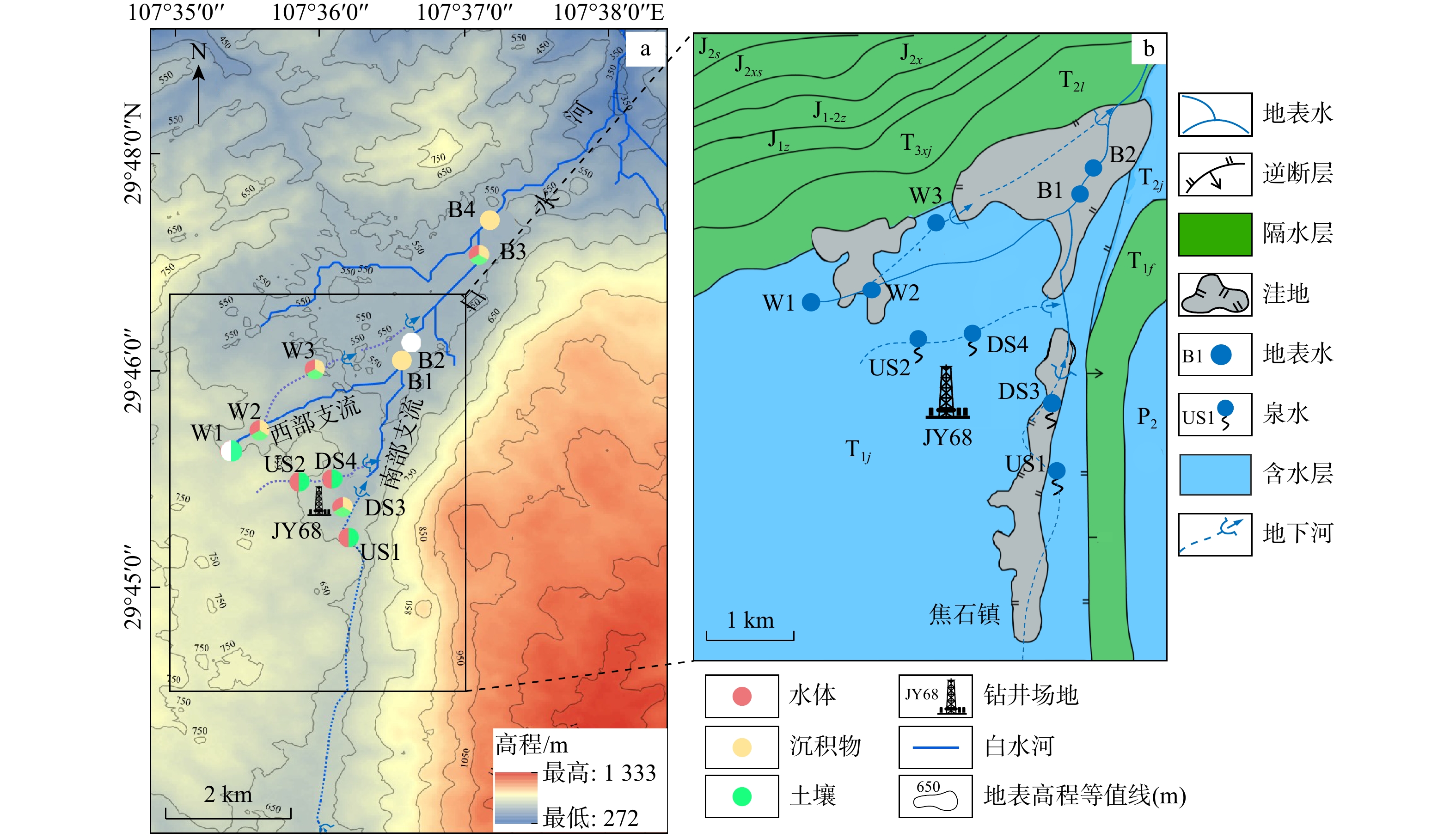
To explore the transport processes of PAHs in karst groundwater systems within shale gas exploitation areas, a typical exploitation site from the shale gas exploitation area in Fuling was selected as the study area. The concentrations, spatial distribution, and compositional characteristics of PAHs in soils, spring water, surface water, and corresponding sediments were analyzed. Additionally, their potential sources were identified.
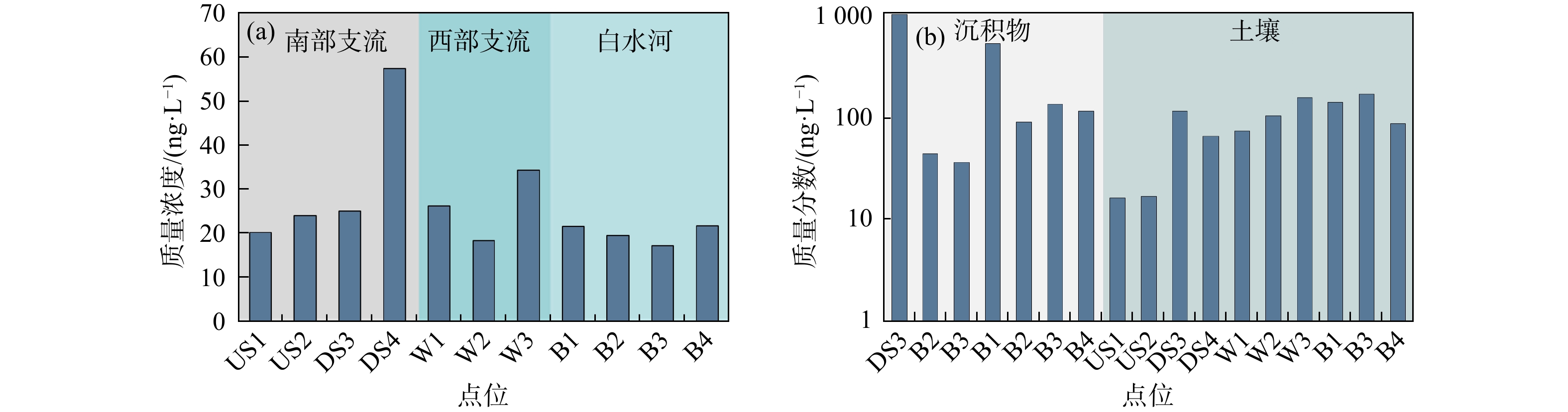
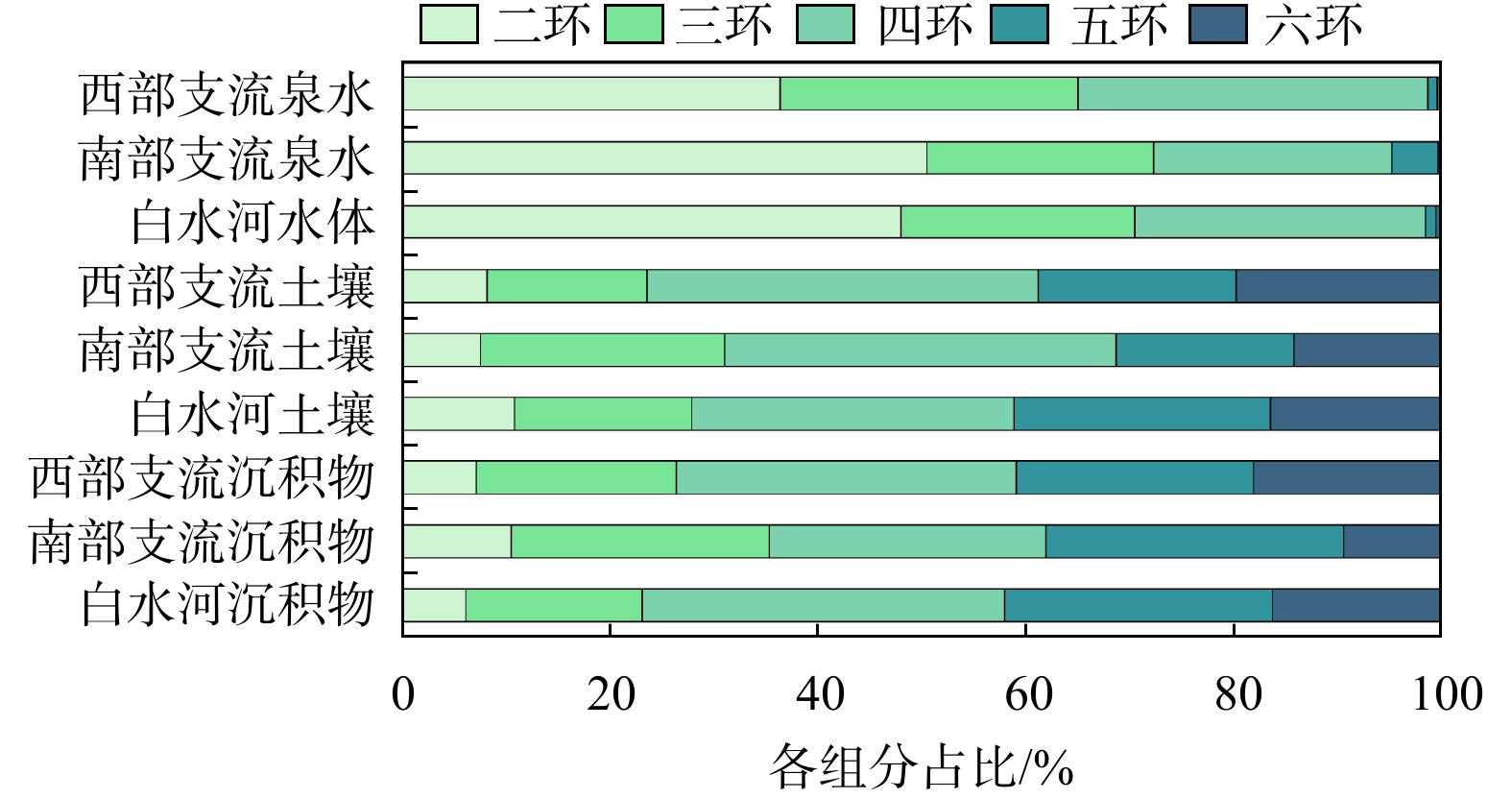
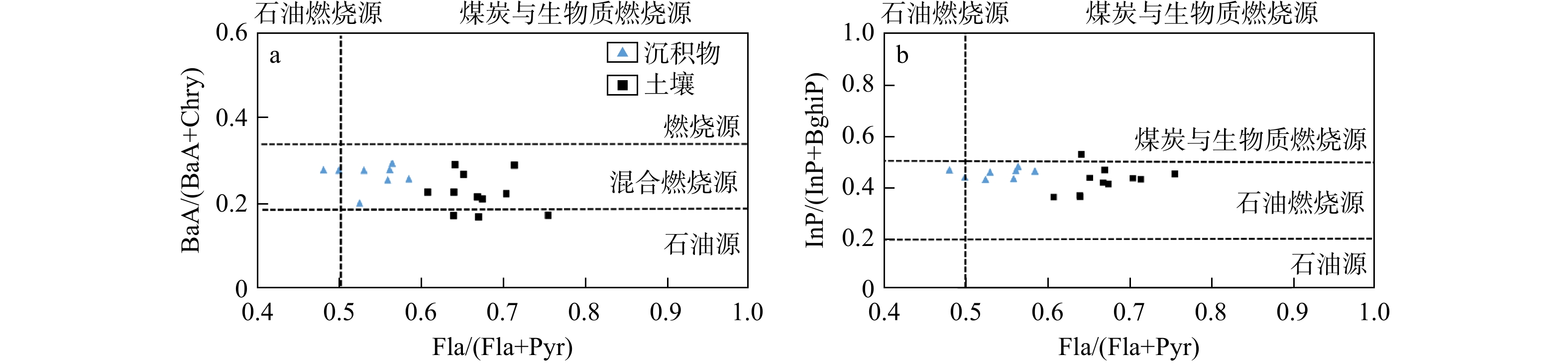
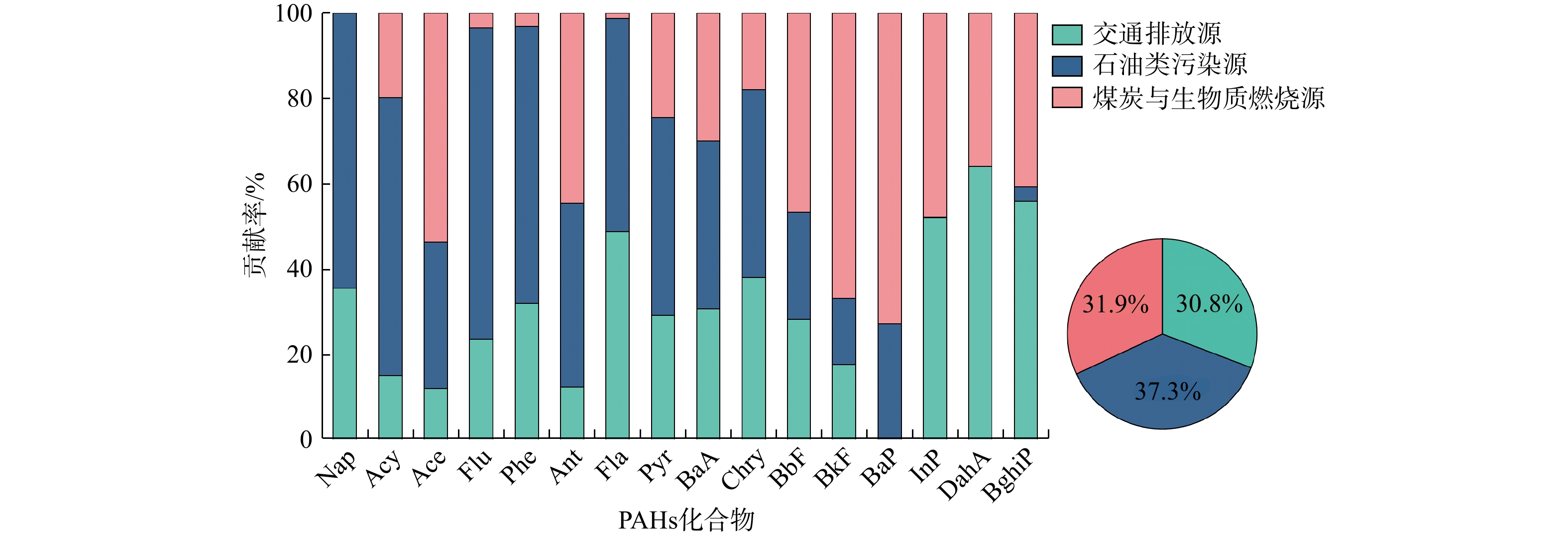
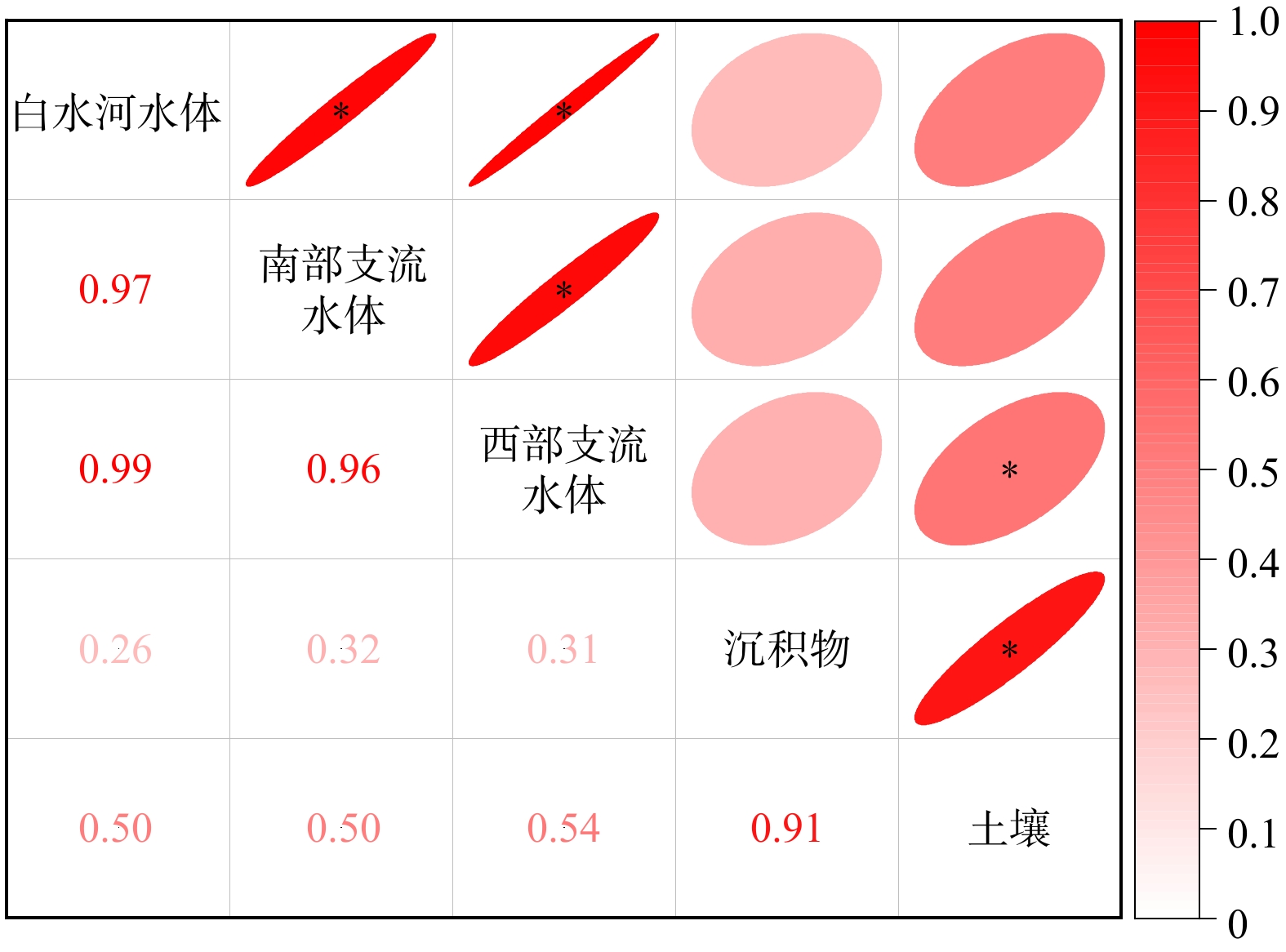
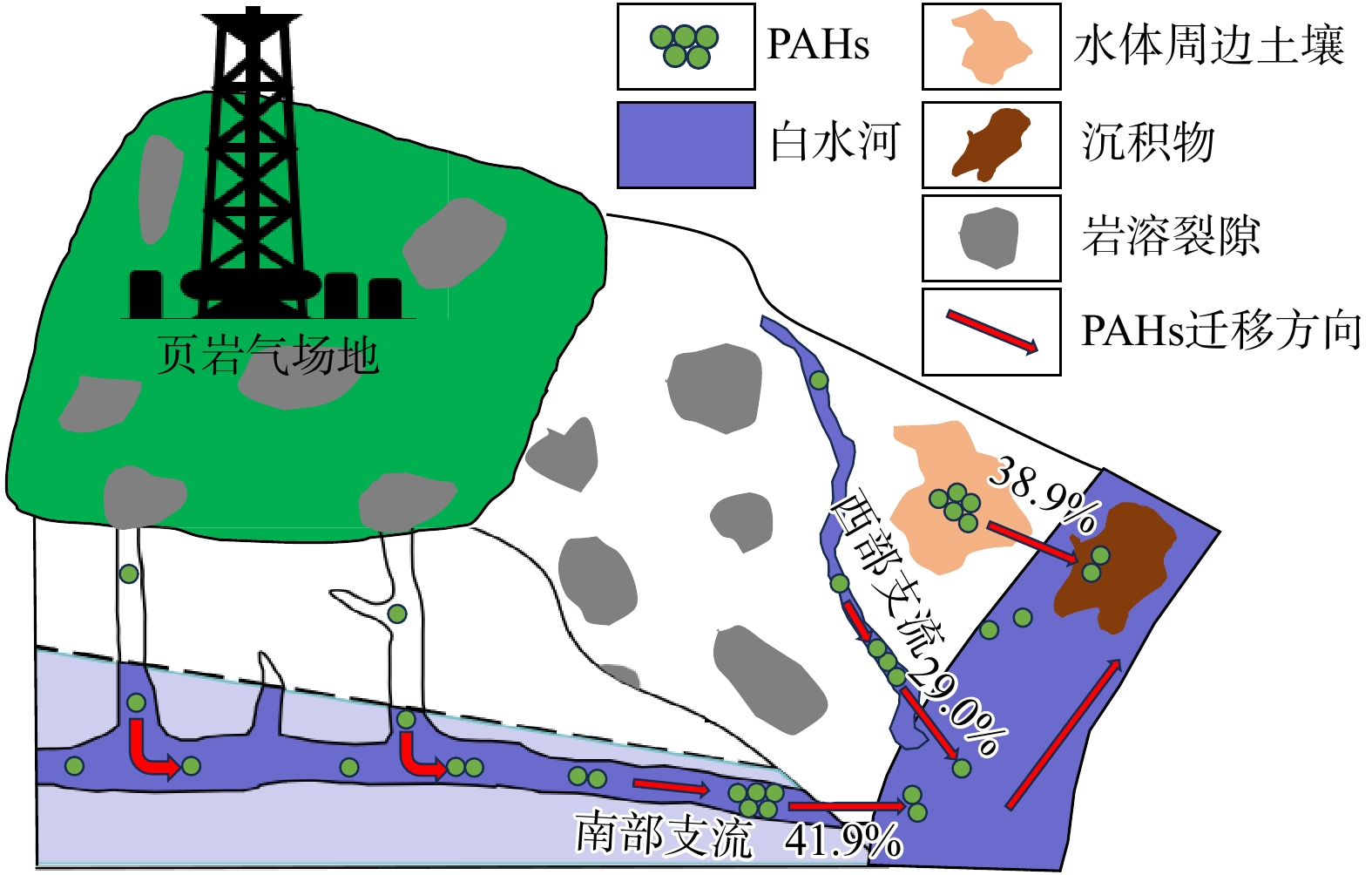
The results showed that the total concentrations of 16 priority PAHs (Σ16PAHs) in the water, soils, and sediments ranged from 17.3 to 57.4 ng/L, from 16.1 to 162 ng/g, and from 35.3 to 962 ng/g, respectively. The concentration ranges of Σ16PAHs in spring water from the southern tributary and western tributary of the Baishui River were 20.3-57.4 ng/L and 18.4-34.4 ng/L, respectively. The operation of the shale gas site may have increased the concentrations of PAHs in the spring water of the southern tributary, but the affected range was limited and the site did not have an obvious influence on the water further downstream in the Baishui River. Compositional analysis showed that low-molecular-weight PAHs (LMW-PAHs) accounted for 59%-82% of PAHs in water and 15%-42% of PAHs in sediments and soils. The source analysis results showed that the largest contributors to PAHs in the study area were petrogenic and petroleum combustion sources (37.3%), followed by coal and biomass combustion (31.9%), and traffic emission (30.8%). Multiple linear regression (MLR) analysis revealed that spring water from the southern tributary (
This study provides a system-scale characterization of PAH occurrence, source signatures, and multi-media transport processes in a karst aquifer system affected by shale gas exploitation. The findings advance understanding of contaminant migration in structurally complex karst aquifers and highlight the critical role of groundwater–surface water interactions in regulating downstream water quality. The results deliver a scientific basis for groundwater pollution prevention, risk management, and sustainable resource protection in shale gas-producing karst regions.

| [1] |
李磊, 张晓光, 王成彪, 等. 我国页岩气压裂开采与环境保护现状[J]. 油气田环境保护, 2016, 26(1): 47-50. doi: 10.3969/j.issn.1005-3158.2016.01.014
LI L, ZHANG X G, WANG C B, et al. Status of shale gas fracturing technology and environment protection in China[J]. Environmental Protection of Oil & Gas Fields, 2016, 26(1): 47-50. (in Chinese with English abstract) doi: 10.3969/j.issn.1005-3158.2016.01.014
|
| [2] |
卢培利, 邱哲, 张代钧, 等. 页岩气开采返排废水有机污染物研究进展与展望[J]. 化工进展, 2018, 37(3): 1161-1166. doi: 10.16085/j.issn.1000-6613.2017-1302
LU P L, QIU Z, ZHANG D J, et al. Research progress and prospect on the organic pollutants in flowback wastewater from shale gas extraction[J]. Chemical Industry and Engineering Progress, 2018, 37(3): 1161-1166. (in Chinese with English abstract) doi: 10.16085/j.issn.1000-6613.2017-1302
|
| [3] |
XIE B X, QIN J H, SUN H, et al. Leaching behavior of polycyclic aromatic hydrocarbons (PAHs) from oil-based residues of shale gas drill cuttings[J]. Environmental Pollution, 2021, 288: 117773. doi: 10.1016/j.envpol.2021.117773
|
| [4] |
吴娜, 聂志强, 李开环, 等. 页岩气开采钻井固体废物的污染特性[J]. 中国环境科学, 2019, 39(3): 1094-1100. doi: 10.3969/j.issn.1000-6923.2019.03.024
WU N, NIE Z Q, LI K H, et al. Pollution characteristics of solid waste in shale gas mining drilling[J]. China Environmental Science, 2019, 39(3): 1094-1100. (in Chinese with English abstract) doi: 10.3969/j.issn.1000-6923.2019.03.024
|
| [5] |
RECABARREN-VILLALÓN T, RONDA A C, OLIVA A L, et al. Seasonal distribution pattern and bioaccumulation of polycyclic aromatic hydrocarbons (PAHs) in four bioindicator coastal fishes of Argentina[J]. Environmental Pollution, 2021, 291: 118125. doi: 10.1016/j.envpol.2021.118125
|
| [6] |
QU C K, ALBANESE S, LIMA A, et al. The occurrence of OCPs, PCBs, and PAHs in the soil, air, and bulk deposition of the Naples metropolitan area, southern Italy: Implications for sources and environmental processes[J]. Environment International, 2019, 124: 89-97. doi: 10.1016/j.envint.2018.12.031
|
| [7] |
JENNINGS J. Karst landforms. American scientist[J]. 1983, 71(6): 578-586.
|
| [8] |
胡英, 祁士华. 岩溶地区持久性有机物的研究现状[J]. 安全与环境工程, 2012, 19(1): 9-14. doi: 10.3969/j.issn.1671-1556.2012.01.003
HU Y, QI S H. Research situation of the persistent organic pollutants in karst areas[J]. Safety and Environmental Engineering, 2012, 19(1): 9-14. (in Chinese with English abstract) doi: 10.3969/j.issn.1671-1556.2012.01.003
|
| [9] |
刘粤蛟, 赖富强, 徐浩, 等. 基于测井曲线深程度耦合的页岩岩相智能识别方法[J]. 地质科技通报, 2025, 44(1): 308-320. doi: 10.19509/j.cnki.dzkq.tb20230361
LIU Y J, LAI F Q, XU H, et al. Intelligent identification methods for shale lithology based on the coupling deeply of logging curves[J]. Bulletin of Geological Science and Technology, 2025, 44(1): 308-320. (in Chinese with English abstract) doi: 10.19509/j.cnki.dzkq.tb20230361
|
| [10] |
朱继良, 许模, 孙建平, 等. 重庆涪陵页岩气勘查开发区岩溶水文地质结构研究[J]. 中国岩溶, 2020, 39(1): 1-10. doi: 10.11932/karst2019y32
ZHU J L, XU M, SUN J P, et al. Karst hydrogeologic structures of the shale-gas exploration and exploitation area in Fuling, Chongqing[J]. Carsologica Sinica, 2020, 39(1): 1-10. (in Chinese with English abstract) doi: 10.11932/karst2019y32
|
| [11] |
CHEN W, ZHANG Z Q, ZHU Y, et al. Distribution, sources and transport of polycyclic aromatic hydrocarbons (PAHs) in karst spring systems from western Hubei, Central China[J]. Chemosphere, 2022, 300: 134502. doi: 10.1016/j.chemosphere.2022.134502
|
| [12] |
SUN Y C, ZHANG S Y, LAN J C, et al. Vertical migration from surface soils to groundwater and source appointment of polycyclic aromatic hydrocarbons in epikarst spring systems, Southwest China[J]. Chemosphere, 2019, 230: 616-627. doi: 10.1016/j.chemosphere.2019.05.007
|
| [13] |
SCHWARZ K, GOCHT T, GRATHWOHL P. Transport of polycyclic aromatic hydrocarbons in highly vulnerable karst systems[J]. Environmental Pollution, 2011, 159(1): 133-139. doi: 10.1016/j.envpol.2010.09.026
|
| [14] |
杜娴, 罗固源, 许晓毅. 长江重庆段沉积物中多环芳烃的分布及其来源[J]. 重庆大学学报(自然科学版), 2013(5): 80-85.
DU X, LUO G Y, XU X Y. Distribution and origin of polycyclic aromatic hydrocarbons in the sediments from Chongqing section of the Yangtze River[J]. Journal of Chongqing University, 2013(5): 80-85. (in Chinese with English abstract)
|
| [15] |
邹家素, 孙静, 张晓岭, 等. 长江嘉陵江重庆段多环芳烃的分布特征和来源辨析[J]. 环境化学, 2017, 36(6): 1369-1376. doi: 10.7524/j.issn.0254-6108.2017.06.2016092102
ZOU J S, SUN J, ZHANG X L, et al. Distribution characteristics and sources of polycyclic aromatic hydrocarbons (PAHs) from Yangtze and Jialing River in Chongqing[J]. Environmental Chemistry, 2017, 36(6): 1369-1376. (in Chinese with English abstract) doi: 10.7524/j.issn.0254-6108.2017.06.2016092102
|
| [16] |
蓝家程, 孙玉川, 师阳, 等. 岩溶地下河表层沉积物多环芳烃的污染及生态风险研究[J]. 环境科学, 2015, 36(3): 855-861. doi: 10.13227/j.hjkx.2015.03.014
LAN J C, SUN Y C, SHI Y, et al. Contamination and ecological risk assessment of polycyclic aromatic hydrocarbons in surface sediment in karst underground river[J]. Environmental Science, 2015, 36(3): 855-861. (in Chinese with English abstract) doi: 10.13227/j.hjkx.2015.03.014
|
| [17] |
XIONG J W, FAN X, YANG X W, et al. Polycyclic aromatic hydrocarbons (PAHs) in soils from a shale gas exploitation area in China: Quantitative sources and risk analysis using an improved hybrid model[J]. Journal of Hazardous Materials, 2025, 499: 140263. doi: 10.1016/j.jhazmat.2025.140263
|
| [18] |
孔露露, 史明静, 梁晶晶, 等. 大港油田土壤中PAHs的组成特征及来源分析[J]. 环境科学与技术, 2018(5): 151-157. doi: 10.19672/j.cnki.1003-6504.2018.05.027
KONG L L, SHI M J, LIANG J J, et al. Concentration and origin of polycyclic aromatic hydrocarbons in the soil of dagang oil field[J]. Environmental Science & Technology, 2018(5): 151-157. (in Chinese with English abstract) doi: 10.19672/j.cnki.1003-6504.2018.05.027
|
| [19] |
MALISZEWSKA-KORDYBACH B, KLIMKOWICZ-PAWLAS A, SMRECZAK B, et al. Ecotoxic effect of phenanthrene on nitrifying bacteria in soils of different properties[J]. Journal of Environmental Quality, 2007, 36(6): 1635-1645. doi: 10.2134/jeq2007.0118
|
| [20] |
LI C T, MI H H, LEE W J, et al. PAH emission from the industrial boilers[J]. Journal of Hazardous Materials, 1999, 69(1): 1-11.
|
| [21] |
高佳佳, 罗维. 洋河流域环境多介质中多环芳烃(PAHs)的长距离迁移潜力[J]. 农业环境科学学报, 2017, 36(8): 1601-1609. doi: 10.11654/jaes.2016-1673
GAO J J, LUO W. Analysis of long-range transport potential(LRTP)of polycyclic aromatic hydrocarbons(PAHs)in environ-ments of the Yanghe watershed[J]. Journal of Agro-Environment Science, 2017, 36(8): 1601-1609. (in Chinese with English abstract) doi: 10.11654/jaes.2016-1673
|
| [22] |
刘威杰, 邢新丽, 李小倩, 等. 有机污染场地挥发类有机污染物的优先控制清单[J]. 地质科技通报, 2026, 45(2): 249-261. doi: 10.19509/j.cnki.dzkq.tb20240613
LIU W J, XING X L, LI X Q, et al. Priority control list of volatile organic compounds at organic-contaminated sites[J]. Bulletin of Geological Science and Technology, 2026, 45(2): 249-261. (in Chinese with English abstract) doi: 10.19509/j.cnki.dzkq.tb20240613
|
| [23] |
张超, 秦超杰, 范希, 等. 重庆涪陵页岩气开采区麻溪河流域水和沉积物多环芳烃分布、来源及风险评价[J]. 环境科学学报, 2024, 44(4): 133-144. doi: 10.13671/j.hjkxxb.2023.0310
ZHANG C, QIN C J, FAN X, et al. Distribution, sources and risk assessment of polycyclic aromatic hydrocarbons(PAHs)in water and sediments from the Maxi River basin in Fuling shale gas field, Chongqing[J]. Acta Scientiae Circumstantiae, 2024, 44(4): 133-144. (in Chinese with English abstract) doi: 10.13671/j.hjkxxb.2023.0310
|
| [24] |
黄丹, 黄勇, 安永龙, 等. 北运河流域(北京段)表层土壤多环芳烃空间分布特征及来源解析[J]. 水文地质工程地质, 2023, 50(3): 159-171. doi: 10.16030/j.cnki.issn.1000-3665.202112022
HUANG D, HUANG Y, AN Y L, et al. Spatial distribution and sources of PAHs in topsoil in the Beiyun River basin(Beijing section)[J]. Hydrogeology and Engineering Geology, 2023, 50(3): 159-171. (in Chinese with English abstract) doi: 10.16030/j.cnki.issn.1000-3665.202112022
|
| [25] |
王喆, 李江, 卢丽. 岩溶地下河系统水环境中多环芳烃污染特征[J]. 环境科学与技术, 2021, 44(5): 186-193. doi: 10.19672/j.cnki.1003-6504.2021.05.025
WANG Z, LI J, LU L. Pollution characteristics of polycyclic aromatic hydrocarbons in water environment of karst underground river system[J]. Environmental Science & Technology, 2021, 44(5): 186-193. (in Chinese with English abstract) doi: 10.19672/j.cnki.1003-6504.2021.05.025
|
| [26] |
WALKER S E, DICKHUT R M. Sources of PAHs to sediments of the Elizabeth River, VA[J]. Soil and Sediment Contamination, 2001, 10(6): 611-632.
|
| [27] |
ROKHBAR M, KESHAVARZI B, MOORE F, et al. Occurrence and source of PAHs in Miankaleh international wetland in Iran[J]. Chemosphere, 2023, 321: 138140. doi: 10.1016/j.chemosphere.2023.138140
|
| [28] |
廖曼, 赵述华, 赵妍, 等. 深圳市土壤多环芳烃背景值及其源解析[J]. 土壤通报, 2024, 55(1): 222-230. doi: 10.19336/j.cnki.trtb.2022090705
LIAO M, ZHAO S H, ZHAO Y, et al. Soil background content and source analysis of PAHs in Shenzhen[J]. Chinese Journal of Soil Science, 2024, 55(1): 222-230. (in Chinese with English abstract) doi: 10.19336/j.cnki.trtb.2022090705
|
| [29] |
李大雁, 吴健, 王敏, 等. 高速路沿线土壤多环芳烃赋存特征及生态风险[J]. 环境科学与技术, 2022, 45(4): 209-217. doi: 10.19672/j.cnki.1003-6504.2589.21.338
LI D Y, WU J, WANG M, et al. Distribution characteristics and ecological risk of polycyclic aromatic hydrocarbons in surface soil of the expressways[J]. Environmental Science & Technology, 2022, 45(4): 209-217. (in Chinese with English abstract) doi: 10.19672/j.cnki.1003-6504.2589.21.338
|
| [30] |
LAN J C, SUN Y C, YUAN D X. Transport of polycyclic aromatic hydrocarbons in a highly vulnerable karst underground river system of Southwest China[J]. Environmental Science and Pollution Research, 2018, 25(34): 34519-34530. doi: 10.1007/s11356-018-3005-z
|
| [31] |
罗孝俊, 陈社军, 麦碧娴, 等. 珠江三角洲地区水体表层沉积物中多环芳烃的来源、迁移及生态风险评价[J]. 生态毒理学报, 2006, 1(1): 17-24. doi: 10.3969/j.issn.1673-5897.2006.01.003
LUO X J, CHEN S J, MAI B X, et al. Source, transport and risk assessment of PAHs in surface sediments from Pearl River delta[J]. Asian Journal of Ecotoxicology, 2006, 1(1): 17-24. (in Chinese with English abstract) doi: 10.3969/j.issn.1673-5897.2006.01.003
|
| [32] |
王思琪, 潘毅, 万军伟, 等. 基于TOPMODEL和MODFLOW-CFP模型的管道型岩溶水系统数值模拟[J]. 地质科技通报, 2026, 45(1): 258-271. doi: 10.19509/j.cnki.dzkq.tb20240101
WANG S Q, PAN Y, WAN J W, et al. Numerical simulation of conduit-type karst groundwater system based on TOPMODEL and MODFLOW-CFP[J]. Bulletin of Geological Science and Technology, 2026, 45(1): 258-271. (in Chinese with English abstract) doi: 10.19509/j.cnki.dzkq.tb20240101
|
| [33] |
KAČAROĞLU F. Review of groundwater pollution and protection in karst areas[J]. Water, Air, and Soil Pollution, 1999, 113(1): 337-356.
|
| [34] |
BUTKOVSKYI A, BRUNING H, KOOLS S A E, et al. Organic pollutants in shale gas flowback and produced waters: Identification, potential ecological impact, and implications for treatment strategies[J]. Environmental Science & Technology, 2017, 51(9): 4740-4754. doi: 10.1021/acs.est.6b05640
|
| [35] |
李湘涛, 石文睿, 郭美瑜, 等. 涪陵页岩气田焦石坝区海相页岩气层特征研究[J]. 石油天然气学报, 2014, 36(11): 11-15. doi: 10.3969/j.issn.1000-9752.2014.11.004
LI X T, SHI W R, GUO M Y, et al. Characteristics of marine shale gas reservoirs in Jiaoshiba area of Fuling Shale gas field[J]. Journal of Oil and Gas Technology, 2014, 36(11): 11-15. (in Chinese with English abstract) doi: 10.3969/j.issn.1000-9752.2014.11.004
|
| [36] |
吴青芸, 郑猛, 胡云霞. 页岩气开采的水污染问题及其综合治理技术[J]. 科技导报, 2014, 32(13): 74-83.
WU Q Y, ZHENG M, HU Y X. Shale gas produced water contamination and its comprehensive treatment[J]. Science & Technology Review, 2014, 32(13): 74-83. (in Chinese with English abstract)
|
| [37] |
ZHAO Z H, GONG X H, ZHANG L, et al. Riverine transport and water-sediment exchange of polycyclic aromatic hydrocarbons (PAHs) along the middle-lower Yangtze River, China[J]. Journal of Hazardous Materials, 2021, 403: 123973. doi: 10.1016/j.jhazmat.2020.123973
|
| [38] |
杨秀雯, 魏志莹, 易佳佩, 等. 湖北秭归鱼泉洞泉域系统中六六六(HCHs)和滴滴涕(DDTs)的分布、来源与迁移[J]. 地质科技通报, 2024, 43(3): 311-322. doi: 10.19509/j.cnki.dzkq.tb20230466
YANG X W, WEI Z Y, YI J P, et al. Distribution, sources and transport of HCHs and DDTs in the Yuquandong spring system from Zigui County, Hubei Province[J]. Bulletin of Geological Science and Technology, 2024, 43(3): 311-322. (in Chinese with English abstract) doi: 10.19509/j.cnki.dzkq.tb20230466
|
| [39] |
孙玉川. 有机氯农药和多环芳烃在表层岩溶系统中的迁移、转化特征研究[D]. 重庆: 西南大学, 2012.
SUN Y C. Study on migration and transformation characteristics of OCPs and PAHs in epikarst system[D]. Chongqing: Southwest University, 2012. (in Chinese with English abstract)
|
| [40] |
蓝家程, 孙玉川, 姜勇祥, 等. 岩溶环境对多环芳烃迁移转化的影响[J]. 环境监测管理与技术, 2020, 32(1): 8-12. doi: 10.3969/j.issn.1006-2009.2020.01.003
LAN J C, SUN Y C, JIANG Y X, et al. Effect of karst environment on migration and transformation of polycyclic aromatic hydrocarbons[J]. The Administration and Technique of Environmental Monitoring, 2020, 32(1): 8-12. (in Chinese with English abstract) doi: 10.3969/j.issn.1006-2009.2020.01.003
|
| [41] |
JIA T Q, GUO W, XING Y, et al. Spatial distributions and sources of PAHs in soil in chemical industry parks in the Yangtze River delta, China[J]. Environmental Pollution, 2021, 283: 117121. doi: 10.1016/j.envpol.2021.117121
|
| [42] |
LARSEN R K, BAKER J E. Source apportionment of polycyclic aromatic hydrocarbons in the urban atmosphere: A comparison of three methods[J]. Environmental Science & Technology, 2003, 37(9): 1873-1881. doi: 10.1021/es0206184
|
Supported by:
Beijing Renhe Information Technology Co., Ltd.


 Submission System


 DownLoad: