| Citation: | MA Yonggang,LI Lianglong,LI Yingpeng,et al. Susceptibility assessment of thermal thawing geohazards in Haibei Prefecture based on Kruskal-Wallis test and dimensionality reduction-based indicator optimization[J]. Bulletin of Geological Science and Technology,2026,45(4):1-19 doi: 10.19509/j.cnki.dzkq.tb20250338

|
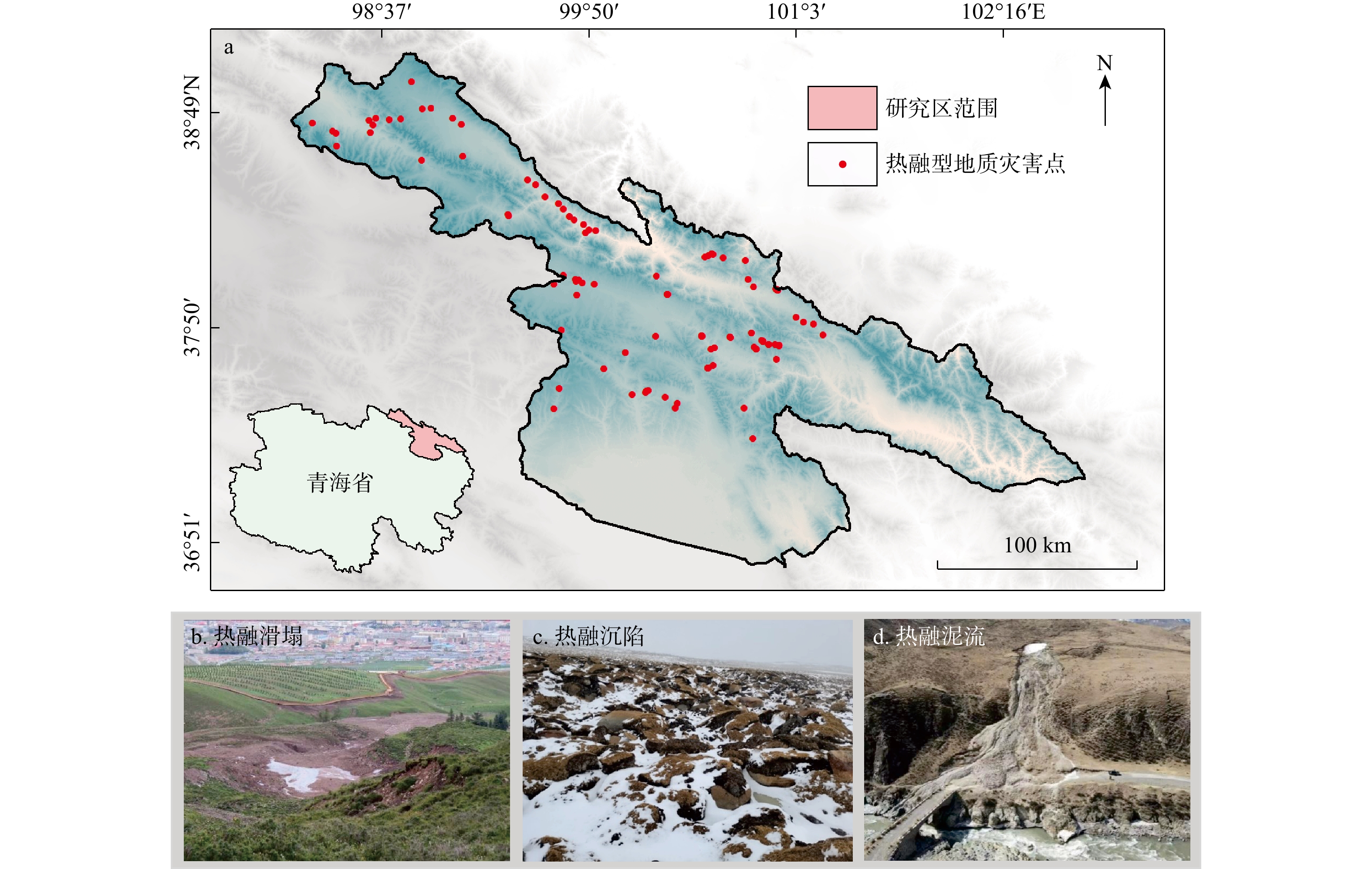
Haibei Tibetan Autonomous Prefecture is located in the central part of the Qilian Mountains with widespread permafrost coverage. Accelerated global warming has aggravated permafrost degradation and triggered frequent thermal thawing geohazards, which severely threaten local residents' lives and property safety. To address two key scientific bottlenecks: Ambiguous dominant hazard-controlling factors and valid information loss induced by the conventional direct elimination of redundant conditioning factors, this study carries out susceptibility assessment to provide technical support for regional sustainable infrastructure construction and geohazard early warning.
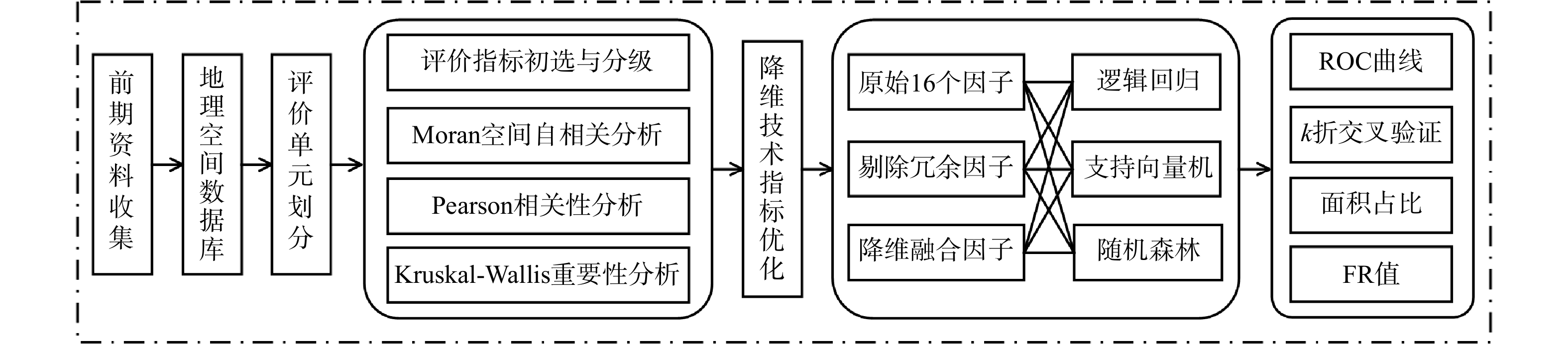
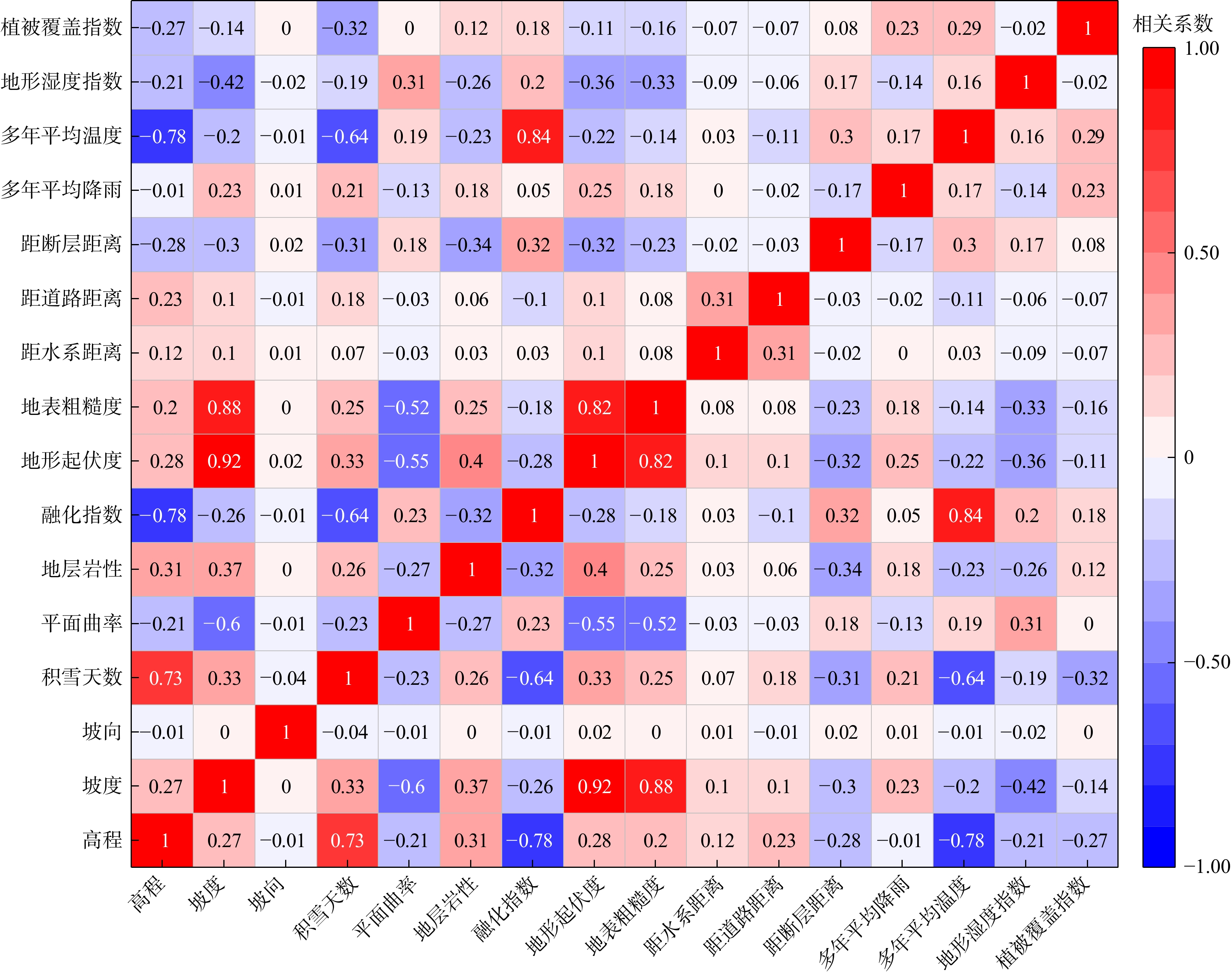
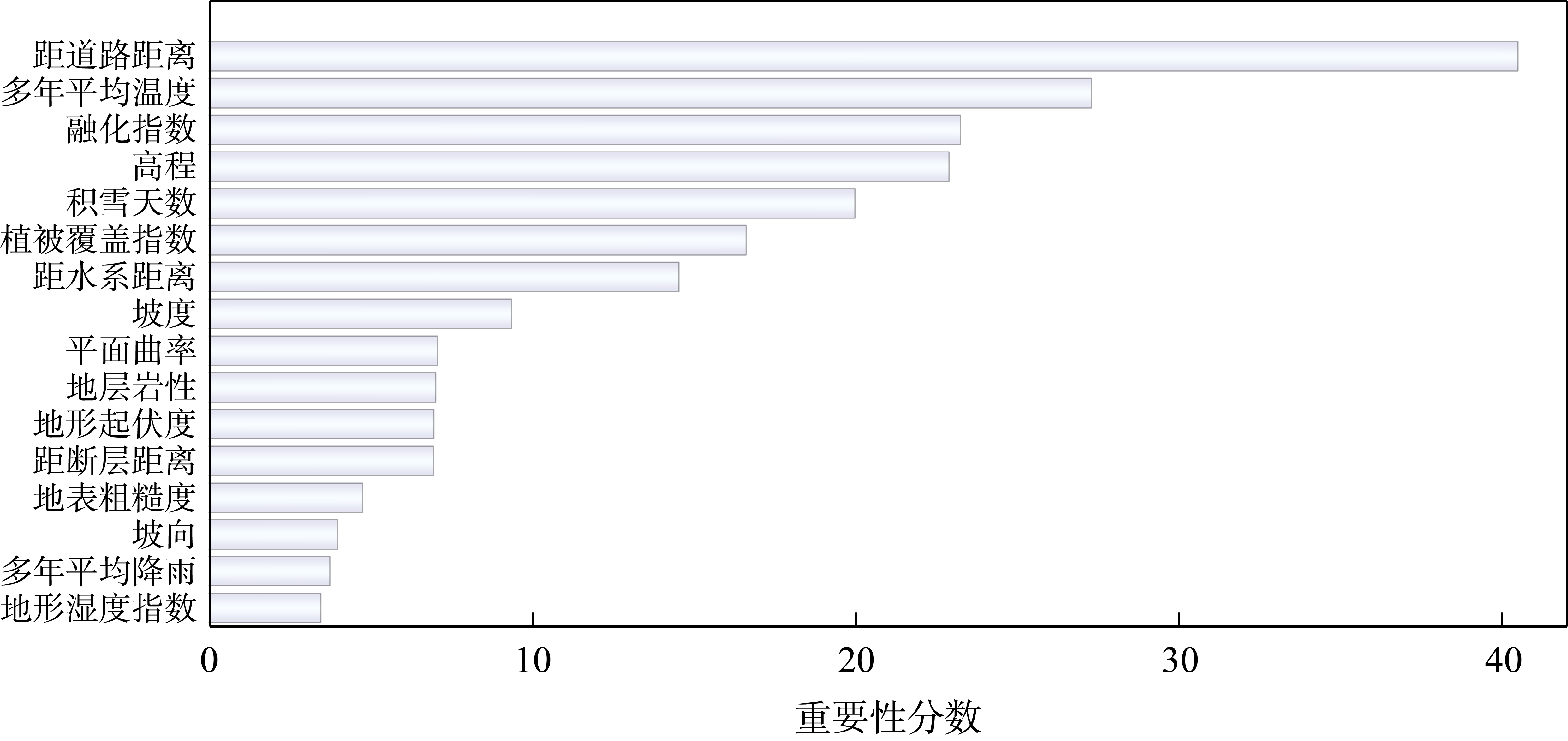
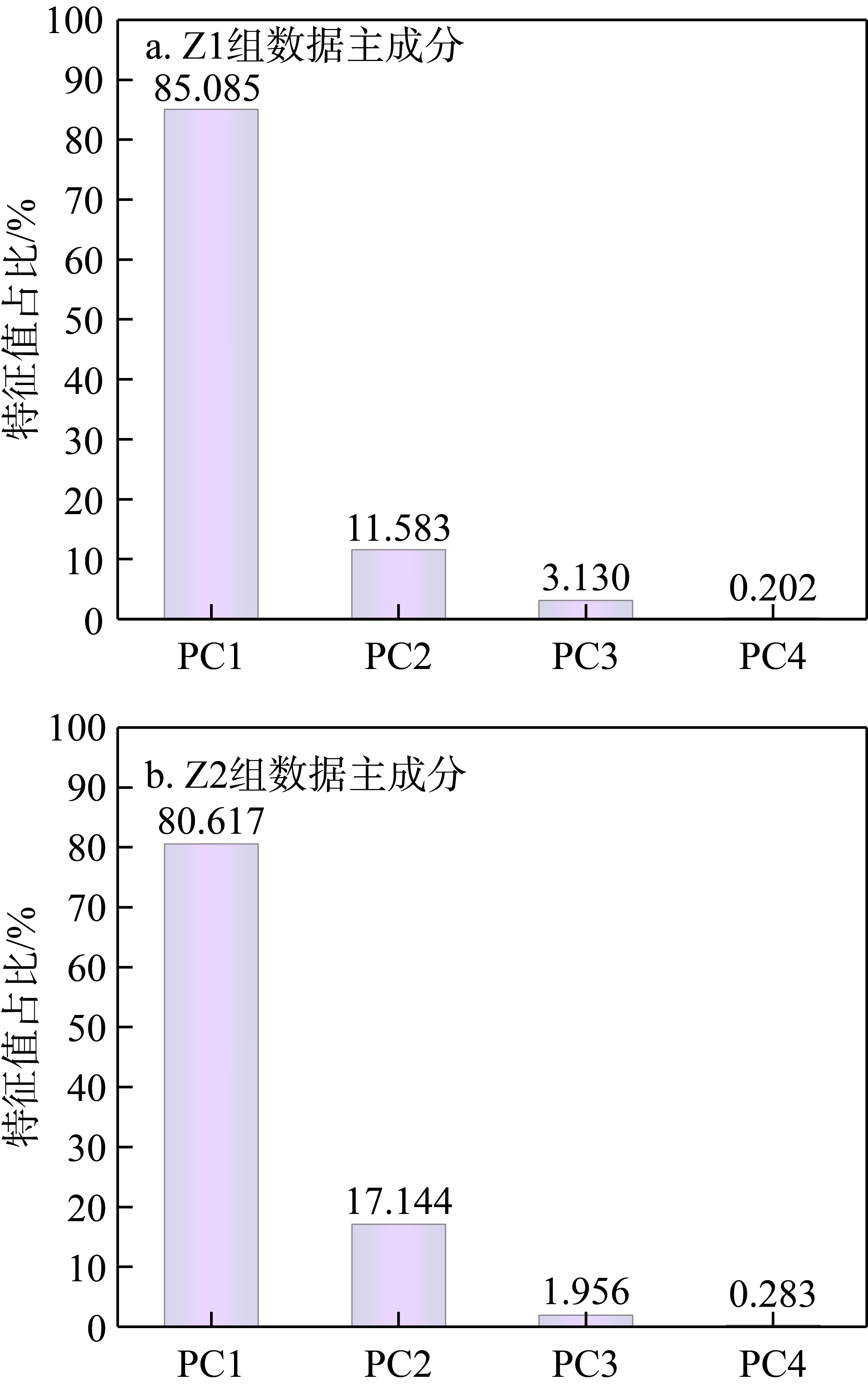
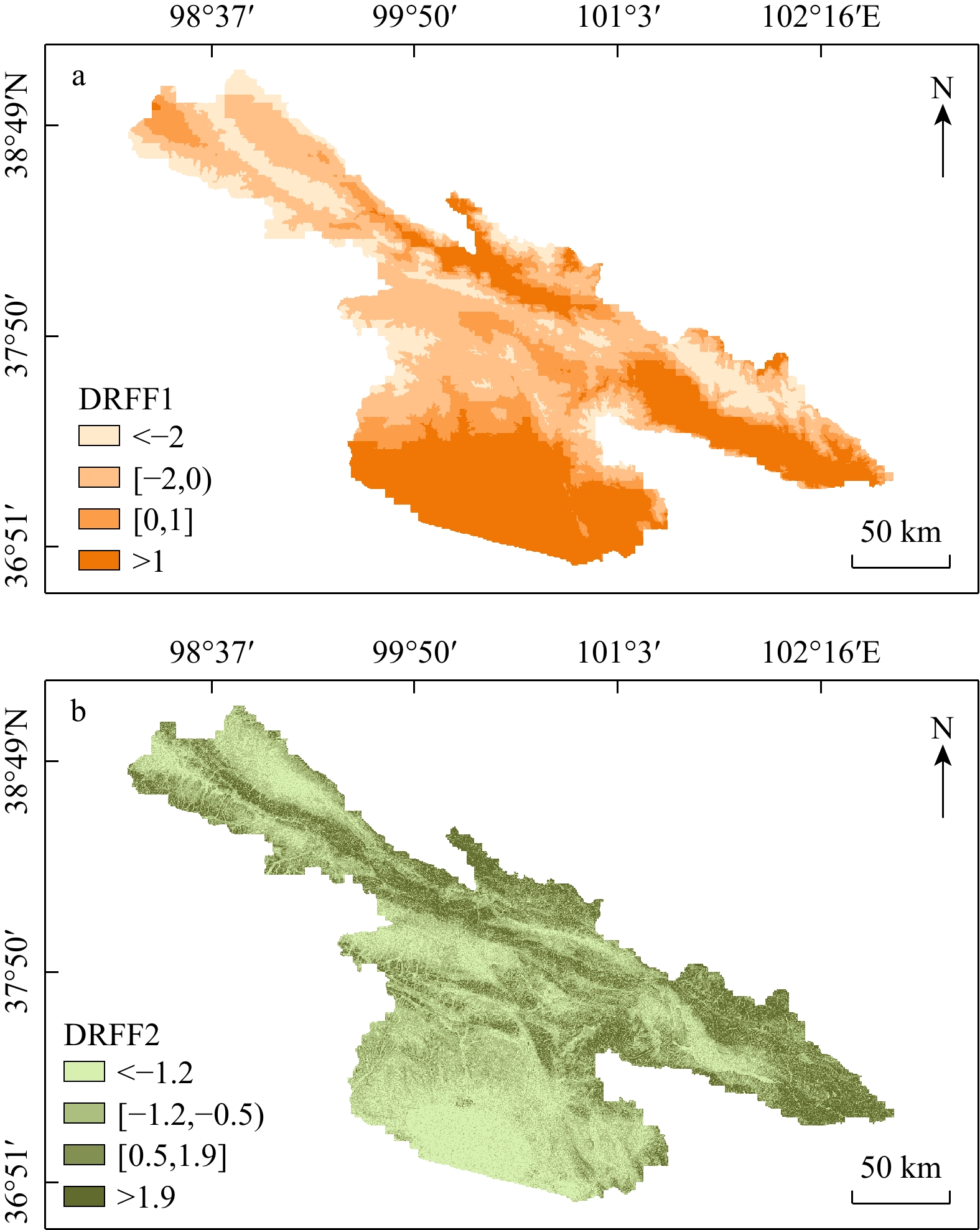
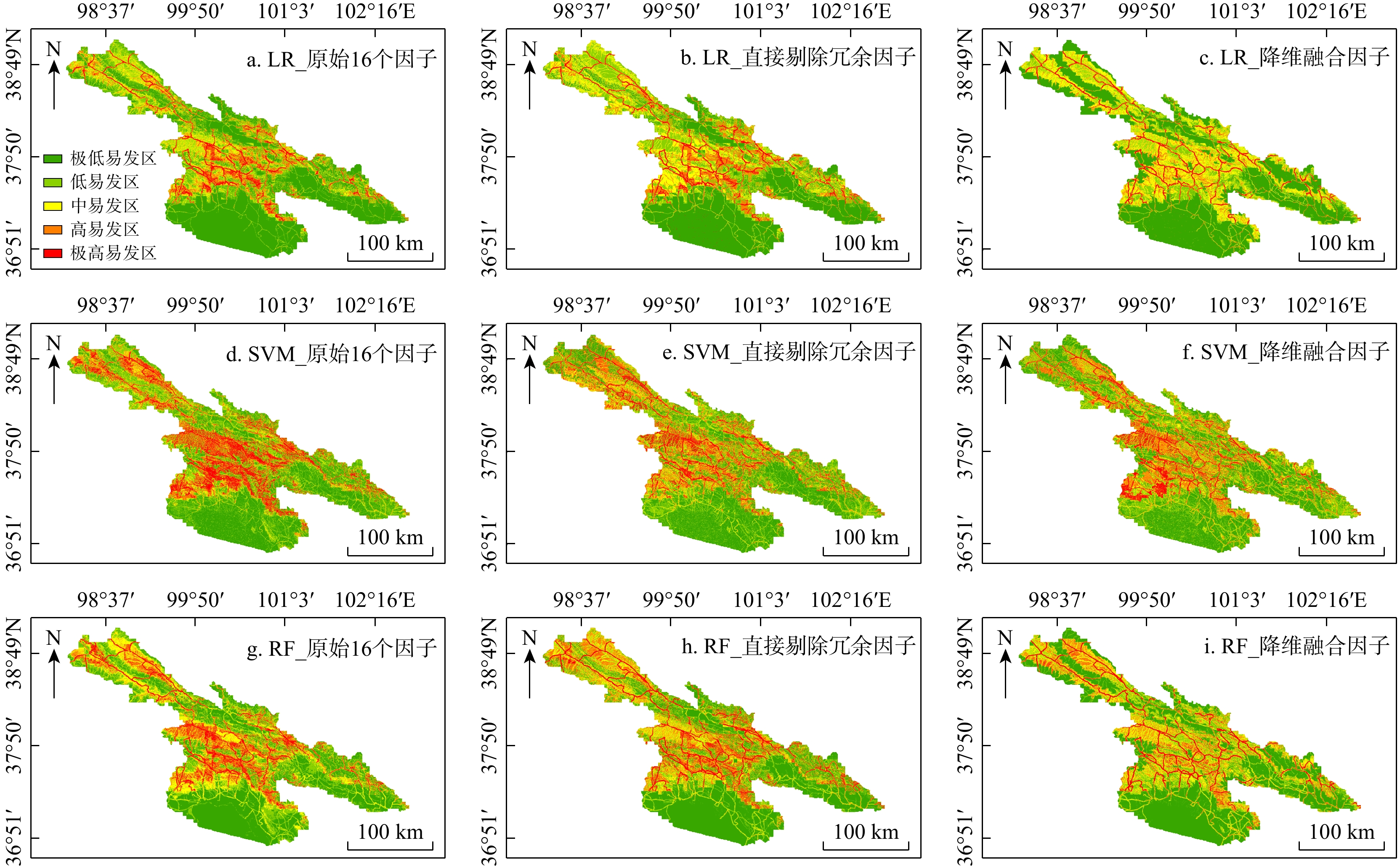
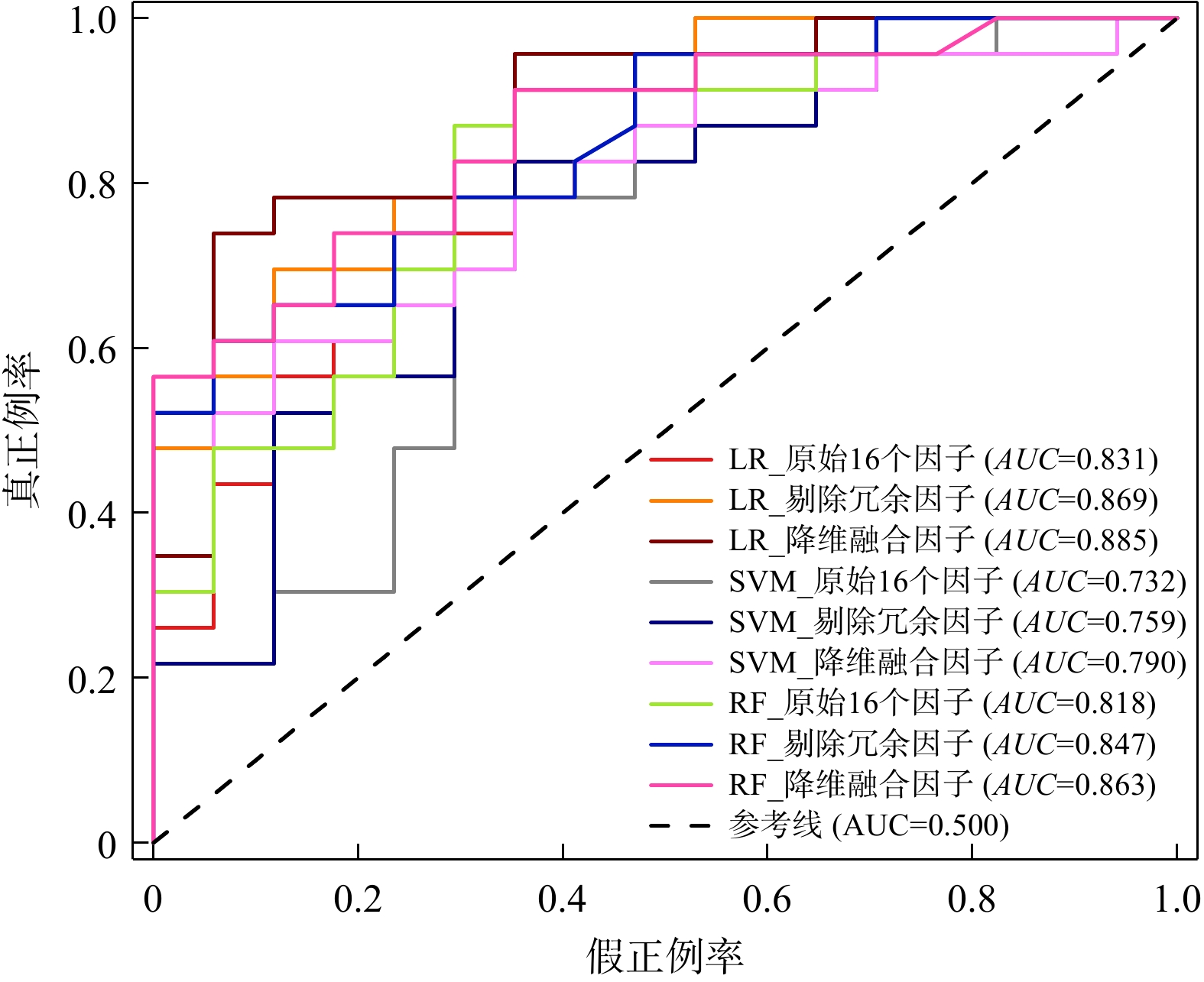
16 preliminary conditioning factors covering topography, meteorology, geological setting, and human engineering interference were selected in this study. Pearson correlation analysis and Kruskal-Wallis test were sequentially adopted to quantify multicollinearity and factor importance. Principal component analysis (PCA)-based dimensionality reduction was applied to integrate highly correlated redundant variables for indicator optimization. Three machine learning algorithms, namely logistic regression (LR), support vector machine (SVM), and random forest (RF), along with frequency ratio method, were used for susceptibility modeling and analysis. Model performance was verified via ROC-AUC metric and 5-fold cross-validation.
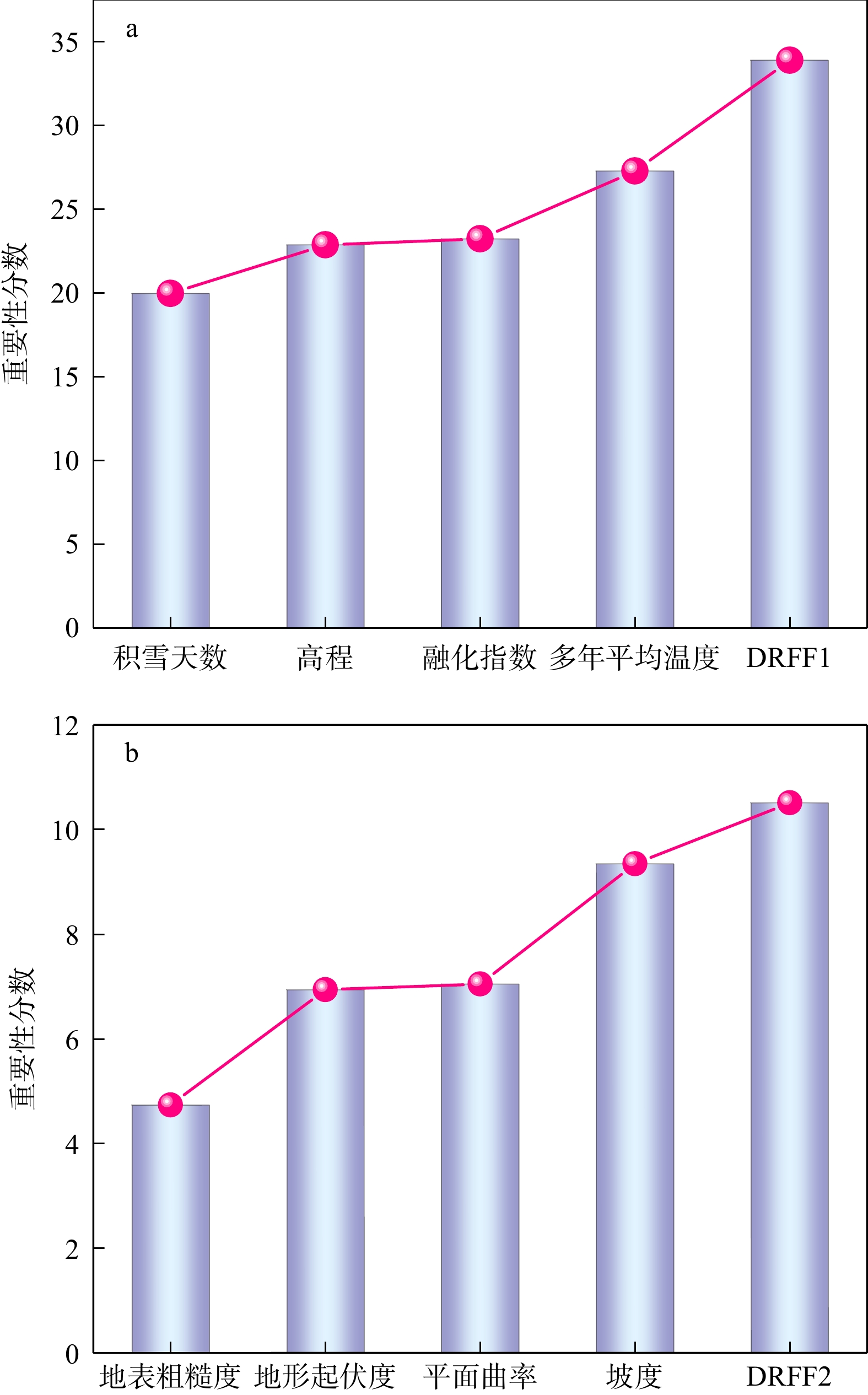
Kruskal-Wallis testing identified distance to roads, multi-year average temperature, thawing index, elevation, and annual snow cover days as the dominant controlling factors. Different from common rainfall-triggered landslides, precipitation did not play a dominant role in the formation of thaw-related geohazards. Therefore, indicators reflecting permafrost thermal regime and engineering disturbance should be prioritized in assessment. PCA-based dimensionality reduction effectively eliminated strong inter-factor correlation while retaining the main information of the original dataset, and the fused composite factors showed significantly enhanced importance. The prediction accuracy of all three machine learning models improved after indicator optimization, and the optimized LR model achieved the best overall performance with an average AUC of 0.875 via five-fold cross-validation.
The indicator optimization framework combining Kruskal-Wallis significance test and PCA-based dimensionality reduction possesses high reliability, and the optimized LR coupling model is applicable to thaw hazard susceptibility mapping in the study area. The proposed research framework can serve as a technical reference for geohazard assessment in analogous permafrost regions across the Qinghai-Xizang Plateau.

| [1] |
LIN Z J, GAO Z Y, NIU F J, et al. High spatial density ground thermal measurements in a warming permafrost region, Beiluhe Basin, Qinghai-Tibet Plateau[J]. Geomorphology, 2019, 340: 1-14. doi: 10.1016/j.geomorph.2019.04.032
|
| [2] |
ZHANG Z Y, WANG Y B, MA Z H, et al. Thaw slump development in permafrost regions alters the soil hydrothermal processes and responses to precipitation[J]. Engineering Geology, 2025, 354: 108183. doi: 10.1016/j.enggeo.2025.108183
|
| [3] |
曹文庚, 潘登, 徐郅杰, 等. 河南省滑坡灾害易发性制图研究: 多种机器学习模型的对比[J]. 地质科技通报, 2025, 44(1): 101-111. doi: 10.19509/j.cnki.dzkq.tb20230338
CAO W G, PAN D, XU Z J, et al. Landslide disaster vulnerability mapping study in Henan Province: Comparison of different machine learning models[J]. Bulletin of Geological Science and Technology, 2025, 44(1): 101-111. (in Chinese with English abstract doi: 10.19509/j.cnki.dzkq.tb20230338
|
| [4] |
黄发明, 陈杰, 杨阳, 等. 滑坡易发性相关致灾环境因子研究的综述与展望[J]. 地质科技通报, 2025, 44(2): 14-37.
HUANG F M, CHEN J, YANG Y, et al. A review and prospect of disaster-causing environmental factors related to landslide susceptibility prediction[J]. Bulletin of Geological Science and Technology, 2025, 44(2): 14-37. (in Chinese with English abstract
|
| [5] |
CHEN C F, LIU Y T, LI Y Y, et al. Mapping landslide susceptibility with the consideration of spatial heterogeneity and factor optimization[J]. Natural Hazards, 2025, 121(4): 4067-4093. doi: 10.1007/s11069-024-06955-w
|
| [6] |
袁旭山, 刘京会, 黄龙生, 等. 基于机器学习模型的新源县滑坡易发性评估[J]. 科学技术与工程, 2025, 25(5): 1815-1826.
YUAN X S, LIU J H, HUANG L S, et al. Assessment of landslide susceptibility in Xinyuan County based on machine learning models[J]. Science Technology and Engineering, 2025, 25(5): 1815-1826. (in Chinese with English abstract
|
| [7] |
王中羽, 李素敏, 袁利伟, 等. 考虑影响因子重要性选择和土壤含水率的滑坡易发性评价[J]. 水文地质工程地质, 2025, 52(3): 211-221. doi: 10.16030/j.cnki.issn.1000-3665.202309009
WANG Z Y, LI S M, YUAN L W, et al. Landslide susceptibility evaluation considering the importance selection of influencing factors and soil moisture content[J]. Hydrogeology & Engineering Geology, 2025, 52(3): 211-221. (in Chinese with English abstract doi: 10.16030/j.cnki.issn.1000-3665.202309009
|
| [8] |
李信, 薛桂澄, 柳长柱, 等. 基于信息量模型和信息量−逻辑回归模型的海南岛中部山区地质灾害易发性研究[J]. 地质力学学报, 2022, 28(2): 294-305.
LI X, XUE G C, LIU C Z, et al. Evaluation of geohazard susceptibility based on information value model and information value-logistic regression model: A case study of the central mountainous area of Hainan Island[J]. Journal of Geomechanics, 2022, 28(2): 294-305. (in Chinese with English abstract
|
| [9] |
盛明强, 刘梓轩, 张晓晴, 等. 基于频率比联接法和支持向量机的滑坡易发性预测[J]. 科学技术与工程, 2021, 21(25): 10620-10628. doi: 10.3969/j.issn.1671-1815.2021.25.009
SHENG M Q, LIU Z X, ZHANG X Q, et al. Landslide susceptibility prediction based on frequency ratio analysis and support vector machine[J]. Science Technology and Engineering, 2021, 21(25): 10620-10628. (in Chinese with English abstract doi: 10.3969/j.issn.1671-1815.2021.25.009
|
| [10] |
HONG H Y, ILIA I, TSANGARATOS P, et al. A hybrid fuzzy weight of evidence method in landslide susceptibility analysis on the Wuyuan area, China[J]. Geomorphology, 2017, 290: 1-16. doi: 10.1016/j.geomorph.2017.04.002
|
| [11] |
LIU Y M, ZHANG W C, ZHANG Z J, et al. Risk factor detection and landslide susceptibility mapping using geo-detector and Random Forest models: The 2018 Hokkaido eastern Iburi earthquake[J]. Remote Sensing, 2021, 13(6): 1157. doi: 10.3390/rs13061157
|
| [12] |
饶姗姗, 冷小鹏. 基于RSIV-RF模型的凉山州泥石流易发性评价[J]. 地质科技通报, 2024, 43(1): 275-287. doi: 10.19509/j.cnki.dzkq.tb20220267
RAO S S, LENG X P. Debris flow susceptibility evaluation of Liangshan Prefecture based on the RSIV-RF model[J]. Bulletin of Geological Science and Technology, 2024, 43(1): 275-287. (in Chinese with English abstract doi: 10.19509/j.cnki.dzkq.tb20220267
|
| [13] |
刘少泽, 崔美娟, 付晓祎, 等. 顾及缓冲区范围与负样本优化的随机森林地质灾害易发性评价[J]. 科学技术与工程, 2025, 25(15): 6220-6229. doi: 10.12404/j.issn.1671-1815.2405249
LIU S Z, CUI M J, FU X Y, et al. Random Forest evaluation of geological hazard susceptibility considering buffer range and negative sample optimization[J]. Science Technology and Engineering, 2025, 25(15): 6220-6229. (in Chinese with English abstract doi: 10.12404/j.issn.1671-1815.2405249
|
| [14] |
BAI S B, WANG J, LÜ G N, et al. GIS-based logistic regression for landslide susceptibility mapping of the Zhongxian segment in the Three Gorges area, China[J]. Geomorphology, 2010, 115(1/2): 23-31. doi: 10.1016/j.geomorph.2009.09.025
|
| [15] |
ZHANG Z Q, SUN J C. Regional landslide susceptibility assessment and model adaptability research[J]. Remote Sensing, 2024, 16(13): 2305. doi: 10.3390/rs16132305
|
| [16] |
MARJANOVIĆ M, KOVAČEVIĆ M, BAJAT B, et al. Landslide susceptibility assessment using SVM machine learning algorithm[J]. Engineering Geology, 2011, 123(3): 225-234. doi: 10.1016/j.enggeo.2011.09.006
|
| [17] |
ABBASZADEH SHAHRI A, SPROSS J, JOHANSSON F, et al. Landslide susceptibility hazard map in Southwest Sweden using artificial neural network[J]. Catena, 2019, 183: 104225. doi: 10.1016/j.catena.2019.104225
|
| [18] |
王璇, 师芸, 陈浩. CF耦合LR模型的地质灾害易发性评价[J]. 测绘通报, 2022(11): 112-117.
WANG X, SHI Y, CHEN H. Evaluation of geological hazard susceptibility based on certainty factors coupling logistic regression[J]. Bulletin of Surveying and Mapping, 2022(11): 112-117. (in Chinese with English abstract
|
| [19] |
樊芷吟, 苟晓峰, 秦明月, 等. 基于信息量模型与Logistic回归模型耦合的地质灾害易发性评价[J]. 工程地质学报, 2018, 26(2): 340-347. doi: 10.13928/j.cnki.wrahe.2019.03.018
FAN Z Y, GOU X F, QIN M Y, et al. Information and logistic regression models based coupling analysis for susceptibility of geological hazards[J]. Journal of Engineering Geology, 2018, 26(2): 340-347. (in Chinese with English abstract doi: 10.13928/j.cnki.wrahe.2019.03.018
|
| [20] |
周晓亭, 黄发明, 吴伟成, 等. 基于耦合信息量法选择负样本的区域滑坡易发性预测[J]. 工程科学与技术, 2022, 54(3): 25-35.
ZHOU X T, HUANG F M, WU W C, et al. Regional landslide susceptibility prediction based on negative sample selected by coupling information value method[J]. Advanced Engineering Sciences, 2022, 54(3): 25-35. (in Chinese with English abstract
|
| [21] |
LIU L L, ZHANG Y L, XIAO T, et al. A frequency ratio: Based sampling strategy for landslide susceptibility assessment[J]. Bulletin of Engineering Geology and the Environment, 2022, 81(9): 360. doi: 10.1007/s10064-022-02836-3
|
| [22] |
LIN N, DING K, TAN L B, et al. Dynamic landslide susceptibility mapping on time-series InSAR and explainable machine learning: A case study at Wushan in the Three Gorges Reservoir area, China[J]. Advances in Space Research, 2025, 75(12): 8439-8465. doi: 10.1016/j.asr.2025.03.067
|
| [23] |
WANG S B, ZHUANG J Q, ZHENG J, et al. Application of Bayesian hyperparameter optimized Random Forest and XGBoost model for landslide susceptibility mapping[J]. Frontiers in Earth Science, 2021, 9: 712240. doi: 10.3389/feart.2021.712240
|
| [24] |
SUN K, LI Z Q, WANG S J, et al. A support vector machine model of landslide susceptibility mapping based on hyperparameter optimization using the Bayesian algorithm: A case study of the highways in the southern Qinghai-Tibet Plateau[J]. Natural Hazards, 2024, 120(12): 11377-11398. doi: 10.1007/s11069-024-06665-3
|
| [25] |
LUO J, NIU F J, LIN Z J, et al. Recent acceleration of thaw slumping in permafrost terrain of Qinghai-Tibet Plateau: An example from the Beiluhe Region[J]. Geomorphology, 2019, 341: 79-85. doi: 10.1016/j.geomorph.2019.05.020
|
| [26] |
罗京, 牛富俊, 林战举, 等. 青藏高原多年冻土区热融滑塌发育特征及规律[J]. 冰川冻土, 2022, 44(1): 96-105.
LUO J, NIU F J, LIN Z J, et al. The characteristics and patterns of retrogressive thaw slumps developed in permafrost region of the Qinghai-Tibet Plateau[J]. Journal of Glaciology and Geocryology, 2022, 44(1): 96-105. (in Chinese with English abstract
|
| [27] |
李艳, 金会军, 温智, 等. 多年冻土区斜坡稳定性研究综述[J]. 冰川冻土, 2022, 44(1): 203-216.
LI Y, JIN H J, WEN Z, et al. Stability of permafrost slopes: A review[J]. Journal of Glaciology and Geocryology, 2022, 44(1): 203-216. (in Chinese with English abstract
|
| [28] |
SUN Z, WANG Y B, SUN Y, et al. Creep characteristics and process analyses of a thaw slump in the permafrost region of the Qinghai-Tibet Plateau, China[J]. Geomorphology, 2017, 293: 1-10. doi: 10.1016/j.geomorph.2017.04.045
|
| [29] |
LOU P Q, WU T H, CHEN J, et al. Recognition of thaw slumps based on machine learning and UAVs: A case study in the Qilian Mountains, northeastern Qinghai-Tibet Plateau[J]. International Journal of Applied Earth Observation and Geoinformation, 2023, 116: 103163. doi: 10.1016/j.jag.2022.103163
|
| [30] |
张航, 胡海瑞, 朱杰清, 等. 基于非接触测量楔形危岩体稳定性快速评价[J]. 地质科技通报, 2025, 44(2): 67-77. doi: 10.19509/j.cnki.dzkq.tb20240496
ZHANG H, HU H R, ZHU J Q, et al. Rapid analysis of the stability of a wedge-shaped unstable rock mass on the basis of non-contact measurements[J]. Bulletin of Geological Science and Technology, 2025, 44(2): 67-77. (in Chinese with English abstract doi: 10.19509/j.cnki.dzkq.tb20240496
|
| [31] |
GOYES-PEÑAFIEL P, HERNANDEZ-ROJAS A. Landslide susceptibility index based on the integration of logistic regression and weights of evidence: A case study in Popayan, Colombia[J]. Engineering Geology, 2021, 280: 105958. doi: 10.1016/j.enggeo.2020.105958
|
| [32] |
HUANG F M, LIU K J, JIANG S H, et al. Optimization method of conditioning factors selection and combination for landslide susceptibility prediction[J]. Journal of Rock Mechanics and Geotechnical Engineering, 2025, 17(2): 722-746. doi: 10.1016/j.jrmge.2024.04.029
|
| [33] |
JIN J C, CHEN G, MENG X M, et al. Prediction of river damming susceptibility by landslides based on a logistic regression model and InSAR techniques: A case study of the Bailong River Basin, China[J]. Engineering Geology, 2022, 299: 106562. doi: 10.1016/j.enggeo.2022.106562
|
| [34] |
苏志萍, 杨成生, 王子倩. 结合负样本优化与机器学习模型的怒江洲峡谷段滑坡易发性评价[J]. 地球信息科学学报, 2025, 27(4): 979-993. doi: 10.12082/dqxxkx.2025.240614
SU Z P, YANG C S, WANG Z Q. Landslide susceptibility assessment in Nujiang canyon using negative sample optimization and machine learning models[J]. Journal of Geo-Information Science, 2025, 27(4): 979-993. (in Chinese with English abstract doi: 10.12082/dqxxkx.2025.240614
|
| [35] |
WEN H J, LI J Y, LIAO M Y, et al. A hybrid-optimized Random Forest interpretable model for debris flow susceptibility by prior model-based negative sampling[J]. Advances in Space Research, 2025, 76(1): 202-220. doi: 10.1016/j.asr.2025.04.055
|
| [36] |
毕结昂, 徐佩华, 宋盛渊, 等. 基于信息量−逻辑回归耦合模型的玛纳斯河流域地质灾害易发性评价[J]. 工程地质学报, 2022, 30(5): 1549-1560. doi: 10.13544/j.cnki.jeg.2022-0327
BI J A, XU P H, SONG S Y, et al. Assessment of the susceptibility to geological hazards in the Manas River Basin based on the coupled information value-logistic regression model[J]. Journal of Engineering Geology, 2022, 30(5): 1549-1560. (in Chinese with English abstract doi: 10.13544/j.cnki.jeg.2022-0327
|
| [37] |
李郎平, 兰恒星, 郭长宝, 等. 基于改进频率比法的川藏铁路沿线及邻区地质灾害易发性分区评价[J]. 现代地质, 2017, 31(5): 911-929.
LI L P, LAN H X, GUO C B, et al. Geohazard susceptibility assessment along the Sichuan-Tibet railway and its adjacent area using an improved frequency ratio method[J]. Geoscience, 2017, 31(5): 911-929. (in Chinese with English abstract
|
| [38] |
杨永刚, 殷坤龙, 赵海燕, 等. 基于C5.0决策树-快速聚类模型的万州区库岸段乡镇滑坡易发性区划[J]. 地质科技情报, 2019(6): 189-197. doi: 10.19509/j.cnki.dzkq.2019.0622
YANG Y G, YIN K L, ZHAO H Y, et al. Landslide susceptibility evaluation for township units of bank section in Wanzhou district based on C5.0 decision tree and K-means cluster model[J]. Geological Science and Technology Information, 2019(6): 189-197. (in Chinese with English abstract doi: 10.19509/j.cnki.dzkq.2019.0622
|
| [39] |
HU X D, HUANG C, MEI H B, et al. Landslide susceptibility mapping using an ensemble model of Bagging scheme and random subspace: Based naïve Bayes tree in Zigui County of the Three Gorges Reservoir area, China[J]. Bulletin of Engineering Geology and the Environment, 2021, 80(7): 5315-5329. doi: 10.1007/s10064-021-02275-6
|
| [40] |
LIU D L, XIANG Q, SANG X J, et al. Landslide susceptibility prediction method based on HSOM and IABPA-CNN in Wenchuan earthquake disaster area[J]. Journal of Mountain Science, 2024, 21(12): 4001-4018. doi: 10.1007/s11629-024-8971-7
|
| [41] |
LIANG Z, LIU W, PENG W P, et al. Improved shallow landslide susceptibility prediction based on statistics and ensemble learning[J]. Sustainability, 2022, 14(10): 6110. doi: 10.3390/su14106110
|
| [42] |
NEFESLIOGLU H A, GOKCEOGLU C, SONMEZ H. An assessment on the use of logistic regression and artificial neural networks with different sampling strategies for the preparation of landslide susceptibility maps[J]. Engineering Geology, 2008, 97(3/4): 171-191. doi: 10.1016/j.enggeo.2008.01.004
|
| [43] |
SUN X H, CHEN J P, HAN X D, et al. Landslide susceptibility mapping along the upper Jinsha River, south-western China: A comparison ofhydrological and curvature watershed methods for slope unit classification[J]. Bulletin of Engineering Geology and the Environment, 2020, 79(9): 4657-4670. doi: 10.1007/s10064-020-01849-0
|
| [44] |
REICHENBACH P, ROSSI M, MALAMUD B D, et al. A review of statistically-based landslide susceptibility models[J]. Earth-Science Reviews, 2018, 180: 60-91. doi: 10.1016/j.earscirev.2018.03.001
|
| [45] |
古腾飞, 段平, 王伟鹏, 等. 滑坡易发性评价方法综述[J]. 自然灾害学报, 2024, 33(6): 1-16.
GU T F, DUAN P, WANG W P, et al. Review of methods for landslide susceptibility assessment[J]. Journal of Natural Disasters, 2024, 33(6): 1-16. (in Chinese with English abstract
|
| [46] |
李国营, 刘平, 张凯, 等. 量纲统一在滑坡易发性评价中的影响分析[J]. 水文地质工程地质, 2024, 51(3): 118-129. doi: 10.16030/j.cnki.issn.1000-3665.202304005
LI G Y, LIU P, ZHANG K, et al. Analysis of the influence of dimensional unity in landslide susceptibility assessment[J]. Hydrogeology and Engineering Geology, 2024, 51(3): 118-129. (in Chinese with English abstract doi: 10.16030/j.cnki.issn.1000-3665.202304005
|
| [47] |
朱路路. 基于多种负样本取样方法的滑坡易发性评价[D]. 安徽淮南: 安徽理工大学, 2024.
ZHU L L. Landslide susceptibility evaluation based on multiple negative sample sampling methods[D]. Huainan Anhui: Anhui University of Science & Technology, 2024. (in Chinese with English abstract
|
| [48] |
田煜坤. 广西崇左市3S及多模型耦合的滑坡易发性评价研究[D]. 广西桂林: 桂林理工大学, 2024.
TIAN Y K. Evaluation of landslide susceptibility in Chongzuo City, Guangxi with 3S and multi-model coupling[D]. Guilin Guangxi: Guilin University of Technology, 2024. (in Chinese with English abstract
|
| [49] |
王浩. 桂北地区滑坡地质灾害易发性耦合模型的选取与评价[D]. 广西桂林: 桂林理工大学, 2023.
WANG H. Selection and evaluation of integration model for landslide geological hazard susceptibility in northern Guangxi[D]. Guilin Guangxi: Guilin University of Technology, 2023. (in Chinese with English abstract
|
| [50] |
LIN M S, TENG S, CHEN G F, et al. Application of convolutional neural networks based on Bayesian optimization to landslide susceptibility mapping of transmission tower foundation[J]. Bulletin of Engineering Geology and the Environment, 2023, 82(2): 51. doi: 10.1007/s10064-023-03069-8
|
| [51] |
YANG C, LIU L L, HUANG F M, et al. Machine learning-based landslide susceptibility assessment with optimized ratio of landslide to non-landslide samples[J]. Gondwana Research, 2023, 123: 198-216. doi: 10.1016/j.gr.2022.05.012
|
Supported by:
Beijing Renhe Information Technology Co., Ltd.


 Submission System

 DownLoad: