| Citation: | XU Shuyuan,SHUAI Guanyin,HAN Juan,et al. Impact of groundwater levels at different temporal scales on calculation accuracy of annual shallow groundwater storage variation[J]. Bulletin of Geological Science and Technology,2026,45(4):1-13 doi: 10.19509/j.cnki.dzkq.tb20250171

|
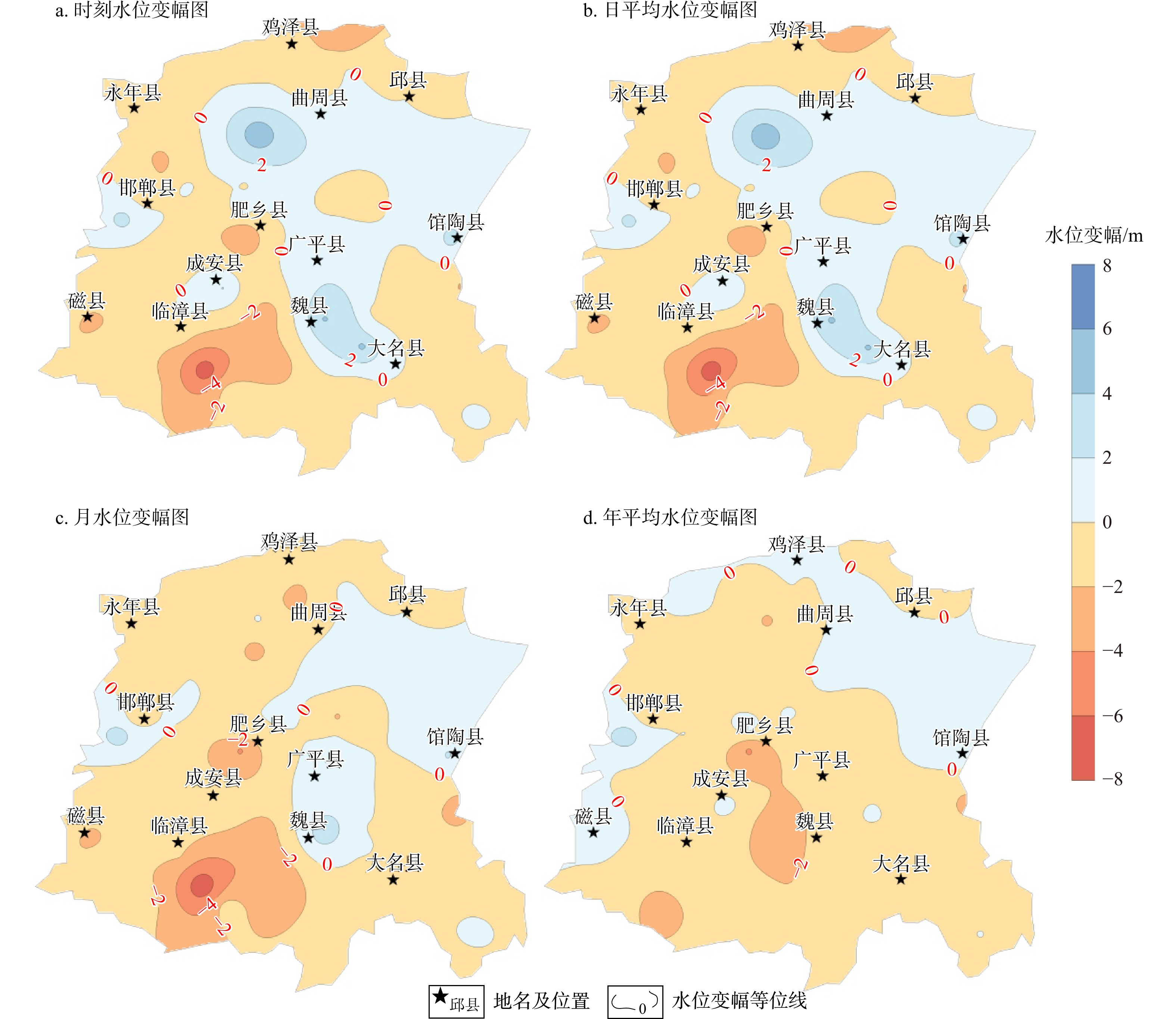
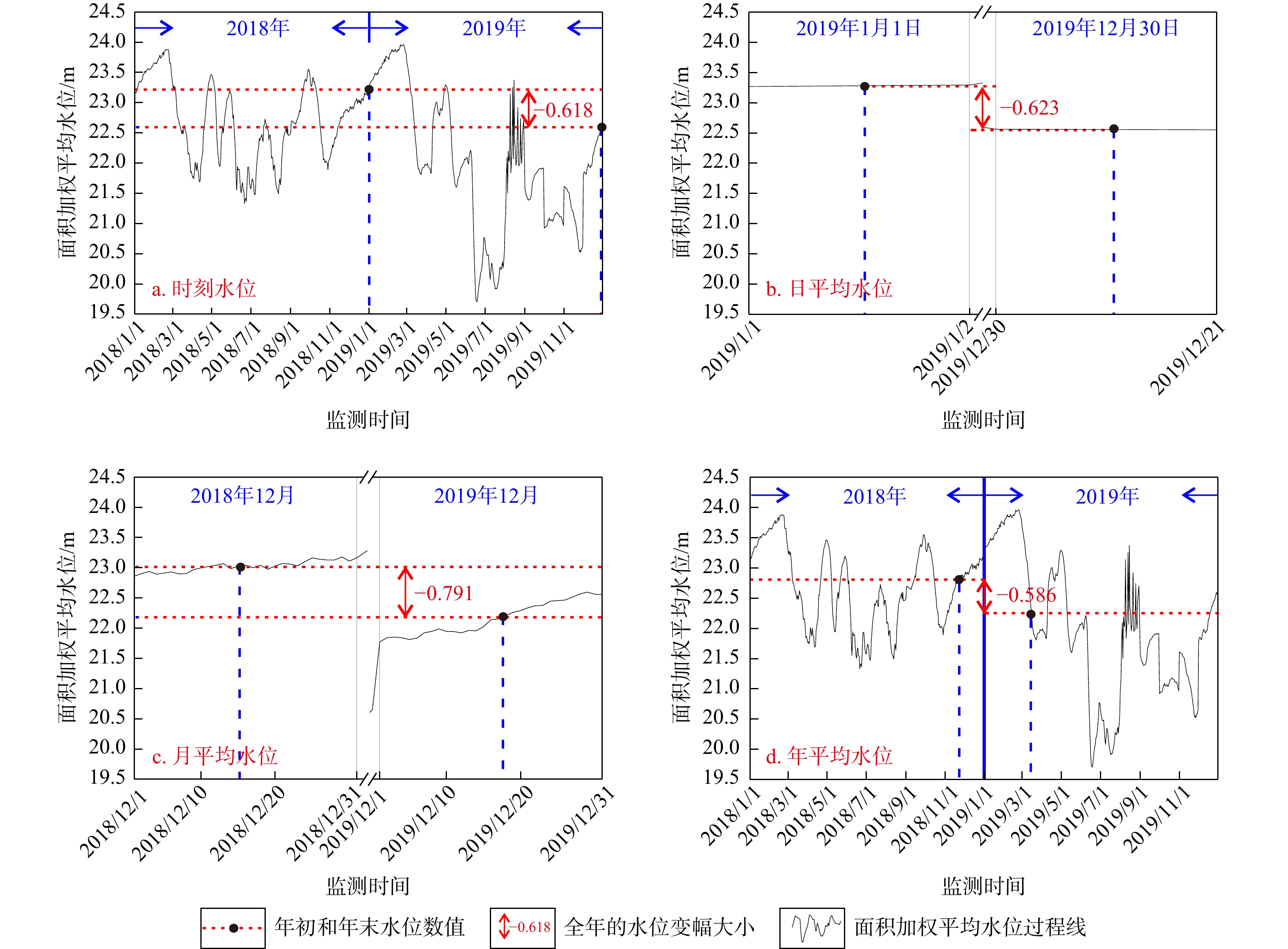
This study aims to examine the influence of groundwater level at different temporal scales (specifically hourly, daily, monthly, and annual average water levels) on the accuracy of annual shallow groundwater storage variation calculations.
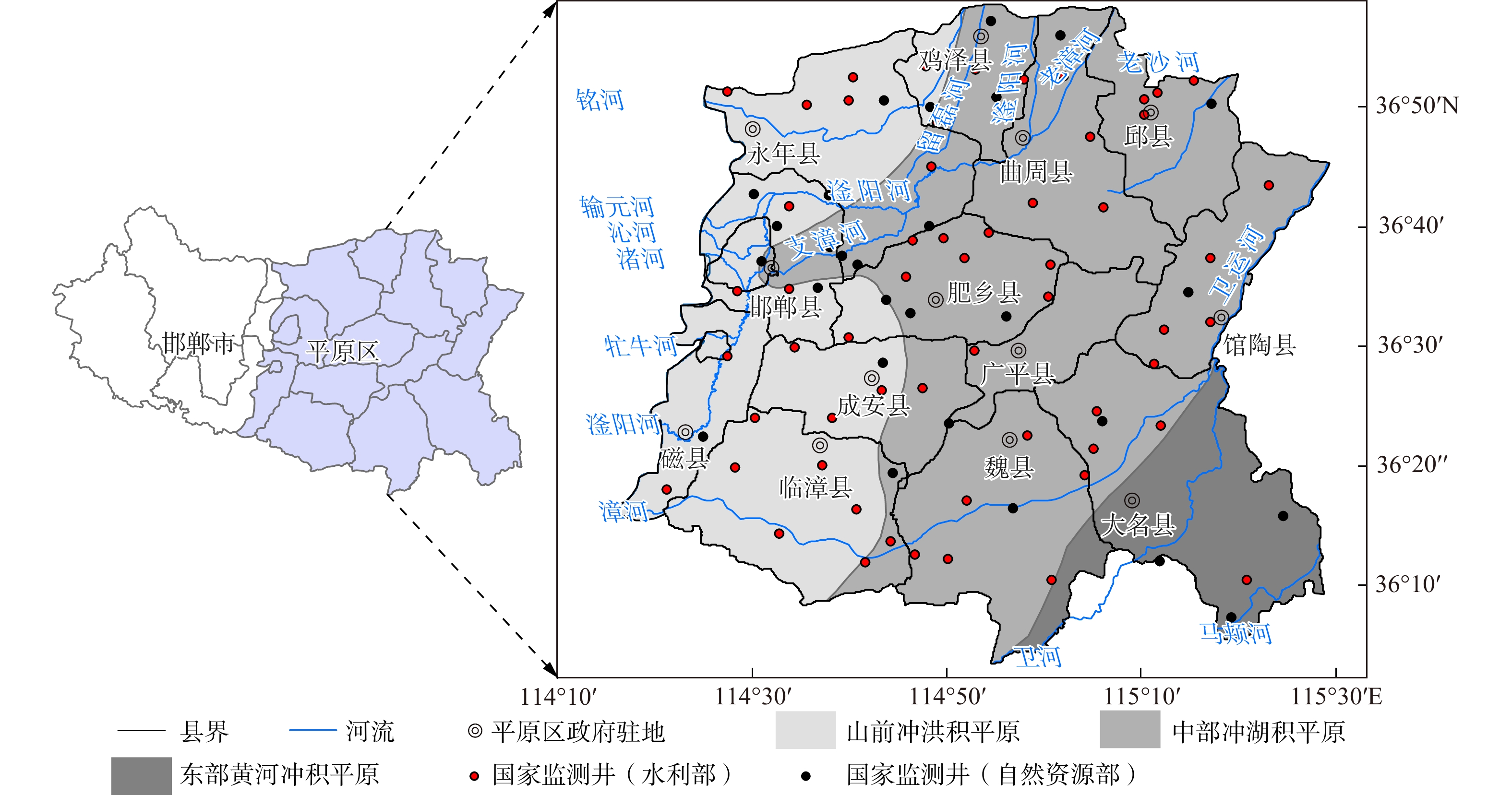
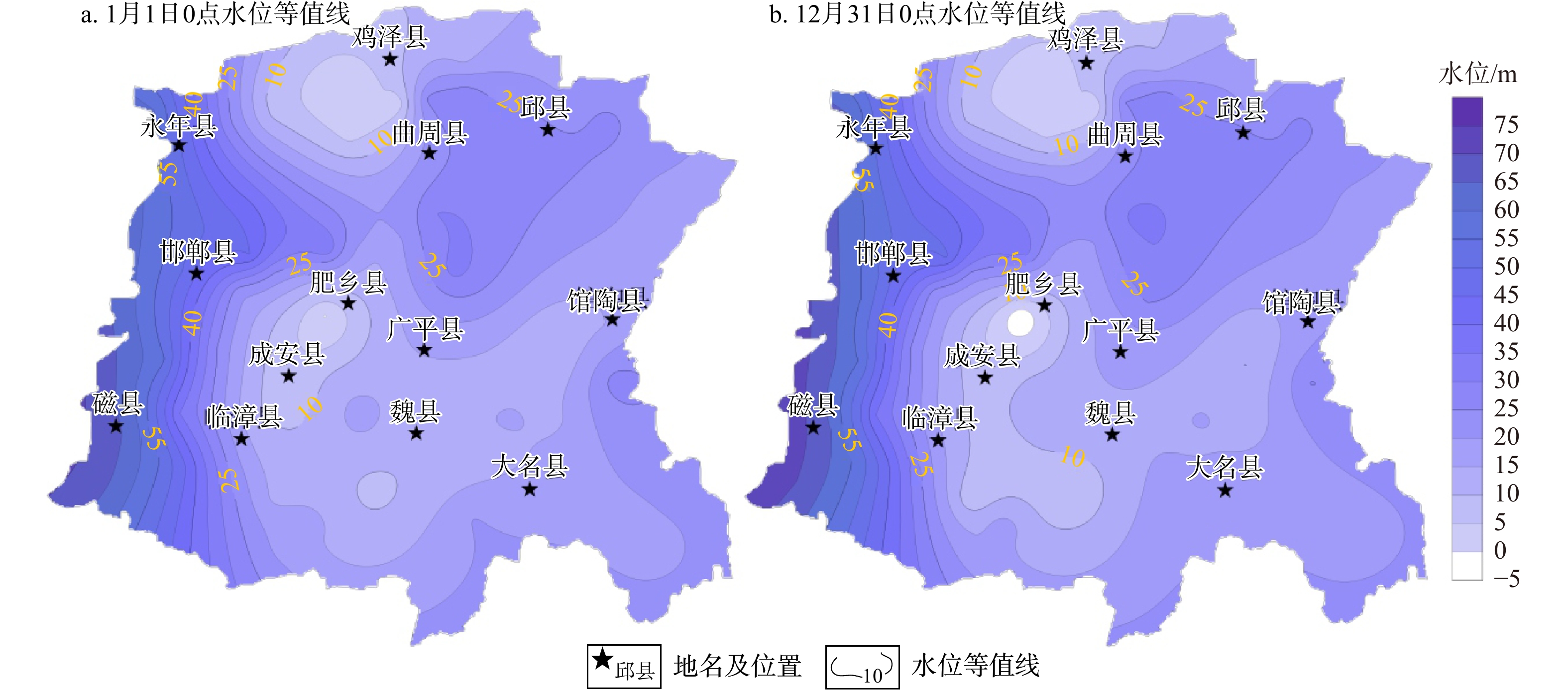
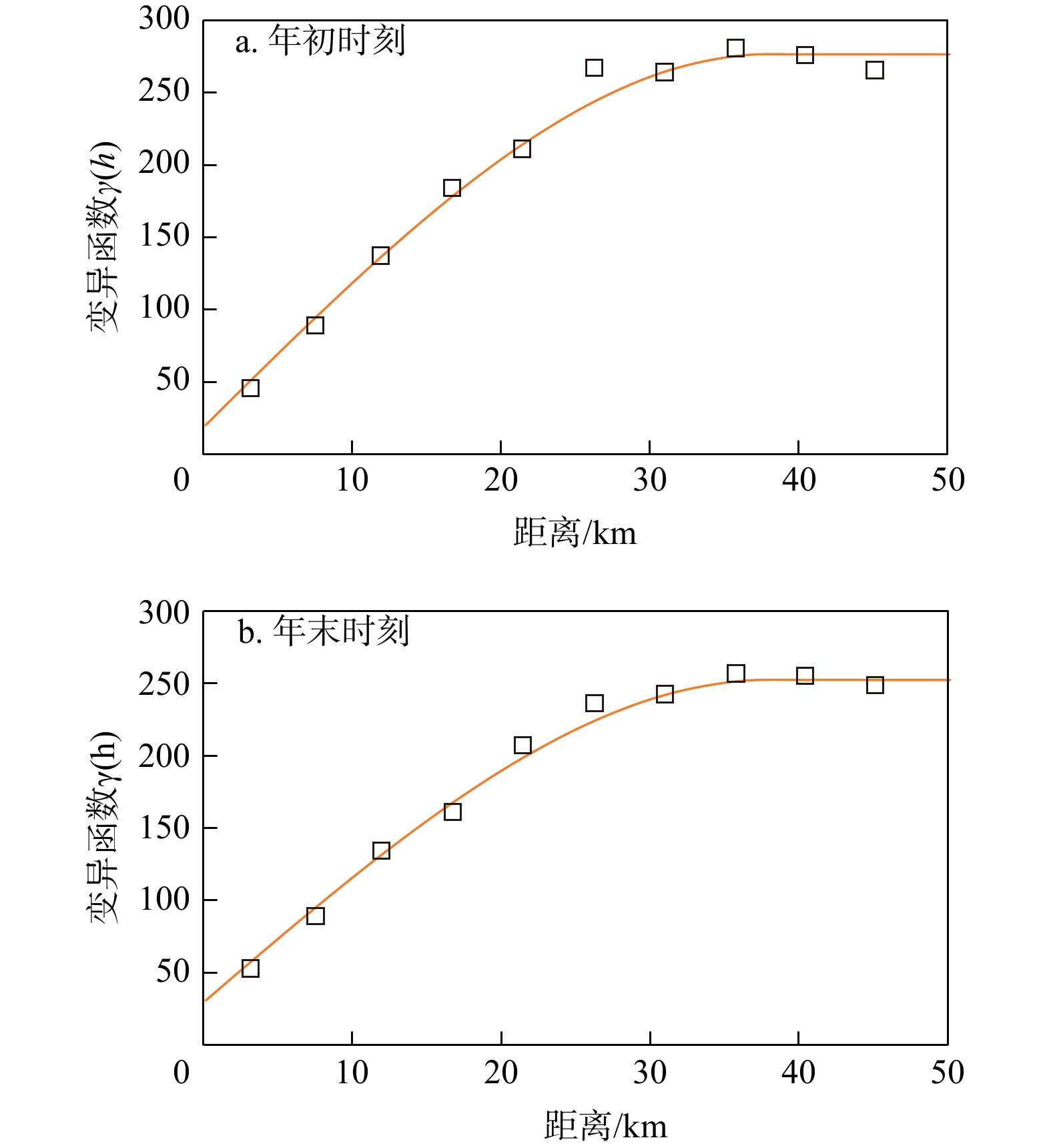
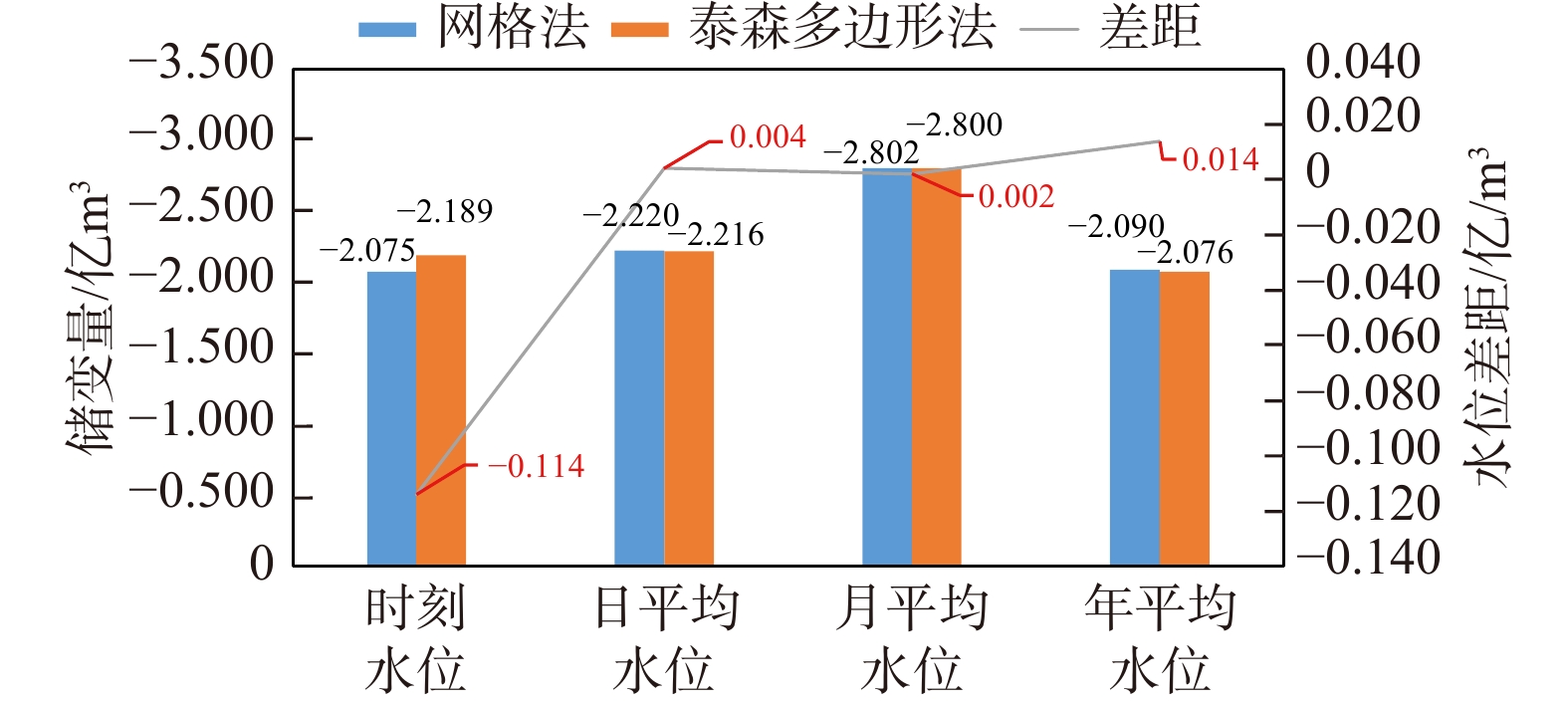
The shallow groundwater system of the Handan Plain at 2019 was selected as the study object. The grid method and the Thiessen polygon method were applied to calculate groundwater storage variations using water level data at different temporal scales, and the results were compared to evaluate differences in calculation accuracy.
The results indicated that, for the same temporal scale, groundwater storage variation estimates obtained using the grid method and the Thiessen polygon method were generally consistent, with a maximum difference of
These findings provide theoretical and methodological support for the rational selection of water level data at different temporal scales, thereby improving the accuracy of groundwater storage variation calculations, which is essential for evaluating the effectiveness of groundwater overexploitation control strategies.

| [1] |
杨会峰, 曹文庚, 支传顺, 等. 近40年来华北平原地下水位演变研究及其超采治理建议[J]. 中国地质, 2021, 48(4): 1142-1155. doi: 10.12029/gc20210411
YANG H F, CAO W G, ZHI C S, et al. Evolution of groundwater level in the North China Plain in the past 40 years and suggestions on its overexploitation treatment[J]. Geology in China, 2021, 48(4): 1142-1155. (in Chinese with English abstract) doi: 10.12029/gc20210411
|
| [2] |
李文鹏, 王龙凤, 杨会峰, 等. 华北平原地下水超采状况与治理对策建议[J]. 中国水利, 2020(13): 26-30. doi: 10.3969/j.issn.1000-1123.2020.13.017
LI W P, WANG L F, YANG H F, et al. The groundwater overexploitation status and countermeasure suggestions of the North China Plain[J]. China Water Resources, 2020(13): 26-30. (in Chinese with English abstract) doi: 10.3969/j.issn.1000-1123.2020.13.017
|
| [3] |
左世诚, 董杰, 廖明生. 时序InSAR形变梯度估计与城市建筑物风险评估: 以北京平原为例[J]. 地质科技通报, 2024, 43(6): 171-183.
ZUO S C, DONG J, LIAO M S. Time-series InSAR deformation gradient estimation and urban buildings risk assessment: A case study in the Beijing Plain[J]. Bulletin of Geological Science and Technology, 2024, 43(6): 171-183. (in Chinese with English abstract)
|
| [4] |
于翔, 解建仓, 姜仁贵, 等. 河北省地下水超采治理效果过程化评价[J]. 排灌机械工程学报, 2021, 39(4): 364-371. doi: 10.3969/j.issn.1674-8530.20.0145
YU X, XIE J C, JIANG R G, et al. Process evaluation for governance effect of groundwater over-exploitation in Hebei Province[J]. Journal of Drainage and Irrigation Machinery Engineering, 2021, 39(4): 364-371. (in Chinese with English abstract) doi: 10.3969/j.issn.1674-8530.20.0145
|
| [5] |
KINZELBACH W, WANG H J, LI Y, et al. Groundwater overexploitation in the North China Plain: A path to sustainability[M]. Singapore: Springer Singapore, 2022.
|
| [6] |
冯战洪, 苏建平. 多措并举推进河北地下水超采治理[J]. 中国水利, 2022(6): 15-16.
FENG Z H, SU J P. Control of groundwater over-exploitation in Hebei with multiple measures[J]. China Water Resources, 2022(6): 15-16. (in Chinese with English abstract)
|
| [7] |
LI H Y, DU X Q, LU X Q, et al. Analysis of groundwater overexploitation based on groundwater regime information[J]. Groundwater, 2023, 61(5): 692-705. doi: 10.1111/gwat.13285
|
| [8] |
YANG H F, MENG R F, BAO X L, et al. Assessment of water level threshold for groundwater restoration and over-exploitation remediation in the Beijing-Tianjin-Hebei plain[J]. Journal of Groundwater Science and Engineering, 2022, 10(2): 113-127.
|
| [9] |
羊艳, 唐世南, 于丽丽. 地下水超采综合治理与修复模式研究[J]. 水利规划与设计, 2021(12): 92-96.
YANG Y, TANG S N, YU L L. Study on comprehensive treatment and restoration model of groundwater overexploitation[J]. Water Resources Planning and Design, 2021(12): 92-96. (in Chinese with English abstract)
|
| [10] |
SUN L, WANG X Y, WANG S W, et al. Experimental study on soil deformation caused by overexploitation of groundwater[J]. Water Environment Research, 2024, 96(9): e11111. doi: 10.1002/wer.11111
|
| [11] |
GE Y X, WU J, LI B H, et al. Analysis and evaluation of variation characteristics in groundwater resources carrying capacity in Beijing between 2010 and 2020[J]. Sustainability, 2022, 14(15): 9200. doi: 10.3390/su14159200
|
| [12] |
LIU X M, LIU C M, BRUTSAERT W. Mutual consistency of groundwater storage changes derived from GRACE and from baseflow recessions in the Central Yangtze River Basin[J]. Journal of Geophysical Research: Atmospheres, 2020, 125(24): e2019JD031467. doi: 10.1029/2019jd031467
|
| [13] |
魏士禹, 郭云彤, 崔亚莉, 等. 1985—2016年民勤地下水位及储变量动态特征分析[J]. 干旱区地理, 2021, 44(5): 1272-1280.
WEI S Y, GUO Y T, CUI Y L, et al. Dynamic characteristics of groundwater level and storage variables in Minqin from 1985 to 2016[J]. Arid Land Geography, 2021, 44(5): 1272-1280. (in Chinese with English abstract)
|
| [14] |
张庆卜. 国家级地下水位监测数据分析研究[D]. 北京: 中国地质大学(北京), 2020: 35-68.
ZHANG Q B. Analysis and research on monitoring data of national groundwater level[D]. Beijing: China University of Geosciences (Beijing), 2020: 35-68. (in Chinese with English abstract)
|
| [15] |
韩志国. 地下水蓄变量计算方法的探讨[J]. 治淮, 2008(11): 21-22. doi: 10.3969/j.issn.1001-9243.2008.11.013
HAN Z G. Discussion on methods for calculating groundwater storage changes[J]. Harnessing the Huaihe River, 2008(11): 21-22. (in Chinese with English abstract) doi: 10.3969/j.issn.1001-9243.2008.11.013
|
| [16] |
孟春丽, 王闯, 魏雅琴. 2013年中牟县地下水动态及水量平衡分析[J]. 河南水利与南水北调, 2014, 43(14): 9-10.
MENG C L, WANG C, WEI Y Q. Analysis of groundwater dynamics and water balance in Zhongmu County in 2013[J]. Water Resources & South to North Water Diversion, 2014, 43(14): 9-10. (in Chinese with English abstract)
|
| [17] |
JI Z J, CUI Y L, ZHANG S Q, et al. Evaluation of the impact of ecological water supplement on groundwater restoration based on numerical simulation: A case study in the section of Yongding River, Beijing Plain[J]. Water, 2021, 13(21): 3059. doi: 10.3390/w13213059
|
| [18] |
党婧萱, 田涛, 李闯, 等. 基于机器学习与多源数据融合的江苏省潜水位空间分布估计[J]. 地质科技通报, 2026, 45(2): 351-360.
DANG J X, TIAN T, LI C, et al. Exploration of groundwater table spatial estimation in Jiangsu Province based on machine learning and multi-source data fusion[J]. Bulletin of Geological Science and Technology, 2026, 45(2): 351-360. (in Chinese with English abstract)
|
| [19] |
SCANLON B R, FAKHREDDINE S, RATEB A, et al. Global water resources and the role of groundwater in a resilient water future[J]. Nature Reviews Earth & Environment, 2023, 4(2): 87-101. doi: 10.1038/s43017-022-00378-6
|
| [20] |
YIN W J, HAN S C, ZHENG W, et al. Improved water storage estimates within the North China Plain by assimilating GRACE data into the CABLE model[J]. Journal of Hydrology, 2020, 590: 125348. doi: 10.1016/j.jhydrol.2020.125348
|
| [21] |
刘东旭, 胡立堂, 孙建冲, 等. 基于GRACE/GRACE-FO数据降尺度方法反演库尔勒东区地下水储量变化[J]. 测绘学报, 2024, 53(7): 1265-1277. doi: 10.11947/j.AGCS.2024.20230354
LIU D X, HU L T, SUN J C, et al. Retrieval of groundwater storage anomalies in eastern region of Korla by downscaling GRACE/GRACE-FO data[J]. Acta Geodaetica et Cartographica Sinica, 2024, 53(7): 1265-1277. (in Chinese with English abstract) doi: 10.11947/j.AGCS.2024.20230354
|
| [22] |
LEMON M G, KEIM R F. Hydrological controls and sources of water for shallow groundwater of underfit, fine-grained floodplains[J]. Hydrological Processes, 2025, 39(2): e70094. doi: 10.1002/hyp.70094
|
| [23] |
ALI S, LIU D, FU Q, et al. Improving the resolution of GRACE data for spatio-temporal groundwater storage assessment[J]. Remote Sensing, 2021, 13(17): 3513. doi: 10.3390/rs13173513
|
| [24] |
章树安, 孙龙, 杨桂莲. 关于提升国家地下水监测体系和综合分析能力的研究与思考[J]. 中国水利, 2021(7): 9-12.
ZHANG S A, SUN L, YANG G L. Research and reflections on enhancing the national groundwater monitoring system and comprehensive analysis capability[J]. China Water Resources, 2021(7): 9-12. (in Chinese with English abstract)
|
| [25] |
杨泽森, 林晶晶, 常启昕, 等. 地下水与湖泊交互作用的研究趋势与前沿[J]. 地质科技通报, 2024, 43(6): 306-317.
YANG Z S, LIN J J, CHANG Q X, et al. Research trends and frontiers of groundwater-lake interaction[J]. Bulletin of Geological Science and Technology, 2024, 43(6): 306-317. (in Chinese with English abstract)
|
| [26] |
袁有靖, 彭红明, 肖勇, 等. 湟水河流域引胜沟地下水流数值模拟及地下水资源应急保障能力研究[J]. 盐湖研究, 2025, 33(1): 48-56. doi: 10.3724/j.yhyj.2024050
YUAN Y J, PENG H M, XIAO Y, et al. Numerical simulation of groundwater flow and evaluation of groundwater resources emergency exploitation capacity in Yinsheng gully of Huangshui River watershed[J]. Journal of Salt Lake Research, 2025, 33(1): 48-56. (in Chinese with English abstract) doi: 10.3724/j.yhyj.2024050
|
| [27] |
郭晓东, 刘强, 李文鹏, 等. 西辽河平原地下水失衡及其与土地利用的互馈关系[J]. 水文地质工程地质, 2024, 51(4): 77-87.
GUO X D, LIU Q, LI W P, et al. Groundwater imbalance and its mutual feedback relationship with land use in West Liaohe Plain[J]. Hydrogeology and Engineering Geology, 2024, 51(4): 77-87. (in Chinese with English abstract)
|
| [28] |
吴志豪, 高燕燕, 温芮, 等. 秦岭北麓沣河流域地下水−地表水化学特征及转化关系[J]. 地球科学与环境学报, 2024, 46(3): 334-350. doi: 10.19814/j.jese.2024.02009
WU Z H, GAO Y Y, WEN R, et al. Chemical characteristics and transformation relationship of groundwater and surface water in Fenghe River basin at the northern foot of Qinling Mountains, China[J]. Journal of Earch Sciences and Environment, 2024, 46(3): 334-350. (in Chinese with English abstract) doi: 10.19814/j.jese.2024.02009
|
| [29] |
张士杰, 黄智华. 华北平原邯郸地区地下水位动态及成因分析[J]. 人民黄河, 2019, 41(增刊2): 25-27.
ZHANG S J, HUANG Z H. Analysis of groundwater level dynamics and causes in the Handan area of the North China Plain[J]. Yellow River, 2019, 41(S2): 25-27. (in Chinese with English abstract)
|
| [30] |
周伟凯. 邯郸平原区地下水动态模拟研究[D]. 河北 邯郸: 河北工程大学, 2017: 32-60.
ZHOU W K. Dynamic simulation of groundwater in Handan Plain area[D]. Handan Hebei: Hebei University of Engineering, 2017: 32-60. (in Chinese with English abstract)
|
| [31] |
孙健. 基于MODFLOW的邯郸市东部平原区地下水数值模拟研究[D]. 北京: 中国地质大学(北京), 2017: 40-50.
SUN J. Numerical simulation study of groundwater in eastern plain area of Handan based on MODFLOW[D]. Beijing: China University of Geosciences (Beijing), 2017: 40-50. (in Chinese with English abstract)
|
| [32] |
刘岩, 李鹏, 李莎, 等. 浅析邯郸市东部平原区浅层地下水动态规律及变化趋势预测[J]. 地下水, 2023, 45(6): 72-74.
LIU Y, LI P, LI S, et al. Analyzing the dynamic pattern of shallow groundwater and predicting the trend of changes in the eastern plain area of Handan City[J]. Ground Water, 2023, 45(6): 72-74. (in Chinese with English abstract)
|
| [33] |
白林, 李振洪, 宋莎, 等. 利用时序InSAR技术反演邯郸平原区地表形变与含水层参数[J]. 地球物理学报, 2022, 65(9): 3351-3362.
BAI L, LI Z H, SONG S, et al. Estimation of the land deformation and aquifer parameters in the Handan Plain using multi-temporal InSAR technology[J]. Chinese Journal of Geophysics, 2022, 65(9): 3351-3362. (in Chinese with English abstract)
|
| [34] |
YANG S, MA Y L, DUAN F K, et al. Characteristics and formation of typical winter haze in Handan, one of the most polluted cities in China[J]. Science of the Total Environment, 2018, 613/614: 1367-1375.
|
| [35] |
HAO H D, ZHANG M M, WANG J X, et al. Distribution pattern and enrichment mechanism of selenium in topsoil in Handan Se-enriched belt, North China[J]. Sustainability, 2022, 14(6): 3183. doi: 10.3390/su14063183
|
| [36] |
HUSSAIN R, WEI C H, LUO K L. Hydrogeochemical characteristics, source identification and health risks of surface water and groundwater in mining and non-mining areas of Handan, China[J]. Environmental Earth Sciences, 2019, 78(14): 402. doi: 10.1007/s12665-019-8350-9
|
| [37] |
王鑫, 张涛, 金映谷. 异常检测算法综述[J]. 现代计算机, 2020(30): 21-26. doi: 10.11772/j.issn.1001-9081.2022060808
WANG X, ZHANG T, JIN Y G. Overview of anomaly detection algorithms[J]. Modern Computer, 2020(30): 21-26. (in Chinese with English abstract) doi: 10.11772/j.issn.1001-9081.2022060808
|
| [38] |
PANG G S, SHEN C H, CAO L B, et al. Deep learning for anomaly detection: A review[J]. ACM Computing Surveys, 2022, 54(2): 1-38.
|
| [39] |
TAHA A, HADI A S. Anomaly detection methods for categorical data: A review[J]. ACM Computing Surveys, 2020, 52(2): 1-35. doi: 10.1145/3312739
|
| [40] |
XU X D, LIU H W, YAO M H. Recent progress of anomaly detection[J]. Complexity, 2019, 2019(1): 2686378. doi: 10.1155/2019/2686378
|
| [41] |
NANDA S K, RAY L. Quantitative application of sigma metrics in medical biochemistry[J]. Journal of Clinical and Diagnostic Research, 2013, 7(12): 2689-2691. doi: 10.7860/jcdr/2013/7292.3700
|
| [42] |
王俊霖, 黄兵, 郑颖, 等. 环洞庭湖区地下水位空间分布特征研究[J]. 长江流域资源与环境, 2020, 29(4): 919-927. doi: 10.11870/cjlyzyyhj202004013
WANG J L, HUANG B, ZHENG Y, et al. Spatial characteristics of groundwater level in Dongting Lake area[J]. Resources and Environment in the Yangtze Basin, 2020, 29(4): 919-927. (in Chinese with English abstract) doi: 10.11870/cjlyzyyhj202004013
|
| [43] |
李相通. 滏阳河生态补水后水生生物群落特征变化研究[D]. 河北 邯郸: 河北工程大学, 2020: 40-50.
LI X T. A study on the community structure characteristics of aquatic organisms in the Fuyang River after ecological water supplement[D]. Handan Hebei: Hebei University of Engineering, 2020: 40-50. (in Chinese with English abstract)
|
Supported by:
Beijing Renhe Information Technology Co., Ltd.


 Submission System

 DownLoad: