| Citation: | SUN Shaochuan,WANG Yanxin,WANG Xinwei,et al. Characteristics of volcanic high-temperature geothermal system and favorable exploration targets in Yanggao-Tianzhen Basin of Datong[J]. Bulletin of Geological Science and Technology,2026,45(3):169-178 doi: 10.19509/j.cnki.dzkq.tb20250043

|
This study aims to investigate the characteristics of intraplate volcanic high-temperature geothermal resources in China, with a specific focus on the Yanggao-Tianzhen Basin in Datong, to finely characterize the geological features of these volcanic high-temperature geothermal resources, identify favorable exploration targets, and provide a reference for the exploration of intraplate volcanic high-temperature geothermal resources in China.
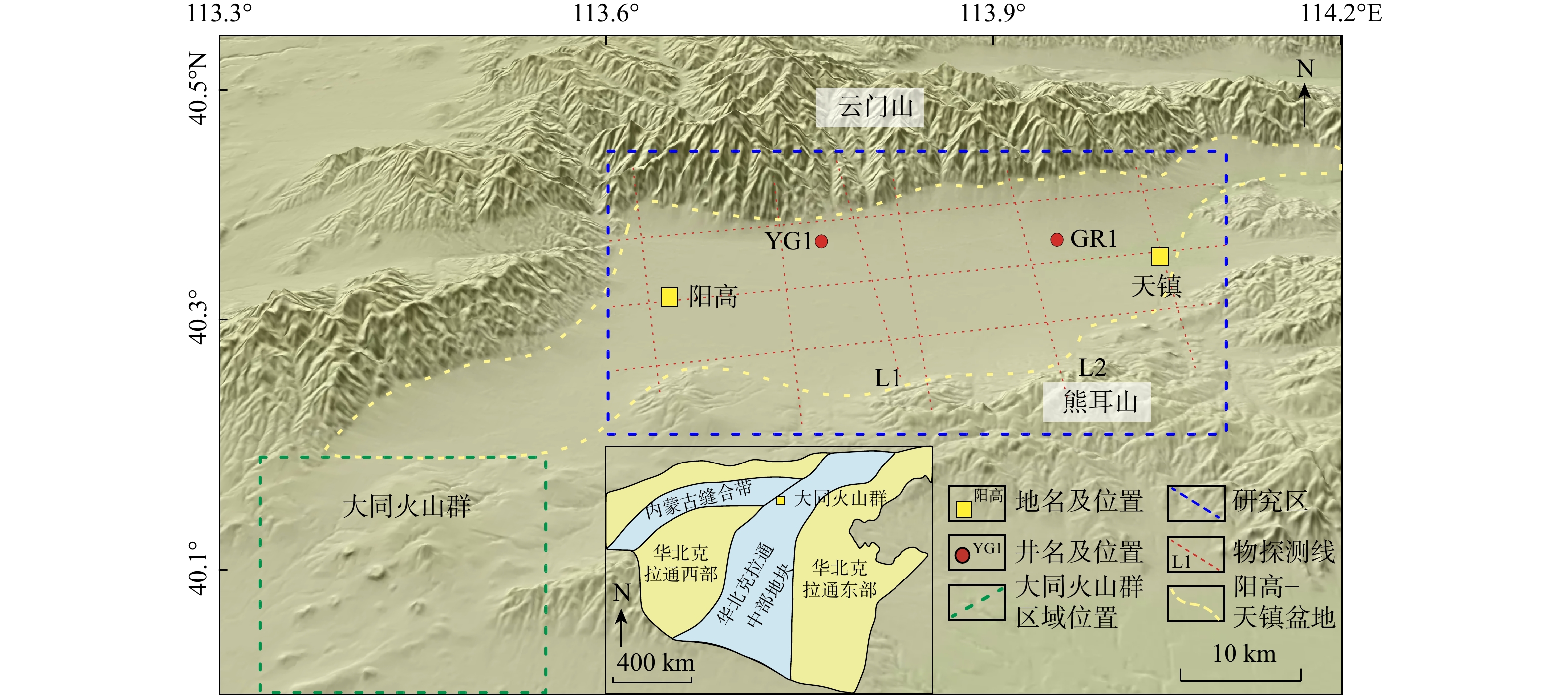
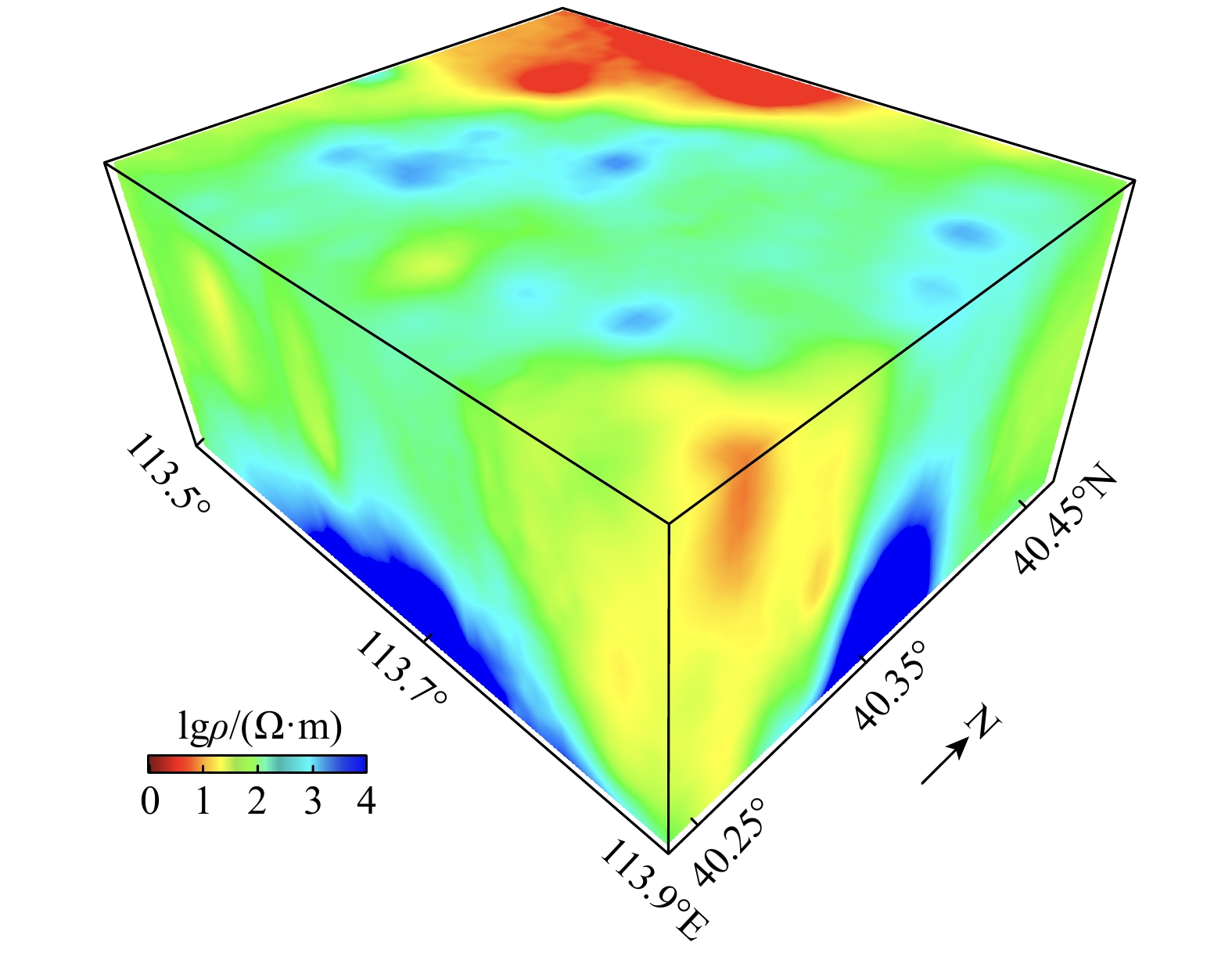
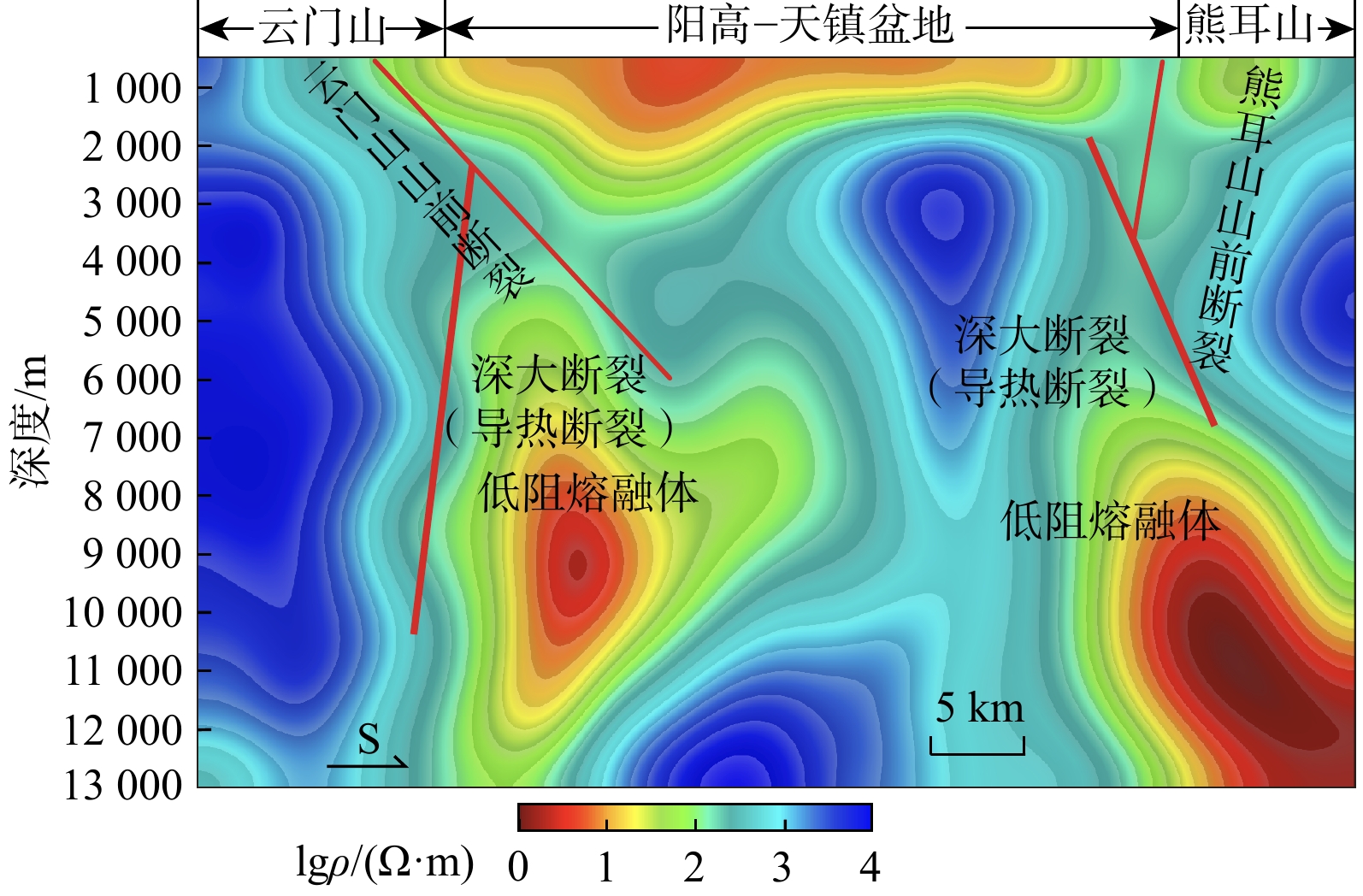
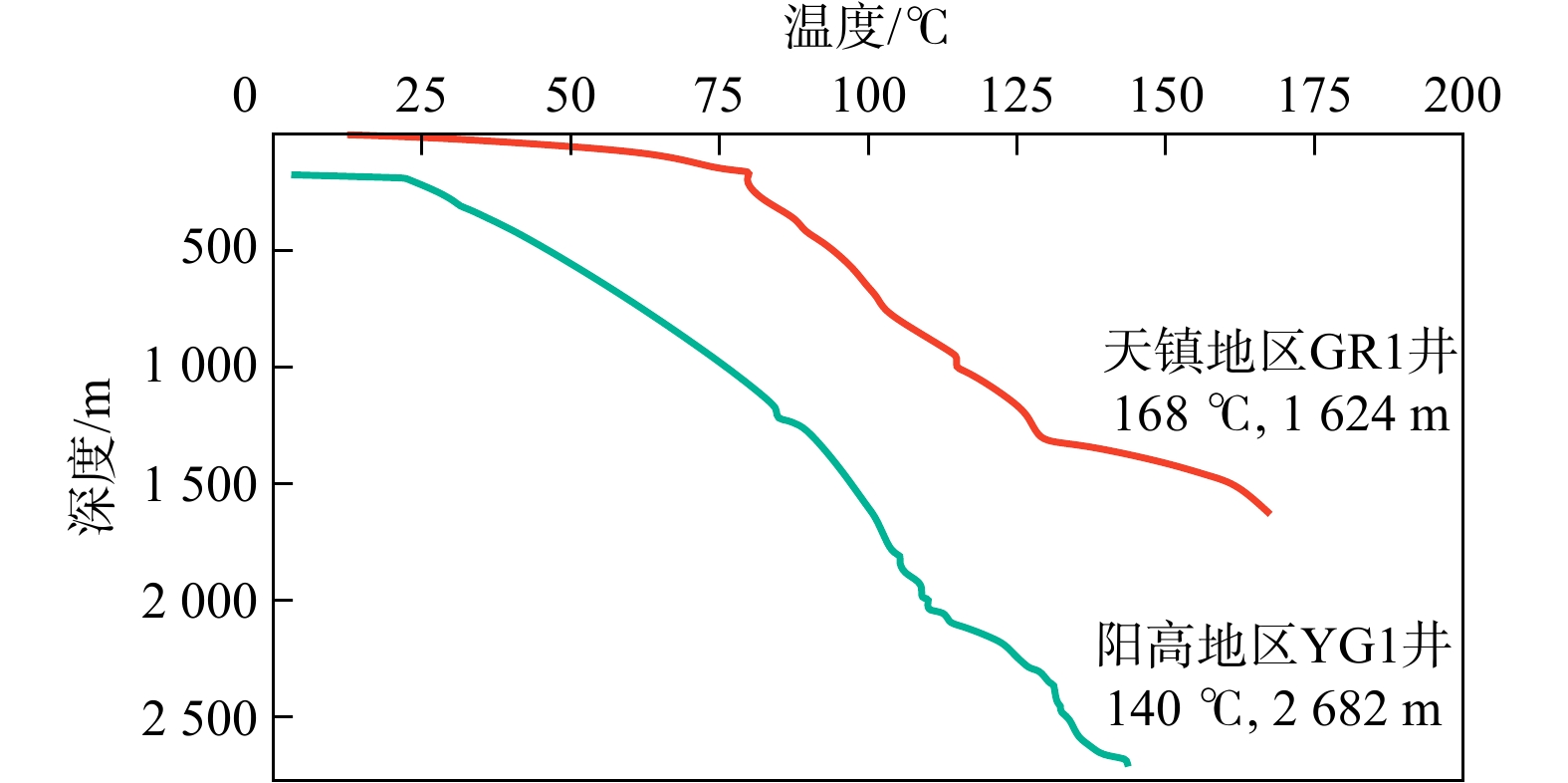
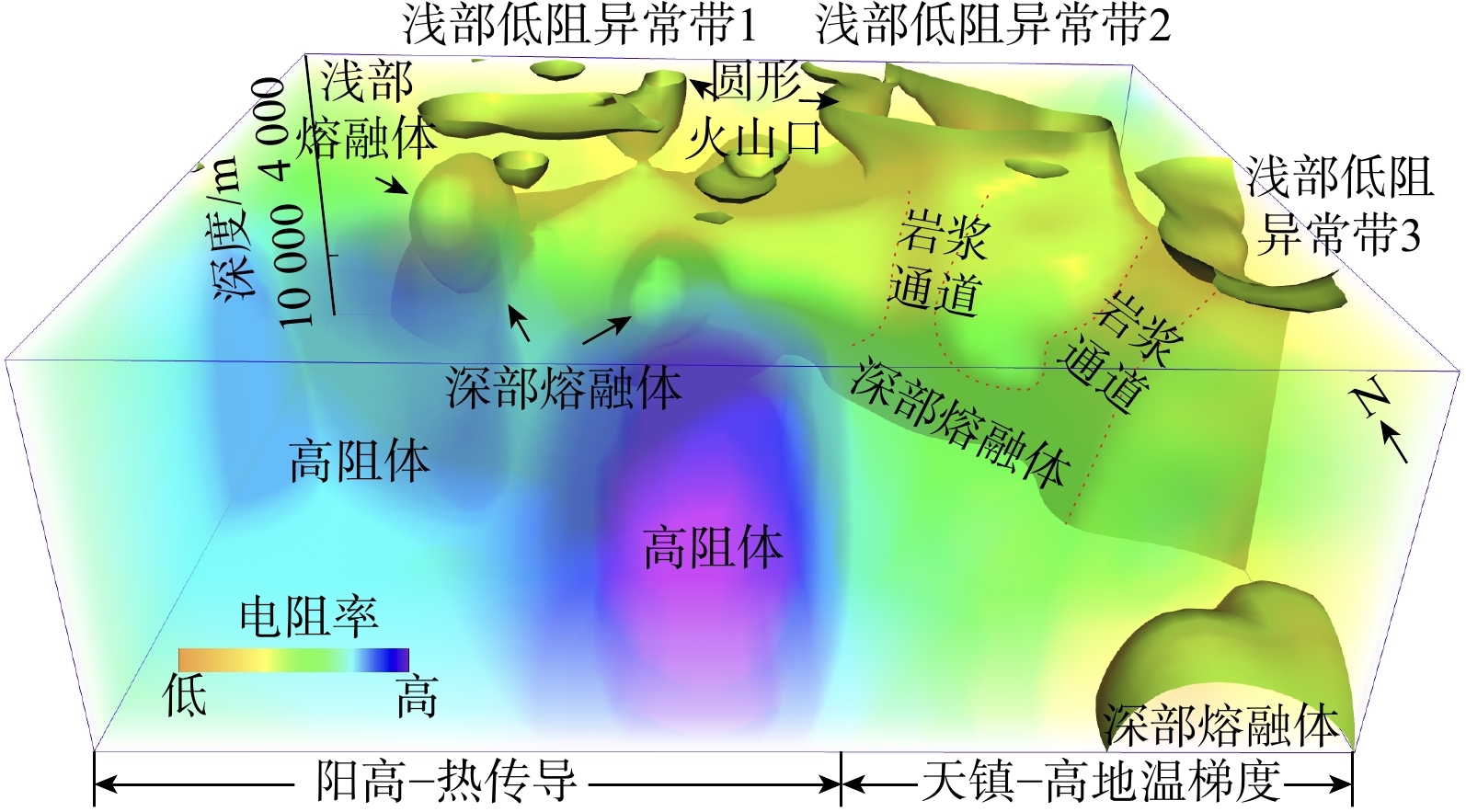
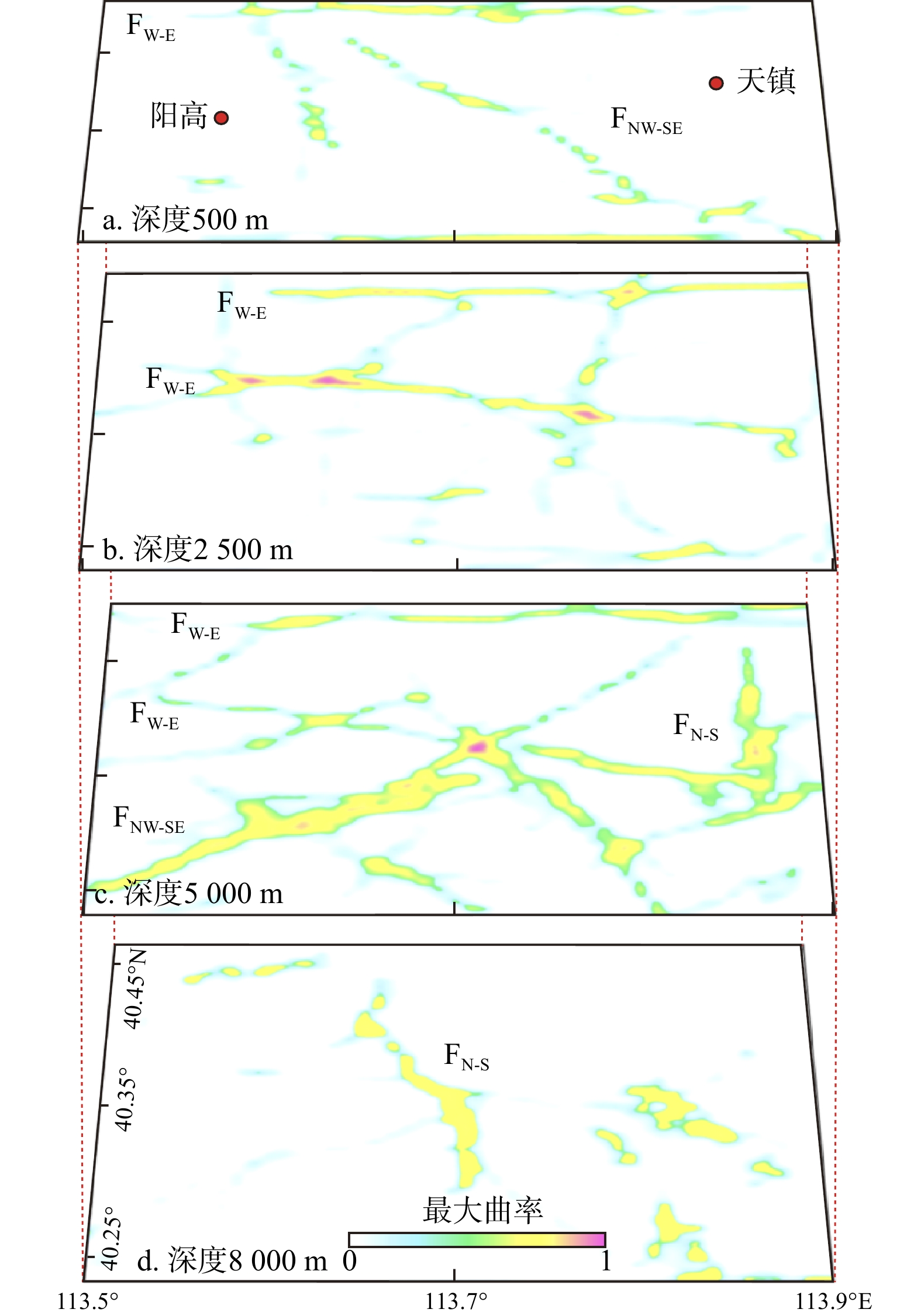
Based on the drilling and geophysical datasets from the Yanggao-Tianzhen region, the identification of heat transfer types, the analysis of the three-dimensional resistivity structure, the enhanced characterization of deep major faults, and the analysis of high-temperature heat source distribution were conducted.
In terms of stratigraphic structure, the Yanggao-Tianzhen Basin was composed of three distinct sequences from top to bottom: Quaternary, Neogene + Paleogene, and Archean. The Quaternary strata served as the regional caprock, facilitating heat transfer mainly through thermal conduction, while thermal convection occurred locally at shallow faults and stratigraphic interfaces. The faults within the basin, trending nearly East-West, played a crucial role in controlling heat distribution and guiding groundwater flow. The burial depth and type of heat sources were key factors influencing the formation and distribution of volcanic high-temperature geothermal resources. These heat sources were buried at depths ranging from
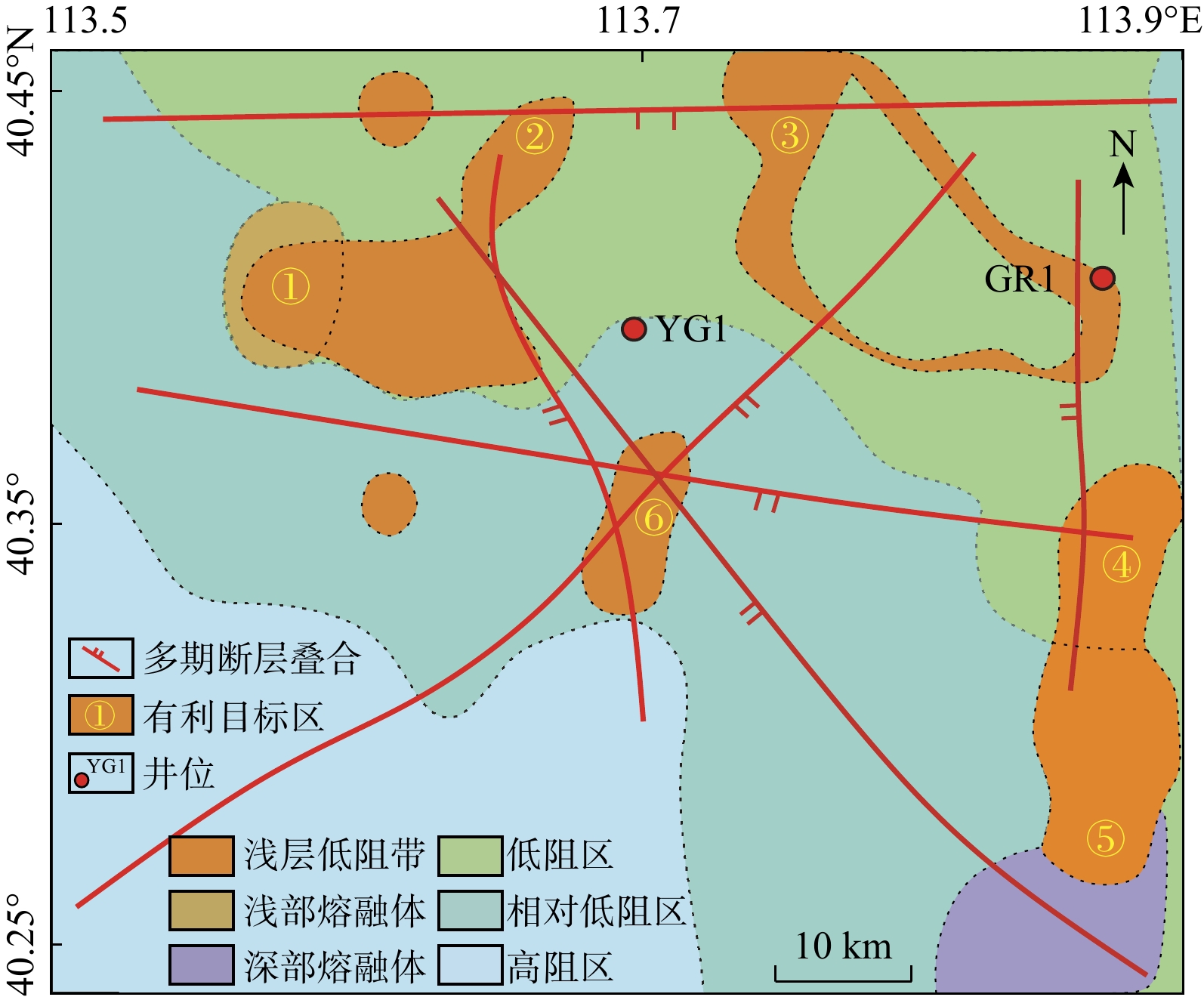
Combining heat source types, heat transfer characteristics, and fault characteristics, six favorable exploration targets within the Yanggao-Tianzhen Basin are proposed, which can be classified into three types: heat conduction type, magmatic eruption type, and deep major fault-controlled type. Among these targets, there are shallow high-temperature and low-resistivity anomaly zones with burial depths less than 3 000 m, covering an area of approximately 216 km2, and this delineates the core scope for the regional geothermal exploration and development.

| [1] |
王贵玲, 陆川. 碳中和目标驱动下地热资源开采利用技术进展[J]. 地质与资源, 2022, 31(3): 412-425. doi: 10.13686/j.cnki.dzyzy.2022.03.017
WANG G L, LU C. Progress of geothermal resources exploitation and utilization technology driven by carbon neutralization target[J]. Geology and Resources, 2022, 31(3): 412-425. (in Chinese with English abstract doi: 10.13686/j.cnki.dzyzy.2022.03.017
|
| [2] |
曹锐, 多吉, 李玉彬, 等. 我国中深层地热资源赋存特征、发展现状及展望[J]. 工程科学学报, 2022, 44(10): 1623-1631.
CAO R, DUO J, LI Y B, et al. Occurrence characteristics, development status, and prospect of deep high-temperature geothermal resources in China[J]. Chinese Journal of Engineering, 2022, 44(10): 1623-1631. (in Chinese with English abstract
|
| [3] |
孙焕泉, 毛翔, 吴陈冰洁, 等. 地热资源勘探开发技术与发展方向[J]. 地学前缘, 2024, 31(1): 400-411. doi: 10.13745/j.esf.sf.2023.9.25
SUN H Q, MAO X, WU C B J, et al. Geothermal resources exploration and development technology: Current status and development directions[J]. Earth Science Frontiers, 2024, 31(1): 400-411. (in Chinese with English abstract doi: 10.13745/j.esf.sf.2023.9.25
|
| [4] |
常宽, 张钱江, 蒋奇云, 等. 我国中深层地热能探测技术研究现状[J]. 地球物理学进展, 2025, 40(1): 54-69.
CHANG K, ZHANG Q J, JIANG Q Y, et al. Research status of geothermal energy detection technology in middle-deep depths in China[J]. Progress in Geophysics, 2025, 40(1): 54-69. (in Chinese with English abstract) .
|
| [5] |
陈作, 赵乐坤, 卫然, 等. 深层地热热储改造技术进展与发展建议[J]. 石油钻探技术, 2024, 52(6): 10-15.
CHEN Z, ZHAO L K, WEI R, et al. Technical advancements and development suggestions of geothermal heat reservoir stimulation in deep formations[J]. Petroleum Drilling Techniques, 2024, 52(6): 10-15. (in Chinese with English abstract
|
| [6] |
许天福, 文冬光, 袁益龙. 干热岩地热能开发技术挑战与发展战略[J]. 地球科学, 2024, 49(6): 2131-2147. doi: 10.3799/dqkx.2023.047
XU T F, WEN D G, YUAN Y L. Technical challenges and strategy of geothermal energy development from hot dry rock[J]. Earth Science, 2024, 49(6): 2131-2147. (in Chinese with English abstract doi: 10.3799/dqkx.2023.047
|
| [7] |
李根生, 武晓光, 宋先知, 等. 干热岩地热资源开采技术现状与挑战[J]. 石油科学通报, 2022, 7(3): 343-364. doi: 10.3969/j.issn.2096-1693.2022.03.031
LI G S, WU X G, SONG X Z, et al. Status and challenges of hot dry rock geothermal resource exploitation[J]. Petroleum Science Bulletin, 2022, 7(3): 343-364. (in Chinese with English abstract doi: 10.3969/j.issn.2096-1693.2022.03.031
|
| [8] |
柴琛, 周昌, 夏钊, 等. 新疆某千米埋深隧道断层控制地热成因及热害评价[J]. 地质科技通报, 2025, 44(4): 304-315. doi: 10.19509/j.cnki.dzkq.tb20240290
CHAI C, ZHOU C, XIA Z, et al. Geothermal genesis and hazard assessment for a fault-controlled kilometerdeep tunnel in Xinjiang[J]. Bulletin of Geological Science and Technology, 2025, 44(4): 304-315. (in Chinese with English abstract doi: 10.19509/j.cnki.dzkq.tb20240290
|
| [9] |
王轲, 刘明亮, 师红杰, 等. 西藏卡吾地热水地球化学特征及其成因机制[J]. 地质科技通报, 2025, 44(4): 142-153. doi: 10.19509/j.cnki.dzkq.tb20240477
WANG K, LIU M L, SHI H J, et al. Geochemical characteristics and genesis mechanisms of Kawu geothermal water in Tibet[J]. Bulletin of Geological Science and Technology, 2025, 44(4): 142-153. (in Chinese with English abstract doi: 10.19509/j.cnki.dzkq.tb20240477
|
| [10] |
BERGFELD D, LOWENSTERN J, HUNT A, et al. Gas and isotope chemistry of thermal features in Yellowstone National Park, Wyoming[R]. Reston, U.S.: U. S. Geological Survey, 2011.
|
| [11] |
LOWENSTERN J B, BERGFELD D, EVANS W C, et al. Generation and evolution of hydrothermal fluids at Yellowstone: Insights from the Heart Lake Geyser Basin[J]. Geochemistry, Geophysics, Geosystems, 2012, 13(1): 2011GC003835. doi: 10.1029/2011gc003835
|
| [12] |
FOURNIER R O. Geochemistry and dynamics of the Yellowstone National Park hydrothermal system[J]. Annual Review of Earth and Planetary Sciences, 1989, 17: 13-53. doi: 10.1146/annurev.ea.17.050189.000305
|
| [13] |
CHRISTIANSEN R L, FOULGER G R, EVANS J R. Upper-mantle origin of the Yellowstone hotspot[J]. Geological Society of America Bulletin, 2002, 114(10): 1245-1256. doi: 10.1130/0016-7606(2002)114<1245:umooty>2.0.co;2
|
| [14] |
EVANS W C, BERGFELD D, VAN SOEST M C, et al. Geochemistry of low-temperature springs Northwest of Yellowstone caldera: Seeking the link between seismicity, deformation, and fluid flow[J]. Journal of Volcanology and Geothermal Research, 2006, 154(3/4): 169-180. doi: 10.1016/j.jvolgeores.2006.01.001
|
| [15] |
BALL J W , NORDSTROM D, CUNNINGHAM K M, et al. Water-chemistry and on-site sulfur-speciation data for selected springs in Yellowstone National Park, Wyoming, 1994-1995[R]. Reston, U.S.: U. S. Geological Survey, 1998.
|
| [16] |
ALAM M T, DHALI F, AMIN A. Present scenario of worldwide geothermal power generation[J]. Journal of Electrical and Power System Engineering, 2020, 6(3): 21-30. doi: 10.46610/joepse.2020.v06i03.003
|
| [17] |
MOORE J N, SIMMONS S F. More power from below[J]. Science, 2013, 340(6135): 933-934. doi: 10.1126/science.1235640
|
| [18] |
LIMBERGER J, BOXEM T, PLUYMAEKERS M, et al. Geothermal energy in deep aquifers: A global assessment of the resource base for direct heat utilization[J]. Renewable and Sustainable Energy Reviews, 2018, 82: 961-975. doi: 10.1016/j.rser.2017.09.084
|
| [19] |
冯波, 曹云龙, 齐晓飞, 等. 增强型地热系统热−水动力−力学(THM)耦合模拟: 以河北马头营凸起区为例[J]. 吉林大学学报(地球科学版), 2023, 53(6): 1892-1906. doi: 10.13278/j.cnki.jjuese.20230230
FENG B, CAO Y L, QI X F, et al. Thermal-hydrodynamic-mechanical(THM)coupling simulation of enhanced geothermal system development in matouying uplift area, Hebei Province[J]. Journal of Jilin University (Earth Science Edition), 2023, 53(6): 1892-1906. (in Chinese with English abstract doi: 10.13278/j.cnki.jjuese.20230230
|
| [20] |
康凤新, 张保建, 崔洋, 等. 华北中东部高温地热能成因机制[J]. 地学前缘, 2024, 31(6): 31-51. doi: 10.13745/j.esf.sf.2024.7.9
KANG F X, ZHANG B J, CUI Y, et al. Formation of high-temperature geothermal reservoirs in central and eastern North China[J]. Earth Science Frontiers, 2024, 31(6): 31-51. (in Chinese with English abstract doi: 10.13745/j.esf.sf.2024.7.9
|
| [21] |
张浩, 雷建设, 宋晓燕, 等. 山西断陷带及其邻区背景噪声面波直接反演成像[J]. CT理论与应用研究, 2025, 34(2): 175-189. doi: 10.15953/j.ctta.2025.002
ZHANG H, LEI J S, SONG X Y, et al. Direct surface-wave tomography from ambient noise in the Shanxi rift zone and adjacent areas[J]. Computerized Tomography Theory and Applications, 2025, 34(2): 175-189. (in Chinese with English abstract doi: 10.15953/j.ctta.2025.002
|
| [22] |
黄翔, 丁志峰, 宁杰远, 等. 基于背景噪声和地震面波联合反演华北克拉通中部岩石圈结构[J]. 地震学报, 2022, 44(4): 539-554. doi: 10.11939/jass.20210042
HUANG X, DING Z F, NING J Y, et al. Joint inversion of the lithospheric structure of the Central North China Craton from ambient noise and seismic surface wave[J]. Acta Seismologica Sinica, 2022, 44(4): 539-554. (in Chinese with English abstract doi: 10.11939/jass.20210042
|
| [23] |
唐有彩, 陶开, 钮凤林. 利用远震地震波形畸变现象探测地幔低速体[J]. 地球物理学报, 2017, 60(10): 3753-3764.
TANG Y C, TAO K, NIU F L. Detecting slow velocity anomalies in deep mantle from waveform distortion of teleseismic events[J]. Chinese Journal of Geophysics, 2017, 60(10): 3753-3764. (in Chinese with English abstract
|
| [24] |
ZHANG H Q, HUANG Q H, ZHAO G Z, et al. Three-dimensional conductivity model of crust and uppermost mantle at the northern trans North China orogen: Evidence for a mantle source of Datong volcanoes[J]. Earth and Planetary Science Letters, 2016, 453: 182-192. doi: 10.1016/j.jpgl.2016.08.025
|
| [25] |
XU X B, ZHAO L, WANG K, et al. Indication from finite-frequency tomography beneath the North China Craton: The heterogeneity of craton destruction[J]. Science China Earth Sciences, 2018, 61(9): 1238-1260.
|
| [26] |
朱悦, 彭荣华, 胡祥云, 等. 基于变维度贝叶斯反演的地热黏土盖层音频大地电磁探测能力研究[J]. 地质科技通报, 2024, 43(3): 341-350. doi: 10.19509/j.cnki.dzkq.tb20220697
ZHU Y, PENG R H, HU X Y, et al. Research on audio-frequency magnetotelluric detection capability of geothermal clay cap based on trans-dimensional Bayesian inversion[J]. Bulletin of Geological Science and Technology, 2024, 43(3): 341-350. (in Chinese with English abstract doi: 10.19509/j.cnki.dzkq.tb20220697
|
| [27] |
朱敏, 吴庆举, 宁杰远, 等. 利用接收函数三维Kirchhoff偏移成像方法研究华北克拉通中西部地幔过渡带结构[J]. 中国科学: 地球科学, 2024, 54(9): 2835-2847.
ZHU M , WU Q J, NING J Y, et. al. Structure of the mantle transition zone in the central and western parts of the North China Craton using the receiver function 3D Kirchhoff migration method[J]. Scientia Sinica (Terrae), 2024, 54(9): 2835-2847. (in Chinese with English abstract
|
| [28] |
侯爵, 潘佳铁, 李永华, 等. 华北克拉通中西部地壳S波速度结构及其地质意义[J]. 地球物理学报, 2023, 66(5): 1960-1975. doi: 10.6038/cjg2022Q0287
HOU J, PAN J T, LI Y H, et al. Crustal S-wave velocity structure in the western and central North China Craton and its geological significance[J]. Chinese Journal of Geophysics, 2023, 66(5): 1960-1975. (in Chinese with English abstract doi: 10.6038/cjg2022Q0287
|
| [29] |
潘纪顺, 李朋辉, 段永红, 等. 华北克拉通中西部地区的地壳结构研究[J]. 地震地质, 2021, 43(5): 1269-1291. doi: 10.3969/j.issn.0253-4967.2021.05.014
PAN J S, LI P H, DUAN Y H, et al. Study on the crustal structure of the central and western part of the North China Craton[J]. Seismology and Geology, 2021, 43(5): 1269-1291. (in Chinese with English abstract doi: 10.3969/j.issn.0253-4967.2021.05.014
|
| [30] |
汤艳杰, 英基丰, 赵月鹏, 等. 华北克拉通岩石圈地幔特征与演化过程[J]. 中国科学: 地球科学, 2021, 51(9): 1489-1503.
TANG Y J, YING J F, ZHAO Y P, et al. Nature and secular evolution of the lithospheric mantle beneath the North China Craton[J]. Scientia Sinica (Terrae), 2021, 51(9): 1489-1503. (in Chinese with English abstract
|
| [31] |
朱日祥, 陈凌, 吴福元, 等. 华北克拉通破坏的时间、范围与机制[J]. 中国科学: 地球科学, 2011, 41(5): 583-592.
ZHU R X, CHEN L, WU F Y, et al. Timing, scale and mechanism of the destruction of the North China Craton[J]. Scientia Sinica (Terrae), 2011, 41(5): 583-592.
|
| [32] |
LI S Z, ZHAO G C, DAI L M, et al. Cenozoic faulting of the Bohai Bay Basin and its bearing on the destruction of the eastern North China Craton[J]. Journal of Asian Earth Sciences, 2012, 47: 80-93. doi: 10.1016/j.jseaes.2011.06.011
|
| [33] |
胡小猛, 周天航, 蔡顺, 等. 大同火山活动在区域沉积中的记录和阶段性历史研究[J]. 地理学报, 2017, 72(9): 131-141.
HU X M, ZHOU T H, CAI S, et al. The sedimentary record of Datong volcano eruption and its active stages[J]. Acta Geographica Sinica, 2017, 72(9): 131-141. (in Chinese with English abstract
|
| [34] |
陈玲. 山西大同新生代火山群碱性玄武岩喷发前状态研究[D]. 北京: 中国地质大学(北京), 2019.
CHEN L. Study on the pre-eruption state of Cenozoic volcanic group alkaline basalt in Datong, Shanxi[D]. Beijing: China University of Geosciences (Beijing), 2019. (in Chinese with English abstract
|
| [35] |
陈美君. 基于沉积记录的大同盆地火山活动历史与古环境研究[D]. 上海: 上海师范大学, 2017.
CHEN M J. The study on the Datong volcano active stages and paleolake changes based on the sedimentary records[D]. Shanghai: Shanghai Normal University, 2017. (in Chinese with English abstract
|
| [36] |
张昆, 刘磊, 马兴知, 等. 大地电磁测深数据处理方法技术进展[J]. 中国地质调查, 2024, 11(5): 129-138.
ZHANG K, LIU L, MA X Z, et al. Technical progress of processing methods for magnetotelluric sounding data[J]. Geological Survey of China, 2024, 11(5): 129-138. (in Chinese with English abstract
|
| [37] |
伍亮, 李桐林, 朱成, 等. 大地电磁测深法中静态效应及其反演[J]. 地球物理学进展, 2015, 30(2): 840-846.
WU L, LI T L, ZHU C, et al. Research and inversion static effect in magnetotelluric[J]. Progress in Geophysics, 2015, 30(2): 840-846. (in Chinese with English abstract
|
| [38] |
何亚东, 贾小丰, 张自宾, 等. 阳高−天镇地区高温地热系统形成机制及资源开发前景研究[J]. 水文地质工程地质, 2023, 50(4): 39-49. doi: 10.16030/j.cnki.issn.1000-3665.202302065
HE Y D, JIA X F, ZHANG Z B, et al. A study of the formation mechanism and resource development prospect of the high-temperature geothermal system in the Yanggao-Tianzhen area[J]. Hydrogeology & Engineering Geology, 2023, 50(4): 39-49. (in Chinese with English abstract doi: 10.16030/j.cnki.issn.1000-3665.202302065
|
| [39] |
周文龙. 大同盆地东北部地热区电性结构探测研究[D]. 武汉: 中国地质大学(武汉), 2021.
ZHOU W L. Study on electrical structure detection in geothermal area in Northeast Datong Basin[D]. Wuhan: China University of Geosciences (Wuhan), 2021. (in Chinese with English abstract
|
| [40] |
张炯, 黄少鹏, 傅饶, 等. 大地电磁测深在火山区地热研究中的应用[J]. 岩石学报, 2017, 33(1): 279-290.
ZHANG J, HUANG S P, FU R, et al. Application of magnetotellurics in geothermal exploration and research in volcano areas[J]. Acta Petrologica Sinica, 2017, 33(1): 279-290. (in Chinese with English abstract
|
| [41] |
赵凌强, 詹艳, 胡亚轩, 等. 三维大地电磁方法揭示的吉林龙岗板内单成因火山深部岩浆系统[J]. 地球物理学报, 2024, 67(11): 4220-4232. doi: 10.6038/cjg2023R0502
ZHAO L Q, ZHAN Y, HU Y X, et al. The deep magma system in the Longgang intraplate monogenetic volcano of Jilin Province revealed by 3D magnetotelluric method[J]. Chinese Journal of Geophysics, 2024, 67(11): 4220-4232. (in Chinese with English abstract doi: 10.6038/cjg2023R0502
|
| [42] |
赵国泽, 陈小斌, 汤吉. 中国地球电磁法新进展和发展趋势[J]. 地球物理学进展, 2007, 22(4): 1171-1180. doi: 10.3969/j.issn.1004-2903.2007.04.024
ZHAO G Z, CHEN X B, TANG J. Advanced geo-electromagnetic methods in China[J]. Progress in Geophysics, 2007, 22(4): 1171-1180. (in Chinese with English abstract doi: 10.3969/j.issn.1004-2903.2007.04.024
|
| [43] |
张先康, 张成科, 赵金仁, 等. 长白山天池火山区岩浆系统深部结构的深地震测深研究[J]. 地震学报, 2002, 24(2): 135-143.
ZHANG X K, ZHANG C K, ZHAO J R, et al. Deep seismic sounding investigation into the deep structure of the magma system in Changbaishan Tianchi volconic region[J]. Acta Seismologica Sinica, 2002, 24(2): 135-143. (in Chinese with English abstract
|
Supported by:
Beijing Renhe Information Technology Co., Ltd.


 Submission System


 DownLoad: