| Citation: | WU Xiaobin,QIANG Xiaolong,ZHANG Xiaoyan,et al. Effect of CO2 flooding on the pore structure of tight sandstones: A case study of Chang 7 Member of Triassic Yanchang Formation in Ordos Basin[J]. Bulletin of Geological Science and Technology,2026,45(2):11-19 doi: 10.19509/j.cnki.dzkq.tb20240452

|
CO2 flooding is a crucial technology for enhancing oil recovery efficiency in tight oil reservoirs. CO2 injection reacts with in situ minerals in the formation, leading to changes in the pore structure of the rock. However, tight sandstones undergo complex diagenesis with significant differences in cement distribution, and it is therefore necessary to clarify the mechanisms of microstructural changes in tight sandstones with different cement characteristics during the CO2 flooding process.
In this study, CO2 flooding simulation experiments, cast thin sections analysis, scanning electron microscopy (SEM), nuclear magnetic resonance, and X-ray diffraction were adopted to investigate the changes in mineral composition and pore structures of tight sandstones before and after CO2 flooding.
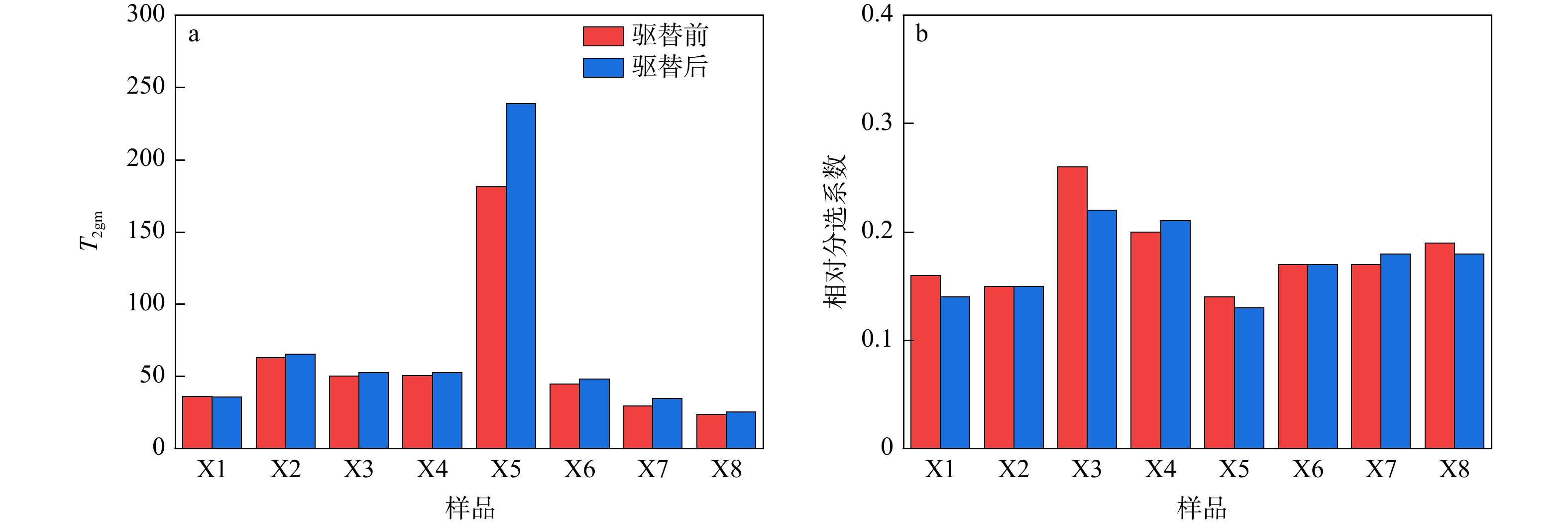
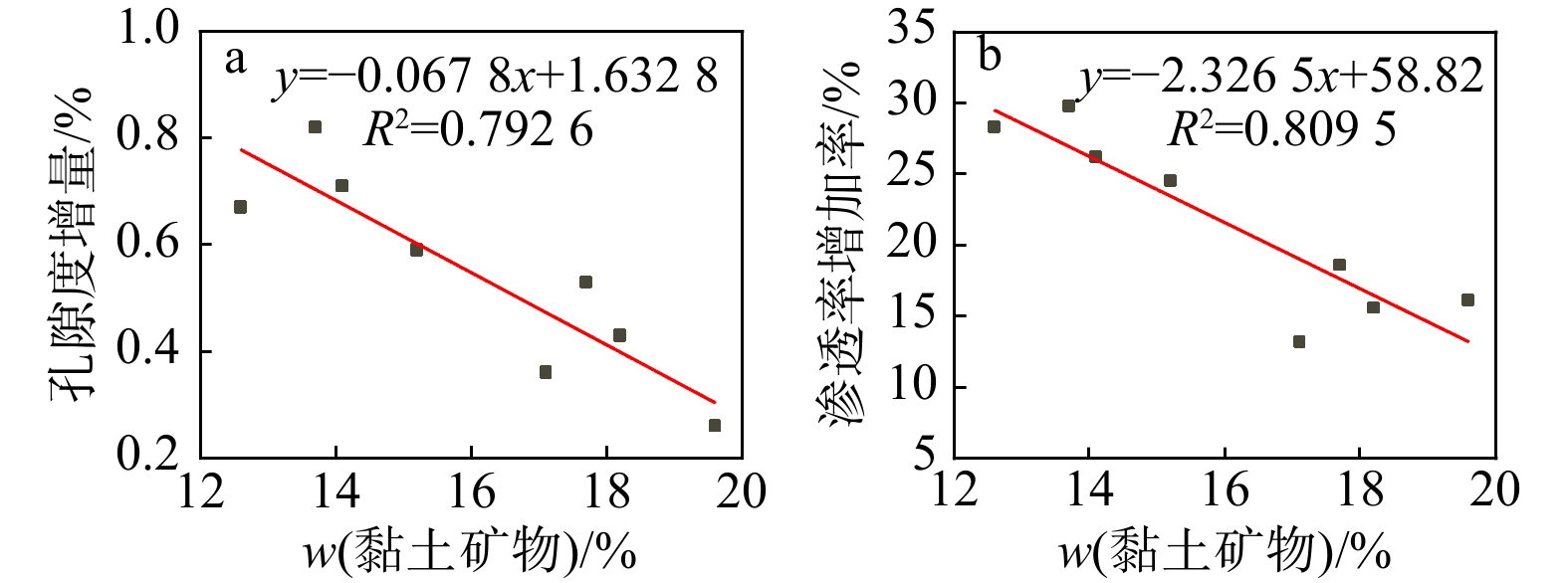
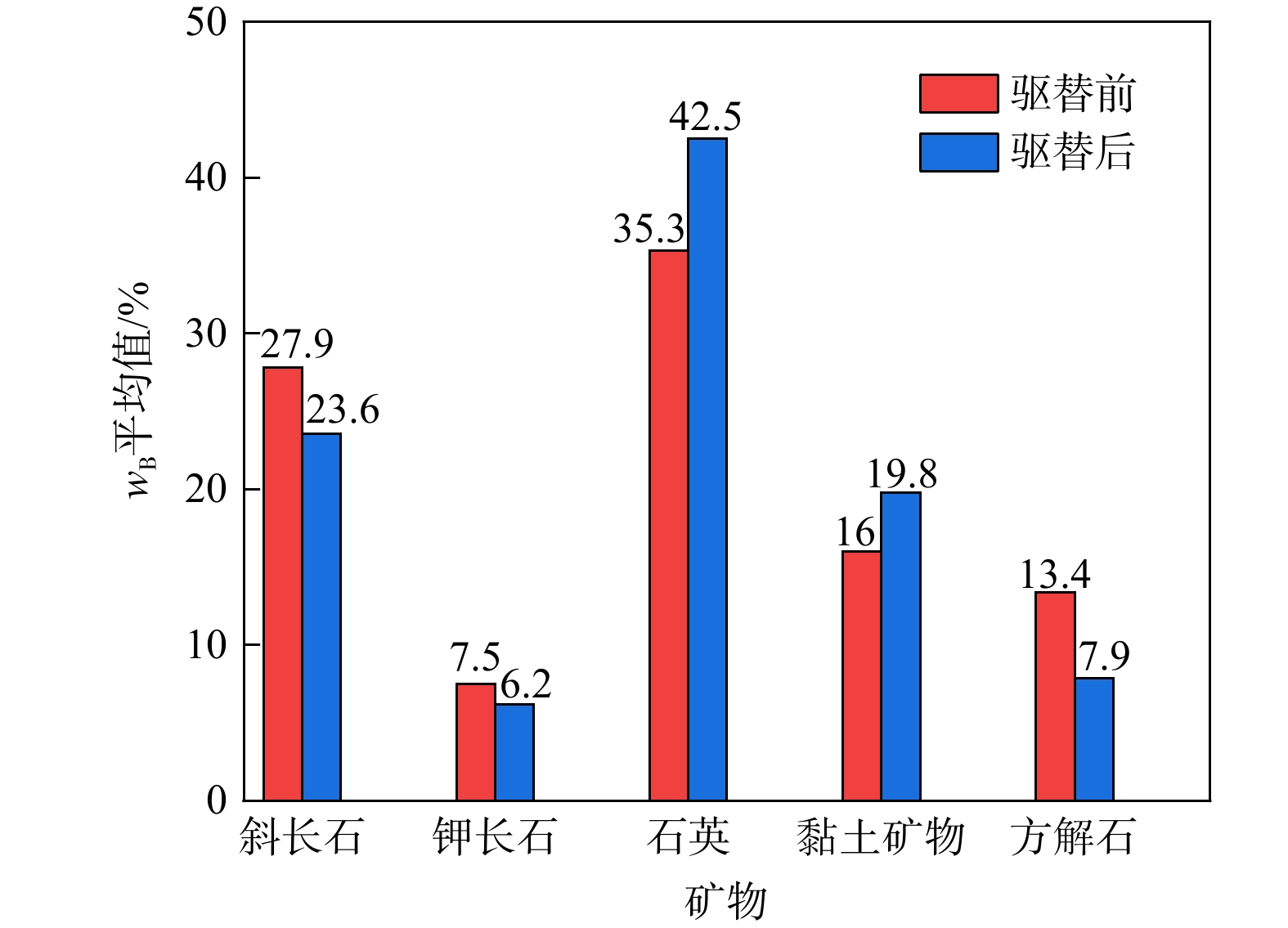
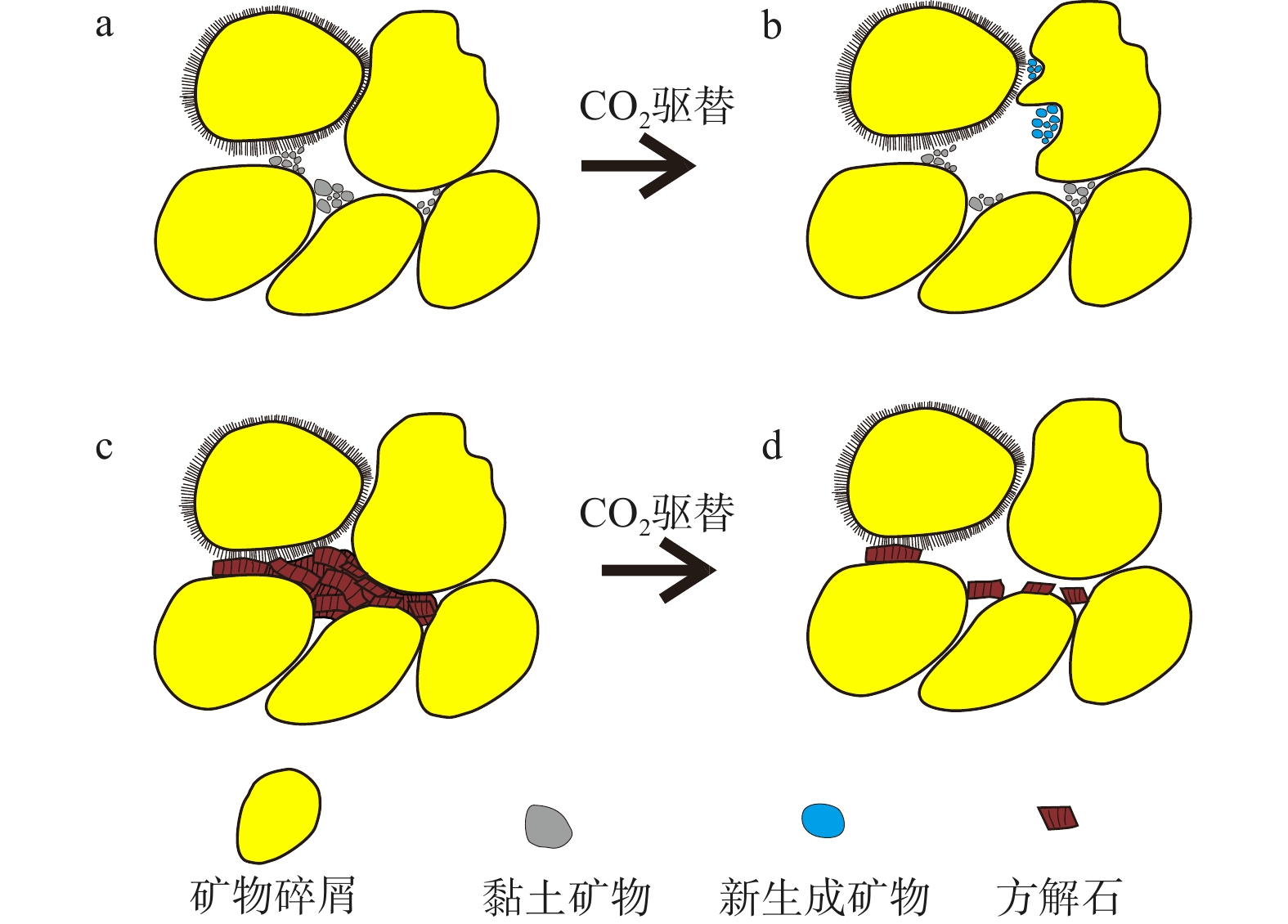
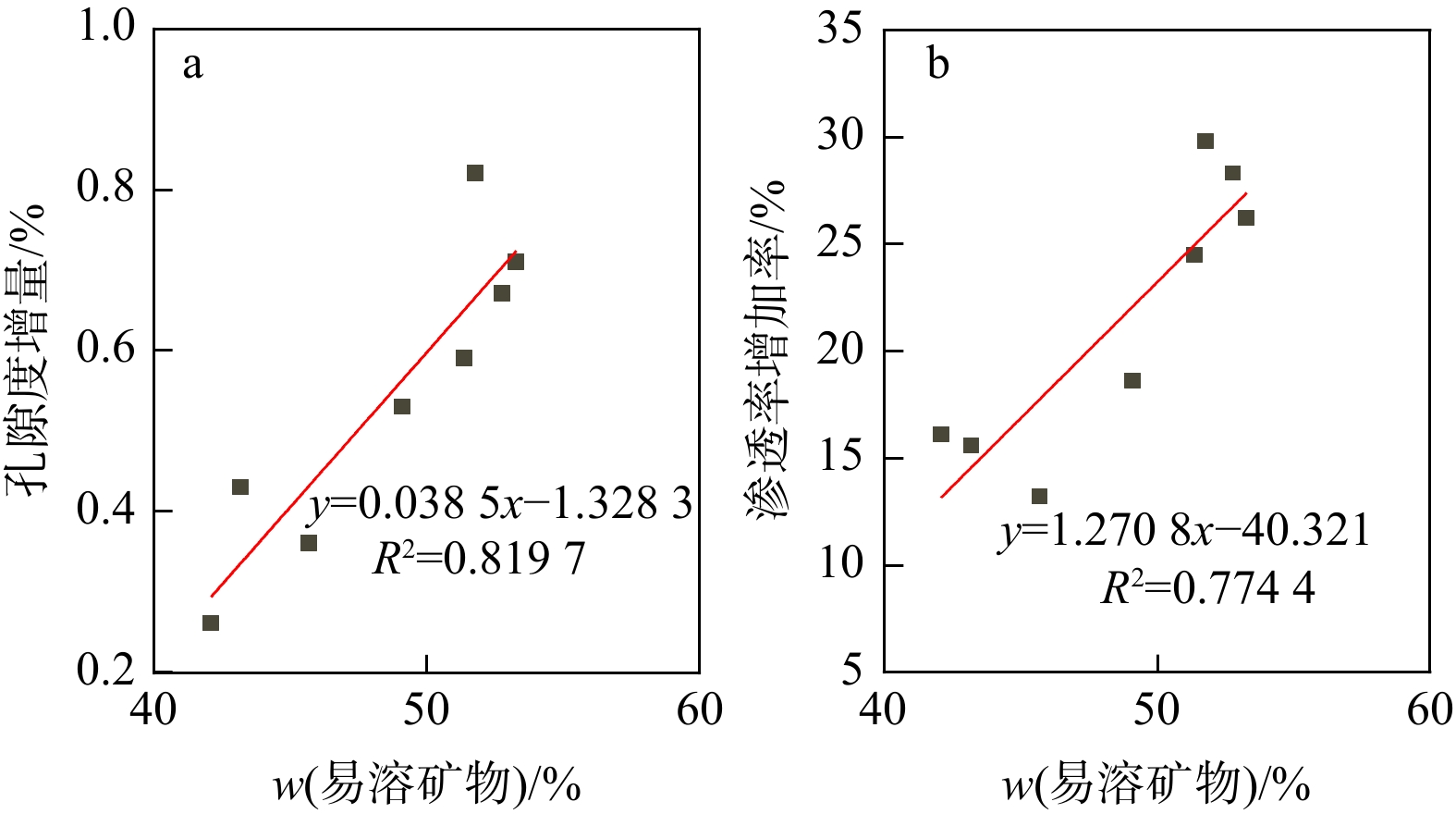
The results showed that the cements in tight sandstones were complex and diverse, mainly composed of clay minerals and calcite, with significant distribution differences among different cement types. Cements affected the mineralogical structure and pore morphology of tight sandstones. After CO2 flooding, the average porosity increment of tight sandstones reached 0.55%, the average permeability increase rate was 21.59%, and the average relative sorting coefficient decreased by only 0.01, indicating that CO2 flooding increased the porosity and permeability of the reservoir, but had a weak impact on the heterogeneity of the pore structure. During CO2 flooding, feldspar and calcite were dissolved, resulting in the precipitation of quartz and clay minerals. In tight sandstone with high clay content, CO2 dissolution was dispersed, and the newly precipitated minerals and clay detached from framework grains blocked pores, leading to minor changes in petrophysical properties. In tight sandstones with high calcite content, carbonic acid dissolved large amounts of calcite, creating new storage spaces and flow paths, significantly improving the petrophysical properties of tight sandstones. Therefore, CO2 flooding has different effects on the pore structure of tight sandstones with varying cement characteristics. CO2 flooding results in a much more significant improvement in the physical properties of tight sandstones with high calcite content than those with high clay content.
These results can provide new insights for the development and evaluation of tight sandstone reservoirs.

| [1] |
GHANIZADEH A, CLARKSON C R, AQUINO S, et al. Petrophysical and geomechanical characteristics of Canadian tight oil and liquid-rich gas reservoirs: Ⅱ Geomechanical property estimation[J]. Fuel, 2015, 153: 682-691. doi: 10.1016/j.fuel.2015.02.113
|
| [2] |
贾承造, 邹才能, 李建忠, 等. 中国致密油评价标准、主要类型、基本特征及资源前景[J]. 石油学报, 2012, 33(3): 343-350.
JIA C Z, ZOU C N, LI J Z, et al. Assessment criteria, main types, basic features and resource prospects of the tight oil in China[J]. Acta Petrolei Sinica, 2012, 33(3): 343-350. (in Chinese with English abstract
|
| [3] |
邹才能, 翟光明, 张光亚, 等. 全球常规-非常规油气形成分布、资源潜力及趋势预测[J]. 石油勘探与开发, 2015, 42(1): 13-25. doi: 10.11698/PED.2015.01.02
ZOU C N, ZHAI G M, ZHANG G Y, et al. Formation, distribution, potential and prediction of global conventional and unconventional hydrocarbon resources[J]. Petroleum Exploration and Development, 2015, 42(1): 13-25. (in Chinese with English abstract doi: 10.11698/PED.2015.01.02
|
| [4] |
LI Y, XU W K, WU P, et al. Dissolution versus cementation and its role in determining tight sandstone quality: A case study from the Upper Paleozoic in northeastern Ordos Basin, China[J]. Journal of Natural Gas Science and Engineering, 2020, 78: 103324. doi: 10.1016/j.jngse.2020.103324
|
| [5] |
WANG H T, LUN Z M, LYU C Y, et al. Nuclear-magnetic-resonance study on mechanisms of oil mobilization in tight sandstone reservoir exposed to carbon dioxide[J]. SPE Journal, 2018, 23(3): 750-761. doi: 10.2118/179554-PA
|
| [6] |
王伟, 宋渊娟, 黄静, 等. 利用高压压汞实验研究致密砂岩孔喉结构分形特征[J]. 地质科技通报, 2021, 40(4): 22-30. doi: 10.19509/j.cnki.dzkq.2021.0402
WANG W, SONG Y J, HUANG J, et al. Fractal characteristics of pore-throat structure in tight sandstones using high-pressure mercury intrusion porosimetry[J]. Bulletin of Geological Science and Technology, 2021, 40(4): 22-30. (in Chinese with English abstract doi: 10.19509/j.cnki.dzkq.2021.0402
|
| [7] |
SOULAINE C, ROMAN S, KOVSCEK A, et al. Mineral dissolution and wormholing from a pore-scale perspective[J]. Journal of Fluid Mechanics, 2017, 827: 457-483. doi: 10.1017/jfm.2017.499
|
| [8] |
LIU B, WANG C, ZHANG J, et al. Displacement mechanism of oil in shale inorganic nanopores by supercritical carbon dioxide from molecular dynamics simulations[J]. Energy & Fuels, 2017, 31(1): 738-746.
|
| [9] |
SONG Z J, SONG Y L, LI Y Z, et al. A critical review of CO2 enhanced oil recovery in tight oil reservoirs of North America and China[J]. Fuel, 2020, 276: 118006. doi: 10.1016/j.fuel.2020.118006
|
| [10] |
郑长远, 雷宏武, 崔银祥, 等. 西宁盆地南部天然CO2泄漏和浅部含水层响应[J]. 地质科技通报, 2023, 42(6): 223-232. doi: 10.19509/j.cnki.dzkq.tb20220529
ZHENG C Y, LEI H W, CUI Y X, et al. Natural CO2 leakage and responses of shallow aquifers in the southern Xining Basin[J]. Bulletin of Geological Science and Technology, 2023, 42(6): 223-232. (in Chinese with English abstract doi: 10.19509/j.cnki.dzkq.tb20220529
|
| [11] |
YANG L L, XU T F, YANG B, et al. Effects of mineral composition and heterogeneity on the reservoir quality evolution with CO2 intrusion[J]. Geochemistry, Geophysics, Geosystems, 2014, 15(3): 605-618.
|
| [12] |
KAMPMAN N, BUSCH A, BERTIER P, et al. Observational evidence confirms modelling of the long-term integrity of CO2-reservoir caprocks[J]. Nature Communications, 2016, 7: 12268. doi: 10.1038/ncomms12268
|
| [13] |
陈儒贤, 侯加根. 高尚堡油田高3102断块沙三2+3亚段中低渗透储层可动流体赋存特征及其影响因素[J]. 地质科技通报, 2023, 42(6): 174-186. doi: 10.19509/j.cnki.dzkq.tb20220184
CHEN R X, HOU J G. Occurrence characteristics and influencing factors of movable fluid in the medium- and low-permeability reservoirs of the Es32+3 submember of the Gao3102 fault block in the Gaoshangpu oilfield[J]. Bulletin of Geological Science and Technology, 2023, 42(6): 174-186. (in Chinese with English abstract doi: 10.19509/j.cnki.dzkq.tb20220184
|
| [14] |
WANG Q, WANG L, GLOVER P W J, et al. Effect of a pore throat microstructure on miscible CO2 soaking alternating gas flooding of tight sandstone reservoirs[J]. Energy & Fuels, 2020, 34(8): 9450-9462.
|
| [15] |
LIN R, YU Z H, ZHAO J Z, et al. Experimental evaluation of tight sandstones reservoir flow characteristics under CO2-Brine-Rock multiphase interactions: A case study in the Chang 6 layer, Ordos Basin, China[J]. Fuel, 2022, 309: 122167. doi: 10.1016/j.fuel.2021.122167
|
| [16] |
AL-BAYATI D, SAEEDI A, MYERS M, et al. Insights into immiscible supercritical CO2 EOR: An XCT scanner assisted flow behaviour in layered sandstone porous media[J]. Journal of CO2 Utilization, 2019, 32: 187-195. doi: 10.1016/j.jcou.2019.04.002
|
| [17] |
张芥瑜, 张凤奇, 刘阳, 等. 鄂尔多斯盆地WL地区延长组储层成岩作用与孔隙结构差异成因[J]. 地质科技通报, 2023, 42(6): 162-173.
ZHANG J Y, ZHANG F Q, LIU Y, et al. Causes of reservoir diagenesis and pore structure differences of the Yanchang Formation in the WL area of the Ordos Basin[J]. Bulletin of Geological Science and Technology, 2023, 42(6): 162-173. (in Chinese with English abstract
|
| [18] |
REN J J, YIN Z Y, LI Q P, et al. Pore-scale investigation of CH4 hydrate kinetics in clayey-silty sediments by low-field NMR[J]. Energy & Fuels, 2022, 36(24): 14874-14887.
|
| [19] |
WANG W, LI X Y, WEI Z K, et al. Effect of CO2-brine-rock interactions on the pore structure of the tight sandstone during CO2 flooding: A case study of Chang 7 Member of the Triassic Yanchang Formation in the Ordos Basin, China[J]. ACS Omega, 2023, 8(4): 3998-4009. doi: 10.1021/acsomega.2c06805
|
| [20] |
ZHAO D F, YIN D D. Effect of fluid/rock interactions on physical character of tight sandstone reservoirs during CO2 flooding[J]. Geofluids, 2021, 2021(1): 5552169.
|
| [21] |
WEI B, ZHANG X, WU R N, et al. Pore-scale monitoring of CO2 and N2 flooding processes in a tight formation under reservoir conditions using nuclear magnetic resonance (NMR): A case study[J]. Fuel, 2019, 246: 34-41. doi: 10.1016/j.fuel.2019.02.103
|
| [22] |
WEI B, ZHANG X, LIU J, et al. Adsorptive behaviors of supercritical CO2 in tight porous media and triggered chemical reactions with rock minerals during CO2-EOR and-sequestration[J]. Chemical Engineering Journal, 2020, 381: 122577. doi: 10.1016/j.cej.2019.122577
|
| [23] |
王伟, 陈朝兵, 许爽, 等. 鄂尔多斯盆地延长组致密砂岩不同尺度孔喉分形特征及其控制因素[J]. 石油实验地质, 2022, 44(1): 33-40.
WANG W, CHEN Z B, XU S, et al. Fractal characteristics and its controlling factors of pore-throat with different scales in tight sandstones of the Yanchang Formation in the Ordos Basin[J]. Petroleum Geology & Experiment, 2022, 44(1): 33-40. (in Chinese with English abstract
|
| [24] |
王伟, 朱玉双, 余彩丽, 等. 鄂尔多斯盆地致密砂岩储层孔喉分布特征及其差异化成因[J]. 天然气地球科学, 2019, 30(10): 1439-1450. doi: 10.11764/j.issn.1672-1926.2019.06.006
WANG W, ZHU Y S, YU C L, et al. Pore size distribution of tight sandstone reservoir and their differential origin in Ordos Basin[J]. Natural Gas Geoscience, 2019, 30(10): 1439-1450. (in Chinese with English abstract doi: 10.11764/j.issn.1672-1926.2019.06.006
|
| [25] |
王伟, 许兆林, 李维振, 等. 基于高斯过程回归和高压压汞测定致密砂岩渗透率: 以鄂尔多斯盆地长7段致密砂岩为例[J]. 地质科技通报, 2022, 41(4): 30-37. doi: 10.19509/j.cnki.dzkq.2022.0117
WANG W, XU Z L, LI W Z, et al. Determination of permeability in tight sandstone reservoirs using Gaussian process regression and high-pressure porosimetry: A case study of the Member-7 of Yanchang Formation in the Jiyuan area of the Ordos Basin[J]. Bulletin of Geological Science and Technology, 2022, 41(4): 30-37. (in Chinese with English abstract doi: 10.19509/j.cnki.dzkq.2022.0117
|
| [26] |
WAN T, WANG W M, JIANG J Q, et al. Pore-scale analysis of gas huff-n-puff enhanced oil recovery and waterflooding process[J]. Fuel, 2018, 215: 561-571. doi: 10.1016/j.fuel.2017.11.033
|
| [27] |
YUAN G H, CAO Y C, JIA Z Z, et al. Selective dissolution of feldspars in the presence of carbonates: The way to generate secondary pores in buried sandstones by organic CO2[J]. Marine and Petroleum Geology, 2015, 60: 105-119. doi: 10.1016/j.marpetgeo.2014.11.001
|
| [28] |
XIAO D S, JIANG S, THUL D, et al. Impacts of clay on pore structure, storage and percolation of tight sandstones from the Songliao Basin, China: Implications for genetic classification of tight sandstone reservoirs[J]. Fuel, 2018, 211: 390-404. doi: 10.1016/j.fuel.2017.09.084
|
| [29] |
SUN Y P, WEI L N, DAI C L, et al. The carbonic acid-rock reaction in feldspar/dolomite-rich tightsand and its impact on CO2-water relative permeability during geological carbon storage[J]. Chemical Geology, 2021, 584: 120527. doi: 10.1016/j.chemgeo.2021.120527
|
| [30] |
TUTOLO B M, LUHMANN A J, KONG X Z, et al. CO2 sequestration in feldspar-rich sandstone: Coupled evolution of fluid chemistry, mineral reaction rates, and hydrogeochemical properties[J]. Geochimica et Cosmochimica Acta, 2015, 160: 132-154. doi: 10.1016/j.gca.2015.04.002
|
| [31] |
KETZER J M, IGLESIAS R, EINLOFT S, et al. Water-rock-CO2 interactions in saline aquifers aimed for carbon dioxide storage: Experimental and numerical modeling studies of the Rio Bonito Formation (Permian), southern Brazil[J]. Applied Geochemistry, 2009, 24(5): 760-767. doi: 10.1016/j.apgeochem.2009.01.001
|
| [32] |
XU T F, APPS J A, PRUESS K. Mineral sequestration of carbon dioxide in a sandstone-shale system[J]. Chemical Geology, 2005, 217(3/4): 295-318.
|
| [33] |
XU T F, APPS J A, PRUESS K. Numerical simulation of CO2 disposal by mineral trapping in deep aquifers[J]. Applied Geochemistry, 2004, 19(6): 917-936. doi: 10.1016/j.apgeochem.2003.11.003
|
| [34] |
KUMAR Y, GHODERAO M, SARKHEL R, et al. Exploring CO2 sequestration potential as gas hydrates in clay dominated subsea system with and without surfactant[J]. Fuel, 2024, 363: 130990. doi: 10.1016/j.fuel.2024.130990
|
| [35] |
WANG W, YAN Z Y, CHEN D Y, et al. The mechanism of mineral dissolution and its impact on pore evolution of CO2 flooding in tight sandstone: A case study from the Chang 7 Member of the Triassic Yanchang Formation in the Ordos Basin, China[J]. Geoenergy Science and Engineering, 2024, 235: 212715. doi: 10.1016/j.geoen.2024.212715
|
| [36] |
CHENG Q, TANG J R, LIU Y L, et al. Pore alteration of Yanchang shale after CO2-brine-rock interaction: Influence on the integrity of caprock in CO2 geological sequestration[J]. Fuel, 2024, 363: 130952. doi: 10.1016/j.fuel.2024.130952
|
| [37] |
SHARMA S, AGRAWAL V, MCGRATH S, et al. Geochemical controls on CO2 interactions with deep subsurface shales: Implications for geologic carbon sequestration[J]. Environmental Science: Processes & Impacts, 2021, 23(9): 1278-1300.
|
| [38] |
ZHANG X, WEI B, SHANG J, et al. Alterations of geochemical properties of a tight sandstone reservoir caused by supercritical CO2-brine-rock interactions in CO2-EOR and geosequestration[J]. Journal of CO2 Utilization, 2018, 28: 408-418. doi: 10.1016/j.jcou.2018.11.002
|
| [39] |
WANG W, LIANG Z Z, ZUO J, et al. The pore structure changes and CO2 migration dynamic characteristics in tight sandstone during supercritical CO2 geosequestration: A case study in the Chang 7 layer, Ordos Basin, China[J]. Fuel, 2025, 379: 133019. doi: 10.1016/j.fuel.2024.133019
|
| [40] |
PEARSON A R, HARTLAND A, FRISIA S, et al. Formation of calcite in the presence of dissolved organic matter: Partitioning, fabrics and fluorescence[J]. Chemical Geology, 2020, 539: 119492. doi: 10.1016/j.chemgeo.2020.119492
|
Supported by:
Beijing Renhe Information Technology Co., Ltd.


 Submission System


 DownLoad: