投审稿入口
投审稿入口


An improved LSTM-based shear wave prediction method: A case study of fracture-cavity reservoirs in Tahe Oilfield
-
摘要:
横波速度是表征岩土介质物理、力学性质的关键参数,在油气勘探开发中作用突出。碳酸盐岩缝洞储层结构复杂、非均质性极强,传统岩石物理模型与经验公式横波预测速度精度偏低。以新疆维吾尔自治区塔河油田超深层缝洞储层为研究对象,提出基于降维技术与储集体类型划分的长短期记忆神经网络(long short-term memory,简称LSTM)横波预测方法:先校正失真测井曲线,采用主成分分析法(principal components analysis,简称PCA)将声波时差、密度测井以及中子测井等11项测井参数降维为 5 个主成分;结合成像测井与电性特征,利用支持向量机(support vector machine,简称SVM)将储层划分为溶孔、裂缝、基岩、未充填溶洞、充填砂泥质溶洞、充填角砾溶洞6类,再构建LSTM深度学习模型开展分类型横波预测。结果表明,本方法对缝洞储层的横波预测结果与实测值相关性达到91%,相对于传统经验公式预测精度显著提升。本研究提出的 PCA-SVM-LSTM 组合预测方法,可有效刻画塔河油田超深层缝洞型储层的强非均质特征,预测结果与实测数据吻合度高,可为同类碳酸盐岩储层横波预测提供高效可行的技术思路。
Abstract:ObjectiveShear wave velocity is a critical parameter that characterizes the physical and mechanical properties of subsurface media, and it plays an indispensable role in the exploration and development of oil and gas resources. In carbonate fracture-cavity reservoirs, complex lithologic assemblages and strong reservoir heterogeneity bring great challenges to shear wave velocity acquisition. Traditional rock physics models and empirical formulas are difficult to adapt to such complex geological conditions, resulting in low prediction accuracy and poor applicability.
MethodsTaking the ultra-deep fracture-cavity reservoirs in Tahe Oilfield, Xinjiang Uygur Autonomou Region as the research target, this study proposed a shear wave velocity prediction method using long short-term memory (LSTM) neural networks based on dimensionality reduction and reservoir classification. Firstly, the distorted logging curves were corrected by using valid undistorted logging data to guarantee the reliability of input datasets. Secondly, principal component analysis (PCA) was adopted to reduce the dimensionality of 11 logging parameters including acoustic slowness, density logging, and neutron logging, and five principal components were extracted to eliminate data redundancy. On the basis of imaging logging and electrical logging characteristics, support vector machine (SVM) was applied to divide reservoirs into six categories: Dissolved pores, fractures, intact bedrock, unfilled caves, sand-mud filled caves, and breccia-filled caves. Then, targeted LSTM deep learning models were established to realize classified shear wave velocity prediction for different reservoir types.
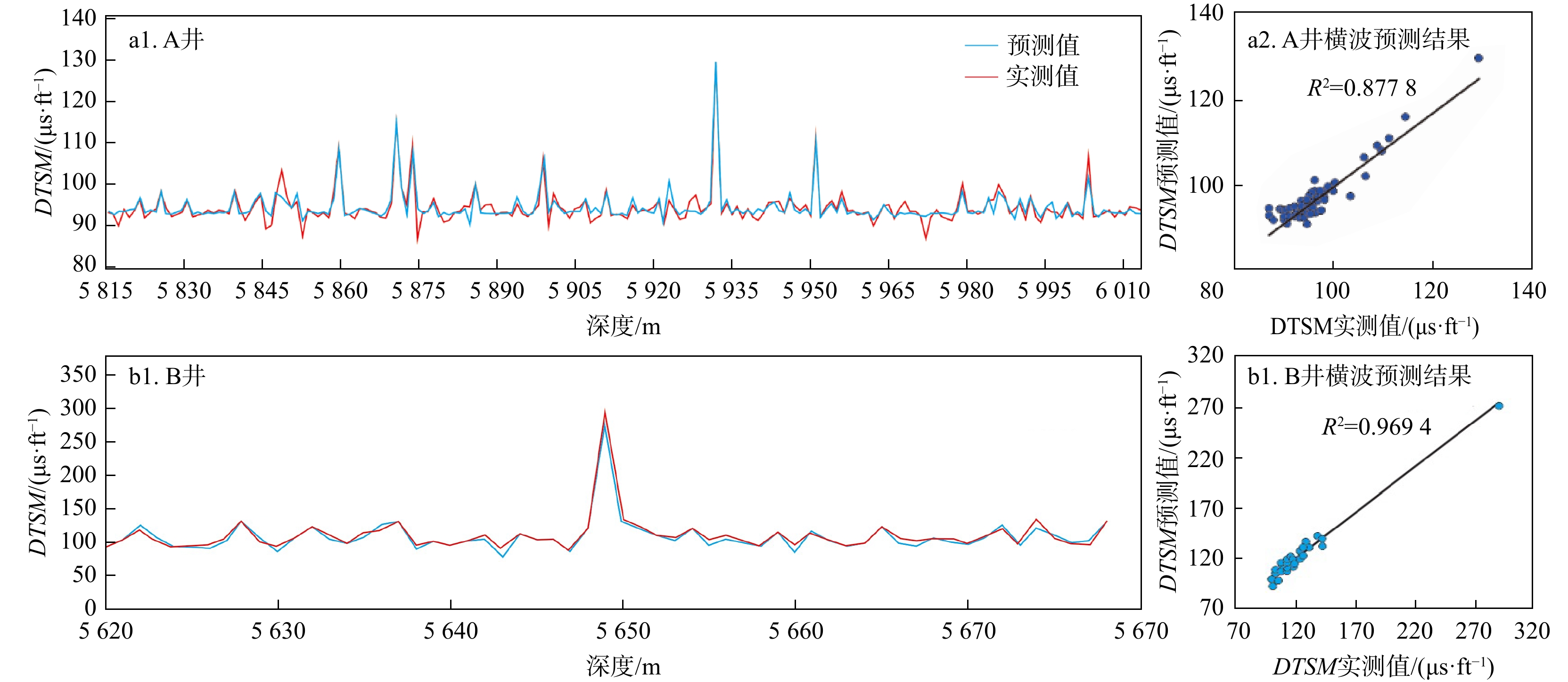
ResultsThe application results showed that the correlation between predicted results and measured values of the proposed method reached 91%, representing a significant improvement over conventional empirical formulas and rock physics methods. Independent verification using blind wells further proved that the maximum correlation coefficient between predicted and measured shear wave velocity was up to
0.9694 . The predicted curves were highly consistent with measured data.ConclusionThe proposed PCA-SVM-LSTM combined method can well describe the strong heterogeneity of ultra-deep fracture-cavity reservoirs in Tahe Oilfield, and the prediction results show good agreement with measured data. This method avoids the complicated rock physics modeling process and has the advantages of simple workflow and high computational efficiency. It provides an efficient and feasible technical reference for shear wave velocity prediction of similar carbonate fracture-cavity reservoirs.
-
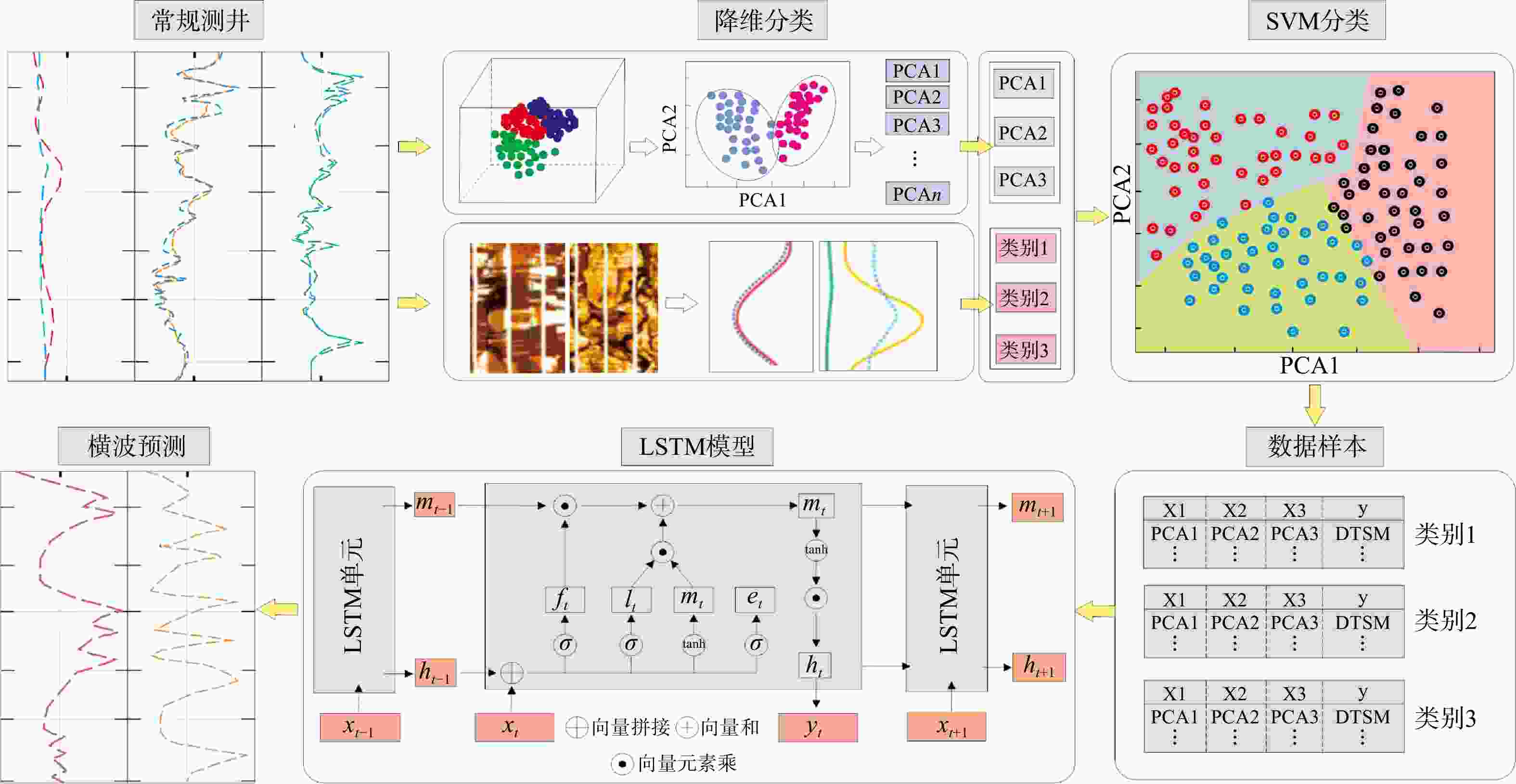
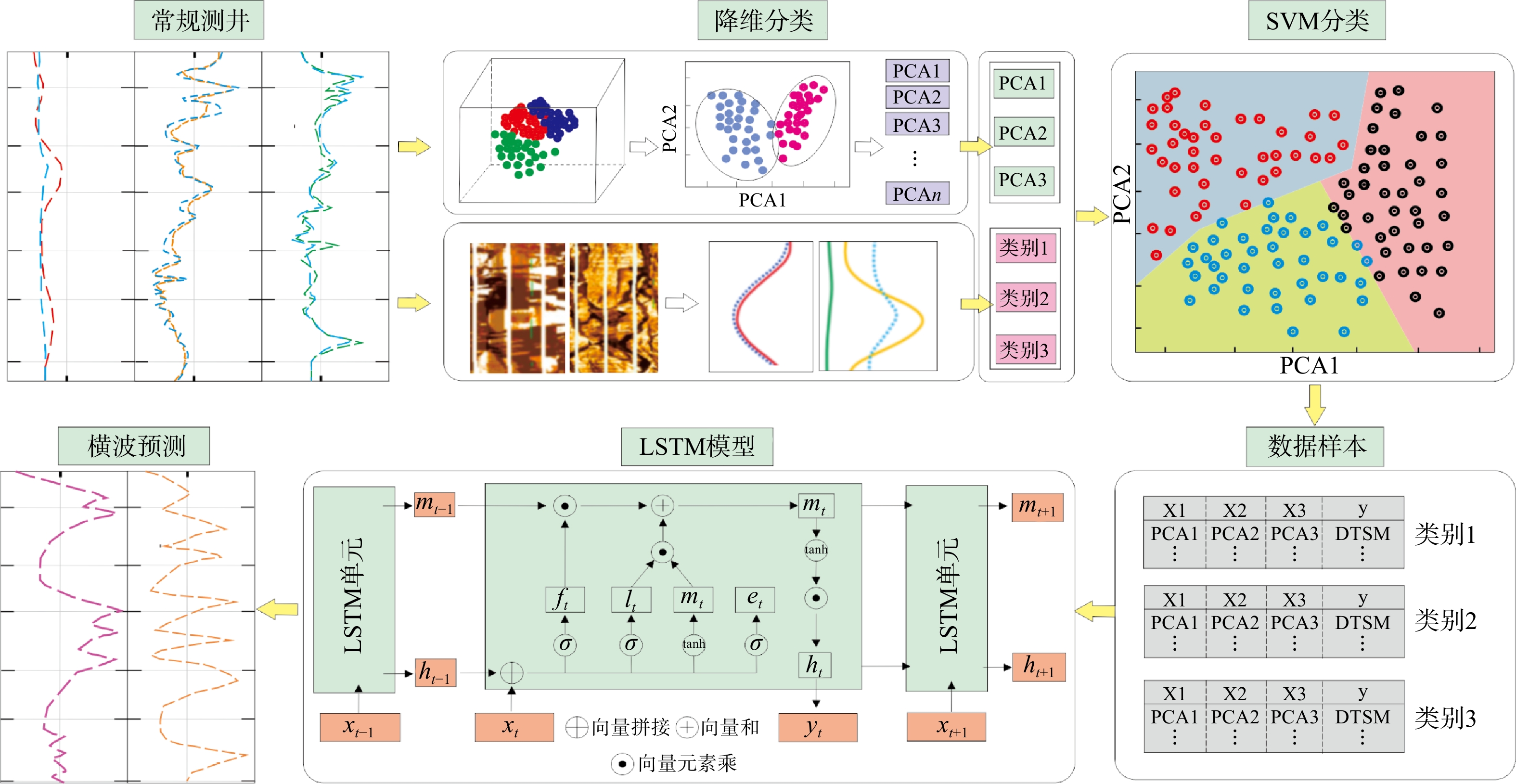
图 1 技术路线图
PCA. 主成分分析;SVM. 支持向量机;LSTM. 长短期记忆神经网络;DTSM. 横波数据;下同
Figure 1. Technical roadmap
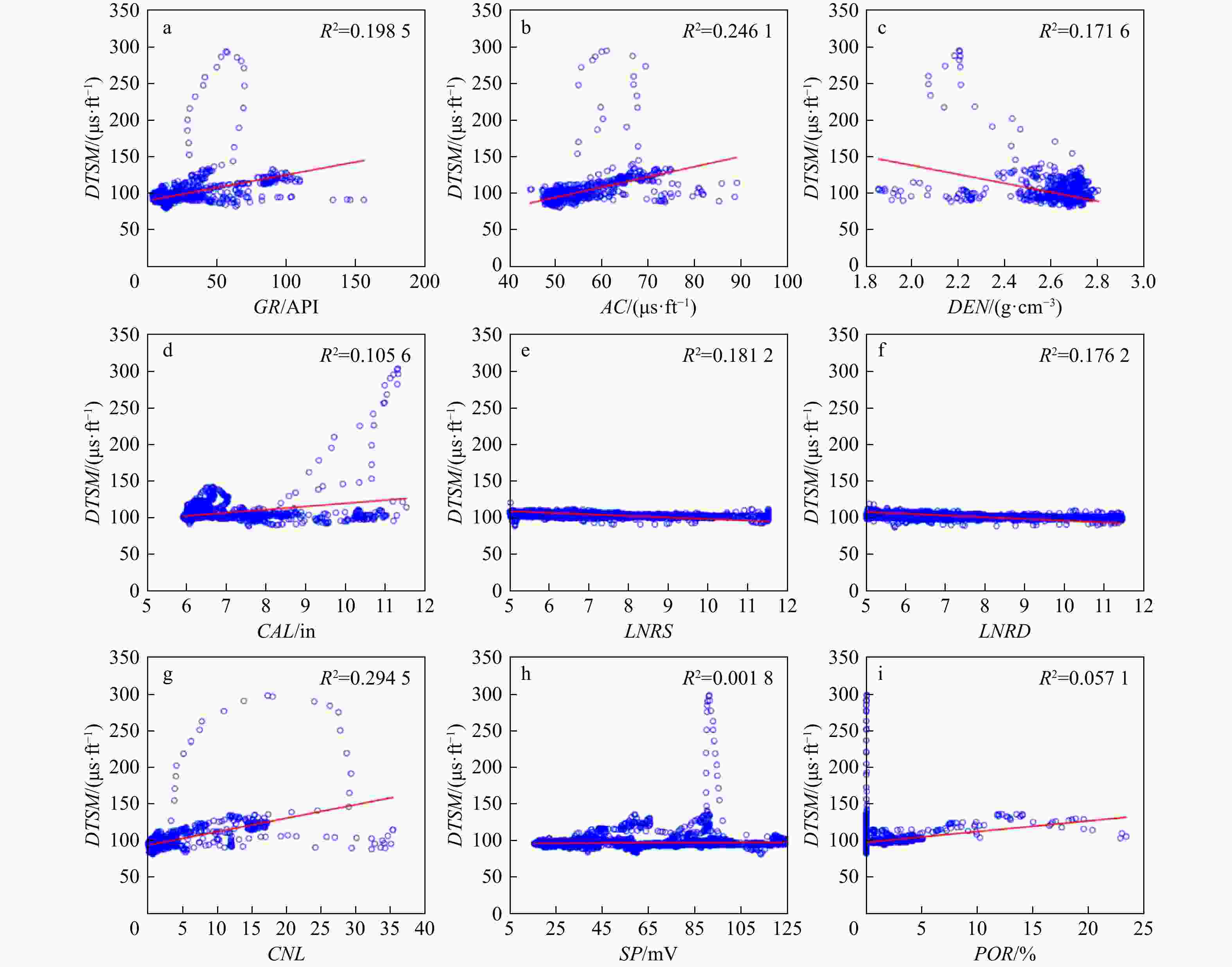
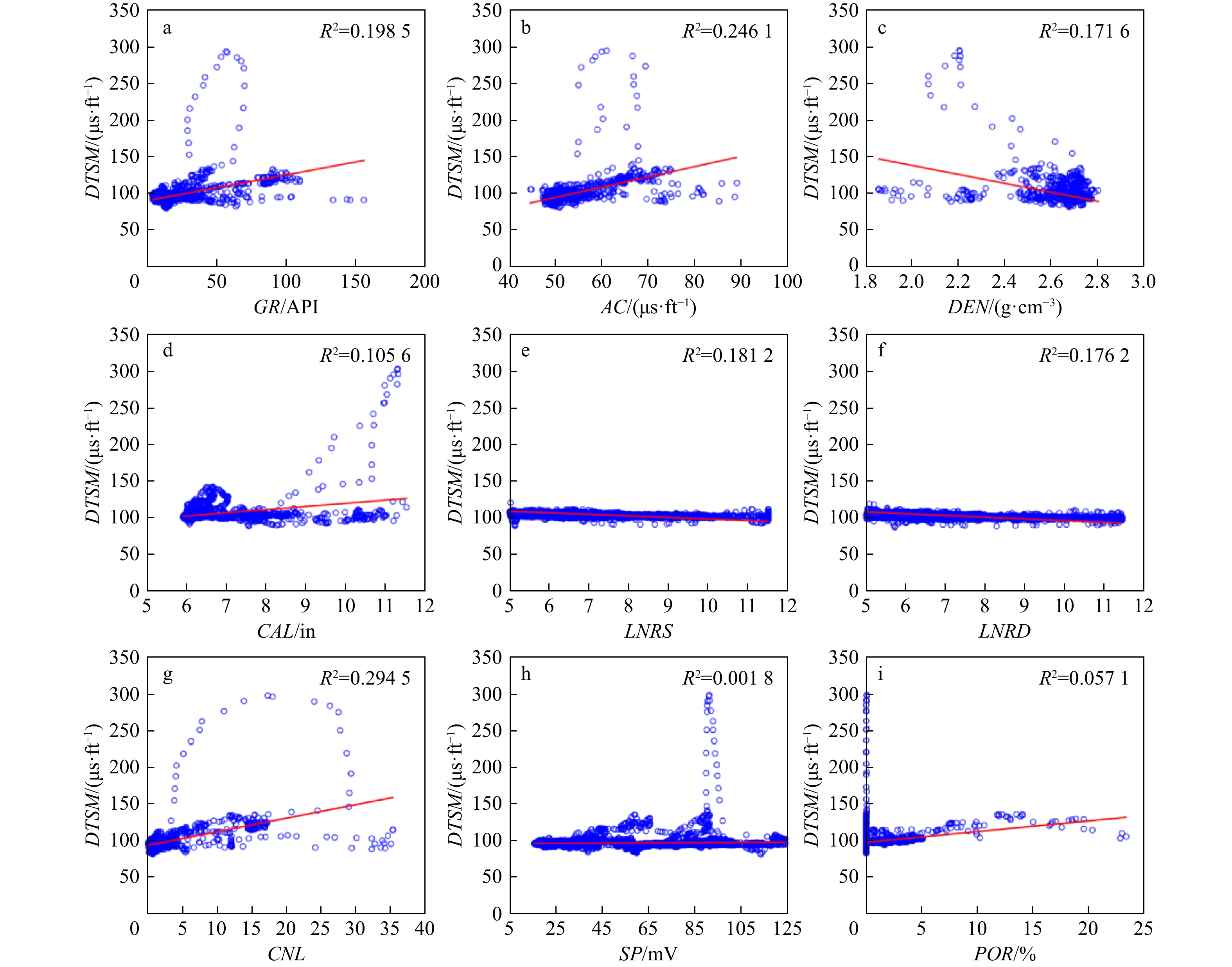
图 2 实测横波数据与不同测井资料的交会图
GR. 自然伽马;AC. 声波时差;DEN. 补偿密度测井;CAL. 井径;LNRS. 浅侧向电阻率自然对数;LNRD. 深侧向电阻率自然对数;CNL. 补偿中子测井;SP. 自然电位;POR. 孔隙度;1 in=25.4 mm;下同
Figure 2. Crossing diagrams between DTSM and various logging datas
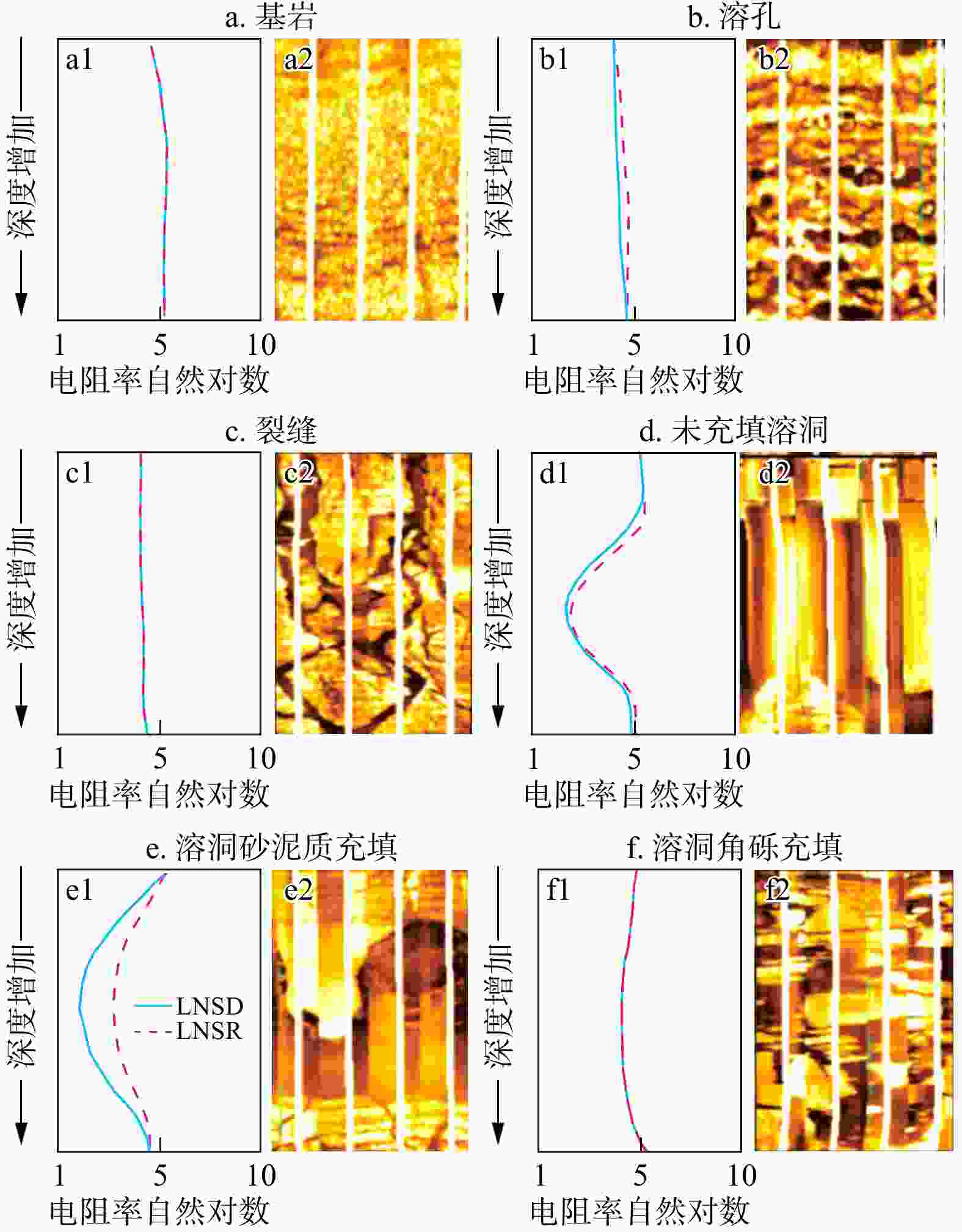
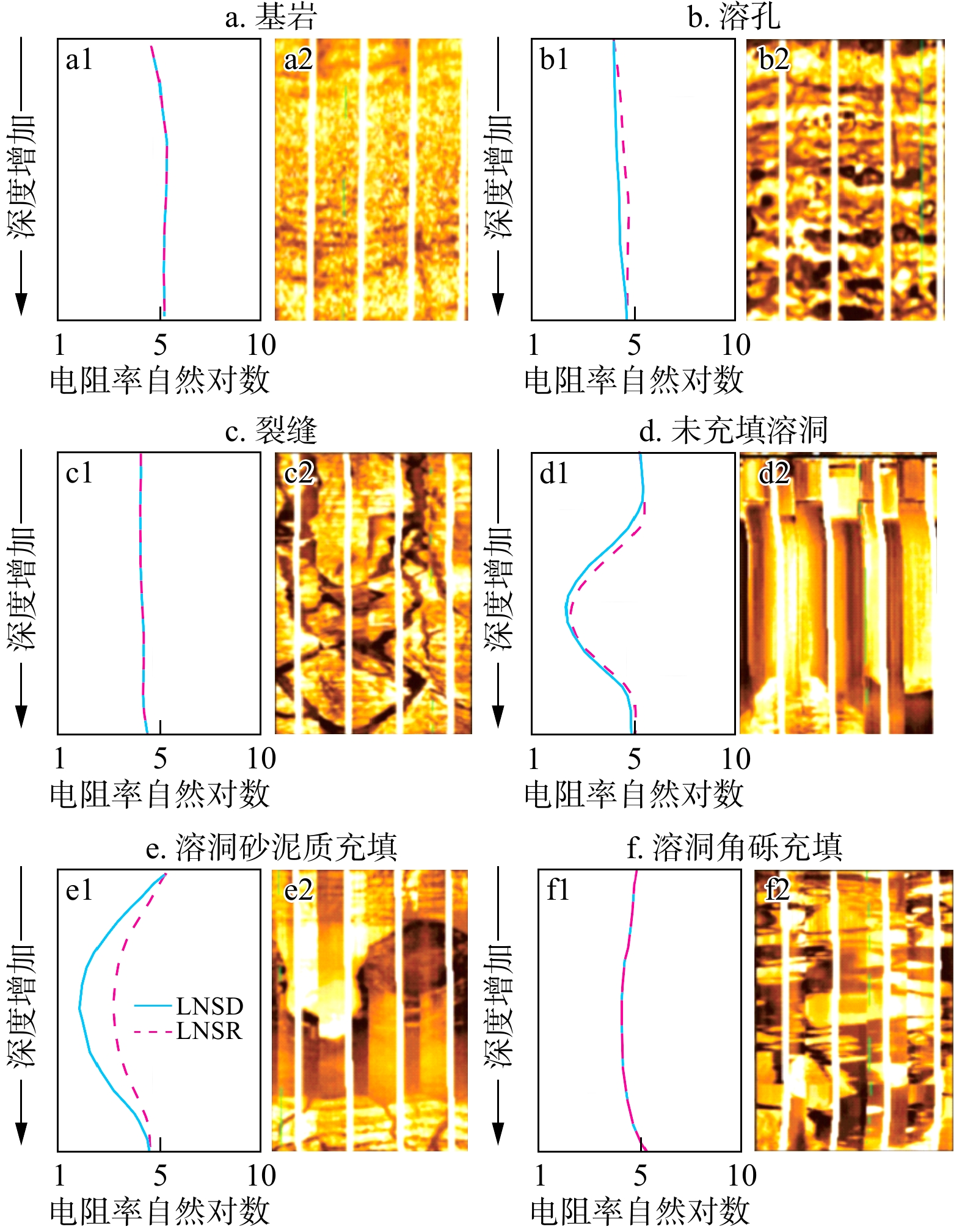
图 3 不同类型缝洞储层电阻特征分类示意
a1~f1为不同类型缝洞储层的LNSR与LNSD示意图;a2~f2为FMI成像测井
Figure 3. Illustration of classification of resistance characteristics for different types of fracture-cavity reservoirs
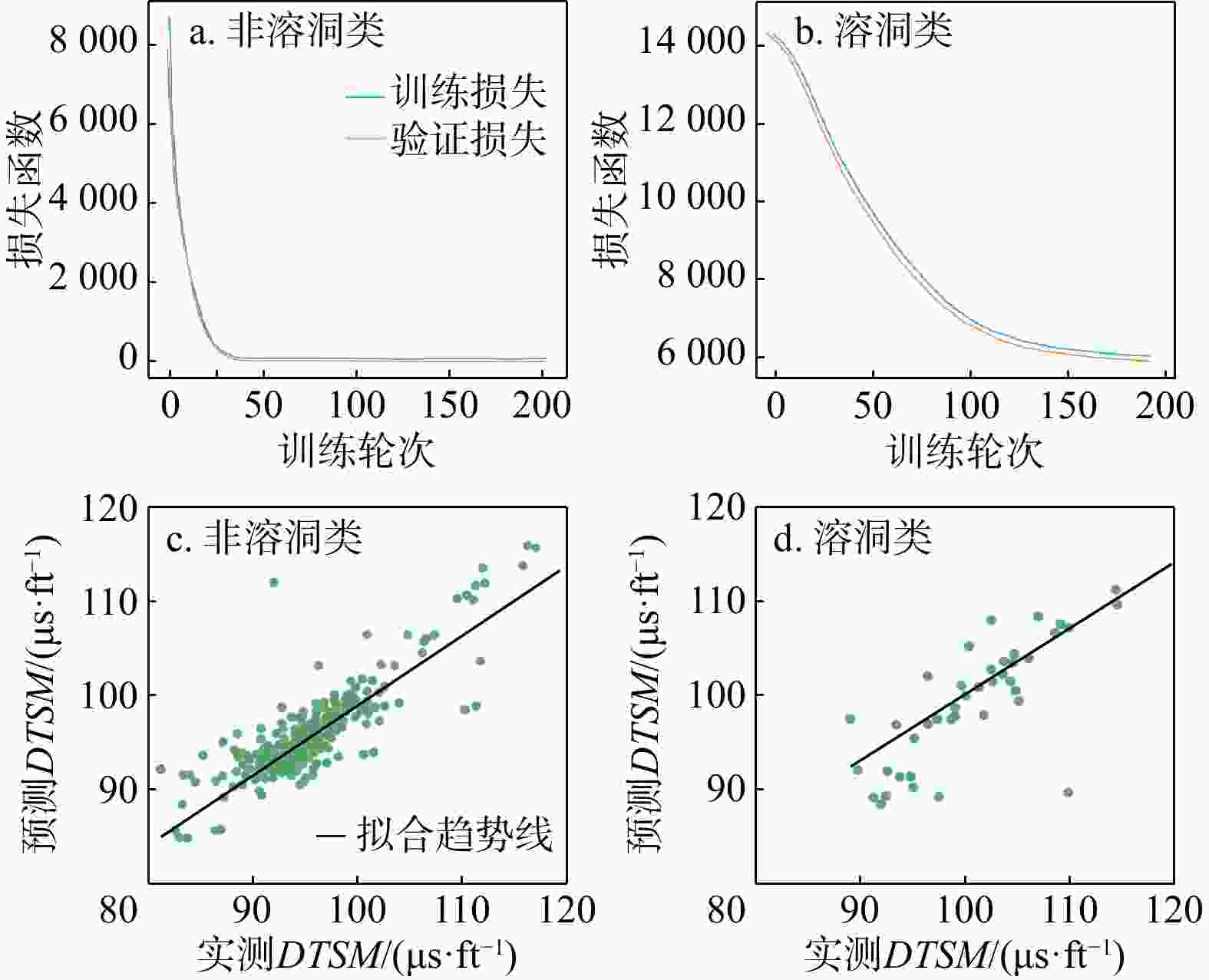
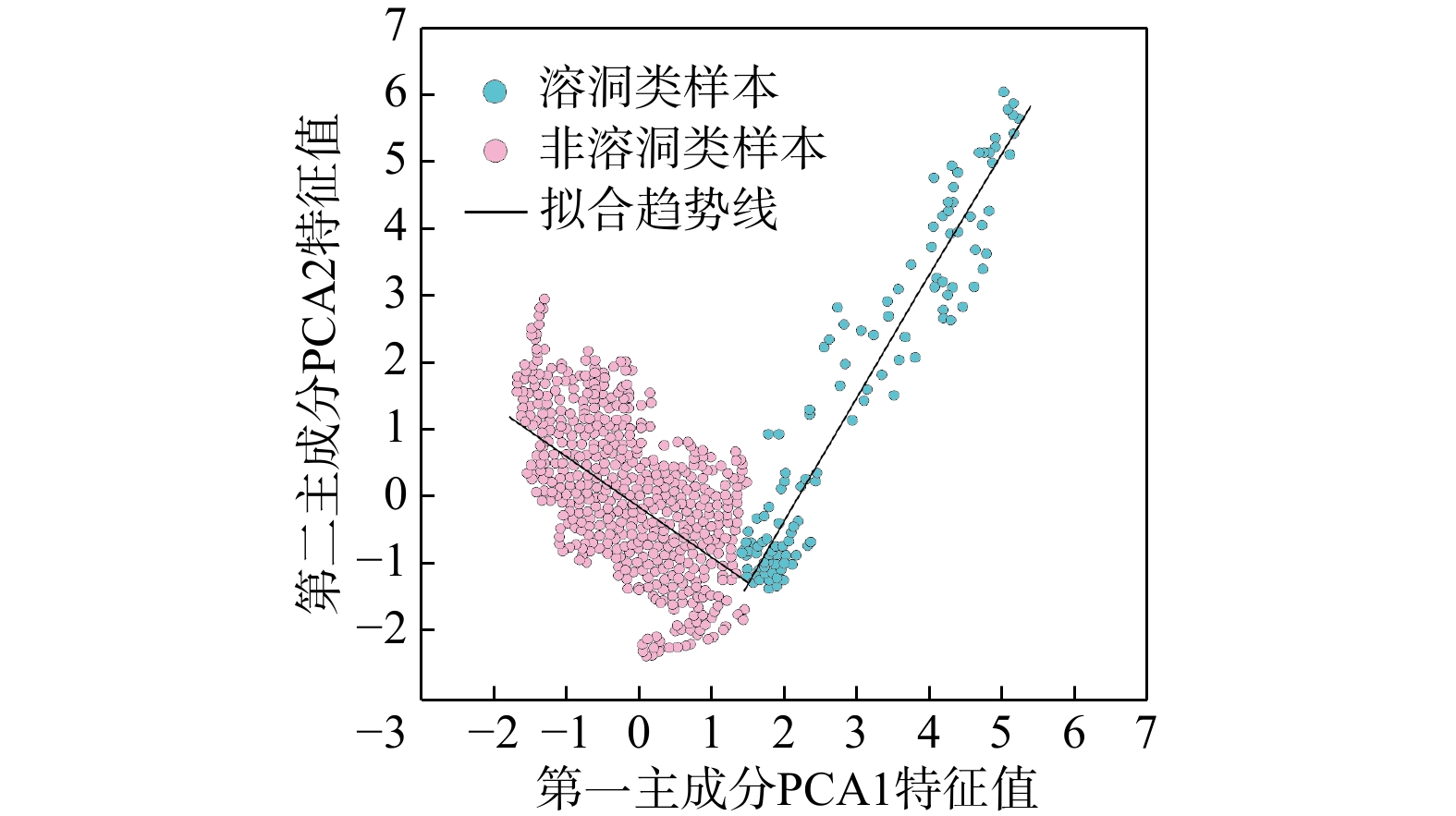
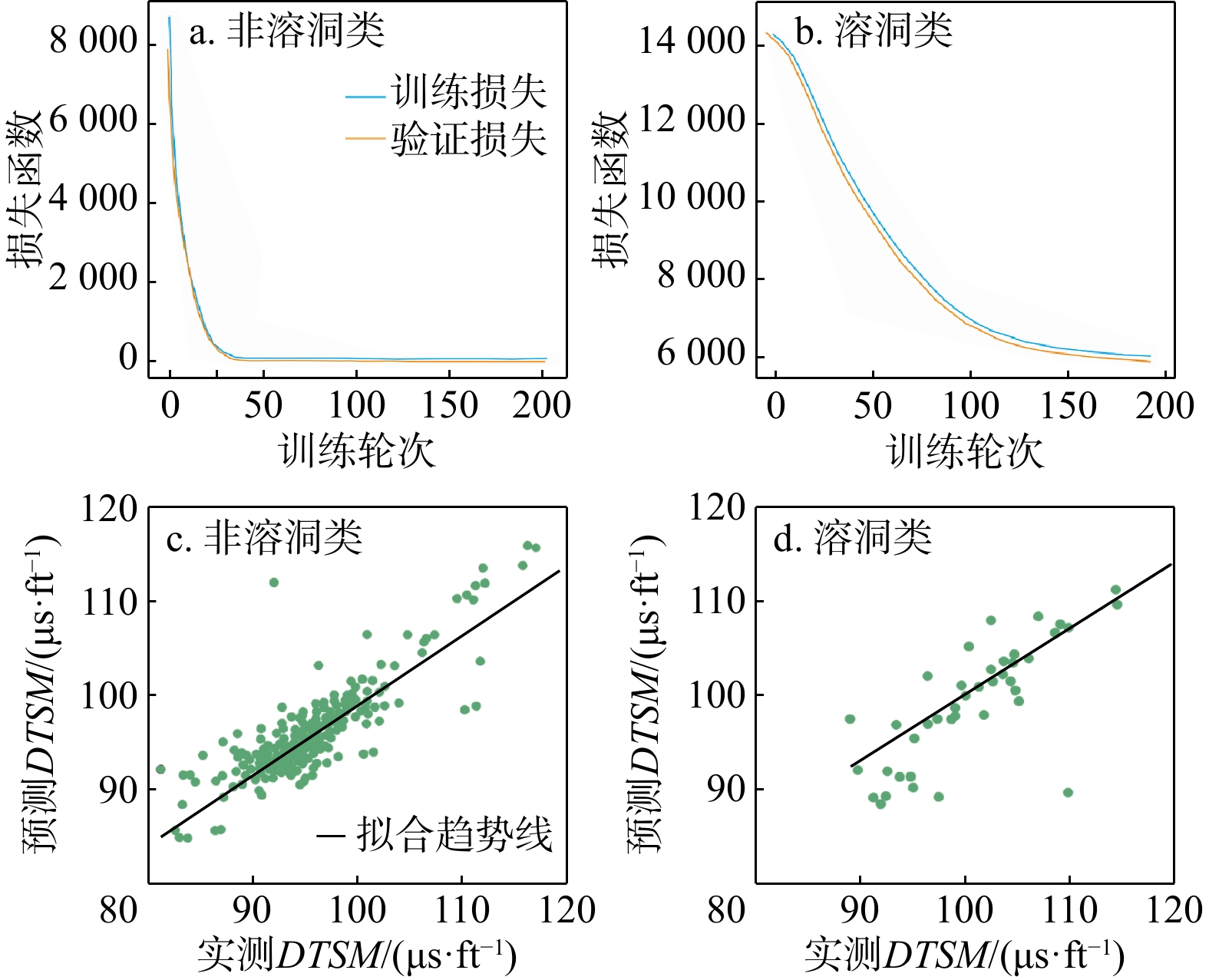
图 5 非溶洞与溶洞类缝洞储层损失函数变化曲线(a, b)以及横波预测结果(c, d)
Figure 5. Variation curves of loss function (a, b) and shear wave prediction results (c, d) for non-cave and cave of fracture-cavity reservoiry
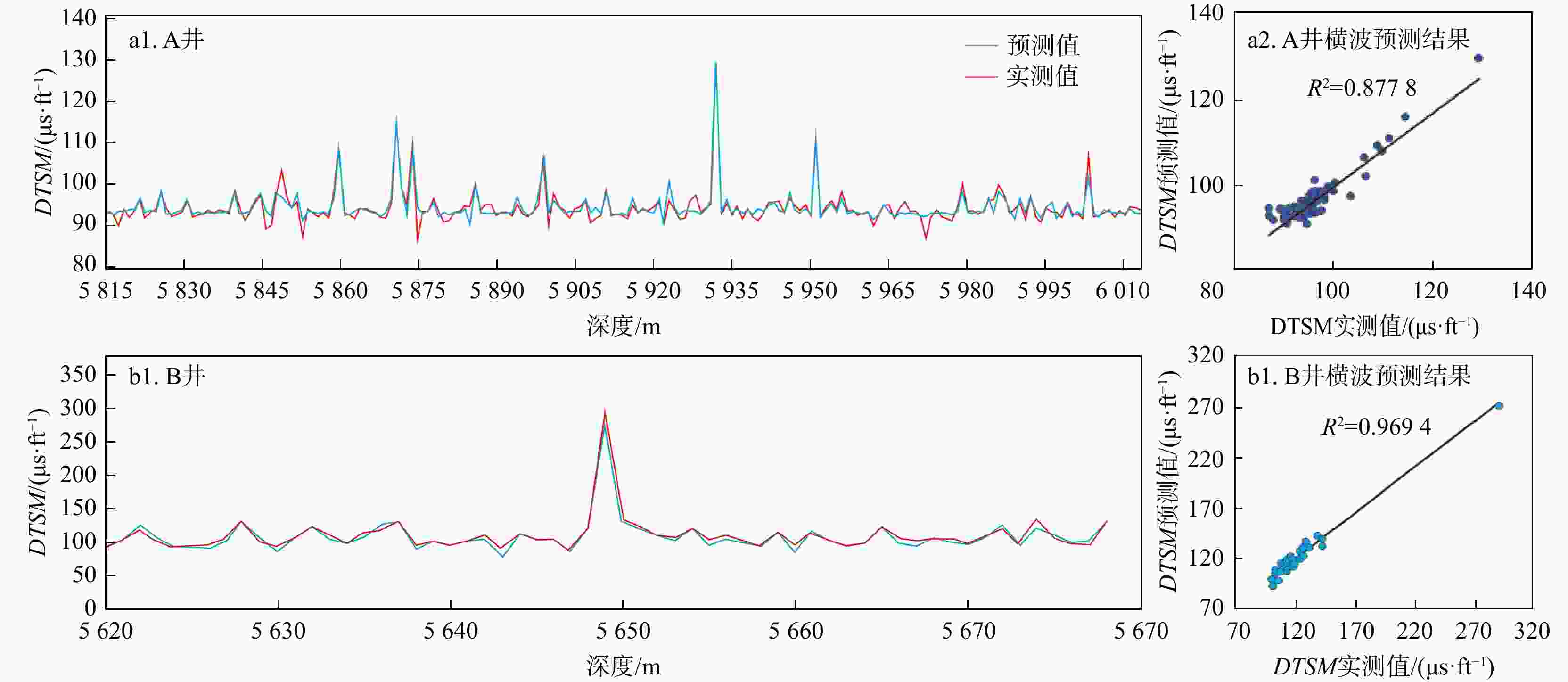
图 6 A井(a)和B井(b)的横波预测模型后验曲线
Figure 6. Posterior curves of shear wave prediction models for Well A (a) and Well B (b)
表 1 PCA主成分贡献表
Table 1. Contribution rates of principal components from PCA
特征向量 LNRS LNRD GR AC DEN CNL SP CAL POR RC RM 特征值 方差贡献率/% 累计贡献率/% PCA1 −0.37 −0.36 0.35 0.35 −0.28 0.28 0.33 0.17 0.30 0.22 0.23 6.83 61.41 61.41 PCA2 0.19 0.22 −0.13 0.16 −0.39 0.17 −0.26 0.51 −0.20 −0.29 0.49 1.31 11.80 73.21 PCA3 −0.01 −0.02 0.10 −0.13 0.26 −0.29 −0.09 0.72 0.46 −0.08 −0.27 0.79 7.08 80.29 PCA4 −0.11 −0.13 0.13 0.14 −0.12 0.27 −0.06 −0.16 0.10 −0.80 −0.40 0.76 6.84 87.13 PCA5 −0.09 −0.11 0.20 0.09 −0.57 −0.67 −0.01 0.02 −0.31 0.02 −0.25 0.52 4.68 91.81 PCA6 0.04 0.07 −0.02 0.02 0.13 −0.48 0.40 −0.22 0.29 −0.41 0.53 0.36 3.23 95.04 PCA7 0.01 0.19 0.19 −0.25 0.20 0.13 0.63 0.31 −0.57 −0.15 −0.06 0.20 1.79 96.84 PCA8 −0.03 0.78 0.78 −0.23 0.21 −0.01 −0.43 −0.11 −0.12 −0.05 0.28 0.16 1.46 98.30 PCA9 0.17 0.10 0.10 −0.69 −0.52 0.17 0.17 −0.08 0.34 0.04 −0.04 0.14 1.25 99.55 PCA10 −0.51 −0.37 −0.37 −0.46 0 −0.05 −0.20 0.05 −0.13 −0.12 0.22 0.05 0.45 100.00 PCA11 0.72 0 0 0 0 0 0 0 0 0 0.04 0 0 100.00 注:RC. 深浅电阻率差;RM. 深浅电阻率比值  下载: 导出CSV
-
[1] 吴思, 韩波, 纪利祥, 等. 利用叠前AVO反演预测砂岩储层有效压力[J]. 石油地球物理勘探, 2024, 59(5): 1165-1173.WU S, HAN B, JI L X, et al. Pre-stack AVO inversion for estimating effective pressure in sandstone reservoirs[J]. Oil Geophysical Prospecting, 2024, 59(5): 1165-1173. (in Chinese with English abstract) [2] 文欢, 张长建, 马海陇. 叠前AVO反演技术在塔河油田三种类型油气藏流体识别中的适用性分析[J]. 石油地质与工程, 2023, 37(2): 1-7.WEN H, ZHANG C J, MA H L. Applicability analysis of pre-stack AVO inversion technique in fluid identification of three types of oil and gas reservoirs in Tahe Oilfield[J]. Petroleum Geology and Engineering, 2023, 37(2): 1-7. (in Chinese with English abstract) [3] 陆诗阔, 王迪, 李玉坤, 等. 鄂尔多斯盆地大牛地气田致密砂岩储层三维岩石力学参数场研究[J]. 天然气地球科学, 2015, 26(10): 1844-1850.LU S K, WANG D, LI Y K, et al. Research on three-dimensional mechanical parameters′ distribution of the tight sandstone reservoirs in Daniudi gasfield[J]. Natural Gas Geoscience, 2015, 26(10): 1844-1850. (in Chinese with English abstract) [4] 孟祥龙, 王胜建, 朱迪斯, 等. 基于TPE优化集成学习的岩石弹性模量预测模型[J]. 地质科技通报, 2026, 45(1): 342-350.MENG X L, WANG J S, ZHU D S, et al. Prediction model for rock elastic modulus based on TPE-optimized ensemble learning[J]. Bulletin of Geological Science and Technology, 2026, 45(1): 342-350. (in Chinese with English abstract) [5] 郭咏欣, 李键, 秦德文, 等. 东海西湖凹陷富煤砂泥薄互层深度学习横波预测[J]. 地球物理学进展, 2025, 40(5): 2148-2159. doi: 10.6038/pg2025II0469GUO Y X, LI J, QIN D W, et al. Shearing wave velocity prediction by deep learning for coal-rich sand and mud interbedded formations in the Xihu Sag of the East China Sea[J]. Progress in Geophysics, 2025, 40(5): 2148-2159. (in Chinese with English abstract) doi: 10.6038/pg2025II0469 [6] ANEMANGELY M, RAMEZANZADEH A, AMIRI H, et al. Machine learning technique for the prediction of shear wave velocity using petrophysical logs[J]. Journal of Petroleum Science and Engineering, 2019, 174: 306-327. doi: 10.1016/j.petrol.2018.11.032 [7] YOU J C, CAO J X, WANG X J, et al. Shear wave velocity prediction based on LSTM and its application for morphology identification and saturation inversion of gas hydrate[J]. Journal of Petroleum Science and Engineering, 2021, 205: 109027. doi: 10.1016/j.petrol.2021.109027 [8] GHOLAMI R, MORADZADEH A, RASOULI V, et al. Shear wave velocity prediction using seismic attributes and well log data[J]. Acta Geophysica, 2014, 62(4): 818-848. [9] 张元中, 周开金, 赵建斌, 等. 砂泥岩地层横波测井曲线预测方法研究[J]. 石油物探, 2012, 51(5): 508-514. doi: 10.3969/j.issn.1000-1441.2012.05.013ZHANG Y Z, ZHOU K J, ZHAO J B, et al. Research on predicting methods of shear wave logging curves in sandstone and mudstone strata[J]. Geophysical Prospecting for Petroleum, 2012, 51(5): 508-514. (in Chinese with English abstract) doi: 10.3969/j.issn.1000-1441.2012.05.013 [10] 黄为清, 郝召兵, 伍向阳. 一种带误差校正的横波速度预测方法[J]. 地球物理学进展, 2011, 26(6): 2184-2189.HUANG W Q, HAO Z B, WU X Y. A method for shear-wave velocity prediction with error correction[J]. Progress in Geophysics, 2011, 26(6): 2184-2189. (in Chinese with English abstract) [11] 陈启艳, 高建虎, 董雪华, 等. 碳酸盐岩地层横波速度预测[J]. 天然气地球科学, 2014, 25(6): 921-927.CHEN Q Y, GAO J H, DONG X H, et al. Shear velocity estimation in carbonate reservoir[J]. Natural Gas Geoscience, 2014, 25(6): 921-927. (in Chinese with English abstract) [12] 王金伟, 张尔华, 谢春临. 虚拟孔隙度优化Xu-White模型法预测横波速度[J]. 断块油气田, 2011, 18(4): 445-448.WANG J W, ZHANG E H, XIE C L. Prediction of shear wave velocity with optimized Xu-White model based on virtual porosity[J]. Fault-Block Oil & Gas Field, 2011, 18(4): 445-448. (in Chinese with English abstract) [13] 周琦, 印兴耀, 李坤. 煤系地层地震岩石物理建模及横波预测方法[J]. 石油地球物理勘探, 2022, 57(2): 357-366. doi: 10.13810/j.cnki.issn.1000-7210.2022.02.012ZHOU Q, YIN X Y, LI K. Seismic rock physics modeling and shear wave velocity prediction method of coal measure strata[J]. Oil Geophysical Prospecting, 2022, 57(2): 357-366. (in Chinese with English abstract) doi: 10.13810/j.cnki.issn.1000-7210.2022.02.012 [14] 乔汉青, 刘财, 方慧, 等. 基于统计学岩石物理模型的火山岩横波速度预测方法[J]. 地球科学, 2023, 48(8): 2993-3006.QIAO H Q, LIU C, FANG H, et al. S-wave velocity prediction method of volcanic rock based on statistical rock-physics model[J]. Earth Science, 2023, 48(8): 2993-3006. (in Chinese with English abstract) [15] 刘致水, 王康宁, 包乾宗, 等. 致密砂岩储层岩石物理横波速度预测方法: 以鄂尔多斯盆地延长组为例[J]. 石油学报, 2022, 43(9): 1284-1294.LIU Z S, WANG K N, BAO Q Z, et al. Prediction method of rock physics S-wave velocity in tight sandstone reservoir: A case study of Yanchang Formation in Ordos Basin[J]. Acta Petrolei Sinica, 2022, 43(9): 1284-1294. (in Chinese with English abstract) [16] 刘兰锋, 尹龙, 黄捍东, 等. 一种基于岩石物理建模的横波预测方法[J]. 物探与化探, 2021, 45(6): 1482-1487. doi: 10.11720/wtyht.2021.1164LIU L F, YIN L, HUANG H D, et al. Research on the method of shear wave prediction based on rock physics modeling[J]. Geophysical and Geochemical Exploration, 2021, 45(6): 1482-1487. (in Chinese with English abstract) doi: 10.11720/wtyht.2021.1164 [17] WANG J L, WU S G, ZHAO L X, et al. An effective method for shear-wave velocity prediction in sandstones[J]. Marine Geophysical Research, 2019, 40(4): 655-664. doi: 10.1007/s11001-019-09396-4 [18] YU S W, MA J W, WANG W L. Deep learning for denoising[J]. Geophysics, 2019, 84(6): 333-350. doi: 10.1190/geo2018-0668.1 [19] WU X M, LIANG L M, et al. FaultSeg3D: Using synthetic data sets to train an end-to-end convolutional neural network for 3D seismic fault segmentation[J]. Geophysics, 2019, 84(3): 35-45. doi: 10.1190/geo2018-0646.1 [20] WU H, ZHANG B, LIN T F, et al. Semiautomated seismic horizon interpretation using the encoder-decoder convolutional neural network[J]. Geophysics, 2019, 84(6): 403-417. doi: 10.1190/geo2018-0672.1 [21] YOON D, YEEH Z, BYUN J. Seismic data reconstruction using deep bidirectional long short-term memory with skip connections[J]. IEEE Geoscience and Remote Sensing Letters, 2021, 18(7): 1298-1302. doi: 10.1109/LGRS.2020.2993847 [22] KAUR H, PHAM N, FOMEL S, et al. A deep learning framework for seismic facies classification[J]. Interpretation, 2023, 11(1): 107-116. doi: 10.1190/INT-2022-0048.1 [23] 李安, 蔡益栋, 王子豪, 等. 基于机器学习测井反演的煤体结构评价: 以鄂尔多斯盆地榆林地区本溪组8号煤为例[J]. 地质科技通报, 2025, 44(4): 2-15. doi: 10.19509/j.cnki.dzkq.tb20240539LI A, CAI Y D, WANG Z H, et al. Evaluation of coal structure based on machine learning logging inversion: A case from No. 8 coal of Benxi Formation in Yulin area of Ordos Basin[J]. Bulletin of Geological Science and Technology, 2025, 44(4): 2-15. (in Chinese with English abstract) doi: 10.19509/j.cnki.dzkq.tb20240539 [24] 黎子豪, 蒋恕. 基于机器学习和SHAP算法的声波测井曲线重构及可解释性分析[J]. 地质科技通报, 2025, 44(1): 321-331.LI Z H, JIANG S. Reconstructing and interpreting analysis of sonic logging curves based on machine learning and SHAP algorithm[J]. Bulletin of Geological Science and Technology, 2025, 44(1): 321-331. (in Chinese with English abstract) [25] 武中原. 序列数据机器学习方法在岩石物理参数预测中的应用研究[D]. 北京: 中国地质大学(北京), 2021.WU Z Y. Research on the application of machine learning methods for sequential data in the prediction of rock physical parameters[D]. Beijing: China University of Geosciences (Beijing), 2021. (in Chinese with English abstract) [26] 王俊. 循环神经网络在储层预测中的应用研究[D]. 成都: 成都理工大学, 2021.WANG J. Application study of recurrent neural network in reservoir prediction[D]. Chengdu: Chengdu University of Technology, 2021. (in Chinese with English abstract) [27] 马乔雨, 张欣, 张春雷, 等. 基于一维卷积神经网络的横波速度预测[J]. 岩性油气藏, 2021, 33(4): 111-120.MA Q Y, ZHANG X, ZHANG C L, et al. Shear wave velocity prediction based on one-dimensional convolutional neural network[J]. Lithologic Reservoirs, 2021, 33(4): 111-120. (in Chinese with English abstract) [28] ZHANG Y, ZHANG C L, MA Q Y, et al. Automatic prediction of shear wave velocity using convolutional neural networks for different reservoirs in Ordos Basin[J]. Journal of Petroleum Science and Engineering, 2022, 208: 109252. doi: 10.1016/j.petrol.2021.109252 [29] 朱颜, 韩向义, 岳欣欣, 等. 致密砂岩储层脆性测井评价方法研究及应用: 以鄂尔多斯盆地渭北油田为例[J]. 物探与化探, 2021, 45(5): 1239-1247.ZHU Y, HAN X Y, YUE X X, et al. Research and application of brittleness logging evaluation method to tight sandstone reservoirs: Exemplified by Weibei oil-field in Ordos Basin[J]. Geophysical and Geochemical Exploration, 2021, 45(5): 1239-1247. (in Chinese with English abstract) [30] RAJABI M, GHORBANI H, AGHDAM K Y. Prediction of shear wave velocity by extreme learning machine technique from well log data [J]. Journal of Petroleum Geomechanics, 2022, 4(3), 35-49. [31] 周恒, 武中原, 张欣, 等. 基于LSTM循环神经网络的横波预测方法[J]. 断块油气田, 2021, 28(6): 829-834.ZHOU H, WU Z Y, ZHANG X, et al. Shear wave prediction method based on LSTM recurrent neural network[J]. Fault-Block Oil and Gas Field, 2021, 28(6): 829-834. (in Chinese with English abstract) [32] ZHANG Y, ZHONG H R, WU Z Y, et al. Improvement of petrophysical workflow for shear wave velocity prediction based on machine learning methods for complex carbonate reservoirs[J]. Journal of Petroleum Science and Engineering, 2020, 192: 107234. doi: 10.1016/j.petrol.2020.107234 [33] 王树华, 杨国杰, 穆星. 基于深度前馈神经网络方法的横波速度预测[J]. 油气地质与采收率, 2022, 29(1): 80-89. doi: 10.13673/j.cnki.cn37-1359/te.2022.01.010WANG S H, YANG G J, MU X. S-wave velocity prediction based on deep feedforward neural network[J]. Petroleum Geology and Recovery Efficiency, 2022, 29(1): 80-89. (in Chinese with English abstract) doi: 10.13673/j.cnki.cn37-1359/te.2022.01.010 [34] 冯刚. 基于机器学习与岩石物理建模的储层预测[D]. 北京: 中国石油大学(北京), 2022.FENG G. Reservoir prediction based on machine learning and rock physical modeling[D]. Beijing: China University of Petroleum (Beijing), 2022. (in Chinese with English abstract) [35] 何运康, 李庆春, 刘兴业. 基于注意力机制和双向长短时记忆网络的横波速度预测方法及应用[J]. 石油物探, 2023, 62(2): 225-235. doi: 10.3969/j.issn.1000-1441.2023.02.004HE Y K, LI Q C, LIU X Y. Shear wave velocity prediction based on bidirectional long short-term memory networks with attention mechanism[J]. Geophysical Prospecting for Petroleum, 2023, 62(2): 225-235. (in Chinese with English abstract) doi: 10.3969/j.issn.1000-1441.2023.02.004 [36] 任宇飞, 强璐, 程妮, 等. 基于GA-BP神经网络的致密砂岩横波时差预测方法[J]. 能源与环保, 2024, 46(4): 124-129.REN Y F, QIANG L, CHENG N, et al. Prediction method of shear wave time difference in tight sandstone based on GA-BP neural network[J]. China Energy and Environmental Protection, 2024, 46(4): 124-129. (in Chinese with English abstract) [37] 方志坚, 巴晶, 熊繁升, 等. 利用机器学习与改进岩石物理模型预测页岩油层系横波速度[J]. 石油地球物理勘探, 2024, 59(3): 381-391.FANG Z J, BA J, XIONG F S, et al. Shear wave velocity prediction of shale oil formations based on machine learning and improved rock physics model[J]. Oil Geophysical Prospecting, 2024, 59(3): 381-391. (in Chinese with English abstract) [38] FENG G, ZENG H H, XU X R, et al. Shear wave velocity prediction based on deep neural network and theoretical rock physics modeling[J]. Frontiers in Earth Science, 2023, 10: 1025635. [39] 刘涛. 基于XGBoost算法的碳酸盐岩储层横波速度预测研究[D]. 成都: 成都理工大学, 2023.LIU T. Prediction of shear wave velocity in carbonate reservoir based on XGBoost algorithm[D]. Chengdu: Chengdu University of Technology, 2023. (in Chinese with English abstract) [40] 赵军, 裴浩辰, 罗谋兵, 等. AdaBoost算法优化BP神经网络的横波时差预测及应用[J]. 地球物理学进展, 2025, 40(5): 2085-2096.ZHAO J, PEI H C, LUO M B, et al. Shear wave slowness prediction and application based on BP neural network optimized by AdaBoost algorithm[J]. Progress in Geophysics, 2025, 40(5): 2085-2096. (in Chinese with English abstract) [41] 韩鹏远, 丁文龙, 杨德彬, 等. 塔河油田奥陶系碳酸盐岩储层裂缝表征与主控因素分析[J]. 地学前缘, 2024, 31(5): 209-226.HAN P Y, DING W L, YANG D B, et al. Characteristics and main controlling factors of fracture development in the Ordovician carbonate reservoir, Tahe Oilfield[J]. Earth Science Frontiers, 2024, 31(5): 209-226. (in Chinese with English abstract) [42] 曾联波, 宋逸辰, 韩俊, 等. 塔里木盆地构造流体作用对超深层断控碳酸盐岩缝洞型储层的控制[J]. 石油勘探与开发, 2025, 52(1): 128-139.ZENG L B, SONG Y C, HAN J, et al. Control of structure and fluid on ultra-deep fault-controlled carbonate fracture-vug reservoirs in Tarim Basin, NW China[J]. Petroleum Exploration and Development, 2025, 52(1): 128-139. (in Chinese with English abstract) [43] 管倩倩. 基于PCA-CNN模型的页岩储层有机碳含量预测方法[J]. 油气地质与采收率, 2022, 29(6): 49-57.GUAN Q Q. Prediction method of total organic carbon in shale oil reservoir based on PCA-CNN model[J]. Petroleum Geology and Recovery Efficiency, 2022, 29(6): 49-57. (in Chinese with English abstract) [44] 张亮, 党海龙, 刘庆海, 等. 考虑地质分层约束的长短期记忆循环神经网络测井曲线重构[J]. 科学技术与工程, 2024, 24(19): 8045-8051.ZHANG L, DANG H L, LIU Q H, et al. Logging curve reconstruction of long short-term memory recurrent neural network considering geological stratification constraints[J]. Science Technology and Engineering, 2024, 24(19): 8045-8051. (in Chinese with English abstract) -

 下载:
下载:

 点击查看大图
计量
- 文章访问数: 185
- PDF下载量: 21
- 被引次数: 0