投审稿入口


Impact of mixing intensity on reservoir pore-throat structure and its application to (mixed) sandstone reservoir classification: A case study of Miocene of M Oilfield, Iraq
-
摘要:目的
混积砂岩储层受陆源碎屑与碳酸盐双重作用,储层非均质性极强,但目前混积程度对储层孔喉的定量控制机制尚不明确。本研究旨在明确混积度对储层孔喉结构的控制效应,并建立适用于混积砂岩的储层定量分类方案,为该类储层有利区预测提供支撑。
方法以伊拉克 M 油田中新统 Asmari 组为研究实例,综合利用岩心观察、铸体薄片鉴定、实测孔渗、测井及地球化学测试资料,基于陆源碎屑−碳酸盐组分体积分数界定混积度,构建测井
S 1 参数实现混积度定量识别;结合压汞、半渗透隔板、核磁共振开展多尺度孔喉表征,分析混积度与孔喉结构的耦合关系,并结合单井产能数据验证储层分类方案。结果研究表明:研究区发育含砂颗粒白云岩、白云质砂岩等多种混积岩,依据次要组分体积分数将混积划分为弱混积(10%~25%)与强混积(25%~50%);混积度对砂岩储层孔喉改造作用显著,对碳酸盐岩储层孔隙度影响有限,但会明显破坏孔喉连通性;云质混积度低于 25% 时砂岩以原生粒间孔−缩颈型喉道组合为主,孔渗条件优越,高于 25% 后孔喉结构发生重构,晶间(溶)孔大量发育,孔渗性能显著衰减。厘定
H jy 为 10%,25%,35% 3个关键阈值,以此将混积砂岩划分为 Ⅰ-Ⅳ 4类储层;基于比采油指数(SPI)产能统计证实四类储层产能逐级递减,分类方案与实际产能匹配良好。结论混积度是控制混积砂岩储层非均质性的核心地质因素,25% 是砂岩储层物性发生劣化的关键界限。融合混积度与孔喉结构的储层分类方案,可有效识别有利储层,为中东地区同类混积砂岩油气藏勘探开发提供地质参考依据。
Abstract:ObjectiveMixed siliciclastic–carbonate (mixed-sediment) reservoirs are widely developed in the Middle East, where complex interbedding and intermixing of terrigenous clastic and carbonate components lead to pronounced reservoir heterogeneity. At present, the quantitative control mechanism of mixing intensity over pore-throat structure remains poorly constrained, which restricts the prediction of high-quality reservoirs and efficient hydrocarbon development in these complex reservoirs. This study aims to clarify the controlling effect of mixing intensity on reservoir pore-throat structure and establish a quantitative reservoir classification scheme specifically for mixed sandstone reservoirs, thereby providing a geological basis for favorable reservoir evaluation of analogous mixed-sediment reservoirs.
MethodsTaking the Miocene Asmari Formation in M oilfield, Iraq, as the research object, multi-source datasets including core descriptions, thin-section observations, core-measured porosity and permeability, well-logging curves, and geochemical test data were comprehensively integrated. Based on the volume fractions of terrigenous clastic and carbonate components obtained from thin-section mineral quantification, mixing intensity was quantitatively defined, and a logging-derived
S 1 parameter was constructed to realize continuous quantitative identification of mixing intensity in boreholes. Multi-scale pore-throat characterization techniques, including mercury-intrusion capillary pressure, semi-permeable diaphragm method, and nuclear magnetic resonance, were adopted to analyze the coupling relationship between mixing intensity and microscopic pore-throat structure. Single-well productivity data, characterized by the specific productivity index (SPI), were further applied to verify the rationality of the proposed reservoir classification scheme.ResultsThe results showed that multiple types of mixed-sediment rocks, including sand-bearing granular dolostones and dolomitic sandstones, occurred in the study area. According to the volume fraction of minor components, mixed rocks were classified into weak-mixing (10%-25%) and strong-mixing (25%-50%) categories. Mixing intensity substantially modified pore-throat systems in sandstone reservoirs. In carbonate reservoirs, it had a limited effect on porosity but substantially impaired pore-throat connectivity. When the dolomitic mixing intensity
H jy was lower than 25%, sandstones were dominated by a combination of primary intergranular pores and necking throats, with favorable porosity and permeability. OnceH jy exceeded 25%, pore-throat structures were reconstructed, intercrystalline (dissolution) pores widely developed, and porosity and permeability degraded remarkably. Three critical threshold values ofH jy (10%, 25%, and 35%) were determined, based on which mixed sandstone reservoirs were classified into four types (Types Ⅰ–Ⅳ). Productivity statistics using SPI demonstrated a progressive decline in productivity from Type Ⅰ to Type Ⅳ, indicating good agreement between this classification scheme and actual production performance.ConclusionIt is concluded that mixing intensity is the key geological factor controlling heterogeneity in mixed sandstone reservoirs, and 25% represents the critical threshold for the deterioration of sandstone reservoir properties. The proposed reservoir classification scheme integrating mixing intensity and pore-throat structure can effectively discriminate favorable reservoir intervals, and offers valuable geological references for hydrocarbon exploration and development of comparable mixed sandstone reservoirs across the Middle East.
-
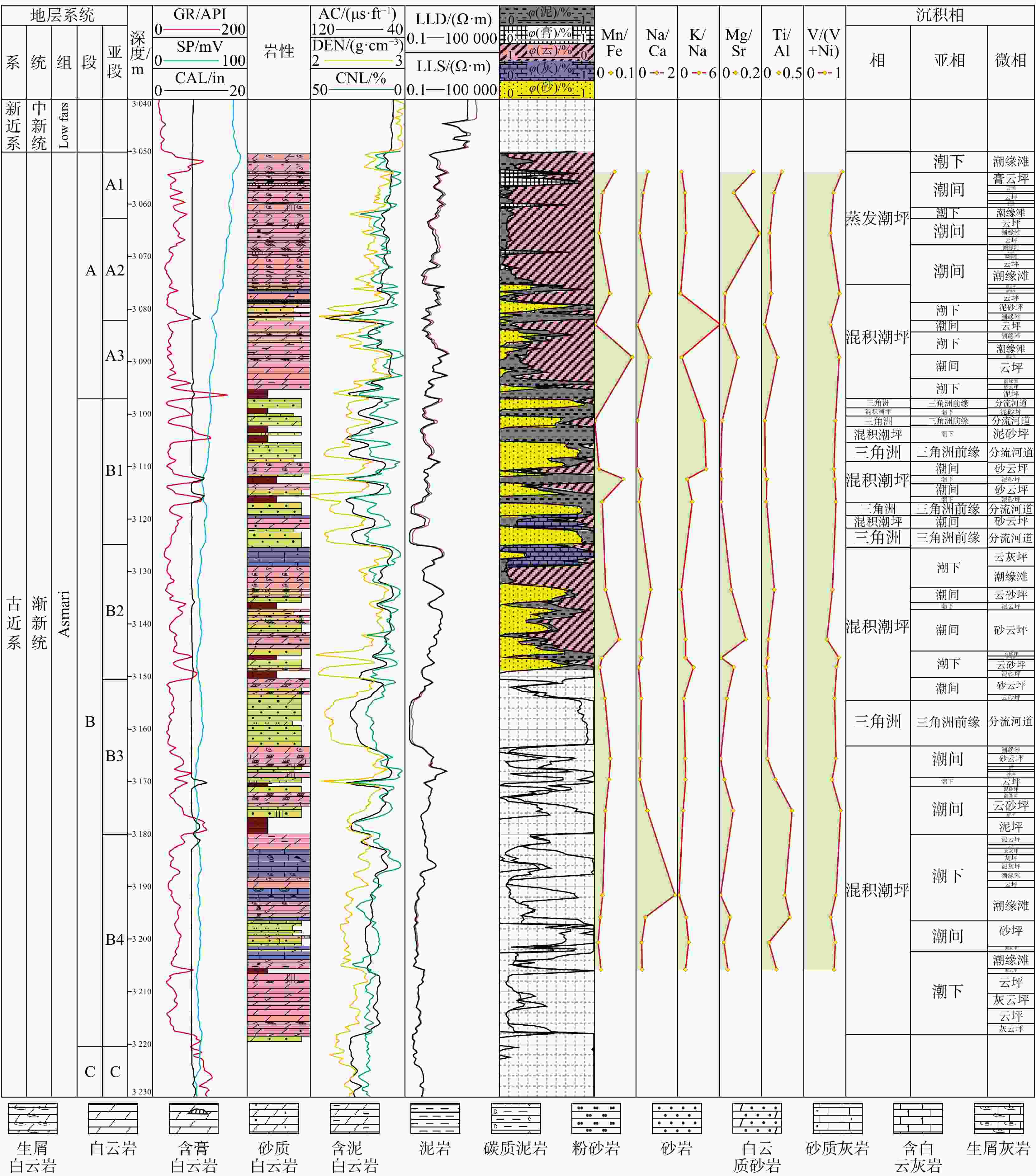
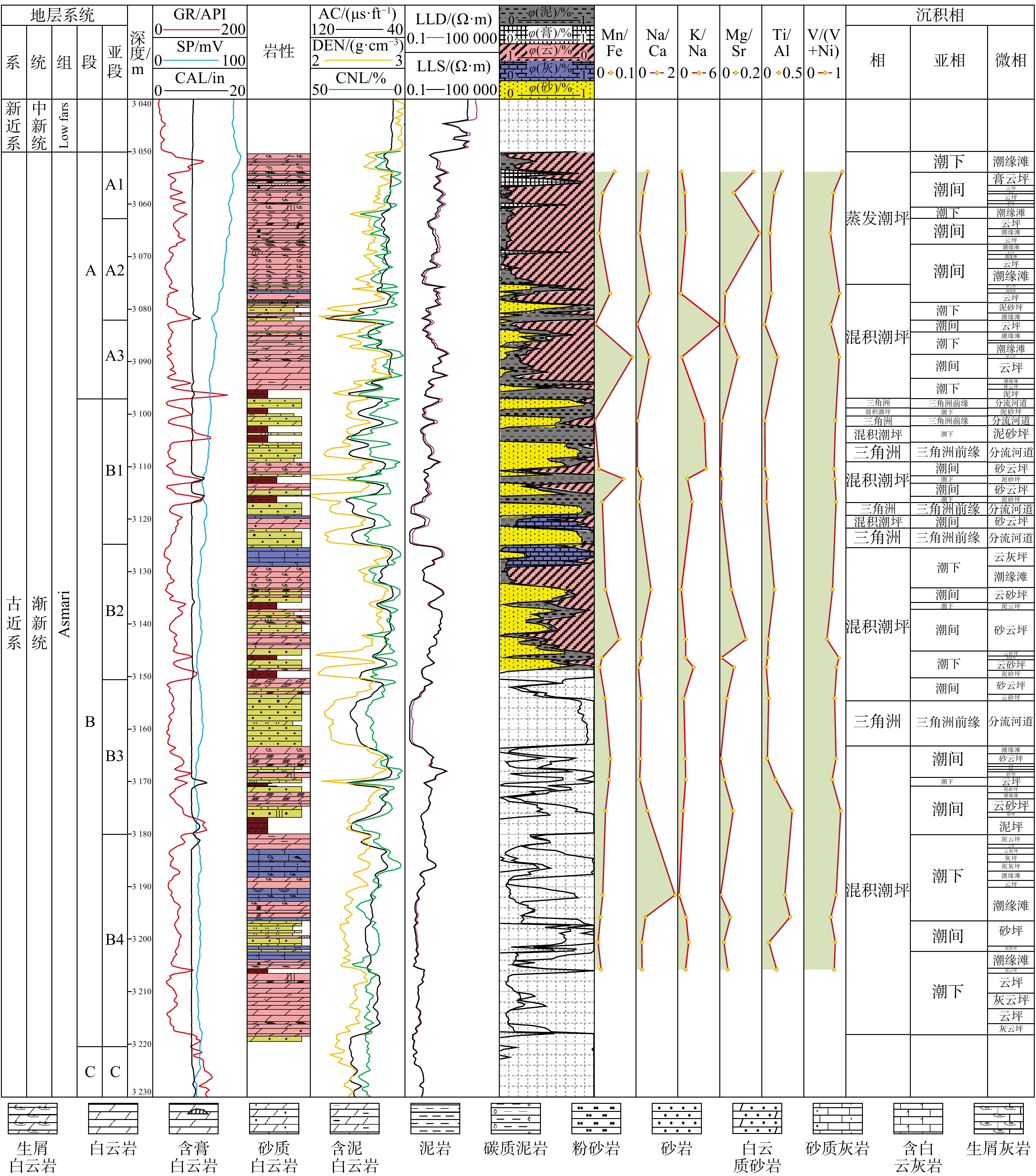
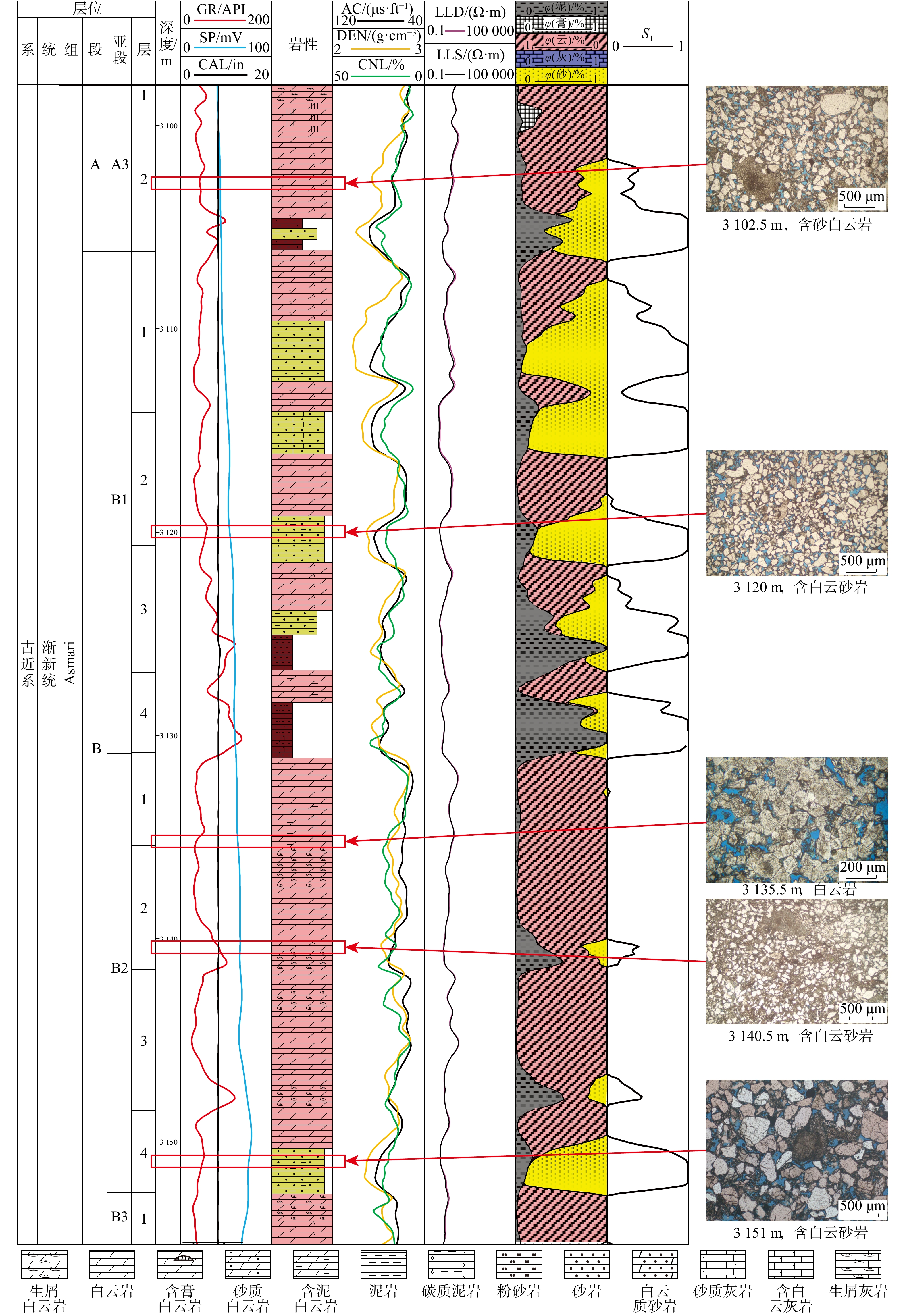
图 2 M油田综合柱状图
GR为自然伽马;SP为自然电位;CAL为井径;AC为声波时差;DEN为密度;CNL为补偿中子;LLD为深侧向电阻率;LLS为浅侧向电阻率;下同
Figure 2. Comprehensive stratigraphic column of M oilfield
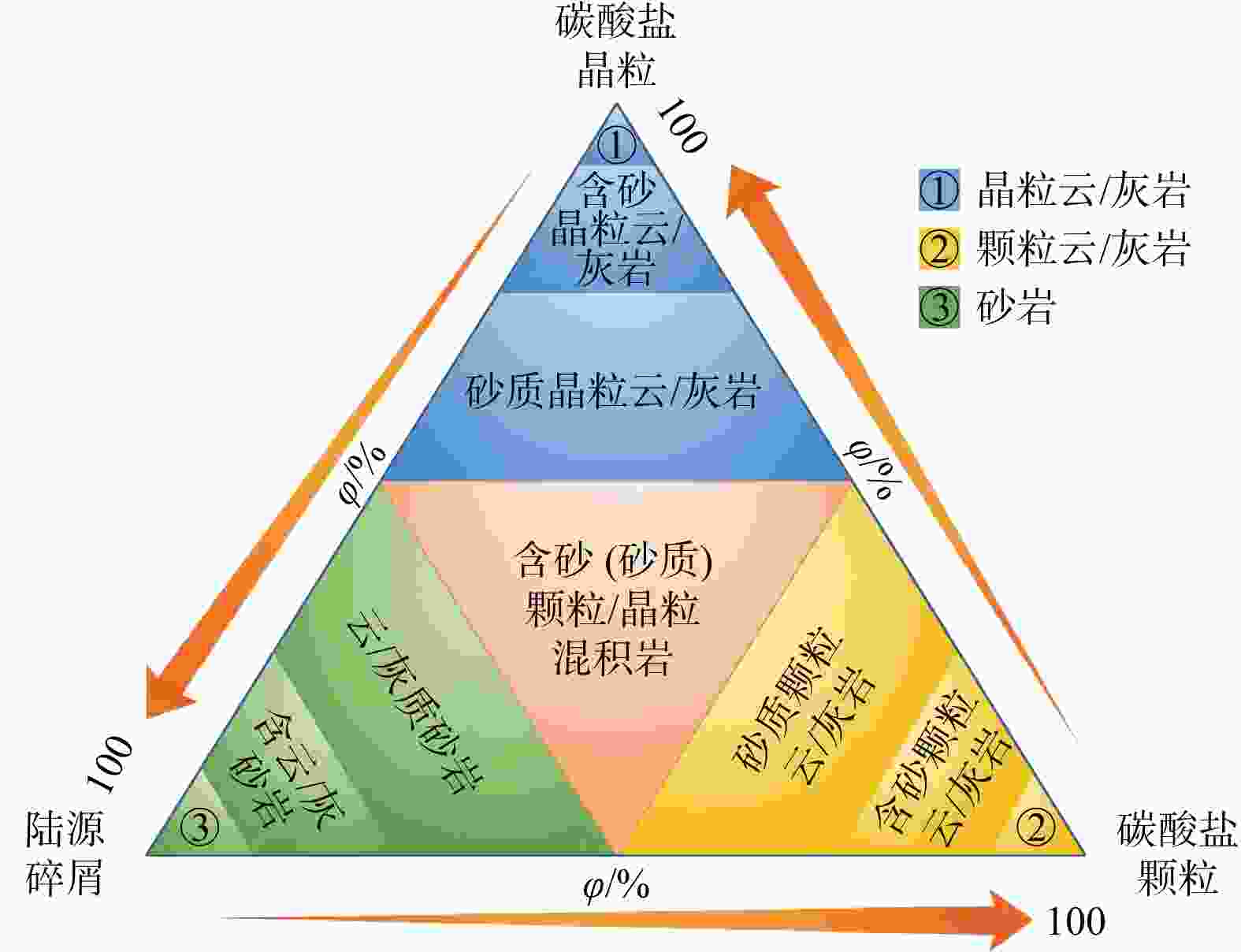
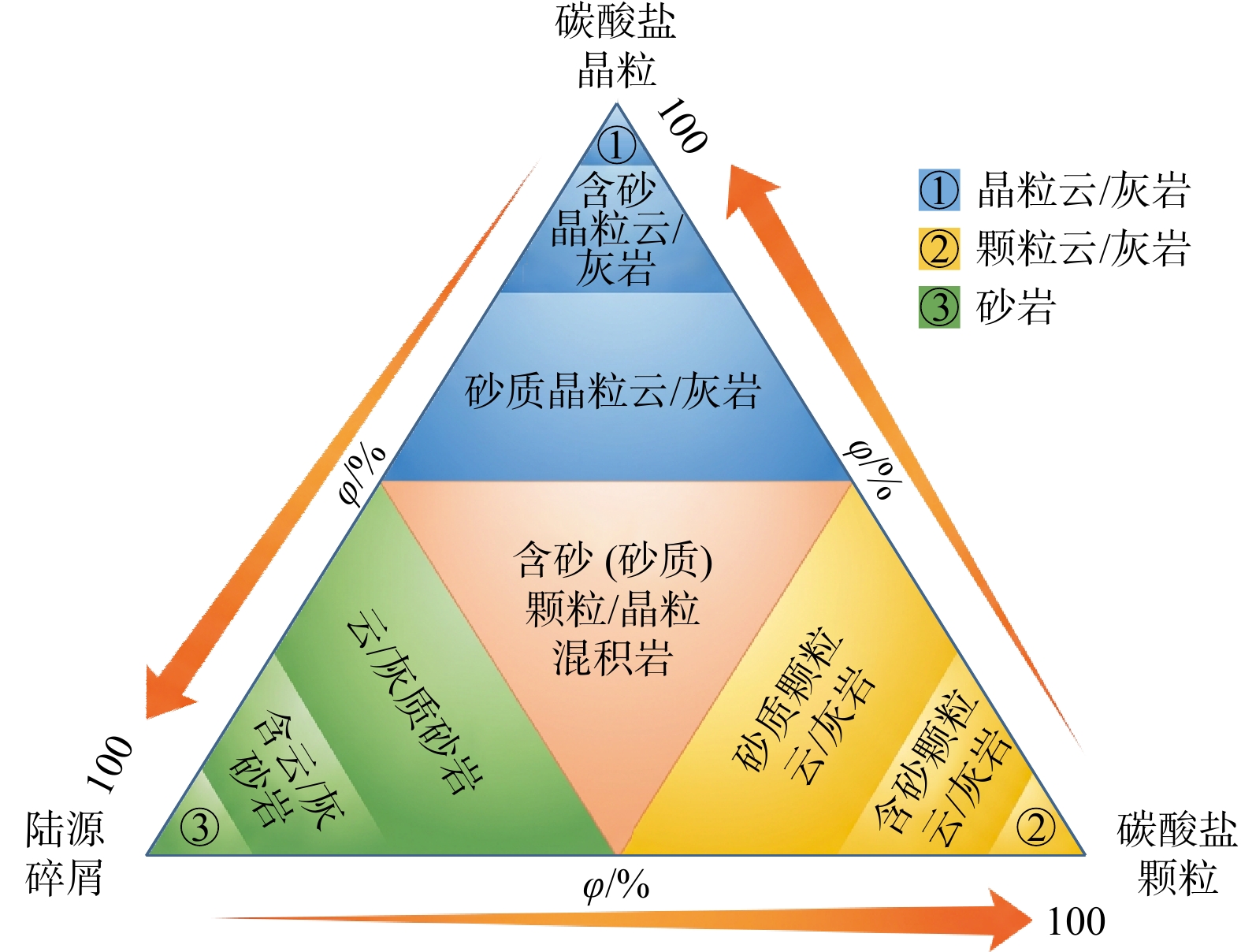
图 3 Asmari组混积岩岩石分类图
Figure 3. Classification of mixed-sediment rocks of Asmari Formation
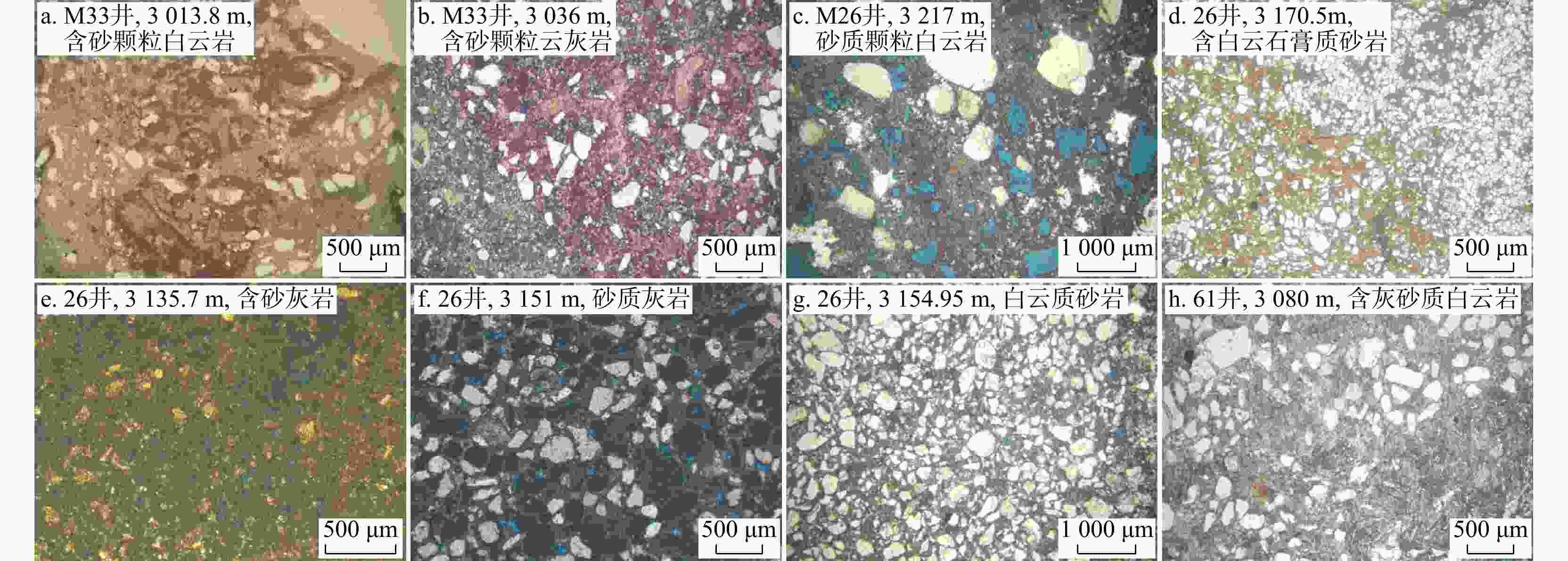
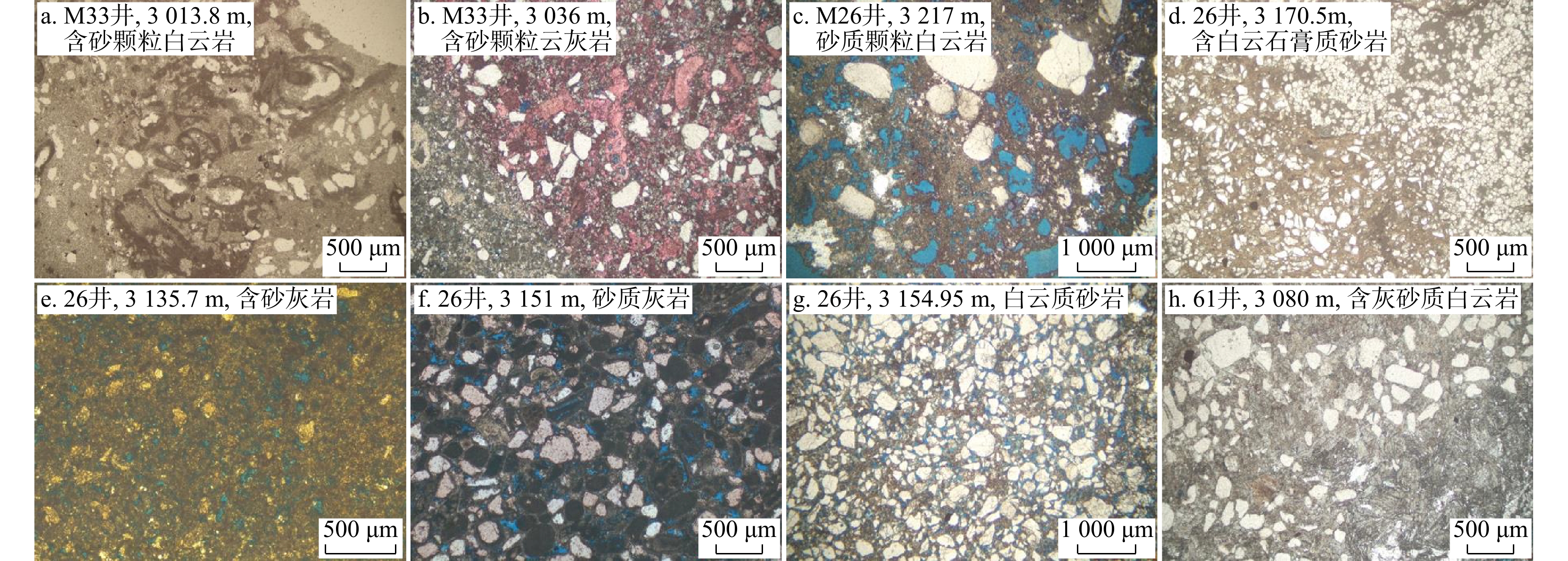
图 4 混积岩类型薄片照片
a. M33井,
3013.8 m,含砂颗粒白云岩;b. M33井,3036 m,含砂颗粒云灰岩;c. M26井,3217 m,砂质颗粒白云岩;d. 26井,3170.5 m,含白云石膏质砂岩;e. 26井,3135.7 m,含砂灰岩;f. 26井,3151 m,砂质灰岩;g. 26井,3154.95 m,白云质砂岩;h. 61井,3080 m,含灰砂质白云岩Figure 4. Thin-section microphotographs of mixed-sediment rocks
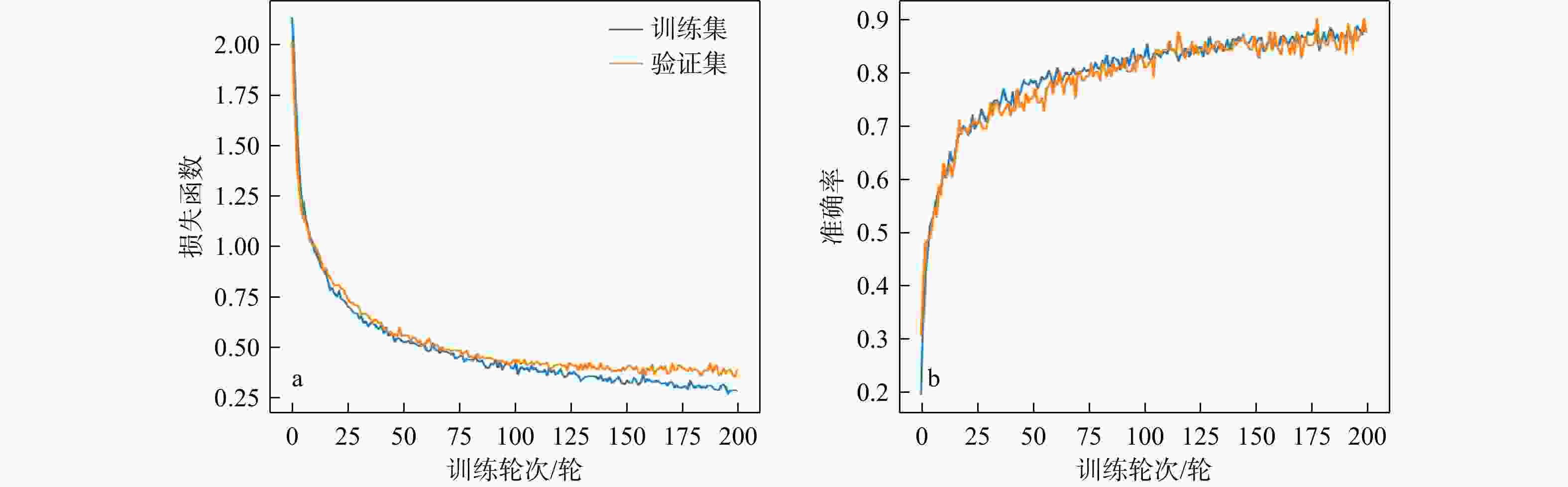
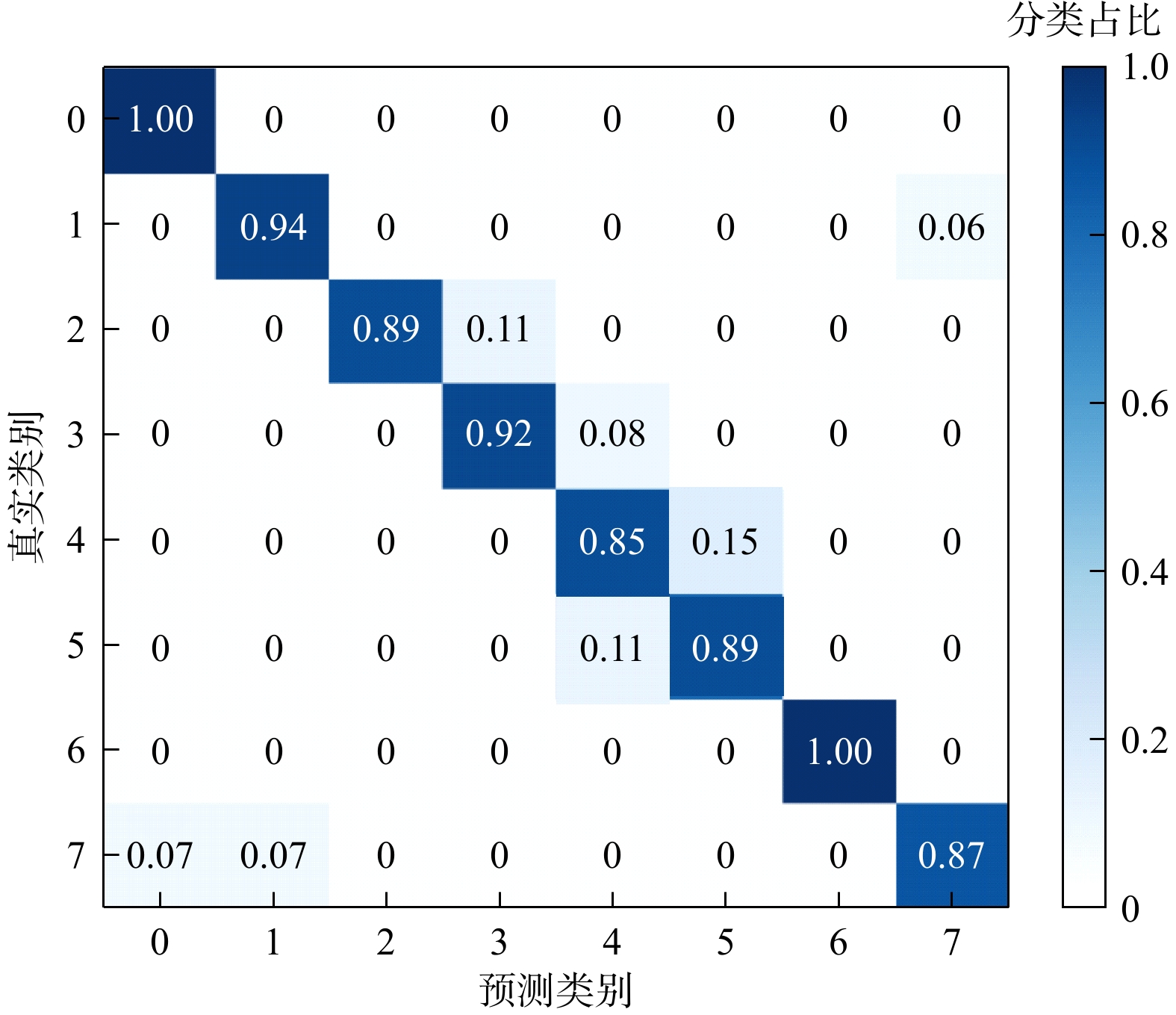
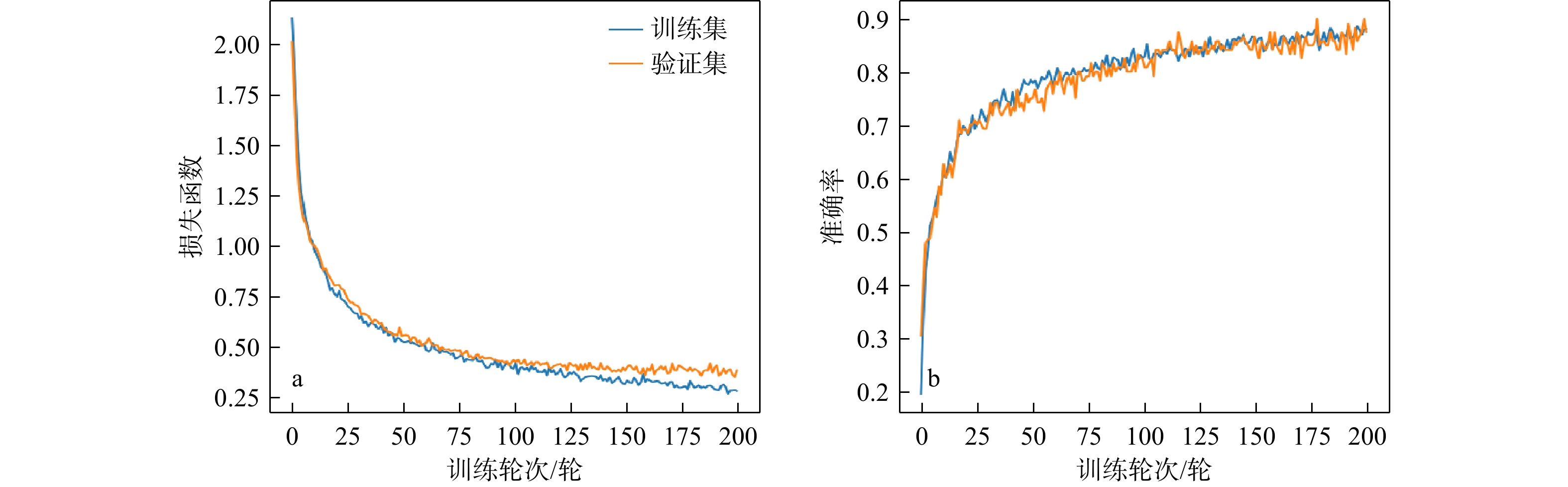
图 6 卷积神经网络(CNN)模型损失函数 (a) 与准确率 (b) 随训练轮次变化
Figure 6. Variation of loss function (a) and accuracy (b) of convolutional neural network (CNN) model with training epochs
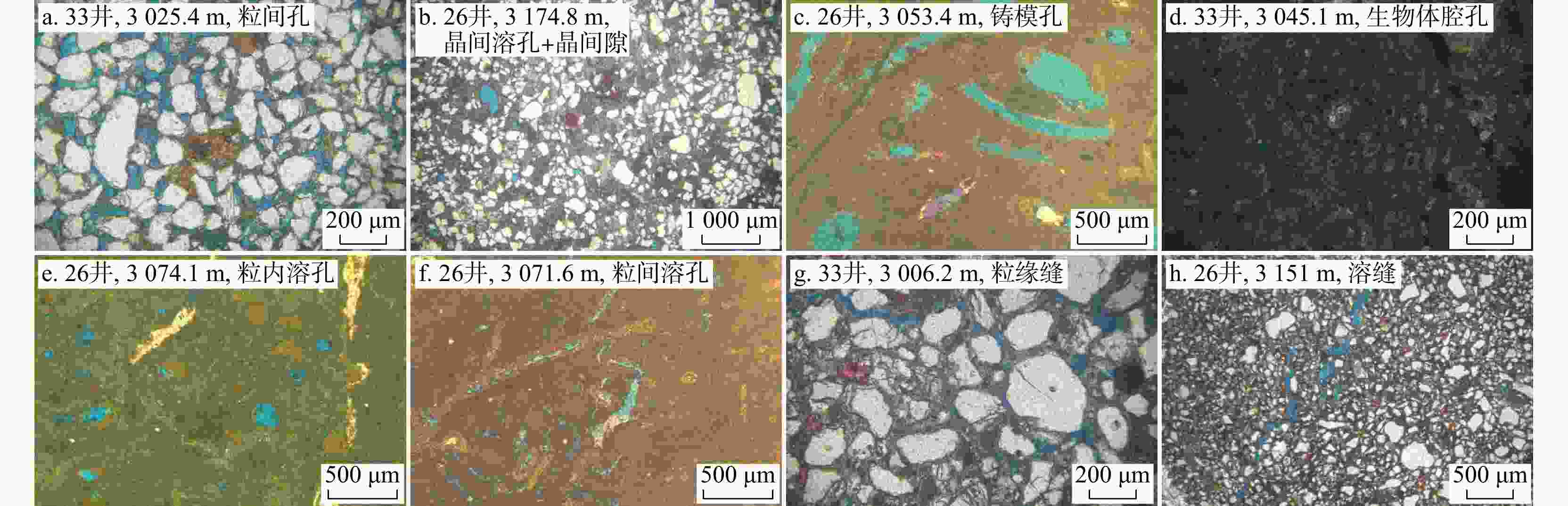
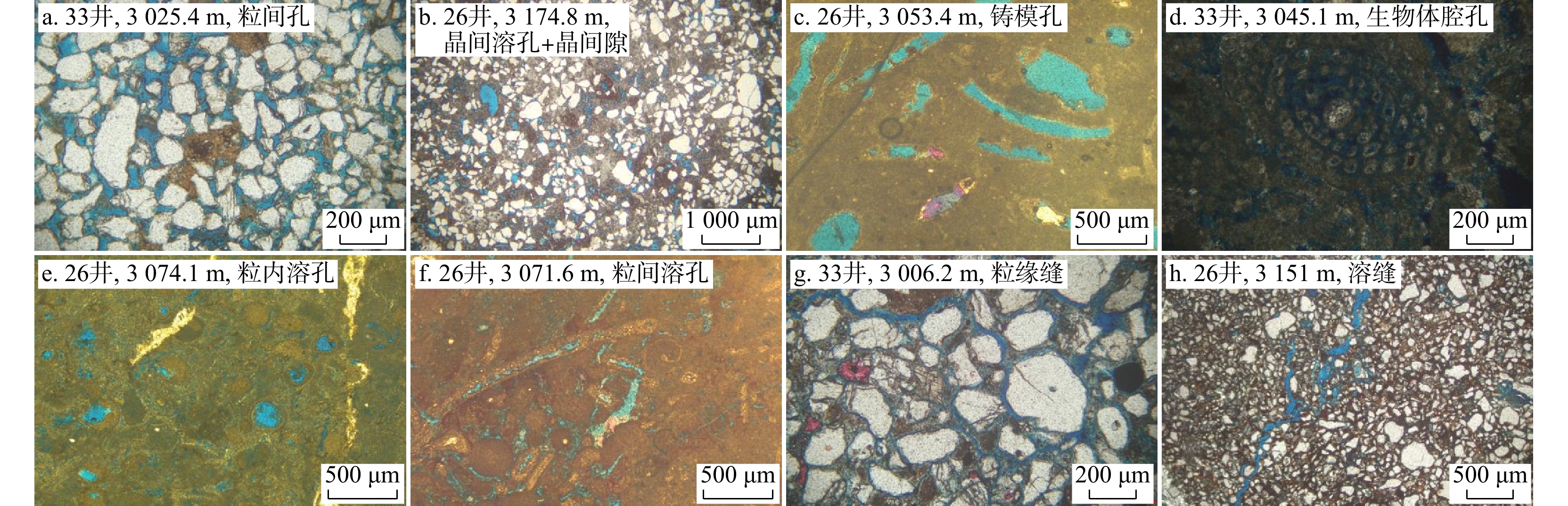
图 8 研究区储集空间薄片照片
a. 33井,
3025.4 m,粒间孔;b. 26井,3174.8 m,晶间溶孔+晶间隙;c. 26井,3053.4 m,铸模孔;d. 33井,3045.1 m,生物体腔孔;e. 26井,3074.1 m,粒内溶孔;f. 26井,3071.6 m,粒间溶孔;g. 33井,3006.2 m,粒缘缝;h. 26井,3151 m,溶缝Figure 8. Thin-section microphotographs of reservoir pore space in study area
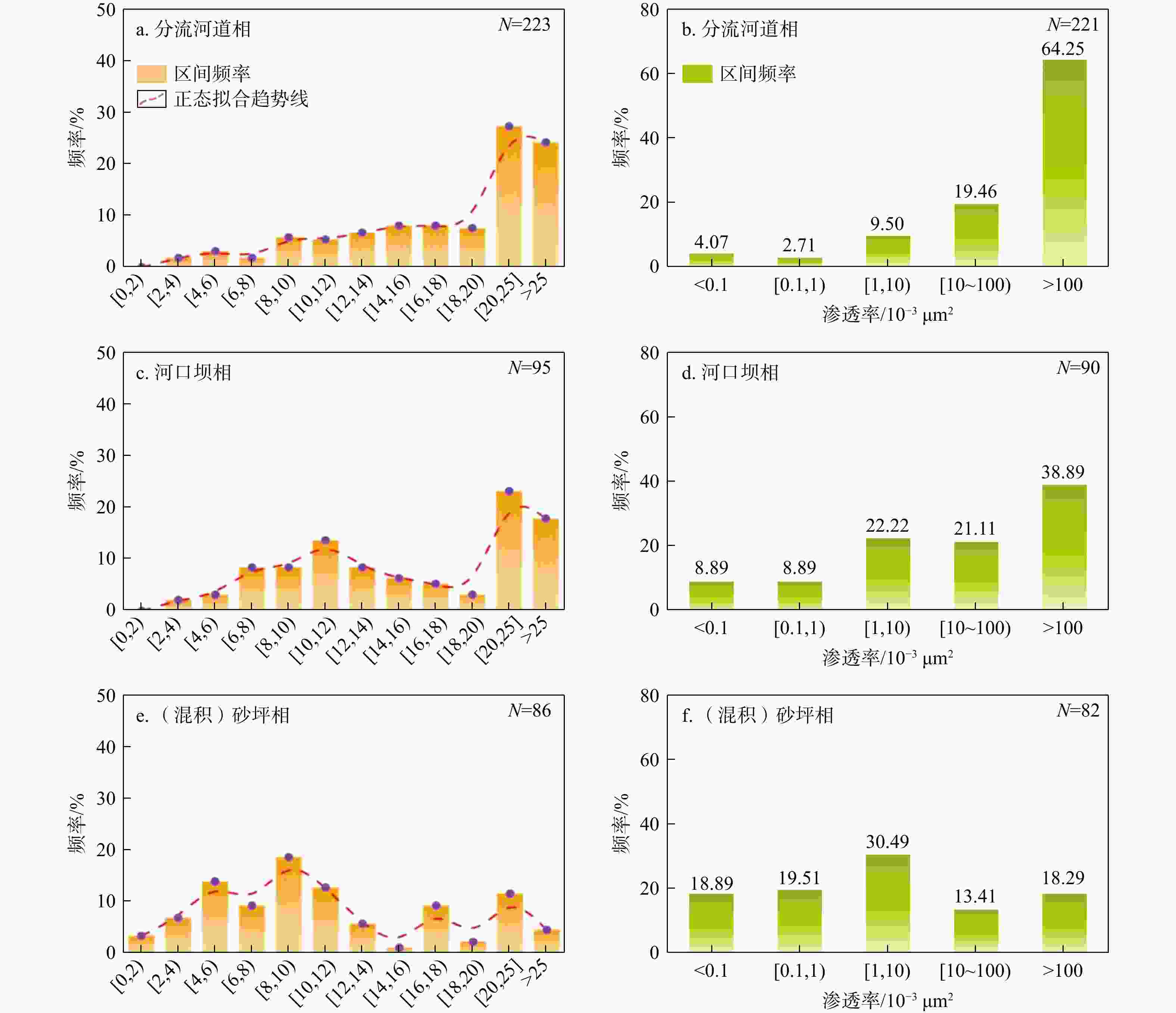
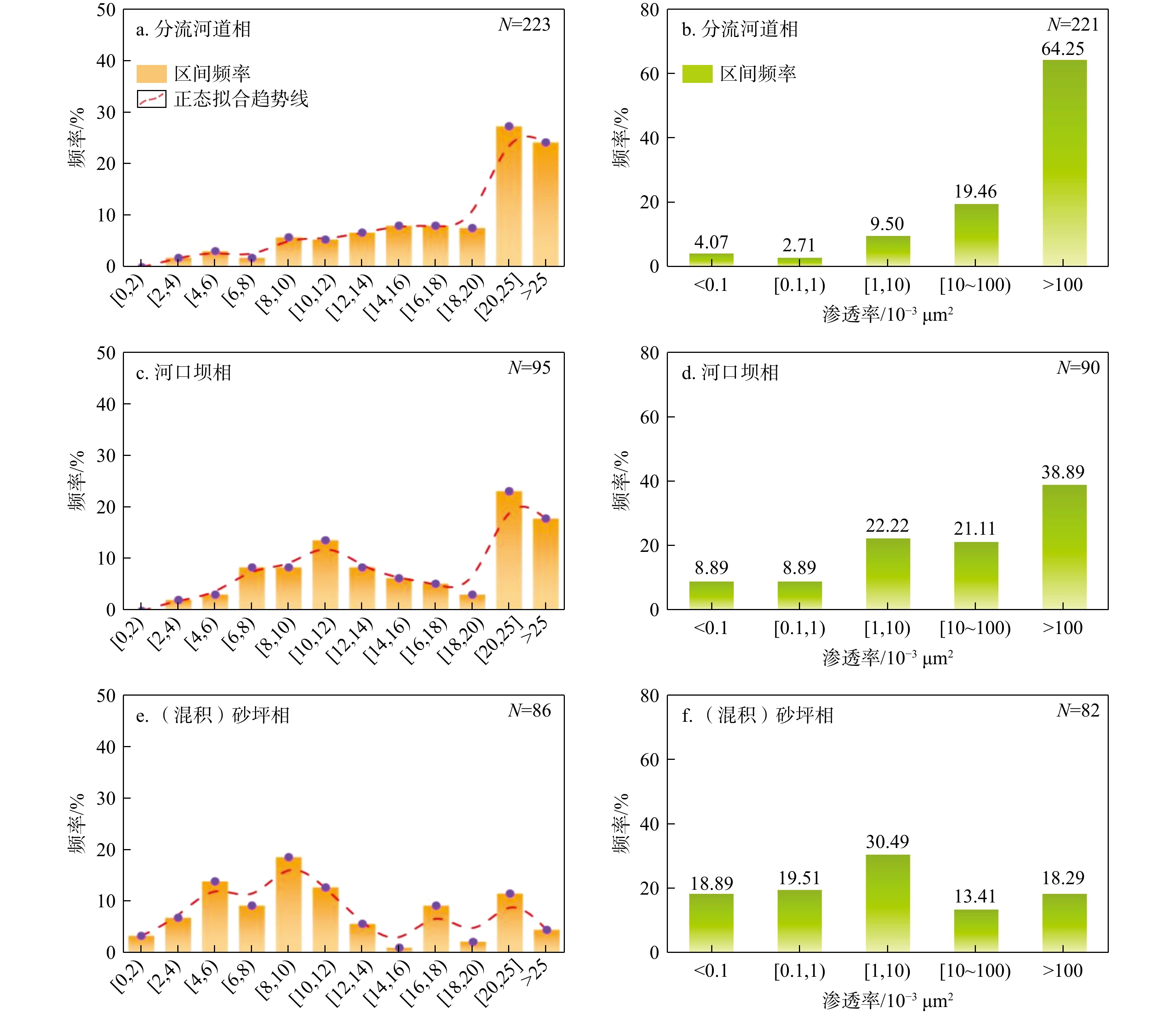
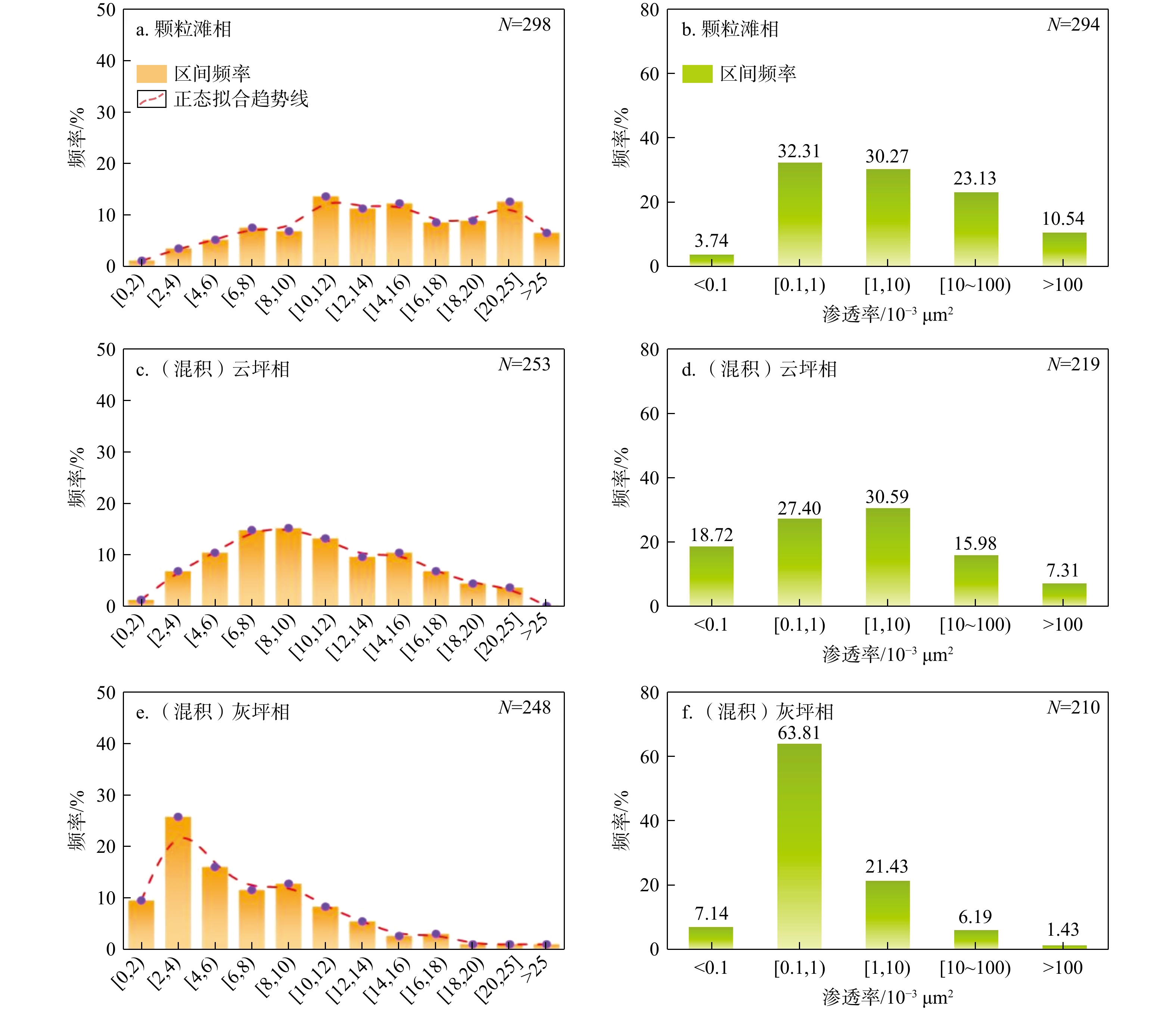
图 9 砂岩类储层孔、渗频率分布图(N为样品书;因四舍五入,各子图频率之和可能不严格等于100%;下同)
Figure 9. Frequency distribution of porosity and permeability in sandstone reservoirs
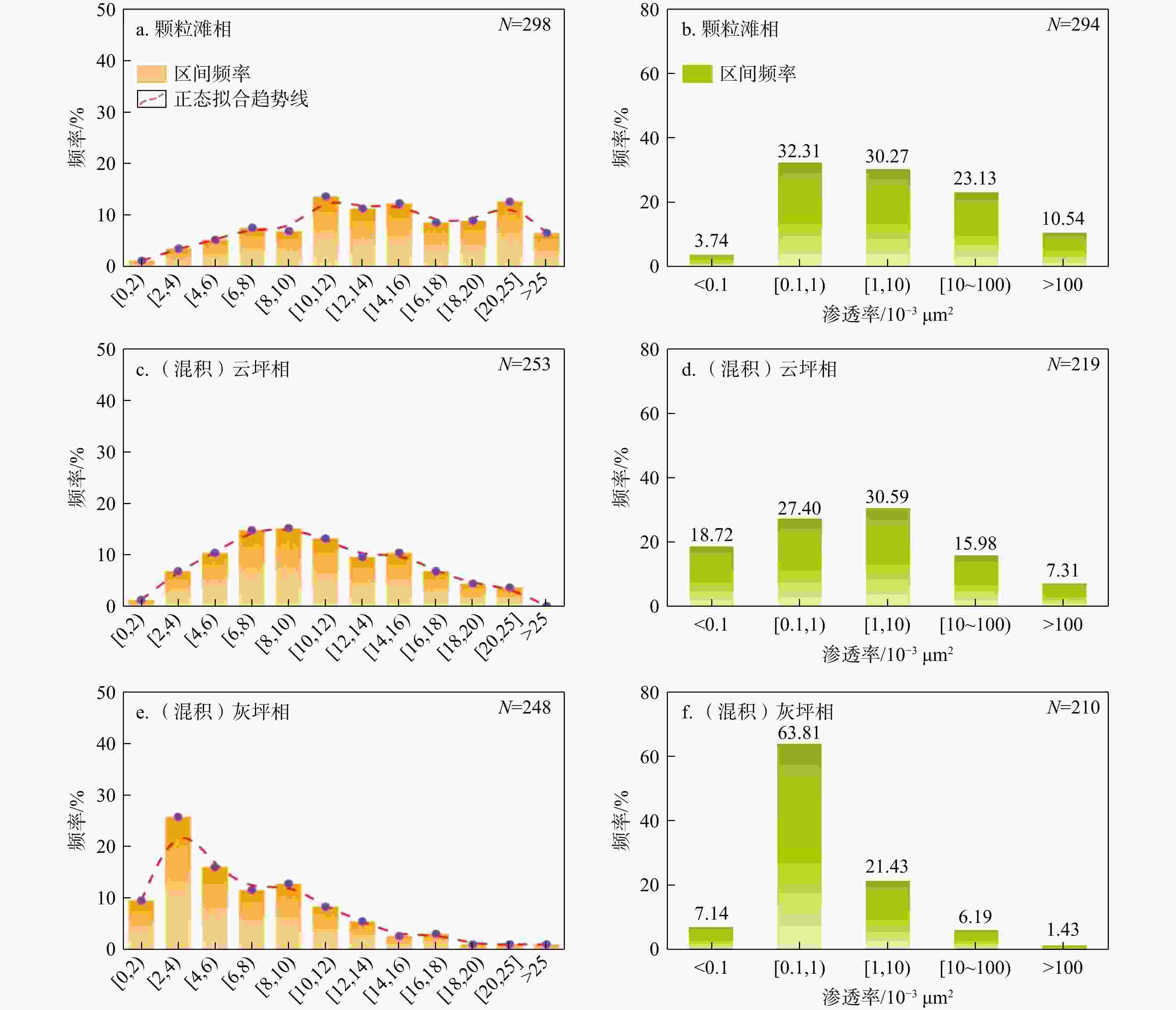
图 10 碳酸盐岩类储层孔、渗频率分布图
Figure 10. Frequency distribution of porosity and permeability in carbonate reservoirs
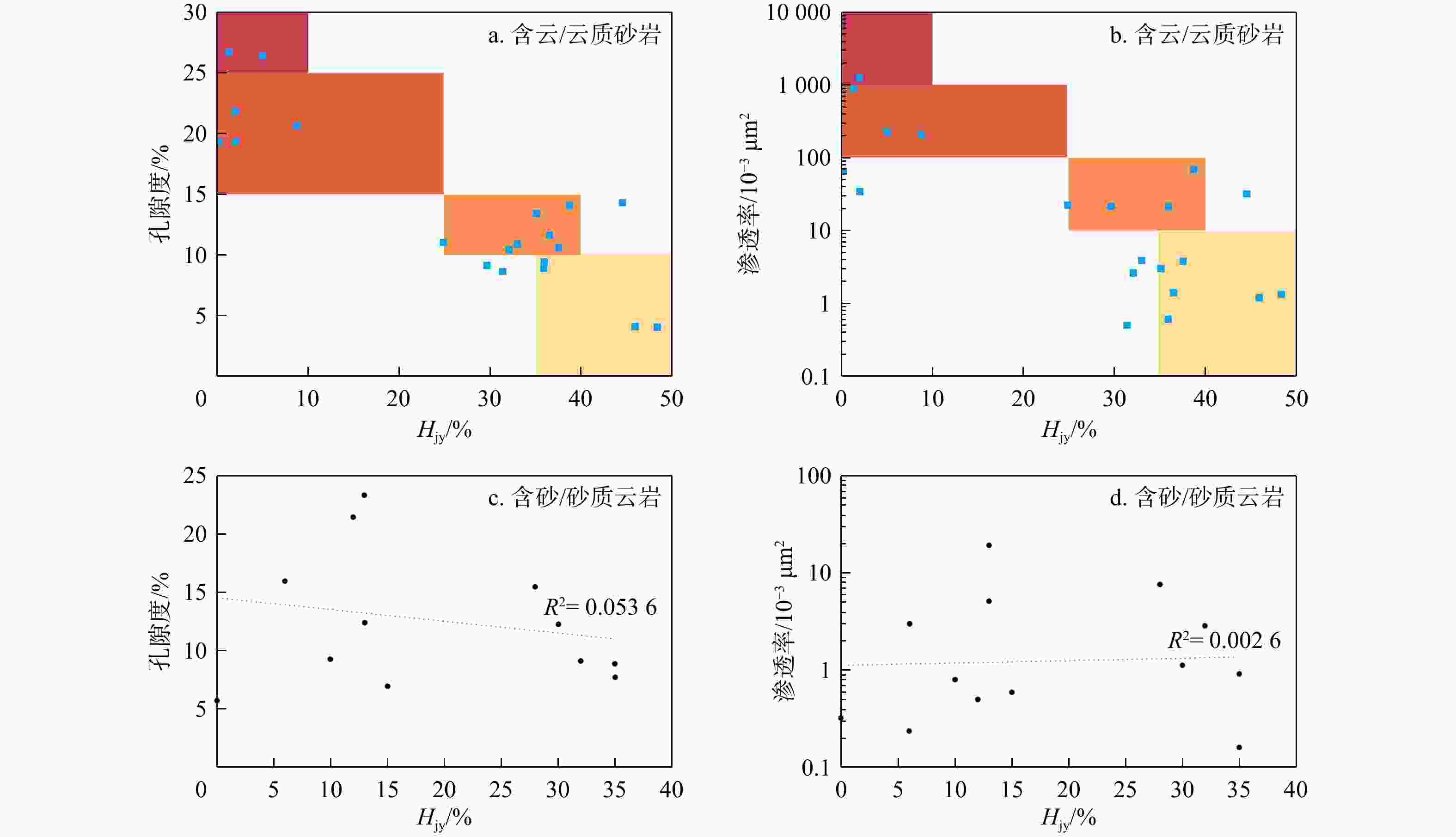
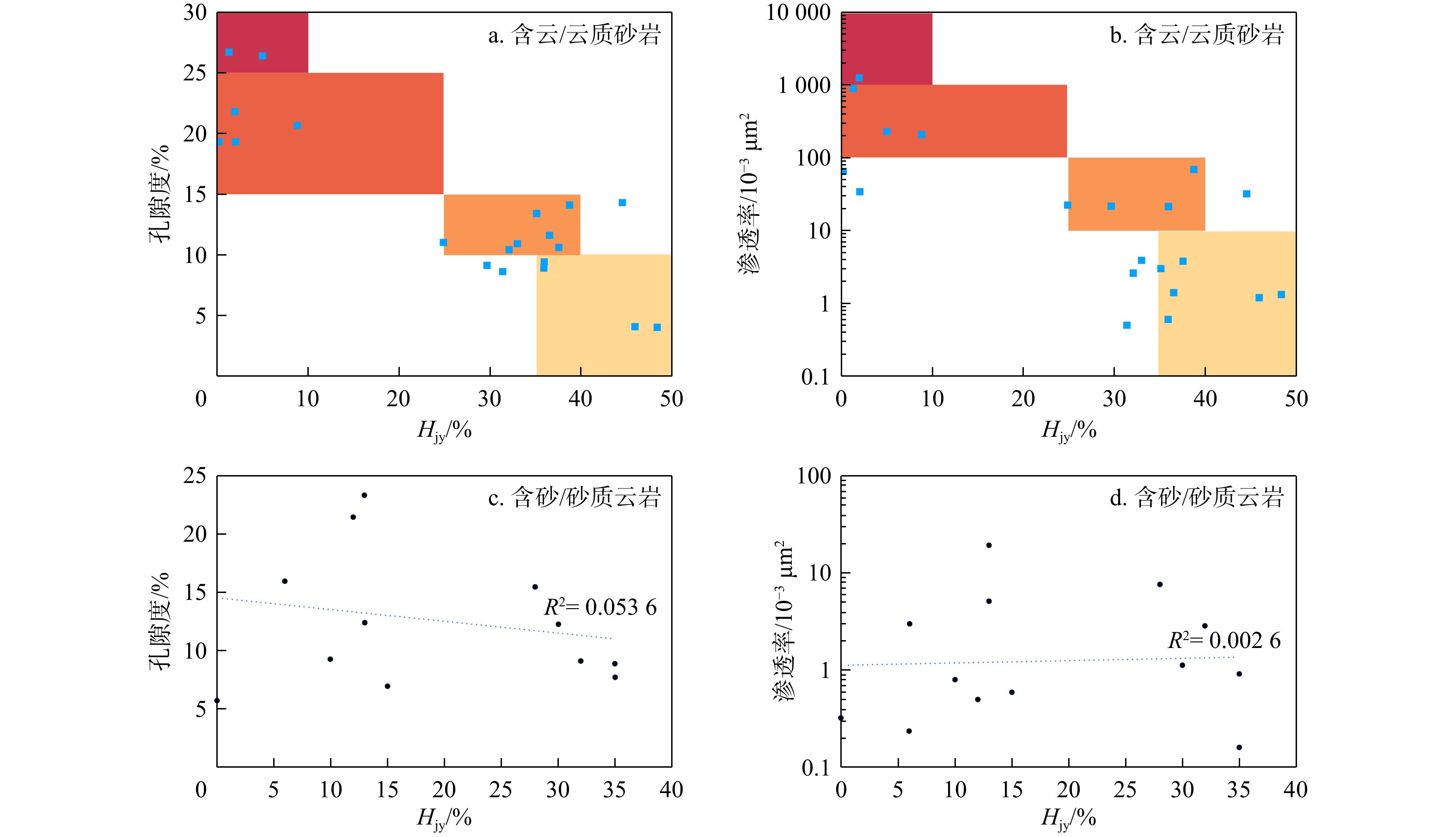
图 11 孔隙度、渗透率与混积度交会图(Hjy为砂岩储层的云质混积度;Hjs为碳酸盐岩(云岩)储层的砂质混积度;R2为决定系数;下同)
Figure 11. Crossplots of porosity and permeability versus mixing intensity
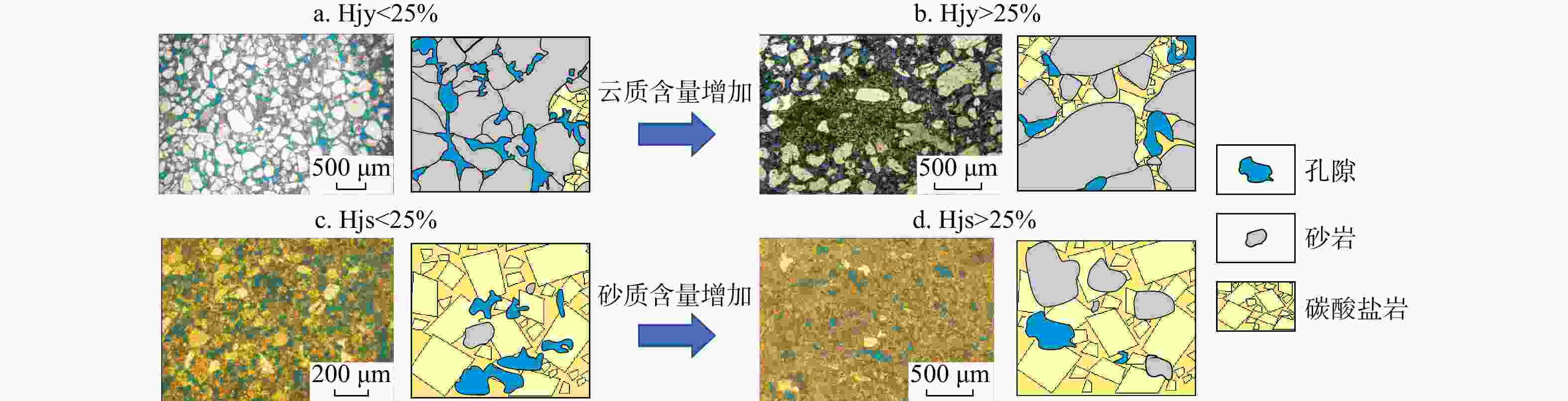
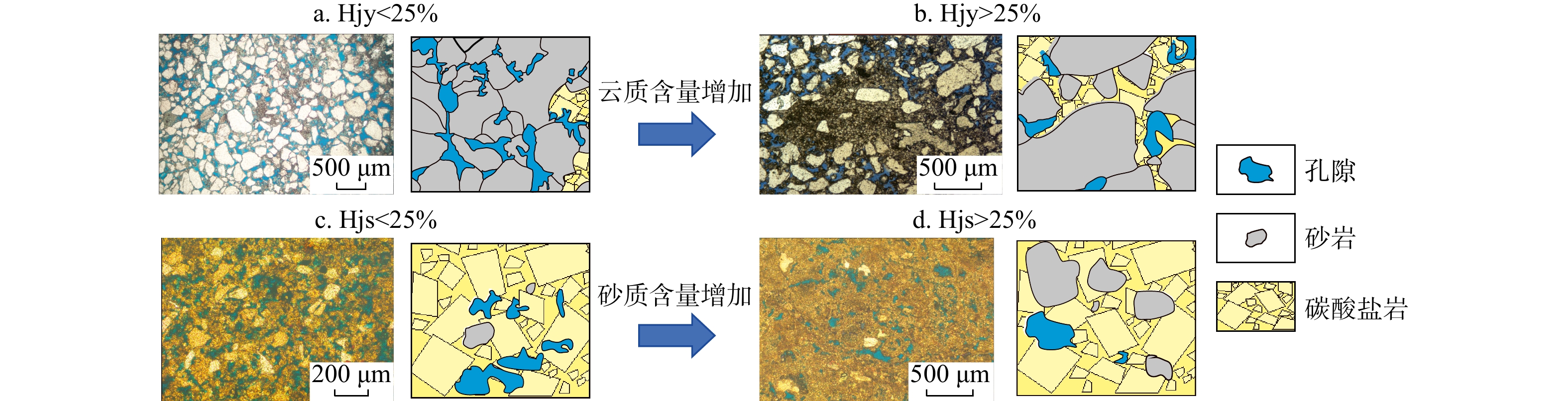
图 12 混积度对砂岩与碳酸盐岩储层孔喉结构的差异化影响示意图
Φ,K为对应样品实测值
Figure 12. Schematic diagram of differential effects of mixing intensity on pore-throat structure of sandstone and carbonate reservoirs
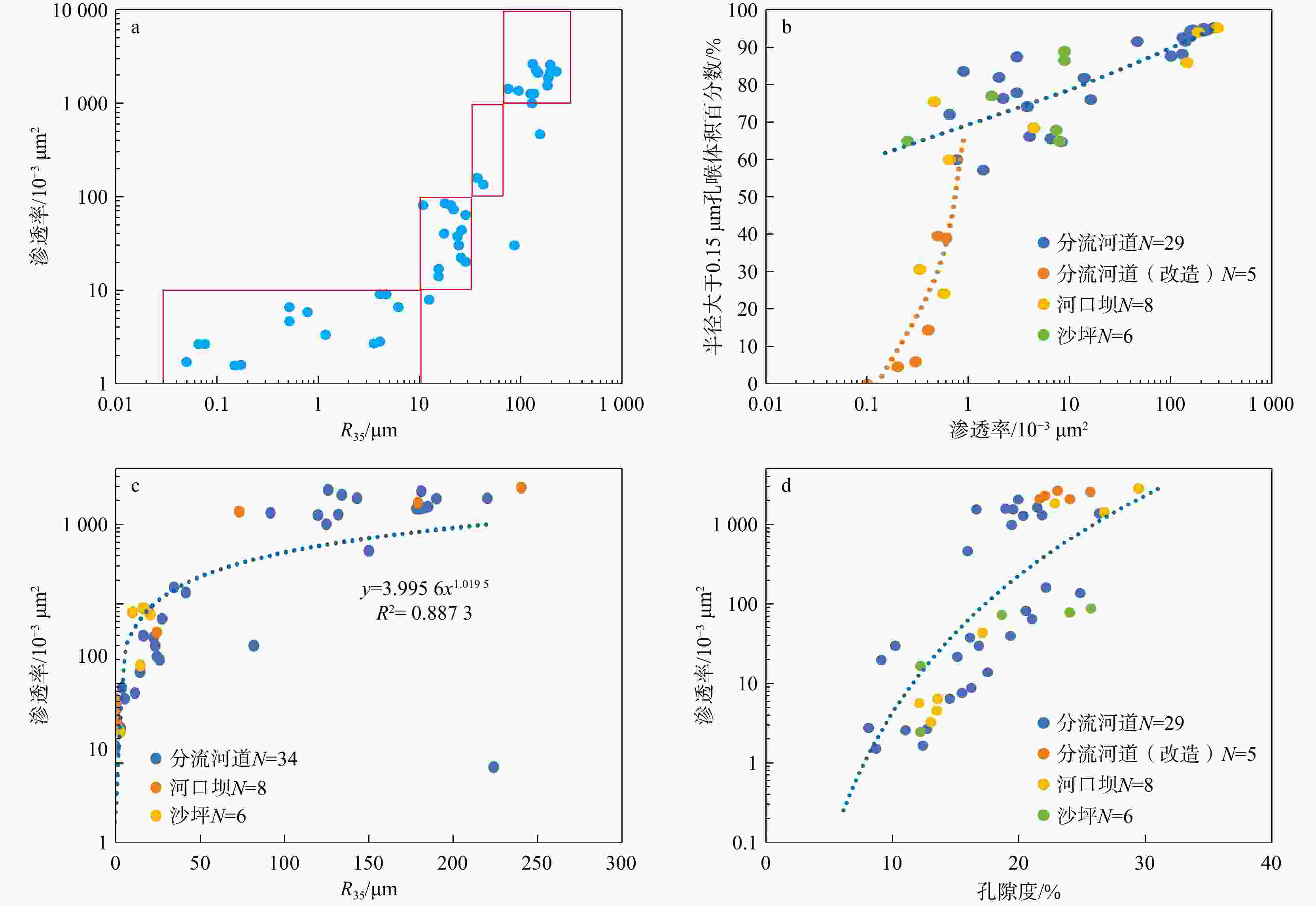
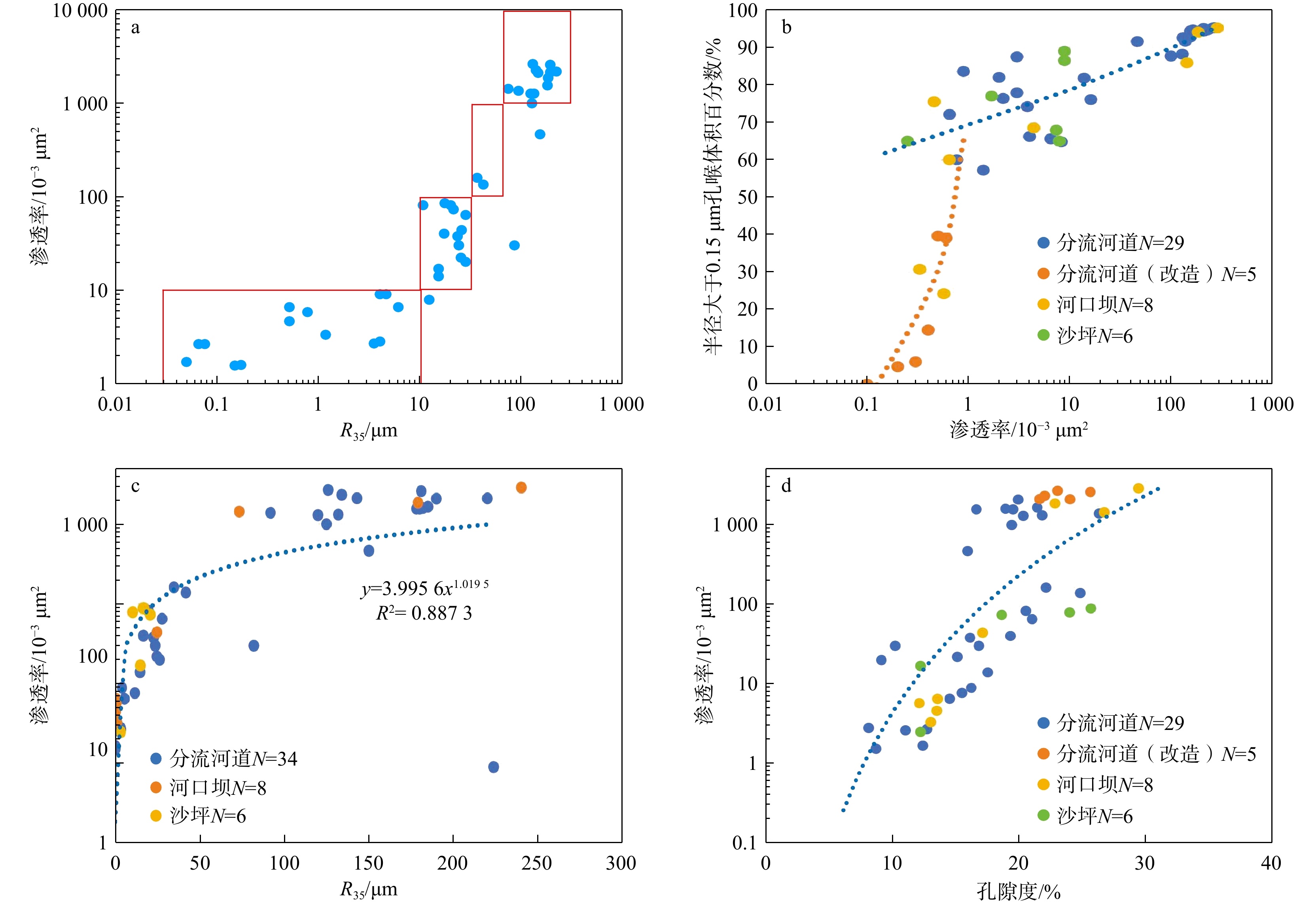
图 13 研究区砂岩储层渗透率与R35、可流动孔喉体积百分数及孔隙度的交会关系图版
Figure 13. Crossplots of permeability versus R35, volume fraction of flowable pore throats, and porosity in sandstone reservoirs in study area
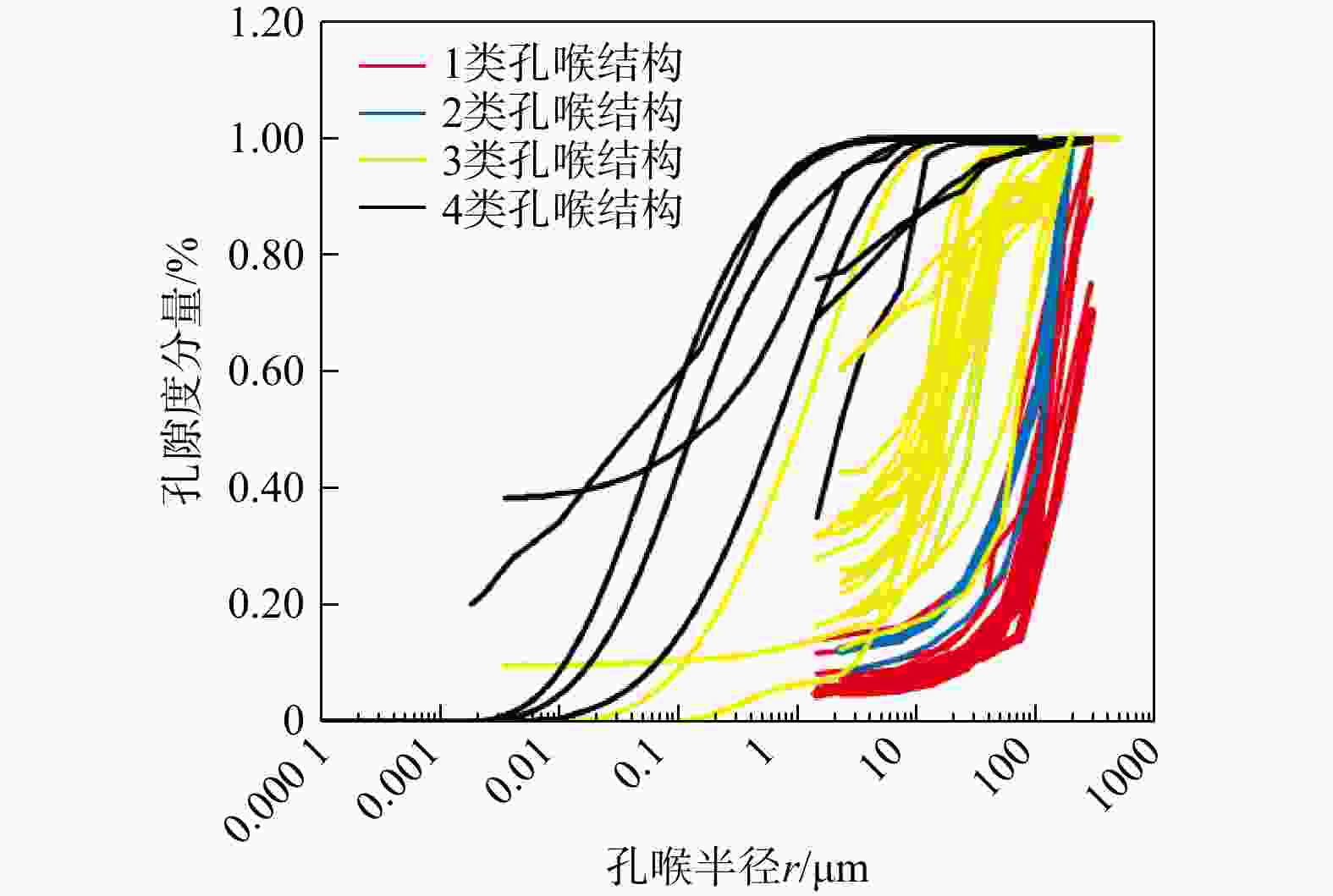
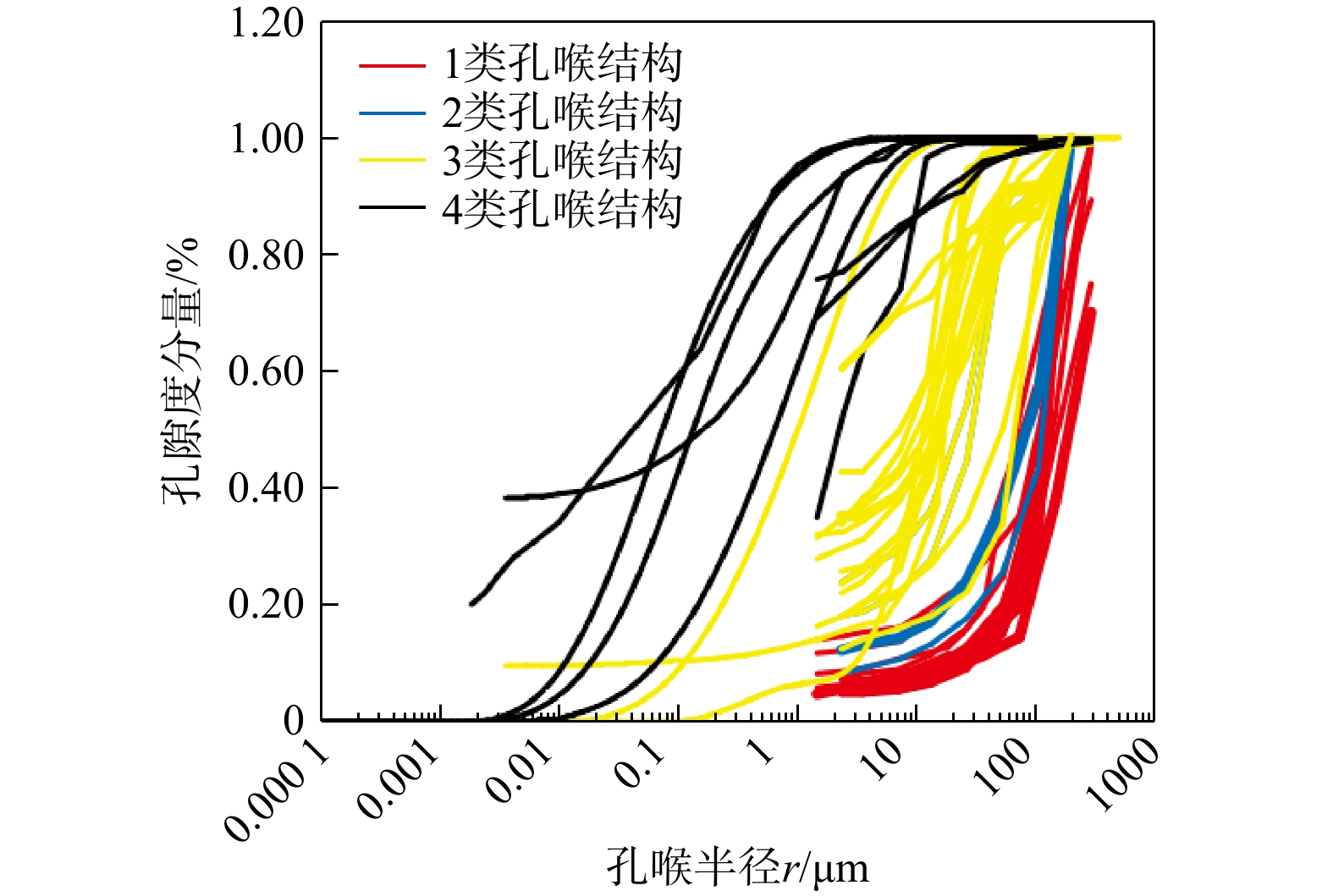
图 14 M油田砂岩伪毛管力曲线分布图
R35为进汞35%饱和度对应的孔喉半径;r为相关系数
Figure 14. Distribution of pseudo-capillary pressure curves for sandstones in M oilfield
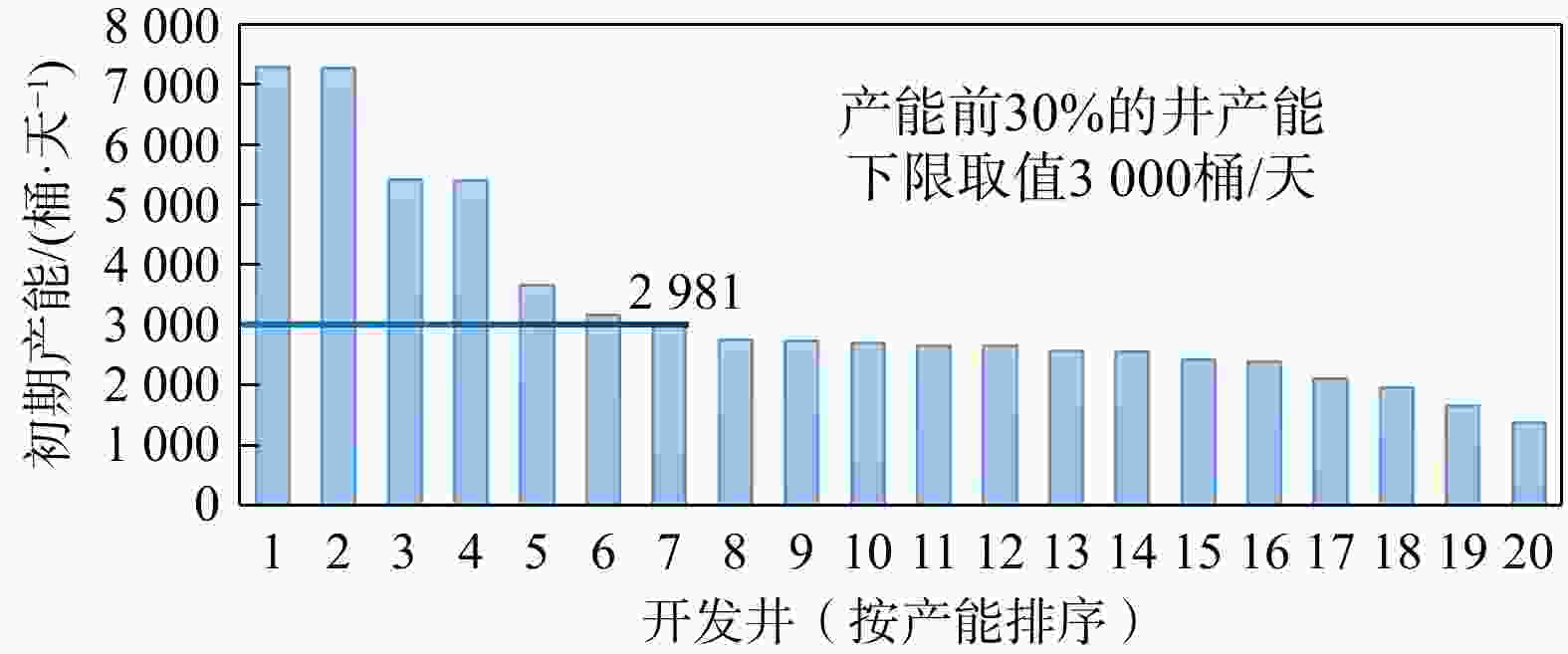
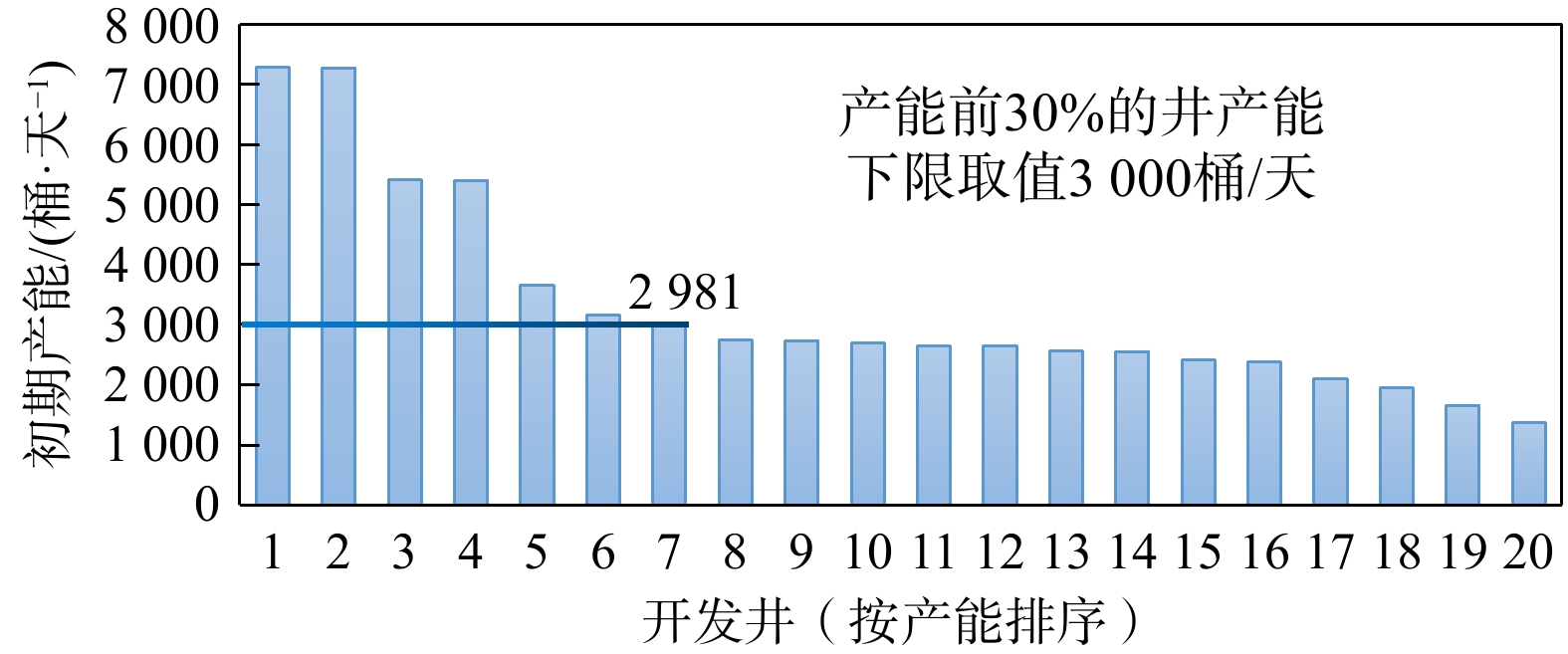
图 15 研究区开发井初产统计
Figure 15. Initial-production statistics of development wells in study area
表 1 强混积和弱混积的定量识别标志
Table 1. Quantitative discrimination criteria for strong and weak mixing intensity
按混积度分类 组分特征/% S1/% 强混积 φ(次要组分)[25, 50] [0.25, 0.75] 弱混积 φ(次要组分)[10, 25) [10, 25),(75, 90] 注:S1为测井识别用的混积度参数,为砂岩组分占砂岩、灰质、白云质三组分总量的体积分数,下同  下载: 导出CSV
-
[1] MOUNT J F. Mixing of siliciclastic and carbonate sediments in shallow shelf environments[J]. Geology, 1984, 12(7): 432. doi: 10.1130/0091-7613(1984)12<432:mosacs>2.0.co;2 [2] 张锦泉, 叶红专. 论碳酸盐与陆源碎屑的混合沉积[J]. 成都地质学院学报, 1989(2): 87-92.ZHANG J Q, YE H Z. A study on carbonate and siliciclastic mixed sediments[J]. Journal of Chengdu College of Geology, 1989(2): 87-92. (in Chinese with English abstract) [3] 杨朝青, 沙庆安. 云南曲靖中泥盆统曲靖组的沉积环境: 一种陆源碎屑与海相碳酸盐的混合沉积[J]. 沉积学报, 1990(2): 59-66. doi: 10.14027/j.cnki.cjxb.1990.02.008YANG C Q, SHA Q A. Sedimentary environment of the Middle Devonian Qujing Formation, Qujing, Yunnan Province: A kind of mixing sedimentation of terrigenous clastics and carbonate[J]. Acta Sedimentologica Sinica, 1990(2): 59-66. (in Chinese with English abstract) doi: 10.14027/j.cnki.cjxb.1990.02.008 [4] MANCINI E A, TEW B H. Recognition of maximum flooding events in mixed siliciclastic-carbonate systems: Key to global chronostratigraphic correlation[J]. Geology, 1997, 25(4): 351. (in Chinese with English abstract) doi: 10.1130/0091-7613(1997)025<0351:romfei>2.3.co;2 [5] 张雄华. 混积岩的分类和成因[J]. 地质科技情报, 2000, 19(4): 31-34. doi: 10.3969/j.issn.1000-7849.2000.04.006ZHANG X H. Classification and origin of mixosedimentite[J]. Geological Science and Technology Information, 2000, 19(4): 31-34. (in Chinese with English abstract) doi: 10.3969/j.issn.1000-7849.2000.04.006 [6] 董桂玉, 陈洪德, 何幼斌, 等. 陆源碎屑与碳酸盐混合沉积研究中的几点思考[J]. 地球科学进展, 2007, 22(9): 931-939. doi: 10.3321/j.issn:1001-8166.2007.09.007DONG G Y, CHEN H D, HE Y B, et al. Some problems on the study of the mixed siliciclastic-carbonate sediments[J]. Advances in Earth Science, 2007, 22(9): 931-939. (in Chinese with English abstract) doi: 10.3321/j.issn:1001-8166.2007.09.007 [7] 高岗, 杨尚儒, 屈童. 混合沉积研究现状及其与油气富集的关系[J]. 地质科技情报, 2018, 37(6): 82-88. doi: 10.19509/j.cnki.dzkq.2018.0610GAO G, YANG S R, QU T. Research status of mixing sediments and their relationship with petroleum enrichment[J]. Geological Science and Technology Information, 2018, 37(6): 82-88. (in Chinese with English abstract) doi: 10.19509/j.cnki.dzkq.2018.0610 [8] 齐玉民, 章顺利, 吴家洋, 等. 渤海石臼坨凸起沙河街组深埋藏混积岩成岩作用特征[J]. 地质科技情报, 2019, 38(3): 63-69. doi: 10.19509/j.cnki.dzkq.2019.0306QI Y M, ZHANG S L, WU J Y, et al. Diagenesis characteristics of Shahejie Formation deep-buried mixed siliciclastic-carbonate sediments in the Shijiutuo uplift, Bohai Sea[J]. Geological Science and Technology Information, 2019, 38(3): 63-69. (in Chinese with English abstract) doi: 10.19509/j.cnki.dzkq.2019.0306 [9] 叶茂松. 环渤中坳陷古近系沙河街组一二段混积岩特征及优质储层形成机理[D]. 武汉: 中国地质大学(武汉), 2019.YE M S. Characteristics of siliciclastic-carbonate sediments and forming mechanism of high-quality reservoirs in the Member 1~2 of the Shahejie Formation, circum-Bozhong Depression, Bohai Bay Basin[D]. Wuhan: China University of Geosciences (Wuhan), 2019. (in Chinese with English abstract) [10] 彭军, 杨一茗, 刘惠民, 等. 陆相湖盆细粒混积岩的沉积特征与成因机理—以东营凹陷南坡陈官庄地区沙河街组四段上亚段为例[J]. 石油学报, 2022, 43(10): 1409-1426. doi: 10.7623/syxb20221005PENG J, YANG Y M, LIU H M, et al. Sedimentary characteristics and genetic mechanism of fine-grained hybrid rocks in continental lacustrine basins: A case study of the upper submember of the 4th Member of Shahejie Formation in Chenguanzhuang area, southern slope of Dongying Depression[J]. Acta Petrolei Sinica, 2022, 43(10): 1409-1426. (in Chinese with English abstract) doi: 10.7623/syxb20221005 [11] 杨梦颖, 谭秀成, 钟寿康, 等. 陆表海环境混积岩发育特征及对台地早期演化的启示: 以鄂尔多斯盆地马一段−马二段为例[J]. 古地理学报, 2026, 28(1): 173-188. doi: 10.7605/gdlxb.2025.085YANG M Y, TAN X C, ZHONG S K, et al. Characteristics of mixed sedimentation in epicontinental sea and implications for early evolution of platforms: Insights from O1m1 to O1m2 of the Majiagou Formation in Ordos Basin[J]. Journal of Palaeogeography (Chinese Edition), 2026, 28(1): 173-188. (in Chinese with English abstract) doi: 10.7605/gdlxb.2025.085 [12] 刘桂珍, 高伟, 尉加盛, 等. 混积层系沉积、层序特征——以鄂尔多斯盆地高桥地区本溪组为例[J]. 天然气地球科学, 2021, 32(3): 382-392. doi: 10.11764/j.issn.1672-1926.2020.11.002LIU G Z, GAO W, YU J S, et al. Sedimentary characteristics and sequence stratigraphy in a mixed silicilastic-carbonate depositional system: Case study of Benxi Formation in Gaoqiao area, Ordos Basin[J]. Natural Gas Geoscience, 2021, 32(3): 382-392. (in Chinese with English abstract) doi: 10.11764/j.issn.1672-1926.2020.11.002 [13] 曾文人. 准东地区咸化湖盆混积层系中富有机质烃源岩的形成机制[D]. 北京: 中国石油大学(北京), 2024.ZENG W R. Formation mechanism of organic-rich source rocks in mixed sedimentary strata of the saline lake basin in the eastern Junggar Basin[D]. Beijing: China University of Petroleum (Beijing), 2024. (in Chinese with English abstract) [14] 王国忠. 南海北部大陆架现代礁源碳酸盐与陆源碎屑的混合沉积作用[J]. 古地理学报, 2001, 3(2): 47-54. doi: 10.3969/j.issn.1671-1505.2001.02.007WANG G Z. Mixed sedimentation of recent reefoid carbonates and terrigenous clastics in the north continental shelf of the South China Sea[J]. Journal of Palaeogeography, 2001, 3(2): 47-54. (in Chinese with English abstract) doi: 10.3969/j.issn.1671-1505.2001.02.007 [15] GOMEZ F J, ASTINI R A. Sedimentology and sequence stratigraphy from a mixed (carbonate-siliciclastic) rift to passive margin transition: The Early to Middle Cambrian of the Argentine Precordillera[J]. Sedimentary Geology, 2015, 316: 39-61. doi: 10.1016/j.sedgeo.2014.11.003 [16] 朱筱敏, 李维, 王晓琳, 等. 高邮−金湖凹陷古近系阜宁组细粒混积岩沉积环境[J]. 古地理学报, 2025, 27(4): 985-996. doi: 10.7605/gdlxb.2025.088ZHU X M, LI W, WANG X L, et al. Sedimentary environment of fine-grained mixed rocks from the Paleogene Funing Formation in Gaoyou and Jinhu Sag[J]. Journal of Palaeogeography, 2025, 27(4): 985-996. (in Chinese with English abstract) doi: 10.7605/gdlxb.2025.088 [17] 冯进来, 胡凯, 曹剑, 等. 陆源碎屑与碳酸盐混积岩及其油气地质意义[J]. 高校地质学报, 2011, 17(2): 297-307. doi: 10.3969/j.issn.1006-7493.2011.02.015FENG J L, HU K, CAO J, et al. A review on mixed rocks of terrigenous clastics and carbonates and their petroleum-gas geological significance[J]. Geological Journal of China Universities, 2011, 17(2): 297-307. (in Chinese with English abstract) doi: 10.3969/j.issn.1006-7493.2011.02.015 [18] CAI L X, ZHANG X H, GUO X W, et al. Formation mechanisms and geological significance of the Lower Triassic fine-grained mixed sedimentary rocks in the Central Uplift of the South Yellow Sea Basin, eastern China[J]. Journal of Asian Earth Sciences, 2023, 247: 105609. doi: 10.1016/j.jseaes.2023.105609 [19] CHIARELLA D, LONGHITANO S G, TROPEANO M. Types of mixing and heterogeneities in siliciclastic-carbonate sediments[J]. Marine and Petroleum Geology, 2017, 88: 617-627. doi: 10.1016/j.marpetgeo.2017.09.010 [20] 董艳蕾, 朱筱敏, 滑双君, 等. 黄骅坳陷沙河街组一段下亚段混合沉积成因类型及演化模式[J]. 石油与天然气地质, 2011, 32(1): 98-107.DONG Y L, ZHU X M, HUA S J, et al. Genetic types and evolutionary model of mixed clastie-carbonate deposits in the lower part of the Sha-1 Formation, the Huanghua Depression[J]. Oil & Gas Geology, 2011, 32(1): 98-107. (in Chinese with English abstract) [21] 何娟, 孙立春, 倪军娥, 等. 伊拉克M油田Asmari组B段混积岩储层特征及储层非均质性对开发的影响[J]. 中国海上油气, 2018, 30(4): 127-134. doi: 10.11935/j.issn.1673-1506.2018.04.015HE J, SUN L C, NI J E, et al. Characteristics and heterogeneity of the diamictite reservoir in B Member of Asmari Formation in M oilfield, Iraq and their impacts on development[J]. China Offshore Oil and Gas, 2018, 30(4): 127-134. (in Chinese with English abstract) doi: 10.11935/j.issn.1673-1506.2018.04.015 [22] LE GARZIC E, VERGÉS J, SAPIN F, et al. Evolution of the NW Zagros fold and thrust belt in Kurdistan region of Iraq from balanced and restored crustal-scale sections and forward modeling[J]. Journal of Structural Geology, 2019, 124: 51-69. doi: 10.1016/j.jsg.2019.04.006 [23] GHANADIAN M, FAGHIH A, FARD I A, et al. Tectonic constraints for hydrocarbon targets in the Dezful Embayment, Zagros fold and thrust belt, SW Iran[J]. Journal of Petroleum Science and Engineering, 2017, 157: 1220-1228. doi: 10.1016/j.petrol.2017.02.004 [24] AL-BANNA N Y. Oligocene/Miocene boundary in northern Iraq[J]. GeoArabia, 2008, 13(2): 187-190. doi: 10.2113/geoarabia1302187 [25] 陈培元, 孙福亭, 童艺, 等. 伊拉克东南部Asmari组A油组白云岩成因及其对储层的影响[J]. 中国海上油气, 2023, 35(3): 77-88. doi: 10.11935/j.issn.1673-1506.2023.03.008CHEN P Y, SUN F T, TONG Y, et al. Formation mechanisms of dolomite and its influence on reservoir of oil group A in Asmari Formation, southeastern Iraq[J]. China Offshore Oil and Gas, 2023, 35(3): 77-88. (in Chinese with English abstract) doi: 10.11935/j.issn.1673-1506.2023.03.008 [26] VAN BUCHEM F S P, ALLAN T, LAURSEN G V, et al. Sequence stratigraphy and Sr isotope stratigraphy of the Oligo-Miocene deposits in the Dezful Embayment (Asmari and Pabdeh formations, SW Iran): Implications for reservoir characterisation[C]//Anon. 1st International Petroleum Conference and Exhibition. Shiraz, Iran: [s. n. ], 2009. [27] ALLAHKARAMPOUR DILL M, VAZIRI-MOGHADDAM H, SEYRAFIAN A, et al. Oligo-Miocene carbonate platform evolution in the northern margin of the Asmari intra-shelf basin, SW Iran[J]. Marine and Petroleum Geology, 2018, 92: 437-461. doi: 10.1016/j.marpetgeo.2017.11.008 [28] BREW G, LITAK R, BARAZANGI M, et al. Tectonic evolution of Northeast Syria: Regional implications and hydrocarbon prospects[J]. GeoArabia, 1999, 4(3): 289-318. doi: 10.2113/geoarabia0403289 [29] 欧成华, 陈伟, 李朝纯, 等. 扎格罗斯山前Fauqi背斜滑脱生长褶皱的构造几何解析与模拟[J]. 中国科学(地球科学), 2016, 46(9): 1265-1277. doi: 10.1360/N072015-00585OU C H, CHEN W, LI C C, et al. Structural geometrical analysis and simulation of decollement growth folds in piedmont Fauqi anticline of Zagros Mountains[J]. Scientia Sinica (Terrae), 2016, 46(9): 1265-1277. (in Chinese with English abstract) doi: 10.1360/N072015-00585 [30] 欧成华, 陈伟, 韩耀祖, 等. 扎格罗斯盆地Buzurgan背斜斜向逆冲断裂褶皱的几何解析及运动学模拟[J]. 地球科学, 2016, 41(3): 385-393.OU C H, CHEN W, HAN Y Z, et al. Geometric analysis and kinematic simulation of oblique-thrust fault-related-fold of Buzurgan anticline in Zagros Basin[J]. Earth Science, 2016, 41(3): 385-393. (in Chinese with English abstract) [31] 文磊, 张光亚, 李曰俊, 等. 扎格罗斯褶皱冲断带构造变形特征[J]. 地质科学, 2015, 50(2): 653-664. doi: 10.3969/j.issn.0563-5020.2015.02.020WEN L, ZHANG G Y, LI Y J, et al. Structure-deformation features of the Zagros fold and thrust belt[J]. Chinese Journal of Geology, 2015, 50(2): 653-664. (in Chinese with English abstract) doi: 10.3969/j.issn.0563-5020.2015.02.020 [32] ALA M A, KINGHORN R R F, RAHMAN M. Organic geochemistry and source rock characteristics of the Zagros petroleum province, Southwest Iran[J]. Journal of Petroleum Geology, 1980, 3(1): 61-89. doi: 10.1111/j.1747-5457.1980.tb01004.x [33] 李开奇. 伊拉克米桑油田Asmari组岩溶特征及膏质团块成因研究[D]. 成都: 西南石油大学, 2015: 7-9.LI K Q. Study on karst characteristics and genesis of gypsum agglomeration of Asmari Formation in Missan oilfield, Iraq[D]. Chengdu: Southwest Petroleum University, 2015: 7-9. (in Chinese with English abstract) [34] SHABAFROOZ R, MAHBOUBI A, VAZIRI-MOGHADDAM H, et al. Depositional architecture and sequence stratigraphy of the Oligo-Miocene Asmari platform;southeastern Izeh zone, Zagros Basin, Iran[J]. Facies, 2014, 61(1): 423. doi: 10.1007/s10347-014-0423-3 [35] MILLER K G, WRIGHT J D, BROWNING J V. Visions of ice sheets in a greenhouse world[J]. Marine Geology, 2005, 217(3/4): 215-231. doi: 10.1016/j.margeo.2005.02.007 [36] AVARJANI S, MAHBOUBI A, MOUSSAVI-HARAMI R, et al. Facies, depositional sequences, and biostratigraphy of the Oligo-Miocene Asmari Formation in Marun oilfield, North Dezful Embayment, Zagros Basin, SW Iran[J]. Palaeoworld, 2015, 24(3): 336-358. doi: 10.1016/j.palwor.2015.04.003 -

 下载:

 点击查看大图
计量
- 文章访问数: 192
- PDF下载量: 11
- 被引次数: 0