投审稿入口
投审稿入口


-
摘要:
微塑料作为新污染物,已广泛存在于土壤和地下水中,但其在非均质多孔介质中的迁移机制尚不明确,为更好地预测其环境行为与评估风险,采用室内砂柱实验,系统研究聚苯乙烯微塑料在3种典型介质中的迁移特征:均质粗砂(粒径范围为1.18~1.40 mm)、均质细砂(粒径范围为0.12~0.13 mm)和同心圆非均质结构(中心粗砂、外围细砂),并设置不同pH值(5,7,9)、流速(0.5,1.0 mL/min)和微塑料粒径(200,800 nm)等条件,观测其穿透行为。研究表明,非均质介质显著改变了微塑料的迁移路径和截留分布,穿透曲线呈典型双峰特征,反映出优先流(粗砂区)与截留区(细砂区)的共存机制。微塑料的迁移性随pH值与流速的增加而增强;同时,200 nm颗粒的迁移能力显著优于800 nm颗粒。其潜在机制为pH值升高与粒径减小分别通过增强微塑料与介质表面的静电排斥以及削弱物理阻塞促进迁移,流速增大则可以增加微塑料所受水动力从而降低介质表面对其的吸附能力。本研究揭示了非均质介质中微塑料迁移的双峰路径由“快速−慢速”双域流结构所主导,同时明确了pH值、水动力条件与颗粒粒径等环境因子的关键调控作用,可为地下环境中微塑料污染的行为模拟与风险控制提供实验依据。
Abstract:ObjectiveAs an emerging class of contaminants, microplastics have been widely detected in soil and groundwater. Based on their origin, they can be classified into primary or secondary microplastics, and their loads in terrestrial systems may be 2-23 times those in the oceans. Groundwater serves as the drinking water source for approximately 50% of the global population and supplies 43% of agricultural irrigation water. Therefore, groundwater contamination by microplastics has become an increasing concern. Microplastics can enter groundwater systems through wastewater irrigation, landfill leachate infiltration, atmospheric wet and dry deposition, and surface water-groundwater exchange. However, their transport mechanisms in heterogeneous porous media remain unclear, which limits the prediction of their environmental behaviors and risk assessment.
MethodsIn this study, laboratory sand-column experiments were conducted to systematically investigate the transport characteristics of fluorescent polystyrene microplastics (200 and 800 nm) in three typical porous media: homogeneous coarse sand (particle size range: 1.18 to 1.40 mm), homogeneous fine sand (particle size range: from 0.12 to 0.13 mm), and a concentric heterogeneous structure (coarse sand in the center and fine sand at the periphery). Different conditions were set, including pH values (5, 7, 9), flow rates (0.5, 1.0 mL/min), and microplastic particle sizes (200, 800 nm), to observe their breakthrough behaviors. After injecting 3 pore volumes (PVs) of the microplastic suspension into the columns pre-equilibrated with 0.01 mol/L NaCl background solution, the columns were flushed with 5 PVs of the background solution. The effluent was collected and its fluorescence intensity was measured to construct breakthrough curves, and the columns were subsequently divided into 10 segments to quantify the retained microplastics and establish retention profiles. Batch adsorption experiments and zeta-potential measurements were also performed to characterize the surface properties of the sands and microplastics.
ResultsHeterogeneous media significantly altered the transport paths and retention distribution of microplastics. The breakthrough curves exhibited a typical bimodal pattern, reflecting the coexistence of preferential flow (in coarse sand regions) and retention zones (in fine-sand regions). The mobility of microplastics increased with increasing pH and flow rate. For example, in fine sand, the breakthrough rates were 103.17%, 87.06%, and 19.98% at pH 9, 7, and 5, respectively. In coarse sand, they increased from 69.30% to 95.87% as the flow rate increased from 0.5 to 1.0 mL/min. Meanwhile, the transport capacity of 200 nm particles was significantly greater than that of 800 nm particles, with breakthrough rates of 96.20% versus 69.30% in coarse sand and 75.61% versus 67.22% in the heterogeneous medium. The underlying mechanisms are as follows. Increased pH and decreased particle size promote transport by enhancing the electrostatic repulsion between microplastics and the medium surface and by weakening physical clogging, respectively, whereas higher flow rates increase the hydrodynamic force on microplastics, thereby reducing their adsorption capacity onto the medium surface.
ConclusionThis study reveals that the bimodal transport pattern of microplastics in heterogeneous media is dominated by the "fast-slow" dual-domain flow structure. It also clarifies the key regulatory roles of environmental factors such as pH, hydrodynamic conditions, and particle size. These findings provide experimental evidence for the behavior simulation and risk control of microplastic pollution in subsurface environments.
-
Key words:
- polystyrene microplastics /
- groundwater /
- heterogeneous media /
- transport
-
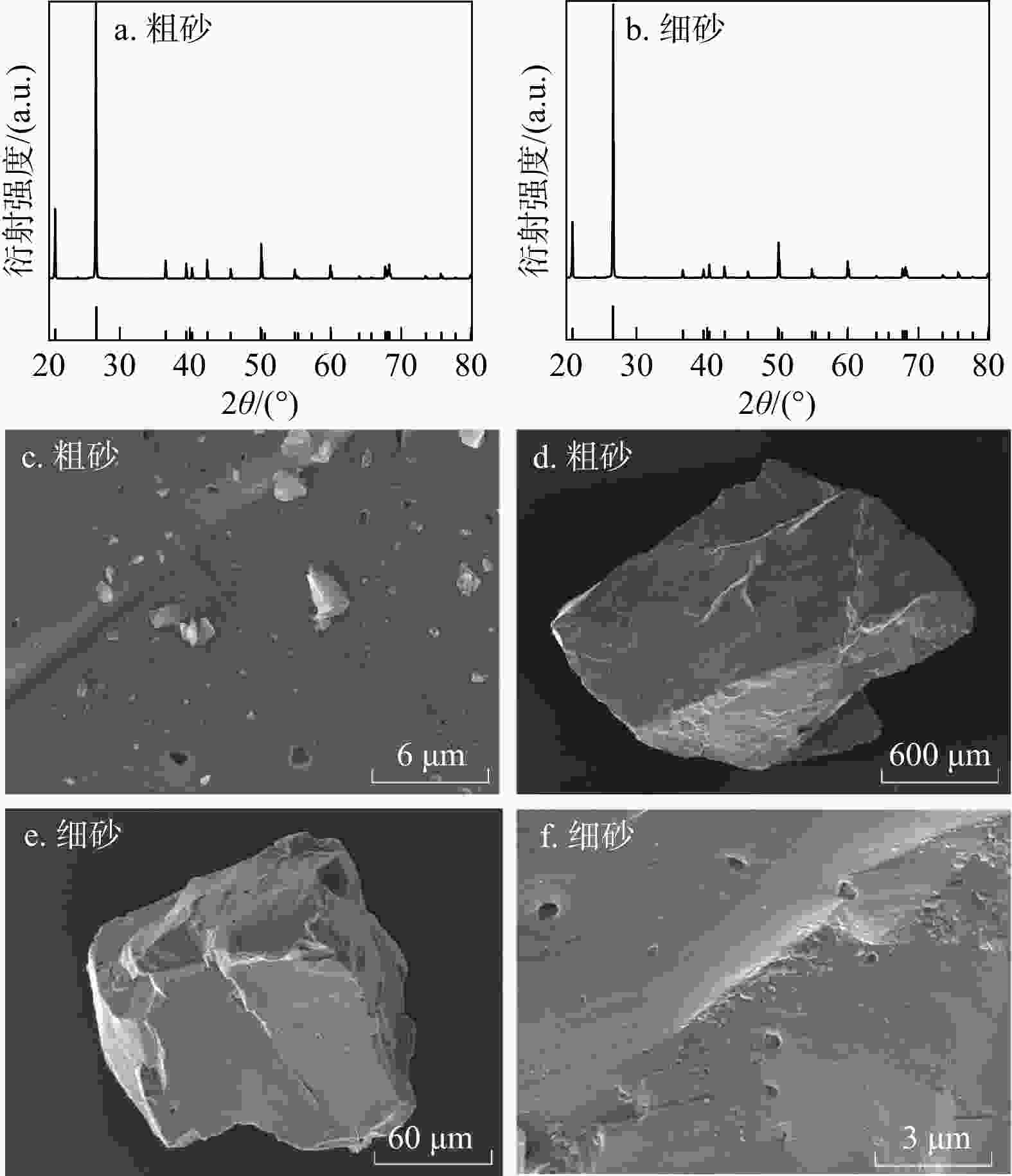
图 2 粗砂和细砂的XRD分析图(a, b)和SEM图像(c~f)(θ. 衍射角)
Figure 2. XRD patterns (a, b) and SEM images (c-f) of coarse sand and fine sand
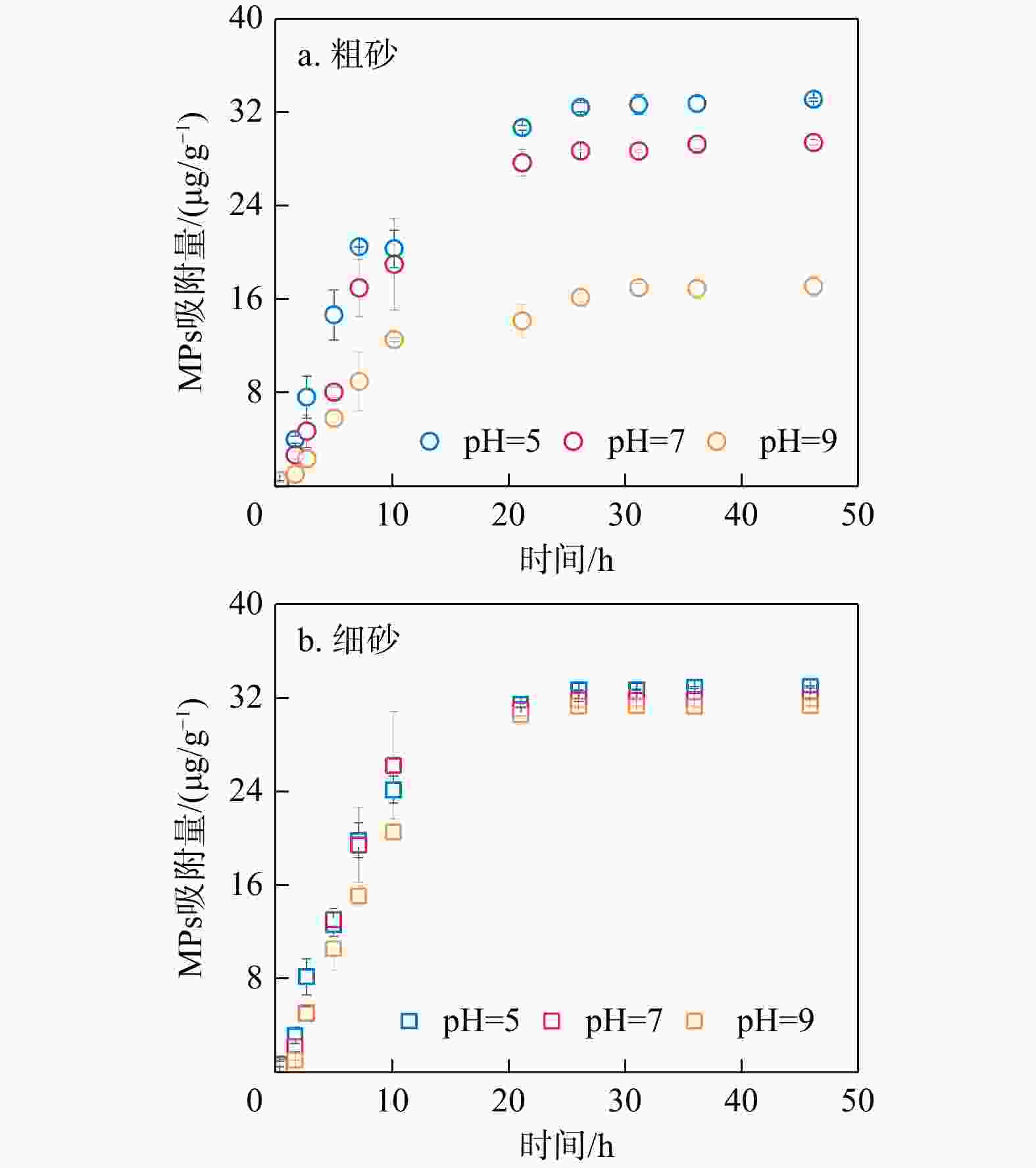
图 3 微塑料在粗砂(a)和细砂(b)中的吸附批实验结果
Figure 3. Results of batch adsorption experiments of microplastics in coarse sand (a) and fine sand (b)
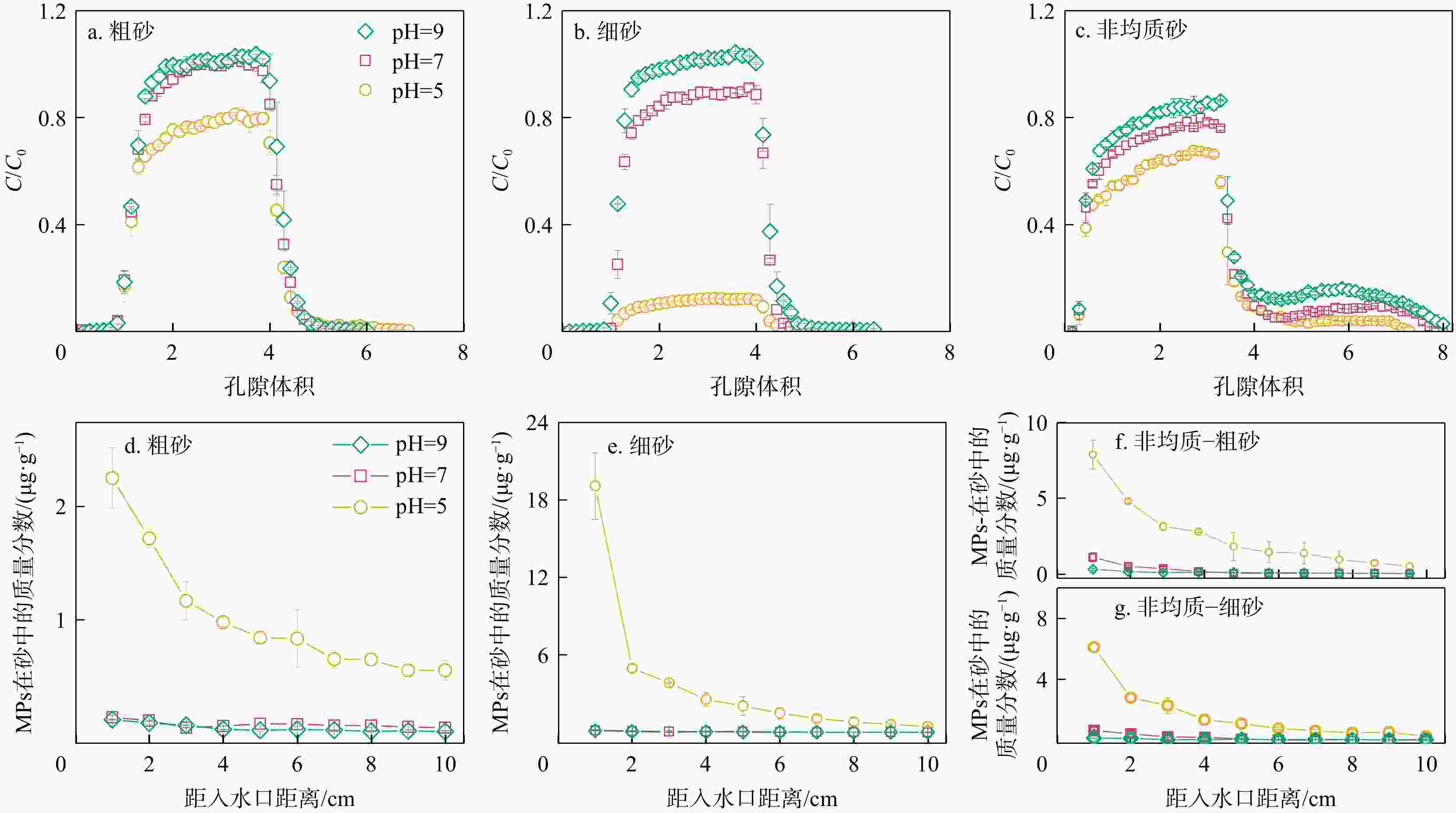
图 4 不同pH(5,7,9)下微塑料在粗砂、细砂、非均质砂柱中的穿透曲线和截留曲线(C. 不同采样时刻砂柱出水口处的MPs质量浓度;C0. 初始进液的MPs质量浓度;下同)
Figure 4. Breakthrough curves and retention profiles of microplastics in coarse sand, fine sand, and heterogeneous sand columns under different pH conditions (5, 7, 9)
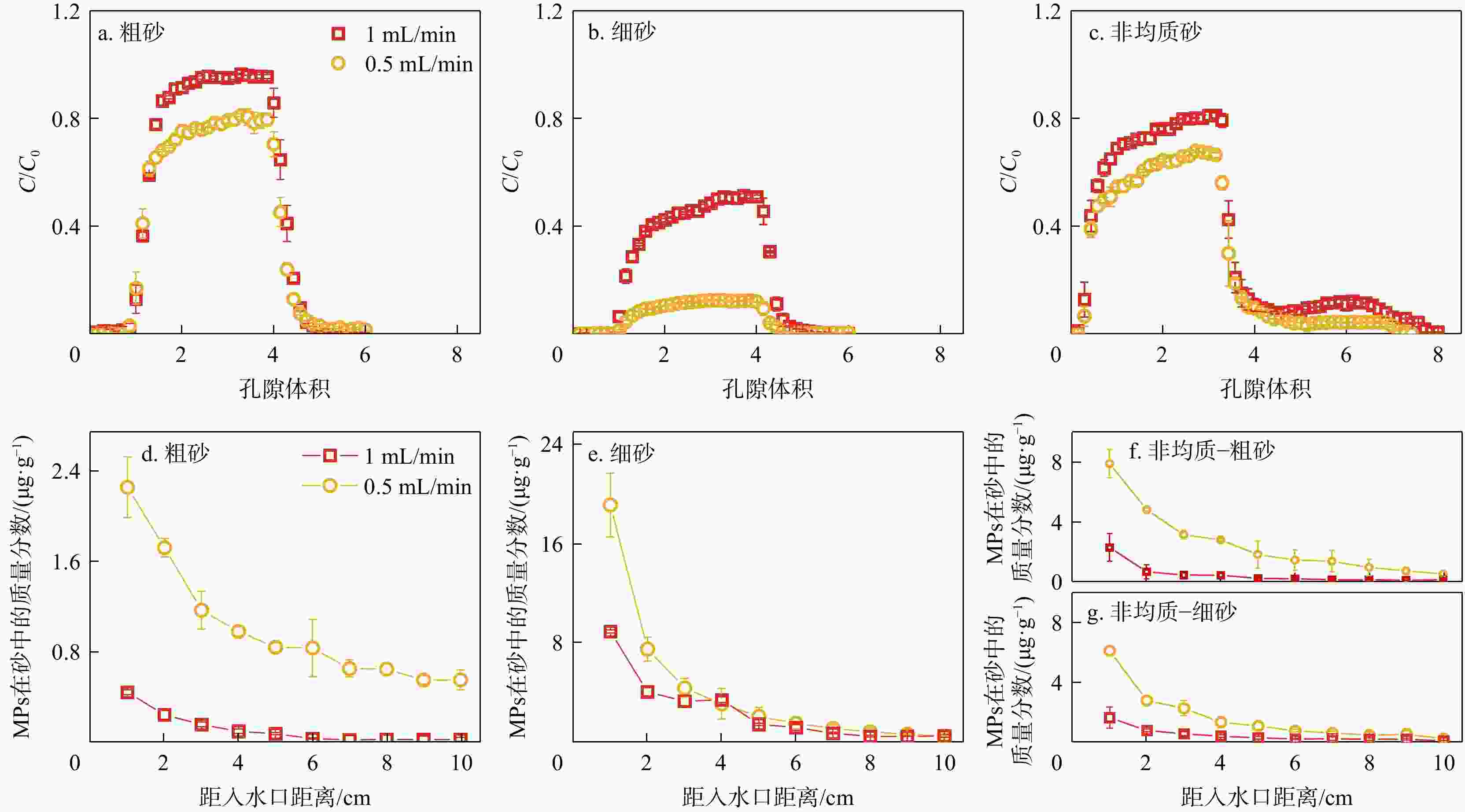
图 5 不同流速下(Q=0.5, 1.0 mL/min)微塑料在粗砂、细砂、非均质砂柱中的穿透曲线和截留曲线
Figure 5. Breakthrough curves and retention profiles of microplastics in coarse sand, fine sand, and heterogeneous sand columns under different flow rates (Q=0.5 and 1.0 mL/min)
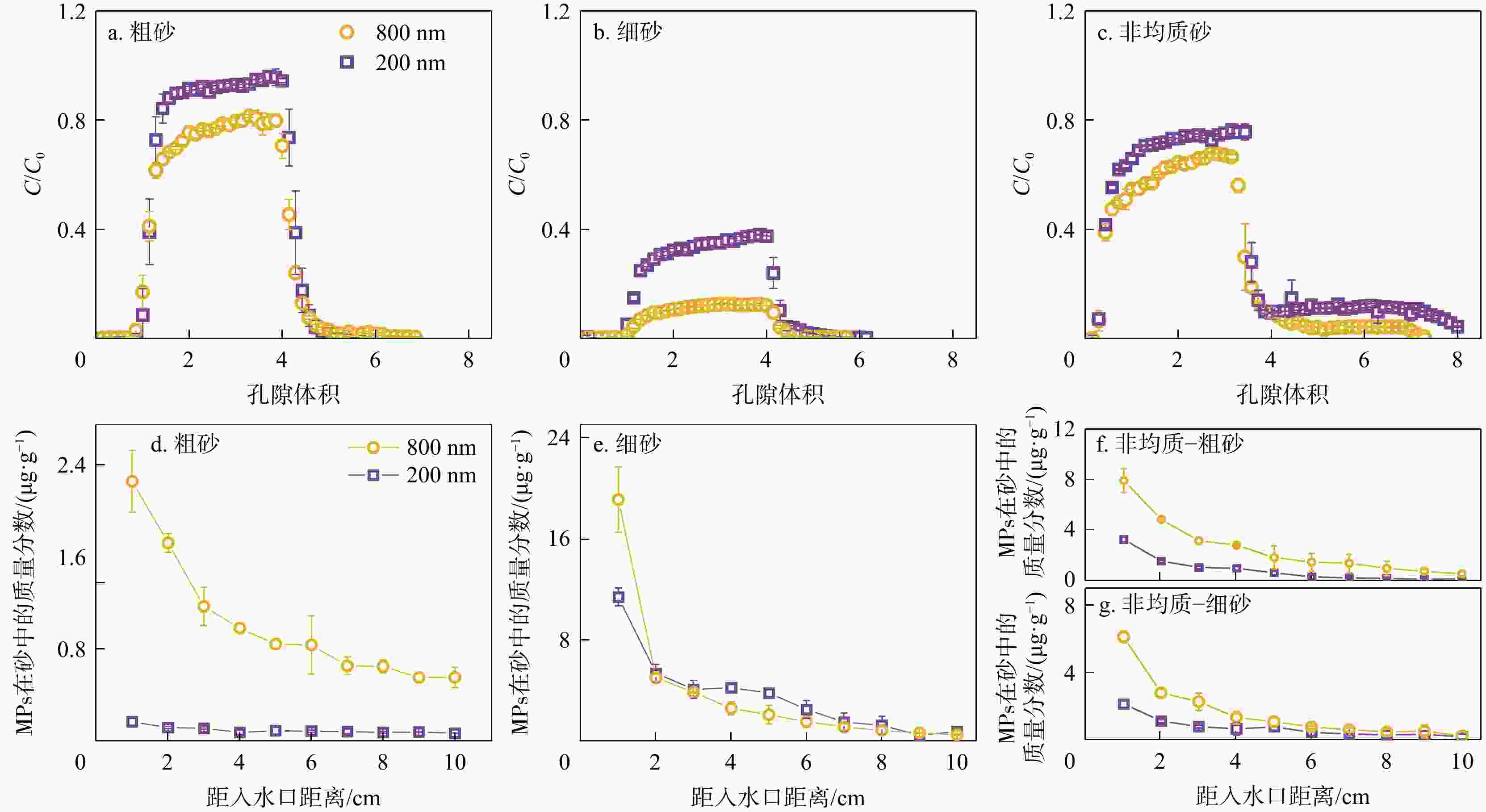
图 6 不同粒径(200, 800 nm)微塑料在粗砂、细砂、非均质砂柱中的穿透曲线和截留曲线
Figure 6. Breakthrough curves and retention profiles of microplastics in coarse sand, fine sand, and heterogeneous sand columns with different particle sizes (200, 800 nm)
表 1 不同影响因素下砂柱中微塑料迁移实验的条件
Table 1. Experimental conditions for microplastic transport in sand columns under different factors
微塑料浓
度/(mg·L−1)介质
类型影响
因素微塑料
粒径/nm流速/
(mL·min−1)pH值 5 粗砂
细砂
非均质砂pH值 800 0.5 5, 7, 9 流速 800 0.5, 1.0 5 粒径 200, 800 0.5 5  下载: 导出CSV
表 2 微塑料和石英砂的平均粒径以及Zeta电位
Table 2. Average particle size and Zeta potential of microplastics and quartz sands
样品 粒径 pH值 Zeta电位/mV 粗砂 ( 1200 ±100) µm5 −34.17 7 −37.10 9 −39.60 细砂 (175±25) µm 5 −32.83 7 −36.70 9 −38.53 MPs 727.18 nm 5 −34.17 7 −41.33 9 −49.70 232.20 nm 5 −34.25 7 −40.63 9 −48.89 注:MPs. 为微塑料;下同
下载: 导出CSV
表 3 不同影响因素下微塑料在粗砂、细砂、非均质砂柱中的迁移实验的质量平衡分析
Table 3. Mass balance analysis of microplastic transport experiments in coarse sand, fine sand, and heterogeneous sand columns under different influencing factors
影响因素 水平 介质类型 穿透率/% 截留率/% 回收率/% pH值 5 粗砂 69.3 15.31 84.61 细砂 19.98 67.15 87.14 非均质砂 67.22 20.09 87.82 7 粗砂 102.17 0.25 102.43 细砂 87.06 4.08 91.15 非均质砂 95.71 1.29 97.01 9 粗砂 103.33 0.63 103.97 细砂 103.17 0.55 103.73 非均质砂 104.14 0.87 105.01 流速/(mL·min−1) 0.5 粗砂 69.3 15.31 84.61 细砂 19.98 67.15 87.14 非均质砂 67.22 20.09 87.82 1.0 粗砂 95.87 1.43 97.30 细砂 44.98 42.96 87.94 非均质砂 81.75 7.78 89.52 粒径/nm 200 粗砂 96.19 1.39 97.58 细砂 37.42 53.31 90.73 非均质砂 75.61 13.26 88.87 800 粗砂 69.3 15.31 84.61 细砂 19.98 67.15 87.14 非均质砂 67.22 20.09 87.82
下载: 导出CSV
-
[1] THOMPSON R C, OLSEN Y, MITCHELL R P, et al. Lost at sea: Where is all the plastic[J]. Science, 2004, 304(5672): 838-838. doi: 10.1126/science.1094559 [2] BOTTERELL Z L R, BEAUMONT N, DORRINGTON T, et al. Bioavailability and effects of microplastics on marine zooplankton: A review[J]. Environmental Pollution, 2019, 245: 98-110. doi: 10.1016/j.envpol.2018.10.065 [3] BESSELING E, QUIK J T K, SUN M Z, et al. Fate of nano- and microplastic in freshwater systems: A modeling study[J]. Environmental Pollution, 2017, 220: 540-548. doi: 10.1016/j.envpol.2016.10.001 [4] LI J, SONG Y, CAI Y B. Focus topics on microplastics in soil: Analytical methods, occurrence, transport, and ecological risks[J]. Environmental Pollution, 2020, 257: 113570. doi: 10.1016/j.envpol.2019.113570 [5] DRIS R, GASPERI J, MIRANDE C, et al. A first overview of textile fibers, including microplastics, in indoor and outdoor environments[J]. Environmental Pollution, 2017, 221: 453-458. doi: 10.1016/j.envpol.2016.12.013 [6] RILLIG M C. Microplastic in terrestrial ecosystems and the soil[J]. Environmental Science & Technology, 2012, 46(12): 6453-6454. doi: 10.1021/es302011r [7] ALIMI O S, FARNER BUDARZ J, HERNANDEZ L M, et al. Microplastics and nanoplastics in aquatic environments: Aggregation, deposition, and enhanced contaminant transport[J]. Environmental Science & Technology, 2018, 52(4): 1704-1724. doi: 10.1021/acs.est.7b05559 [8] 包旭辉, 闫振华, 陆光华. 我国淡水中微塑料的污染现状及生物效应研究[J]. 水资源保护, 2019, 35(6): 115-123. doi: 10.3880/j.issn.1004-6933.2019.06.018BAO X H, YAN Z H, LU G H. Study on pollution status and biological effect of microplastics in fresh water of China[J]. Water Resources Protection, 2019, 35(6): 115-123. (in Chinese with English abstract) doi: 10.3880/j.issn.1004-6933.2019.06.018 [9] 朱丽萍, 陶雪晴, 万愉快, 等. 陆地地质环境微塑料污染研究现状与展望[J]. 地质科技通报, 2023, 42(6): 233-241. doi: 10.19509/j.cnki.dzkq.tb20220353ZHU L P, TAO X Q, WAN Y K, et al. Microplastic contamination in terrestrial geoenvironments: Review and outlook[J]. Bulletin of Geological Science and Technology, 2023, 42(6): 233-241. (in Chinese with English abstract) doi: 10.19509/j.cnki.dzkq.tb20220353 [10] REN Z F, GUI X Y, XU X Y, et al. Microplastics in the soil-groundwater environment: Aging, migration, and co-transport of contaminants-A critical review[J]. Journal of Hazardous Materials, 2021, 419: 126455. doi: 10.1016/j.jhazmat.2021.126455 [11] ZHOU Y F, HE G, JIANG X L, et al. Microplastic contamination is ubiquitous in riparian soils and strongly related to elevation, precipitation and population density[J]. Journal of Hazardous Materials, 2021, 411: 125178. doi: 10.1016/j.jhazmat.2021.125178 [12] MANIKANDA BHARATH K, NATESAN U, VAIKUNTH R, et al. Spatial distribution of microplastic concentration around landfill sites and its potential risk on groundwater[J]. Chemosphere, 2021, 277: 130263. doi: 10.1016/j.chemosphere.2021.130263 [13] ZHU G Q, YUE K, NI X Y, et al. The types of microplastics, heavy metals, and adsorption environments control the microplastic adsorption capacity of heavy metals[J]. Environmental Science and Pollution Research, 2023, 30(33): 80807-80816. doi: 10.1007/s11356-023-28131-6 [14] JUNAID M, WANG J. Interaction of nanoplastics with extracellular polymeric substances (EPS) in the aquatic environment: A special reference to eco-corona formation and associated impacts[J]. Water Research, 2021, 201: 117319. doi: 10.1016/j.watres.2021.117319 [15] 董姝楠, 夏继红, 王为木, 等. 土壤−地下水中微塑料迁移的影响因素及机制研究进展[J]. 农业工程学报, 2020, 36(14): 1-8. doi: 10.11975/j.issn.1002-6819.2020.14.001DONG S N, XIA J H, WANG W M, et al. Review on impact factors and mechanisms of microplastic transport in soil and groundwater[J]. Transactions of the Chinese Society of Agricultural Engineering, 2020, 36(14): 1-8. (in Chinese with English abstract) doi: 10.11975/j.issn.1002-6819.2020.14.001 [16] QUEVEDO I R, TUFENKJI N. Mobility of functionalized quantum dots and a model polystyrene nanoparticle in saturated quartz sand and loamy sand[J]. Environmental Science & Technology, 2012, 46(8): 4449-4457. doi: 10.1021/es2045458 [17] MORALES V L, PARLANGE J Y, STEENHUIS T S. Are preferential flow paths perpetuated by microbial activity in the soil matrix A review[J]. Journal of Hydrology, 2010, 393(1/2): 29-36. doi: 10.1016/j.jhydrol.2009.12.048 [18] SIRIVITHAYAPAKORN S, KELLER A. Transport of colloids in unsaturated porous media: A pore-scale observation of processes during the dissolution of air-water interface[J]. Water Resources Research, 2003, 39(12): 2003WR002487. doi: 10.1029/2003WR002487 [19] ZHUANG J, QI J, JIN Y. Retention and transport of amphiphilic colloids under unsaturated flow conditions: Effect of particle size and surface property[J]. Environmental Science & Technology, 2005, 39(20): 7853-7859. doi: 10.1021/es050265j [20] TONG M, JOAINSON W P. Excess colloid retention in porous media as a function of colloid size, fluid velocity, and grain angularity[J]. Environmental Science & Technology, 2006, 40(24): 7725-7731. doi: 10.1021/es061201r [21] WANG S, AL-HASNI N S, LIU Z L, et al. Multifaceted aquatic environmental differences between nanoplastics and microplastics: Behavior and fate[J]. Environment & Health, 2024, 2(10): 688-701. doi: 10.1021/envhealth.4c00013 [22] FRANCHI A, O'MELIA C R. Effects of natural organic matter and solution chemistry on the deposition and reentrainment of colloids in porous media[J]. Environmental Science & Technology, 2003, 37(6): 1122-1129. doi: 10.1021/es015566h [23] SADRI B, PERNITSKY D, SADRZADEH M. Aggregation and deposition of colloidal particles: Effect of surface properties of collector beads[J]. Colloids and Surfaces A: Physicochemical and Engineering Aspects, 2017, 530: 46-52. [24] JI Y N, YANG K W, LI X H, et al. Effects of polystyrene fragments on the transport of Pb2+ in saturated porous media: The role of microplastics characteristics and flow velocity[J]. Journal of Hazardous Materials, 2025, 493: 138362. doi: 10.1016/j.jhazmat.2025.138362 [25] WU X L, LYU X Y, LI Z Y, et al. Transport of polystyrene nanoplastics in natural soils: Effect of soil properties, ionic strength and cation type[J]. Science of the Total Environment, 2020, 707: 136065. doi: 10.1016/j.scitotenv.2019.136065 [26] MAAß S, DAPHI D, LEHMANN A, et al. Transport of microplastics by two collembolan species[J]. Environmental Pollution, 2017, 225: 456-462. doi: 10.1016/j.envpol.2017.03.009 [27] MITZEL M R, SAND S, WHALEN J K, et al. Hydrophobicity of biofilm coatings influences the transport dynamics of polystyrene nanoparticles in biofilm-coated sand[J]. Water Research, 2016, 92: 113-120. doi: 10.1016/j.watres.2016.01.026 [28] TRIPATHI S, CHAMPAGNE D, TUFENKJI N. Transport behavior of selected nanoparticles with different surface coatings in granular porous media coated with pseudomonas aeruginosa biofilm[J]. Environmental Science & Technology, 2012, 46(13): 6942-6949. doi: 10.1021/es202833k [29] 高一攀, 孙蓉琳, 何世伟, 等. 均质砂箱含水层多级水流系统溶质运移的非费克现象[J]. 地质科技通报, 2026, 45(3): 303-313. doi: 10.19509/j.cnki.dzkq.tb20250044GAO Y P, SUN R L, HE S W, et al. Non-Fickian phenomenon of solute transport in hierarchical groundwater flow systems of homogeneous sandbox aquifer[J]. Bulletin of Geological Science and Technology, 2026, 45(3): 303-313. (in Chinese with English abstract) doi: 10.19509/j.cnki.dzkq.tb20250044 [30] ZHAO W, LIN Q, XU S. Effect of colloidal particle on permeability of saturated porous media different in particle size[J]. Acta Pedologica Sinica, 2020, 57(2): 336-346. [31] ZHONG T Z, GUANG Q J, HE X C, et al. Deposition process and mechanism of colloidal particles in hyporheic zone[J]. Advances in Water Science, 2021, 32(5): 738-750. [32] BRADFORD S A, YATES S R, BETTAHAR M, et al. Physical factors affecting the transport and fate of colloids in saturated porous media[J]. Water Resources Research, 2002, 38(12): W12521. doi: 10.1029/2002wr001340 [33] BRADFORD S A, BETTAHAR M. Concentration dependent transport of colloids in saturated porous media[J]. Journal of Contaminant Hydrology, 2006, 82(1/2): 99-117. doi: 10.1016/j.jconhyd.2005.09.006 [34] CHOWDHURY I, HONG Y, HONDA R J, et al. Mechanisms of TiO2 nanoparticle transport in porous media: Role of solution chemistry, nanoparticle concentration, and flowrate[J]. Journal of Colloid and Interface Science, 2011, 360(2): 548-555. doi: 10.1016/j.jcis.2011.04.111 [35] TUFENKJI N, ELIMELECH M. Breakdown of colloid filtration theory: Role of the secondary energy minimum and surface charge heterogeneities[J]. Langmuir, 2005, 21(3): 841-852. doi: 10.1021/la048102g [36] PHENRAT T, CIHAN A, KIM H J, et al. Transport and deposition of polymer-modified FeO nanoparticles in 2-D heterogeneous porous media: Effects of particle concentration, FeO content, and coatings[J]. Environmental Science & Technology, 2010, 44(23): 9086-9093. doi: 10.1021/es102398e [37] NASCIMENTO A G, TÓTOLA M R, SOUZA C S, et al. Temporal and spatial dynamics of blocking and ripening effects on bacterial transport through a porous system: A possible explanation for CFT deviation[J]. Colloids and Surfaces B: Biointerfaces, 2006, 53(2): 241-244. doi: 10.1016/j.colsurfb.2006.08.020 [38] CAMESANO T A, UNICE K M, LOGAN B E. Blocking and ripening of colloids in porous media and their implications for bacterial transport[J]. Colloids and Surfaces A: Physicochemical and Engineering Aspects, 1999, 160(3): 291-307. [39] CAO J J, BAI X, YE Z F, et al. Enhanced transport of TiO2-reduced graphene oxide nanocomposites in saturated porous media: The impact of loaded TiO2 shape and solution conditions[J]. Water, Air, & Soil Pollution, 2020, 231(3): 124. doi: 10.1007/s11270-020-04492-3 [40] DONG S, CAI W, XIA J, et al. Aggregation kinetics of fragmental PET nanoplastics in aqueous environment: Complex roles of electrolytes, pH and humic acid[J]. Environmental Pollution, 2021, 268: 115828. doi: 10.1016/j.envpol.2020.115828 [41] KANTI SEN T, KHILAR K C. Review on subsurface colloids and colloid-associated contaminant transport in saturated porous media[J]. Advances in Colloid and Interface Science, 2006, 119(2/3): 71-96. doi: 10.1016/j.cis.2005.09.001 [42] HAPPEL J, BRENNER H. Low Reynolds number hydrodynamics: With special applications to particulate media[M]. Dordrecht: Springer Netherlands, 1983: 1-689. [43] 张俊, 刘天罡, 董佳秋, 等. 含水层层状非均质对地下水流系统的影响[J]. 中国地质, 2020, 47(6): 1715-1725. doi: 10.12029/gc20200609ZHANG J, LIU T G, DONG J Q, et al. The impact of aquifer layered heterogeneity on groundwater flow system[J]. Geology in China, 2020, 47(6): 1715-1725. (in Chinese with English abstract) doi: 10.12029/gc20200609 [44] SHEN C Y, JIN Y, ZHUANG J, et al. Role and importance of surface heterogeneities in transport of particles in saturated porous media[J]. Critical Reviews in Environmental Science and Technology, 2020, 50(3): 244-329. doi: 10.1080/10643389.2019.1629800 [45] LU T T, GILFEDDER B S, PENG H, et al. Effects of clay minerals on the transport of nanoplastics through water-saturated porous media[J]. Science of the Total Environment, 2021, 796: 148982. doi: 10.1016/j.scitotenv.2021.148982 [46] STRUTZ T J, HORNBRUCH G, DAHMKE A, et al. Influence of permeability on nanoscale zero-valent iron particle transport in saturated homogeneous and heterogeneous porous media[J]. Environmental Science and Pollution Research, 2016, 23(17): 17200-17209. doi: 10.1007/s11356-016-6814-y [47] 李文超, 马闪闪, 李选王, 等. 非均性多孔介质中生物炭胶体的迁移行为研究[J]. 环境科学学报, 2021, 41(7): 2857-2867. doi: 10.13671/j.hjkxxb.2020.0545LI W C, MA S S, LI X W, et al. The migration behaviors of biochar colloids in heterogeneous porous media[J]. Acta Scientiae Circumstantiae, 2021, 41(7): 2857-2867. (in Chinese with English abstract) doi: 10.13671/j.hjkxxb.2020.0545 [48] CHEN C, WANG J, LIU J, et al. Microscopic insights into the adsorption of lead ions on goethite via combined SEM-EDS and XAFS analysis[J]. Environmental Science & Technology, 2021, 55: 2234-2242. doi: 10.1021/acs.est.0c02333 [49] DONG H, JIAO L, LIU Y, et al. Characterization of engineered biochar and its application in pollutant removal: A focus on physicochemical properties[J]. Journal of Hazardous Materials, 2022, 425: 127786. [50] ZHOU D M, WANG D J, CANG L, et al. Transport and re-entrainment of soil colloids in saturated packed column: Effects of pH and ionic strength[J]. Journal of Soils and Sediments, 2011, 11(3): 491-503. doi: 10.1007/s11368-010-0331-2 [51] BRADFORD S A, SIMUNEK J, BETTAHAR M, et al. Modeling colloid attachment, straining, and exclusion in saturated porous media[J]. Environmental Science and Technology, 2003, 37(10): 2242-2250. doi: 10.1021/es025899u [52] BRADFORD S A, SIMUNEK J, BETTAHAR M, et al. Significance of straining in colloid deposition: Evidence and implications[J]. Water Resources Research, 2006, 42(12): W12S15. doi: 10.1029/2005wr004791 [53] TONG M P, JOHNSON W P. Colloid population heterogeneity drives hyperexponential deviation from classic filtration theory[J]. Environmental Science & Technology, 2007, 41(2): 493-499. doi: 10.1021/es061202j [54] JOHNSON W P, PAZMINO E, MA H L. Direct observations of colloid retention in granular media in the presence of energy barriers, and implications for inferred mechanisms from indirect observations[J]. Water Research, 2010, 44(4): 1158-1169. doi: 10.1016/j.watres.2009.12.014 [55] MA H L, PAZMINO E, JOHNSON W P. Surface heterogeneity on hemispheres-in-cell model yields all experimentally-observed non-straining colloid retention mechanisms in porous media in the presence of energy barriers[J]. Langmuir, 2011, 27(24): 14982-14994. doi: 10.1021/la203587j [56] XU S P, GAO B, SAIERS J E. Straining of colloidal particles in saturated porous media[J]. Water Resources Research, 2006, 42(12): 2006WR004948. doi: 10.1029/2006WR004948 [57] 王云权, 陈思源, 齐鹏飞. 考虑土壤结构和吸附力作用下的土壤水分运移模拟[J]. 地质科技通报, 2026, 45(1): 272-278.WANG Y Q, CHEN S Y, QI P F. Simulation of soil water transport considering the effects of soil structure and adsorption forces[J]. Bulletin of Geological Science and Technology, 2026, 45(1): 272-278. (in Chinese with English abstract) -

 下载:
下载:


 点击查看大图

计量
- 文章访问数: 325
- PDF下载量: 15
- 被引次数: 0