投审稿入口
投审稿入口


Control of NW-trending basement faults on Cenozoic basin evolution in Lishui East Sag, East China Sea Basin
-
摘要:
NW向构造是东海盆地裂陷结构“南北分块”的主导因素,但关于其具体如何控制盆地构造演化的研究较少。以东海盆地丽东洼陷为例,基于丽东洼陷新采集的
1400 km2高精度三维地震资料,开展了基底构造、新生代多幕裂陷结构、断裂系统及岩浆活动的解释与分析。研究揭示丽东洼陷基底发育了4条具右行扭动特征的NW向转换带(TZ1~TZ4),在裂陷期与裂后期存在不同程度的活动。①裂陷期,NW向转换带调节裂陷结构沿走向的变化,致使NE向断层在转换带部位发生分叉、扭曲或转为NW向,进而分隔NE向构造单元,促使盆地演化为“东西分带、南北分块”结构。其中,裂陷Ⅰ幕月桂峰期4个转换带内的基底NW向断层普遍活动,限定或半限定次洼边界;裂陷Ⅱ幕灵峰期TZ2和TZ3持续活动,TZ1和TZ4活动减弱,且NW向转换带的活动段向SE方向迁移。②裂后期,基底NW向断层对断层的发育仍具有控制作用,伸展断裂在NW向转换带内更发育,且带内断裂转为EW走向并呈右阶雁行排列。此外,基底NW向断层还控制了洼陷东部雁荡凸起上NW向沟谷体系的发育并成为裂后期火山通道的优势发育部位。③结合地震资料与前人研究成果,认为丽东洼陷的基底NW向断层可能起源于中生代印支期NW向逆冲断裂系。总体而言,基底NW向断层在丽东洼陷整个新生代裂陷结构、断裂体系、岩浆活动以及沉积物源通道的演化中均发挥了重要作用。研究成果不仅为深入理解东海盆地的构造演化提供了重要依据,也丰富了基底先存断层对裂谷盆地控制作用的认识。Abstract:ObjectiveNW-trending structures are the dominant factor controlling the "north-south segmentation" of rift architecture in the East China Sea Basin, yet studies on their specific control mechanisms of basin evolution remain poorly constrained. To investigate this issue, the study uses the Lishui East Sag as a case study.
MethodsBased on newly acquired
1400 km2 high-precision 3D seismic data from the Lishui East Sag, interpretations and analyses of basement structure, Cenozoic multi-phase rift architecture, fault systems, and magmatic activity were carried out.ResultsThe results revealed four NW-trending dextral transfer zones (TZ1-TZ4) in the basement of the Lishui East Sag, which exhibited varying degrees of activity during both the rifting stage and the post-rifting stage. ① During the rifting stage, the NW-trending transfer zones accommodated variations in rift architecture along strike, causing NE-trending faults to branch, distort, or reorient into NW-trending faults. This process segmented NE-trending structural units and led to a structural pattern characterized by "east-west zonation and north-south segmentation." During the rifting episode I (sedimentary period of the Yueguifeng Formation), NW-trending basement faults in TZ1-TZ4 were all active, defining or partially defining sub-sag boundaries. During the rifting episode II (sedimentary period of the Lingfeng Formation), TZ2 and TZ3 remained active, while TZ1 and TZ4 activity greatly weakened. In addition, active segments along NW-trending transfer zones migrated southeastward. ② During the post-rifting stage, NW-trending basement faults continued to influence fault development. Extensional faults were more developed within the NW-trending transfer zones, and reoriented to an EW strike, forming right-stepping en echelon patterns. Additionally, NW-trending basement faults controlled the development of NW-trending valley systems on the eastern Yandang uplift in the eastern part of the sag and served as preferential pathways for volcanic conduits in the post-rifting stage. ③ Integrating seismic data and previous studies, this study proposed that the NW-trending basement faults in the Lishui East Sag originated from the NW-trending thrust fault system formed during the Mesozoic Indosinian orogeny.
ConclusionIn summary, NW-trending basement faults play a crucial role throughout the Cenozoic evolution of the Lishui East Sag, governing its rift architecture, fault systems, magmatic activity, and sediment source pathways. This study provides significant insights into the tectonic evolution of the East China Sea Basin and enhances understanding of how pre-existing basement faults control rift basin development.
-
Key words:
- East China Sea Basin /
- Lishui East Sag /
- NW-trending basement fault /
- rift structure /
- Cenozoic
-
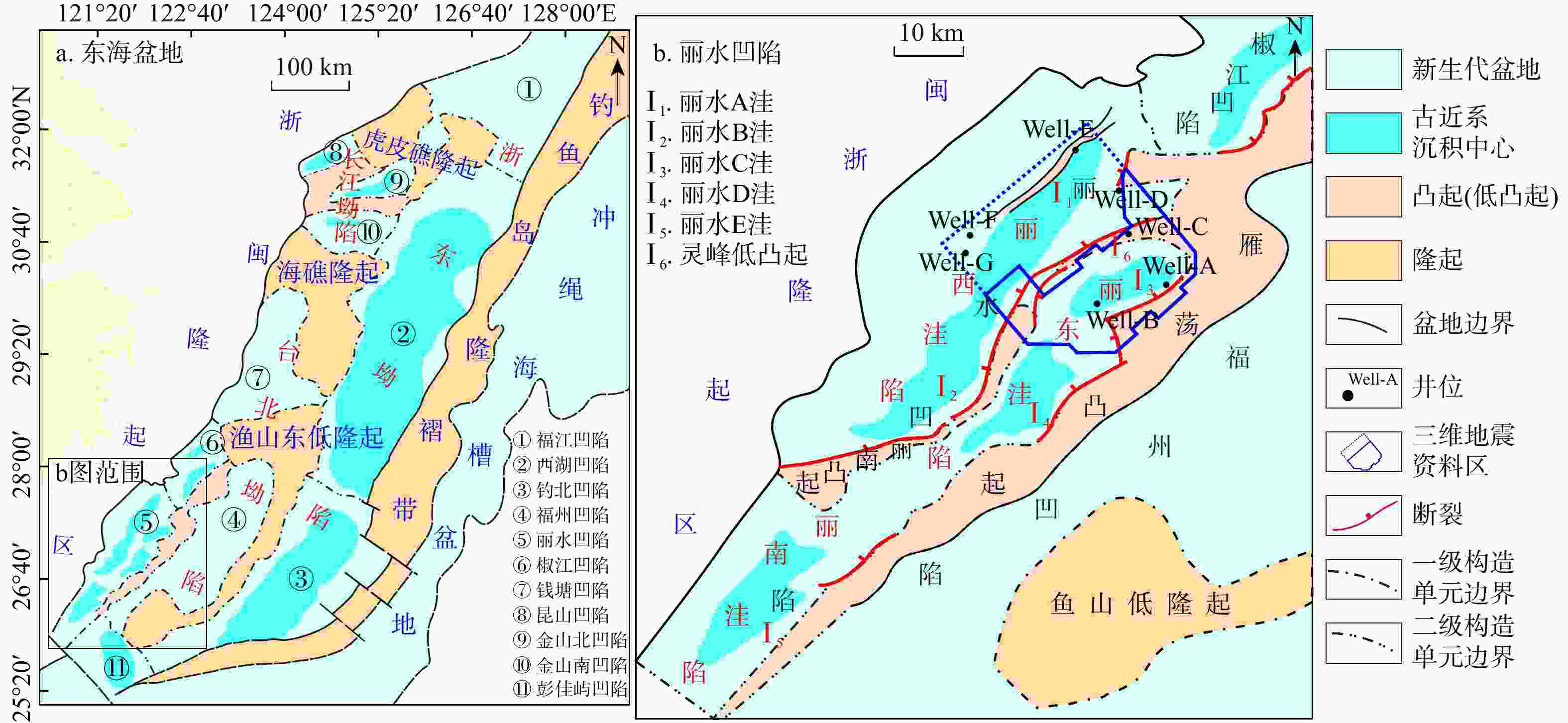
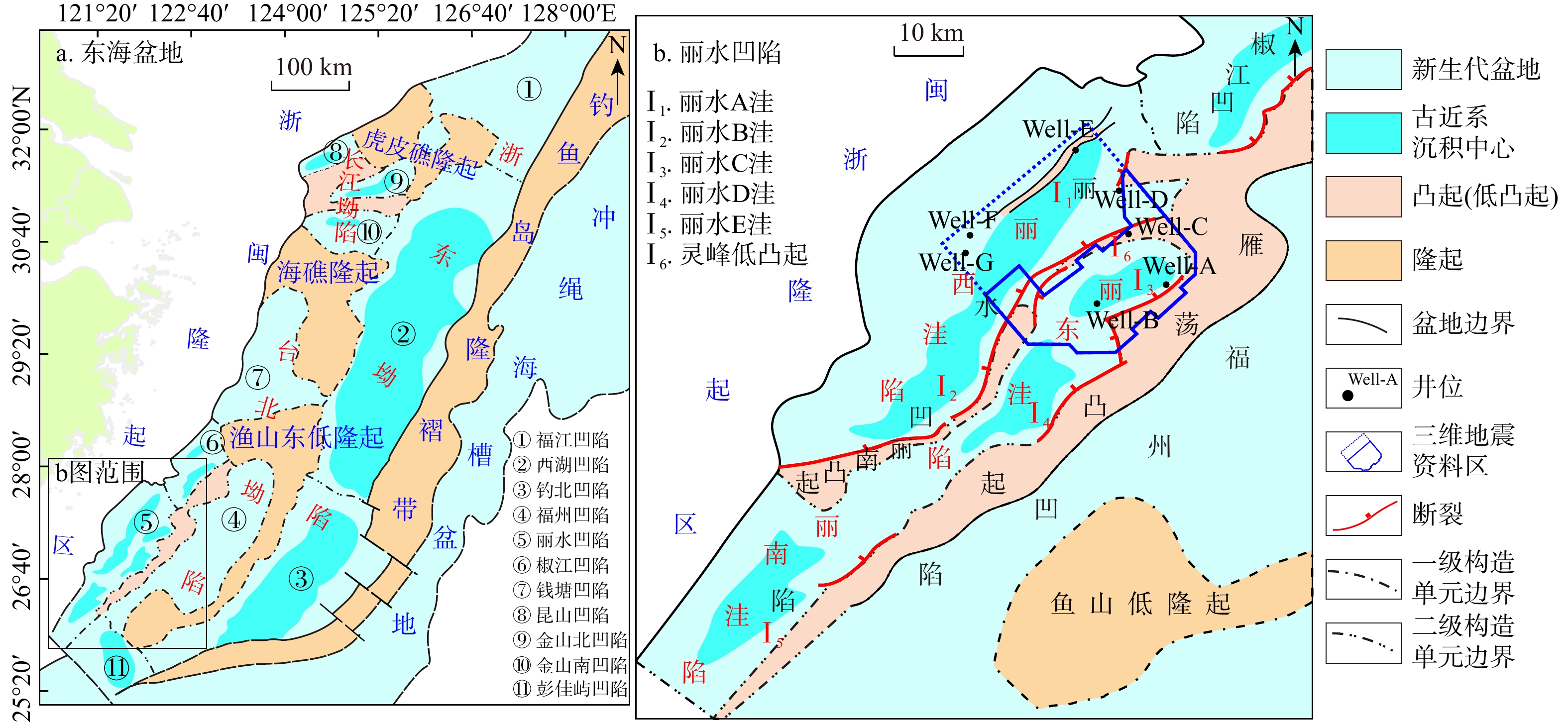
图 1 东海盆地(a)及丽水凹陷(b)构造单元图(据文献[41]修改)
Figure 1. Structural unit maps of East China Sea Basin (a) and Lishui Sag (b)
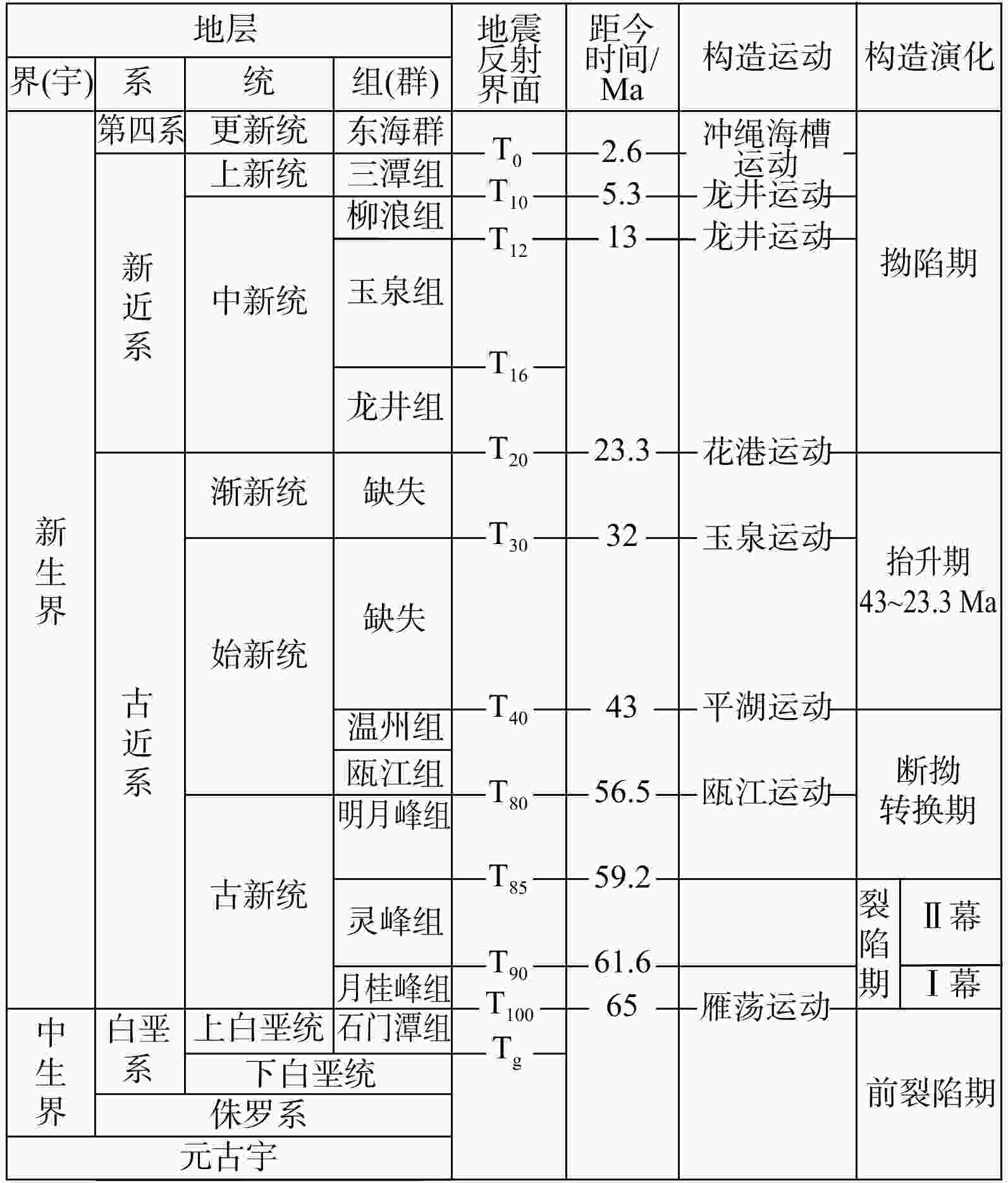
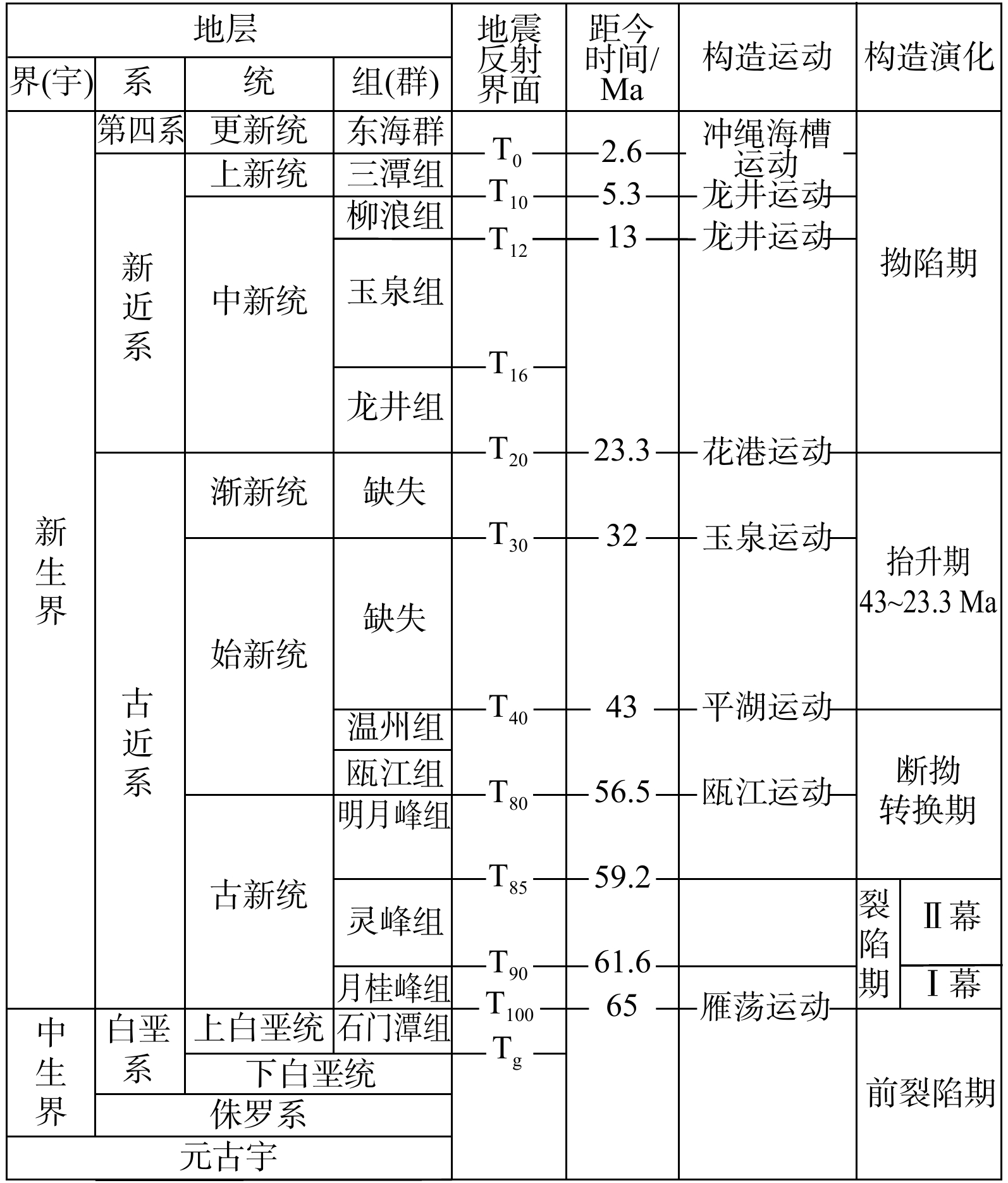
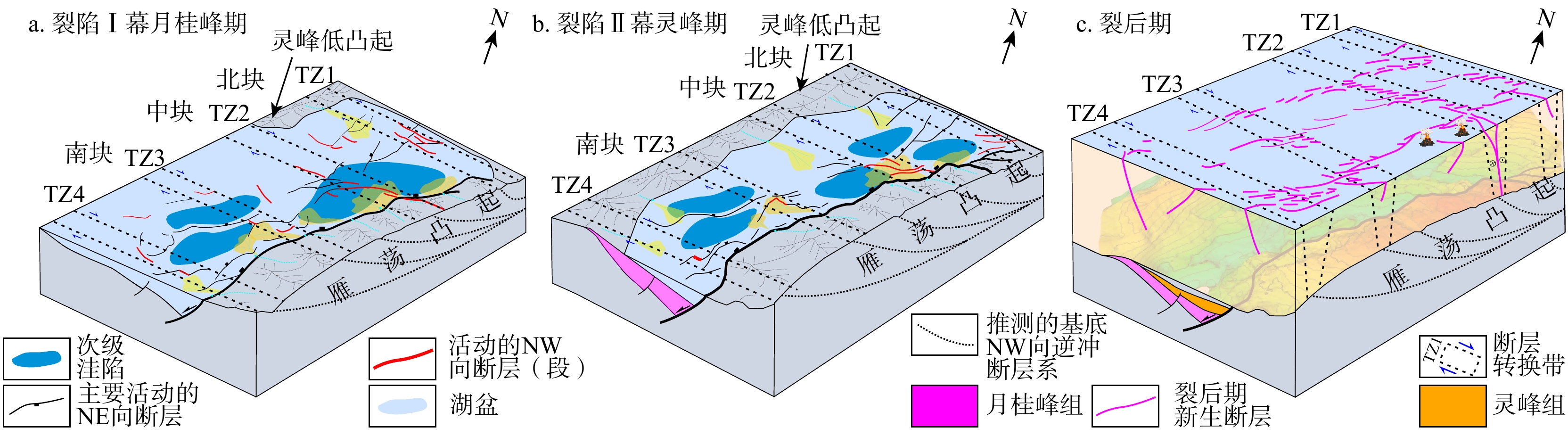
图 2 丽水凹陷构造沉积演化(据文献[41]修改)
Figure 2. Structural and sedimentary evolution of Lishui Sag
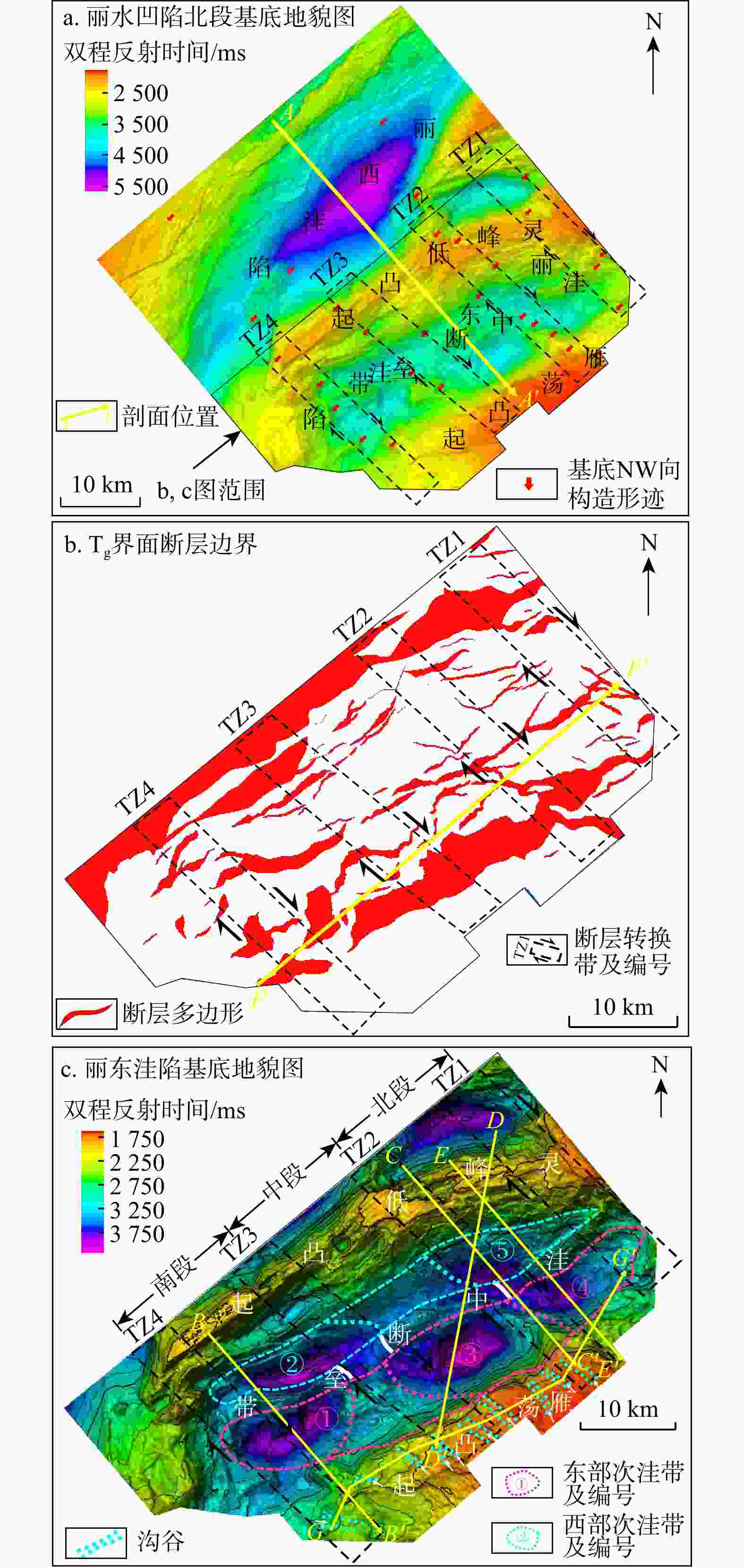
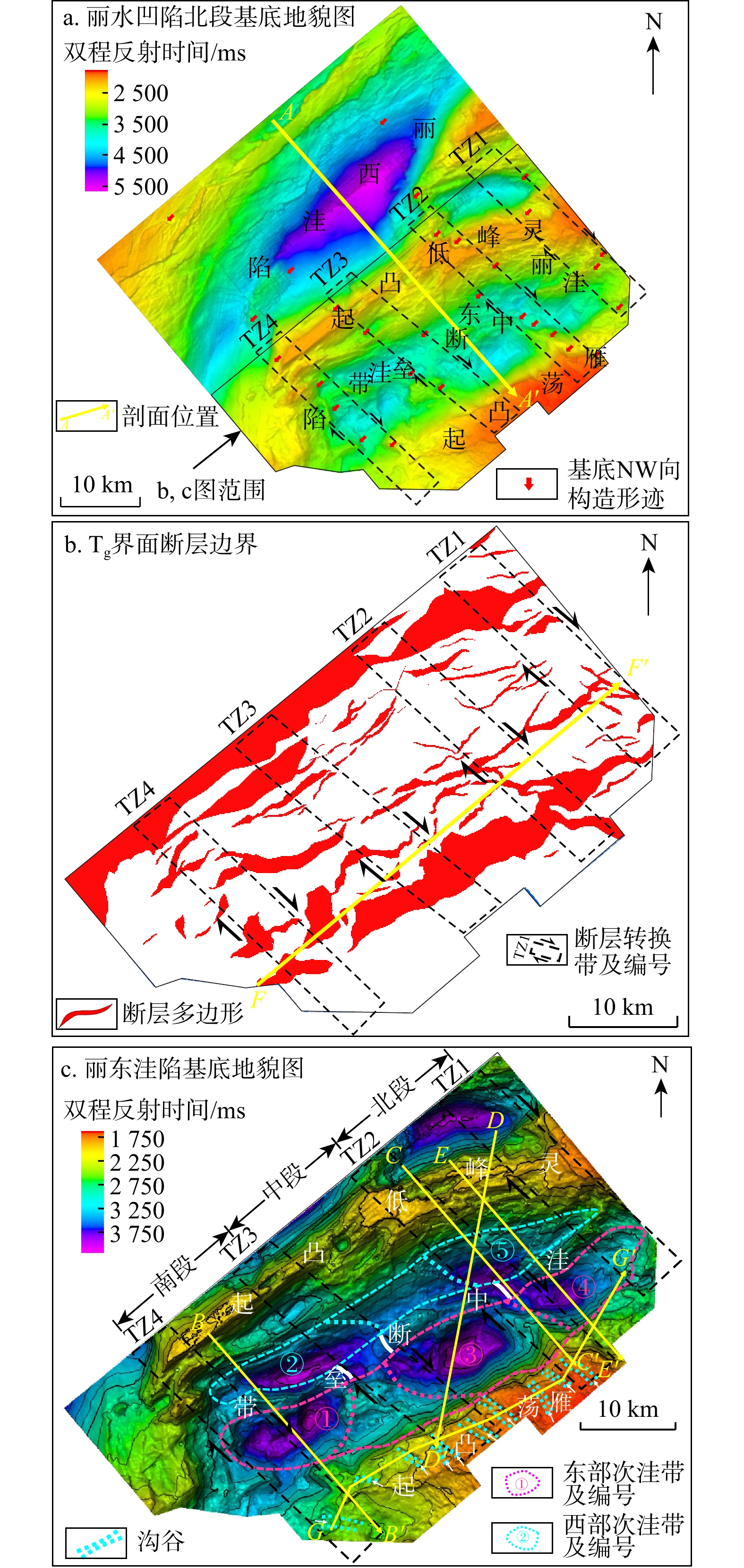
图 3 丽水凹陷北段基底地貌图(a)、Tg界面断层边界(b)和丽东洼陷基底地貌图(c)
a图范围见图1b中三维地震资料区
Figure 3. Basement geomorphology of northern Lishui Sag (a), fault boundary of Tg interface (b), and basement geomorphology of Lishui East Sag (c)
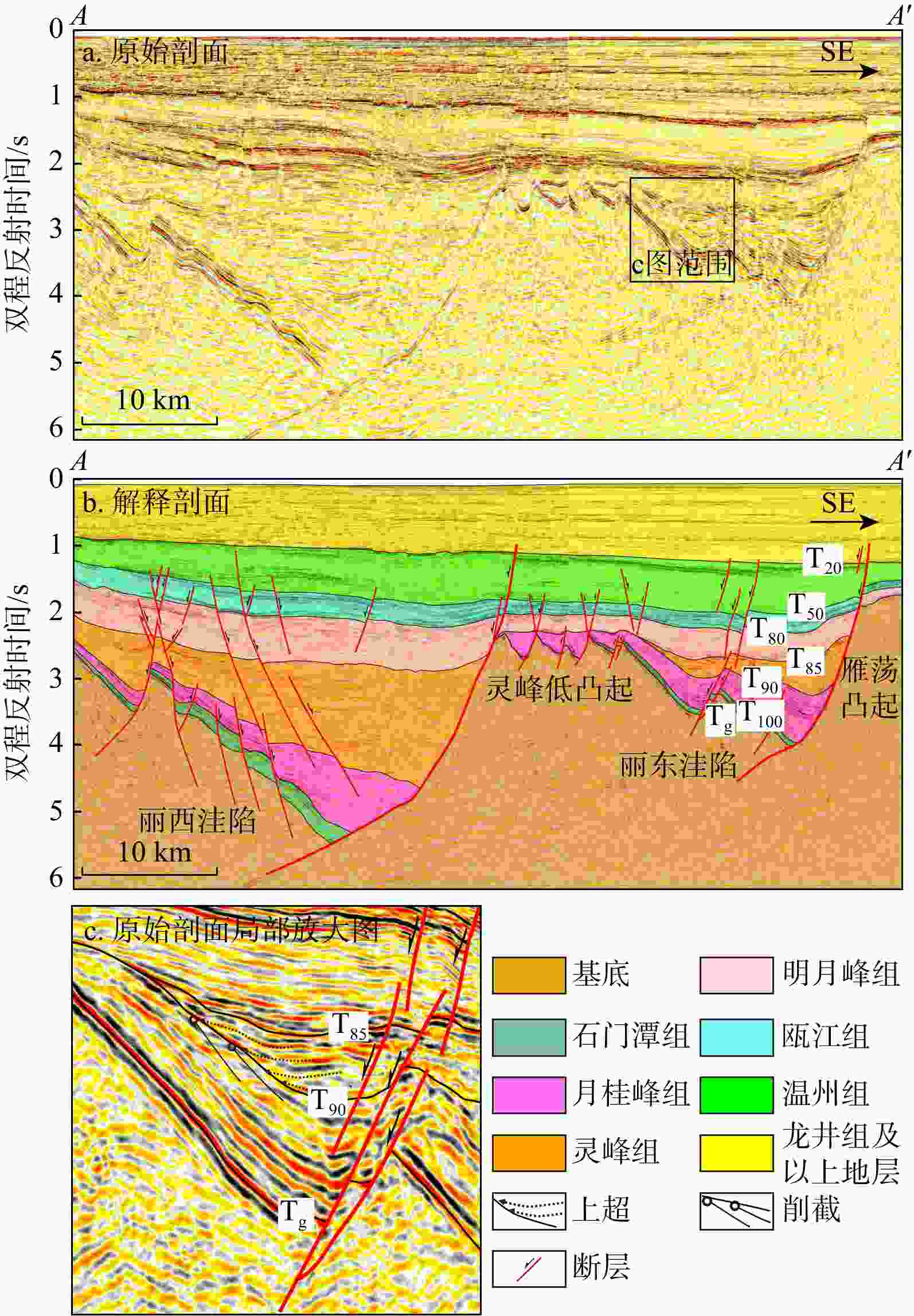
图 4 横跨丽水凹陷的地震剖面(a, b)和丽东洼陷西部斜坡局部剖面放大图(c)
剖面A—A'位置见图3a;T85等为地震反射界面编号;下同
Figure 4. Seismic profiles across Lishui Sag (a, b) and enlarged local profile of western slope in Lishui East Sag (c)
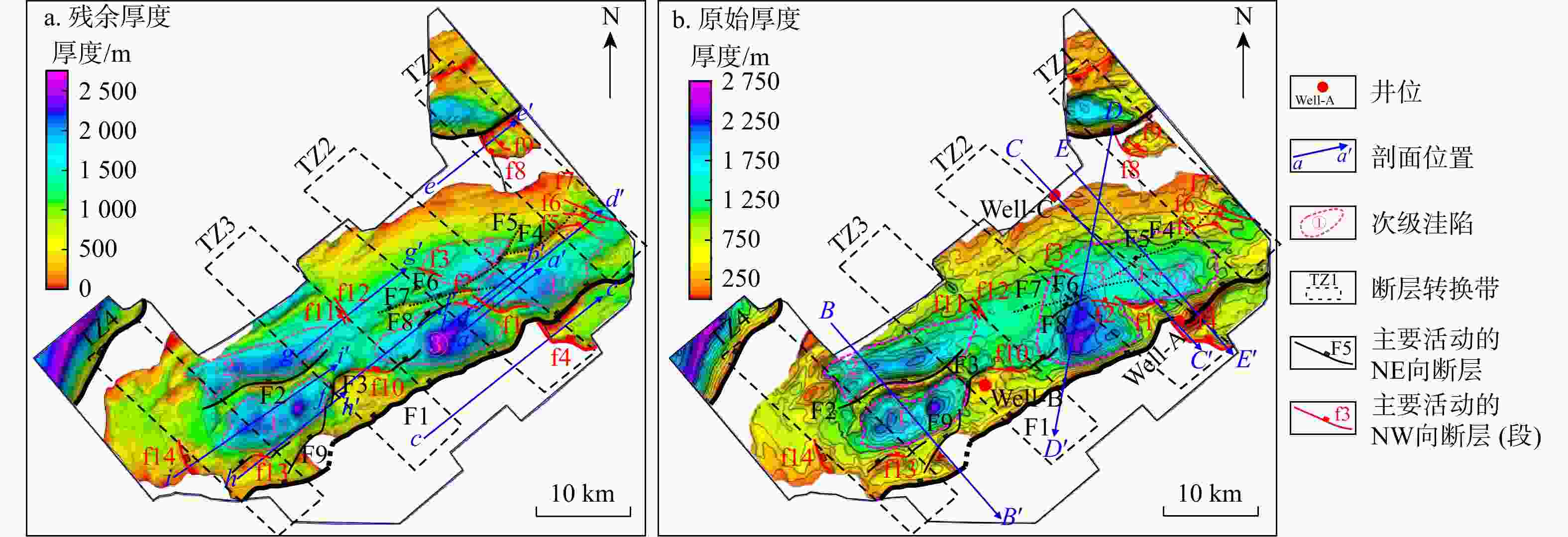
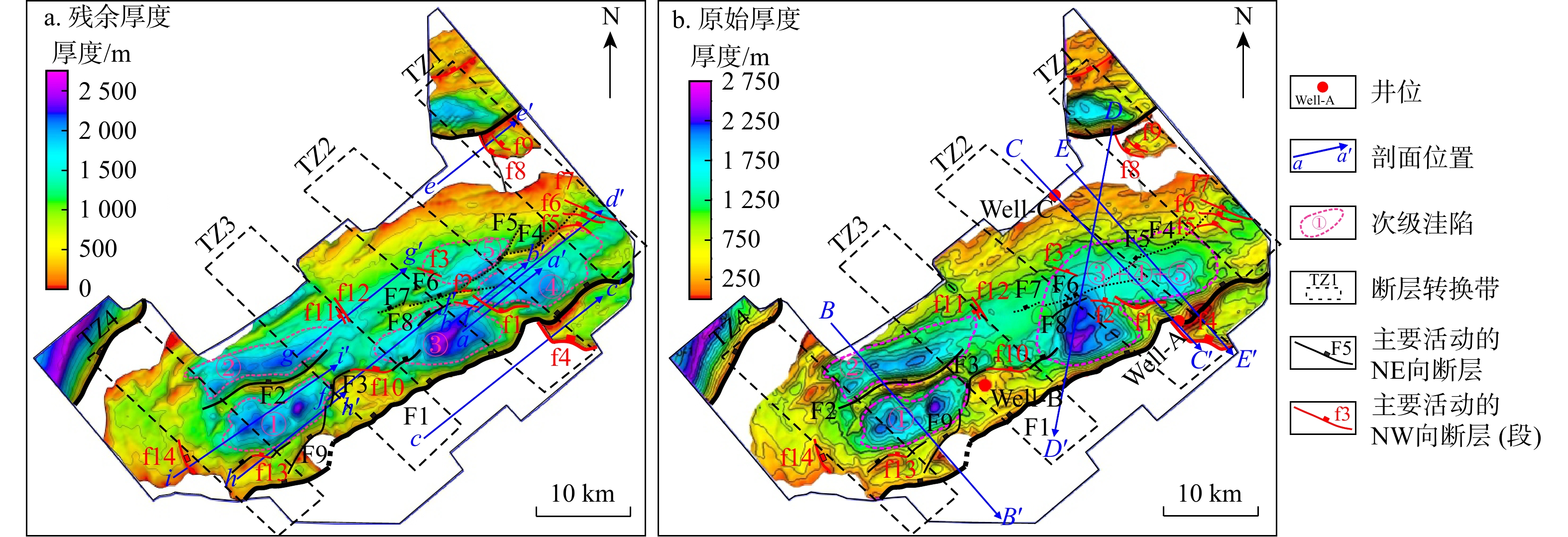
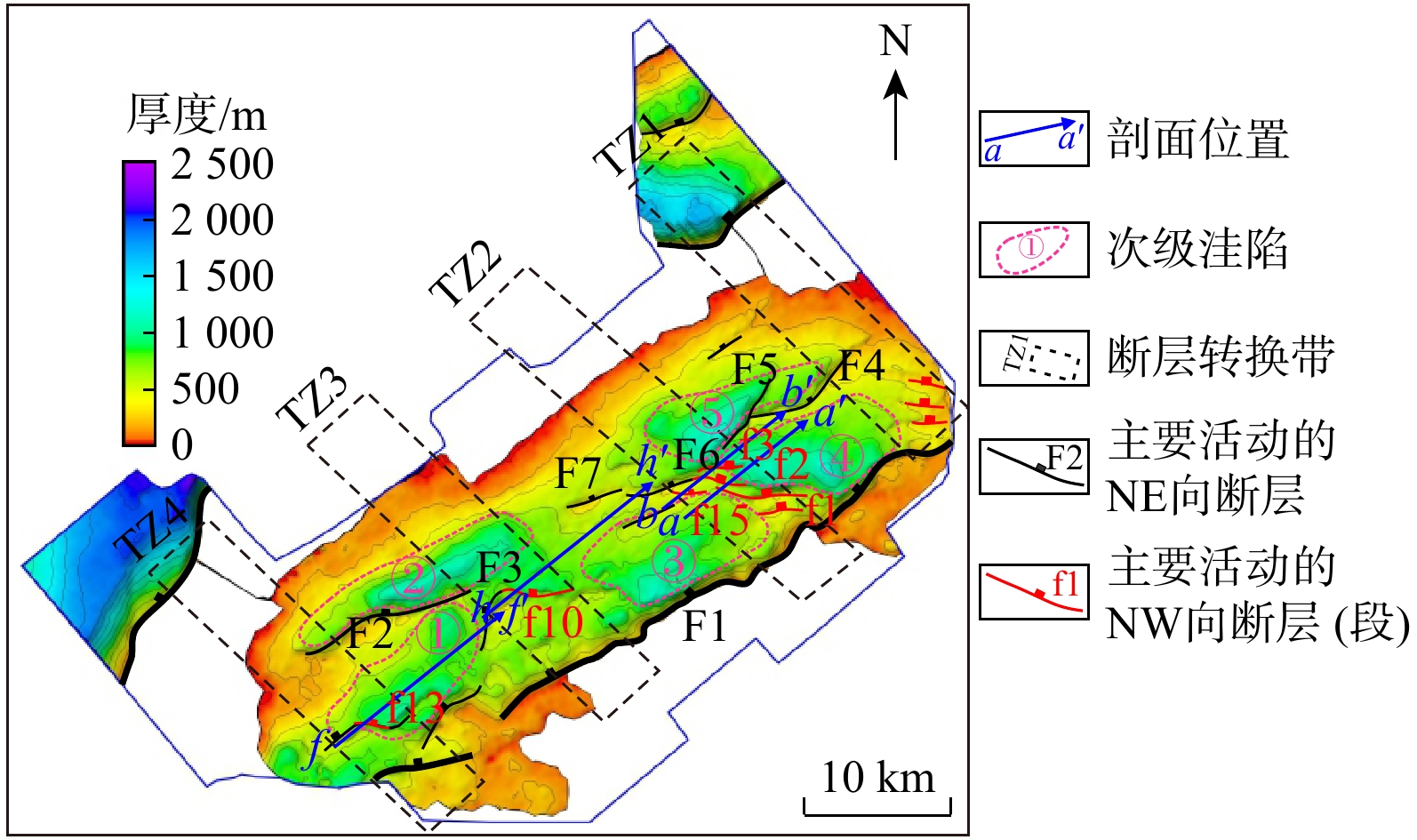
图 5 月桂峰组残余厚度图(a)和原型厚度图(b)
a,b图范围见图1b中三维地震资料区(蓝色实线框内)
Figure 5. Residual thickness (a) and original thickness (b) of Yueguifeng Formation
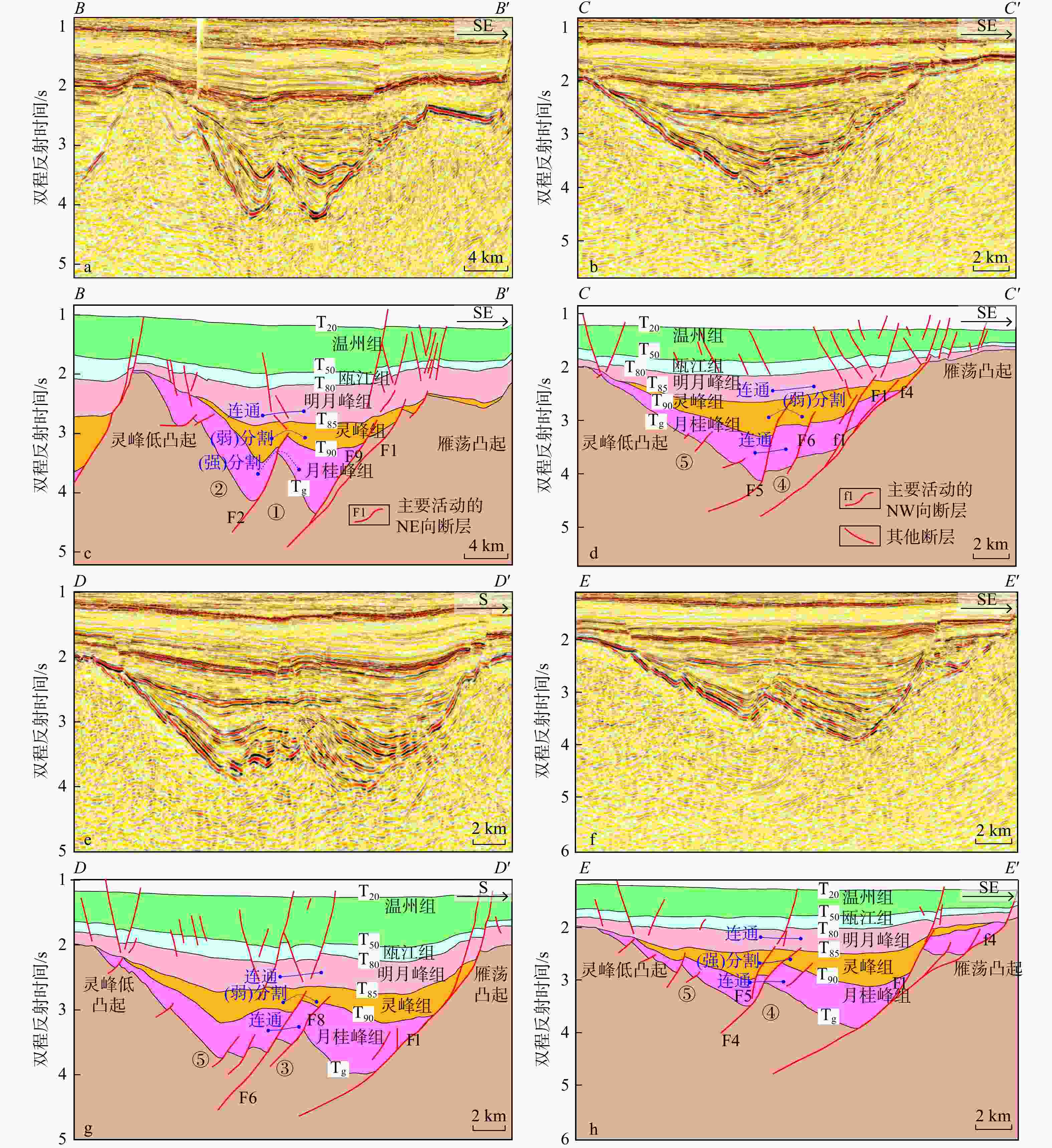
图 6 过丽东洼陷各次级洼陷地震剖面
a,b,e,f. 原始剖面;c,d,g,h. 解释剖面。剖面位置见图5b;①~⑤为次级洼陷编号;下同
Figure 6. Seismic profiles across sub-sags of Lishui East Sag
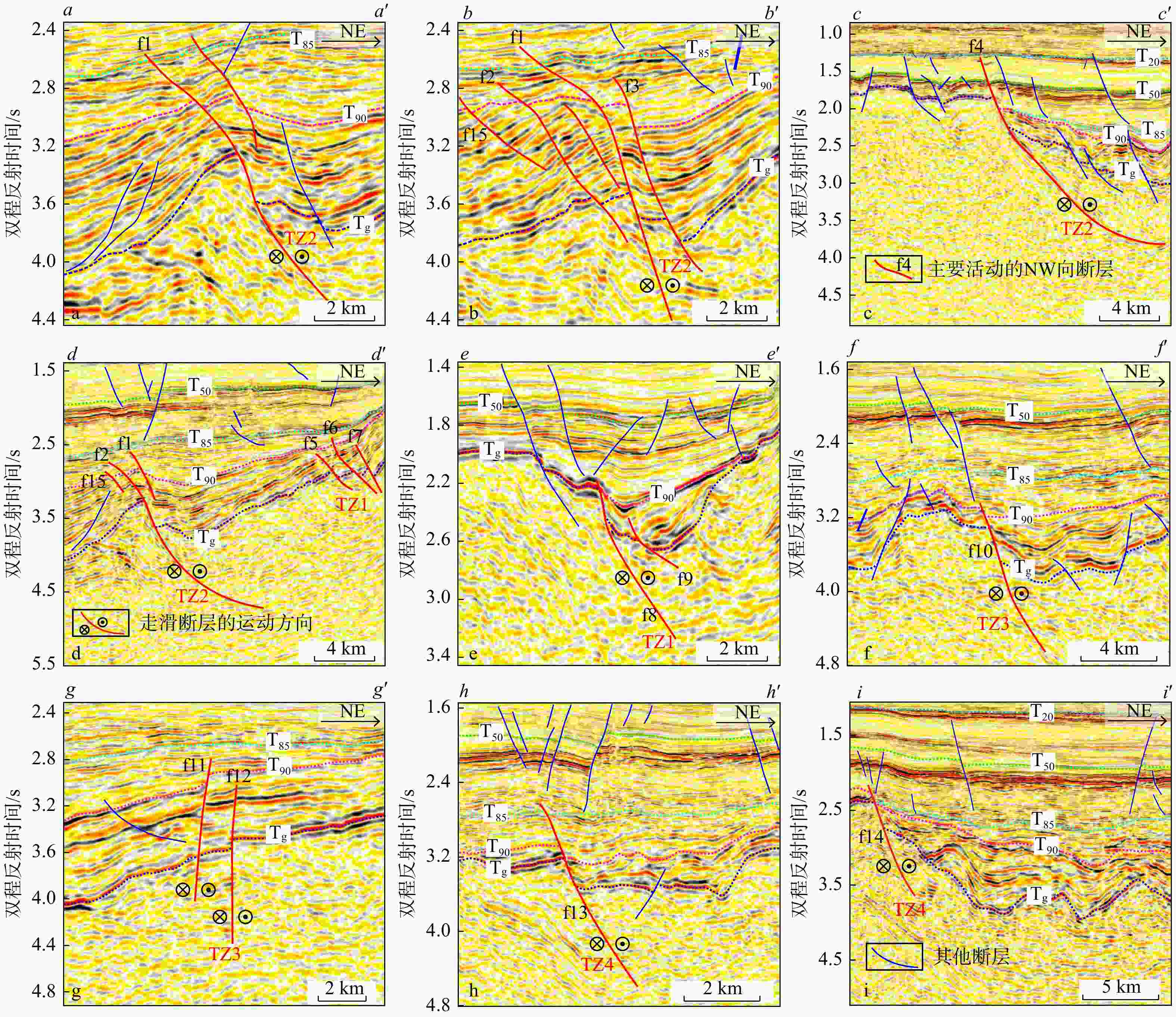
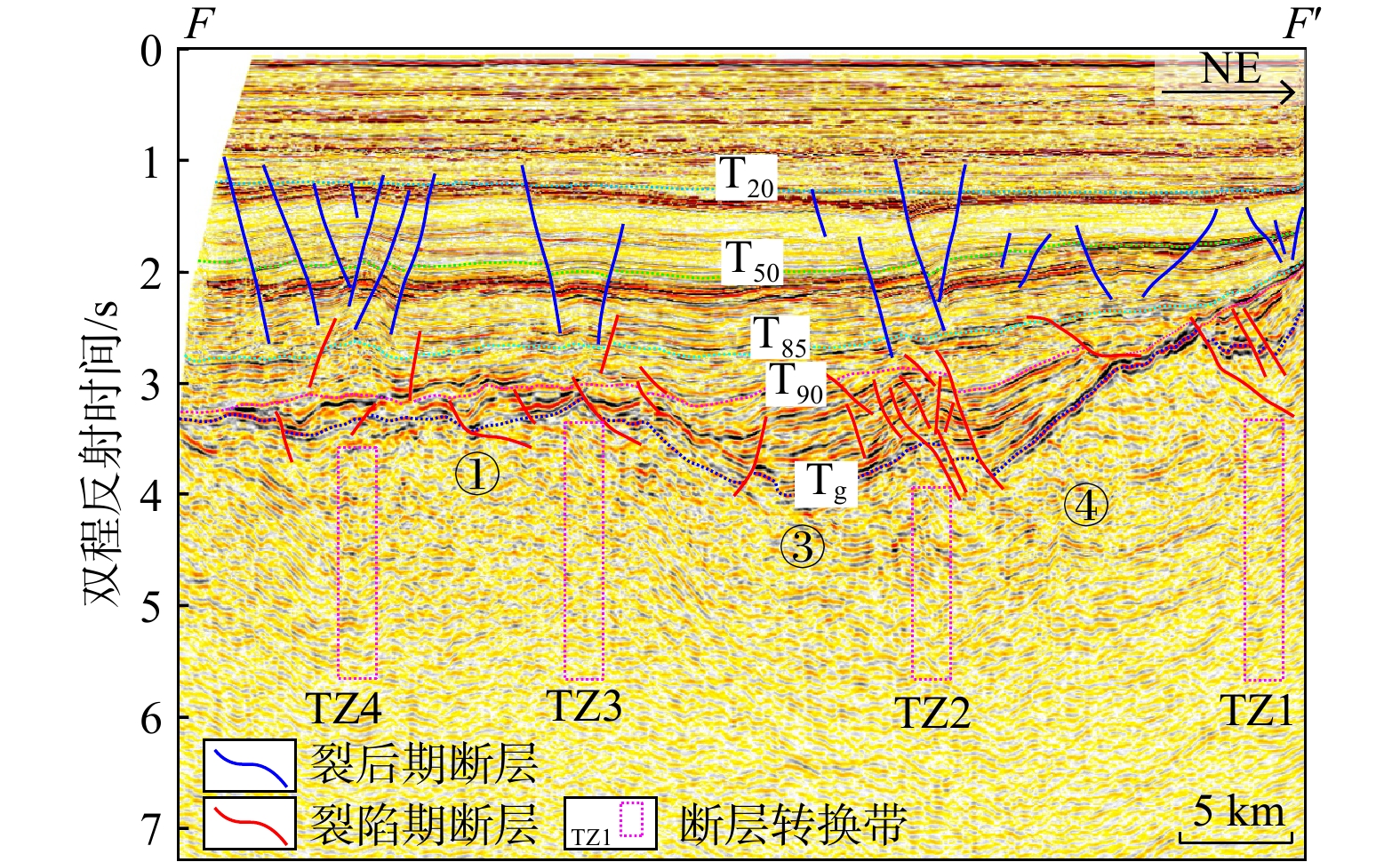
图 7 过NW向转换带典型地震解释剖面
剖面位置见图5a;TZ1~TZ4为断层转换带编号,考虑到基底反射杂乱不足以精确识别其范围,故图中未标注出范围
Figure 7. Typical seismic interpretation profiles across NW-trending transfer zones
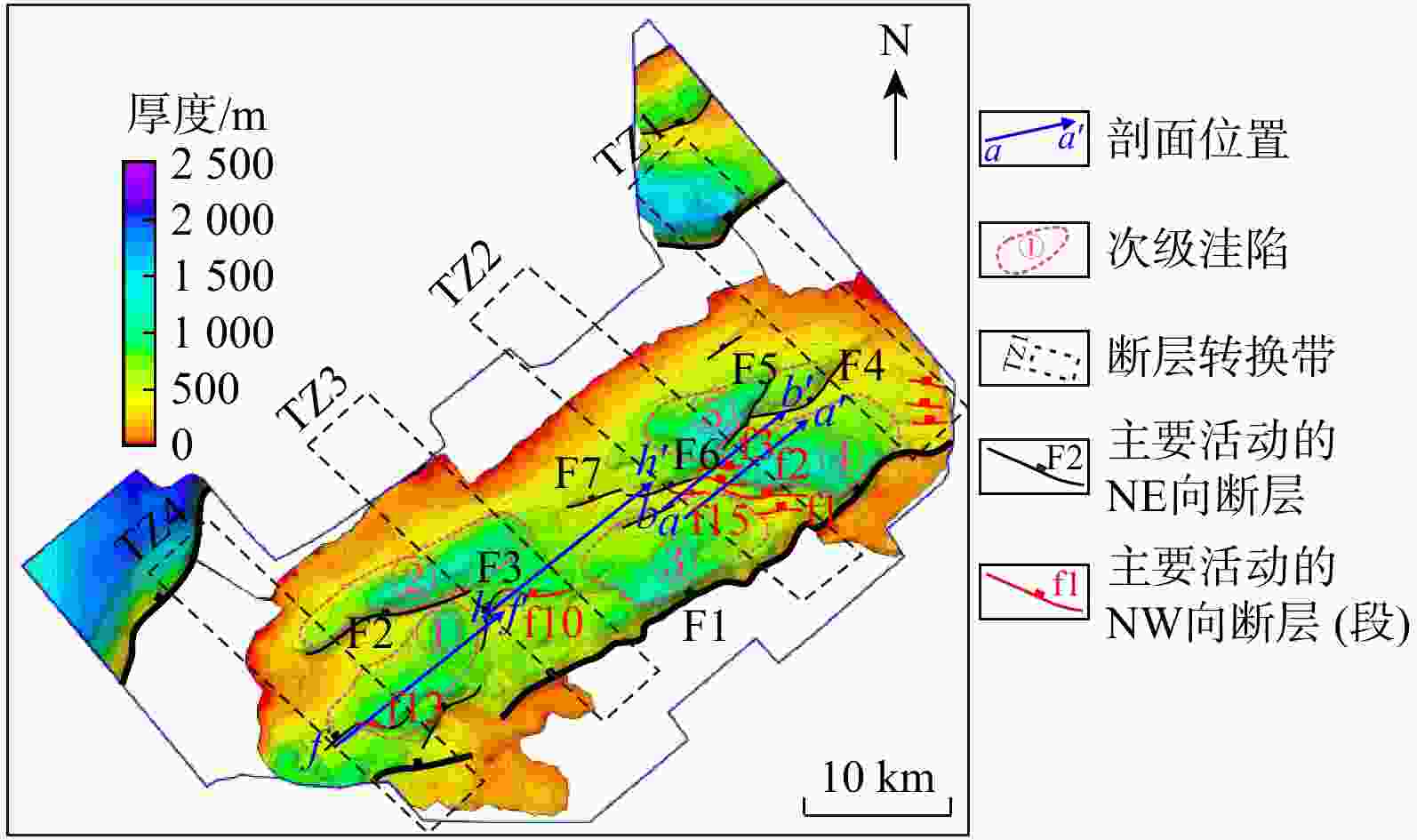
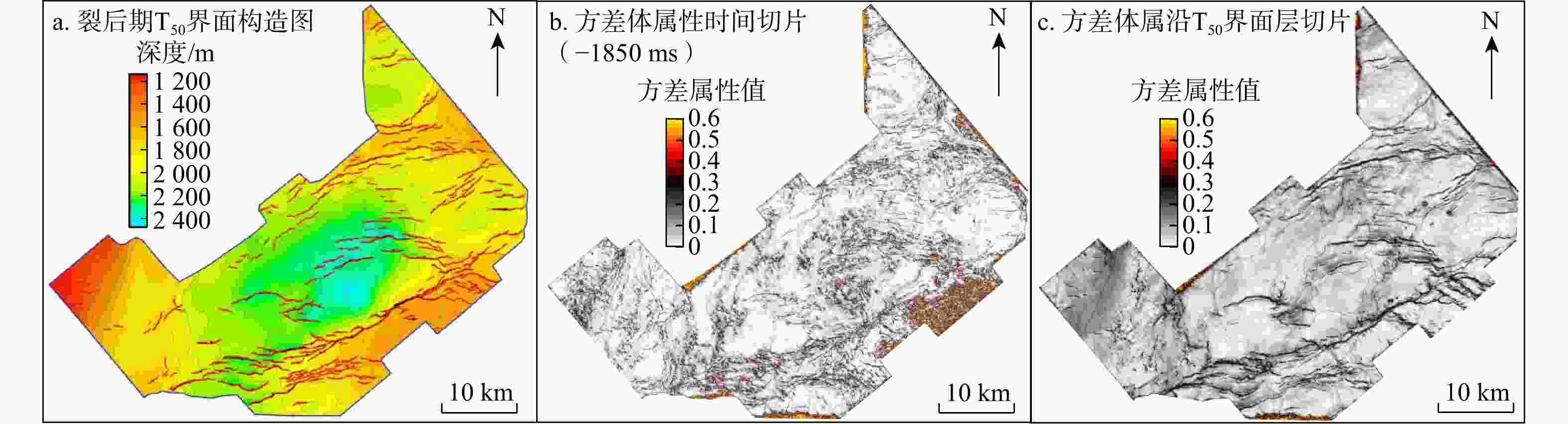
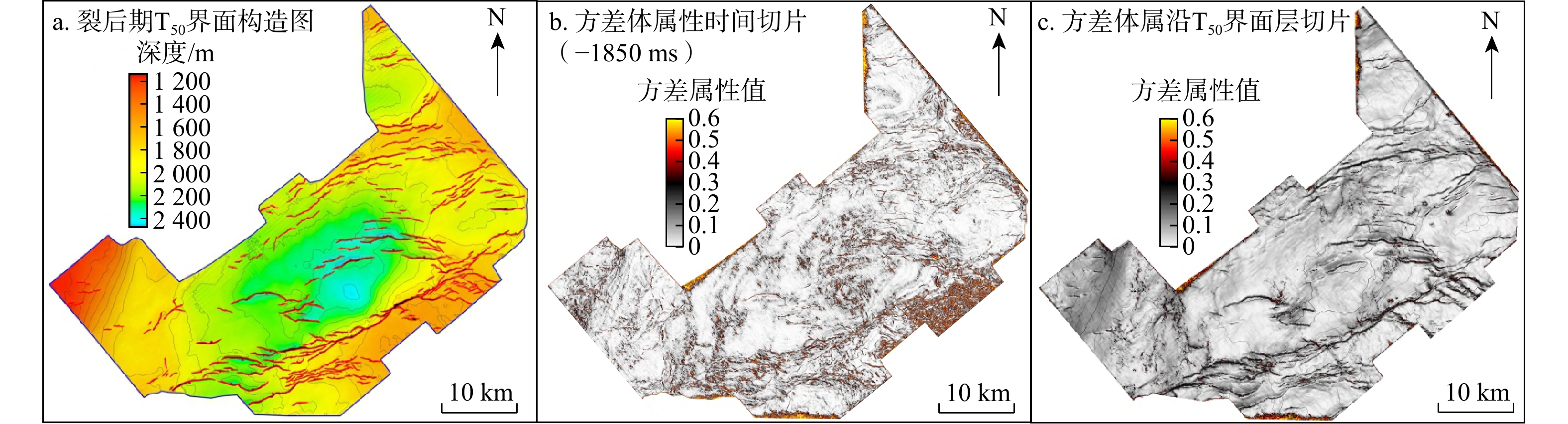
图 9 裂后期T50界面构造图(a)、方差体属性时间切片(−
1850 ms)(b)和方差体属性沿T50界面层切片(c)a~c图范围见图1b中三维地震资料区(蓝色实线框内)
Figure 9. Structural map of post-rift T50 interface (a), variance cube attribute time slice (−
1850 ms) (b), and variance cube attribute horizon slice along T50 interface (c)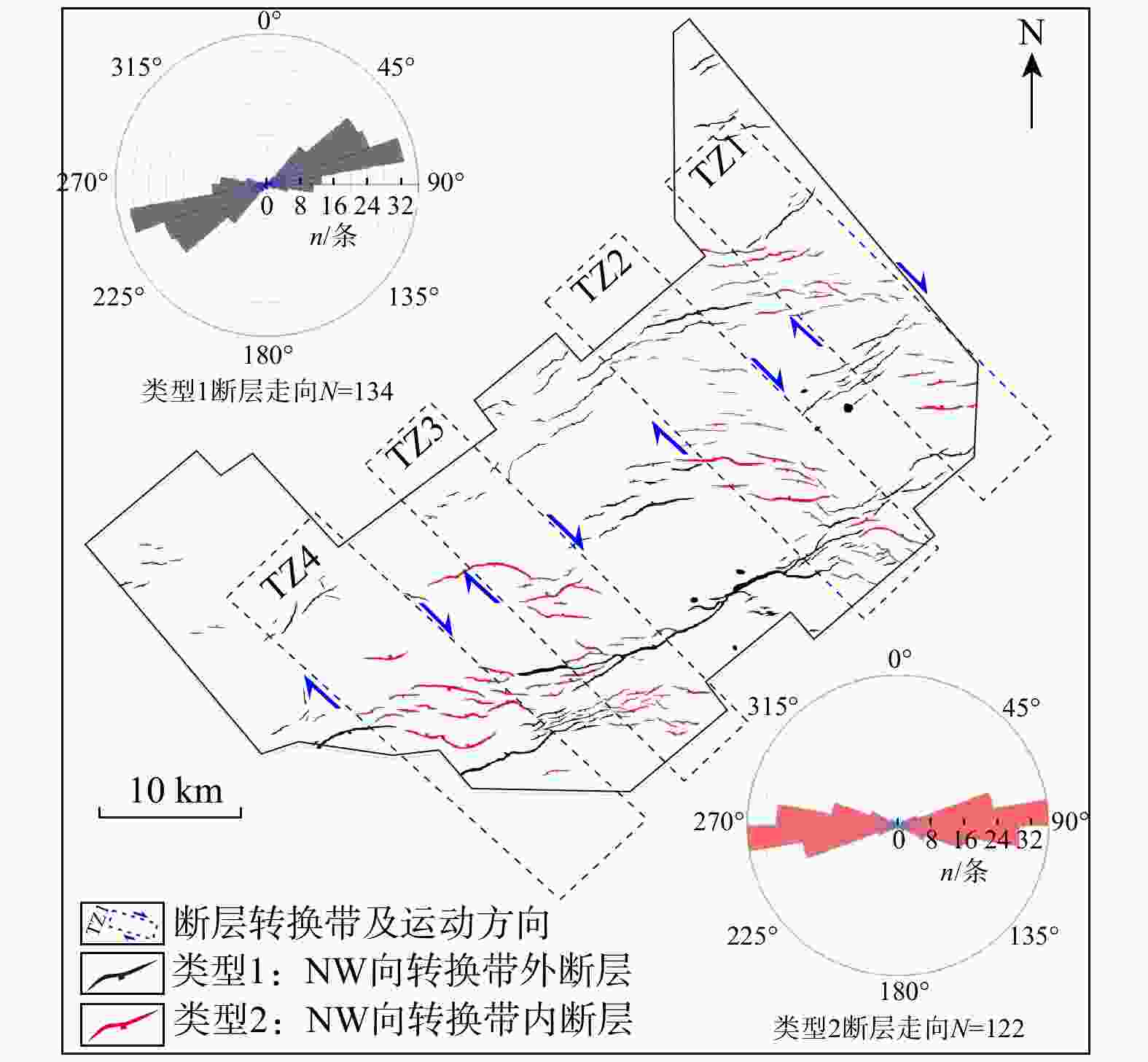
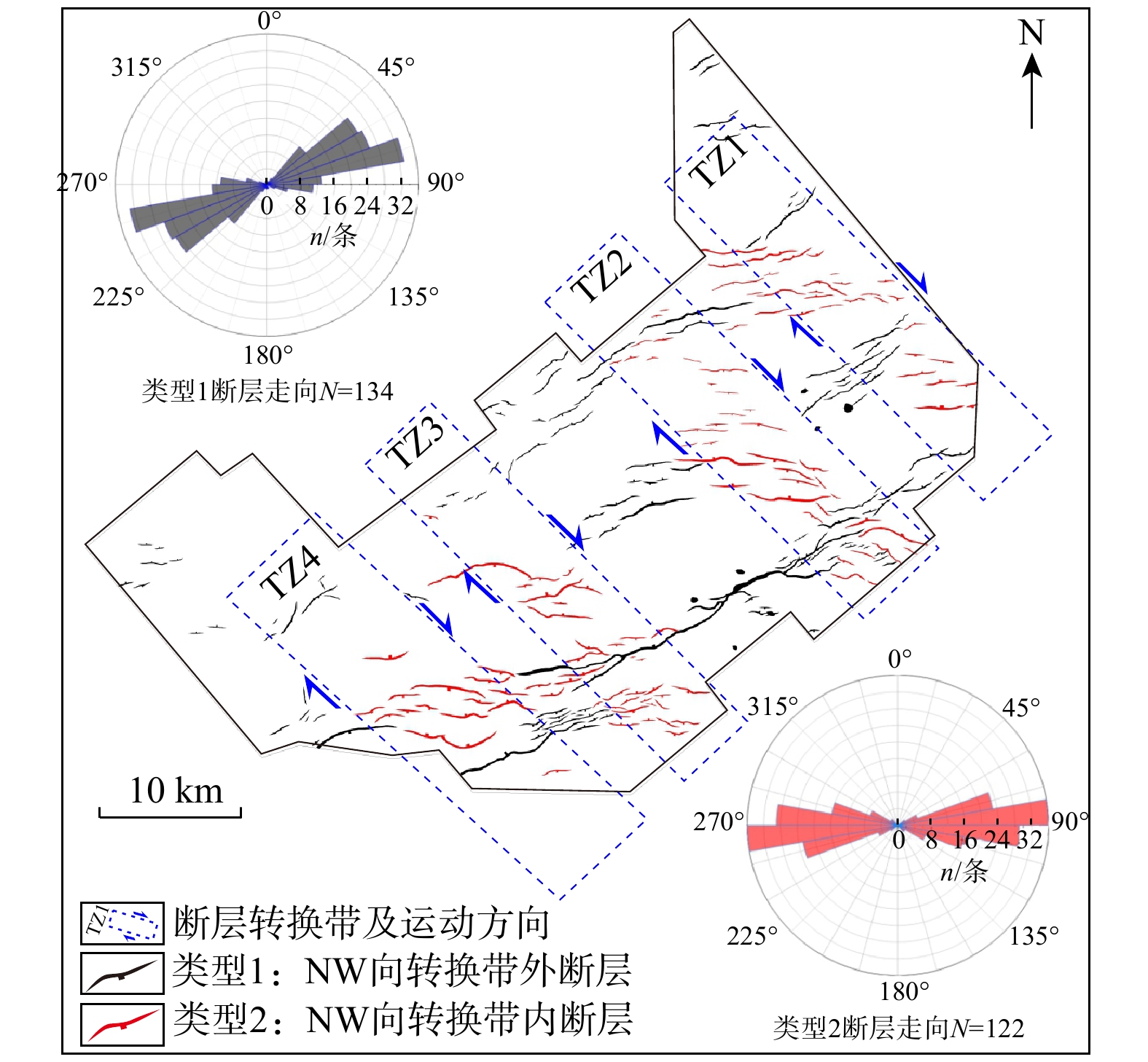
图 10 T50界面断裂分布及不同部位断层走向玫瑰花图
N. 纳入统计的断层总条数;n. 断层条数
Figure 10. Fault distribution of T50 interface and rose diagrams of fault strikes in different parts
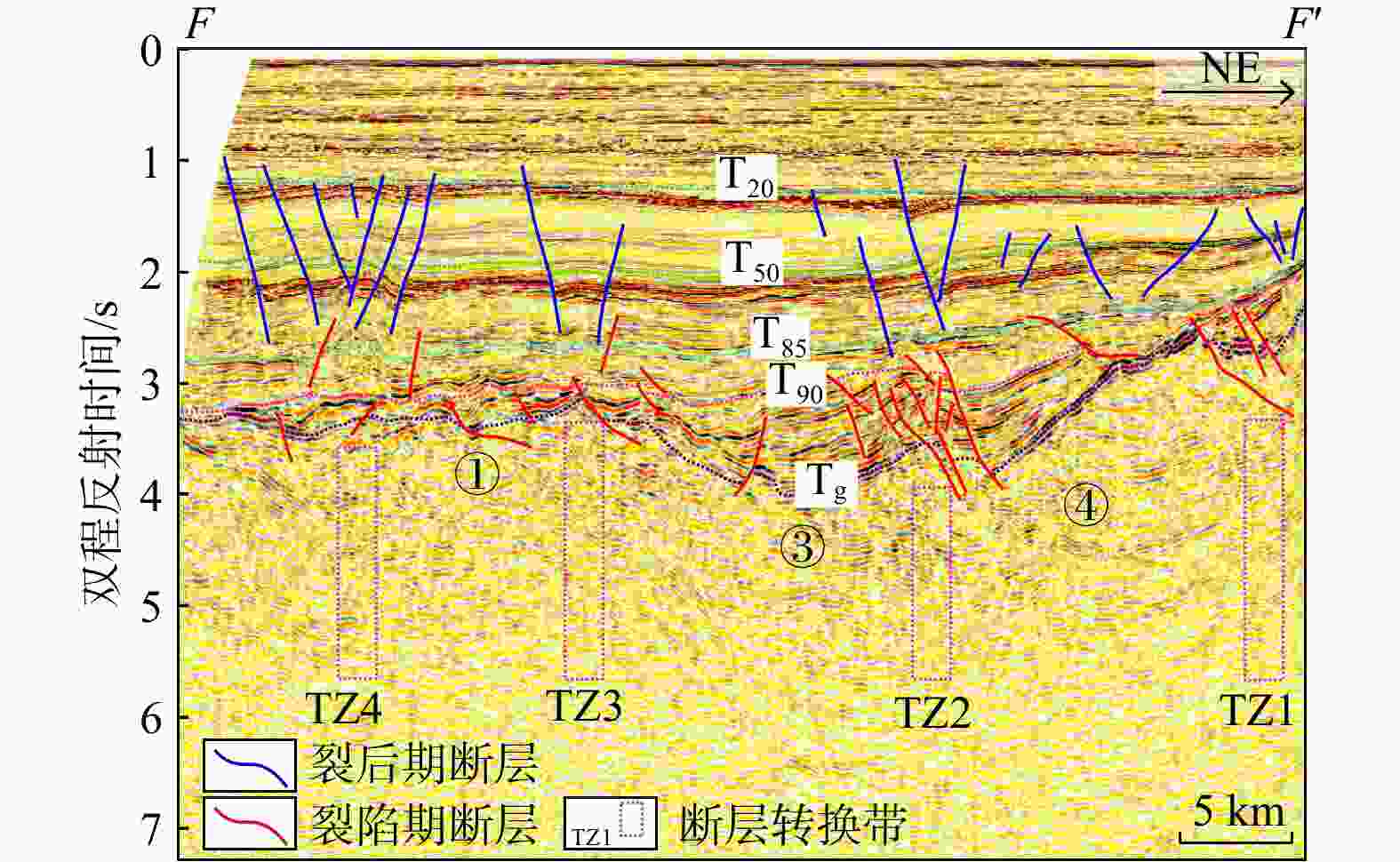
图 11 丽东洼陷裂后期断裂负花状构造典型地震解释剖面(剖面位置见图3b)
Figure 11. Typical seismic interpretation profile of post-rift negative flower structure in Lishui East Sag
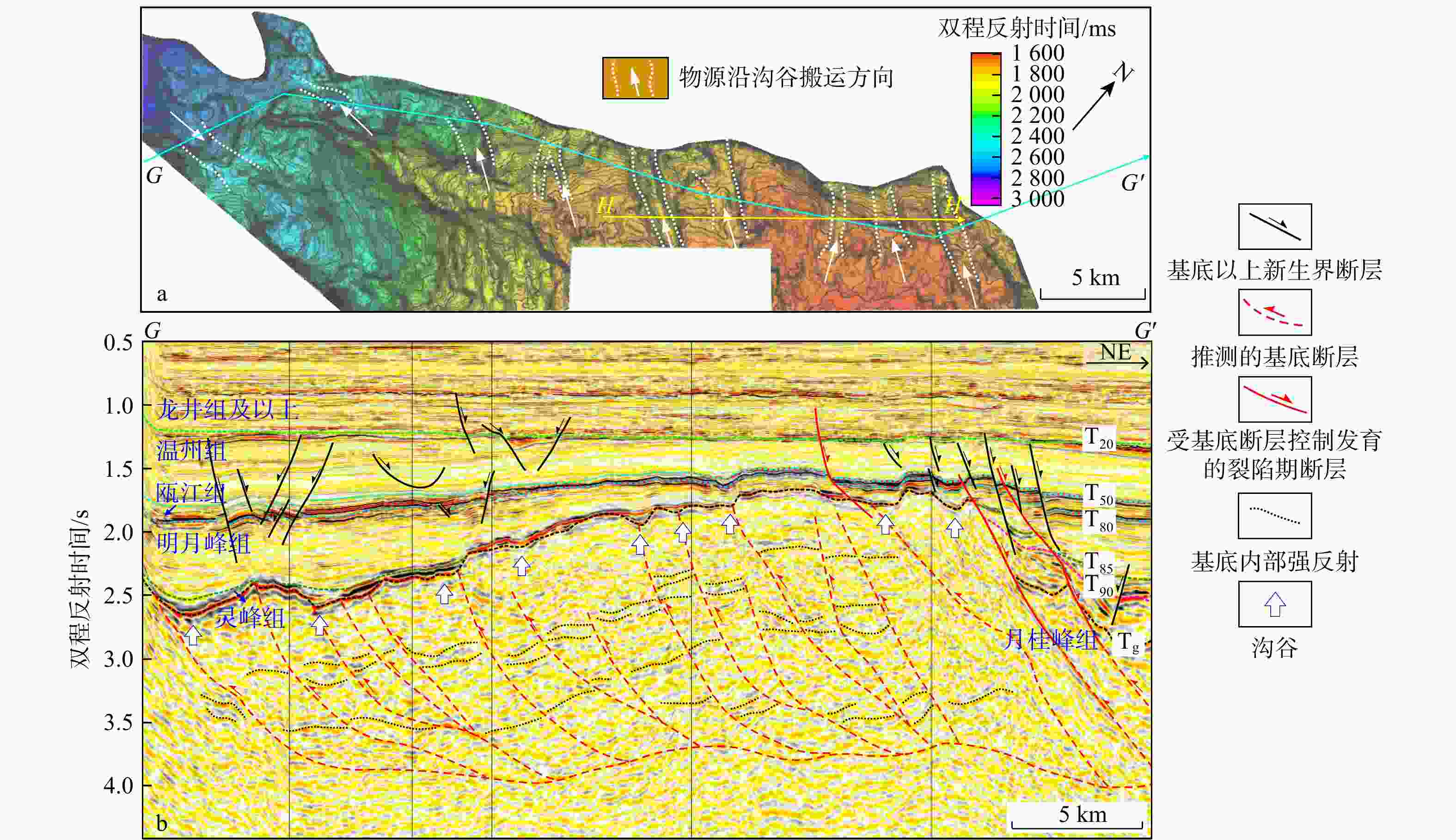
图 12 丽东洼陷东部雁荡凸起上沟谷构造地形背景(a)及典型剖面(b)(剖面位置见图3c)
Figure 12. Structural and geomorphic background (a) and typical profile (b) of valleys on Yandang uplift in eastern Lishui East Sag
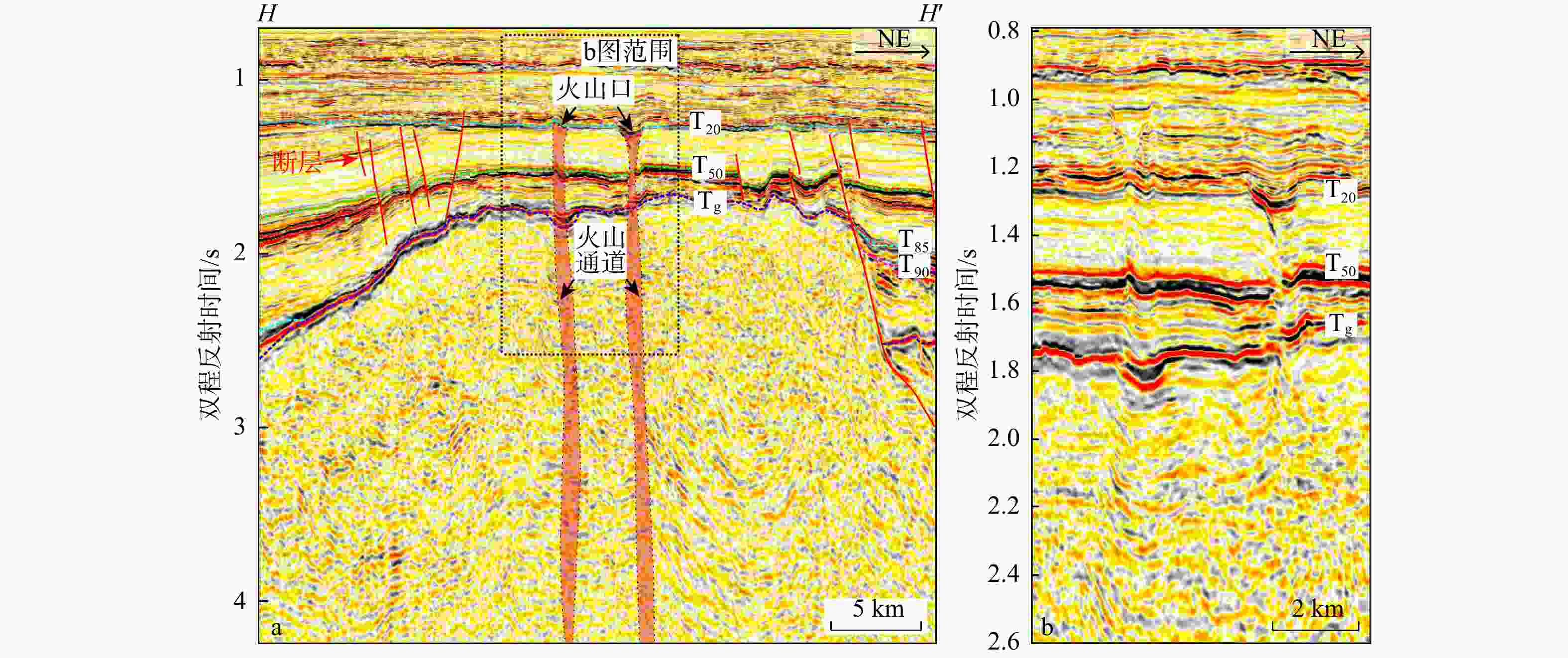
图 13 丽东洼陷岩浆通道典型剖面(a)及局部放大图(b)(剖面位置见图12a)
Figure 13. Typical seismic profile (a) and local enlarged view (b) of magmatic conduits in Lishui East Sag
-
[1] 吴义平, 王建君, 陶士振, 等. 坦桑尼亚鲁夸裂谷盆地氦气充注及成藏机理研究[J]. 地学前缘, 2025, 32(2): 261-276.WU Y P, WANG J J, TAO S Z, et al. Research on helium charging and accumulation mechanism in Rukwa Rift Basin in Tanzania[J]. Earth Science Frontiers, 2025, 32(2): 261-276. (in Chinese with English abstract [2] 吴根耀, 马力, 里群, 等. 继承性构造与新生构造并存的时空发育特征: “盆”“山”耦合理论指导油气勘探的一个切入点[J]. 石油实验地质, 2010, 32(1): 1-9. doi: 10.3969/j.issn.1001-6112.2010.01.001WU G Y, MA L, LI Q, et al. Time-spatial developing features of co-existed inherited and neogenic structures: A tangent in point of basin-orogeny coupling theory guiding petroleum exploration[J]. Petroleum Geology & Experiment, 2010, 32(1): 1-9. (in Chinese with English abstract doi: 10.3969/j.issn.1001-6112.2010.01.001 [3] 朱光, 姜芹芹, 朴学峰, 等. 基底断层在断陷盆地断层系统发育中的作用: 以苏北盆地南部高邮凹陷为例[J]. 地质学报, 2013, 87(4): 441-452. doi: 10.3969/j.issn.0001-5717.2013.04.001ZHU G, JIANG Q Q, PIAO X F, et al. Role of basement faults in faulting system development of a rift basin: An example from the Gaoyou Sag in southern Subei Basin[J]. Acta Geologica Sinica, 2013, 87(4): 441-452. (in Chinese with English abstract doi: 10.3969/j.issn.0001-5717.2013.04.001 [4] MORLEY C K, HARANYA C, PHOOSONGSEE W, et al. Activation of rift oblique and rift parallel pre-existing fabrics during extension and their effect on deformation style: Examples from the rifts of Thailand[J]. Journal of Structural Geology, 2004, 26(10): 1803-1829. doi: 10.1016/j.jsg.2004.02.014 [5] CORTI G, RANALLI G, AGOSTINI A, et al. Inward migration of faulting during continental rifting: Effects of pre-existing lithospheric structure and extension rate[J]. Tectonophysics, 2013, 594: 137-148. doi: 10.1016/j.tecto.2013.03.028 [6] SCHUMACHER M E. Upper Rhine Graben: Role of preexisting structures during rift evolution[J]. Tectonics, 2002, 21(1): 6-1-6-17. doi: 10.1029/2001tc900022 [7] FOSSEN H, ROTEVATN A. Fault linkage and relay structures in extensional settings: A review[J]. Earth-Science Reviews, 2016, 154: 14-28. doi: 10.1016/j.earscirev.2015.11.014 [8] BEACOM L E, HOLDSWORTH R E, MCCAFFREY K J W, et al. A quantitative study of the influence of pre-existing compositional and fabric heterogeneities upon fracture-zone development during basement reactivation[J]. Geological Society, London, Special Publications, 2001, 186(1): 195-211. doi: 10.1144/GSL.SP.2001.186.01.12 [9] COLLANEGA L, SIUDA K, A L JACKSON C, et al. Normal fault growth influenced by basement fabrics: The importance of preferential nucleation from pre-existing structures[J]. Basin Research, 2019, 31(4): 659-687. doi: 10.1111/bre.12327 [10] GIBSON G M, TOTTERDELL J M, WHITE L T, et al. Pre-existing basement structure and its influence on continental rifting and fracture zone development along Australia's southern rifted margin[J]. Journal of the Geological Society, 2013, 170(2): 365-377. doi: 10.1144/jgs2012-040 [11] CORTI G. Control of rift obliquity on the evolution and segmentation of the main Ethiopian rift[J]. Nature Geoscience, 2008, 1(4): 258-262. doi: 10.1038/ngeo160 [12] MORLEY C K, GABDI S, SEUSUTTHIYA K. Fault superimposition and linkage resulting from stress changes during rifting: Examples from 3D seismic data, Phitsanulok Basin, Thailand[J]. Journal of Structural Geology, 2007, 29(4): 646-663. [13] 张刚. 先存断裂对大陆裂谷形成演化的影响[D]. 江苏徐州: 中国矿业大学, 2023.ZHANG G. Effect of pre-existing faults on the formation and evolution of continental rift valleys[D]. Xuzhou Jiangsu: China University of Mining and Technology, 2023. (in Chinese with English abstract [14] WU L L, MEI L F, PATON D A, et al. Basement structures have crucial influence on rift development: Insights from the Jianghan Basin, central China[J]. Tectonics, 2020, 39(2): e2019TC005671. [15] 胡望水, 吕炳全, 张文军, 等. 松辽盆地构造演化及成盆动力学探讨[J]. 地质科学, 2005, 40(1): 16-31. doi: 10.3321/j.issn:0563-5020.2005.01.002HU W S, LYU B Q, ZHANG W J, et al. An approach to tectonic evolution and dynamics of the Songliao Basin[J]. Chinese Journal of Geology (Scientia Geologica Sinica), 2005, 40(1): 16-31. (in Chinese with English abstract doi: 10.3321/j.issn:0563-5020.2005.01.002 [16] 詹润, 朱光. 济阳坳陷青东凹陷基底断裂复活规律和方式[J]. 地质论评, 2012, 58(5): 816-828. doi: 10.3969/j.issn.0371-5736.2012.05.003ZHAN R, ZHU G. Reactivity features and patterns of basement faults in the Qingdong Sag, Jiyang Depression[J]. Geological Review, 2012, 58(5): 816-828. (in Chinese with English abstract doi: 10.3969/j.issn.0371-5736.2012.05.003 [17] 任健, 吕丁友, 陈兴鹏, 等. 渤海东部先存构造斜向拉伸作用及其石油地质意义[J]. 石油勘探与开发, 2019, 46(3): 530-541.REN J, LYU D Y, CHEN X P, et al. Oblique extension of pre-existing structures and its control on oil accumulation in eastern Bohai Sea[J]. Petroleum Exploration and Development, 2019, 46(3): 530-541. (in Chinese with English abstract [18] 薛永安, 吕丁友, 胡志伟, 等. 渤海海域隐性断层构造发育特征与成熟区勘探实践[J]. 石油勘探与开发, 2021, 48(2): 233-246.XUE Y A, LYU D Y, HU Z W, et al. Tectonic development of subtle faults and exploration in mature areas in Bohai Sea, East China[J]. Petroleum Exploration and Development, 2021, 48(2): 233-246. (in Chinese with English abstract [19] 高顺莉, 徐曦, 周祖翼. 南黄海北部盆地晚白垩世以来构造变形与盆地成因[J]. 石油与天然气地质, 2015, 36(6): 924-933.GAO S L, XU X, ZHOU Z Y. Structural deformation and genesis of the northern sub-basin in South Yellow Sea since Late Cretaceous[J]. Oil & Gas Geology, 2015, 36(6): 924-933. (in Chinese with English abstract [20] 黄建军, 牛华伟. 南黄海盆地南部坳陷对冲挤压变形与拉张断陷叠加特征分析[J]. 特种油气藏, 2019, 26(4): 15-20.HUANG J J, NIU H W. Superposition characterization between hedging extrusion deformation and tensile fault-depression in the southern depression of the South Yellow Sea Basin[J]. Special Oil & Gas Reservoirs, 2019, 26(4): 15-20. (in Chinese with English abstract [21] 刘欢, 许长海, 申雯龙, 等. 东海丽水凹陷构造转移带特征及其油气地质意义[J]. 油气地质与采收率, 2021, 28(4): 12-22. doi: 10.13673/j.cnki.cn37-1359/te.2021.04.002LIU H, XU C H, SHEN W L, et al. Characteristics of transfer zones in Lishui Sag, East China Sea and its significance for petroleum geology[J]. Petroleum Geology and Recovery Efficiency, 2021, 28(4): 12-22. (in Chinese with English abstract doi: 10.13673/j.cnki.cn37-1359/te.2021.04.002 [22] 庞雄, 郑金云, 梅廉夫, 等. 先存俯冲陆缘背景下南海北部陆缘断陷特征及成因[J]. 石油勘探与开发, 2021, 48(5): 1069-1080. doi: 10.11698/PED.2021.05.19PANG X, ZHENG J Y, MEI L F, et al. Characteristics and origin of continental marginal fault depressions under the background of preexisting subduction continental margin, northern South China Sea, China[J]. Petroleum Exploration and Development, 2021, 48(5): 1069-1080. (in Chinese with English abstract doi: 10.11698/PED.2021.05.19 [23] 纪凯, 邓超, 李博, 等. 珠江口盆地新生代裂陷形成和演化的时空差异性及其成因机制探讨[J]. 地质科技通报, 2025, 44(6): 121-133.JI K, DENG C, LI B, et al. Discussion on the spatiotemporal differences of Cenozoic rift formation and evolution and its genetic mechanism in the Pearl River Mouth Basin[J]. Bulletin of Geological Science and Technology, 2025, 44(6): 121-133. (in Chinese with English abstract [24] 张远泽, 漆家福, 吴景富. 南海北部新生代盆地断裂系统及构造动力学影响因素[J]. 地球科学, 2019, 44(2): 603-625.ZHANG Y Z, QI J F, WU J F. Cenozoic faults systems and its geodynamics of the continental margin basins in the northern of South China Sea[J]. Earth Science, 2019, 44(2): 603-625. (in Chinese with English abstract [25] 王璞珺, 高传承, 高有峰, 等. 松辽盆地国际大陆科学钻探松科2井基底变质岩研究[J]. 地学前缘, 2025, 32(5): 38-51.WANG P J, GAO C C, GAO Y F, et al. Study on basement metamorphic rocks of the ICDP borehole SK2 in the Songliao Basin[J]. Earth Science Frontiers, 2025, 32(5): 38-51. (in Chinese with English abstract [26] WANG P J, YANG Z L, GAO Y F, et al. Interaction between basement detachment fault, rift onset unconformity, and overlying basin fills: An example from the Songliao Basin of a Cretaceous active continental margin volcanic rift in Northeast Asia[J]. Marine and Petroleum Geology, 2024, 168: 107042. doi: 10.1016/j.marpetgeo.2024.107042 [27] CORTI G, LUCIA S, BONINI M, et al. Interaction between normal faults and pre-existing thrust systems in analogue models[J]. Geological Society, London, Special Publications, 2006, 253(1): 65-78. doi: 10.1144/GSL.SP.2006.253.01.03 [28] ZIEGLER P A, CLOETINGH S. Dynamic processes controlling evolution of rifted basins[J]. Earth-Science Reviews, 2004, 64(1/2): 1-50. doi: 10.1016/s0012-8252(03)00041-2 [29] 吴婷婷, 张丽丽, 吴哲, 等. 珠江口盆地前新生代先存断裂特征及动力背景: 以惠州凹陷和番禺4洼为例[J]. 海洋地质前沿, 2022, 38(6): 54-62. doi: 10.16028/j.1009-2722.2021.162WU T T, ZHANG L L, WU Z, et al. Characteristics and dynamic background of pre-existing fractures in pre-Cenozoic of Pearl River Mouth Basin: Cases of Huizhou Sag and Panyu 4 Depression[J]. Marine Geology Frontiers, 2022, 38(6): 54-62. (in Chinese with English abstract doi: 10.16028/j.1009-2722.2021.162 [30] 刘剑平, 汪新伟, 汪新文. 临清坳陷变换构造研究[J]. 地质科技情报, 2004, 23(4): 51-54. doi: 10.3969/j.issn.1000-7849.2004.04.011LIU J P, WANG X W, WANG X W. Transition structures in Linqing Depression[J]. Geological Science and Technology Information, 2004, 23(4): 51-54. (in Chinese with English abstract doi: 10.3969/j.issn.1000-7849.2004.04.011 [31] 田安琦, 刘成林, 付金华, 等. 西湖凹陷中央反转带花港组构造: 成岩控储机制研究[J]. 中国石油勘探, 2025, 30(6): 134-152. doi: 10.3969/j.issn.1672-7703.2008.02.004TIAN A Q, LIU C L, FU J H, et al. Tectono-diagenetic reservoir-controlling mechanisms of Huagang Formation in the central inversion structural belt, Xihu Sag[J]. China Petroleum Exploration, 2025, 30(6): 134-152. (in Chinese with English abstract doi: 10.3969/j.issn.1672-7703.2008.02.004 [32] LI W, CAO M Y, MENG M F, et al. Characteristics of transfer zones under the influence of pre-existing faults and regional stress transformation: Wenchang A subsag, Zhujiang River Mouth Basin, northern South China Sea[J]. Journal of Oceanology and Limnology, 2024, 42(3): 744-759. doi: 10.1007/s00343-023-3079-4 [33] 王和明, 尹文荣. 东海重力磁力异常与地质构造[J]. 石油与天然气地质, 1986, 7(4): 295-307.WANG H M, YIN W R. Gravity and magnetic anomaly and the geological tectonics of the East China Sea[J]. Oil & Gas Geology, 1986, 7(4): 295-307. (in Chinese with English abstract [34] 杨长清, 杨艳秋, 杨传胜, 等. 东海陆架盆地南部中生代构造-沉积演化与油气勘探方向[J]. 海洋地质与第四纪地质, 2019, 39(6): 30-40. doi: 10.16562/j.cnki.0256-1492.2019070305YANG C Q, YANG Y Q, YANG C S, et al. Tectono-sedimentary evolution of the Mesozoic in the southern East China Sea shelf basin and its bearing on petroleum exploration[J]. Marine Geology & Quaternary Geology, 2019, 39(6): 30-40. (in Chinese with English abstract doi: 10.16562/j.cnki.0256-1492.2019070305 [35] 徐发. 东海陆架盆地新生界结构特征及迁移规律[J]. 石油天然气学报, 2012, 34(6): 1-7.XU F. Characteristics of Caenozoic structure and tectonic migration of the East China Sea shelf basin[J]. Journal of Oil and Gas Technology, 2012, 34(6): 1-7. (in Chinese with English abstract [36] 王超, 唐贤君, 蒋一鸣, 等. 西湖凹陷天台斜坡带北部构造变换带特征及油气地质意义[J]. 海洋地质与第四纪地质, 2020, 40(6): 93-105.WANG C, TANG X J, JIANG Y M, et al. Characteristics of the structural transfer zone of northern Tiantai slope in Xihu Sag of the East China Sea Basin and their petroleum geological significances[J]. Marine Geology & Quaternary Geology, 2020, 40(6): 93-105. (in Chinese with English abstract [37] 楚逸忱. 西湖凹陷NW向构造转换带发育特征及成因机制[D]. 山东青岛: 中国石油大学(华东), 2022.CHU Y C. Structural characteristics and mechanism of NW structural transfer zone of Xihu Sag[D]. Qingdao Shandong: China University of Petroleum (Huadong), 2022. (in Chinese with English abstract [38] 索艳慧, 李三忠, 戴黎明, 等. 东亚及其大陆边缘新生代构造迁移与盆地演化[J]. 岩石学报, 2012, 28(8): 2602-2618.SUO Y H, LI S Z, DAI L M, et al. Cenozoic tectonic migration and basin evolution in East Asia and its continental margins[J]. Acta Petrologica Sinica, 2012, 28(8): 2602-2618. (in Chinese with English abstract [39] 索艳慧, 李三忠, 戴黎明, 等. 东海陆架盆地构造单元划分与特征[J]. 海洋地质与第四纪地质, 2010, 30(6): 49-58.SUO Y H, LI S Z, DAI L M, et al. Division and characteristics of tectonic units of the East China Sea shelf basin[J]. Marine Geology & Quaternary Geology, 2010, 30(6): 49-58. (in Chinese with English abstract [40] 侯方辉, 张训华, 李刚, 等. 从被动陆缘到主动陆缘: 东海陆架盆地中生代构造体制转换的盆地记录[J]. 石油地球物理勘探, 2015, 50(5): 980-990. doi: 10.13810/j.cnki.issn.1000-7210.2015.05.023HOU F H, ZHANG X H, LI G, et al. From passive continental margin to active continental margin: Basin recordings of Mesozoic tectonic regime transition of the East China Sea shelf basin[J]. Oil Geophysical Prospecting, 2015, 50(5): 980-990. (in Chinese with English abstract doi: 10.13810/j.cnki.issn.1000-7210.2015.05.023 [41] 覃军, 熊萍, 何新建, 等. 东海盆地石门潭组属于裂陷期地层序列吗?[J]. 地层学杂志, 2024, 48(4): 380-391.QIN J, XIONG P, HE X J, et al. Is shimentan formation in the East China Sea Basin a syn-rifting succession?[J]. Journal of Stratigraphy, 2024, 48(4): 380-391. (in Chinese with English abstract [42] 赵志刚, 王鹏, 祁鹏, 等. 东海盆地形成的区域地质背景与构造演化特征[J]. 地球科学, 2016, 41(3): 546-554.ZHAO Z G, WANG P, QI P, et al. Regional background and tectonic evolution of East China Sea Basin[J]. Earth Science, 2016, 41(3): 546-554. (in Chinese with English abstract [43] 冯晓杰, 蔡东升, 王春修, 等. 东海陆架盆地中新生代构造演化特征[J]. 中国海上油气 地质, 2003, 15(1): 33-37.FENG X J, CAI D S, WANG C X, et al. The meso-Cenozoic tectonic evolution in East China Sea shelf basin[J]. China Offshore Oil and Gas, 2003, 15(1): 33-37. (in Chinese with English abstract [44] 张建培, 张田, 唐贤君. 东海陆架盆地类型及其形成的动力学环境[J]. 地质学报, 2014, 88(11): 2033-2043.ZHANG J P, ZHANG T, TANG X J. Basin type and dynamic environment in the East China Sea shelf basin[J]. Acta Geologica Sinica, 2014, 88(11): 2033-2043. (in Chinese with English abstract [45] 夏斌, 张敏强, 万志峰, 等. 东海丽水-椒江凹陷构造样式与含油气远景[J]. 华南地震, 2007, 27(3): 1-8.XIA B, ZHANG M Q, WAN Z F, et al. Structural styles and hydrocarbon prospects in the Lishui-Jiaojiang Sag, the East China Sea[J]. South China Journal of Seismology, 2007, 27(3): 1-8. (in Chinese with English abstract [46] 朱珍君, 李琦, 陈贺贺, 等. 东海陆架盆地丽水凹陷古新统源-汇系统耦合及时-空演化[J]. 石油与天然气地质, 2023, 44(3): 735-752.ZHU Z J, LI Q, CHEN H H, et al. Source-to-sink coupling and temporal-spatial evolution in the Lishui Sag of East China Sea Shelf Basin during the Paleocene[J]. Oil & Gas Geology, 2023, 44(3): 735-752. (in Chinese with English abstract [47] 柴利根. 论鱼山−久米断裂带性质及其对东海地质构造的控制作用[J]. 石油与天然气地质, 1986, 7(2): 107-115.CHAI L G. The nature of Yushan-Kume fault belt and its control over East China Sea[J]. Oil & Gas Geology, 1986, 7(2): 107-115. (in Chinese with English abstract [48] 李乃胜. 冲绳海槽断裂构造的研究[J]. 海洋与湖沼, 1988, 19(4): 347-358.LI N S. On the fracturing structures of the Okinawa trough[J]. Oceanologia et Limnologia Sinica, 1988, 19(4): 347-358. (in Chinese with English abstract [49] 尚鲁宁, 张勇, 张训华, 等. 东海陆架外缘区构造特征及其成因机制[J]. 海洋与湖沼, 2018, 49(6): 1178-1189.SHANG L N, ZHANG Y, ZHANG X H, et al. Tectonic structure of the outer shelf of the East China Sea and the formation mechanism[J]. Oceanologia et Limnologia Sinica, 2018, 49(6): 1178-1189. (in Chinese with English abstract [50] 刘光鼎. 中国海区及邻域地质地球物理特征[M]. 北京: 科学出版社, 1992.LIU G D. Geologic-geophysic features of China seas and adjacent regions[M]. Beijing: Science Press, 1992. (in Chinese) [51] KONG F C, LAWVER L A, LEE T Y. Evolution of the southern Taiwan-Sinzi Folded Zone and opening of the southern Okinawa trough[J]. Journal of Asian Earth Sciences, 2000, 18(3): 325-341. [52] 席杰波, 沈毅, 吴健生, 等. 中国东海北北东向和北西向断裂带研究的新认识[J]. 同济大学学报, 1988, 16(2): 179-189.XI J B, SHEN Y, WU J S, et al. On evolution of the NNE and NW tranding faults in the East China Sea[J]. Journal of Tongji University, 1988, 16(2): 179-189. (in Chinese with English abstract [53] SHI W, DONG S W, ZHANG Y Q, et al. The typical large-scale superposed folds in the central South China: Implications for Mesozoic intracontinental deformation of the South China block[J]. Tectonophysics, 2015, 664: 50-66. [54] CHENG Y J, WU Z P, XU B, et al. The Mesozoic tectonic evolution of the East China Sea Basin: New insights from 3D seismic reflection data[J]. Tectonophysics, 2023, 848: 229717. [55] 李宁, 唐贤君, 钟荣全, 等. 东海陆架盆地中部隆起带北西向大断层识别及成因机制[J]. 中国海上油气, 2024, 36(5): 22-33.LI N, TANG X J, ZHONG R Q, et al. Identification and genetic mechanism of NW-trending large faults in central uplift zone of East China Sea shelf basin[J]. China Offshore Oil and Gas, 2024, 36(5): 22-33. (in Chinese with English abstract [56] 任建业. 中国近海海域新生代成盆动力机制分析[J]. 地球科学, 2018, 43(10): 3337-3361.REN J Y. Genetic dynamics of China offshore Cenozoic basins[J]. Earth Science, 2018, 43(10): 3337-3361. (in Chinese with English abstract [57] 岳上, 权永彬, 杜学斌, 等. 西湖凹陷中西部地区烃源岩生烃潜力及油源对比[J]. 地质科技通报, 2024, 43(2): 87-98.YUE S, QUAN Y B, DU X B, et al. Hydrocarbon generation potential and oil source comparison of source rocks in the central and western regions of Xihu Depression[J]. Bulletin of Geological Science and Technology, 2024, 43(2): 87-98. (in Chinese with English abstract [58] 徐东浩, 秦兰芝, 李峻颉, 等. 西湖凹陷平北斜坡带平湖组层序构型差异及控砂模式[J]. 地质科技通报, 2024, 43(4): 154-166.XU D H, QIN L Z, LI J J, et al. Sequence stratigraphic architectures and sand-body distribution models of the Pinghu Formation in the Pingbei slope belt of the Xihu Depression[J]. Bulletin of Geological Science and Technology, 2024, 43(4): 154-166. (in Chinese with English abstract [59] 王福国, 张向涛, 梅廉夫, 等. 珠江口盆地白云东区古近纪挤压-伸展变形模式及勘探意义[J]. 地质科技通报, 2023, 42(1): 246-252.WANG F G, ZHANG X T, MEI L F, et al. Characteristics of Paleogene compression-extension deformation and exploration significance in the Baiyun East area, Pearl River Mouth Basin[J]. Bulletin of Geological Science and Technology, 2023, 42(1): 246-252. (in Chinese with English abstract [60] 蔡国富, 张向涛, 彭光荣, 等. 南海北部阳江−一统暗沙断裂带与新近纪岩浆活动[J]. 大地构造与成矿学, 2021, 45(1): 40-52.CAI G F, ZHANG X T, PENG G R, et al. Neogene volcanism and tectonics along the Yangjing-Yitong'ansha fault zone in the northern South China Sea margin[J]. Geotectonica et Metallogenia, 2021, 45(1): 40-52. (in Chinese with English abstract -

 下载:
下载:






 点击查看大图
计量
- 文章访问数: 527
- PDF下载量: 196
- 被引次数: 0