投审稿入口
投审稿入口


Coordinated and efficient prediction of multiple parameters for complex shale reservoirs based on deep learning: A case study of Qingshankou Formation in Songliao Basin
-
摘要:目的
松辽盆地青山口组是我国陆相页岩油重点勘探层系,但该套页岩储层非均质性强、岩性复杂,同时研究区存在岩心实验样本有限、核磁共振测井资料稀缺的现实约束,传统储层评价方法存在精度有限、区域适用性较差的问题;纯数据驱动机器学习又容易受样本数量制约,泛化能力难以保障。针对上述矛盾,本文提出一套融合地质先验知识与机器学习的多参数协同预测方法,实现页岩储层关键参数的测井定量评价。
方法构建由改进 Δlog
R 法、轻量化全连接神经网络(FCNN)和岩心标定优化经验公式共同组成一体化预测框架,完成总有机碳质量分数w (TOC)、矿物含量与孔隙度的协同高精度反演。改进 ΔlogR 法引入分段地层基线校正与优化权重系数D 动态调整策略,适配高成熟度页岩的非线性测井响应;轻量化 FCNN 以声波时差(AC)、伽马射线(GR)、井径(CAL)、补偿中子(CNL)、深侧向电阻率对数(logLLD)、自然电位(SP)、补偿密度(DEN)共 7 条常规测井曲线为输入,建立硅质、黏土和碳酸盐3类主要矿物含量的非线性反演模型;孔隙度预测基于岩心实测数据标定,优化声波–密度–中子协同计算式,改善超低孔页岩储层的预测精度。结果实例盲井验证表明:改进 Δlog
R 法将w (TOC)预测决定系数R 2由 0.613 提升至 0.786;矿物含量预测模型平均R 2达 0.867,在小样本条件下依然具备良好泛化能力;孔隙度预测R 2由 0.68 提升至 0.91。结论该套预测框架充分兼顾地质合理性与物理可解释性,有效化解小样本条件下模型泛化不足的难题,显著提升复杂页岩储层多参数预测的精度与稳定性,建立了适用于小样本非常规储层的一体化测井解释体系,可为松辽盆地及国内外同类陆相盆地页岩油储层甜点识别、可压裂性评价与高效开发提供技术支撑。
Abstract:ObjectiveThe Upper Cretaceous Qingshankou Formation of the Songliao Basin represents a critical exploration target for continental shale oil in China. Nevertheless, this shale reservoir is characterized by strong reservoir heterogeneity and complex lithological assemblages. Practical exploration is further constrained by limited core test samples and scarce nuclear magnetic resonance (NMR) logging data in the study area. Conventional reservoir evaluation approaches suffer from limited prediction accuracy and poor regional adaptability. Meanwhile, purely data-driven machine learning models frequently suffer from deteriorated generalization ability when training datasets are insufficient. To resolve these bottlenecks, this study develops a multi-parameter coordinated prediction method integrating geological prior knowledge and machine learning algorithms for quantitative well-log evaluation of key shale reservoir parameters.
MethodsAn integrated prediction framework was constructed by combining an improved Δlog
R method, a lightweight fully connected neural network (FCNN), and core-calibrated optimized empirical formulas to achieve high-precision coordinated inversion of total organic carbon mass fractionw (TOC), three major mineral components, and total porosity. The improved ΔlogR algorithm adopted segmented stratigraphic baseline calibration and dynamically adjustable weighting coefficientD , which mitigated the limitations of fixed-baseline linear assumptions and adapted to nonlinear logging responses within high-maturity shale intervals. The lightweight FCNN took seven conventional well-logging curves as input variables: acoustic travel time (AC), gamma ray (GR), caliper (CAL), compensated neutron log (CNL), logarithmic deep lateral resistivity (logLLD), spontaneous potential (SP), and compensated density (DEN). It established a nonlinear inversion model for felsic, clay, and carbonate mineral contents. For porosity estimation, an acoustic-density-neutron synergistic calculation formula was optimized using core-measured porosity data. It substantially enhanced the prediction accuracy for ultra-low-porosity shale reservoirs.ResultsBlind-well validation demonstrated that the improved Δlog
R method increased the coefficient of determinationR 2 ofw (TOC) prediction from 0.613 to 0.786. The lightweight FCNN mineral prediction model yielded an averageR 2 of 0.867 and maintained favorable generalization ability under small-sample conditions. After formula optimization, theR 2 of porosity prediction increased from 0.68 to 0.91.ConclusionThe proposed prediction workflow balances geological rationality and physical interpretability and effectively alleviates the problem of insufficient model generalization caused by limited training samples. It remarkably improves prediction accuracy and stability for multi-parameter inversion in complex shale reservoirs and forms an integrated well-log interpretation system applicable to small-sample unconventional reservoirs. This study can provide reliable technical support for “sweet spot” identification, fracability assessment, and efficient development of shale oil reservoirs in the Songliao Basin and other similar continental basins worldwide.
-
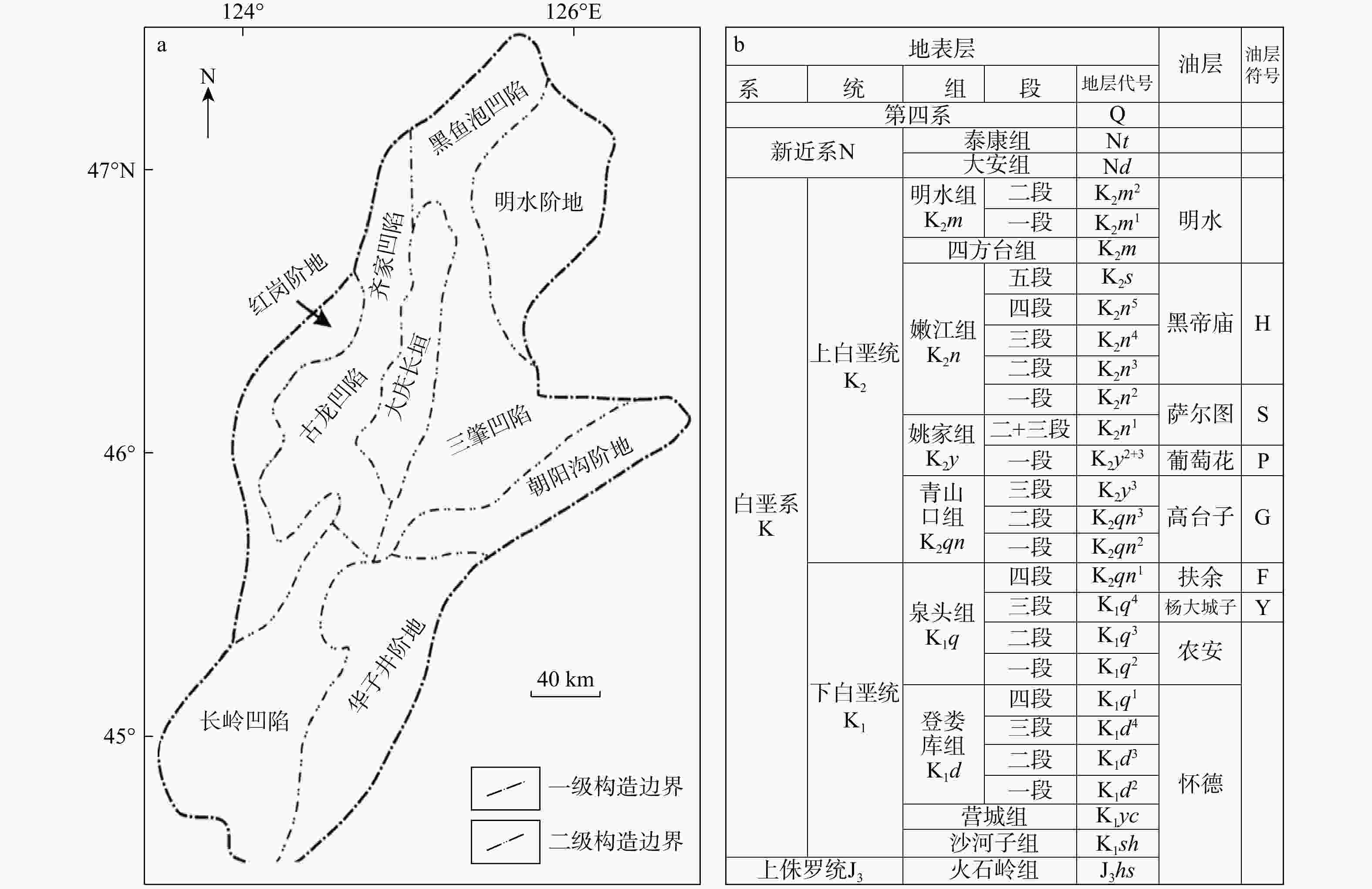
图 1 松辽盆地构造平面图[24] (a) 与地层层序表 (b)
Figure 1. Tectonic map (a) and stratigraphic column (b) of Songliao Basin
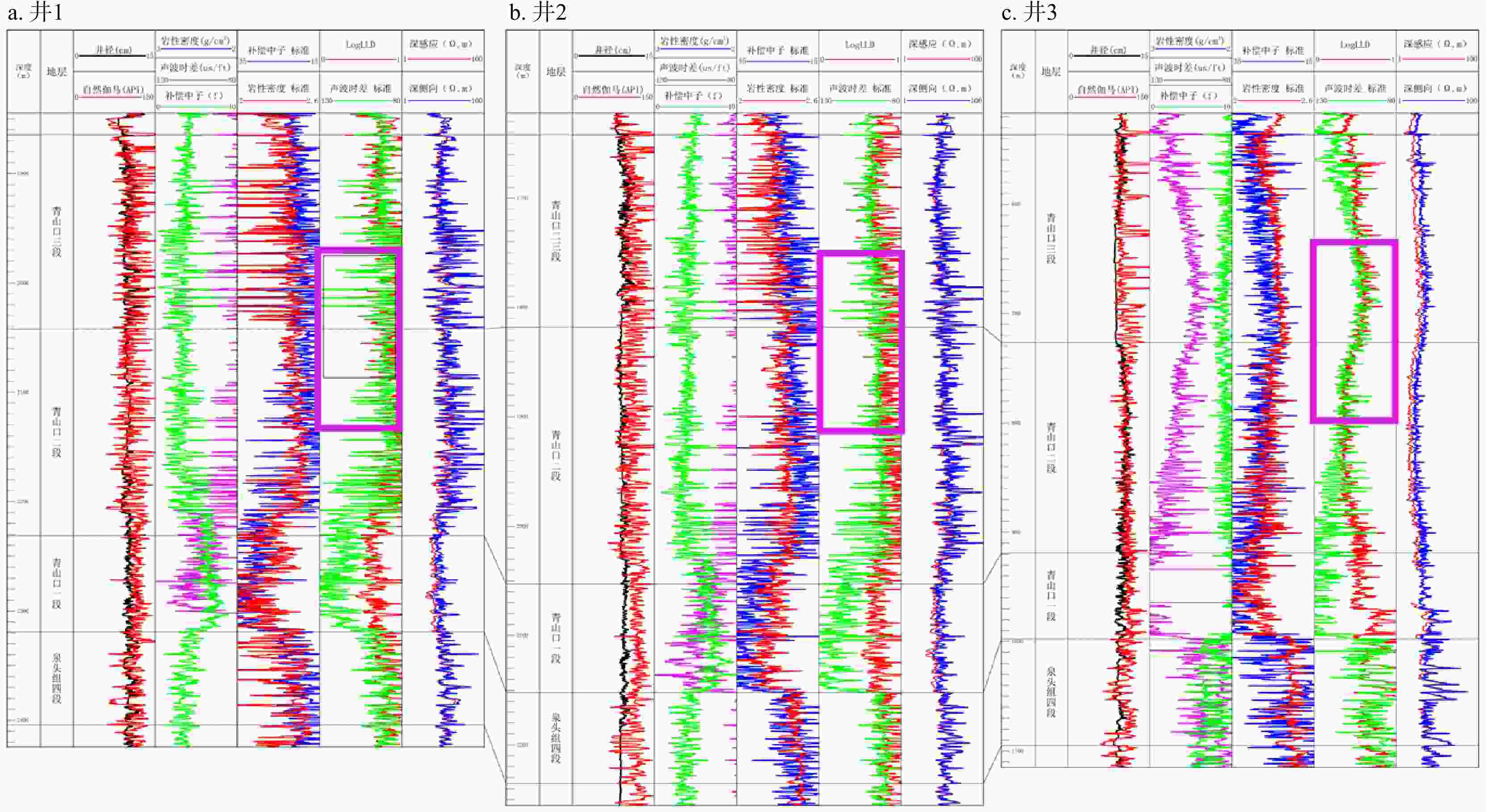
图 2 以声波时差为例的井 1 (a)、井 2 (b)、井 3 (c) 测井曲线标准化处理过程
Figure 2. Standardization process of well-logging curves in Well 1(a), Well 2(b), and Well 3(c) using acoustic travel time as an example
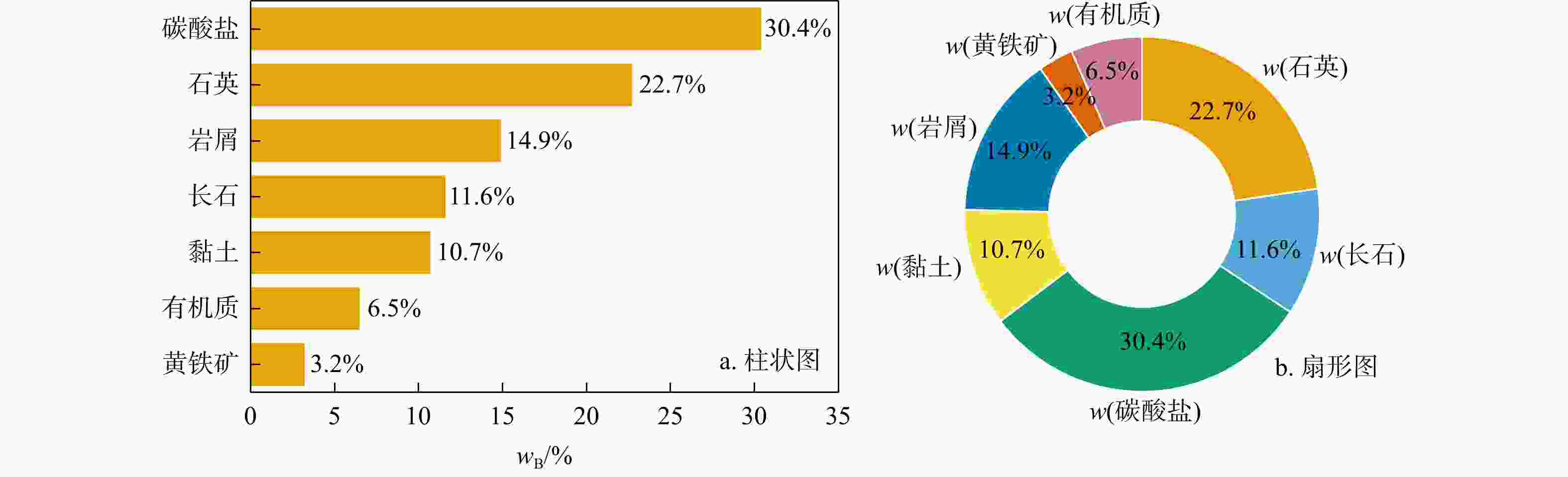
图 3 松辽盆地青山口组页岩样品XRD 矿物含量统计
Figure 3. XRD-derived mineral content statistics of shale samples from Qingshankou Formation, Songliao Basin
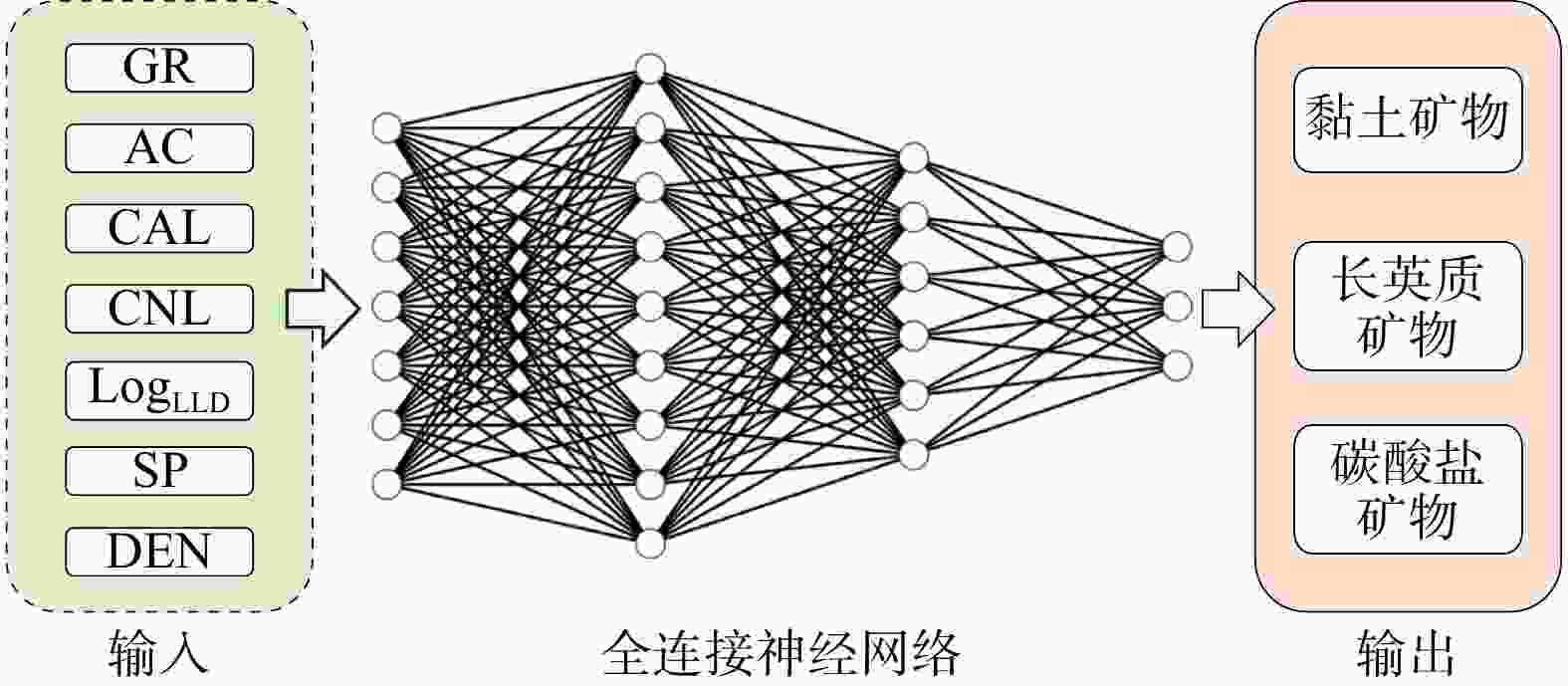
图 4 矿物含量预测网络结构示意图
GR为自然伽马;AC为声波时差;CAL为井径;CNL为补偿中子;logLLD为深侧向电阻率对数;SP为自然电位;DEN为密度
Figure 4. Schematic diagram of network structure for mineral content prediction
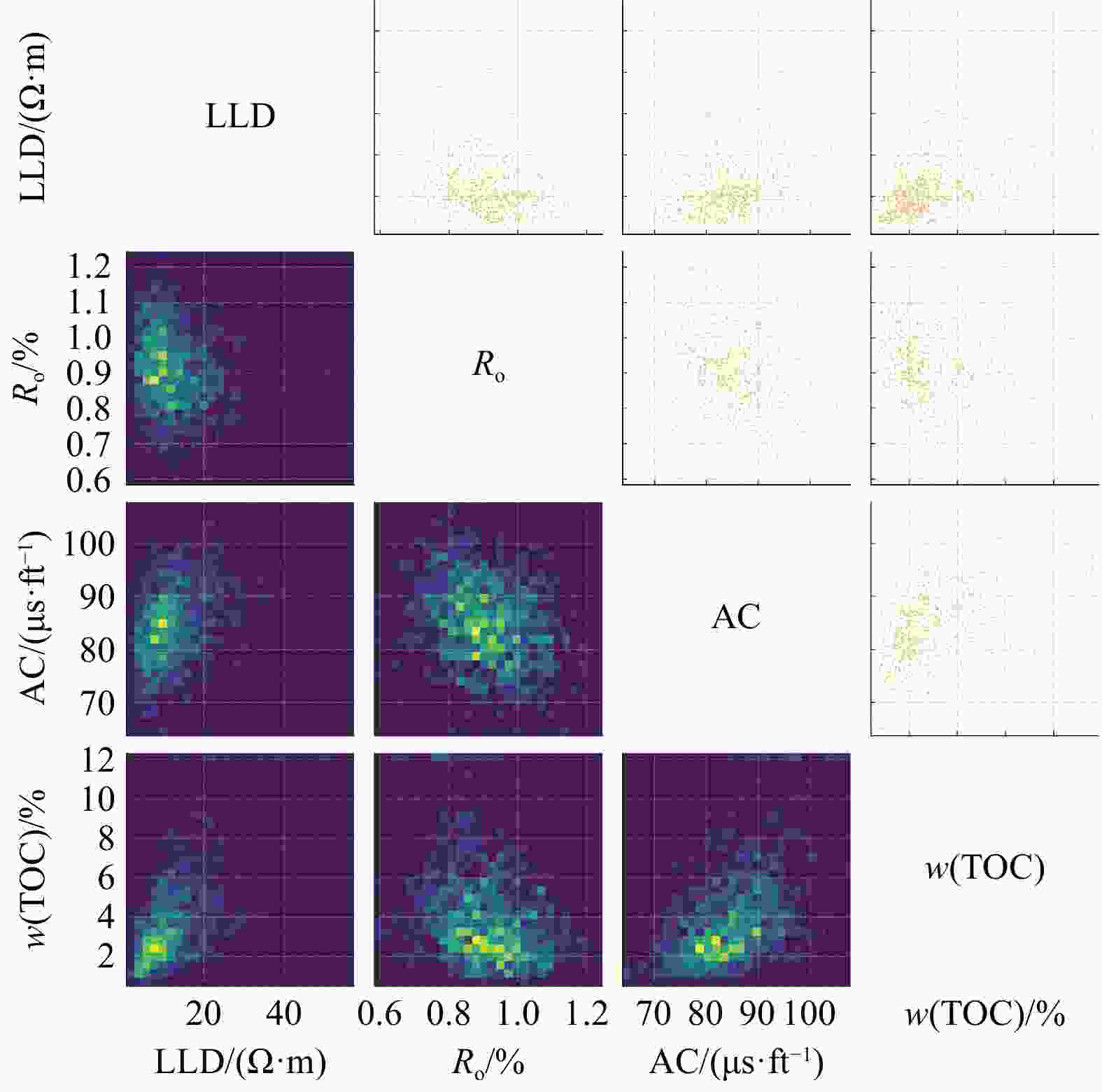
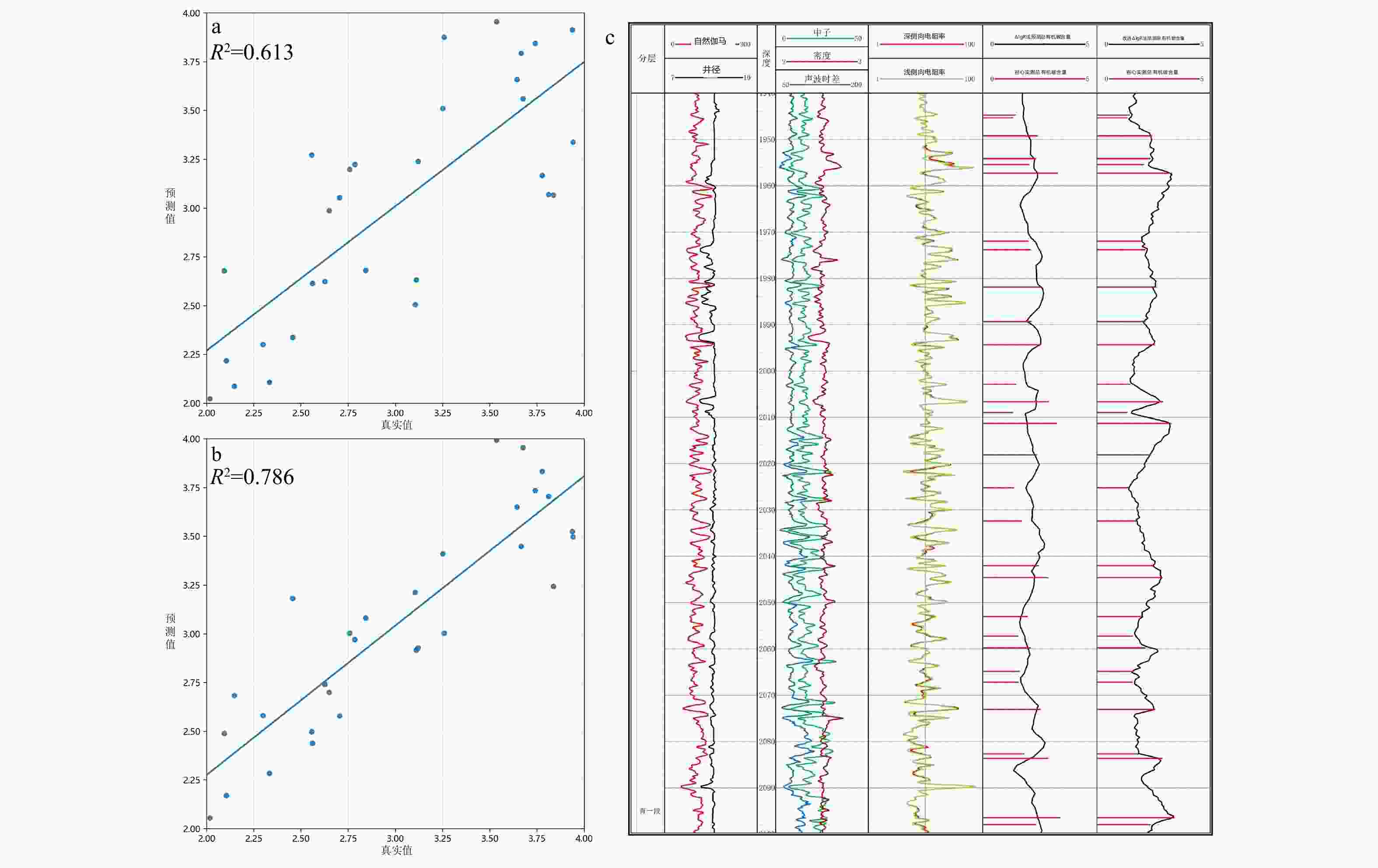
图 6 传统与改进ΔlogR法 w(TOC)测井解释效果对比(R2为决定系数,下同)
Figure 6. Comparison of w(TOC) logging interpretation results between conventional and improved ΔlogR methods
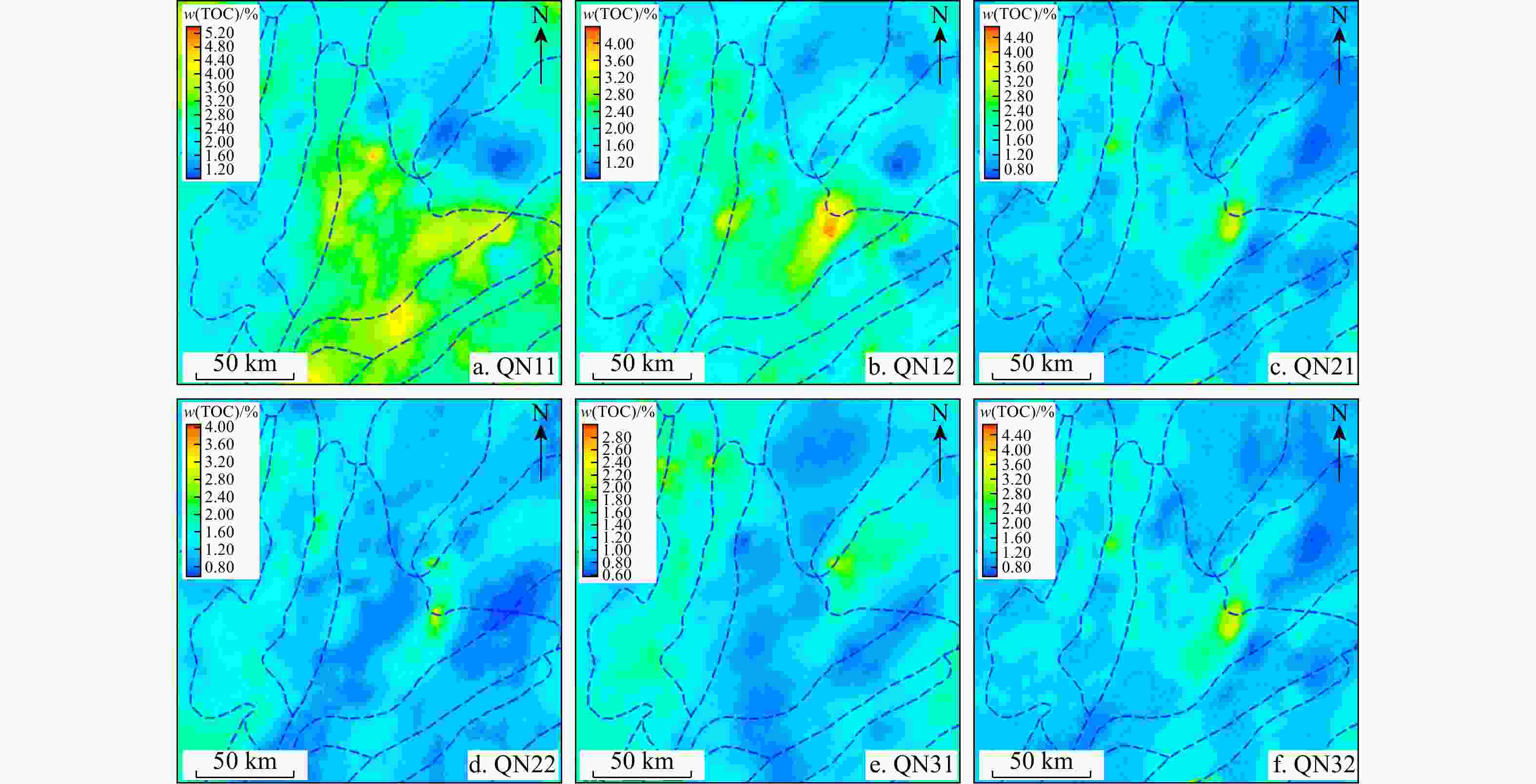
图 7 青山口组各小层w(TOC)含量平面分布
QN11. 青一段 1 小层;QN12. 青一段 2 小层;QN21. 青二段 1 小层;QN22. 青二段 2 小层;QN31. 青三段 1 小层;QN32. 青三段 2 小层;下同
Figure 7. Plane distribution of w(TOC) content for each sub-layer of Qingshankou Formation
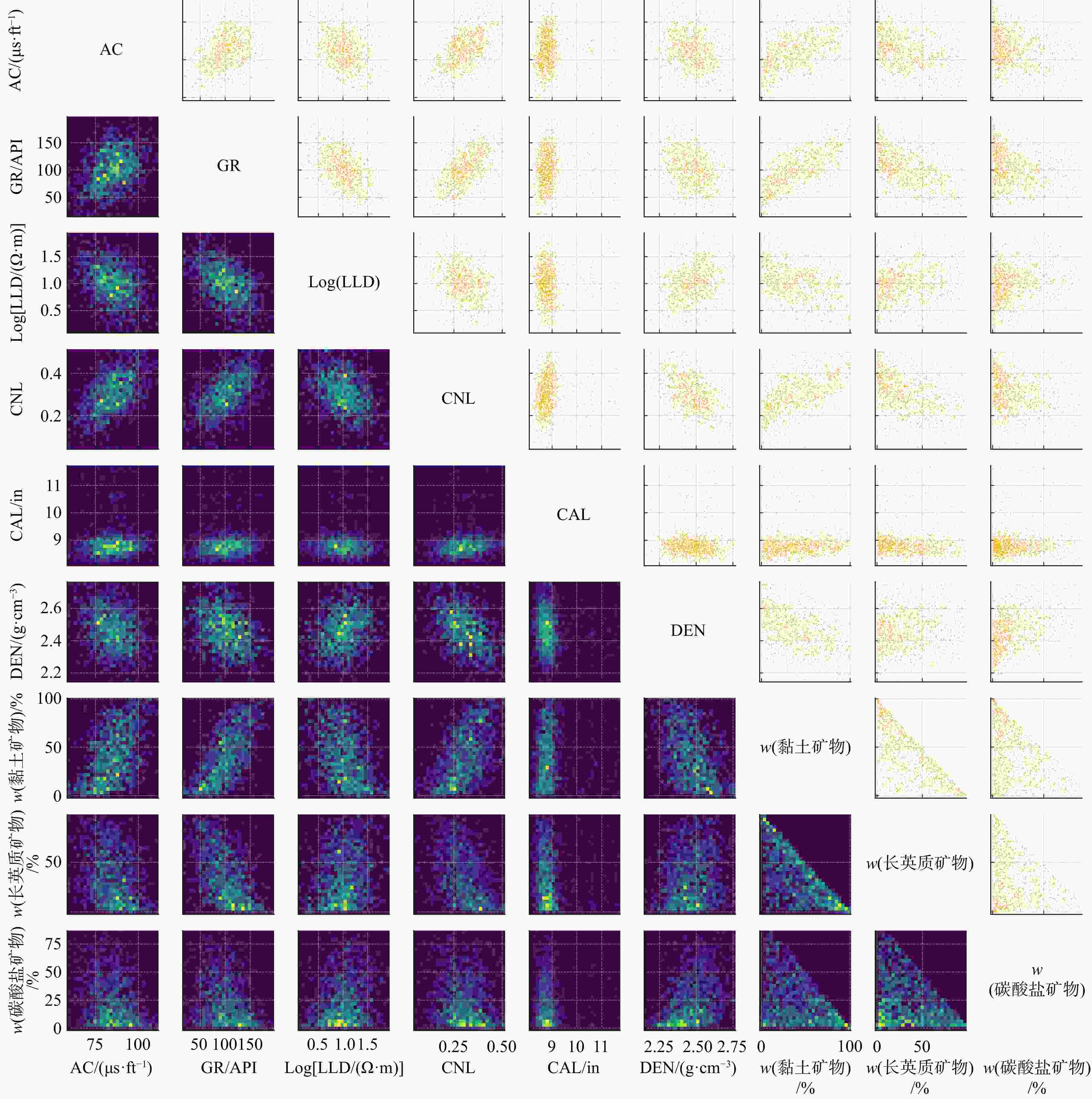
图 8 AC、GR、logLLD、CNL、CAL、DEN 测井参数与 XRD 实测矿物含量的两两关系矩阵
Figure 8. Pair-wise matrix of AC, GR, logLLD, CNL, CAL, DEN logging data versus XRD-measured mineral content
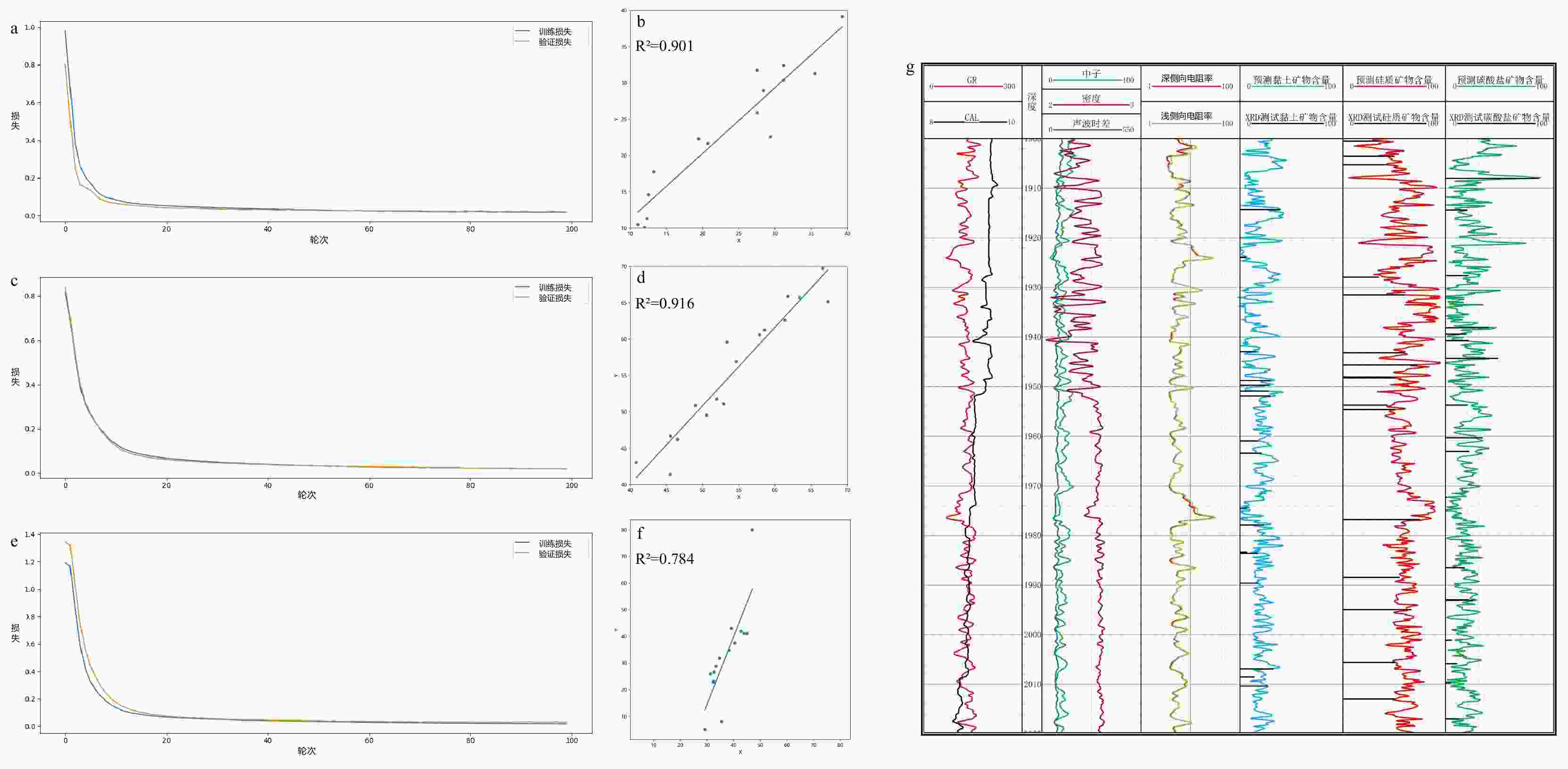
图 9 FCNN 矿物预测模型训练效果(a~f)及盲井矿物含量预测井柱(g)
Figure 9. Training performance of FCNN mineral prediction model (a-f) and well column prediction of mineral contents for blind well (g)
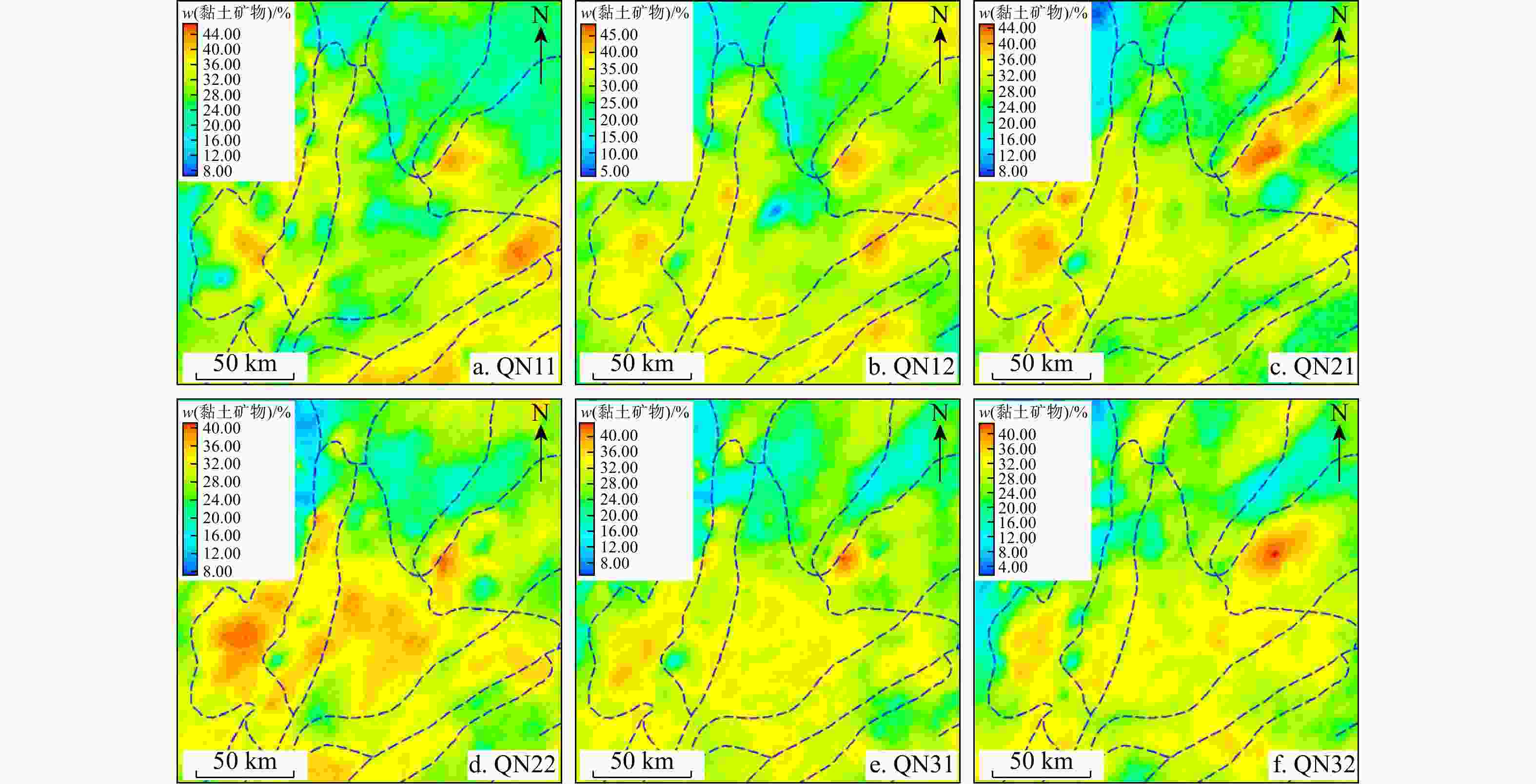
图 10 青山口组各小层黏土矿物含量平面分布
Figure 10. Plane distribution of clay mineral content for each sub-layer of Qingshankou Formation
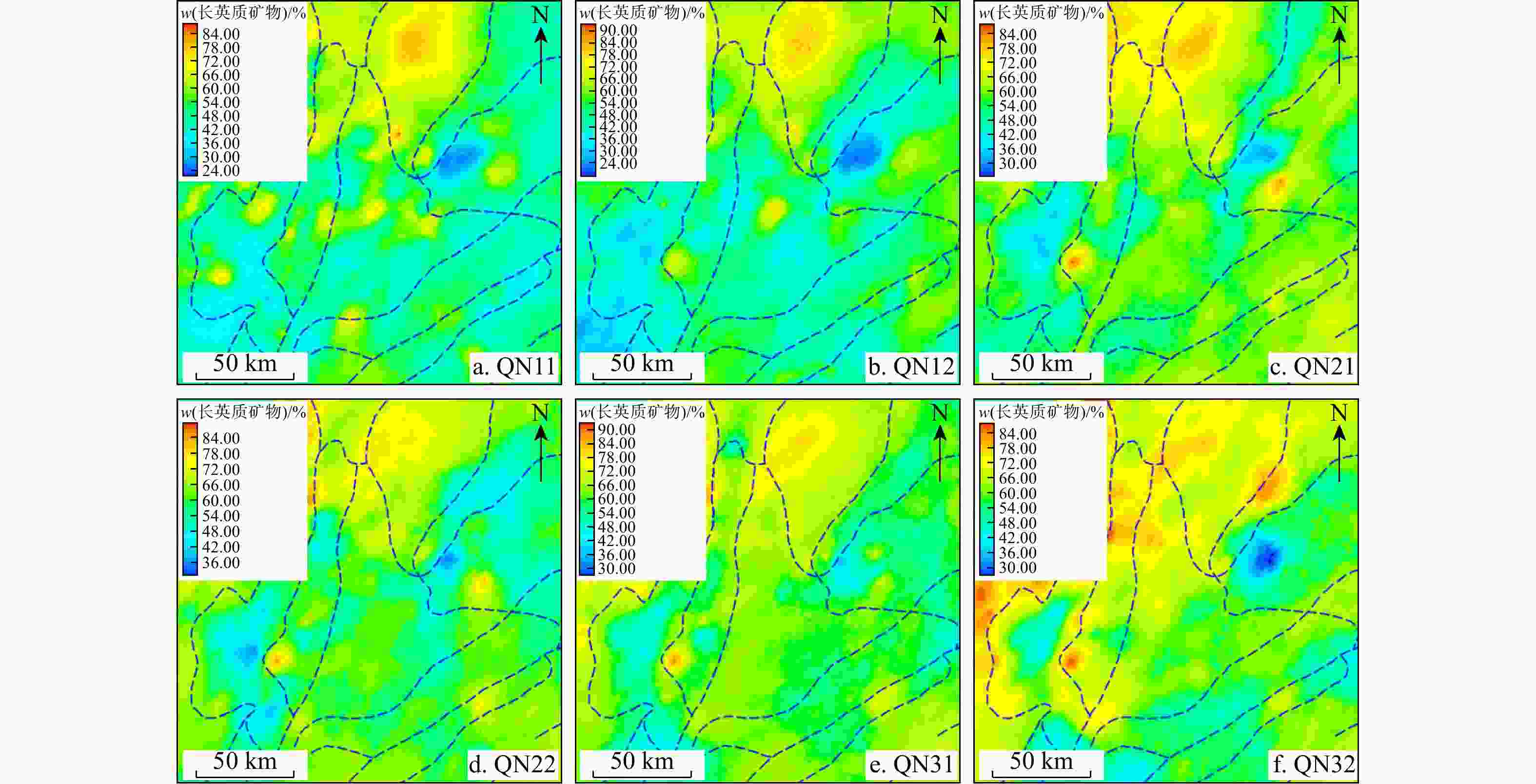
图 11 青山口组各小层长英质矿物含量平面分布
Figure 11. Plane distribution of felsic mineral content for each sub-layer of Qingshankou Formation
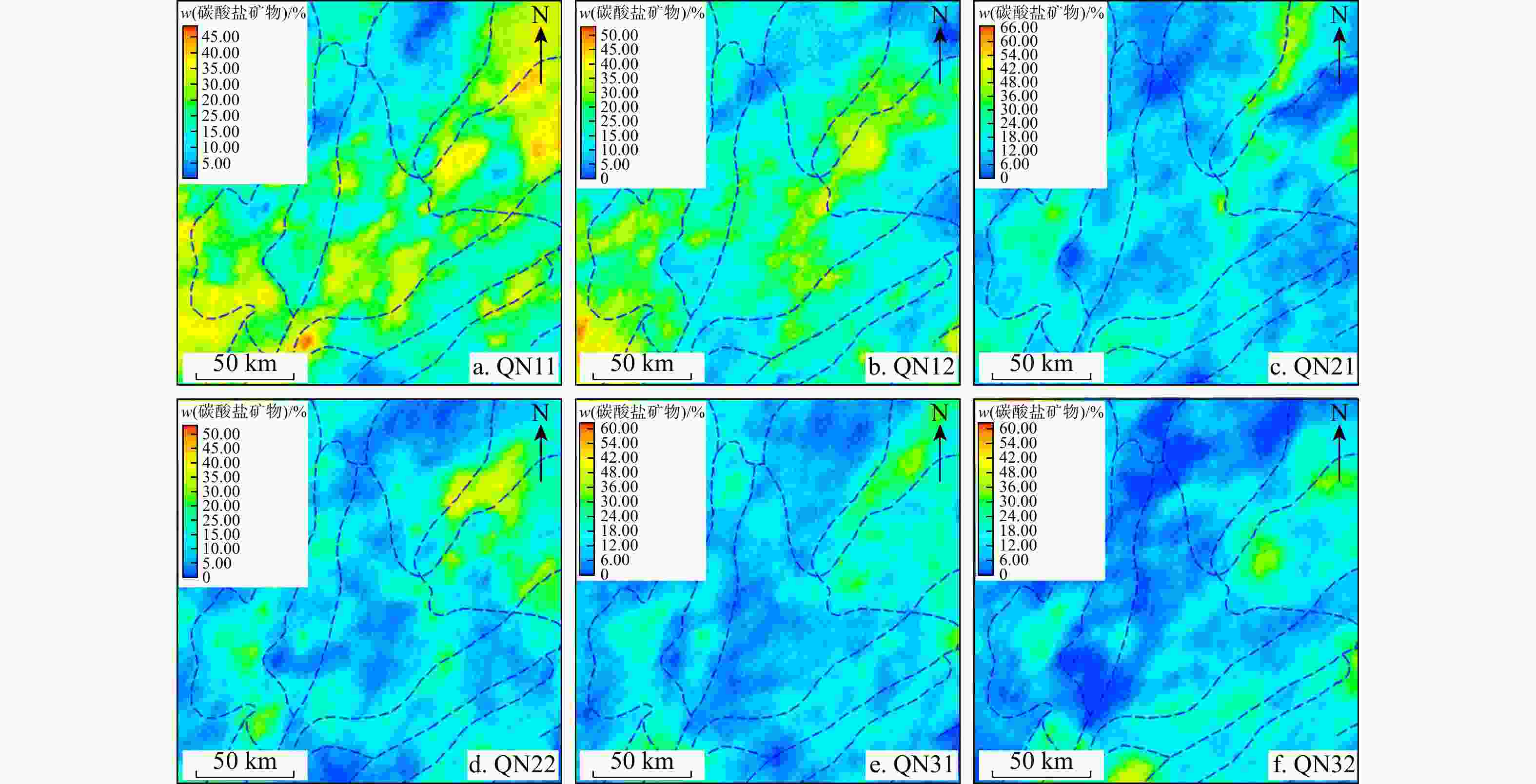
图 12 青山口组各小层碳酸盐矿物含量平面分布
Figure 12. Plane distribution of carbonate mineral content for each sub-layer of Qingshankou Formation
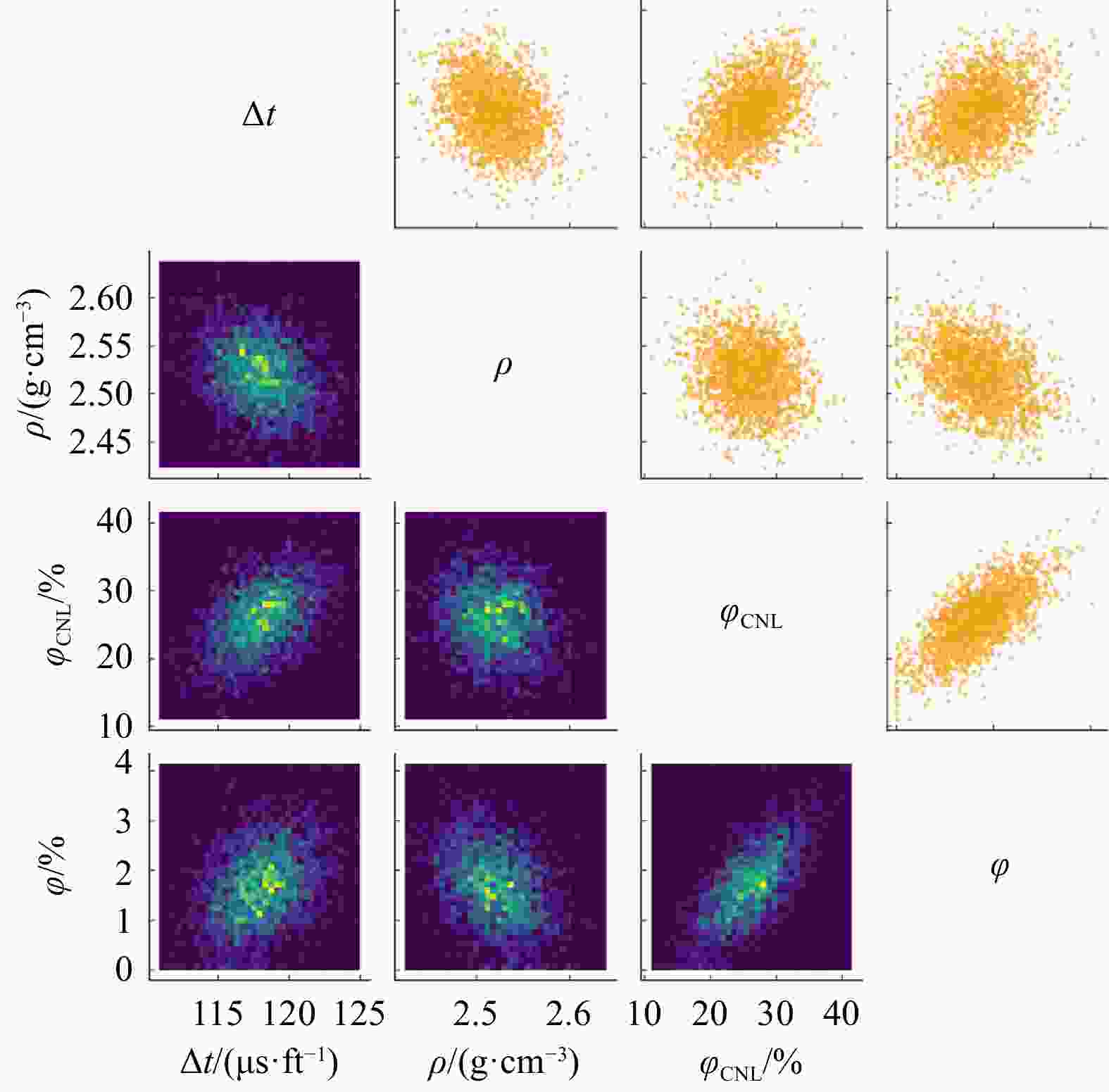
图 13 声波时差Δt、密度$ \rho $和中子孔隙度$ \varphi $CNL测井数据和实测孔隙度$ \varphi $的两两关系矩阵
Figure 13. Pair-wise correlation matrix of acoustic travel time Δt, density $ \rho $, and compensated neutron porosity $ \varphi $CNL logging data versus measured porosity $ \varphi $
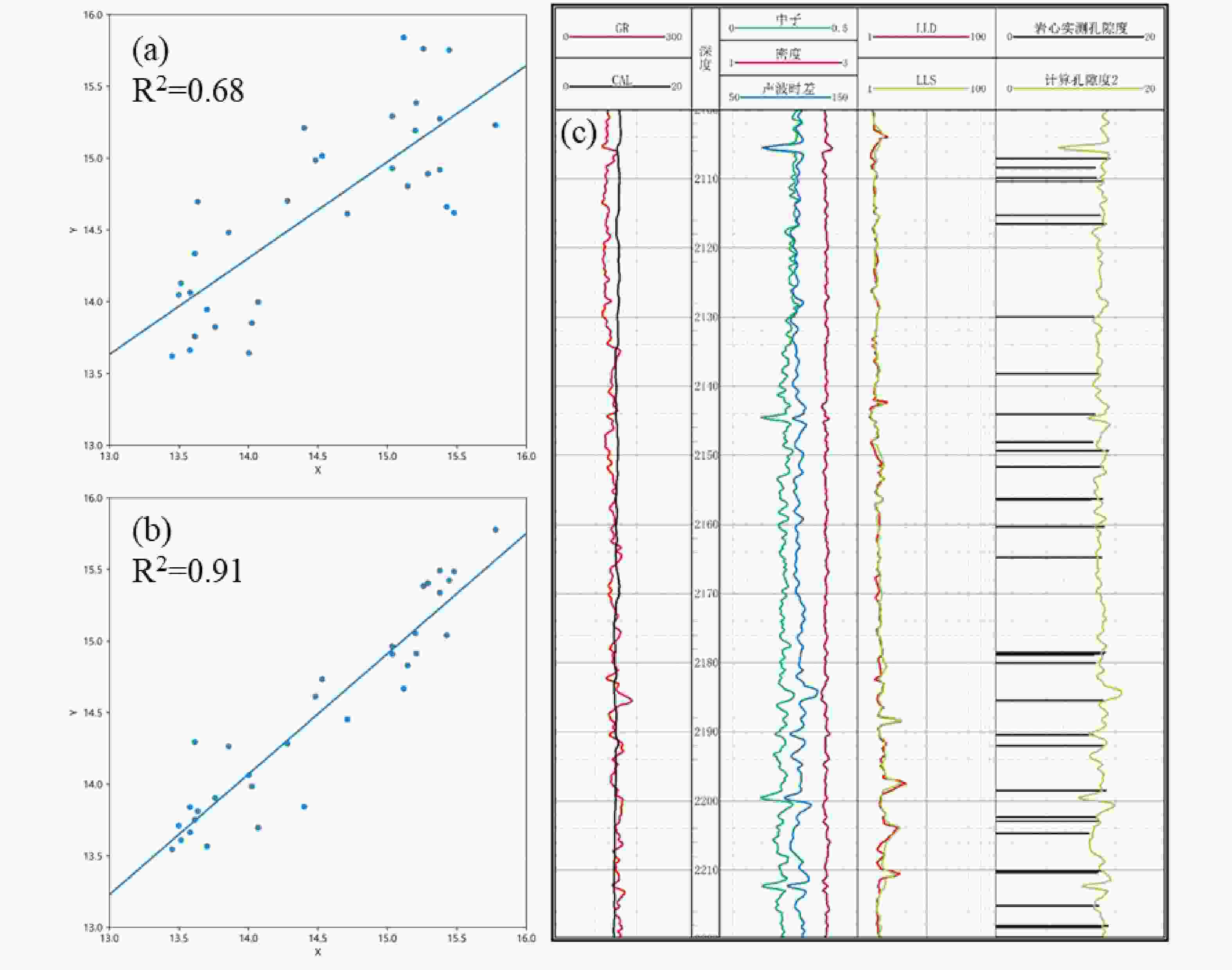
图 14 模型改进前后预测效果对比(a, b)及盲井孔隙度预测井柱图(c)
Figure 14. Comparison of prediction performance before and after model improvement (a, b) and well column diagram of predicted porosity for blind well (c)
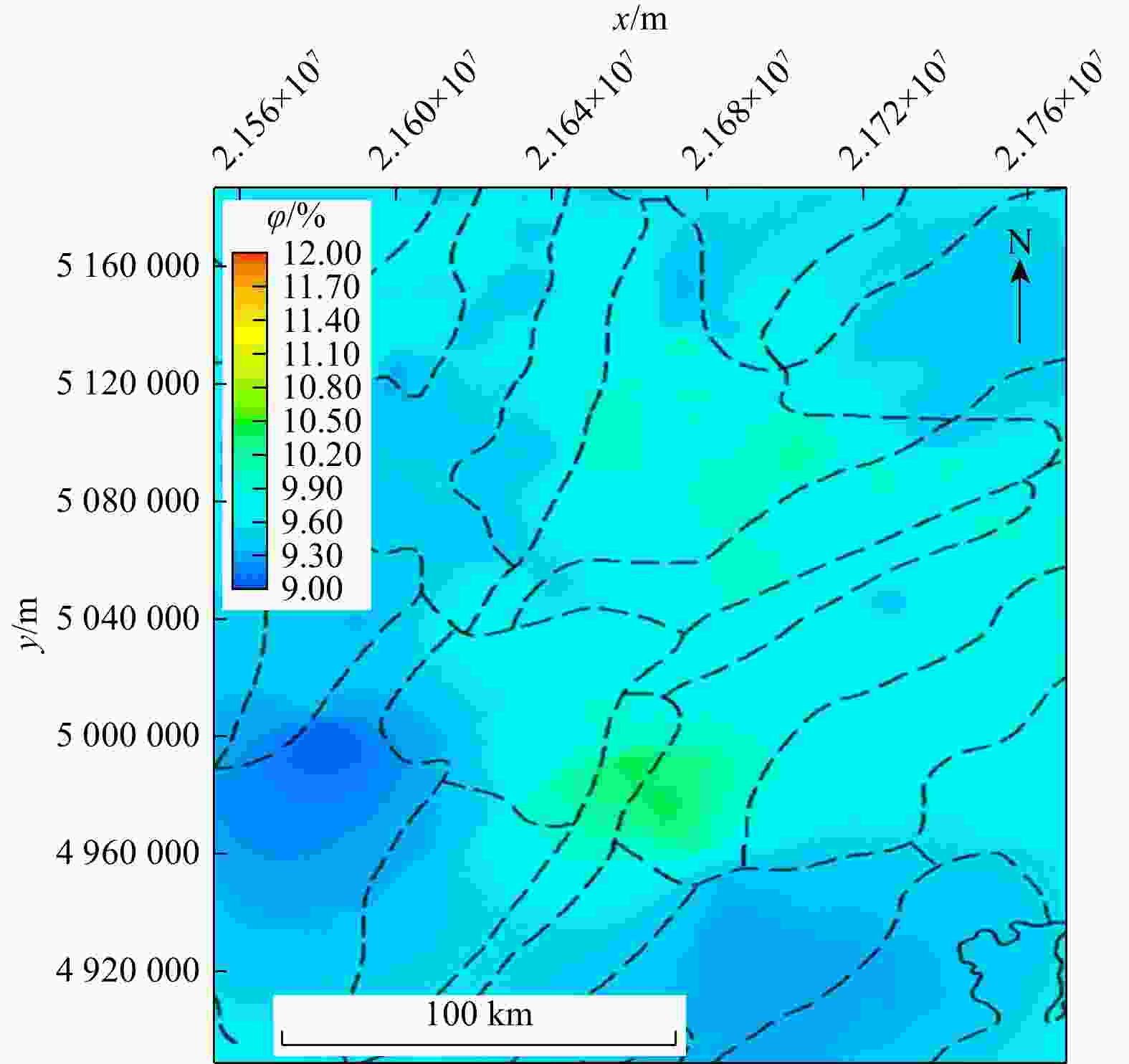
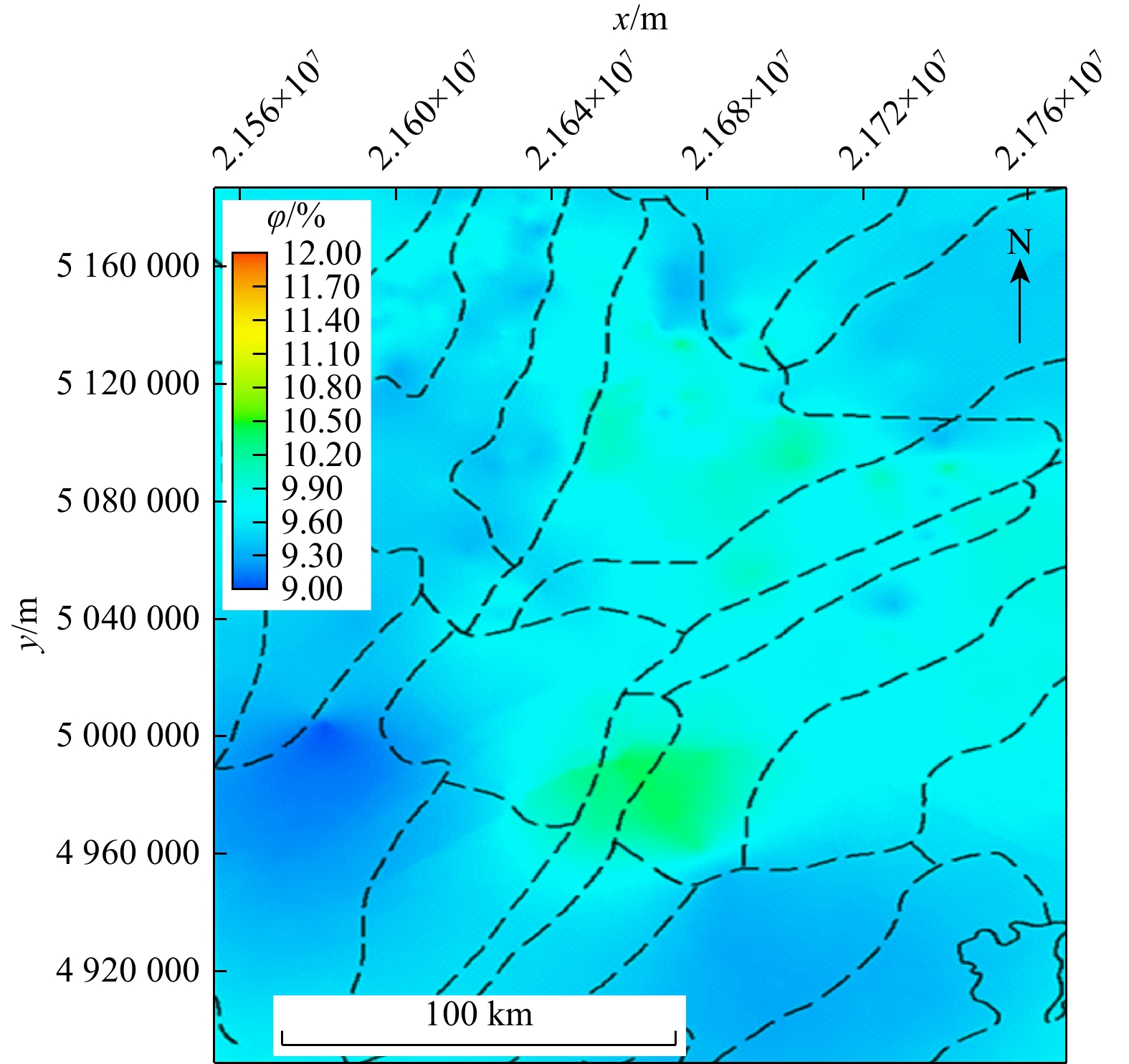
图 15 研究区页岩总孔隙度平面分布图
Figure 15. Plane distribution map of total porosity for shale in study area
表 1 研究区数据资料统计
Table 1. Data statistics of study area
数据类型 数量 岩心数据 X 射线衍射(XRD) 324块 总有机碳质量分数w(TOC) 1286 块镜质体反射率Ro 861块 测井数据 自然电位SP 1023 口井自然伽马GR 1026 口井声波时差AC 1026 口井补偿中子CNL 628口井 补偿密度DEN 1024 口井深侧向电阻率LLD 1021 口井 下载: 导出CSV
表 2 改进的ΔlogR法中使用的参数
Table 2. Parameters used in improved ΔlogR method
地层 基线电阻率/(Ω·m) 基线声波时差/(μs·ft−1) 优化权重系数D 青一段 4.5 80 0.42 青二段 6.0 76 0.47 青三段 7.2 85 0.51
下载: 导出CSV
-
[1] 林铁锋, 王瑞, 张金友, 等. 松辽盆地古龙页岩油富集规律及有利区分布[J]. 大庆石油地质与开发, 2024, 43(3): 88-98. doi: 10.19597/J.ISSN.1000-3754.202402003LIN T F, WANG R, ZHANG J Y, et al. Enrichment law and favorable areas distribution of Gulong shale oil in Songliao Basin[J]. Petroleum Geology & Oilfield Development in Daqing, 2024, 43(3): 88-98. (in Chinese with English abstract) doi: 10.19597/J.ISSN.1000-3754.202402003 [2] 黄建红, 蒋威, 谭先锋, 等. 柴达木盆地西部干柴沟区块下干柴沟组上段页岩油储层特征及勘探潜力[J]. 地质科技通报, 2024, 43(4): 141-153. doi: 10.19509/j.cnki.dzkq.tb20230493HUANG J H, JIANG W, TAN X F, et al. Characteristics and exploration potential of shale oil reservoir in the Upper Member of the Xiaganchaigou Formation in the Ganchaigou area, western Qaidam Basin[J]. Bulletin of Geological Science and Technology, 2024, 43(4): 141-153. (in Chinese with English abstract) doi: 10.19509/j.cnki.dzkq.tb20230493 [3] 邹才能, 董大忠, 熊伟, 等. 中国页岩气新区带、新层系和新类型勘探进展、挑战及对策[J]. 石油与天然气地质, 2024, 45(2): 309-326. doi: 10.11743/ogg20240201ZOU C N, DONG D Z, XIONG W, et al. Advances, challenges, and countermeasures in shale gas exploration of underexplored plays, sequences and new types in China[J]. Oil & Gas Geology, 2024, 45(2): 309-326. (in Chinese with English abstract) doi: 10.11743/ogg20240201 [4] HANDHAL A M, AL-ABADI A M, CHAFEET H E, et al. Prediction of total organic carbon at Rumaila oil field, southern Iraq using conventional well logs and machine learning algorithms[J]. Marine and Petroleum Geology, 2020, 116: 104347. doi: 10.1016/j.marpetgeo.2020.104347 [5] 李宁, 冯周, 武宏亮, 等. 中国陆相页岩油测井评价技术方法新进展[J]. 石油学报, 2023, 44(1): 28-44.LI N, FENG Z, WU H L, et al. New advances in methods and technologies for well logging evaluation of continental shale oil in China[J]. Acta Petrolei Sinica, 2023, 44(1): 28-44. (in Chinese with English abstract) [6] 杨智, 唐振兴, 李国会, 等. 陆相页岩层系石油富集区带优选、甜点区段评价与关键技术应用[J]. 地质学报, 2021, 95(8): 2257-2272. doi: 10.3969/j.issn.0001-5717.2021.08.001YANG Z, TANG Z X, LI G H, et al. Optimization of enrichmentplays, evaluation of sweet area & section and application of key technologies for the continental shale strata oil in China[J]. Acta Geologica Sinica, 2021, 95(8): 2257-2272. (in Chinese with English abstract) doi: 10.3969/j.issn.0001-5717.2021.08.001 [7] 周立国. 陆东凹陷中低成熟度页岩油储层含油性特征及 “甜点” 评价[J]. 特种油气藏, 2024, 31(4): 27-35. doi: 10.3969/j.issn.1006-6535.2024.04.004ZHOU L G. Oil-bearing characteristics and "sweet spots" evaluation of medium-low maturity shale oil reservoirs in Ludong Sag[J]. Special Oil & Gas Reservoirs, 2024, 31(4): 27-35. (in Chinese with English abstract) doi: 10.3969/j.issn.1006-6535.2024.04.004 [8] 柳波, 石佳欣, 付晓飞, 等. 陆相泥页岩层系岩相特征与页岩油富集条件: 以松辽盆地古龙凹陷白垩系青山口组一段富有机质泥页岩为例[J]. 石油勘探与开发, 2018, 45(5): 828-838. doi: 10.11698/PED.2018.05.08LIU B, SHI J X, FU X F, et al. Petrological characteristics and shale oil enrichment of lacustrine fine-grained sedimentary system: A case study of organic-rich shale in First Member of Cretaceous Qingshankou Formation in Gulong Sag, Songliao Basin, NE China[J]. Petroleum Exploration and Development, 2018, 45(5): 828-838. (in Chinese with English abstract) doi: 10.11698/PED.2018.05.08 [9] 李志明, 刘雅慧, 何晋译, 等. 陆相页岩油“甜点”段评价关键参数界限探讨[J]. 石油与天然气地质, 2023, 44(6): 1453-1467. doi: 10.11743/ogg20230610LI Z M, LIU Y H, HE J Y, et al. Limits of critical parameters for sweet-spot interval evaluation of lacustrine shale oil[J]. Oil & Gas Geology, 2023, 44(6): 1453-1467. (in Chinese with English abstract) doi: 10.11743/ogg20230610 [10] WANG H J, WU W, CHEN T, et al. An improved neural network for TOC, S1 and S2 estimation based on conventional well logs[J]. Journal of Petroleum Science and Engineering, 2019, 176: 664-678. doi: 10.1016/j.petrol.2019.01.096 [11] 周纯润, 王亮, 苏树特, 等. 基于ΔLogR-GR法的有机碳含量测井评价: 以川东南地区茅口组一段为例[J]. 天然气地球科学, 2024, 35(3): 542-552.ZHOU C R, WANG L, SU S T, et al. The logging evaluation of organic carbon content based on ΔLogR-GR method: Case study of the First Member of Maokou Formation in the southeastern Sichuan Basin[J]. Natural Gas Geoscience, 2024, 35(3): 542-552. (in Chinese with English abstract) [12] KUANG L C, LIU H, REN Y L, et al. Application and development trend of artificial intelligence in petroleum exploration and development[J]. Petroleum Exploration and Development, 2021, 48(1): 1-14. doi: 10.1016/S1876-3804(21)60001-0 [13] TUZINGILA R M, KONG L Y, KOY KASONGO R. A review on experimental techniques and their applications in the effects of mineral content on geomechanical properties of reservoir shale rock[J]. Rock Mechanics Bulletin, 2024, 3(2): 100110. doi: 10.1016/j.rockmb.2024.100110 [14] CHEN W, YANG L Q, ZHA B, et al. Deep learning reservoir porosity prediction based on multilayer long short-term memory network[J]. Geophysics, 2020, 85(4): WA213-WA225. doi: 10.1190/geo2019-0261.1 [15] DU K, SUN Y, ZHOU J, et al. Mineral composition and grain size effects on the fracture and acoustic emission (AE) characteristics of rocks under compressive and tensile stress[J]. Rock Mechanics and Rock Engineering, 2022, 55(10): 6445-6474. doi: 10.1007/s00603-022-02980-y [16] LIU Y, ZHU R H, ZHAI S, et al. Lithofacies identification of shale formation based on mineral content regression using LightGBM algorithm: A case study in the Luzhou block, South Sichuan Basin, China[J]. Energy Science & Engineering, 2023, 11(11): 4256-4272. doi: 10.1002/ese3.1579 [17] TOURTELOT H A. Minor-element composition and organic carbon content of marine and nonmarine shales of Late Cretaceous age in the western interior of the United States[J]. Geochimica et Cosmochimica Acta, 1964, 28(10/11): 1579-1604. doi: 10.1016/0016-7037(64)90008-0 [18] LEE J, LUMLEY D E. Predicting shale mineralogical brittleness index from seismic and elastic property logs using interpretable deep learning[J]. Journal of Petroleum Science and Engineering, 2023, 220: 111231. doi: 10.1016/j.petrol.2022.111231 [19] 杜先利, 王泓博, 赵容生, 等. 松辽盆地南部大情字井区青山口组地热水化学特征及成因模式[J]. 地质科技通报, 2024, 43(3): 22-35. doi: 10.19509/j.cnki.dzkq.tb20230605DU X L, WANG H B, ZHAO R S, et al. Geothermal chemical characteristics and genetic model of the Qingshankou Formation in the Daqingzijing area, southern Songliao Basin[J]. Bulletin of Geological Science and Technology, 2024, 43(3): 22-35. (in Chinese with English abstract) doi: 10.19509/j.cnki.dzkq.tb20230605 [20] 张翘然, 肖红平, 饶松, 等. 松辽盆地现今地温场特征及控制因素[J]. 地质科技通报, 2023, 42(5): 191-204. doi: 10.19509/j.cnki.dzkq.tb20230058ZHANG Q R, XIAO H P, RAO S, et al. Characteristics and controlling factors of the present geothermal field in the Songliao Basin[J]. Bulletin of Geological Science and Technology, 2023, 42(5): 191-204. (in Chinese with English abstract) doi: 10.19509/j.cnki.dzkq.tb20230058 [21] HOU H S, WANG C S, ZHANG J D, et al. Deep continental scientific drilling engineering project in Songliao Basin: Progress in earth science research[J]. China Geology, 2018, 1(2): 173-186. [22] HU D Y, ZOU C C, CHENG P, et al. Petrophysical characteristics of Huoshiling Formation from CCSD SK-2 in the Songliao Basin of Northeast China[J]. Geology in China, 2019, 46(5): 1161-1173. [23] LIU C L, WANG Z L, GUO Z Q, et al. Enrichment and distribution of shale oil in the Cretaceous Qingshankou Formation, Songliao Basin, Northeast China[J]. Marine and Petroleum Geology, 2017, 86: 751-770. doi: 10.1016/j.marpetgeo.2017.06.034 [24] ZHU X M, ZENG H L, LI S L, et al. Sedimentary characteristics and seismic geomorphologic responses of a shallow-water delta in the Qingshankou Formation from the Songliao Basin, China[J]. Marine and Petroleum Geology, 2017, 79: 131-148. doi: 10.1016/j.marpetgeo.2016.09.018 [25] JIA J L, LIU Z J, BECHTEL A, et al. Tectonic and climate control of oil shale deposition in the Upper Cretaceous Qingshankou Formation (Songliao Basin, NE China)[J]. International Journal of Earth Sciences, 2013, 102(6): 1717-1734. doi: 10.1007/s00531-013-0903-7 [26] LIU B, WANG H, FU X, et al. Lithofacies and depositional setting of a highly prospective lacustrine shale oil succession from the Upper Cretaceous Qingshankou Formation in the Gulong Sag, northern Songliao Basin, Northeast China[J]. AAPG Bulletin, 2019, 103(2): 405-432. doi: 10.1306/08031817416 [27] BAI J, XU X Y, CHEN S, et al. Sedimentary characteristics and paleo-environment restoration of the First Member of Qingshankou Formation in Qian'an area, Changling Sag, Songliao Basin: A case study of Well Jiyeyou 1[J]. Geology in China, 2020, 47(1): 220-235. [28] LIU Z J, WANG D P, LIU L, et al. Sedimentary characteristics of the Cretaceous in the Songliao Basin[J]. Acta Geologica Sinica (English Edition), 1993, 6(2): 167-180. doi: 10.1111/j.1755-6724.1993.mp6002005.x [29] 白昕, 陈睿倩, 商斐, 等. 松辽盆地白垩系青山口组页岩沉积环境及其含油性特征[J]. 石油实验地质, 2024, 46(5): 1063-1074. doi: 10.11781/sysydz2024051063BAI X, CHEN R Q, SHANG F, et al. Sedimentary environment and oil-bearing characteristics of shale in Cretaceous Qingshankou Formation in Songliao Basin[J]. Petroleum Geology & Experiment, 2024, 46(5): 1063-1074. (in Chinese with English abstract) doi: 10.11781/sysydz2024051063 [30] ZHANG P L, MISCH D, MENG Q T, et al. Lateral changes of organic matter preservation in the lacustrine Qingshankou Formation (Cretaceous Songliao Basin, NE China): Evidence for basin segmentation[J]. International Journal of Coal Geology, 2022, 254: 103984. doi: 10.1016/j.coal.2022.103984 [31] LIU B, SUN J H, ZHANG Y Q, et al. Reservoir space and enrichment model of shale oil in the First Member of Cretaceous Qingshankou Formation in the Changling Sag, southern Songliao Basin, NE China[J]. Petroleum Exploration and Development, 2021, 48(3): 608-624. doi: 10.1016/S1876-3804(21)60049-6 [32] LIU B, ZHAO X Q, FU X F, et al. Petrophysical characteristics and log identification of lacustrine shale lithofacies: A case study of the First Member of Qingshankou Formation in the Songliao Basin, Northeast China[J]. Interpretation, 2020, 8(3): SL45-SL57. doi: 10.1190/INT-2019-0254.1 [33] SCHMOKER J W. Determination of organic-matter content of Appalachian Devonian shales from gamma-ray logs[J]. AAPG Bulletin, 1981, 65(7): 1285-1298. doi: 10.1306/03B5949A-16D1-11D7-8645000102C1865D [34] PASSEY Q R, CREANEY S, KULLA J B, et al. A practical model for organic richness from porosity and resistivity logs[J]. AAPG Bulletin, 1990, 74(12): 1777-1794. doi: 10.1306/0C9B25C9-1710-11D7-8645000102C1865D [35] CRAIN E R. Unicorns in the garden of good and evil: Part 1. Total organic carbon (TOC)[J]. CSPG Reservoir, 2010(10): 31-34. [36] ZHU L Q, ZHANG C M, ZHANG Z S, et al. An improved method for evaluating the TOC content of a shale formation using the dual-difference ΔlogR method[J]. Marine and Petroleum Geology, 2019, 102: 800-816. doi: 10.1016/j.marpetgeo.2019.01.031 [37] ZENG B, LI M, ZHU J, et al. Selective methods of TOC content estimation for organic-rich interbedded mudstone source rocks[J]. Journal of Natural Gas Science and Engineering, 2021, 93: 104064. doi: 10.1016/j.jngse.2021.104064 [38] LEWENSTEIN M, NOWAK A. Fully connected neural networks with self-control of noise levels[J]. Physical Review Letters, 1989, 62(2): 225-228. doi: 10.1103/PhysRevLett.62.225 [39] KIM D, CHOI J, KIM D, et al. Predicting mineralogy by integrating core and well log data using a deep neural network[J]. Journal of Petroleum Science and Engineering, 2020, 195: 107838. doi: 10.1016/j.petrol.2020.107838 [40] KOHLER M, LANGER S. On the rate of convergence of fully connected deep neural network regression estimates[J]. The Annals of Statistics, 2021, 49(4): 2231-2249. doi: 10.1214/20-aos2034 -

 下载:
下载:



 点击查看大图

计量
- 文章访问数: 363
- PDF下载量: 47
- 被引次数: 0