投审稿入口
投审稿入口


Fluid evolution and hydrocarbon accumulation mechanisms of Cambrian-Sinian source-reservoir system in Well Qitan-1, Tarim Basin
-
摘要:目的
深层−超深层油气具有漫长的流体演化过程与复杂的成藏机理。塔里木盆地是我国典型的深层−超深层油气勘探领域,但仅有少数钻井钻遇下古生界震旦−寒武系烃源岩与储集层,缺乏针对震旦−寒武系油气 “从源到储” 全过程的流体演化同位素年代学约束,制约了对塔里木盆地万米深层油气成藏机理的深入认识。
方法以旗探 1 井寒武系玉尔吐斯组、震旦系奇格布拉克组烃源岩-储层岩心内孔缝洞充填脉体为研究对象,厘定多期脉体的流体来源与成因;综合利用流体包裹体分析、碳酸盐矿物 U-Pb 同位素定年以及固体沥青 Re-Os 同位素定年技术,揭示深层油气动态成藏演化过程。
结果塔北地区寒武系玉尔吐斯组烃源岩发育两期裂缝方解石脉,稀土元素与锶同位素特征指示两期脉均为热液成因,流体来源于深部富锶流体体系;震旦系奇格布拉克组储层发育两期白云石孔洞充填脉,地球化学特征指示两期脉沉淀流体属于地层成岩流体,其中第 Ⅱ 期白云石脉锶同位素组成指示流体混入寒武纪同期海水组分。烃源岩第 Ⅰ 期方解石脉(466±5 Ma)与储层第 Ⅰ 期白云石脉(460±10 Ma)矿物形成于中奥陶世,该套早期脉体后期被油气充注改造并捕获油包裹体,证实原油于二叠纪(海西期)发生初次充注,源-储匹配关系良好。烃源岩第 Ⅱ 期方解石脉(263±69 Ma)与储层第 Ⅱ 期白云石脉(55±15 Ma)均发育大量油包裹体,结合埋藏史模拟,确定第二期大规模油气充注发生于中新世,生烃与成藏具备良好时空耦合关系。储层中晚于第 Ⅱ 期白云石脉产出大量固体残余沥青(30±14 Ma),表明震旦系古油气藏在渐新世早期发生破坏与调整改造,受控于喜马拉雅期构造抬升作用。
结论本研究开展系统同位素年代学与流体演化分析,为厘清下古生界震旦−寒武系烃源岩生烃、排烃、储层油气成藏及保存全过程提供了直接实验证据。
Abstract:ObjectiveDeep-to-ultra-deep hydrocarbon reservoirs are characterized by long-term fluid evolution histories and complex hydrocarbon accumulation mechanisms. The Tarim Basin is a typical exploration target for deep-to-ultra-deep hydrocarbons in China. However, only a small number of boreholes have penetrated the Lower Paleozoic Sinian-Cambrian source rocks and reservoirs. At present, direct isotopic chronological constraints on the complete source-to-reservoir fluid evolution and hydrocarbon charging processes remain scarce, which restricts the in-depth understanding of hydrocarbon accumulation mechanisms at depths of 10 000 m within the Tarim Basin.
MethodsThis study focused on fracture- and vug-filling vein minerals in core samples from the Cambrian Yuertusi Formation (source rock) and the Sinian Qigebulake Formation (reservoir) of Well Qitan-1 (QT-1). The fluid sources and genesis of multiple generations of veins were identified. Multiple analytical approaches were integrated, including petrographic observation of fluid inclusions, micro-in-situ U-Pb dating of carbonate veins, Re-Os isotopic dating of solid bitumen, REE-Sr isotopic geochemistry, fluid inclusion microthermometry, and basin burial-thermal-history modelling, to reconstruct the dynamic hydrocarbon accumulation sequence of deep source-reservoir systems.
ResultsTwo generations of fracture-filling calcite veins were developed in the Cambrian Yuertusi Formation source rocks of northern Tarim. REE and Sr-isotopic signatures indicated that both calcite veins were of hydrothermal origin, precipitated from deep Sr-rich fluid systems. Correspondingly, two generations of pore-filling dolomite veins occurred in the Sinian Qigebulake Formation reservoir. Geochemical proxies indicated that these dolomite veins precipitated from formation diagenetic fluids, and the Sr-isotopic compositions of the second-generation dolomite veins recorded fluid mixing with contemporaneous Cambrian seawater. The first-generation calcite vein in the source rocks (466 ± 5 Ma) and the first-generation dolomite vein in the reservoirs (460 ± 10 Ma) crystallized during the Middle Ordovician. These early-formed veins were later modified by hydrocarbon charging and trapped oil inclusions, which recorded the primary oil-charge event during the Permian (Hercynian), indicating good source-reservoir matching. Burial-thermal modelling revealed that the Yuertusi Formation source rocks reached the oil-generation threshold in the Carboniferous. Both the second-generation calcite vein in the source rocks (263 ± 69 Ma) and second-generation dolomite vein in the reservoirs (55 ± 15 Ma) contained abundant oil inclusions. Constrained by burial-history simulation, the large-scale secondary hydrocarbon charging event took place in the Miocene, showing good spatiotemporal coupling between hydrocarbon generation and accumulation. A large amount of solid residual bitumen occurring after the second-generation dolomite veins in the reservoirs yielded a Re-Os age of 30 ± 14 Ma, documenting the destruction and readjustment of Sinian paleo-hydrocarbon reservoirs in the early Oligocene driven by Himalayan tectonic uplift.
ConclusionThis study conducts systematic isotopic-chronology and fluid evolution analyses for deep source-reservoir intervals in the Tarim Basin. It provides direct experimental evidence for reconstructing the whole process of hydrocarbon generation, expulsion, accumulation, and preservation within the Lower Paleozoic Sinian-Cambrian source-reservoir system.
-
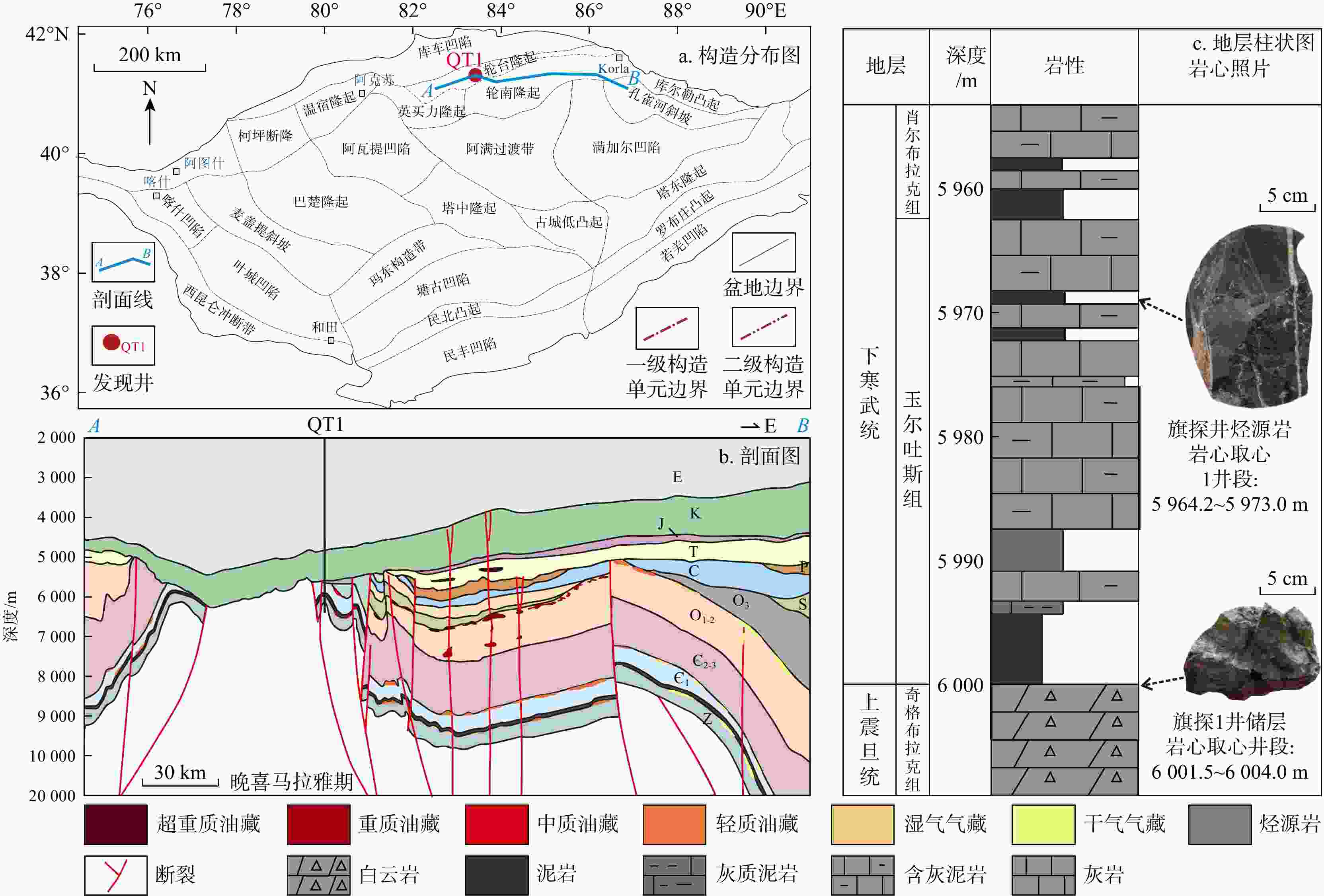
图 1 塔里木盆地旗探1井(QT1井)地质综合图
E. 古近系;K. 白垩系;J. 侏罗系;T. 三叠系;P. 二叠系;C. 石炭系;S. 志留系;O3. 上奥陶统;O1-2. 下−中奥陶统;Є2-3. 中−上寒武统;Є1. 下寒武统;Z. 震旦系;下同
Figure 1. Comprehensive geological diagram of Well QT1 in Tarim Basin
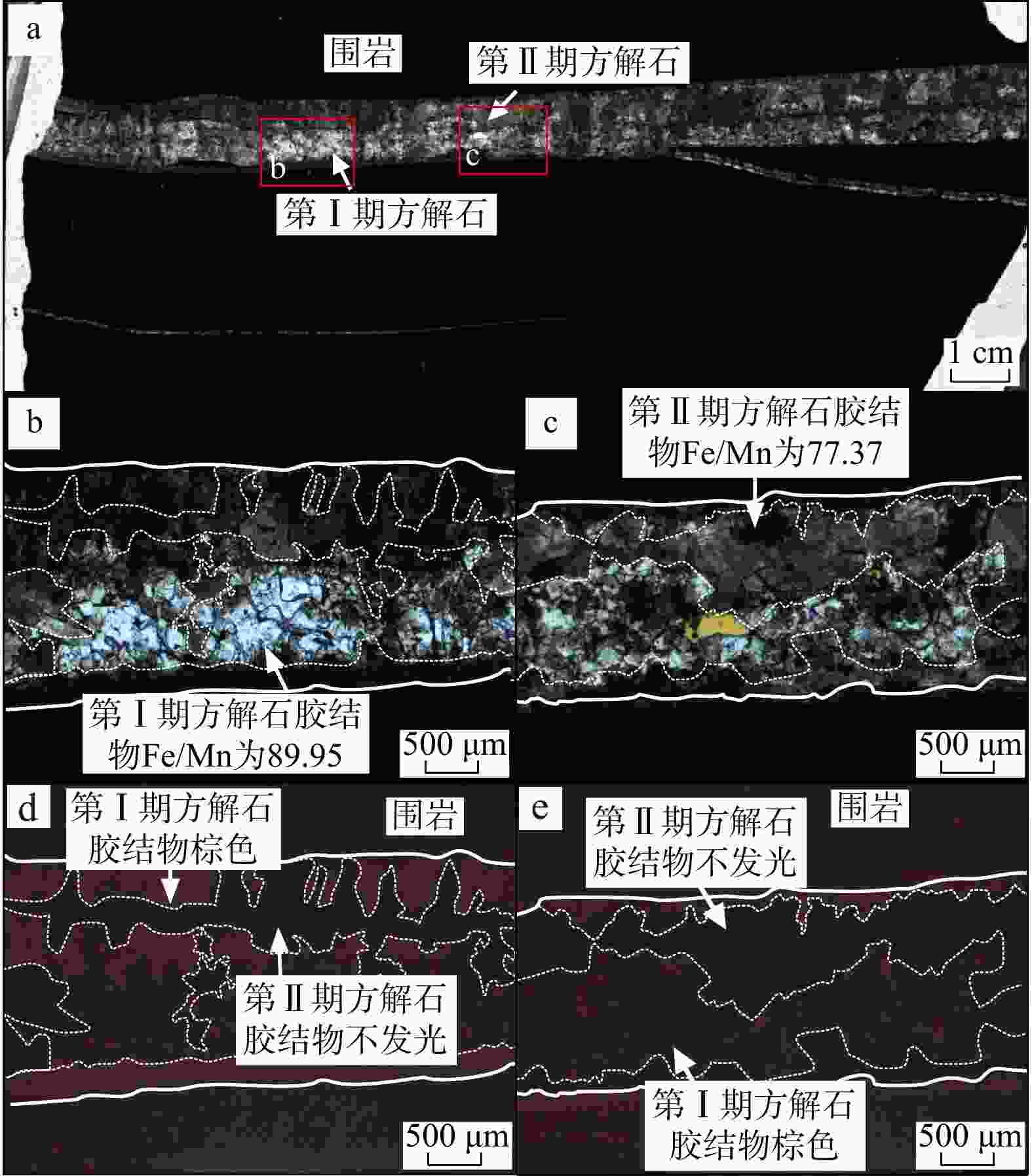
图 2 QT1井下寒武统玉尔吐斯组(Є1y)透射光显微照片和阴极发光照片
a.裂缝充填型脉体,
5968 m;b,c. 2期方解石脉透射光显微照片:第Ⅰ期方解石脉透射光下呈灰黑色,第Ⅱ期方解石脉透射光下呈灰白色,5968 m; d,e. 对应图 b,c 的阴极发光照片:第Ⅰ期方解石胶结物阴极发光为无色−暗棕色,第Ⅱ期方解石胶结物阴极发光基本不发光,5968 mFigure 2. Transmitted-light and cathodoluminescence microphotographs of Lower Cambrian Yuertusi Formation (Є1y) in Well QT1
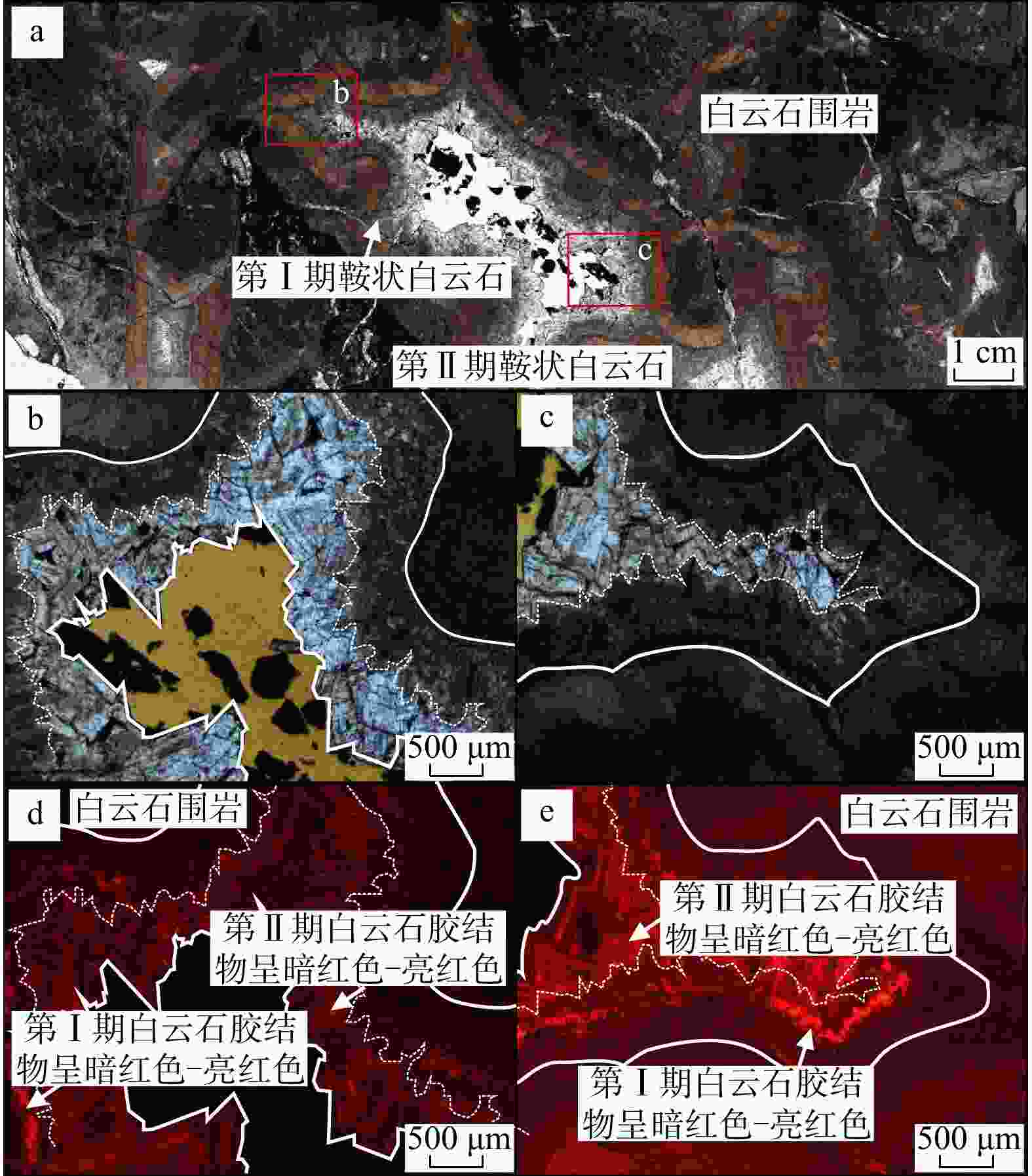
图 3 QT1井上震旦统奇格布拉克组(Z2q)透射光显微照片和阴极发光照片
a. 孔洞型脉体,
6002.5 m;b,c. 2期鞍状白云石脉透射光显微照片:第Ⅰ期鞍状白云石透射光下呈灰色,第Ⅱ期鞍状白云石透射光下呈灰白色,晶间孔隙可见固态沥青充填,6002.5 m;d,e. 对应图 b,c 的阴极发光照片:第Ⅰ期白云石胶结物阴极发光为暗红色−亮红色,第Ⅱ期鞍状白云石胶结物阴极发光同样呈暗红色−亮红色,6002.5 mFigure 3. Transmitted-light and cathodoluminescence microphotographs of Upper Sinian Qigebulake Formation (Z2q) in Well QT1
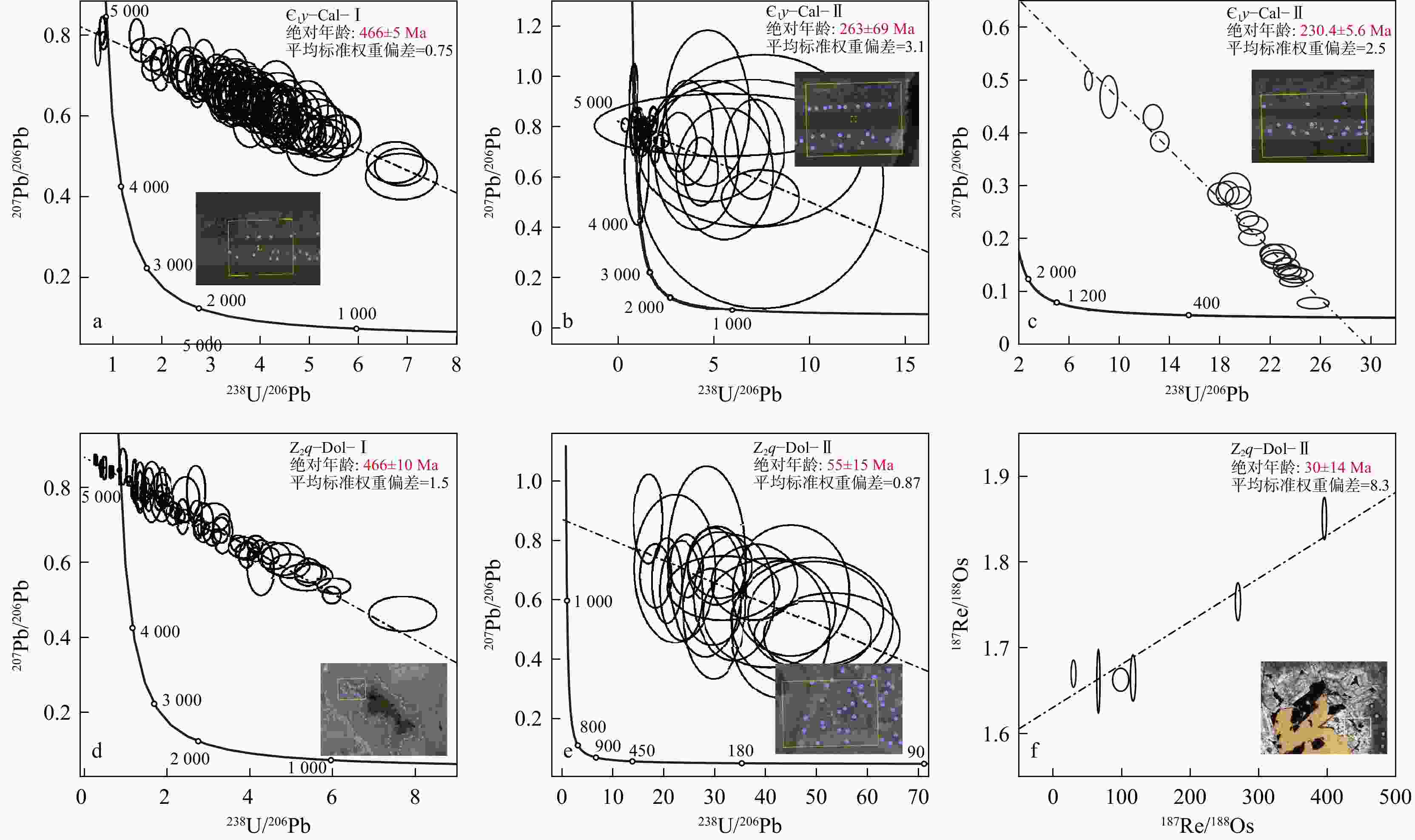
图 4 QT1井下寒武统玉尔吐斯组(Є1y)与上震旦统奇格布拉克组(Z2q)脉体U-Pb定年结果(a~e)及沥青Re-Os定年结果(f)
Є1y-Cal-Ⅰ,Є1y-Cal-Ⅱ分别为下寒武统玉尔吐斯组第Ⅰ期、第Ⅱ期方解石;Z2q-Dol-Ⅰ,Z2q-Dol-Ⅱ分别为上震旦统奇格布拉克组第Ⅰ期、第Ⅱ期白云石;下同
Figure 4. U-Pb dating results of veins (a-e) and Re-Os dating results of solid bitumen (f) for Lower Cambrian Yuertusi Formation (Є1y) and Upper Sinian Qigebulake Formation (Z2q) in Well QT1
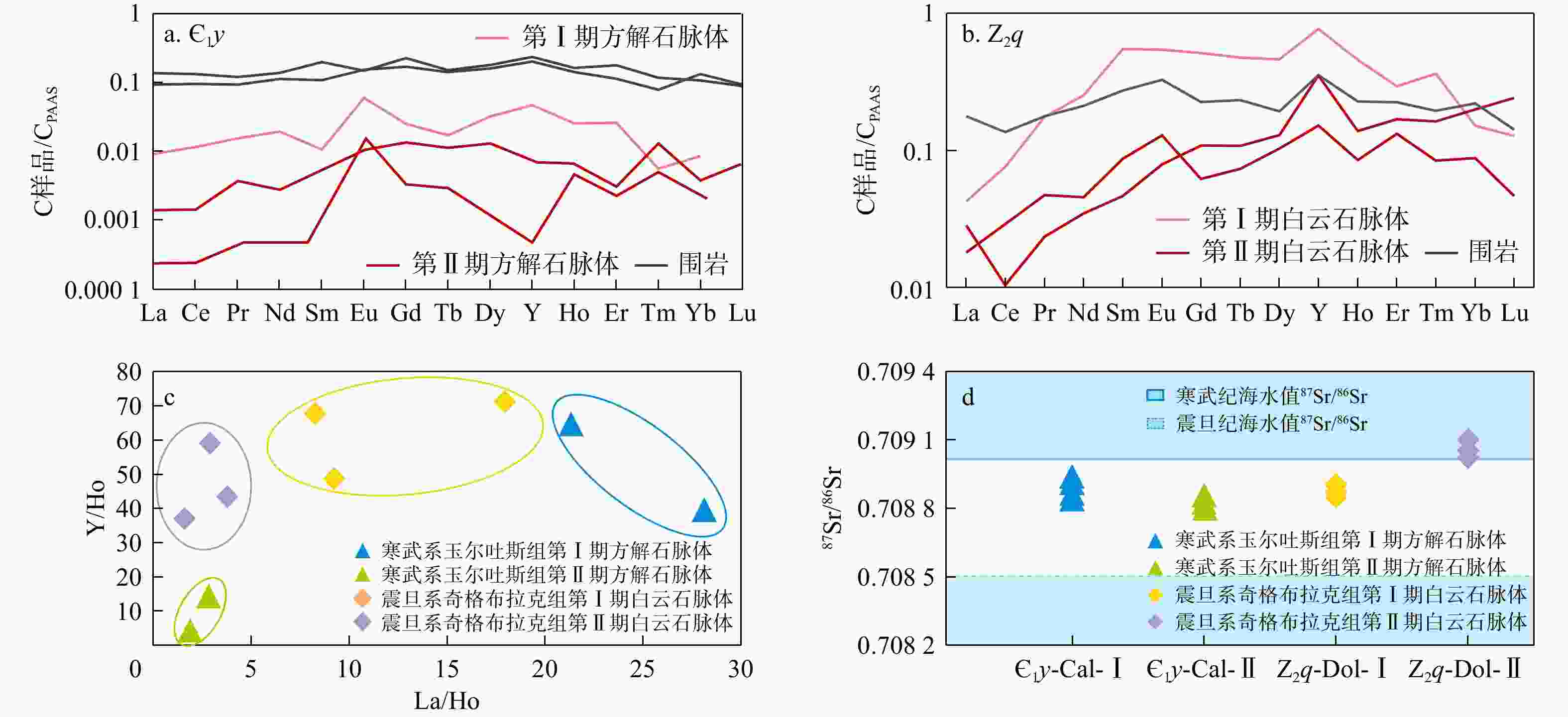
图 5 QT1井下寒武统玉尔吐斯组(Є1y)和上震旦统奇格布拉克组(Z2q)稀土元素PAAS配分模式图(a, b)、La/Ho-Y/Ho交汇图(c)和Sr同位素特征图(d)
Figure 5. PAAS-normalized rare earth element (REE) patterns (a, b), La/Ho-Y/Ho cross-plot (c), and Sr-isotope characteristics (d) of Lower Cambrian Yuertusi Formation (Є1y) and Upper Sinian Qigebulake Formation (Z2q) in Well QT1
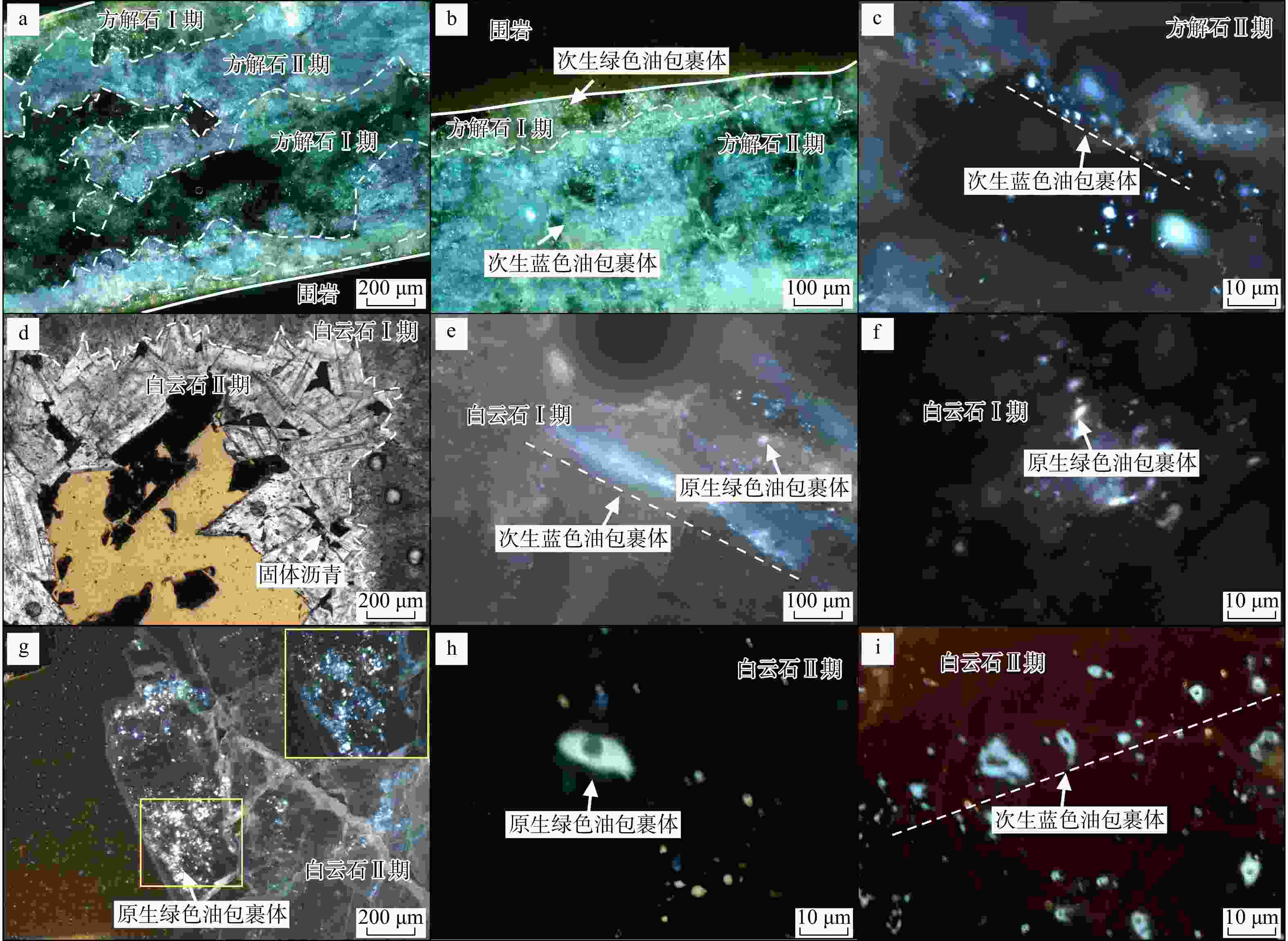
图 6 QT1井下寒武统玉尔吐斯组(Є1y)和上震旦统奇格布拉克组(Z2q)流体包裹体岩相学特征
a,b. 烃源岩(Є1y)2期方解石脉油包裹体荧光照片:第Ⅰ期方解石脉发育次生绿色油包裹体,第Ⅱ期方解石脉发育次生蓝色油包裹体,
5968 m;c. 烃源岩(Є1y)第Ⅱ期方解石脉次生蓝色油包裹体典型照片,5968 m;d. 储层(Z2q)2期白云石脉和固态沥青透射光照片,6002.5 m;e,f.储层(Z2q)第Ⅰ期白云石脉原生绿色油包裹体和次生蓝色油包裹体荧光照片,6002.5 m;g,h. 储层(Z2q)第Ⅱ期白云石脉原生绿色油包裹体荧光照片,6002.5 m;i. 储层(Z2q)第Ⅱ期白云石脉次生蓝色油包裹体荧光照片,6002.5 mFigure 6. Petrographic characteristics of fluid inclusions from Lower Cambrian Yuertusi Formation (Є1y) and Upper Sinian Qigebulake Formation (Z2q) in Well QT1
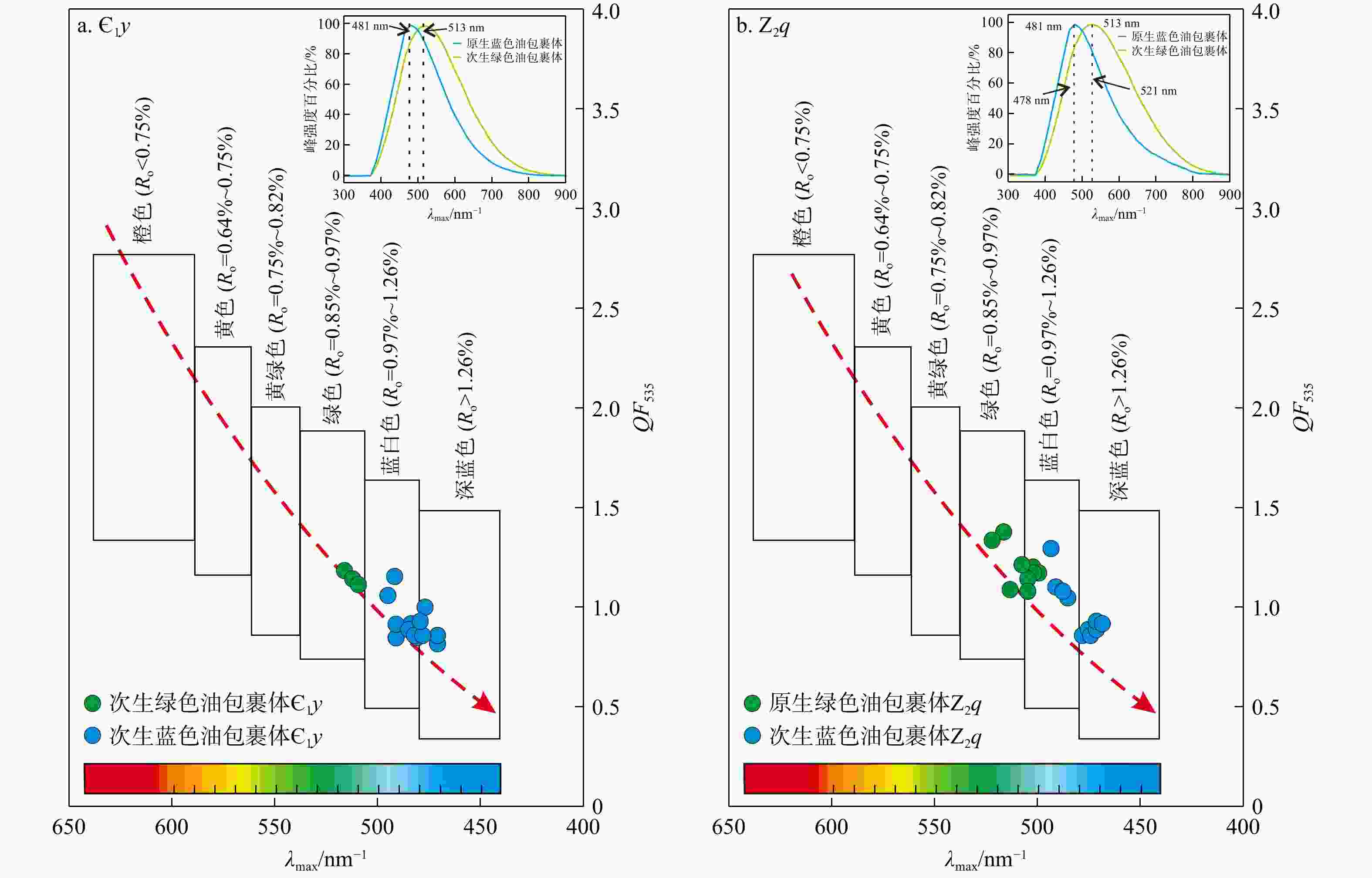
图 7 QT1井下寒武统玉尔吐斯组(Є1y)和上震旦统奇格布拉克组(Z2q)油包裹体荧光光谱图
图底部横向彩色色标为油包裹体荧光颜色渐变标尺,从左至右由红橙色向蓝紫色连续过渡,与纵坐标基于λmax和QF535划分的等效镜质体反射率Ro荧光成熟度分区一一匹配
Figure 7. Fluorescence spectral characteristics of oil inclusions from Lower Cambrian Yuertusi Formation (Є1y) and Upper Sinian Qigebulake Formation (Z2q) in Well QT1
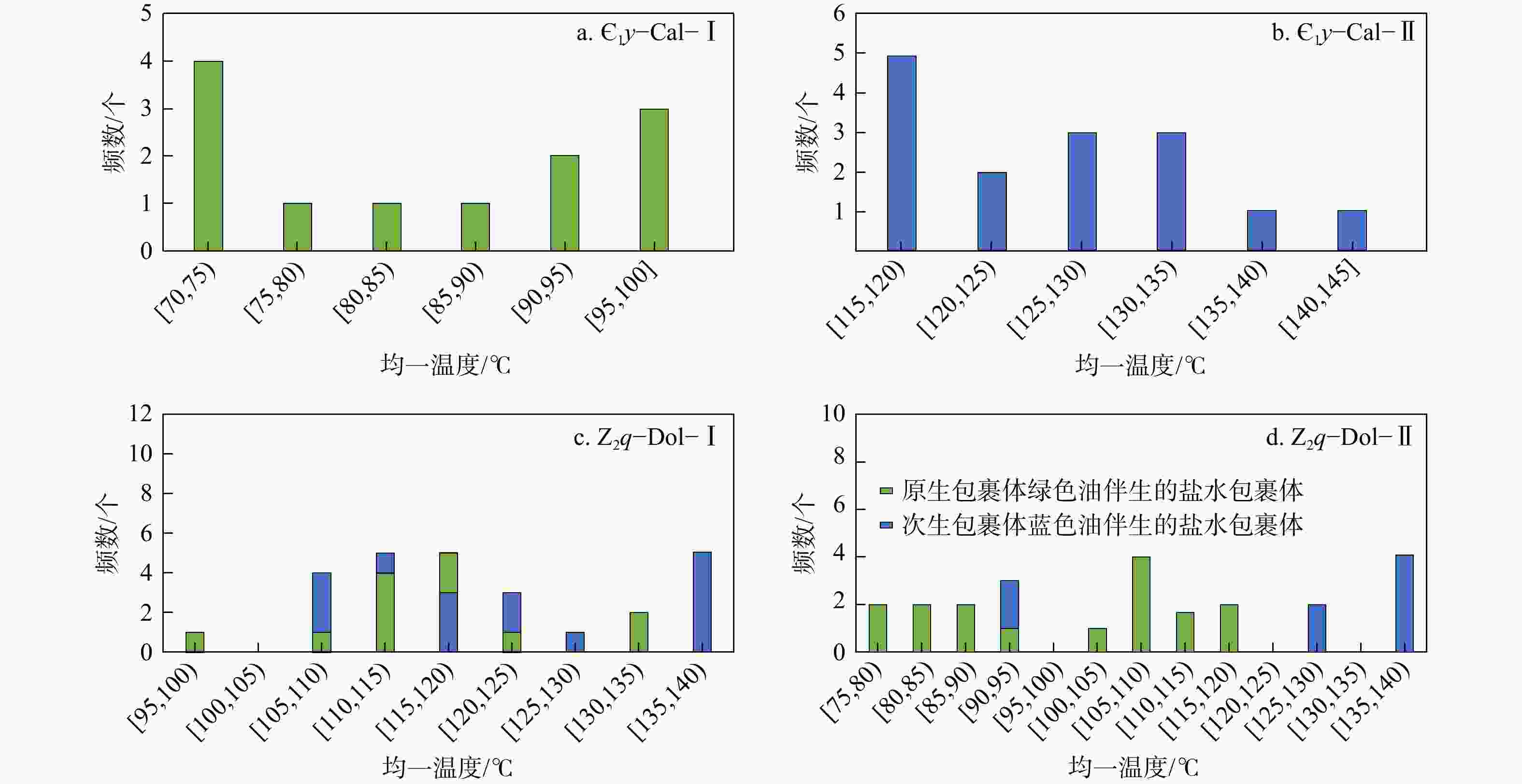
图 8 QT1井下寒武统玉尔吐斯组(Є1y)和上震旦统奇格布拉克组(Z2q)流体包裹体均一温度直方图
Figure 8. Histograms of fluid-inclusion homogenization temperatures of Lower Cambrian Yuertusi Formation (Є1y) and Upper Sinian Qigebulake Formation (Z2q) in Well QT1
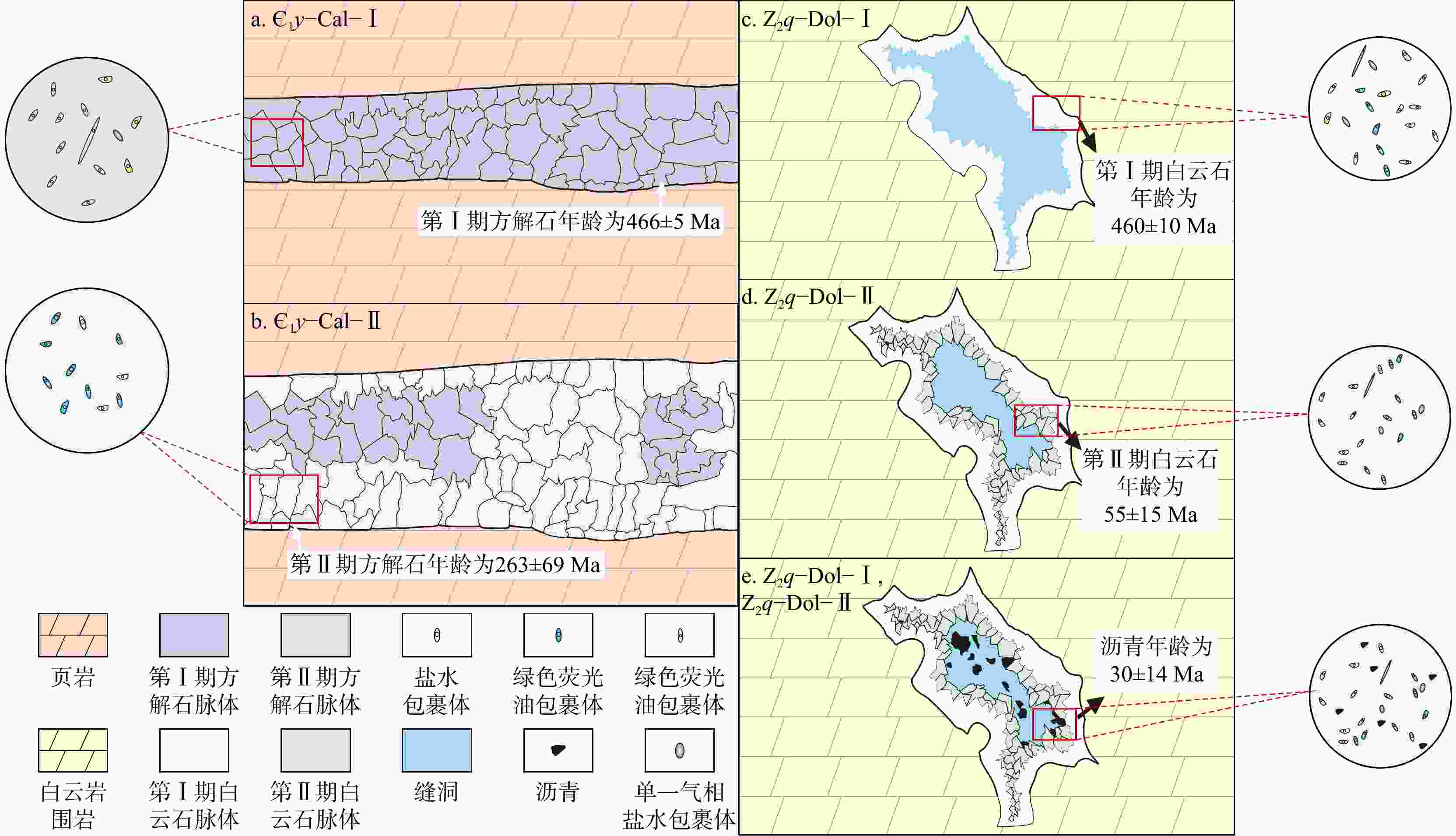
图 9 QT1 井下寒武统玉尔吐斯组(Є1y)烃源岩和上震旦统奇格布拉克组(Z2q)储层流体-油气成藏演化示意图
a. 烃源岩(Є1y)第Ⅰ期方解石脉体及包裹体发育情况;b. QT1井烃源岩(Є1y)第Ⅱ期方解石脉体及包裹体发育情况;c. QT1井储层(Z2q)第Ⅰ期白云石脉体及包裹体发育情况;d. QT1井储层(Z2q)第Ⅱ期白云石脉体及包裹体发育情况;e. QT1井储层(Z2q)2期白云石脉体、固体沥青及其包裹体发育情况。
Figure 9. Schematic diagram of fluid evolution and hydrocarbon accumulation evolution of source rocks of Lower Cambrian Yuertusi Formation (Є1y) and reservoirs of Upper Sinian Qigebulake Formation (Z2q) in Well QT1
-
[1] 何治亮, 金晓辉, 沃玉进, 等. 中国海相超深层碳酸盐岩油气成藏特点及勘探领域[J]. 中国石油勘探, 2016, 21(1): 3-14. doi: 10.3969/j.issn.1672-7703.2016.01.001HE Z L, JIN X H, WO Y J, et al. Hydrocarbon accumulation characteristics and exploration domains of ultra-deep marine carbonates in China[J]. China Petroleum Exploration, 2016, 21(1): 3-14. (in Chinese with English abstract) doi: 10.3969/j.issn.1672-7703.2016.01.001 [2] ZHU G Y, CHEN F R, WANG M, et al. Discovery of the Lower Cambrian high-quality source rocks and deep oil and gas exploration potential in the Tarim Basin, China[J]. AAPG Bulletin, 2018, 102(10): 2123-2151. doi: 10.1306/03141817183 [3] 杨学文, 田军, 王清华, 等. 塔里木盆地超深层油气地质认识与有利勘探领域[J]. 中国石油勘探, 2021, 26(4): 17-28. doi: 10.3969/j.issn.1672-7703.2021.04.002YANG X W, TIAN J, WANG Q H, et al. Geological understanding and favorable exploration fields of ultra-deep formations in Tarim Basin[J]. China Petroleum Exploration, 2021, 26(4): 17-28. (in Chinese with English abstract) doi: 10.3969/j.issn.1672-7703.2021.04.002 [4] 杨率, 邬光辉, 朱永峰, 等. 塔里木盆地北部地区超深断控油藏关键成藏期[J]. 石油勘探与开发, 2022, 49(2): 249-261. doi: 10.11698/PED.2022.02.04YANG S, WU G H, ZHU Y F, et al. Key oil accumulation periods of ultra-deep fault-controlled oil reservoir in northern Tarim Basin, NW China[J]. Petroleum Exploration and Development, 2022, 49(2): 249-261. (in Chinese with English abstract) doi: 10.11698/PED.2022.02.04 [5] 樊太亮, 高志前, 吴俊. 塔里木盆地深层碳酸盐岩建造−改造作用与多类型储层有序性分布[J]. 地学前缘, 2023, 30(4): 1-18. doi: 10.13745/j.esf.sf.2023.6.5FAN T L, GAO Z Q, WU J. Formation and modification of deep-burial carbonate rock sand orderly distribution of multi-typere servoirs in the Tarim Basin[J]. Earth Science Frontiers, 2023, 30(4): 1-18. (in Chinese with English abstract) doi: 10.13745/j.esf.sf.2023.6.5 [6] 张科, 潘文庆, 苏劲, 等. 塔里木盆地南华系−寒武系烃源岩时空分布与生烃潜力评价[J]. 中国石油勘探, 2022, 27(4): 121-134. doi: 10.3969/j.issn.1672-7703.2022.04.009ZHANG K, PAN W Q, SU J, et al. Distribution and hydrocarbon generation potential of the Nanhua-Cambrian source rocks in Tarim Basin[J]. China Petroleum Exploration, 2022, 27(4): 121-134. (in Chinese with English abstract) doi: 10.3969/j.issn.1672-7703.2022.04.009 [7] LU Z D, PING H W, CHEN H H, et al. Geochemical characteristics of Ordovician crude oils in the FI17 strike-slip fault zone of the Fuman oilfield, Tarim Basin: Implications for ultra-deep hydrocarbon accumulation in the Tarim Basin[J]. Marine and Petroleum Geology, 2024, 163: 106800. doi: 10.1016/j.marpetgeo.2024.106800 [8] 赵文智, 汪泽成, 黄福喜, 等. 中国陆上叠合盆地超深层油气成藏条件与勘探地位[J]. 石油学报, 2023, 44(12): 2020-2032. doi: 10.7623/syxb202312002ZHAO W Z, WANG Z C, HUANG F X, et al. Hydrocarbon accumulation conditions and exploration position of ultra-deep reservoirs in onshore superimposed basins of China[J]. Acta Petrolei Sinica, 2023, 44(12): 2020-2032. (in Chinese with English abstract) doi: 10.7623/syxb202312002 [9] 邓倩, 张海祖, 王浩哲, 等. 塔里木盆地轮探1井寒武系轻质油成藏地球化学特征[J]. 地球化学, 2023, 52(1): 20-28. doi: 10.19700/j.0379-1726.2023.01.002DENG Q, ZHANG H Z, WANG H Z, et al. Geochemical characteristics of the Cambrian light crude oil accumulation in Luntan 1 well, Tarim Basin, NW China[J]. Geochimica, 2023, 52(1): 20-28. (in Chinese with English abstract) doi: 10.19700/j.0379-1726.2023.01.002 [10] CAO Z C, MA A L, XU Q Q, et al. Geochemical characteristics and exploration significance of ultra-deep Sinian oil and gas from Well Tashen 5, Tarim Basin, NW China[J]. Energy Geoscience, 2024, 5(1): 100217. doi: 10.1016/j.engeos.2023.100217 [11] LI J Z, TAO X W, BAI B, et al. Geological conditions, reservoir evolution and favorable exploration directions of marine ultra-deep oil and gas in China[J]. Petroleum Exploration and Development, 2021, 48(1): 60-79. doi: 10.1016/S1876-3804(21)60005-8 [12] 闫磊, 朱光有, 王珊, 等. 塔里木盆地震旦系−寒武系万米超深层天然气成藏条件与有利区带优选[J]. 石油学报, 2021, 42(11): 1446-1457. doi: 10.7623/syxb202111004YAN L, ZHU G Y, WANG S, et al. Accmulation conditions and favorable areas for natural gas accumulation in the 10 000 meters ultra-deep Sinian-Cambrian in Tarim Basin[J]. Acta Petrolei Sinica, 2021, 42(11): 1446-1457. (in Chinese with English abstract) doi: 10.7623/syxb202111004 [13] HU Y, JIA C Z, CHEN J Q, et al. Restoration of hydrocarbon generation potential of the highly mature Lower Cambrian Yuertusi Formation source rocks in the Tarim Basin[J]. Petroleum Science, 2025, 22(2): 588-606. doi: 10.1016/j.petsci.2024.12.001 [14] YI S W, LI M P, GUO X J, et al. Rift-uplift-depression accumulation-controlling models of the large gas province in Cambrian pre-salt, Tarim Basin, China[J]. Journal of Natural Gas Geoscience, 2022, 7(6): 309-331. doi: 10.1016/j.jnggs.2022.11.001 [15] SU J, WANG X M, ZHANG C D, et al. Source and exploration potential of the ultra-deep Cambrian petroleum in Well XT-1, Tarim Basin, NW China[J]. Petroleum Exploration and Development, 2025, 52(2): 391-407. doi: 10.1016/S1876-3804(25)60574-X [16] WANG Q H, YANG H J, YANG W. New progress and future exploration targets in petroleum geological research of ultra-deep clastic rocks in Kuqa Depression, Tarim Basin, NW China[J]. Petroleum Exploration and Development, 2025, 52(1): 79-94. doi: 10.1016/S1876-3804(25)60006-1 [17] ZHU G Y, CAO Y H, YAN L, et al. Potential and favorable areas of petroleum exploration of ultra-deep marine strata more than 8 000 m deep in the Tarim Basin, Northwest China[J]. Journal of Natural Gas Geoscience, 2018, 3(6): 321-337. doi: 10.1016/j.jnggs.2018.12.002 [18] WEI G Q, ZHU Y J, ZHENG J F, et al. Tectonic-lithofacies paleogeography, large-scale source-reservoir distribution and exploration zones of Cambrian subsalt formation, Tarim Basin, NW China[J]. Petroleum Exploration and Development, 2021, 48(6): 1289-1303. doi: 10.1016/S1876-3804(21)60287-2 [19] WANG W Y, PANG X Q, WANG Y P, et al. Quantitative prediction model for the depth limit of oil accumulation in the deep carbonate rocks: A case study of Lower Ordovician in Tazhong area of Tarim Basin[J]. Petroleum Science, 2024, 21(1): 115-124. doi: 10.1016/j.petsci.2023.11.013 [20] 黄亚浩, 汪如军, 文志刚, 等. 塔里木盆地富满油田深层−超深层油气成藏过程[J]. 石油学报, 2024, 45(6): 947-960. doi: 10.7623/syxb202406005HUANG Y H, WANG R J, WEN Z G, et al. Hydrocarbon accumulation process of the deep to ultra deep reservoirs in Fuman oilfield, Tarim Basin[J]. Acta Petrolei Sinica, 2024, 45(6): 947-960. (in Chinese with English abstract) doi: 10.7623/syxb202406005 [21] LIU Z, TIAN J Q, HAO F, et al. The hydrocarbon generation process of the deeply buried Cambrian Yuertusi Formation in the Tabei uplift, Tarim Basin, northwestern China: Constraints from calcite veins hosting oil inclusions in the source rock[J]. Geological Society of America Bulletin, 2024, 136(9/10): 3810-3824. doi: 10.1130/b37295.1 [22] 朱光有, 陈斐然, 陈志勇, 等. 塔里木盆地寒武系玉尔吐斯组优质烃源岩的发现及其基本特征[J]. 天然气地球科学, 2016, 27(1): 8-21. doi: 10.11764/j.issn.1672-1926.2016.01.0008ZHU G Y, CHEN F R, CHEN Z Y, et al. Discovery and basic characteristics of the high-quality source rocks of the Cambrian Yuertusi Formation in Tarim Basin[J]. Natural Gas Geoscience, 2016, 27(1): 8-21. (in Chinese with English abstract) doi: 10.11764/j.issn.1672-1926.2016.01.0008 [23] 杨海军, 陈永权, 田军, 等. 塔里木盆地轮探1井超深层油气勘探重大发现与意义[J]. 中国石油勘探, 2020, 25(2): 62-72. doi: 10.3969/j.issn.1672-7703.2020.02.007YANG H J, CHEN Y Q, TIAN J, et al. Great discovery and its significance of ultra-deep oil and gas exploration in Well Luntan-1 of the Tarim Basin[J]. China Petroleum Exploration, 2020, 25(2): 62-72. (in Chinese with English abstract) doi: 10.3969/j.issn.1672-7703.2020.02.007 [24] 贾承造. 塔里木盆地构造特征与油气聚集规律[J]. 新疆石油地质, 1999, 20(3): 177-183. doi: 10.3969/j.issn.1001-3873.1999.03.001JIA C Z. Structural characteristics and oil/gas accumulative regularity in Tarim Basin[J]. Xinjiang Petroleum Geology, 1999, 20(3): 177-183. (in Chinese with English abstract) doi: 10.3969/j.issn.1001-3873.1999.03.001 [25] ZHU G Y, YAN H H, CHEN W Y, et al. Discovery of Cryogenian interglacial source rocks in the northern Tarim, NW China: Implications for Neoproterozoic paleoclimatic reconstructions and hydrocarbon exploration[J]. Gondwana Research, 2020, 80: 370-384. doi: 10.1016/j.gr.2019.10.016 [26] 马安来, 李慧莉, 李杰豪, 等. 塔里木盆地柯坪露头剖面中上奥陶统烃源岩地球化学特征与海相油源对比[J]. 天然气地球科学, 2020, 31(1): 47-60. doi: 10.11764/j.issn.1672-1926.2019.08.005MA A L, LI H L, LI J H, et al. The geochemical characteristics of Middle-Upper Ordovician source rocks in Keping outcrops profiles and marine oil-source correlation, Tarim Basin, NW China[J]. Natural Gas Geoscience, 2020, 31(1): 47-60. (in Chinese with English abstract) doi: 10.11764/j.issn.1672-1926.2019.08.005 [27] 高永进, 尹成明, 刘丽红, 等. 塔里木盆地西北缘寒武系肖尔布拉克组烃源岩特征[J]. 石油与天然气地质, 2024, 45(4): 1064-1078. doi: 10.11743/ogg20240412GAO Y J, YIN C M, LIU L H, et al. Characteristics of source rocks in the Cambrian Xiaoerbulake Formation in the northwestern Tarim Basin[J]. Oil & Gas Geology, 2024, 45(4): 1064-1078. (in Chinese with English abstract) doi: 10.11743/ogg20240412 [28] 陈永权, 杨果, 田浩男, 等. 塔里木克拉通埃迪卡拉纪地层层序与沉积演化[J]. 地层学杂志, 2024, 48(1): 17-41. doi: 10.19839/j.cnki.dcxzz.2024.0001CHEN Y Q, YANG G, TIAN H N, et al. Ediacaran stratigraphic succession and sedimentary evolution of the Tarim craton[J]. Journal of Stratigraphy, 2024, 48(1): 17-41. (in Chinese with English abstract) doi: 10.19839/j.cnki.dcxzz.2024.0001 [29] ZENG L B, SONG Y C, HAN J, et al. Control of structure and fluid on ultra-deep fault-controlled carbonate fracture-vug reservoirs in the Tarim Basin, NW China[J]. Petroleum Exploration and Development, 2025, 52(1): 143-156. doi: 10.1016/S1876-3804(25)60010-3 [30] ZENG Q X, SUN P, JIANG X C, et al. Early oil charging from Sinian shales in Ordovician carbonates of the Tabei uplift, Tarim Basin: Evidence from biomarkers[J]. Petroleum Research, 2025, 10(2): 234-246. doi: 10.1016/j.ptlrs.2024.11.001 [31] HU Z Q, FENG F, FANG C M, et al. Segmented evolution and exploration targets of the Cambrian platform margin in the Manxi area, Tarim Basin[J]. Energy Geoscience, 2025, 6(1): 100367. doi: 10.1016/j.engeos.2024.100367 [32] ZHANG R H, YU C F, YANG Z, et al. Reservoir characteristics and geological implications of marine sandstone on the periphery of Awati Sag, Tarim Basin, China: Case study of Upper Ordovician-Lower Silurian Kepingtage Formation[J]. Journal of Natural Gas Geoscience, 2025, 10(1): 1-11. doi: 10.1016/j.jnggs.2024.12.001 [33] 曹自成, 云露, 平宏伟, 等. 塔里木盆地顺北地区奥陶系天然气地球化学与成因[J]. 地质科技通报, 2025, 44(5): 40-52. doi: 10.19509/j.cnki.dzkq.tb20240099CAO Z C, YUN L, PING H W, et al. Geochemistry and origin of Ordovician natural gas in Shunbei area of Tarim Basin[J]. Bulletin of Geological Science and Technology, 2025, 44(5): 40-52. (in Chinese with English abstract) doi: 10.19509/j.cnki.dzkq.tb20240099 [34] 姜忠正, 唐大卿, 沙旭光, 等. 塔里木盆地塔中隆起中北部地区断裂构造特征及演化[J]. 地质科技通报, 2024, 43(3): 120-132. doi: 10.19509/j.cnki.dzkq.tb20220663JIANG Z Z, TANG D Q, SHA X G, et al. Structure and evolution of faults in central and northern parts of Tazhong uplift, Tarim Basin[J]. Bulletin of Geological Science and Technology, 2024, 43(3): 120-132. (in Chinese with English abstract) doi: 10.19509/j.cnki.dzkq.tb20220663 [35] 王步清, 黄智斌, 马培领, 等. 塔里木盆地构造单元划分标准、依据和原则的建立[J]. 大地构造与成矿学, 2009, 33(1): 86-93. doi: 10.3969/j.issn.1001-1552.2009.01.011WANG B Q, HUANG Z B, MA P L, et al. Establishment of division standard, evidence and principle of structural units in Tarim Basin[J]. Geotectonica et Metallogenia, 2009, 33(1): 86-93. (in Chinese with English abstract) doi: 10.3969/j.issn.1001-1552.2009.01.011 [36] 张光亚, 赵文智, 王红军, 等. 塔里木盆地多旋回构造演化与复合含油气系统[J]. 石油与天然气地质, 2007(5): 653-663. doi: 10.3321/j.issn:0253-9985.2007.05.017ZHANG G Y, ZHAO W Z, WANG H J, et al. Multicycle tectonic evolution and composite petroleum systems in the Tarim Basin[J]. Oil & Gas Geology, 2007(5): 653-663. (in Chinese with English abstract) doi: 10.3321/j.issn:0253-9985.2007.05.017 [37] 林畅松, 李思田, 刘景彦, 等. 塔里木盆地古生代重要演化阶段的古构造格局与古地理演化[J]. 岩石学报, 2011, 27(1): 210-218.LIN C S, LI S T, LIU J Y, et al. Tectonic framework and paleogeographic evolution of the Tarim Basin during the Paleozoic major evolutionary stages[J]. Acta Petrologica Sinica, 2011, 27(1): 210-218. (in Chinese with English abstract) [38] 崔海峰, 田雷, 张年春, 等. 塔西南坳陷南华纪−震旦纪裂谷分布及其与下寒武统烃源岩的关系[J]. 石油学报, 2016, 37(4): 430-438.CUI H F, TIAN L, ZHANG N C, et al. Nanhua-Sinian rift distribution and its relationship with the development of Lower Cambrian source rocks in the southwest depression of Tarim Basin[J]. Acta Petrolei Sinica, 2016, 37(4): 430-438. (in Chinese with English abstract) [39] 易士威, 李明鹏, 郭绪杰, 等. 塔里木盆地南华纪古裂谷对寒武系沉积的控制及勘探意义[J]. 石油学报, 2020, 41(11): 1293-1308. doi: 10.7623/syxb202011001YI S W, LI M P, GUO X J, et al. Control of the Nanhua paleo-rift on Cambrian sedimentation and its exploration significance in Tarim Basin[J]. Acta Petrolei Sinica, 2020, 41(11): 1293-1308. (in Chinese with English abstract) doi: 10.7623/syxb202011001 [40] SU Z, LIU Y F, HAN J F, et al. Application of ultra-deep sandstone reservoirs prediction technology under controlled seismic facies in Yudong block of Tabei uplift, Tarim Basin, China[J]. Journal of Natural Gas Geoscience, 2020, 5(3): 157-167. doi: 10.1016/j.jnggs.2020.05.001 [41] GUAN S W, ZHANG C Y, REN R, et al. Early Cambrian syndepositional structure of the northern Tarim Basin and a discussion of Cambrian subsalt and deep exploration[J]. Petroleum Exploration and Development, 2019, 46(6): 1141-1152. doi: 10.1016/S1876-3804(19)60269-7 [42] DU Y N, WU K Y, LIU Y, et al. Geometry and formation mechanism of tension gashes and their implication on the hydrocarbon accumulation in the deep-seated strata of sedimentary basin: A case from Shunnan area of Tarim Basin[J]. Petroleum Science, 2024, 21(1): 87-99. doi: 10.1016/j.petsci.2023.10.021 [43] 马德波, 王珊, 陈永权, 等. 塔里木盆地寒武系盐下白云岩成藏条件分析与勘探部署方向[J]. 地质科学, 2024, 59(3): 744-759. doi: 10.12017/dzkx.2024.053MA D B, WANG S, CHEN Y Q, et al. Reservoir forming conditions and favorable exploration zones in the Cambrian subsalt dolomite, Tarim Basin, NW China[J]. Chinese Journal of Geology, 2024, 59(3): 744-759. (in Chinese with English abstract) doi: 10.12017/dzkx.2024.053 [44] 蔡振忠, 徐帆, 杨果, 等. 塔里木盆地下寒武统玉尔吐斯组沉积特征及有机质富集模式[J]. 现代地质, 2024, 38(5): 1258-1269. doi: 10.19657/j.geoscience.1000-8527.2023.103CAI Z Z, XU F, YANG G, et al. Sedimentary characteristics of the Lower Cambrian Yuertusi Formation and the organic matter enrichment model in the Tarim Basin[J]. Geoscience, 2024, 38(5): 1258-1269. (in Chinese with English abstract) doi: 10.19657/j.geoscience.1000-8527.2023.103 [45] 李建, 徐田堃, 田景春, 等. 塔里木盆地中−下寒武统沉积相带与储盖关系[J]. 成都理工大学学报(自然科学版), 2023, 50(1): 15-33. doi: 10.3969/j.issn.1671-9727.2023.01.02LI J, XU T K, TIAN J C, et al. Discussion on the relationship between sedimentary facies and reservoir-cap rocks of the Middle-Lower Cambrian in Tarim Basin, China[J]. Journal of Chengdu University of Technology (Science & Technology Edition), 2023, 50(1): 15-33. (in Chinese with English abstract) doi: 10.3969/j.issn.1671-9727.2023.01.02 [46] 焦存礼, 何碧竹, 李扬, 等. 塔里木盆地塔北地区震旦系油气成藏条件与有利勘探方向[J]. 地质学报, 2024, 98(12): 3683-3702. doi: 10.19762/j.cnki.dizhixuebao.2024515JIAO C L, HE B Z, LI Y, et al. The petroleum geological conditions and favorable exploration direction of Sinian in northern Tarim Basin[J]. Acta Geologica Sinica, 2024, 98(12): 3683-3702. (in Chinese with English abstract) doi: 10.19762/j.cnki.dizhixuebao.2024515 [47] 杨宗玉, 罗平, 刘波, 等. 塔里木盆地阿克苏地区下寒武统玉尔吐斯组两套黑色岩系的差异及成因[J]. 岩石学报, 2017, 33(6): 1893-1918.YANG Z Y, LUO P, LIU B, et al. The difference and sedimentation of two black rock series from Yurtus Formation during the Earliest Cambrian in the Aksu area of Tarim Basin, Northwest Chins[J]. Acta Petrologica Sinica, 2017, 33(6): 1893-1918. (in Chinese with English abstract) [48] 高振家, 吴绍祖, 李永安, 等. 新疆阿克苏−柯坪地区震旦纪−寒武纪地层研究[J]. 科学通报, 1981, 26(12): 741-743.GAO Z J, WU S Z, LI Y A, et al. Study on Sinian-Cambrian strata in Aksu-Keping area, Xinjiang[J]. Chinese Science Bulletin, 1981, 26(12): 741-743. (in Chinese with English abstract) [49] 田雷, 崔海峰, 刘军, 等. 塔里木盆地早、中寒武世古地理与沉积演化[J]. 石油与天然气地质, 2018, 39(5): 1011-1021. doi: 10.11743/ogg20180415TIAN L, CUI H F, LIU J, et al. Early-Middle Cambrian paleogeography and depositional evolution of Tarim Basin[J]. Oil & Gas Geology, 2018, 39(5): 1011-1021. (in Chinese with English abstract) doi: 10.11743/ogg20180415 [50] 王志宏, 丁伟铭, 李剑, 等. 塔里木盆地西缘下寒武统玉尔吐斯组沉积地球化学及有机质富集机制研究[J]. 北京大学学报(自然科学版), 2020, 56(4): 667-678. doi: 10.13209/j.0479-8023.2020.045WANG Z H, DING W M, LI J, et al. Paleoenvironment interpretation of Early Cambrian Yurtus Formation, Tarim Basin, and its mechanism for organic carbon accumulation[J]. Acta Scientiarum Naturalium Universitatis Pekinensis, 2020, 56(4): 667-678. (in Chinese with English abstract) doi: 10.13209/j.0479-8023.2020.045 [51] 唐攀, 汪远征, 李双建, 等. 塔里木盆地西北部震旦系−寒武系不整合面成因: 来自沉积学的证据[J]. 沉积学报, 2024, 42(3): 877-891. doi: 10.14027/j.issn.1000-0550.2023.074TANG P, WANG Y Z, LI S J, et al. Genesis of the sinian-Cambrian unconformity in the northwestern Tarim Basin: Evidence from sedimentology[J]. Acta Sedimentologica Sinica, 2024, 42(3): 877-891. (in Chinese with English abstract) doi: 10.14027/j.issn.1000-0550.2023.074 [52] 石开波, 刘波, 田景春, 等. 塔里木盆地震旦纪沉积特征及岩相古地理[J]. 石油学报, 2016, 37(11): 1343-1360. doi: 10.7623/syxb201611003SHI K B, LIU B, TIAN J C, et al. Sedimentary characteristics and lithofacies paleogeography of Sinian in Tarim Basin[J]. Acta Petrolei Sinica, 2016, 37(11): 1343-1360. (in Chinese with English abstract) doi: 10.7623/syxb201611003 [53] 陈旭东, 许启鲁, 郝芳, 等. 塔里木盆地塔北地区上震旦统奇格布拉克组白云岩储层形成与成岩演化[J]. 中国科学: 地球科学, 2023, 53(10): 2348-2369. doi: 10.1360/SSTe-2022-0193CHEN X D, XU Q L, HAO F, et al. Dolomite reservoir formation and diagenesis evolution of the Upper Ediacaran Qigebrak Formation in the Tabei area, Tarim Basin[J]. Scientia Sinica (Terrae), 2023, 53(10): 2348-2369. (in Chinese with English abstract) doi: 10.1360/SSTe-2022-0193 [54] 王胜利, 孟万斌, 祝贺, 等. 塔里木盆地北部震旦系−寒武系盐下碳酸盐沉积模式演化及油气地质意义[J]. 矿物岩石, 2024, 44(2): 122-136. doi: 10.19719/j.cnki.1001-6872.2024.02.10WANG S L, MENG W B, ZHU H, et al. Evolution of Sinian-Cambrian subsalt carbonate sedimentary model and its petroleum geological implication in northern Tarim Basin[J]. Journal of Mineralogy and Petrology, 2024, 44(2): 122-136. (in Chinese with English abstract) doi: 10.19719/j.cnki.1001-6872.2024.02.10 [55] COOGAN L A, PARRISH R R, ROBERTS N M W. Early hydrothermal carbon uptake by the upper oceanic crust: Insight from in situ U-Pb dating[J]. Geology, 2016, 44(2): 147-150. doi: 10.1130/G37212.1 [56] 赵艳军, 陈红汉. 油包裹体荧光颜色及其成熟度关系[J]. 地球科学, 2008, 33(1): 91-96.ZHAO Y J, CHEN H H. The relationship between fluorescence colors of oil inclusions and their maturities[J]. Earth Science, 2008, 33(1): 91-96. (in Chinese with English abstract) [57] 赵彦彦, 李三忠, 李达, 等. 碳酸盐(岩)的稀土元素特征及其古环境指示意义[J]. 大地构造与成矿学, 2019, 43(1): 141-167. doi: 10.16539/j.ddgzyckx.2019.01.011ZHAO Y Y, LI S Z, LI D, et al. Rare earth element geochemistry of carbonate and its paleoenvironmental implications[J]. Geotectonica et Metallogenia, 2019, 43(1): 141-167. (in Chinese with English abstract) doi: 10.16539/j.ddgzyckx.2019.01.011 [58] WEI D, GAO Z Q, ZHANG L L, et al. Application of blocky calcite vein LA-MC-ICP-MS U-Pb dating and geochemical analysis to the study of tectonic-fault-fluid evolutionary history of the Tabei uplift, Tarim Basin[J]. Sedimentary Geology, 2023, 453: 106425. doi: 10.1016/j.sedgeo.2023.106425 -

 下载:
下载:


 点击查看大图

计量
- 文章访问数: 249
- PDF下载量: 23
- 被引次数: 0