投审稿入口
投审稿入口


Study on detection methods of abnormal structural planes in shale reservoirs in the Hongxing area
-
摘要:
页岩储层异常结构面分为强硬面与软弱面,前者以灰岩夹层为代表,后者包含层理缝、天然裂缝2类,其发育特征与页岩储层成藏、压裂改造及油气产出效率密切相关。精准识别异常结构面的类型与发育段,对页岩油气勘探开发具有重要指导意义。以红星地区页岩储层为研究对象,首先利用阵列声波测井快慢横波能量差实现灰岩夹层强硬面的精准识别;其次引入电成像测井基尼系数,通过计算基尼系数的震荡程度量化表征层理缝的发育特征;最后结合阵列声波相关系数等测井参数及声波波形图中的深色条带信息,实现天然裂缝的定性识别与定量刻画。研究表明,能量差信息对灰岩夹层强硬面具有良好的响应特征;基尼系数法有效改进了层理缝以往单条识别工作量大、效果不佳的问题;阵列声波相关系数的异常低值特征与波形图深色条带相结合,能更直观地表征天然裂缝发育特征,可视化判定天然裂缝的发育位置与规模大小。现场应用验证表明,该方法对直井可实现灰岩夹层、层理缝及天然裂缝发育段的准确、快速识别;对水平井,可通过阵列声波测井参数与波形图完成灰岩夹层的判断及天然裂缝的定量识别,结合井漏资料验证,其结果与裂缝识别结论相互佐证,证实了该方法在水平井应用中的可行性与可靠性。
Abstract:ObjectiveAbnormal structural planes in shale reservoirs are divided into hard planes and weak planes. The former is typically represented by limestone interbeds, and the latter includes bedding fractures and natural fractures. Their development characteristics are closely related to reservoir accumulation, hydraulic fracturing, and oil and gas production efficiency. Accurate identification of the types and development intervals of these planes is of great practical significance for the exploration and development of shale oil and gas. Taking shale reservoirs in the Hongxing area as the research target, this study aims to propose a set of effective logging-based detection methods for different types of abnormal structural planes, so as to address the difficult classification and low identification accuracy of these planes in continental shale reservoirs.
MethodsUsing the sensitivity of array sonic logging and electrical imaging logging to the lithology and structural characteristics of shale reservoirs, a combined logging detection method based on array sonic logging and electrical imaging logging was adopted for the identification of abnormal structural planes. Firstly, the energy difference between fast and slow shear waves from array sonic logging was used to accurately identify the limestone interbeds and other hard planes. Secondly, the Gini coefficient of electrical imaging logging was introduced, and the development characteristics of bedding fractures were quantitatively characterized by calculating the degree of fluctuation of the Gini coefficient. Finally, combined with the array sonic correlation coefficient and other logging parameters, as well as the dark strips in the acoustic waveform logs, the qualitative identification and quantitative characterization of natural fractures were realized. In the research process, the acoustic energy values and attenuation coefficients were calculated using Fourier transforms and the strain tensor using the computational Fourier transform moiré (STC) method. The variance of the Gini coefficient was used to quantify the degree of fluctuation, and the pearson correlation coefficient of the frequency spectra of fast and slow shear waves was defined as the core parameter for identifying natural fractures.
ResultsThe research results showed that the energy difference effectively responded to the hard planes of limestone interbeds in the Hongxing area, clearly reflecting their development intervals. The Gini coefficient method addressed the heavy workload and poor performance in traditional single-strip identification of bedding fractures, enabling efficient and quantitative characterization of fracture development. The combination of the abnormally low values of the array sonic correlation coefficient and the dark strips in waveform logs provided an intuitive representation of natural fracture development, allowing visual determination of their positions and scales. Field testing in Well Hong A showed clear differentiation of logging responses for each type of abnormal structural plane, and the identification results were highly consistent with core and lithofacies column data.
ConclusionField verification shows that this method enables accurate and rapid identification of the development intervals of limestone interbeds, bedding fractures, and natural fractures in vertical wells. For horizontal wells, due to the lack of electrical imaging logging data, the bedding fracture development intervals cannot be identified, but limestone interbeds and natural fractures can still be quantitatively detected using array sonic logging parameters and waveform logs. Verification with lost circulation data from the horizontal section of Well Hong A confirmed consistency with fracture identification results, demonstrating the method’s feasibility and reliability in horizontal wells. The proposed logging detection method enriches the diversity of identification methods for abnormal structural planes in shale reservoirs and provides a reliable technical reference for precise layer selection and optimized fracturing design in the Hongxing area and similar continental shale reservoirs.
-
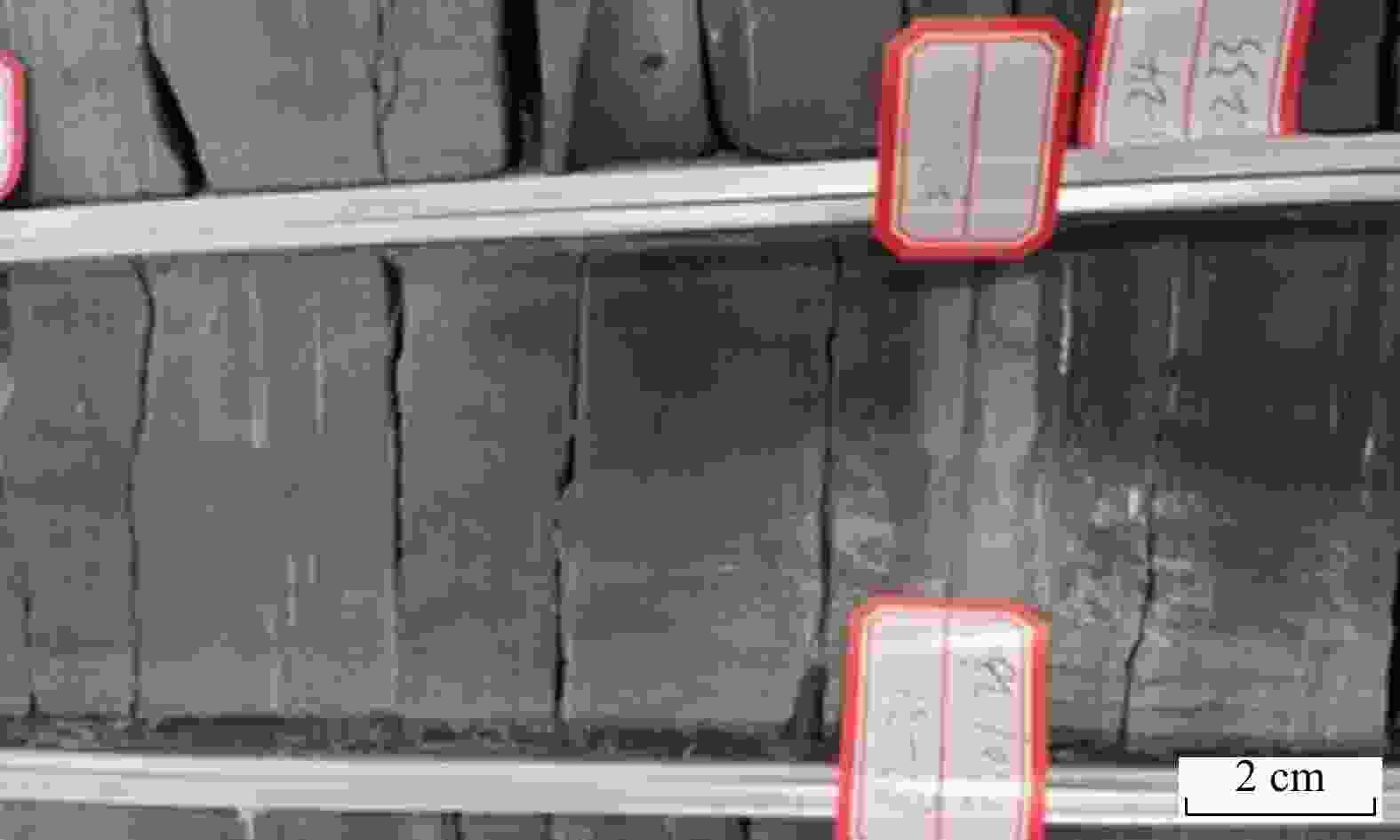
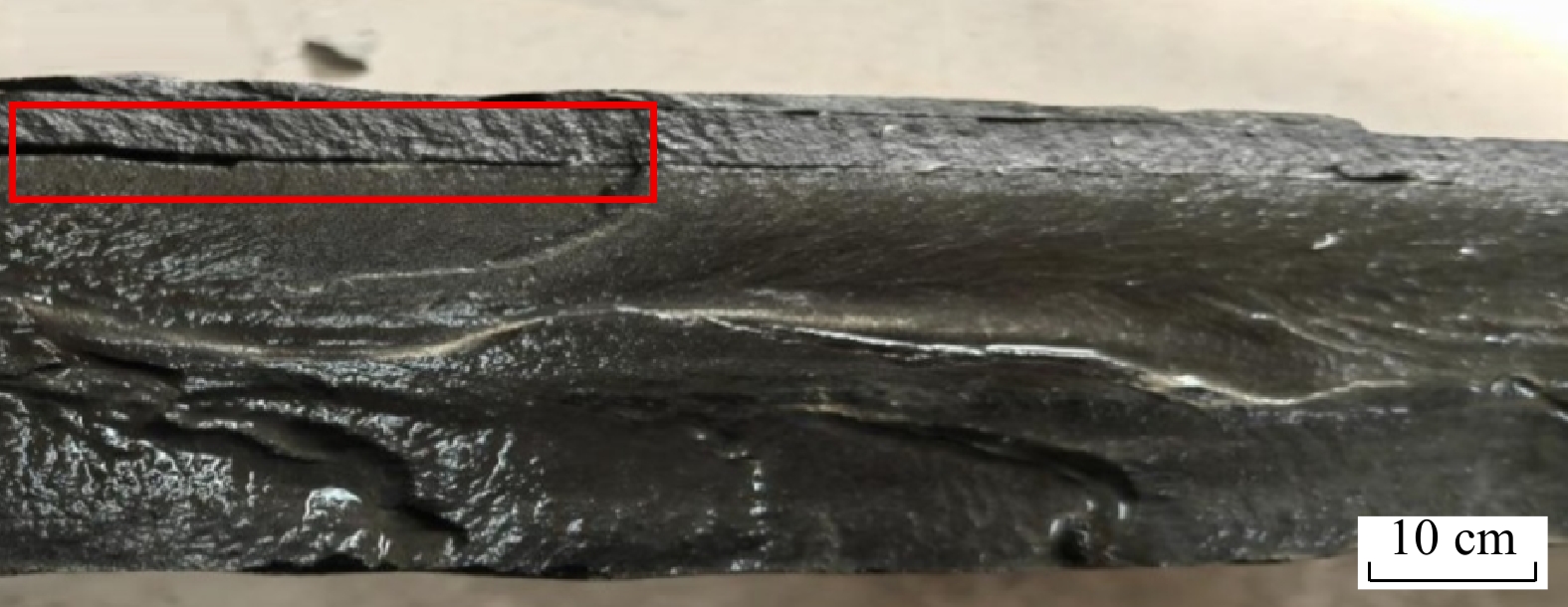
图 1 红星地区红A井灰岩夹层岩心照片
Figure 1. Core photograph of limestone interbeds of Well Hong A in Hongxing area
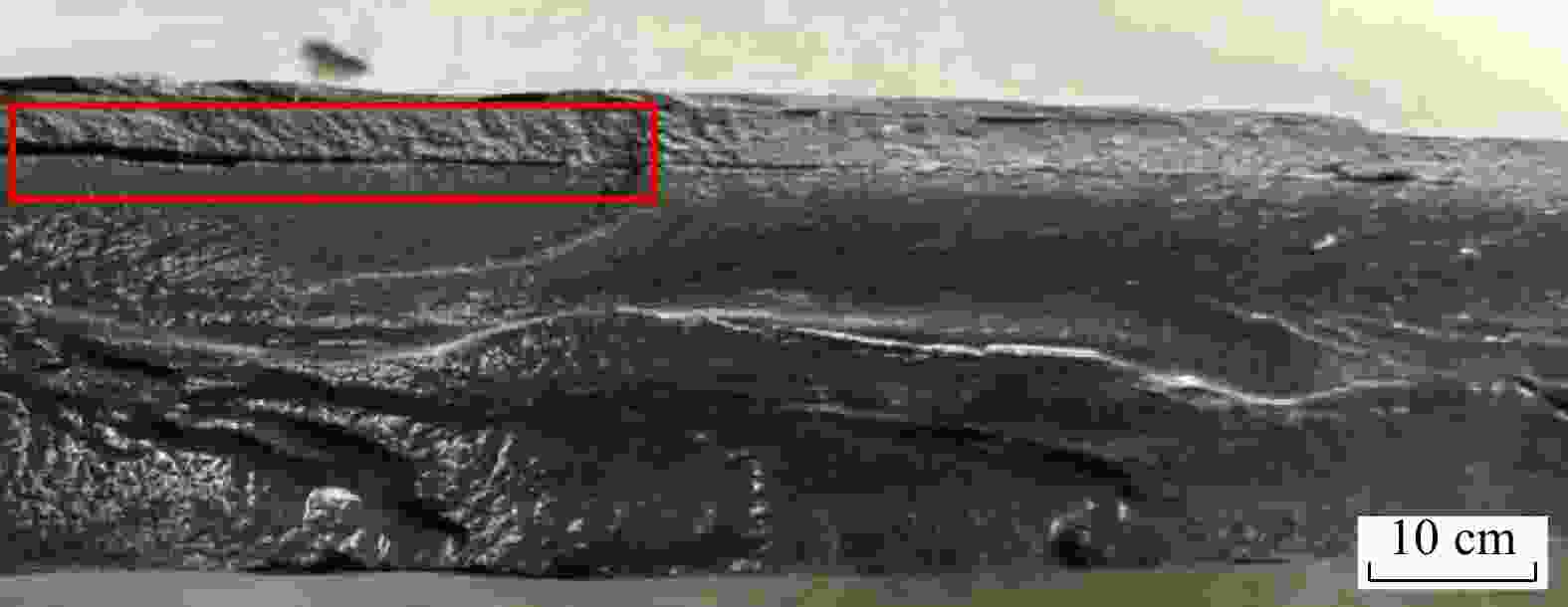
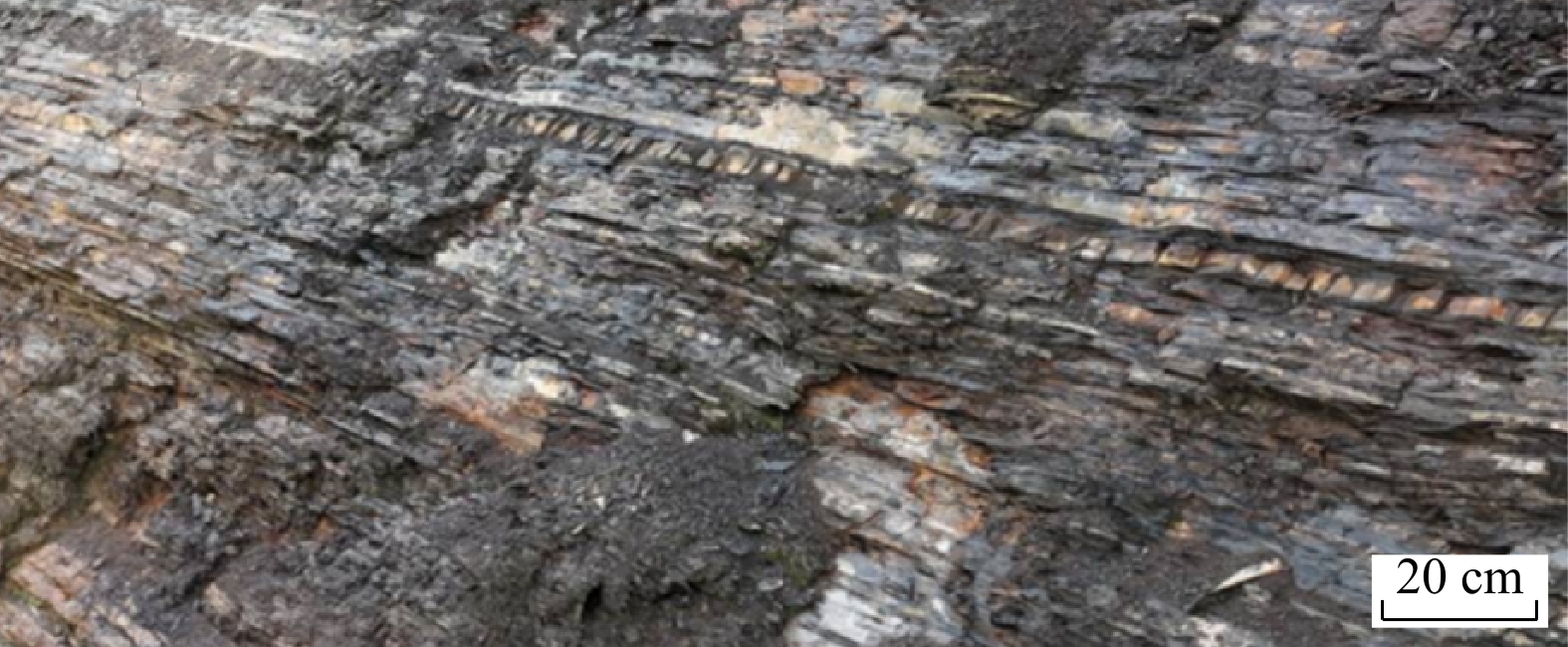
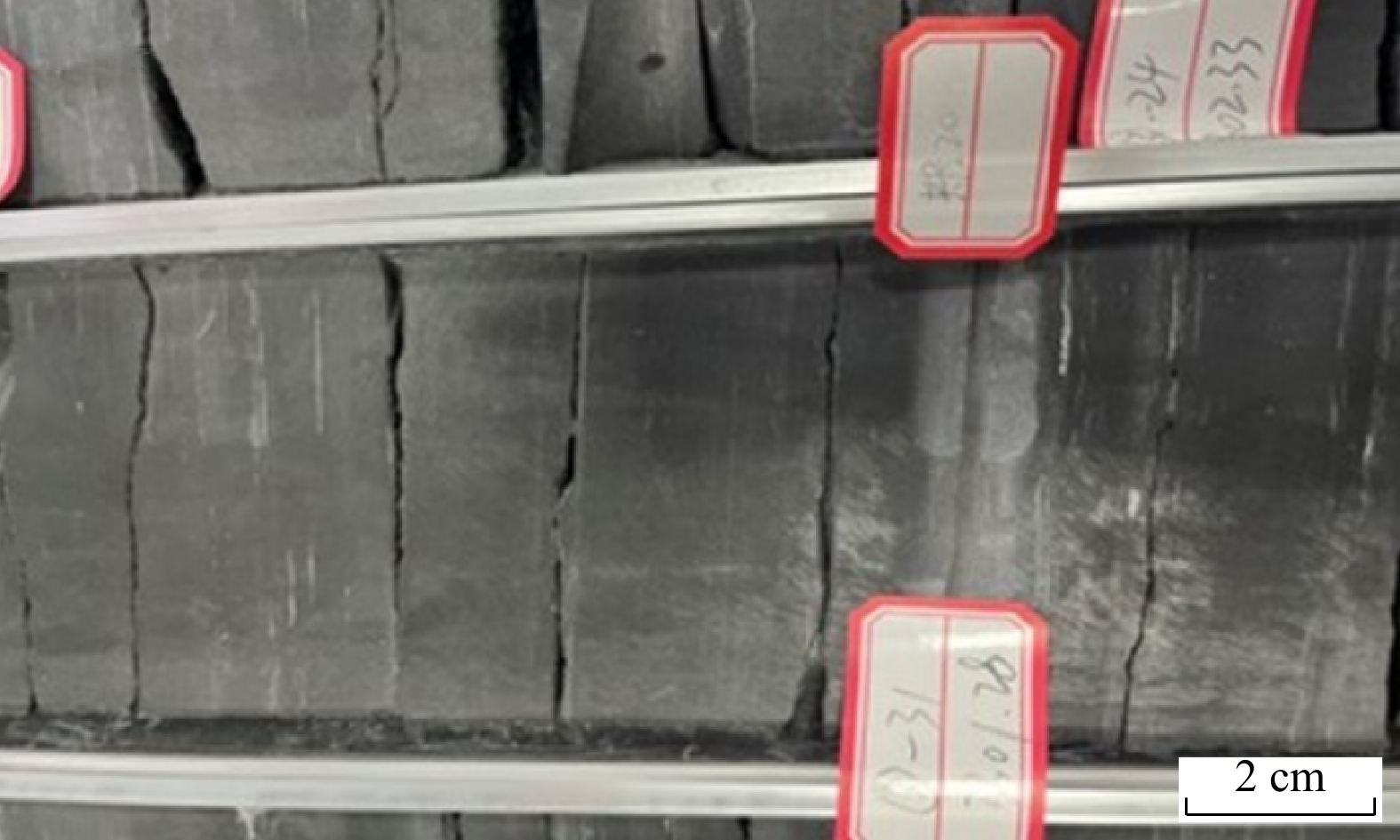
图 3 红星地区红A井天然裂缝示例照片
Figure 3. Representative photograph of natural fractures of Well Hong A in Hongxing area
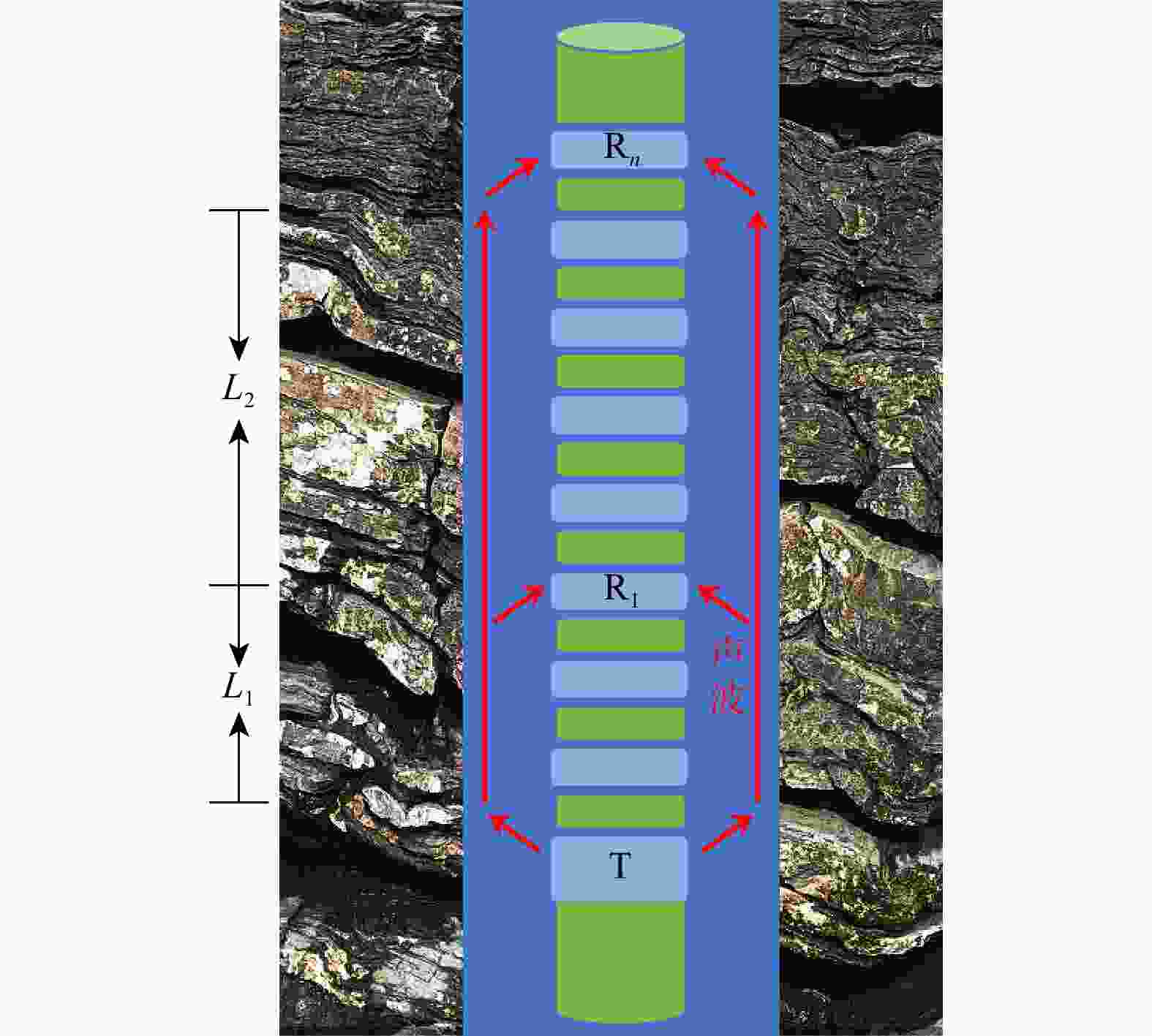
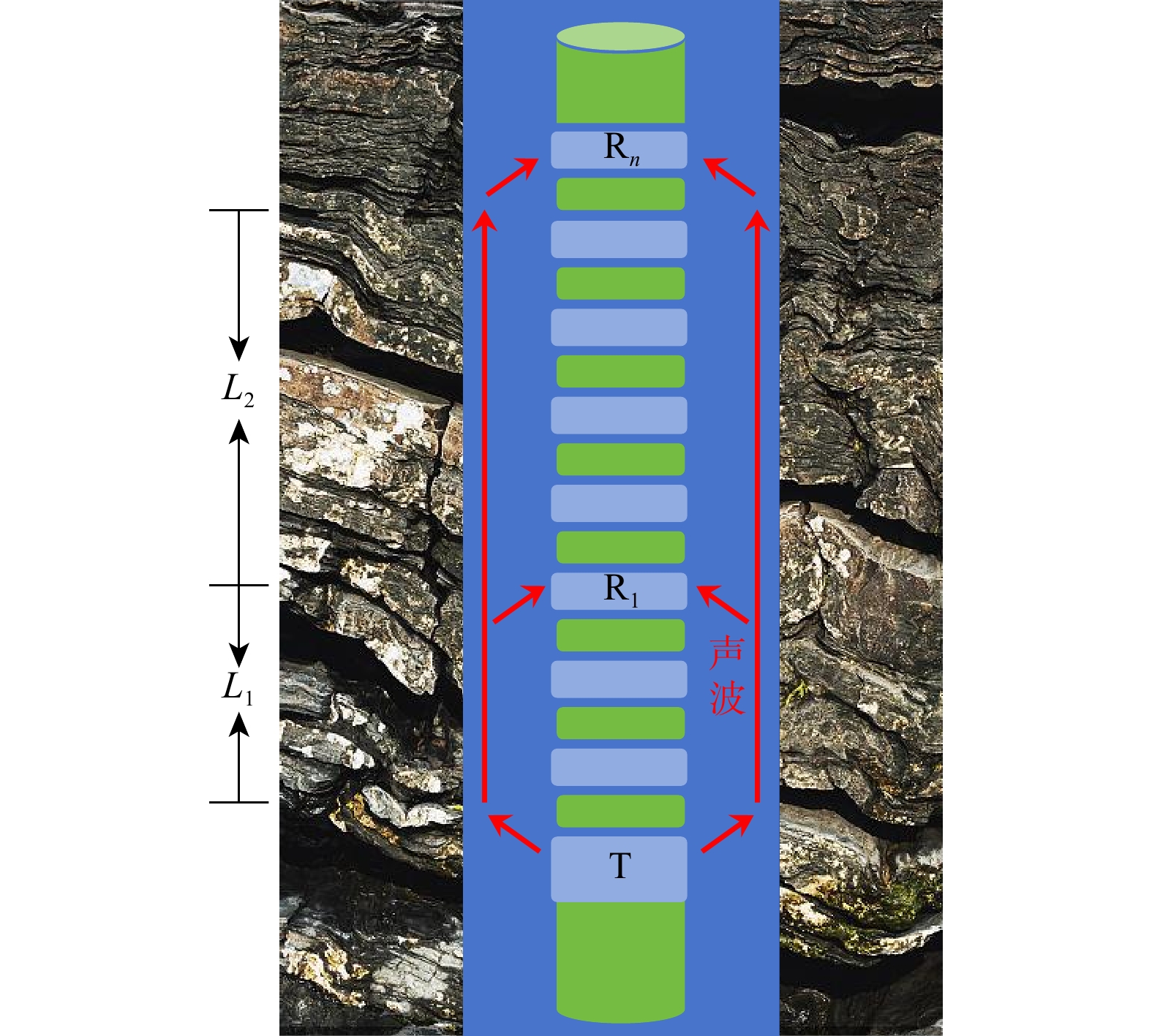
图 4 阵列声波测井远近探头测量示意图
Rn. 第n个接收器;R1. 某个接收器;T. 发射器;L1. 发射器与某接收器距离;L2. 某接收器与第n个接收器间距
Figure 4. Schematic diagram of array sonic logging with far and near receivers
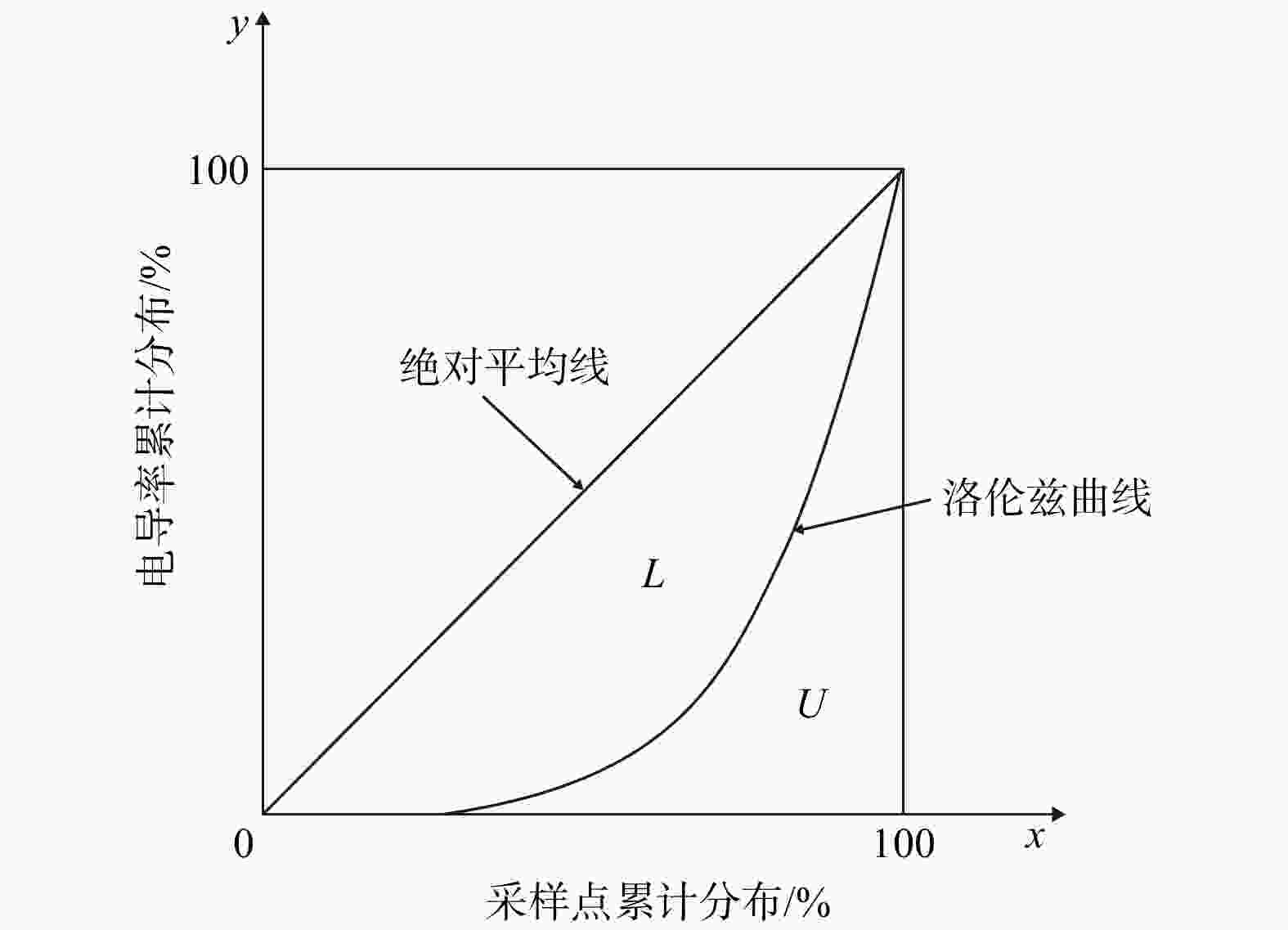
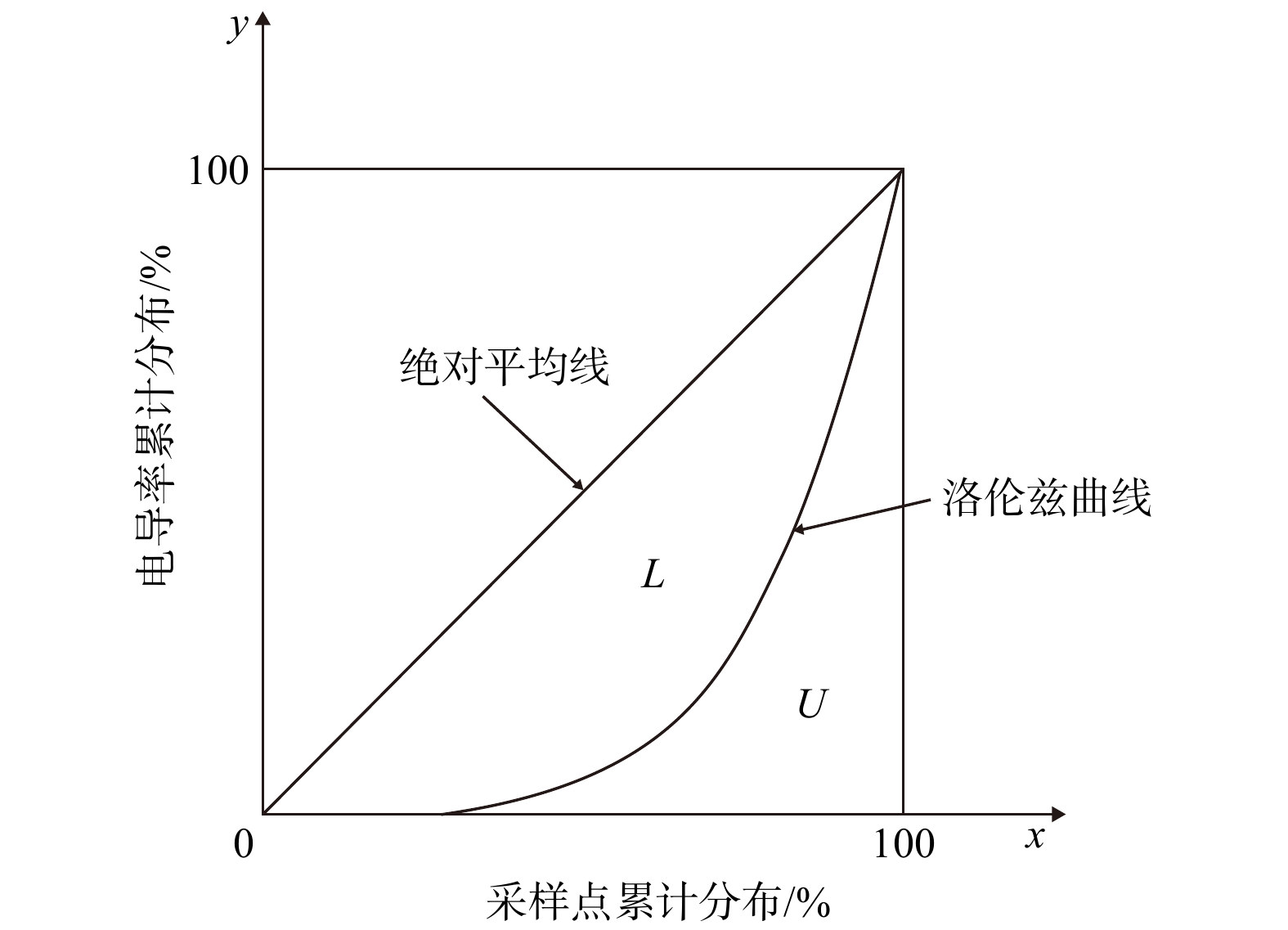
图 5 基于导电率的基尼系数计算示意图
Figure 5. Schematic diagram of Gini coefficient calculation based on conductivity
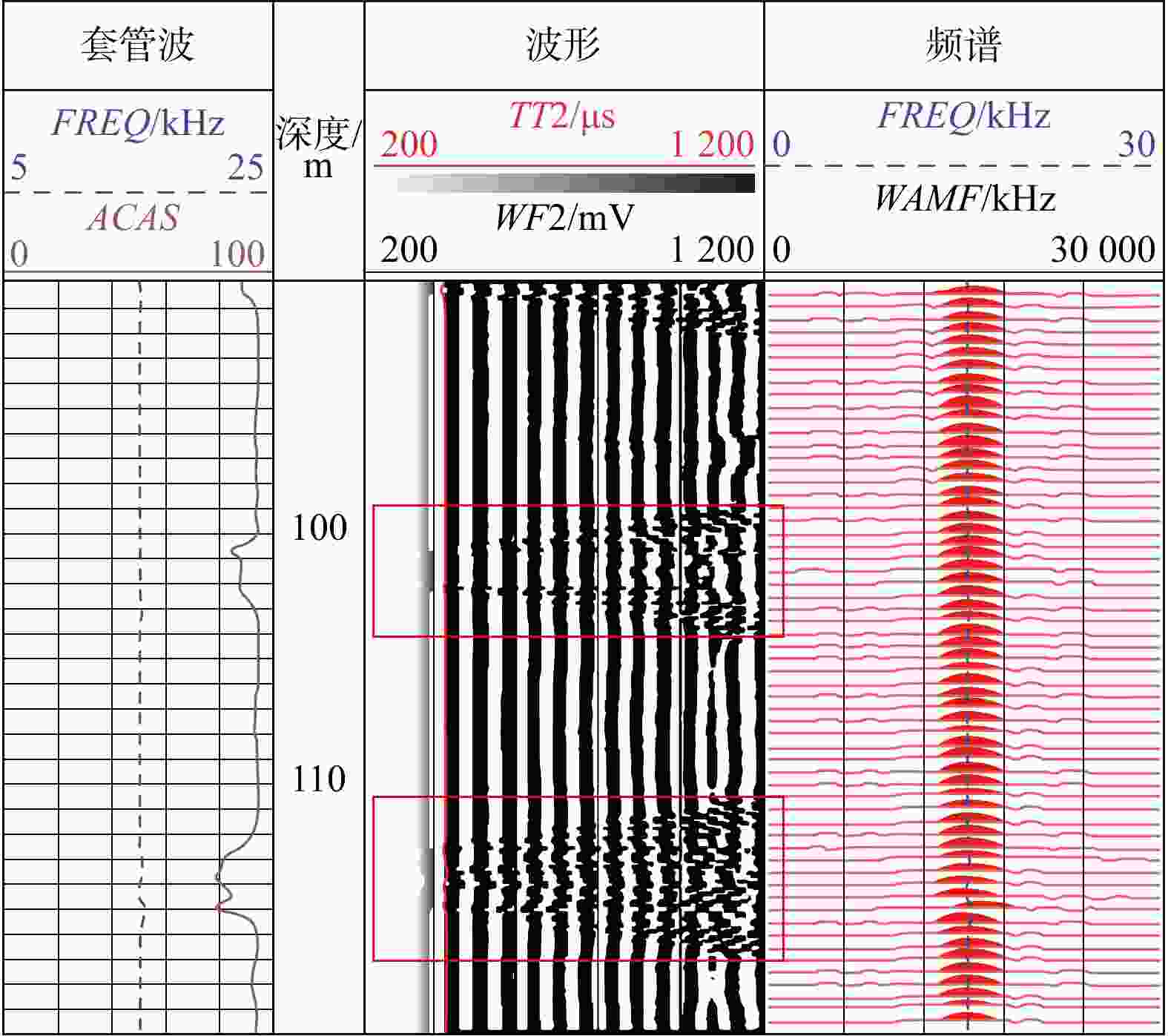
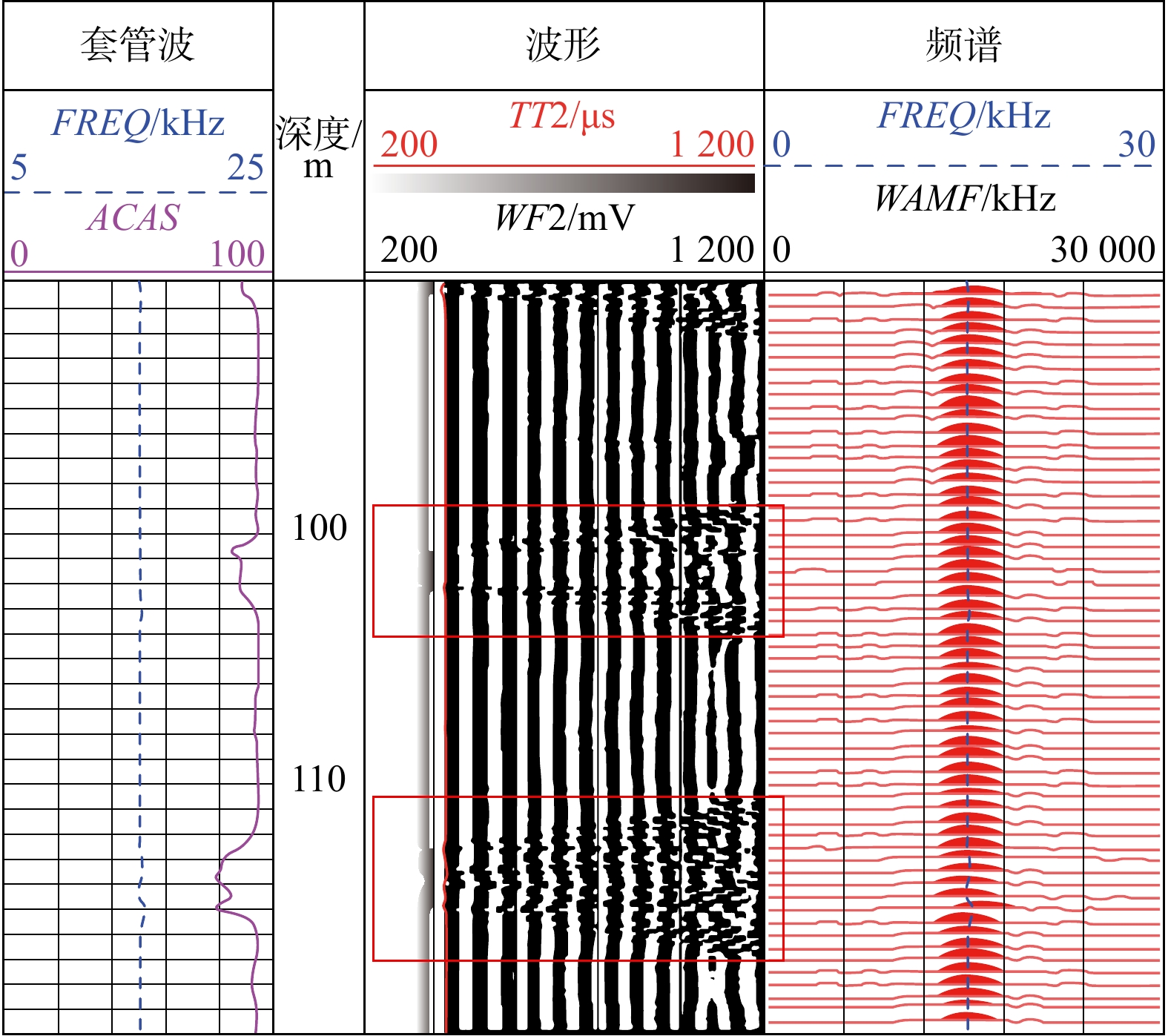
图 6 声波变密度图上的“V”字形条带(红色框中)
FREQ. 主频率;ACAS. 套管声幅;TT2. 慢波到达时间;WF2. 波形;WAMF. 振幅频率
Figure 6. V-shaped stripes on acoustic variable density map
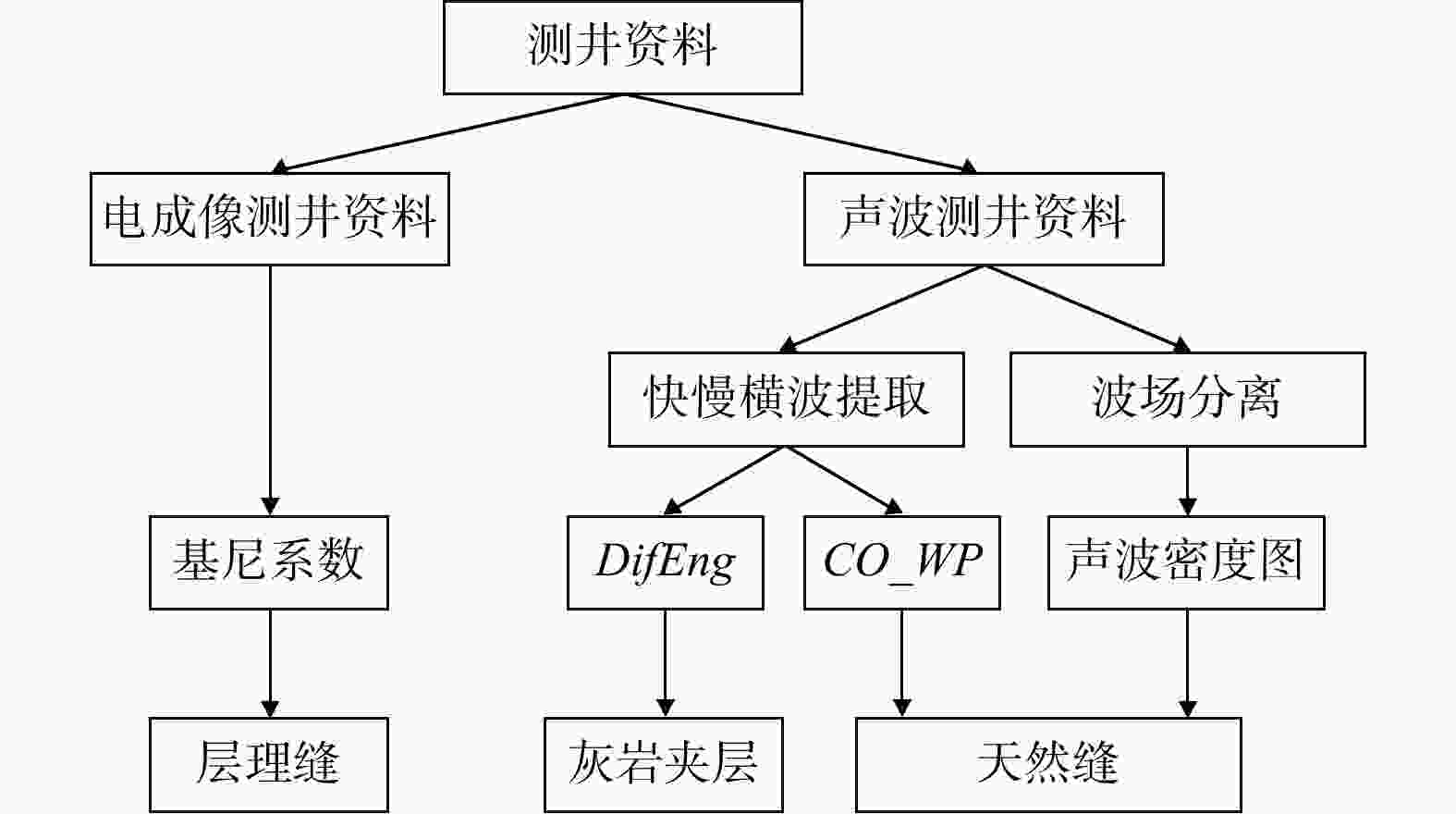
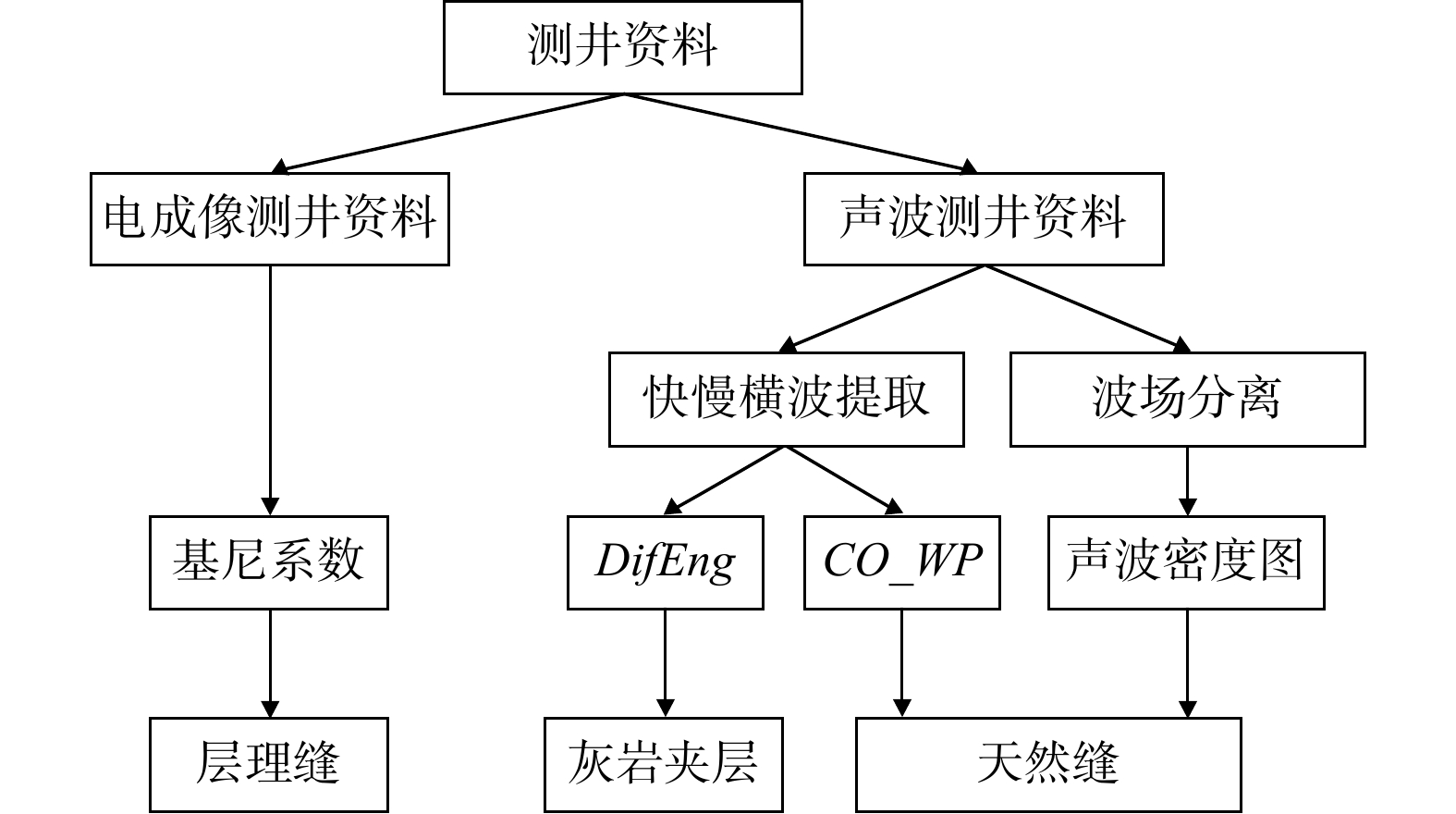
图 7 异常结构面井下识别流程图
DifEng. 声波系数能量差;CO_WP. 快慢横波频谱的皮尔逊相关系数;下同
Figure 7. Downhole identification workflow of abnormal structural planes
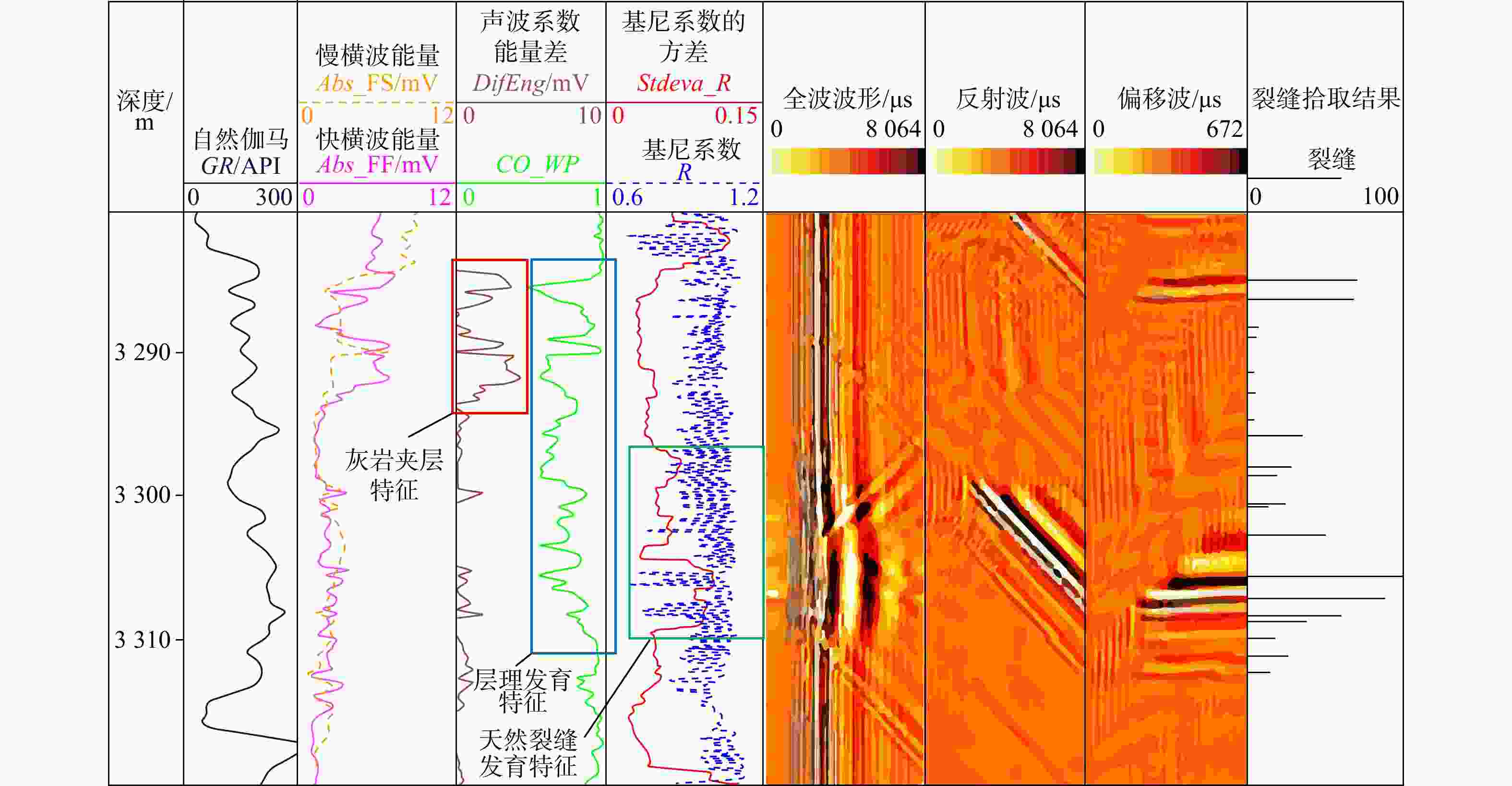
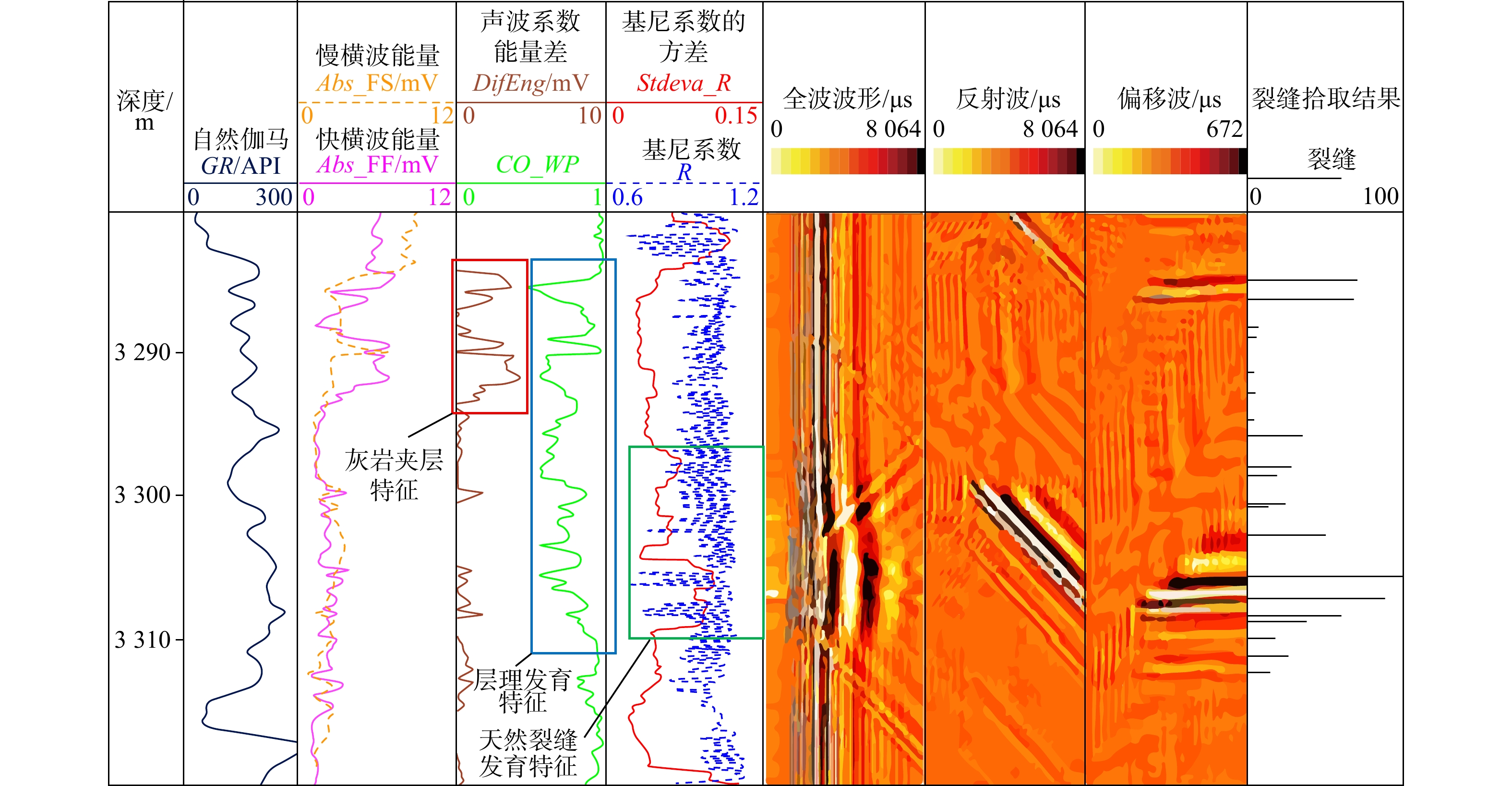
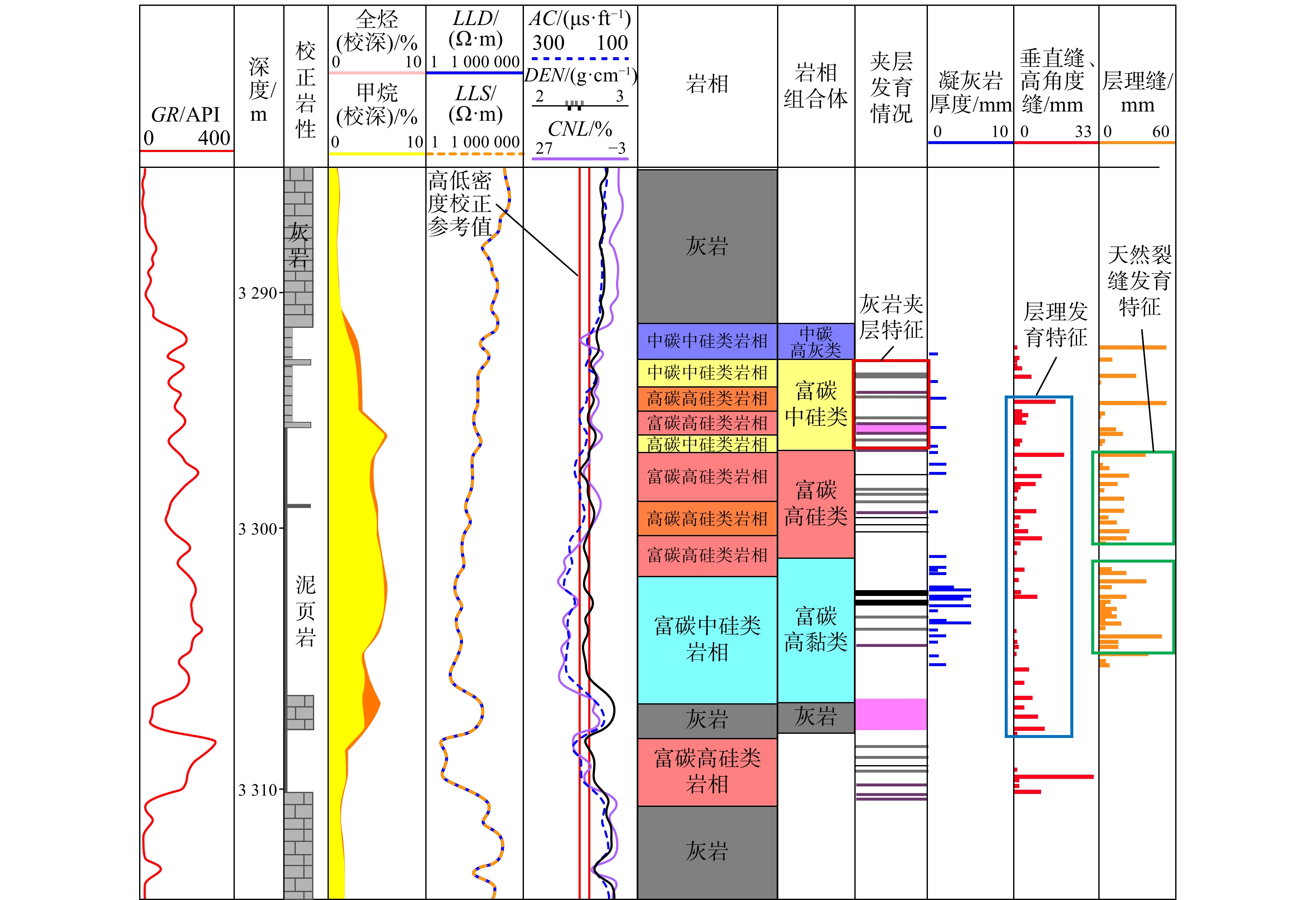
图 8 红星地区红A井综合测井解释图
Figure 8. Comprehensive logging interpretation of Well Hong A in Hongxing area
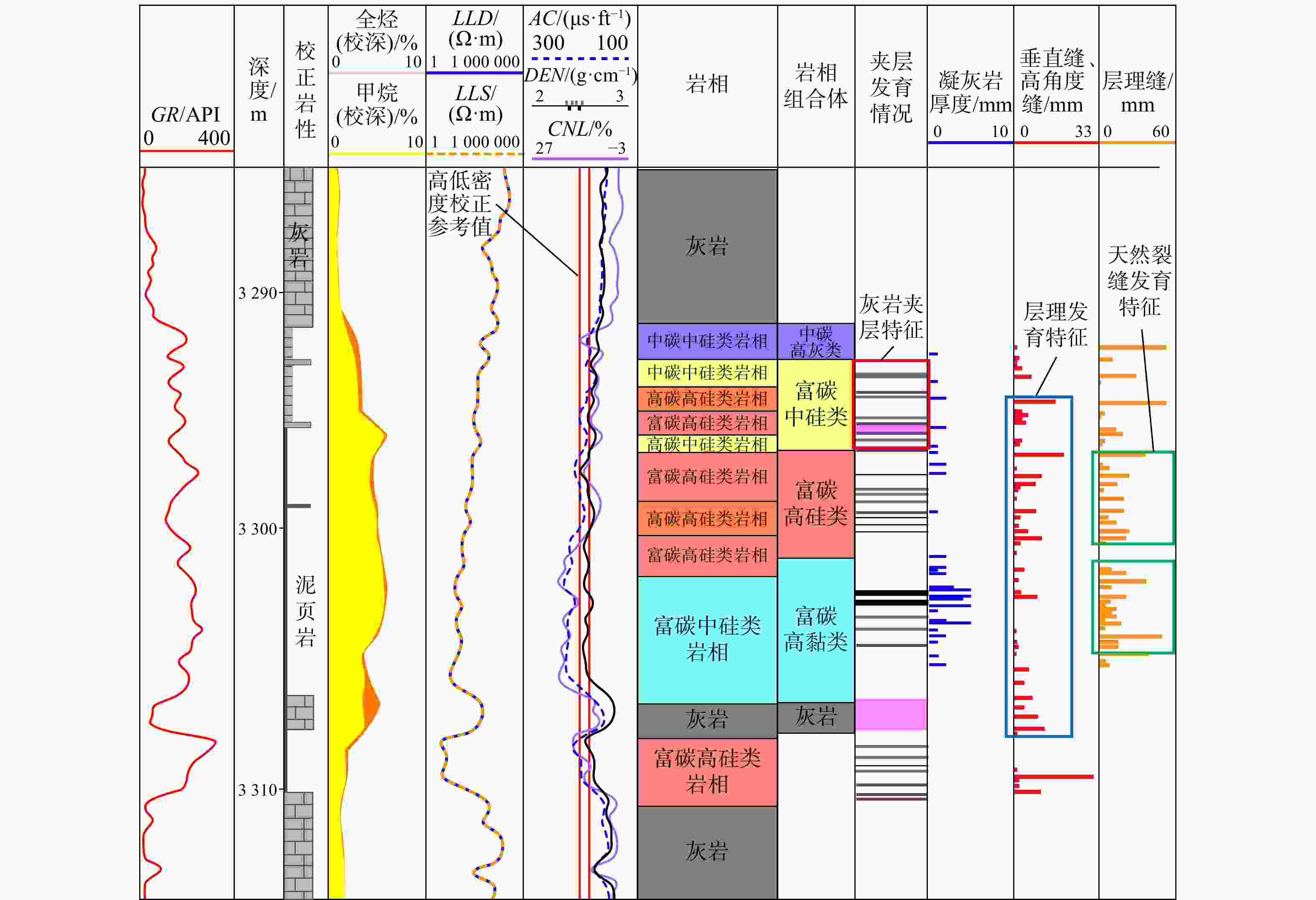
图 9 红星地区红A井综合柱状图
LLD. 深电阻率;LLS. 浅电阻率;AC. 声波时差;DEN. 密度;CNL. 中子
Figure 9. Comprehensive histogram of Well Hong A in Hongxing area
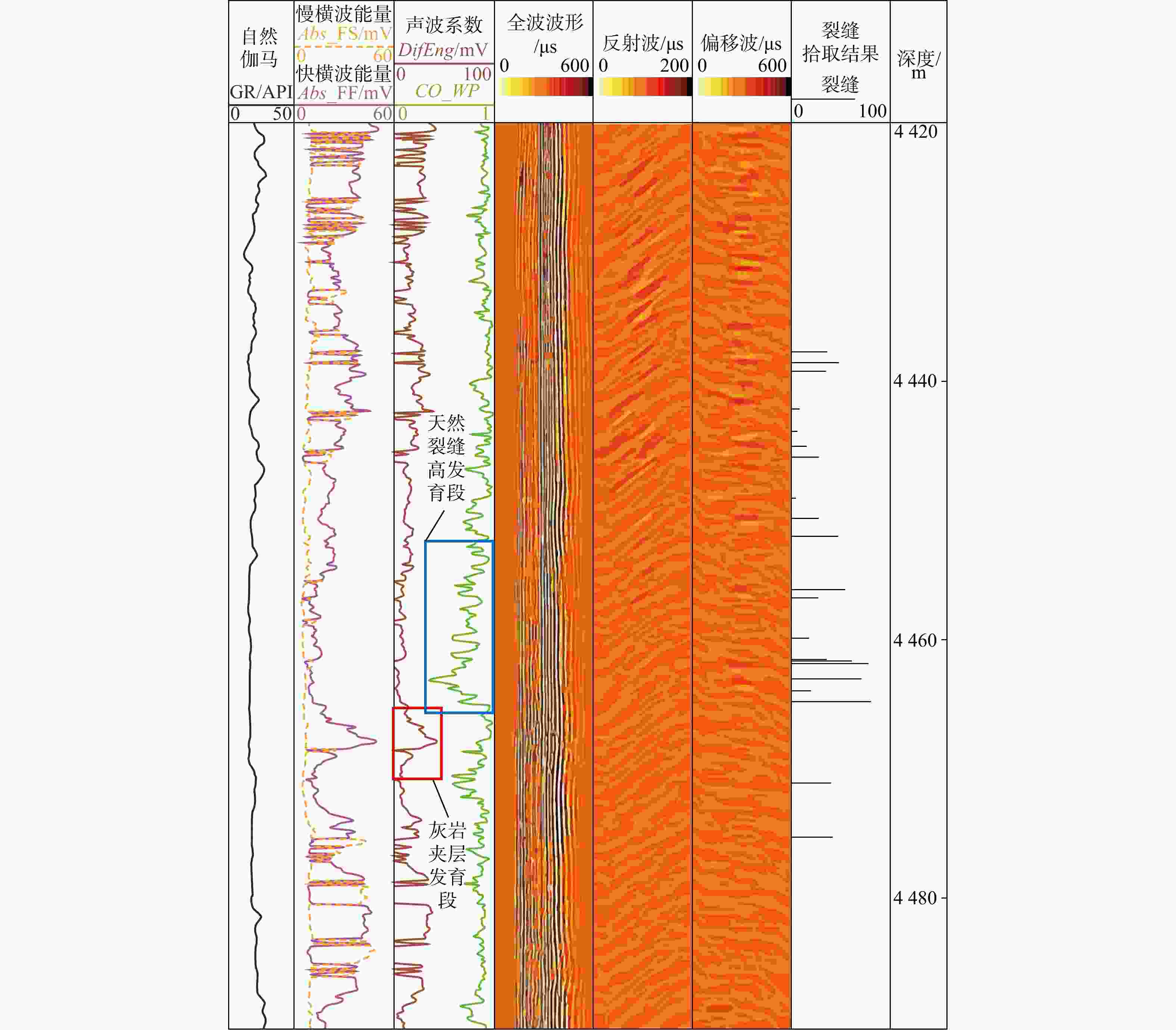
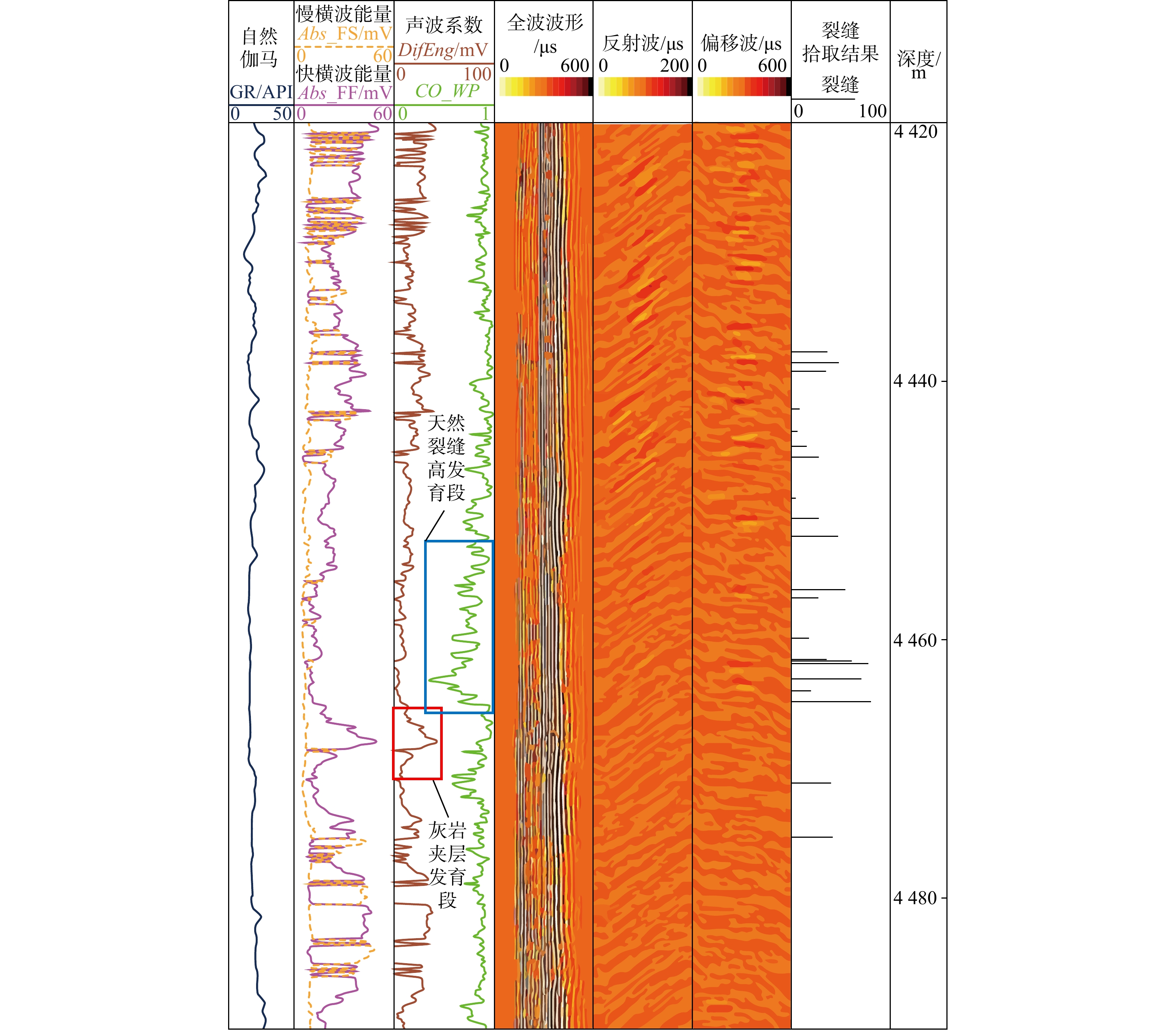
图 10 红星地区红A井水平段阵列声波测井解释图
Figure 10. Array sonic logging interpretation of horizontal section of Well Hong A in Hongxing area
表 1 异常结构面检测方法总结
Table 1. Summary of detection methods for abnormal structural planes
异常结构面 地质特征 识别原理 识别方法优缺点 灰岩夹层 多呈灰白色,与深色泥岩混杂,表现出一定层状、纹层状层理构造。发育溶蚀孔,呈蜂窝状或星散状,孔径一般较大且孔隙边缘不规则 红星地区灰岩夹层的孔径变化差异大,声波经过夹层时,岩性突变引起波阻抗差异,增强了反射与透射效应,能量衰减大,利用声波能量信息定性判别夹层 识别简单准确,可以直观看到地层中灰岩夹层段的发育。能量差的反应存在多解性,需结合实际情况判别 层理缝 高密度,平行或近似平行于页理面,沿页理面呈断续、分枝状、尖灭等分布的特点 由于层理发育层段非均质性强,表现为快慢横波起伏较大,基尼系数忽高忽低,用标准差来表征基尼系数的震荡程度,震荡越剧烈,层理越发育 避免了人工单条拾取工作量大且繁杂的问题;对基尼系数震荡程度的判断存在主观性 天然裂缝 主要发育在高碳页岩中,基本被泥炭质半充填、方解石半充填 地层存在各向异性时,慢横波与快横波正交,各向异性的大小可以反映裂缝发育的程度。天然裂缝发育段与快慢横波频谱信号紧密相关,皮尔逊相关系数表征了快慢横波频谱信号之间的相关性,利用相关性的变化识别天然裂缝发育段;天然裂缝常常导致声波的传播速度减慢或发生折射,从而产生波形的“偏移”现象,根据偏移波形条带的物理特性定量拾取裂缝 识别简单准确,结合声波系数与波形信息可实现天然裂缝的定性定量识别  下载: 导出CSV
-
[1] 王发东, 刘治中. 弓长岭露天铁矿某段边坡变形破坏分析及预测[J]. 金属矿山, 2005(11): 17-19. doi: 10.3321/j.issn:1001-1250.2005.11.006WANG F D, LIU Z Z. Analysis and prediction of formation failure of certain slope in Gongchangling open pit mine[J]. Metal Mine, 2005(11): 17-19. (in Chinese with English abstract doi: 10.3321/j.issn:1001-1250.2005.11.006 [2] 张全, 刘爱娟, 毛增产. 武都水库下游右岸变形体裂缝成因分析及处理方法[J]. 四川水利, 2017, 38(4): 12-15.ZHANG Q, LIU A J, MAO Z C. Cause analysis and treatment method of deformation cracks on the right bank of Wudu reservoir downstream[J]. Sichuan Water Resources, 2017, 38(4): 12-15. (in Chinese) [3] 刘向君, 叶仲斌, 陈一健. 岩石弱面结构对井壁稳定性的影响[J]. 天然气工业, 2002, 22(2): 41-42.LIU X J, YE Z B, CHEN Y J. Influence of rock weak plane texture on sidewall stability[J]. Natural Gas Industry, 2002, 22(2): 41-42. (in Chinese with English abstract [4] ZHAO W C, LIU Y, WANG T T, et al. Stability analysis of wellbore for multiple weakness planes in shale formations[J]. Geomechanics and Geophysics for Geo-Energy and Geo-Resources, 2021, 7(2): 44. doi: 10.1007/s40948-021-00228-7 [5] MA T S, QIU Y, LIU D C, et al. Shear strength parameter determination for the single plane of weakness criterion: Implications for wellbore stability[J]. IOP Conference Series: Earth and Environmental Science, 2020, 570(3): 032008. doi: 10.1088/1755-1315/570/3/032008 [6] SETIAWAN N B, ZIMMERMAN R W. Wellbore breakout prediction in transversely isotropic rocks using true-triaxial failure criteria[J]. International Journal of Rock Mechanics and Mining Sciences, 2018, 112: 313-322. doi: 10.1016/j.ijrmms.2018.10.033 [7] 高开丰. 鄂西南泥灰岩中顺层软弱夹层抗剪强度特性研究及工程应用[D]. 浙江 绍兴: 绍兴文理学院, 2021.GAO K F. Research and engineering application of shear strength characteristics of bedding weak intercalation in marl of southwest Hubei[D]. Shaoxing Zhejiang: Shaoxing University, 2021. (in Chinese with English abstract [8] 赖国泉, 焦海平, 吴红刚, 等. 山区机场高填方滑坡特征、成灾机理、防治及启示: 以攀枝花机场为例[J]. 地质科技通报, 2026, 45(1): 135-146. doi: 10.19509/j.cnki.dzkq.tb20240216LAI G Q, JIAO H P, WU H G, et al. Characteristics, disaster mechanism, prevention and treatment and enlightenment of airport high fill landslide in mountainous area: Taking Panzhihua Airport as an example[J]. Bulletin of Geological Science and Technology, 2026, 45(1): 135-146. (in Chinese with English abstract doi: 10.19509/j.cnki.dzkq.tb20240216 [9] 刘雅利, 刘鹏. 陆相富有机质泥页岩中夹层特征及其作用: 以济阳坳陷为例[J]. 油气地质与采收率, 2019, 26(5): 1-9. doi: 10.13673/j.cnki.cn37-1359/te.2019.05.001LIU Y L, LIU P. Interlayer characteristics and their effect on continental facies organic-rich shale: A case study of Jiyang Depression[J]. Petroleum Geology and Recovery Efficiency, 2019, 26(5): 1-9. (in Chinese with English abstract doi: 10.13673/j.cnki.cn37-1359/te.2019.05.001 [10] 刘之的, 汤小燕, 于红果, 等. 基于岩石力学参数评价火山岩裂缝发育程度[J]. 天然气工业, 2009, 29(11): 20-21. doi: 10.3787/j.issn.1000-0976.2009.11.006LIU Z D, TANG X Y, YU H G, et al. Evaluation of fracture development in volcanic rocks based on rock mechanical parameters[J]. Natural Gas Industry, 2009, 29(11): 20-21. (in Chinese) doi: 10.3787/j.issn.1000-0976.2009.11.006 [11] 黄梦婷, 高斐, 栾凯伦, 等. 涪陵页岩储层裂缝识别方法研究[J]. 矿产勘查, 2024, 15(5): 853-860. doi: 10.20008/j.kckc.202405017HUANG M T, GAO F, LUAN K L, et al. Method study on fracture identification in the Fuling shale reservoir[J]. Mineral Exploration, 2024, 15(5): 853-860. (in Chinese with English abstract doi: 10.20008/j.kckc.202405017 [12] 夏文鹤, 朱喆昊, 韩玉娇, 等. 电阻率测井成像图井壁裂缝智能识别与分割方法[J]. 石油地球物理勘探, 2023, 58(5): 1042-1052.XIA W H, ZHU Z H, HAN Y J, et al. Intelligent identification and segmentation method of wellbore fractures in resistivity logging imaging map[J]. Oil Geophysical Prospecting, 2023, 58(5): 1042-1052. (in Chinese with English abstract [13] 曹继飞, 邹德永, 舒腾飞, 等. 基于主成分分析的碳酸盐岩裂缝识别方法[J]. 科学技术与工程, 2021, 21(36): 15421-15428.CAO J F, ZOU D Y, SHU T F, et al. Fracture identification in carbonate rocks based on principle component analysis[J]. Science Technology and Engineering, 2021, 21(36): 15421-15428. (in Chinese with English abstract [14] 杨帆, 路凡, 柯先启, 等. 电阻率侵入差比法在裂缝识别中的应用[J]. 石油化工应用, 2020, 39(8): 65-67.YANG F, LU F, KE X Q, et al. Application of resistivity invasion difference ratio method in fracture identification[J]. Petrochemical Industry Application, 2020, 39(8): 65-67. (in Chinese) [15] DENG G X, REN W B, CAO F, et al. Fracture prediction and application in carbonate reservoirs based on the rescaled range analysis-finite difference numerical analysis methods[J]. Petroleum Science and Technology, 2025, 43(12): 1333-1349. doi: 10.1080/10916466.2024.2337391 [16] MA N, DONG S Q, WANG L X, et al. Unbalanced graph isomorphism network for fracture identification by well logs[J]. Expert Systems with Applications, 2025, 263: 125794. doi: 10.1016/j.eswa.2024.125794 [17] TEPLUKHIN K V, RATUSHNYAK N A, KOSTITSYN I V, et al. Development of induction logging technology for non-stationary conditions while drilling subhorozontal sections of oil and gas wells[J]. Vestnik Permskogo Universiteta: Seriâ Geologiâ, 2017, 16(2): 122-129. [18] TERINOV N N, GERTS E F, YU N B. Development of logging technology in the urals[J]. Bulletin of Higher Educational Institutions Lesnoi Zhurnal (Forestry Journal), 2016(2): 81-90. doi: 10.17238/issn0536-1036.2016.2.81 [19] 赵笑笑, 闫建平, 王敏, 等. 沾化凹陷沙河街组湖相泥页岩夹层特征及测井识别方法[J]. 岩性油气藏, 2022, 34(1): 118-129. doi: 10.12108/yxyqc.20220112ZHAO X X, YAN J P, WANG M, et al. Logging identification method of lacustrine shale interlayers of Shahejie Formation in Zhanhua Sag[J]. Lithologic Reservoirs, 2022, 34(1): 118-129. (in Chinese with English abstract doi: 10.12108/yxyqc.20220112 [20] 陈世悦, 张顺, 王永诗, 等. 渤海湾盆地东营凹陷古近系细粒沉积岩岩相类型及储集层特征[J]. 石油勘探与开发, 2016, 43(2): 198-208. doi: 10.11698/PED.2016.02.05CHEN S Y, ZHANG S, WANG Y S, et al. Lithofacies types and reservoirs of Paleogene fine-grained sedimentary rocks in Dongying Sag, Bohai Bay Basin[J]. Petroleum Exploration and Development, 2016, 43(2): 198-208. (in Chinese with English abstract doi: 10.11698/PED.2016.02.05 [21] WANG D, ZHANG J Y, JIANG X F, et al. Optimal packing ratio of proppant monolayer for partially-propped horizontal bedding fractures of shale[J]. Gas Science and Engineering, 2025, 135: 205563. doi: 10.1016/j.jgsce.2025.205563 [22] WANG S, CHEN M, LYU J X, et al. Study of the evolution characteristics of fiber-optic strain induced by the propagation of bedding fractures in hydraulic fracturing[J]. Petroleum Science, 2024, 21(6): 4219-4229. doi: 10.1016/j.petsci.2024.09.010 [23] WANG T, LIU Z W, HE Z L, et al. Evaluation of the effectiveness of shale bedding fractures: A case study of the Longmaxi Formation in the Sichuan Basin[J]. Frontiers of Earth Science, 2024, 18(4): 732-742. doi: 10.1007/s11707-024-1120-3 [24] LU H, CAO S, DONG S Q, et al. Control of lamination on bedding-parallel fractures in tight sandstone reservoirs: The seventh member of the Upper Triassic Yanchang Formation in the Ordos Basin, China[J]. Frontiers in Earth Science, 2024, 12: 1428316. doi: 10.3389/feart.2024.1428316 [25] 潘磊, 杜红权, 李雷涛, 等. 川东北元坝地区上三叠统须家河组天然裂缝发育特征与主控因素[J]. 地学前缘, 2024, 31(5): 156-165. doi: 10.13745/j.esf.sf.2024.6.12PAN L, DU H Q, LI L T, et al. Fracture development characteristics and main controlling factors of natural fracture in the Upper Triassic Xujiahe Formation in Yuanba area, northeastern Sichuan Basin[J]. Earth Science Frontiers, 2024, 31(5): 156-165. (in Chinese with English abstract doi: 10.13745/j.esf.sf.2024.6.12 [26] 张冠杰, 张滨鑫, 徐珂, 等. 塔里木盆地库车坳陷博孜区块超深层致密砂岩储层裂缝特征及其对油气产能的影响[J]. 地质科技通报, 2024, 43(2): 75-86.ZHANG G J, ZHANG B X, XU K, et al. Fracture characteristics of ultra-deep tight sandstone reservoirs in the Bozi Block, Kuqa Depression of Tarim Basin, and effects on oil-gas production[J]. Bulletin of Geological Science and Technology, 2024, 43(2): 75-86. (in Chinese with English abstract [27] 齐戈为, 唐军, 蔡明, 等. 裂缝等效宽度的斯通利波检测实验及反演[J]. 西安石油大学学报(自然科学版), 2024, 39(2): 31-38.QI G W, TANG J, CAI M, et al. Stoneley wave detection experiment and inversion of equivalent fracture width[J]. Journal of Xi'an Shiyou University (Natural Science), 2024, 39(2): 31-38. (in Chinese with English abstract [28] 蔡明, 章成广, 韩闯, 等. 微裂缝对横波衰减影响的实验研究及其在致密砂岩裂缝评价中的应用[J]. 中国石油大学学报(自然科学版), 2020, 44(1): 45-52. doi: 10.3969/j.issn.1673-5005.2020.01.005CAI M, ZHANG C G, HAN C, et al. Experimental research of effect of microfracture on shear wave attenuation and its application on fracture evaluation in tight sand formation[J]. Journal of China University of Petroleum (Edition of Natural Science), 2020, 44(1): 45-52. (in Chinese with English abstract doi: 10.3969/j.issn.1673-5005.2020.01.005 [29] 唐军, 齐戈为, 高永德, 等. 裂缝空间有效性的井下声波检测技术[J]. 地球物理学进展, 2024, 39(3): 1164-1172. doi: 10.6038/pg2024HH0239TANG J, QI G W, GAO Y D, et al. 3D detection technology of fracture effectivity on acoustic logging[J]. Progress in Geophysics, 2024, 39(3): 1164-1172. (in Chinese with English abstract doi: 10.6038/pg2024HH0239 [30] 申威. 潜山储层垂向相带阵列声波测井划分方法研究[D]. 湖北荆州: 长江大学, 2023.SHEN W. Vertical phase array acoustic logging of buried hill reservoir[D]. Jingzhou Hubei: Yangtze University, 2023. (in Chinese with English abstract [31] 杨双定, 姜微微, 赵静, 等. 低孔低渗储层压裂效果测井评价方法研究[C]//油气藏监测与管理国际会议论文集. 西安: 西安石油大学, 陕西省石油学会, 2011: 60-67.YANG S D, JIANG W W, ZHAO J, et al. Research on logging evaluation method of fracturing effect in low porosity and low permeability reservoir[C]//Proceedings of the International Conference on oil and gas reservoir monitoring and management. Xi'an: Xi'an Petroleum University, Shaanxi petroleum society, 2011: 60-67. (in Chinese with English abstract [32] 陈渊博. 致密裂缝性储层横波裂缝渗透率计算模型与应用研究[D]. 湖北 荆州: 长江大学, 2022.CHEN Y B. Calculation model and application of fracture permeability based on shear wave in tight fractured reservoirs[D]. Jingzhou Hubei: Yangtze University, 2022. (in Chinese with English abstract [33] 朱雷, 章成广, 唐军, 等. 利用声波全波列测井资料识别致密砂岩储层裂缝[J]. 长江大学学报(自科版), 2015, 12(8): 23-26. doi: 10.16772/j.cnki.1673-1409.2015.08.006ZHU L, ZHANG C G, TANG J, et al. The use of full-wave acoustic logging data to identify fractures in tight sandstone reservoirs[J]. Journal of Yangtze University (Natural Science Edition), 2015, 12(8): 23-26. (in Chinese with English abstract doi: 10.16772/j.cnki.1673-1409.2015.08.006 [34] 徐龙龙, 胡强, 刘建章, 等. 准噶尔盆地中央坳陷西部三叠系深层-超深层超压测井响应特征及成因[J]. 地质科技通报, 2025, 44(4): 154-166. doi: 10.19509/j.cnki.dzkq.tb20240560XU L L, HU Q, LIU J Z, et al. Logging response characteristics and genetic mechanism of deep to ultradeep overpressure of Triassic in the western Central Depression, Junggar Basin[J]. Bulletin of Geological Science and Technology, 2025, 44(4): 154-166. (in Chinese with English abstract doi: 10.19509/j.cnki.dzkq.tb20240560 [35] 湛忠宇, 刘美丽, 朱永军. 基于洛伦兹曲线和基尼系数的浙江省用水结构变化特征[J]. 水资源开发与管理, 2024, 10(6): 59-64. doi: 10.16616/j.cnki.10-1326/TV.2024.06.12ZHAN Z Y, LIU M L, ZHU Y J. Characteristics of water use structure changes in Zhejiang Province based on Lorenz curve and gini coefficient[J]. Water Resources Development and Management, 2024, 10(6): 59-64. (in Chinese with English abstract doi: 10.16616/j.cnki.10-1326/TV.2024.06.12 [36] 彭勇民, 董世雄, 边瑞康, 等. 四川盆地东部页岩气水平井裂缝识别方法及应用[J]. 石油实验地质, 2023, 45(6): 1196-1203.PENG Y M, DONG S X, BIAN R K, et al. Method for identification of fractures in shale gas horizontal wells in eastern Sichuan Basin and its application[J]. Petroleum Geology & Experiment, 2023, 45(6): 1196-1203. (in Chinese with English abstract [37] 李亭宣, 阮平阳, 章刚, 等. 二语流利性测量指标的对比研究及其与口语成绩的相关性分析[J]. 英语广场, 2023(8): 97-100. doi: 10.3969/j.issn.1009-6167.2023.08.025LI T X, RUAN P Y, ZHANG G, et al. A comparative study of the indicators of second language fluency and its correlation with oral performance[J]. English Square, 2023(8): 97-100. (in Chinese) doi: 10.3969/j.issn.1009-6167.2023.08.025 [38] 李楠, 杨帆, 武宏波, 等. 能耗双控政策与高耗能行业能源利用效率关联性研究[J]. 高电压技术, 2023, 49(增刊1): 215-220.LI N, YANG F, WU H B, et al. Study on the correlation between energy consumption double control policy and energy utilization efficiency of high energy consumption industries[J]. High Voltage Engineering, 2023, 49(S1): 215-220. (in Chinese) [39] 高少武, 宋强功, 孙鹏远, 等. 直达波标定的水陆检数据上下行波场分离方法[J]. 石油地球物理勘探, 2025, 60(2): 362-368. doi: 10.13810/j.cnki.issn.1000-7210.2025.02.20240023GAO S W, SONG Q G, SUN P Y, et al. A method of the dual-sensor seismic data up-going and down-going wavefields separation on the direct wave calibration[J]. Oil Geophysical Prospecting, 2025, 60(2): 362-368. (in Chinese with English abstract doi: 10.13810/j.cnki.issn.1000-7210.2025.02.20240023 [40] 孙德成. 井下DAS数据复杂波场的智能恢复与分离[D]. 长春: 吉林大学, 2025.SUN D C. Intelligent recovery and separation of complex wavefields in downhole DAS data[D]. Changchun: Jilin University, 2025. (in Chinese with English abstract [41] 杨光, 高祥成, 李永忠, 等. 岩心数字化技术研究与应用[J]. 油气地质与采收率, 2024, 31(4): 217-226.YANG G, GAO X C, LI Y Z, et al. Research and application of digital core technologies[J]. Petroleum Geology and Recovery Efficiency, 2024, 31(4): 217-226. (in Chinese with English abstract [42] 袁龙, 曹志锋, 别康, 等. 深层-超深层碎屑岩测井评价技术进展及展望[J]. 油气地质与采收率, 2025, 32(6): 1-14.YUAN L, CAO Z F, BIE K, et al. Review and prospect of logging evaluation technologies for deep and ultra-deep clastic rocks[J]. Petroleum Geology and Recovery Efficiency, 2025, 32(6): 1-14. (in Chinese with English abstract -

 下载:
下载:

 点击查看大图
计量
- 文章访问数: 495
- PDF下载量: 177
- 被引次数: 0