投审稿入口
投审稿入口


Diffusion coefficient of H2 in pure water under temperature and pressure conditions for underground hydrogen storage
-
摘要:
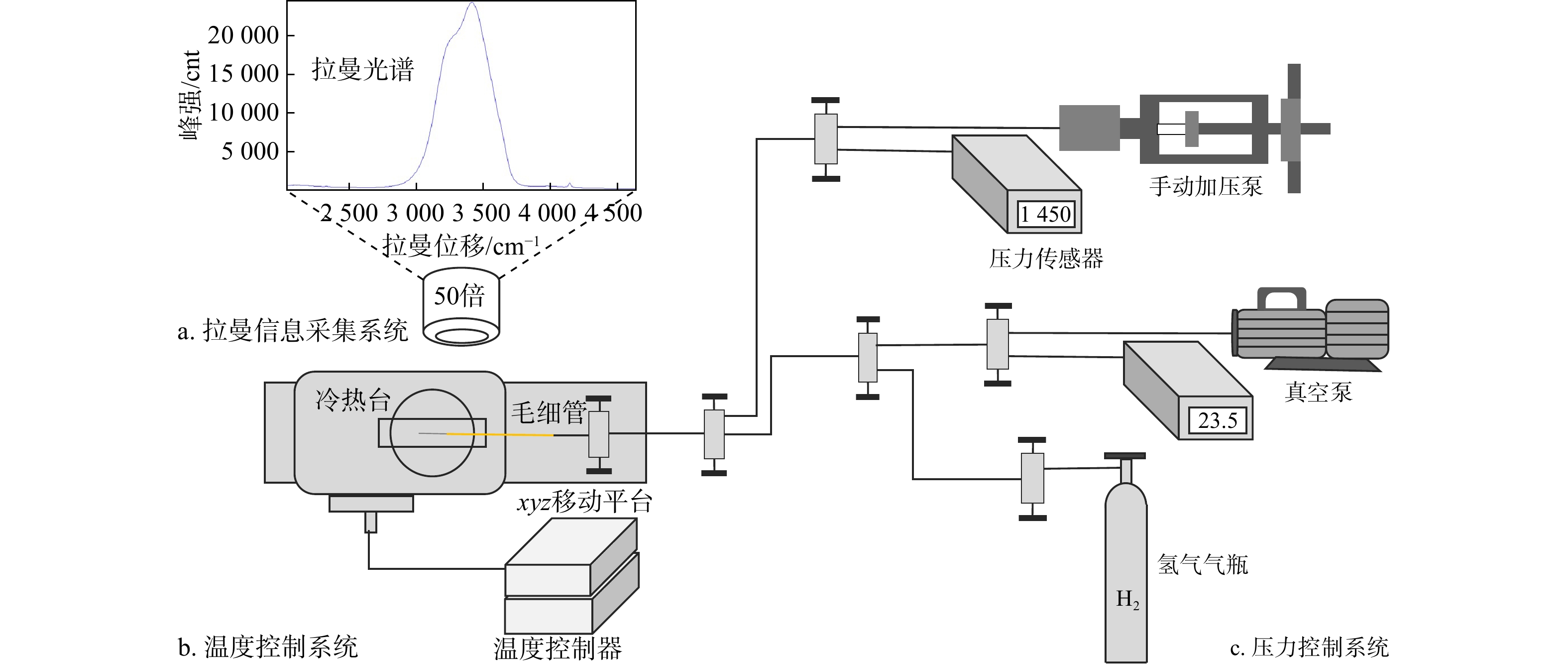
随着氢能利用需求不断提升,地下地质储氢(UHS)已成为能源储存领域的研究热点。地质储氢高温高压条件下H2在纯水中的扩散系数,是定量刻画H2在储层孔隙中运移行为、准确评价H2通过盖层扩散损失的关键参数。但现有研究多集中于常温常压条件,高温高压条件下的实验数据仍较为缺乏。本研究采用显微激光拉曼光谱技术,在透明高压石英毛细管中原位观测H2在水溶液中的溶解扩散过程,实测获得10~30 MPa、298.15~393.15 K温压范围内H2在纯水中的扩散系数,并分析其影响规律与工程应用意义。结果表明:温度对扩散系数影响显著,随温度升高扩散系数明显增大;20 MPa下温度由298.15 K升至363.15 K时,扩散系数增幅约211%,可用Speedy-Angell幂律方程准确拟合:
D =23.572×10⁻⁹[(T /213.54)−1]2.021。压力对扩散系数影响较弱,随压力增大整体呈轻微下降趋势;363.15 K时压力由10 MPa升至30 MPa,扩散系数降幅约4.8%。结合有效扩散系数经验公式估算H2透过盖层的泄漏通量,结果显示盖层厚度越大,H2扩散总量越小、扩散速度越慢、泄漏风险越低。因此,实际地质储氢工程应优先选择温度较低、盖层厚度较大的深层地质构造。本研究获取的高温高压扩散系数数据,可为地质储氢中H2运移规律定量刻画与扩散通量计算提供关键参数,同时为储氢场地选址、方案设计与风险评估提供科学依据。Abstract:ObjectiveWith the global promotion of carbon neutrality and the rapid development of renewable energy, hydrogen has become one of the most promising clean energy carriers due to its high energy density and pollution-free characteristics. Underground hydrogen storage (UHS) is regarded as an effective solution to the large-scale and long-term storage of hydrogen, which has been widely studied in energy and geological engineering fields in recent years. The diffusion coefficient of H2 in water under high-temperature and high-pressure (HTHP) conditions is a key parameter for quantifying hydrogen migration behavior in reservoir pores, simulating diffusion fluxes, and evaluating the leakage risk of hydrogen through caprocks. However, previous studies are mostly limited to ambient temperature and pressure, and experimental data under real UHS-suitable HTHP conditions are still insufficient, with obvious discrepancies among different reported results.
MethodsTo fill this data gap, this study conducted in-situ quantitative observations of the dissolution and diffusion processes of H2 in aqueous solutions using micro-laser Raman spectroscopy in transparent high-pressure quartz capillaries. A series of diffusion experiments was carried out at pressures of 10-30 MPa and temperatures of 298.15-393.15 K, and the diffusion coefficients of H2 in pure water were accurately obtained.
ResultsThe results showed that temperature imposed a dominant effect on the diffusion coefficient of H2 in water. As temperature rose, the diffusion coefficient increased significantly. At 20 MPa, when the temperature increased from 298.15 K to 363.15 K, the diffusion coefficient increased by approximately 211%. The relationship between the diffusion coefficient and temperature could be well fitted by the Speedy-Angell power-law equation:
D =23.572×10⁻⁹[(T /213.54)−1]2.021, with an average absolute deviation (AAD) of only 1.8%. In contrast, pressure had a weak effect on the diffusion coefficient. With increasing pressure, the diffusion coefficient showed a slight decreasing trend. At 363.15 K, when pressure increased from 10 MPa to 30 MPa, the diffusion coefficient decreased by only about 4.8%, which was consistent with the low compressibility of liquid water. Furthermore, combined with the Bruggeman empirical formula and actual geological parameters of the Underground Sun Storage project in Austria, the effective diffusion coefficient and leakage flux of H2 through caprocks were calculated. It revealed that the total cumulative diffusion mass of H2 decreased obviously with increasing caprock thickness. Thicker caprocks significantly slowed down the diffusion rate and prolonged the time required for H2 to migrate outward, thus greatly reducing the loss risk of stored hydrogen.ConclusionTherefore, deep geological structures with relatively low temperature and thick caprocks are strongly recommended for practical UHS engineering. This study provides systematic and reliable HTHP diffusion coefficient data of H2 in pure water, which supplements the basic parameter database for underground hydrogen storage. The findings support the quantitative characterization of hydrogen migration, the calculation of diffusion fluxes, and the assessment of confinement security, and they offer an important scientific basis for site selection, scheme design, and risk management in underground hydrogen storage projects worldwide.
-
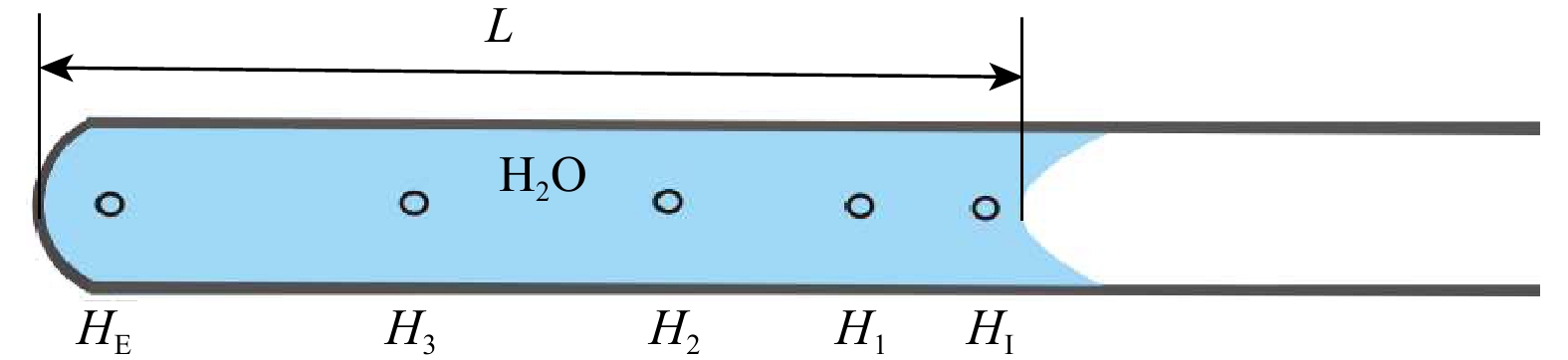
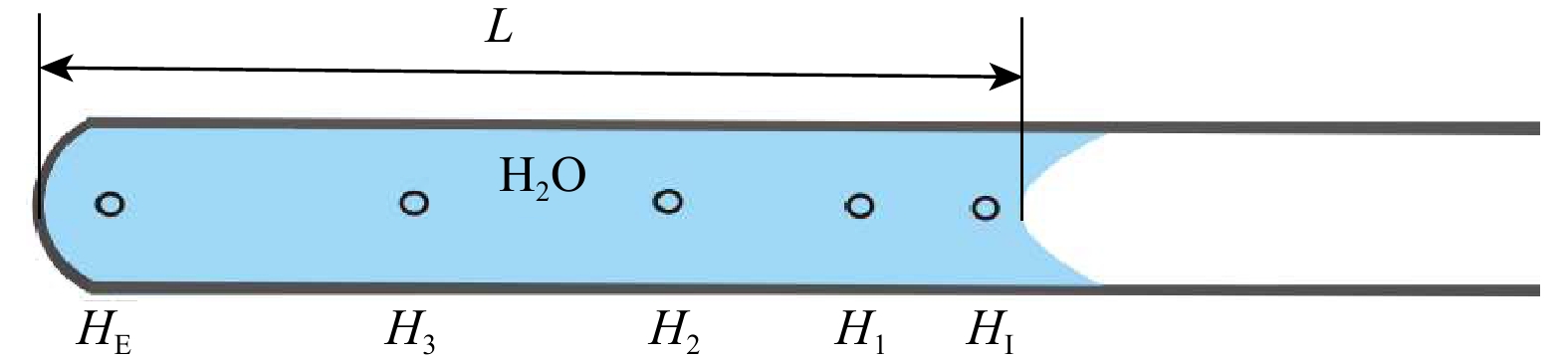
图 3 观测点示意图
L为加压升温后液柱的初始长度;HI为距气液界面50 μm处观测点;H1,H2,H3分别为从界面到管道末端以2~4 mm间距分布的第1~3个观测点;HE为管尾观测点;下同
Figure 3. Schematic diagram of monitoring locations
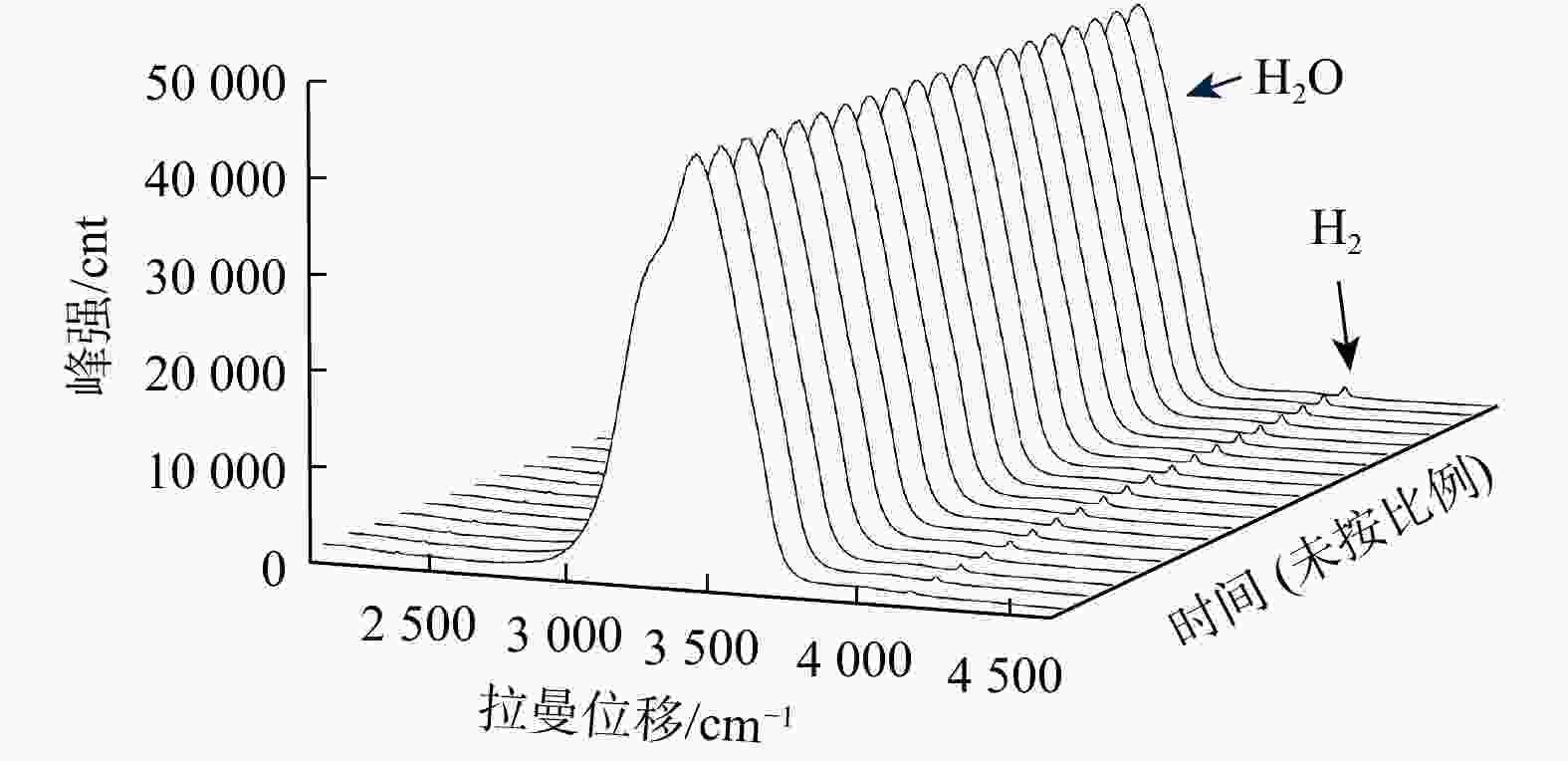
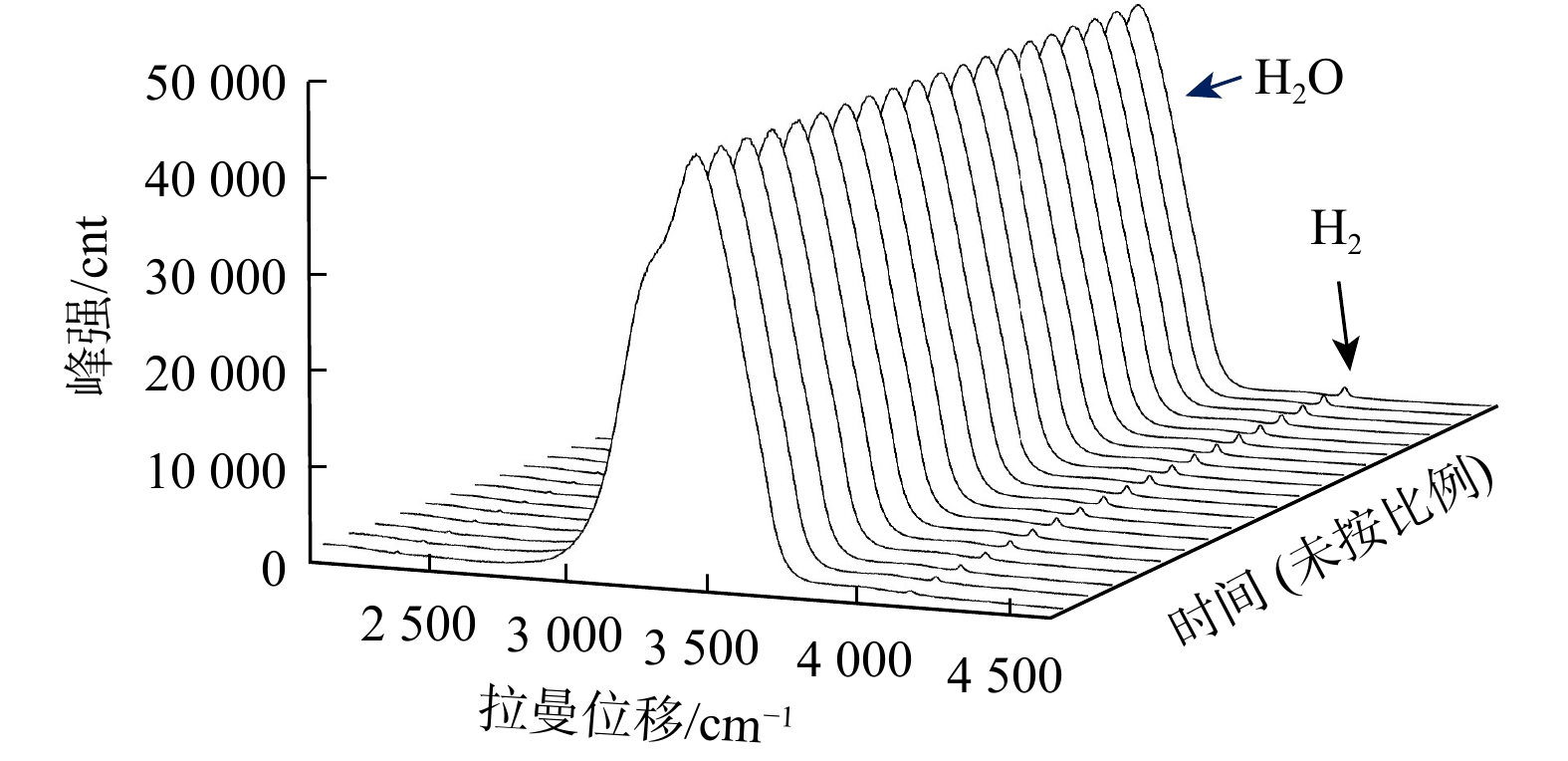
图 4 20 MPa、298.15 K下H1点H2和H2O随时间的拉曼光谱
Figure 4. Time-dependent Raman spectra of H2 and H2O at point H1 under 20 MPa and 298.15 K
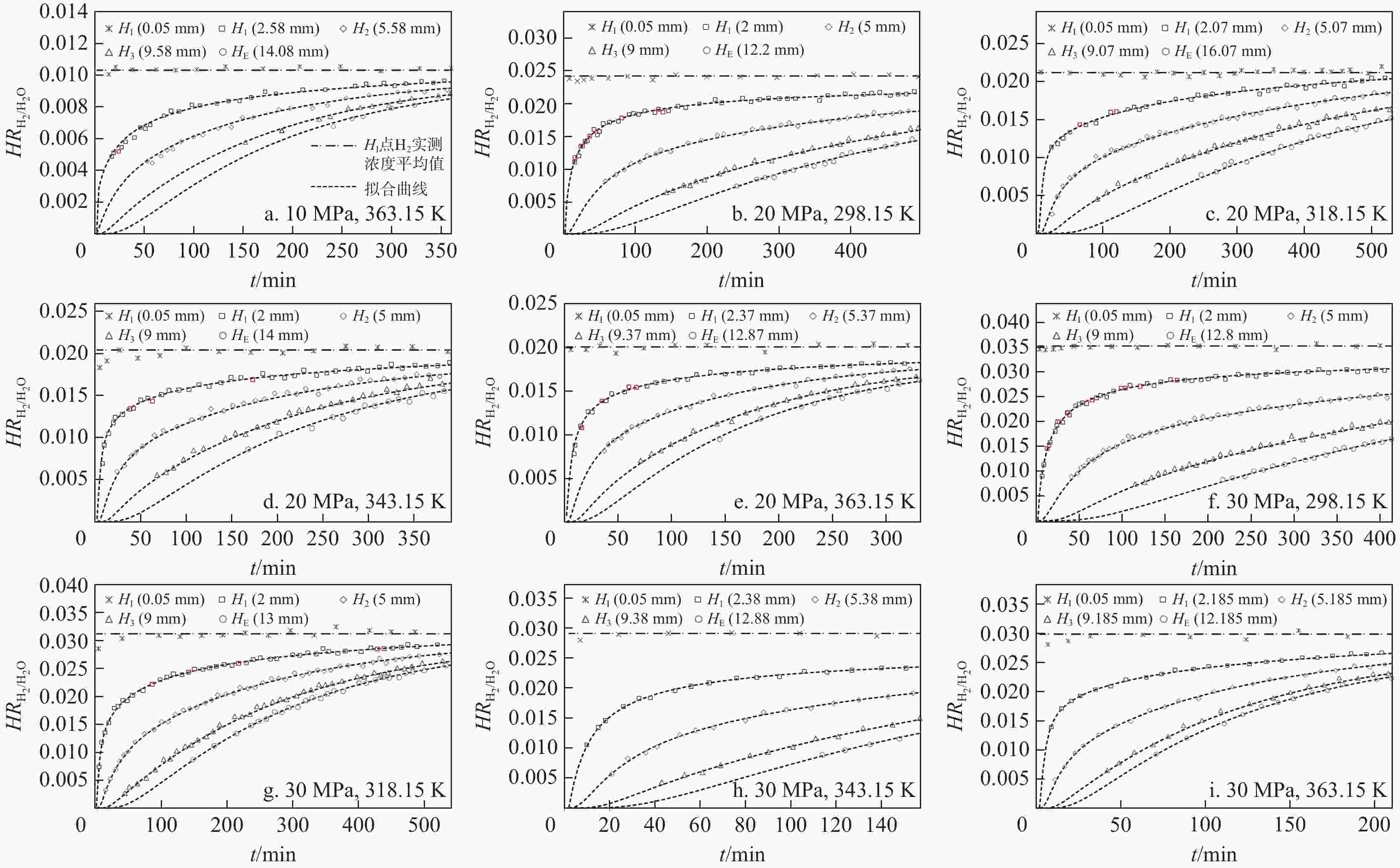
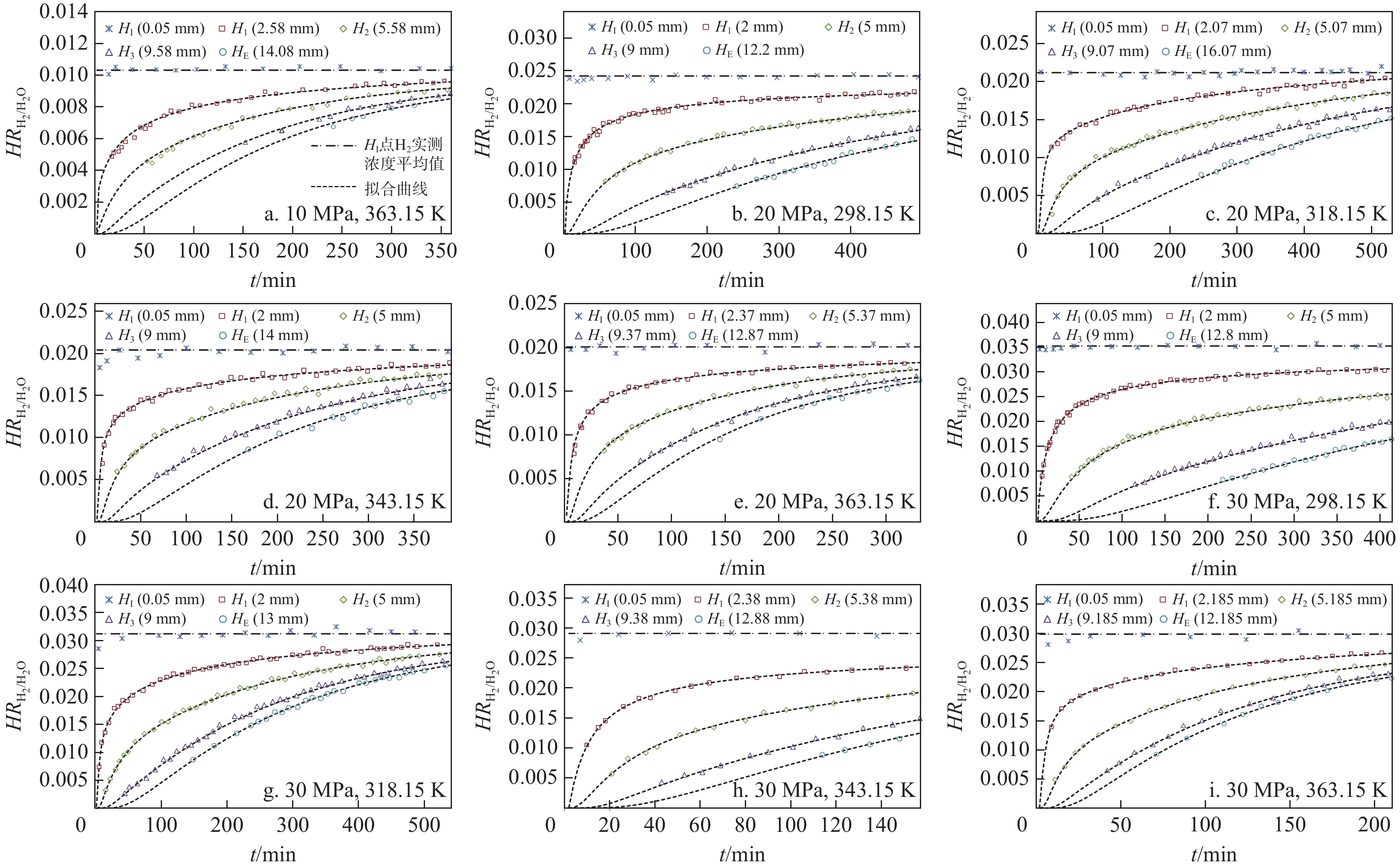
图 5 不同温压条件下各观测点上H2在纯水中浓度随时间的变化关系
$HR_{{\mathrm{H}}_2/{\mathrm{H}}_2{\mathrm{O}}} $为H2拉曼峰强度$(H_{{\mathrm{H}}_2}) $与水溶液拉曼峰强度$(H_{{\mathrm{H}}_2{\mathrm{O}}} )$的比值,表征H2的浓度;t为时间;H1(2 mm)表示观测点编号(观测点距气液界面的距离);下同
Figure 5. Time-dependent variation of H2 concentration in pure water at monitoring points under different temperature-pressure conditions
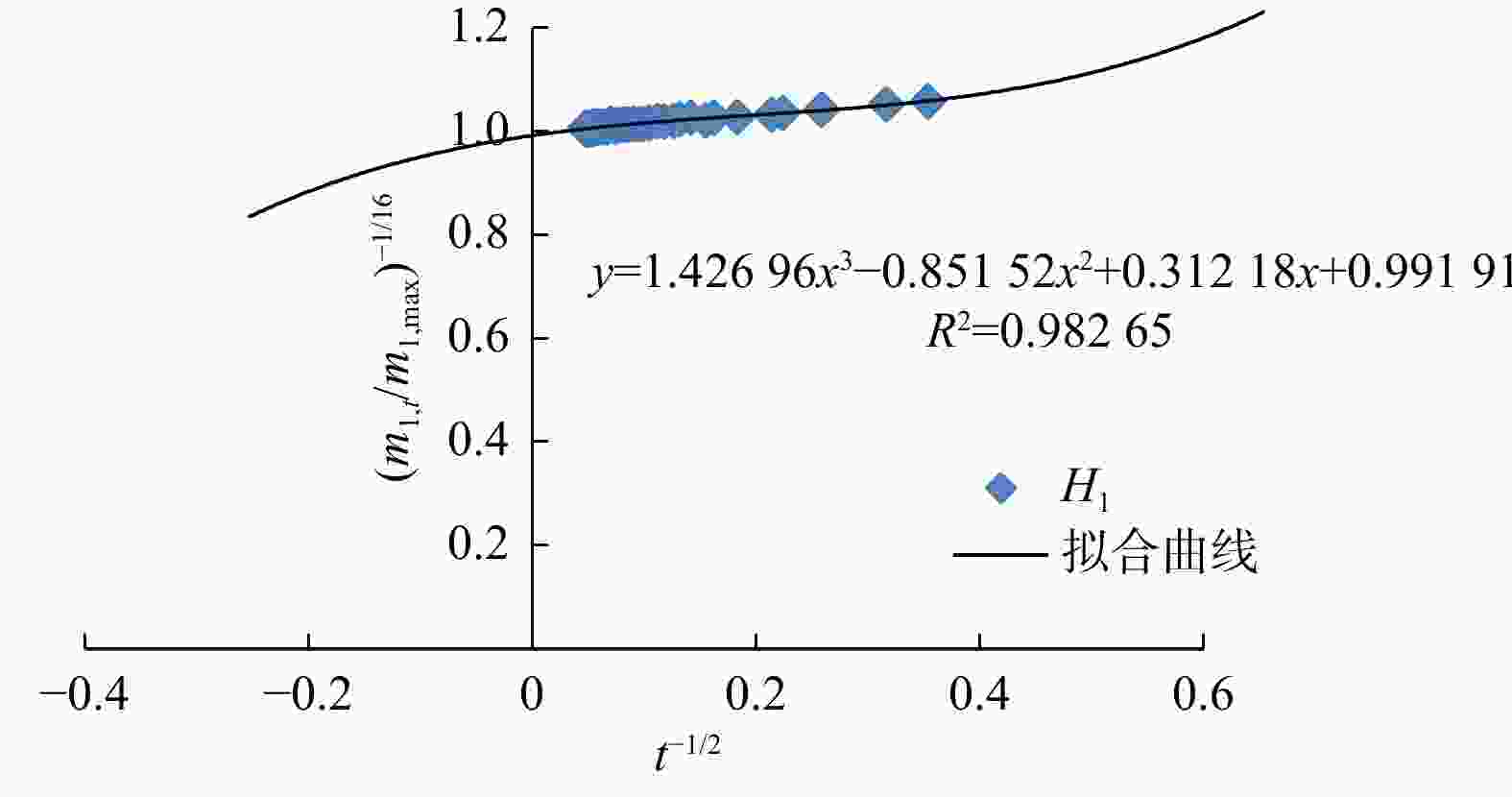
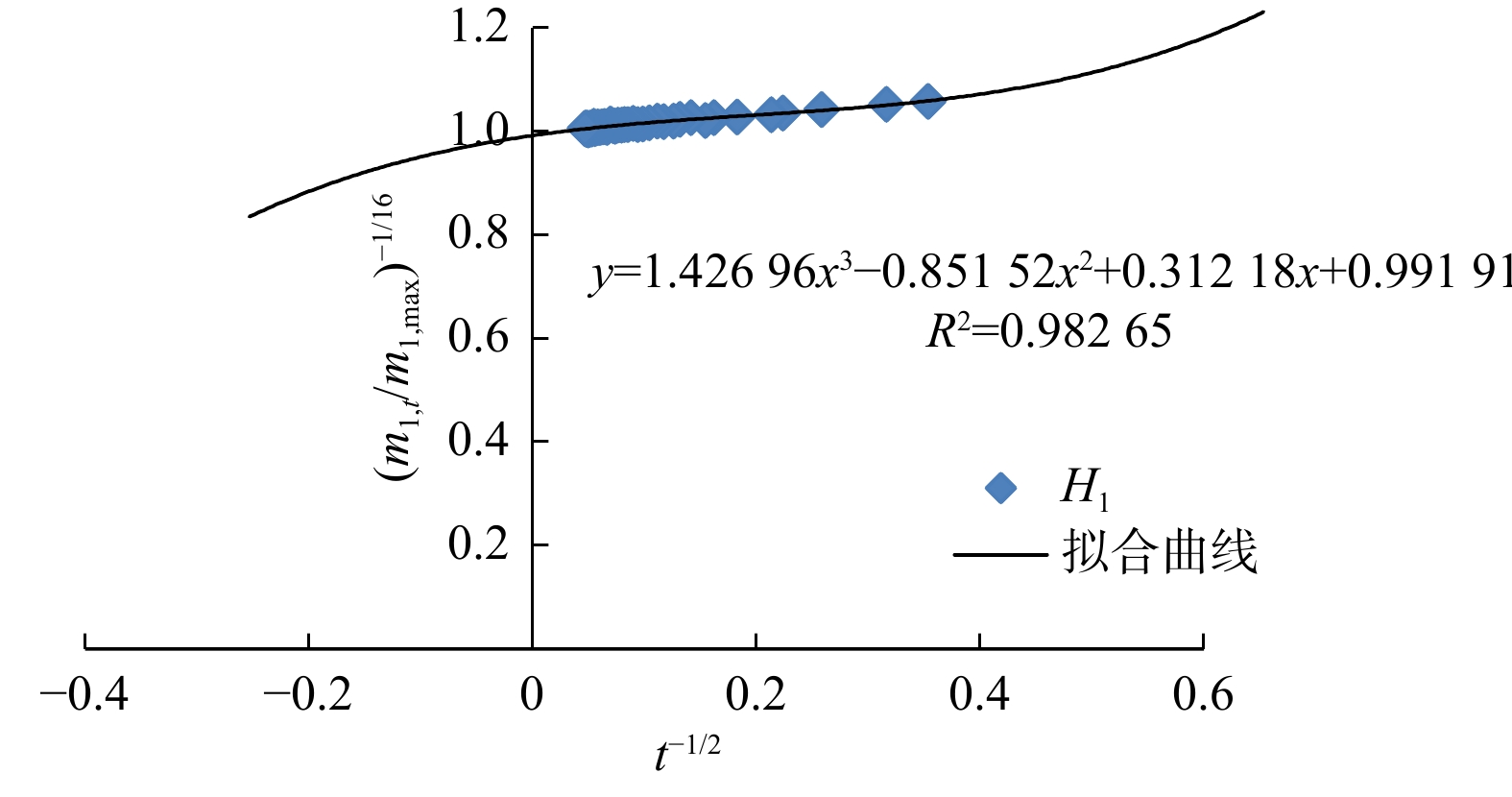
图 6 20 MPa、343.15 K下H1点H2浓度随时间变化多项式拟合
$(m_{1,t}/m_{1,\max}) $为H2浓度随时间演变的拟合多项式,$m_{1,t} $为t时刻H1点的H2浓度,$m_{1,\max} $为H1点的H2浓度的最大值
Figure 6. Polynomial fitting of concentration as a function of time at point H1 under 20 MPa and 343.15 K
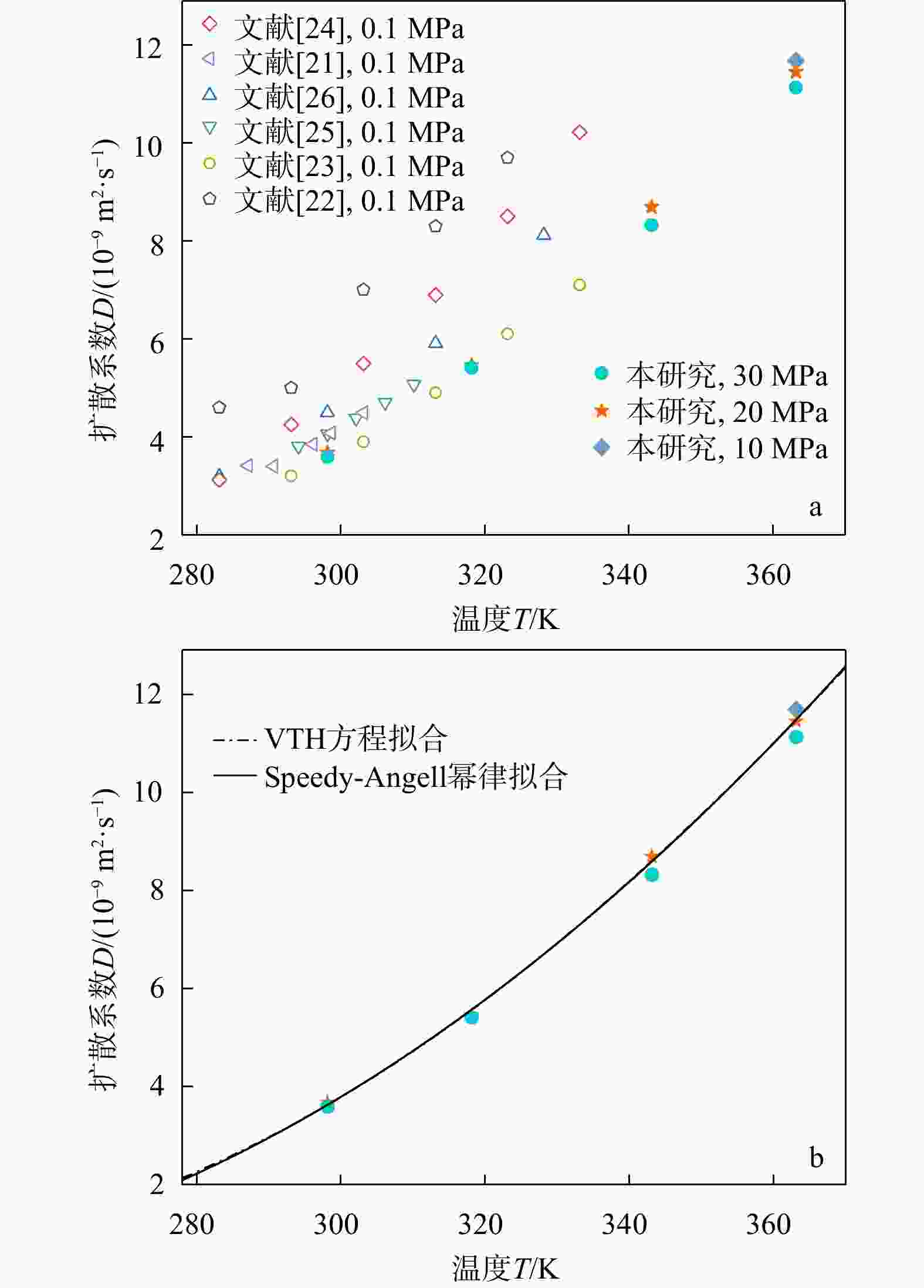
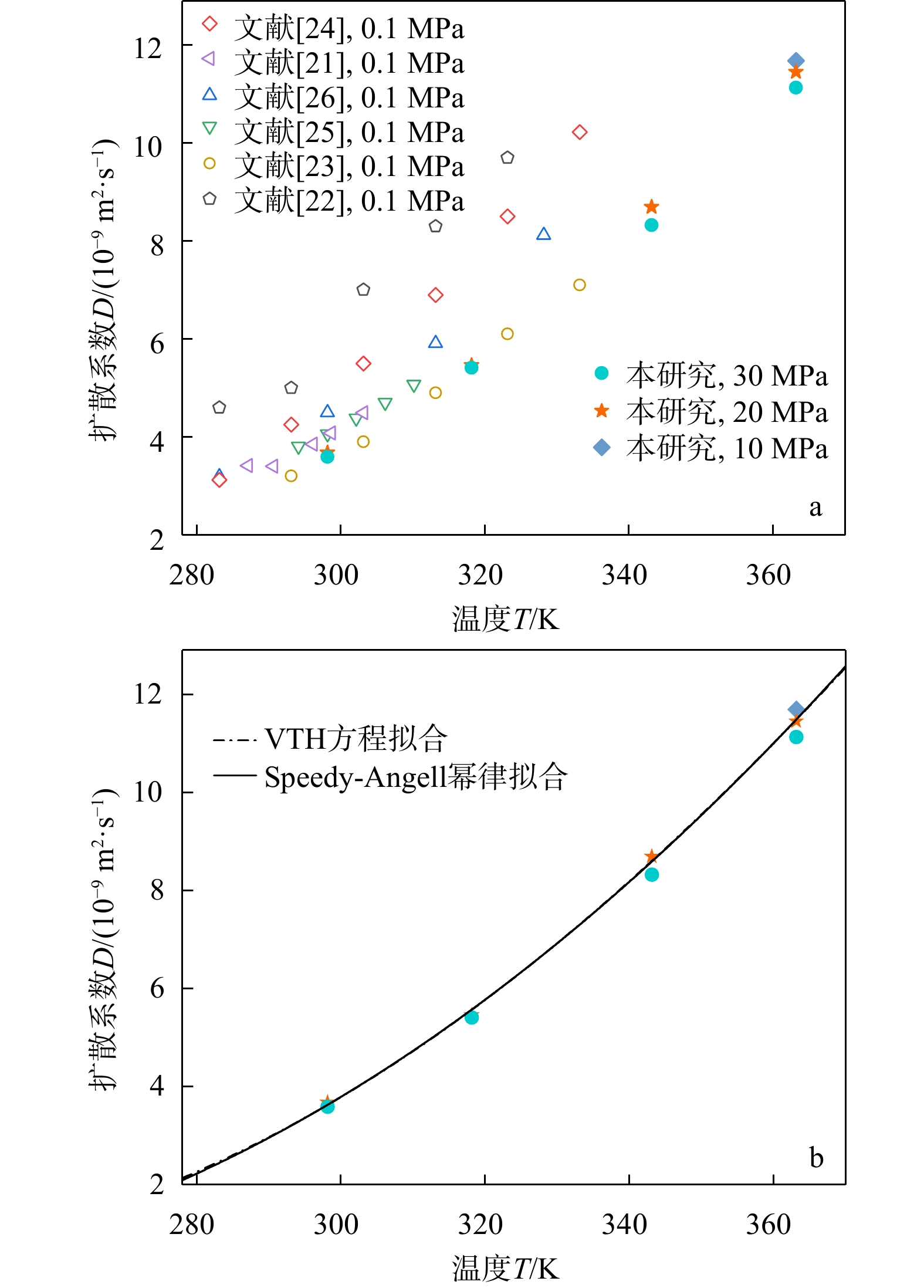
图 7 本实验数据与前人数据的对比(a)以及模型拟合 (b)
Figure 7. Comparison between experimental data and reported data (a) and model fitting (b)
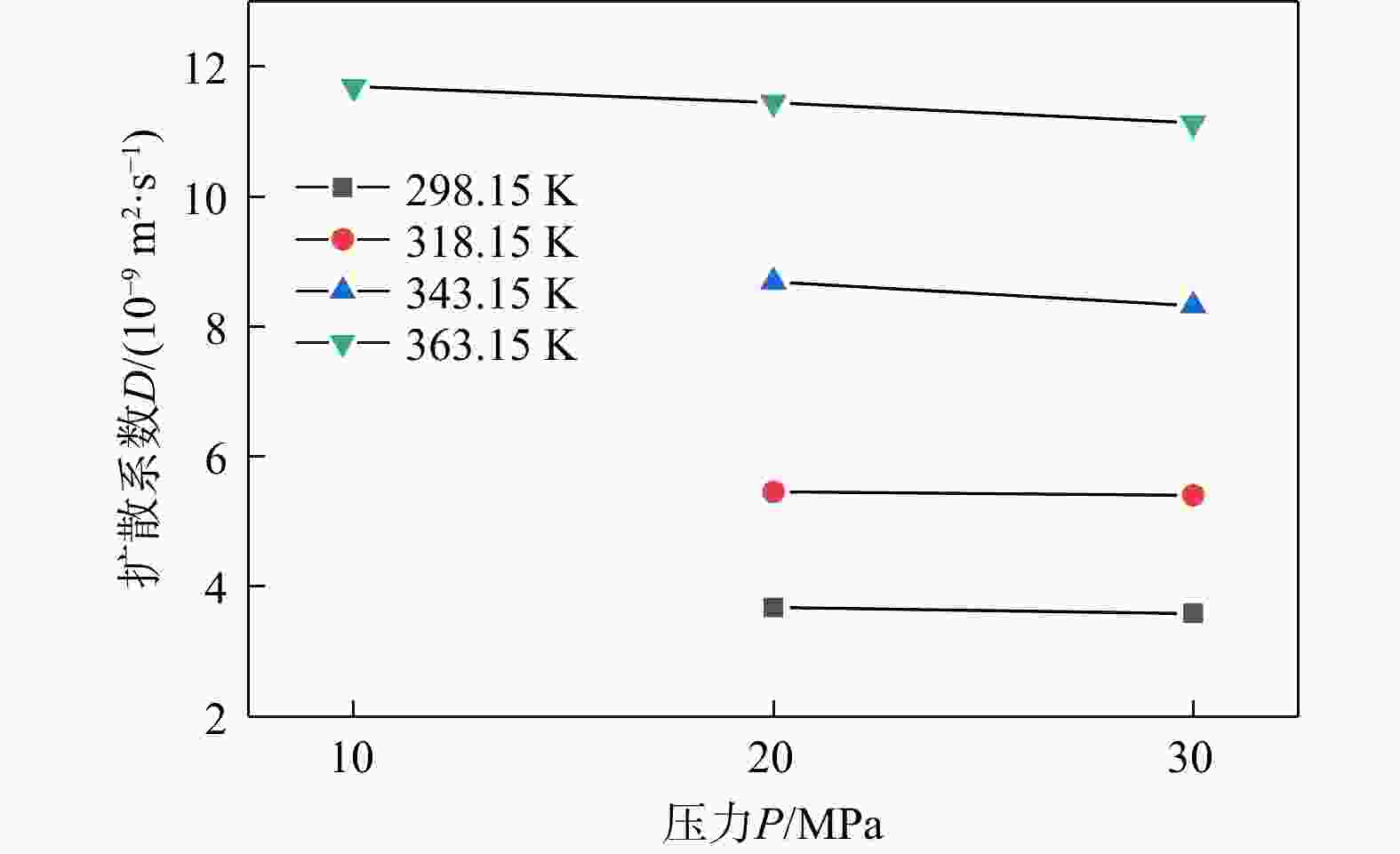
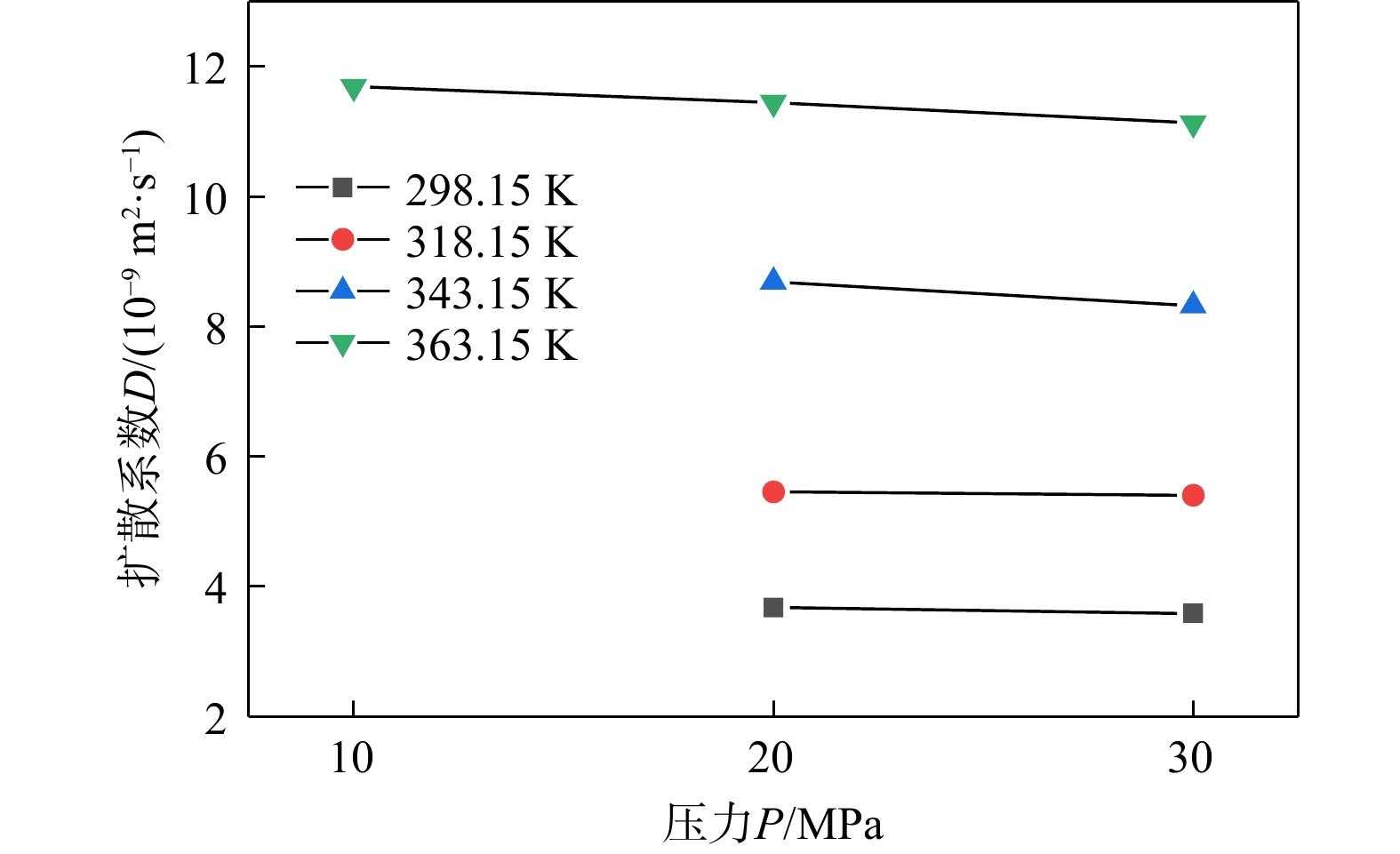
图 8 H2在水中的扩散系数与压力的函数关系
Figure 8. Functional relationship between diffusion coefficient and pressure of H2 in water
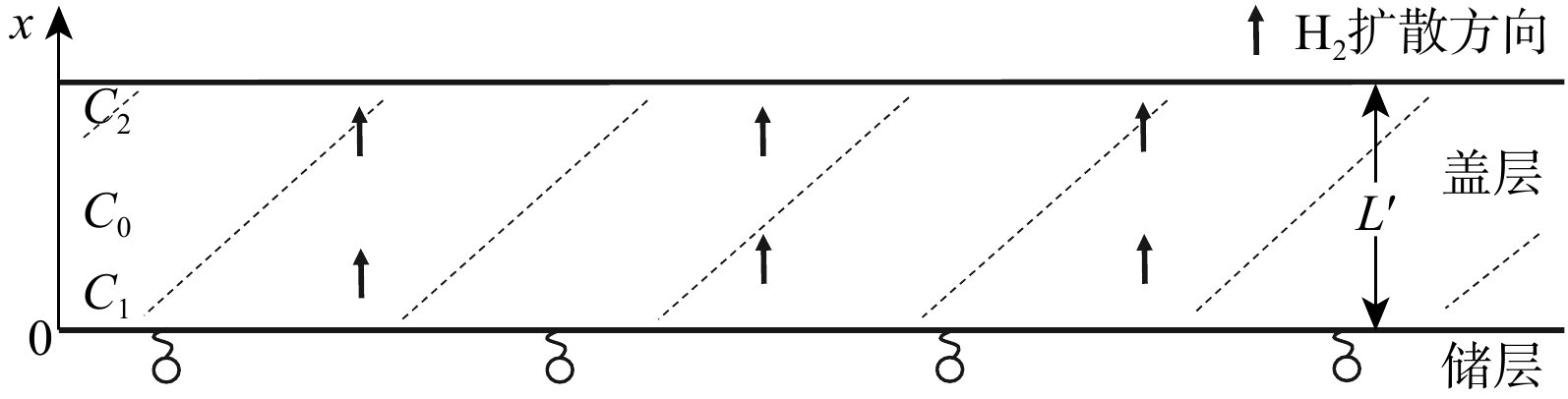
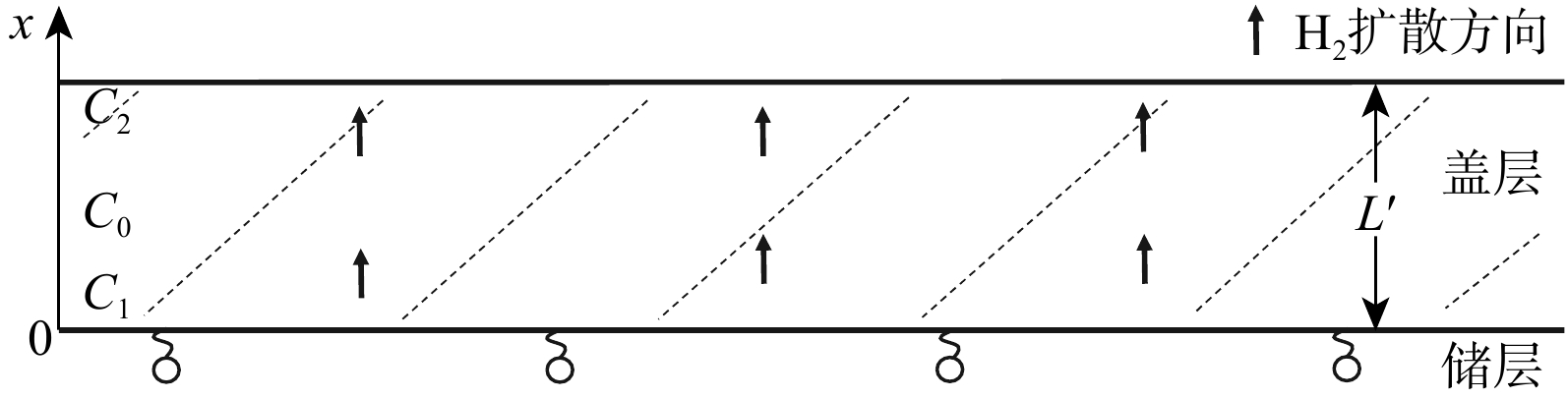
图 9 H2扩散模型示意图
x为距盖层底部高度;L'为盖层厚度;C0为盖层内H2初始浓度;C1为气相与盖层接触面处H2浓度;C2为盖层上边界H2浓度
Figure 9. Schematic diagram of H2 diffusion model
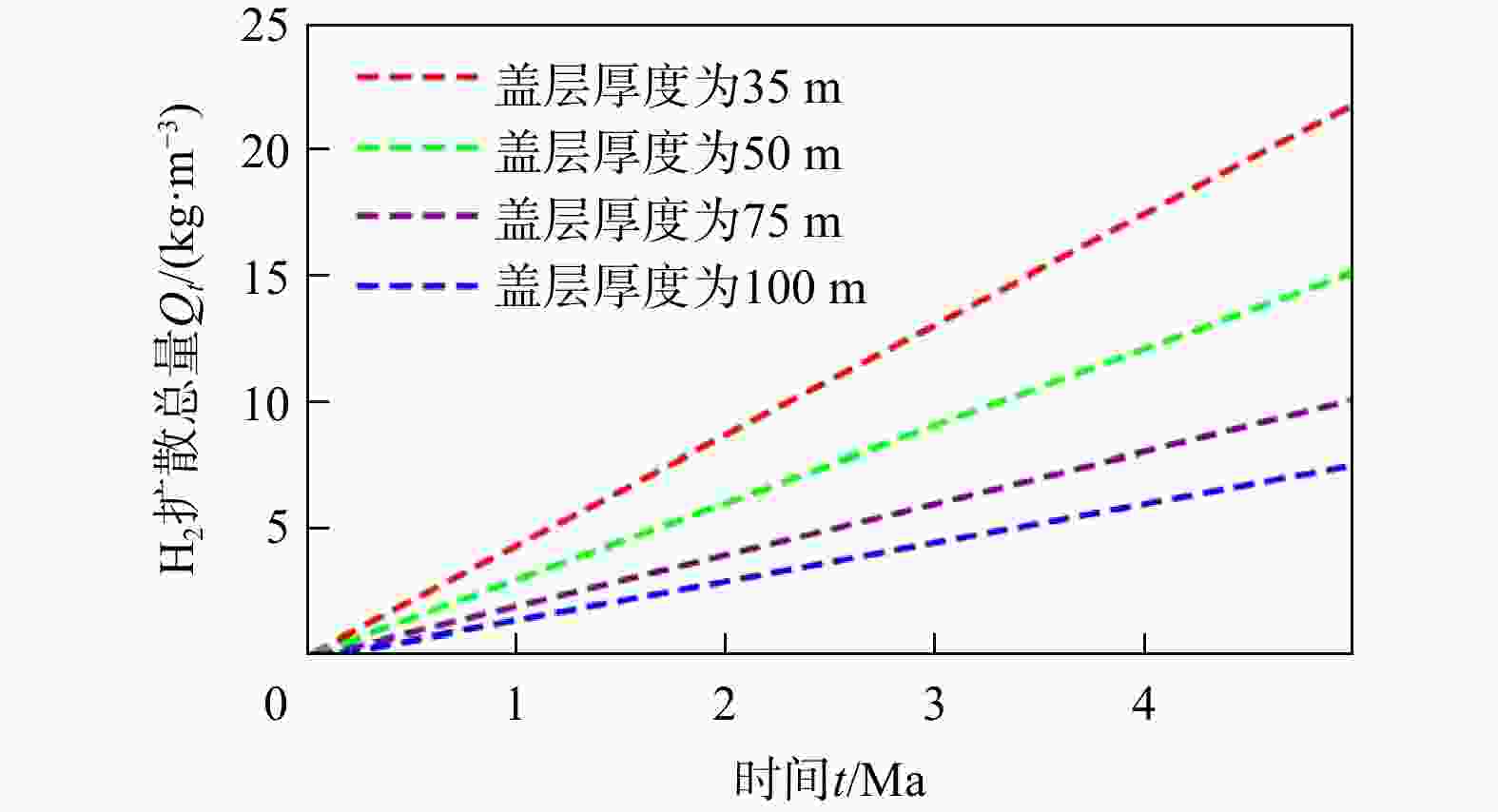
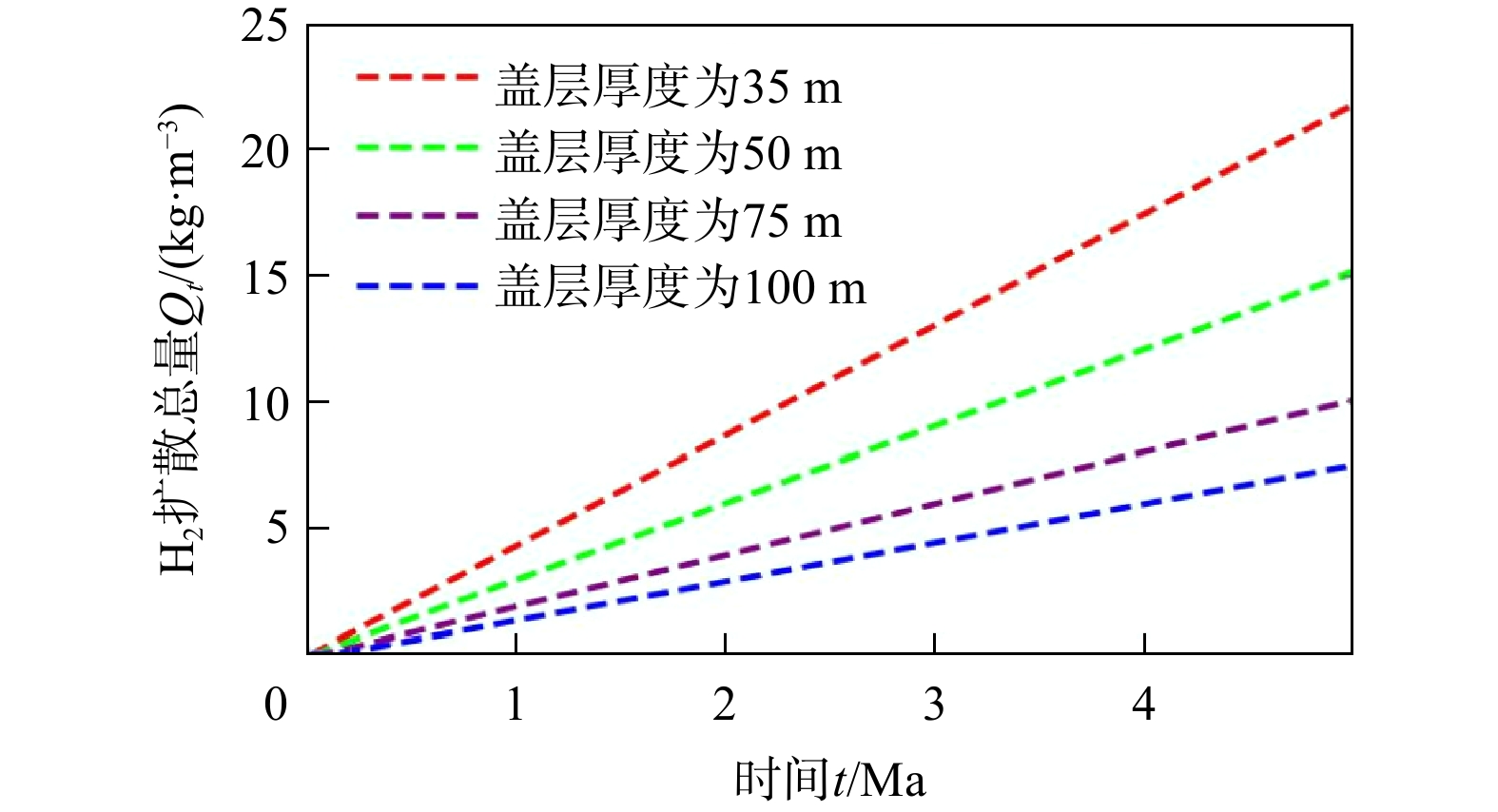
图 10 不同厚度盖层H2扩散通量Qt
Figure 10. Total cumulative diffusion mass of H2 through caprocks with different thicknesses
表 1 不同温压条件下H2在纯水中的扩散系数
Table 1. Diffusion coefficients of H2 in pure water under different temperature-pressure conditions
压力P/MPa 温度T/K 扩散系数D/(10−9m2·s−1) 不确定度/(±10−9m2·s−1) 10 363.15 11.69 0.80 20 298.15 3.68 0.29 20 318.15 5.46 0.47 20 343.15 8.69 0.60 20 363.15 11.45 1.23 30 298.15 3.59 0.35 30 318.15 5.41 0.53 30 343.15 8.32 0.95 30 363.15 11.13 0.98  下载: 导出CSV
-
[1] THAPA B S, NEUPANE B, YANG H S, et al. Green hydrogen potentials from surplus hydro energy in Nepal[J]. International Journal of Hydrogen Energy, 2021, 46(43): 22256-22267. doi: 10.1016/j.ijhydene.2021.04.096 [2] 张菊, 季玉轩, 郭会荣, 等. 海底沉积层裂隙中水合物封堵CO2效果与失稳条件实验[J]. 地质科技通报, 2025, 44(5): 285-292.ZHANG J, JI Y X, GUO H R, et al. Experimental study on CO2 plugging effect and instability conditions of hydrates in fractures in seafloor sediments[J]. Bulletin of Geological Science and Technology, 2025, 44(5): 285-292. (in Chinese with English abstract) [3] 邹才能, 熊波, 薛华庆, 等. 新能源在碳中和中的地位与作用[J]. 石油勘探与开发, 2021, 48(2): 411-420.ZOU C N, XIONG B, XUE H Q, et al. The role of new energy in carbon neutral[J]. Petroleum Exploration and Development, 2021, 48(2): 411-420. (in Chinese with English abstract) [4] 杨春和, 王同涛. 深地储能研究进展[J]. 岩石力学与工程学报, 2022, 41(9): 1729-1759.YANG C H, WANG T T. Advance in deep underground energy storage[J]. Chinese Journal of Rock Mechanics and Engineering, 2022, 41(9): 1729-1759. (in Chinese with English abstract) [5] ZHANG F, ZHAO P C, NIU M, et al. The survey of key technologies in hydrogen energy storage[J]. International Journal of Hydrogen Energy, 2016, 41(33): 14535-14552. doi: 10.1016/j.ijhydene.2016.05.293 [6] WANG Z, ZHANG L F, LU W J, et al. Soret effect on the mixing of H2 and CO2 cushion gas: Implication for underground hydrogen storage[J]. International Journal of Hydrogen Energy, 2024, 83: 1331-1337. doi: 10.1016/j.ijhydene.2024.08.200 [7] 伍娟, 王洋, 杨俊沂, 等. 无膜电解水制氢技术研究进展[J]. 中国科学: 化学, 2025, 55(2): 433-443. doi: 10.1360/SSC-2024-0247WU J, WANG Y, YANG J Y, et al. Research progress on membraneless water electrolysis for hydrogen production[J]. Scientia Sinica (Chimica), 2025, 55(2): 433-443. (in Chinese with English abstract) doi: 10.1360/SSC-2024-0247 [8] MA J L, LI Q, KÜHN M, et al. Power-to-gas based subsurface energy storage: A review[J]. Renewable and Sustainable Energy Reviews, 2018, 97: 478-496. doi: 10.1016/j.rser.2018.08.056 [9] 王延欣. 枯竭油气藏储集库储热供暖耦合CO2封存性能分析[J]. 地质科技通报, 2024, 43(3): 12-21. doi: 10.19509/j.cnki.dzkq.tb20230628WANG Y X. Performance analysis of thermal energy storage for space heating and CO2 sequestration in depleted oil and gas reservoirs[J]. Bulletin of Geological Science and Technology, 2024, 43(3): 12-21. (in Chinese with English abstract) doi: 10.19509/j.cnki.dzkq.tb20230628 [10] SONG R, SONG Y J, LIU J J, et al. Multiscale experimental and numerical study on hydrogen diffusivity in salt rocks and interlayers of salt cavern hydrogen storage[J]. International Journal of Hydrogen Energy, 2024, 79: 319-334. doi: 10.1016/j.ijhydene.2024.06.418 [11] 周庆凡, 张俊法. 地下储氢技术研究综述[J]. 油气与新能源, 2022, 34(4): 1-6. doi: 10.3969/j.issn.2097-0021.2022.04.001ZHOU Q F, ZHANG J F. A review of research on underground hydrogen storage technology[J]. Petroleum Planning & Engineering, 2022, 34(4): 1-6. (in Chinese with English abstract) doi: 10.3969/j.issn.2097-0021.2022.04.001 [12] XUE Y, LIU J, LIANG X, et al. Influence mechanism of brine-gas two-phase flow on sealing property of anisotropic caprock for hydrogen and carbon energy underground storage[J]. International Journal of Hydrogen Energy, 2023, 48(30): 11287-11302. doi: 10.1016/j.ijhydene.2022.05.173 [13] ZENG L P, KESHAVARZ A, XIE Q, et al. Hydrogen storage in Majiagou carbonate reservoir in China: Geochemical modelling on carbonate dissolution and hydrogen loss[J]. International Journal of Hydrogen Energy, 2022, 47(59): 24861-24870. doi: 10.1016/j.ijhydene.2022.05.247 [14] BADE S O, TAIWO K M, NDULUE U F, et al. A review of underground hydrogen storage systems: Current status, modeling approaches, challenges, and future prospective[J]. International Journal of Hydrogen Energy, 2024, 80: 449-474. doi: 10.1016/j.ijhydene.2024.07.187 [15] ZIVAR D, KUMAR S, FOROOZESH J. Underground hydrogen storage: A comprehensive review[J]. International Journal of Hydrogen Energy, 2021, 46(45): 23436-23462. doi: 10.1016/j.ijhydene.2020.08.138 [16] CHABAB S, THÉVENEAU P, COQUELET C, et al. Measurements and predictive models of high-pressure H2 solubility in brine (H2O+NaCl) for underground hydrogen storage application[J]. International Journal of Hydrogen Energy, 2020, 45(56): 32206-32220. doi: 10.1016/j.ijhydene.2020.08.192 [17] 罗亚南, 蒋坤卿, 黄思浩, 等. 地热水回灌耦合CO2地质封存系统安全性分析[J]. 地质科技通报, 2024, 43(3): 59-67. doi: 10.19509/j.cnki.dzkq.tb20230618LUO Y N, JIANG K Q, HUANG S H, et al. Safety analysis of geothermal water recharge coupled with CO2 geological storage system[J]. Bulletin of Geological Science and Technology, 2024, 43(3): 59-67. (in Chinese with English abstract) doi: 10.19509/j.cnki.dzkq.tb20230618 [18] GBADAMOSI A O, MUHAMMED N S, PATIL S, et al. Underground hydrogen storage: A critical assessment of fluid-fluid and fluid-rock interactions[J]. Journal of Energy Storage, 2023, 72: 108473. [19] 李海燕, 彭仕宓, 傅广. 天然气扩散系数的研究方法[J]. 石油勘探与开发, 2001, 28(1): 33-35. doi: 10.3321/j.issn:1000-0747.2001.01.011LI H Y, PENG S M, FU G. Studying method of diffusion coefficient of natural gas[J]. Petroleum Exploration and Development, 2001, 28(1): 33-35. (in Chinese with English abstract) doi: 10.3321/j.issn:1000-0747.2001.01.011 [20] ZHAO X, JIN H. Correlation for self-diffusion coefficients of H2, CH4, CO, O2 and CO2 in supercritical water from molecular dynamics simulation[J]. Applied Thermal Engineering, 2020, 171: 114941. doi: 10.1016/j.applthermaleng.2020.114941 [21] HIMMELBLAU D M. Diffusion of dissolved gases in liquids[J]. Chemical Reviews, 1964, 64(5): 527-550. [22] WISE D L, HOUGHTON G. The diffusion coefficients of ten slightly soluble gases in water at 10-60℃[J]. Chemical Engineering Science, 1966, 21(11): 999-1010. doi: 10.1016/0009-2509(66)85096-0 [23] DE BLOK W J, FORTUIN J M H. Method for determining diffusion coefficients of slightly soluble gases in liquids[J]. Chemical Engineering Science, 1981, 36(10): 1687-1694. doi: 10.1016/0009-2509(81)80014-0 [24] VERHALLEN P T H M, OOMEN L J P, ELSEN A J J M V D, et al. The diffusion coefficients of helium, hydrogen, oxygen and nitrogen in water determined from the permeability of a stagnant liquid layer in the quasi-steady state[J]. Chemical Engineering Science, 1984, 39(11): 1535-1541. doi: 10.1016/0009-2509(84)80082-2 [25] GERTZ V H, LOESCHCKE H H. Bestimmung der diffusions-koeffizienten von H2, O2, N2, und He in wasser und blutserum bei konstant gehaltener Konvektion[J]. Zeitschrift fvr Naturforschung B, 1954, 9(1): 1-9. doi: 10.1515/znb-1954-0102 [26] FERRELL R T, HIMMELBLAU D M. Diffusion coefficients of hydrogen and helium in water[J]. AIChE Journal, 1967, 13(4): 702-708. doi: 10.1002/aic.690130421 [27] TSIMPANOGIANNIS I N, MOULTOS O A. Is Stokes-Einstein relation valid for the description of intra-diffusivity of hydrogen and oxygen in liquid water?[J]. Fluid Phase Equilibria, 2023, 563: 113568. doi: 10.1016/j.fluid.2022.113568 [28] OU W J, GENG L T, LU W J, et al. Quantitative Raman spectroscopic investigation of geo-fluids high-pressure phase equilibria: Part Ⅱ. Accurate determination of CH4 solubility in water from 273 to 603 K and from 5 to 140 MPa and refining the parameters of the thermodynamic model[J]. Fluid Phase Equilibria, 2015, 391: 18-30. doi: 10.1016/j.fluid.2015.01.025 [29] CUSSLER E L. Diffusion: Mass transfer in fluid systems[M]. 3rd ed. Cambridge: Cambridge University Press, 2009. [30] LU W J, CHOU I M, BURRUSS R C, et al. In situ study of mass transfer in aqueous solutions under high pressures via Raman spectroscopy: A new method for the determination of diffusion coefficients of methane in water near hydrate formation conditions[J]. Applied Spectroscopy, 2006, 60(2): 122-129. doi: 10.1366/000370206776023278 [31] 郭会荣, 陈颖, 赵锐锐. 地质封存温压条件下CO2溶解、扩散及水岩反应实验研究[M]. 武汉: 中国地质大学出版社, 2014.GUO H R, CHEN Y, ZHAO R R. Experimental study on CO2 dissolution, diffusion, and water-rock reactions under geological storage temperature-pressure conditions[M]. Wuhan: China University of Geosciences Press, 2014. (in Chinese) [32] LU W J, GUO H R, CHOU I M, et al. Determination of diffusion coefficients of carbon dioxide in water between 268 and 473 K in a high-pressure capillary optical cell with in situ Raman spectroscopic measurements[J]. Geochimica et Cosmochimica Acta, 2013, 115: 183-204. doi: 10.1016/j.gca.2013.04.010 [33] GUO H R, CHEN Y, LU W J, et al. In situ Raman spectroscopic study of diffusion coefficients of methane in liquid water under high pressure and wide temperatures[J]. Fluid Phase Equilibria, 2013, 360: 274-278. doi: 10.1016/j.fluid.2013.09.051 [34] SPEEDY R J, ANGELL C A. Isothermal compressibility of supercooled water and evidence for a thermodynamic singularity at –45℃[J]. The Journal of Chemical Physics, 1976, 65(3): 851-858. doi: 10.1063/1.433153 [35] HUANG Y Y, WU C J, CHEN Y, et al. Measurement of diffusion coefficients of hydrogen sulfide in water and brine using in-situ Raman spectroscopy[J]. Fluid Phase Equilibria, 2022, 556: 113381. doi: 10.1016/j.fluid.2022.113381 [36] HEINEMANN N, SCAFIDI J, PICKUP G, et al. Hydrogen storage in saline aquifers: The role of cushion gas for injection and production[J]. International Journal of Hydrogen Energy, 2021, 46(79): 39284-39296. doi: 10.1016/j.ijhydene.2021.09.174 [37] GRATHWOHL P. Diffusion in natural porous media[M]. New York: Springer, 1998. [38] BETHKE C M, LEE M K, QUINODOZ H A M, et al. Basin modeling with Basin2: A guide to using Basin2[R/OL]. Urbana-Champaign: University of Illinois, 2002[2026-06-01]. https://www.researchgate.net/publication/254459543_Basin_modeling_with_Basin2_A_guide_to_using_Basin2. [39] KROOSS B M, LEYTHAEUSER D. Experimental measurements of the diffusion parameters of light hydrocarbons in water-saturated sedimentary rocks: Ⅱ. Results and geochemical significance[J]. Organic Geochemistry, 1988, 12(2): 91-108. doi: 10.1016/0146-6380(88)90247-1 [40] CRANK J. The mathematics of diffusion[M]. 2nd ed. Oxford: Clarendon Press, 1975. [41] WANG J K, WU R, WEI M Z, et al. A comprehensive review of site selection, experiment and numerical simulation for underground hydrogen storage[J]. Gas Science and Engineering, 2023, 118: 205105. doi: 10.1016/j.jgsce.2023.205105 -

 下载:
下载:


 点击查看大图
计量
- 文章访问数: 396
- PDF下载量: 55
- 被引次数: 0