投审稿入口
投审稿入口


Dissolved organic matter sources in groundwater in alluvial fan of lower reaches of Yellow River and their influence on arsenic enrichment
-
摘要:
豫东平原为黄河下游典型农灌区,区内广泛分布高砷地下水,对居民饮水安全构成严重威胁。揭示冲积平原地下水砷迁移转化的生物地球化学机制,可为防控地方性砷中毒提供科学依据。从黄河冲积平原、决口扇、河间洼地3类地貌单元采集 200 组地下水样品,综合运用水文地球化学分析、三维荧光光谱(3D-EEM)及平行因子分析(PARAFAC),阐明高砷地下水空间分异规律及溶解性有机质(DOM)介导的砷活化机制。研究表明,高砷地下水(
ρ (As)>10 μg/L)主要赋存于 20~50 m 浅层含水层,空间分布受黄河现代河道与故道沉积体系控制,在决口扇前缘与河间洼地形成富集区。DOM 表征显示,高砷水 DOM 具高芳香性与强腐殖化特征,以小分子量腐殖质组分(C1,相对荧光强度占比54%)和类黄腐酸组分(C3,相对荧光强度占比29%)为主,揭示陆源−微生物源协同输入机制。相关性分析表明,地下水砷含量与 Fe(Ⅱ),${\mathrm{NH}}_4^+ $-N 及 DOM 组分 C1和C3的最大荧光强度F max呈显著正相关。弱还原−还原沉积环境中,有机质驱动微生物介导铁(氢)氧化物还原性溶解、腐殖质−铁−砷三元络合物解吸共同构成砷活化双途径;类色氨酸组分(C2)厌氧降解可提升微生物代谢活性,加速沉积物中砷二次释放。研究结果可为黄河下游冲积扇高砷地下水风险管控与安全供水提供理论支撑。Abstract:ObjectiveThe eastern Henan Plain is a typical agricultural irrigation area in the lower reaches of the Yellow River, where high-arsenic groundwater is widely distributed, posing a severe threat to drinking water safety. Revealing the biogeochemical mechanisms of arsenic migration and transformation in groundwater in alluvial plain aquifers can provide a scientific basis for prevention and control of endemic arsenic contamination.
MethodsIn this study, 200 groundwater samples were collected from three geomorphic units, including Yellow River alluvial plain, crevasse splays, and interriver depressions, to identify the distribution of high-arsenic groundwater. Hydrogeochemical analysis, three-dimensional excitation-emission matrix (3D-EEM) fluorescence spectroscopy, and parallel factor analysis (PARAFAC) were applied to clarify its spatial differentiation pattern and the arsenic activation mechanism mediated by dissolved organic matter (DOM).
ResultsHigh-arsenic groundwater (
ρ (As)>10 μg/L) was mainly distributed in shallow aquifers at depths of 20-50 m. Its spatial distribution was controlled by sedimentary systems of modern Yellow River channel and paleochannels, forming enrichment zones at the fronts of crevasse splays and interriver depressions. DOM in high-arsenic groundwater was characterized by high aromaticity and strong humification, dominated by low-molecular-weight humic-like (C1, 54%) and fulvic-like (C3, 29%) components, revealing a synergistic input mechanism of terrestrial and microbial sources. Correlation analysis indicated that arsenic concentration in groundwater was significantly positively correlated with Fe(Ⅱ), NH4+-N, and DOM components C1 and C3F max (maximum fluorescence intensity).ConclusionIn weakly reducing to reducing sedimentary environments, arsenic activation is jointly controlled by two pathways: Microbially mediated reductive dissolution of Fe (hydr)oxides driven by organic matter, and desorption of humic-Fe-As complexes. Anaerobic degradation of tryptophan-like component (C2) enhances microbial metabolic activity and accelerates secondary release of arsenic from sediments. The results provide theoretical support for risk management and safe utilization of high-arsenic groundwater in the alluvial fan in the lower reaches of the Yellow River.
-
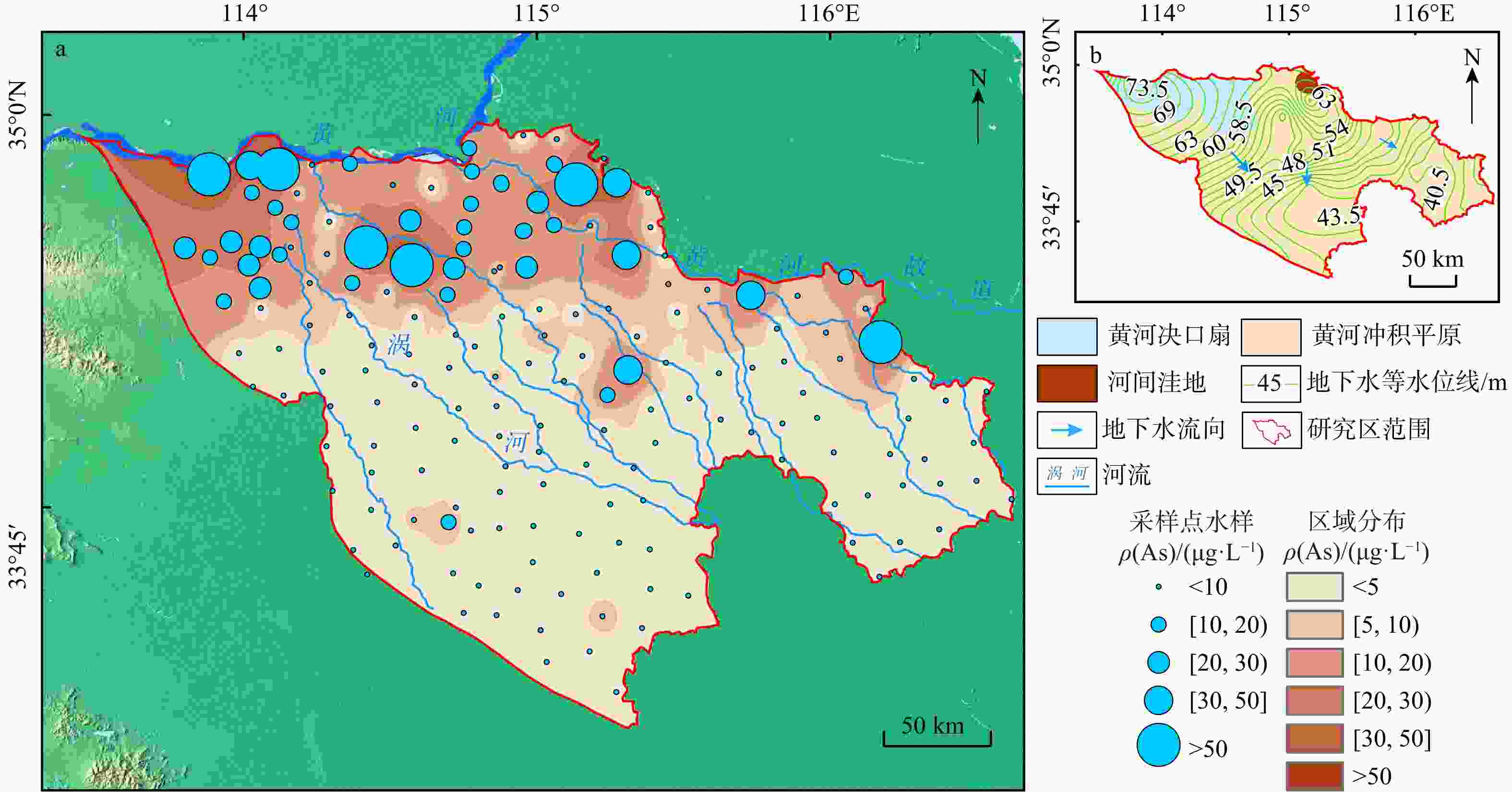
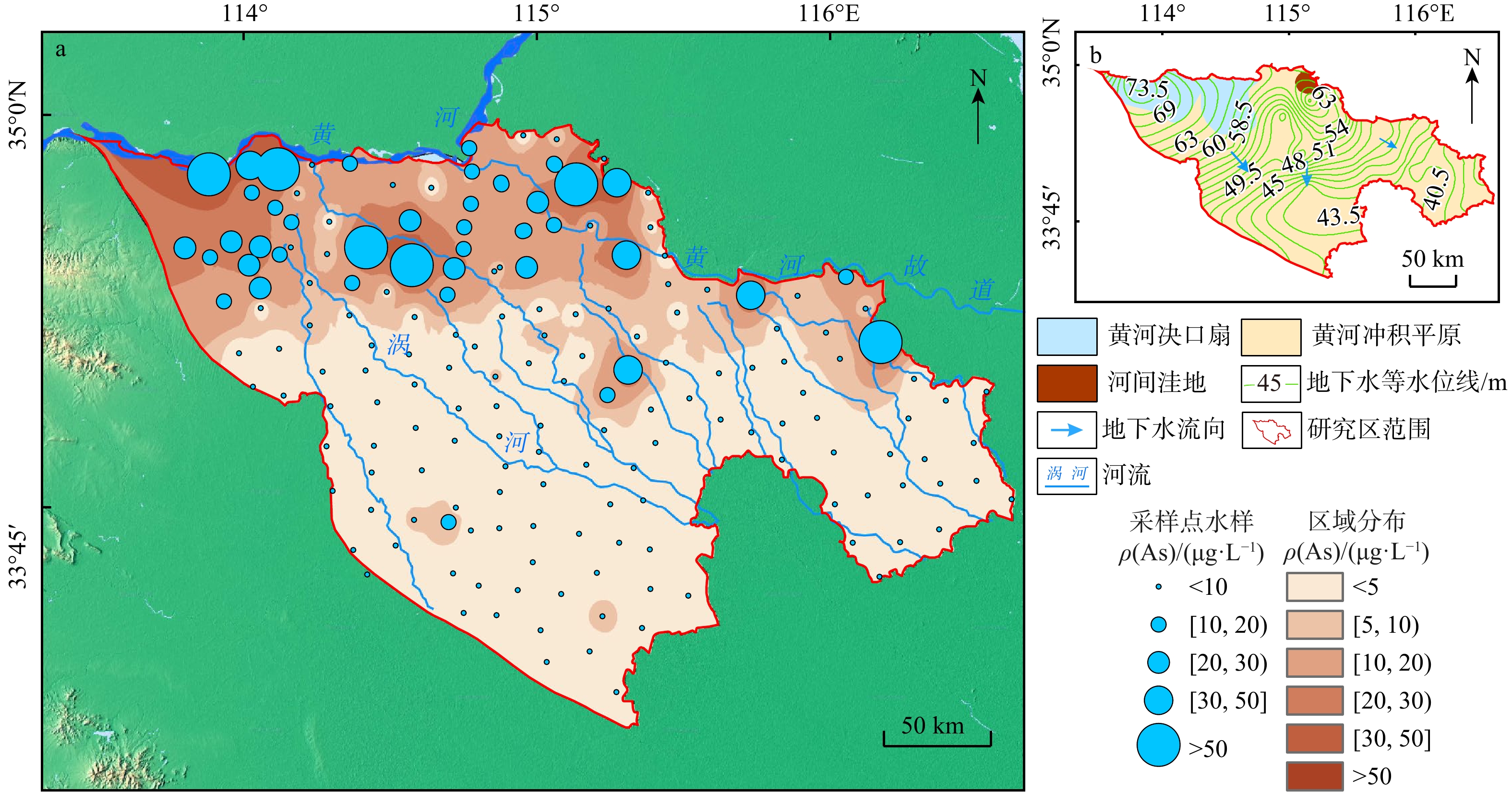
图 1 研究区地貌、地下水砷含量(a)和地下水水位(b)的分布
Figure 1. Distribution of geomorphology, arsenic concentration (a) and groundwater level (b) in groundwater of the study area
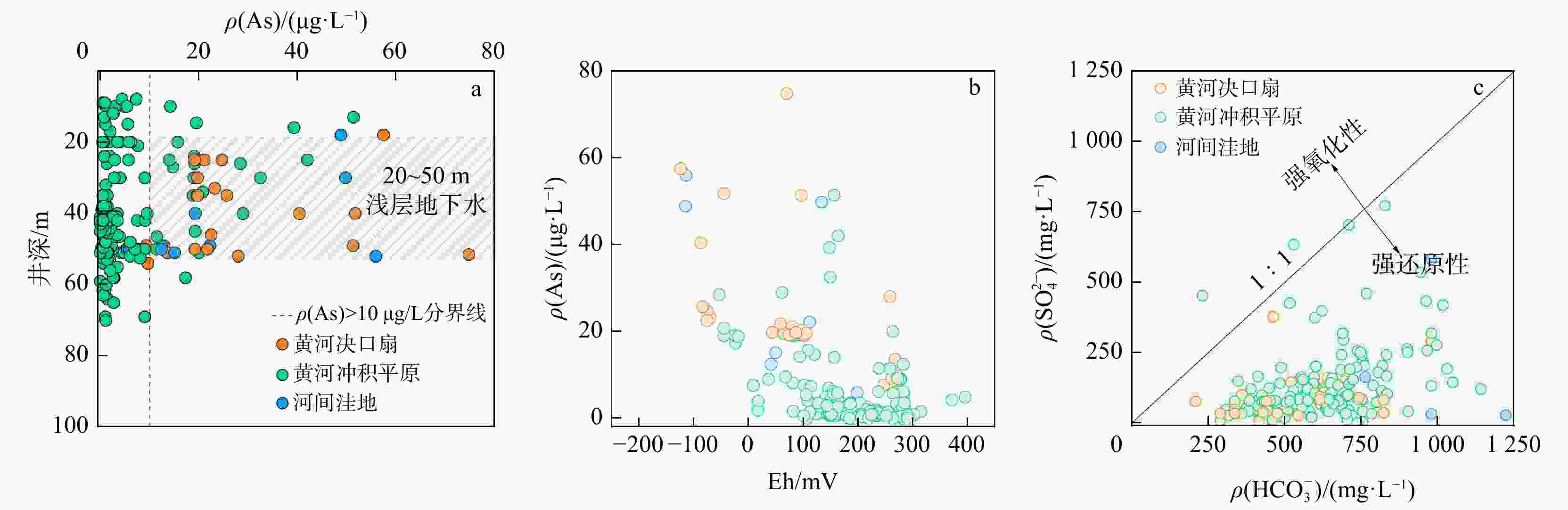
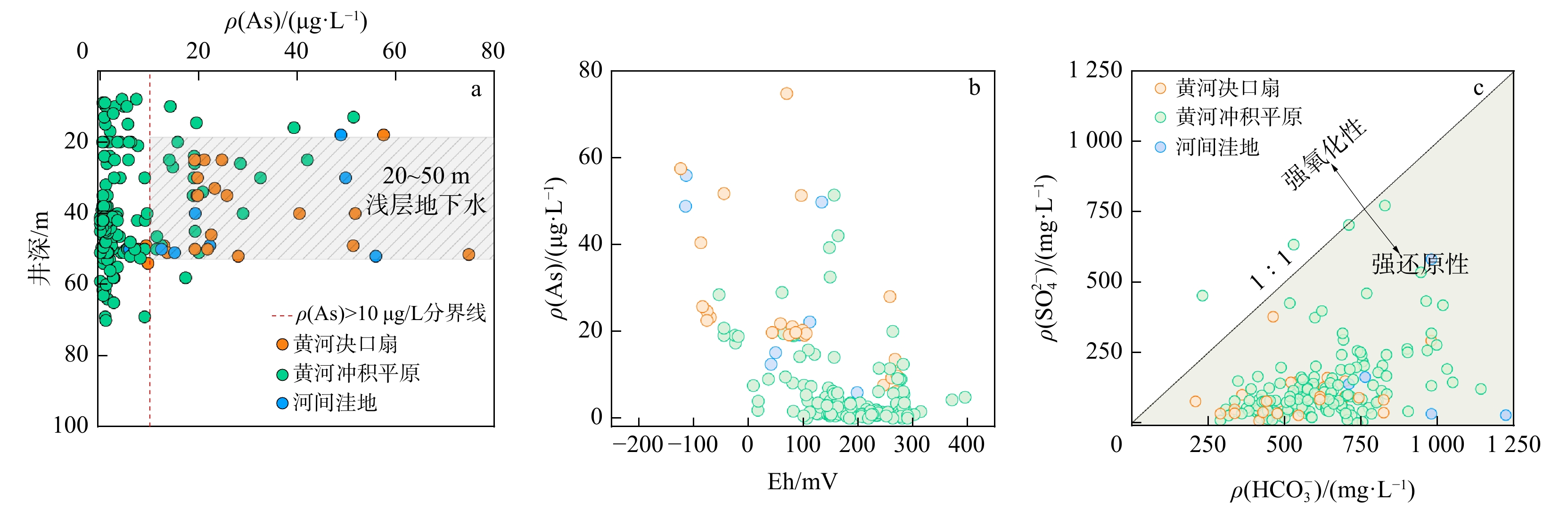
图 2 研究区地下水砷质量浓度与井深(a)和地下水氧化还原电位(b)的关系及不同沉积环境氧化还原条件(c)
Figure 2. Relationships of arsenic concentration in groundwater with well depth (a) and redox potential (b), and redox conditions under different sedimentary environments (c) in the study area
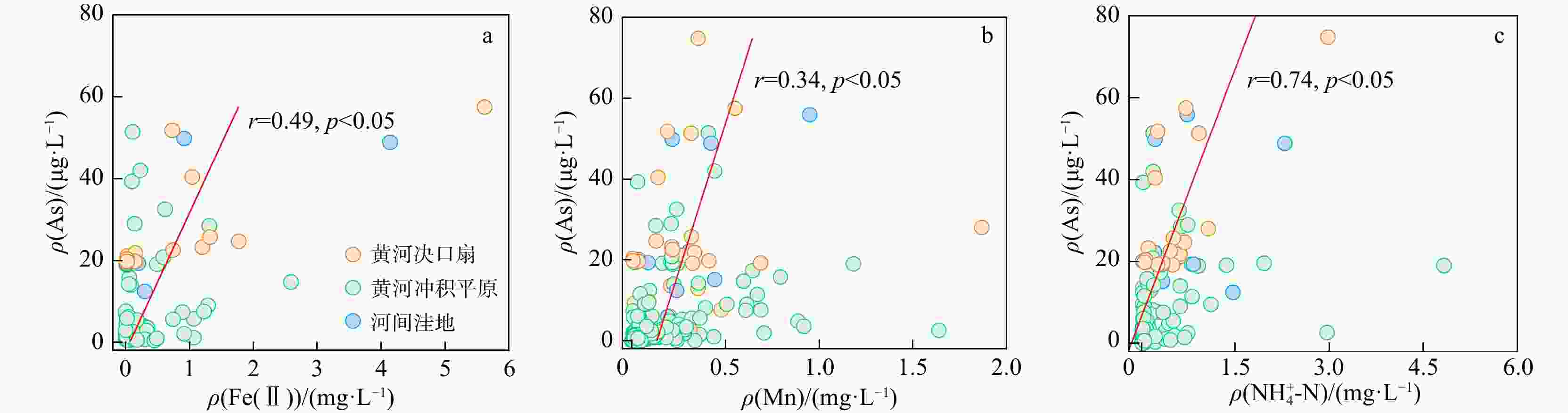
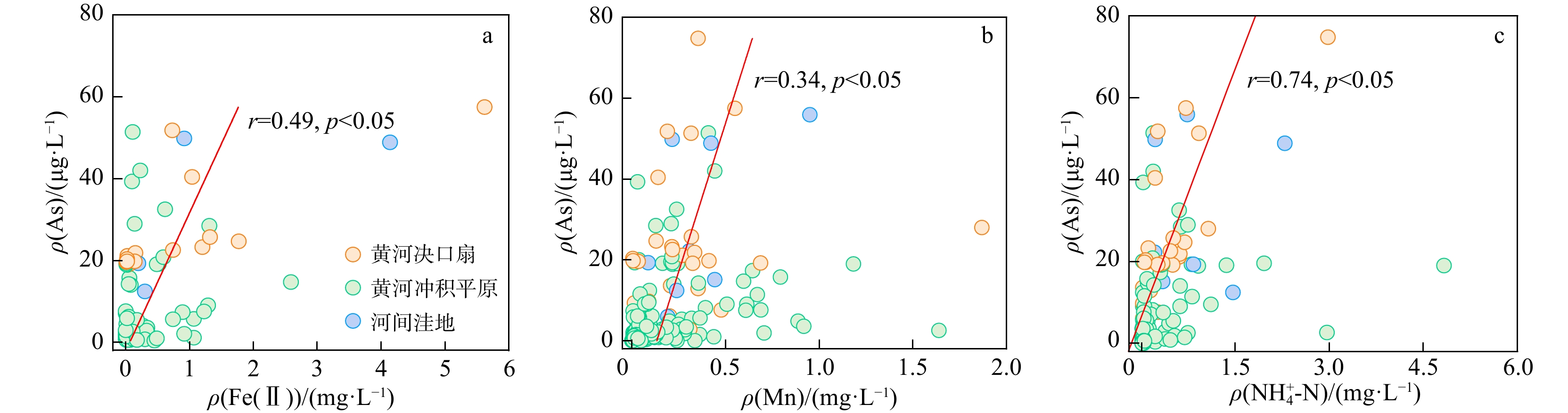
图 3 研究区不同地貌单元地下水中砷质量浓度与Fe(Ⅱ) (a)、Mn (b)、${\mathrm{NH}}_4^+ $-N (c)的关系(r. 相关系数;p. 显著性水平;下同)
Figure 3. Relationships of arsenic concentration with Fe(Ⅱ) (a), Mn (b), and ${\mathrm{NH}}_4^+ $-N (c) in groundwater of different geomorphic units in the study area
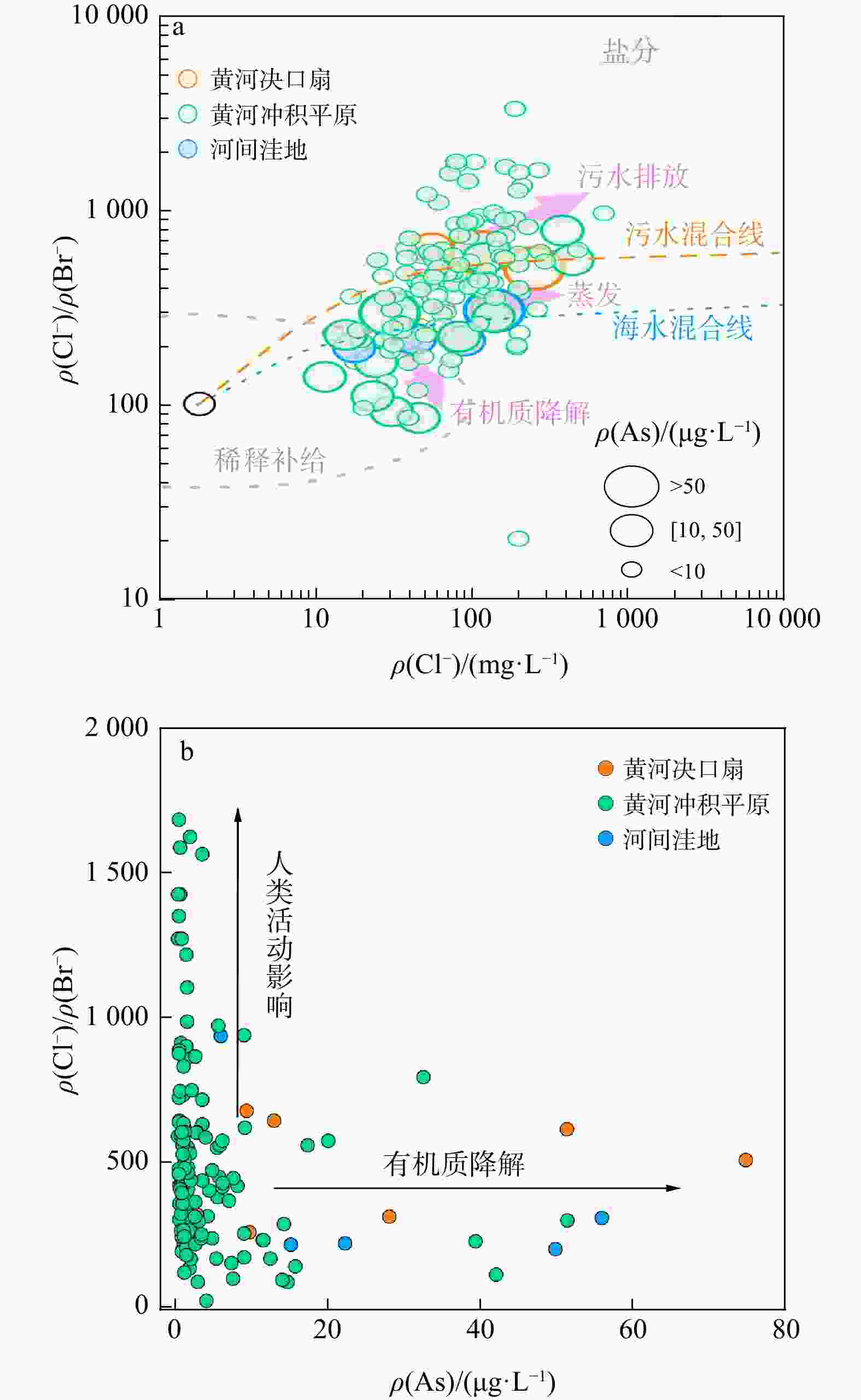
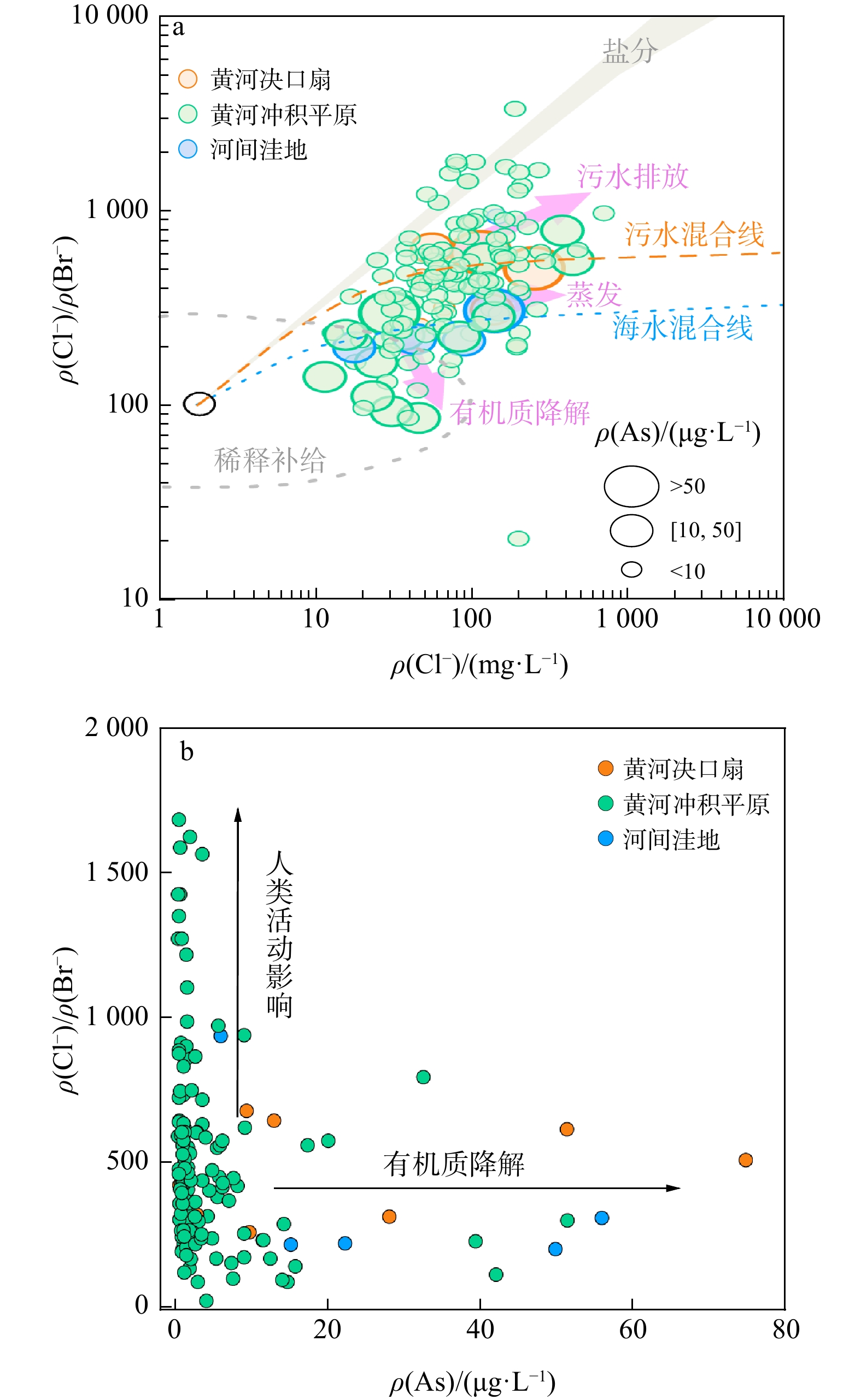
图 4 研究区地下水中ρ(Cl−)/ρ(Br−)与ρ(Cl−) (a)和ρ(As) (b)的关系
Figure 4. Relationships of ρ(Cl−)/ρ(Br−) and ρ(Cl−) (a), ρ(As) (b) in groundwater in the study area
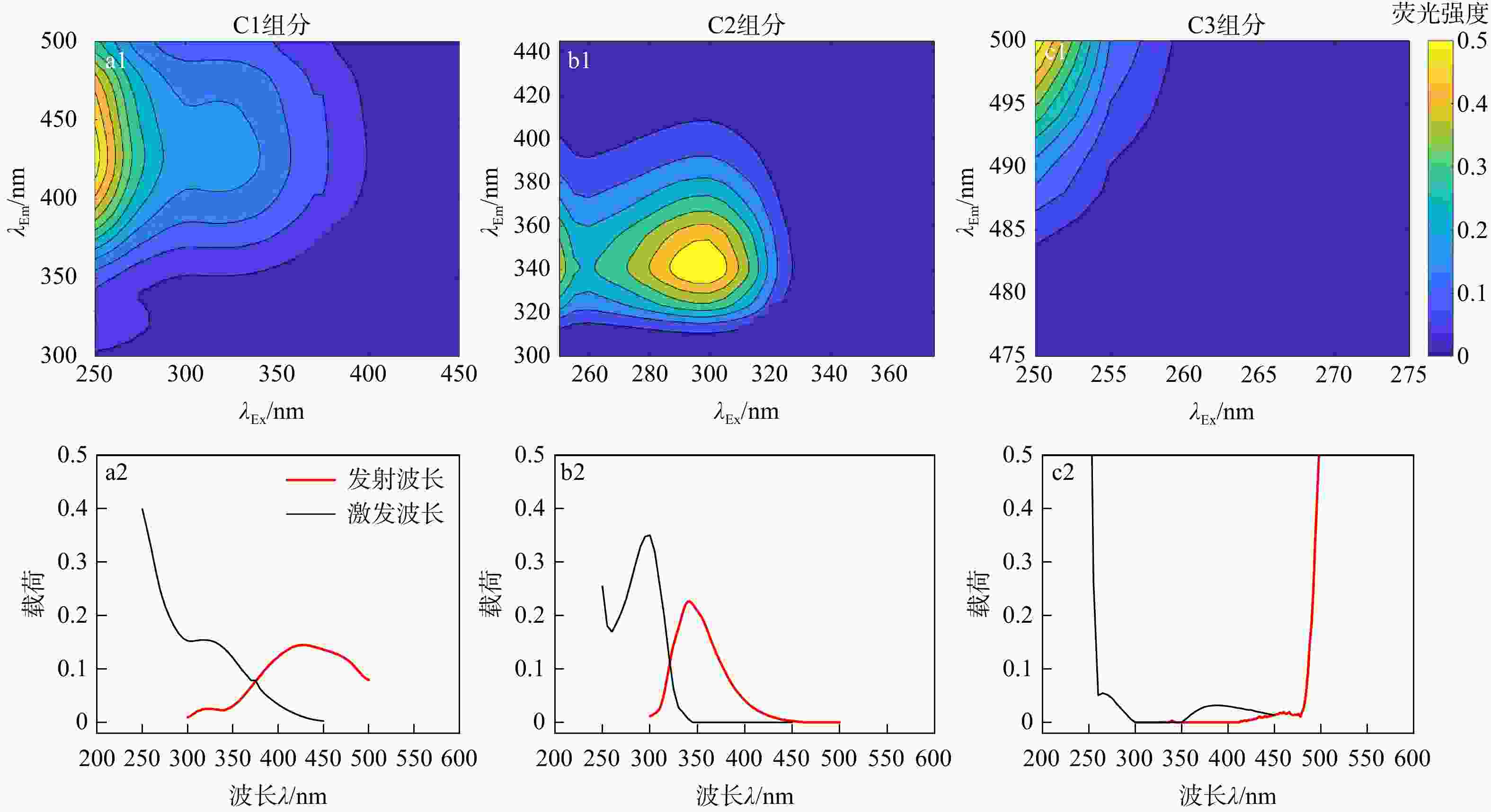
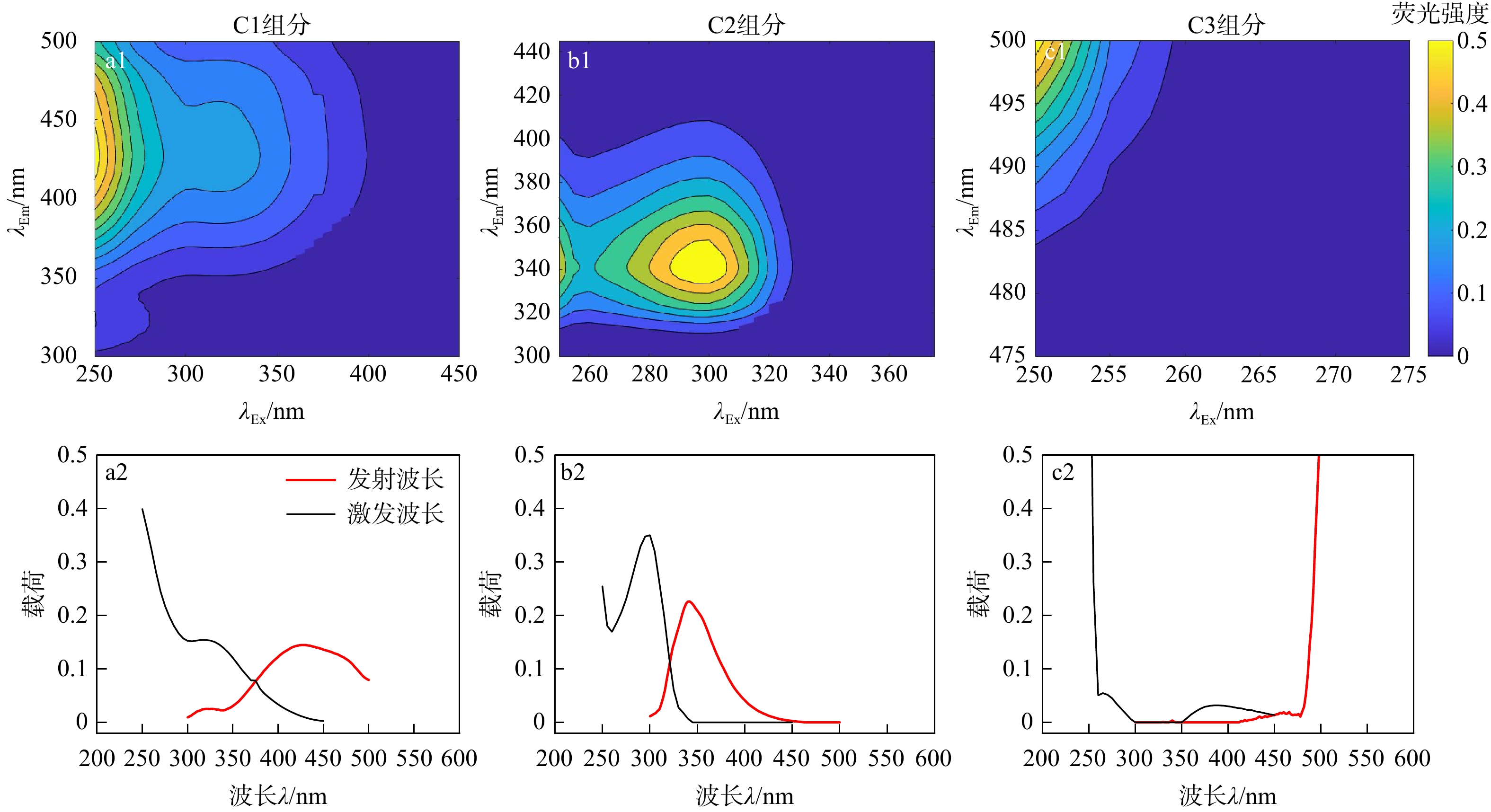
图 5 地下水DOM 3种荧光组分的三维荧光光谱(a1~c1)及载荷(a2~c2)
Figure 5. Three-dimensional excitation-emission matrix fluorescence spectra (a1-c1) and loading (a2-c2) of three fluorescent components of dissolved organic matter (DOM) in groundwater
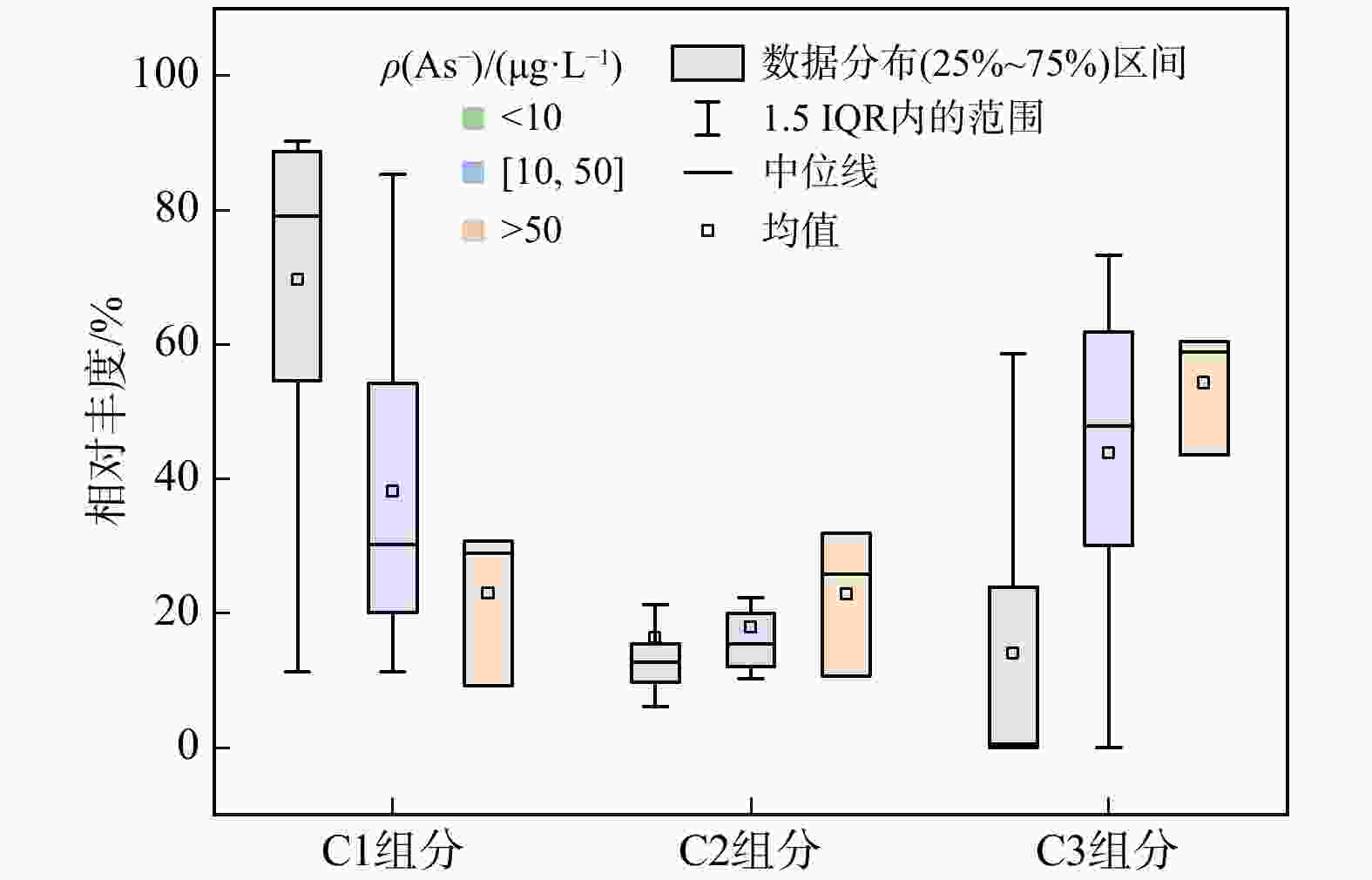
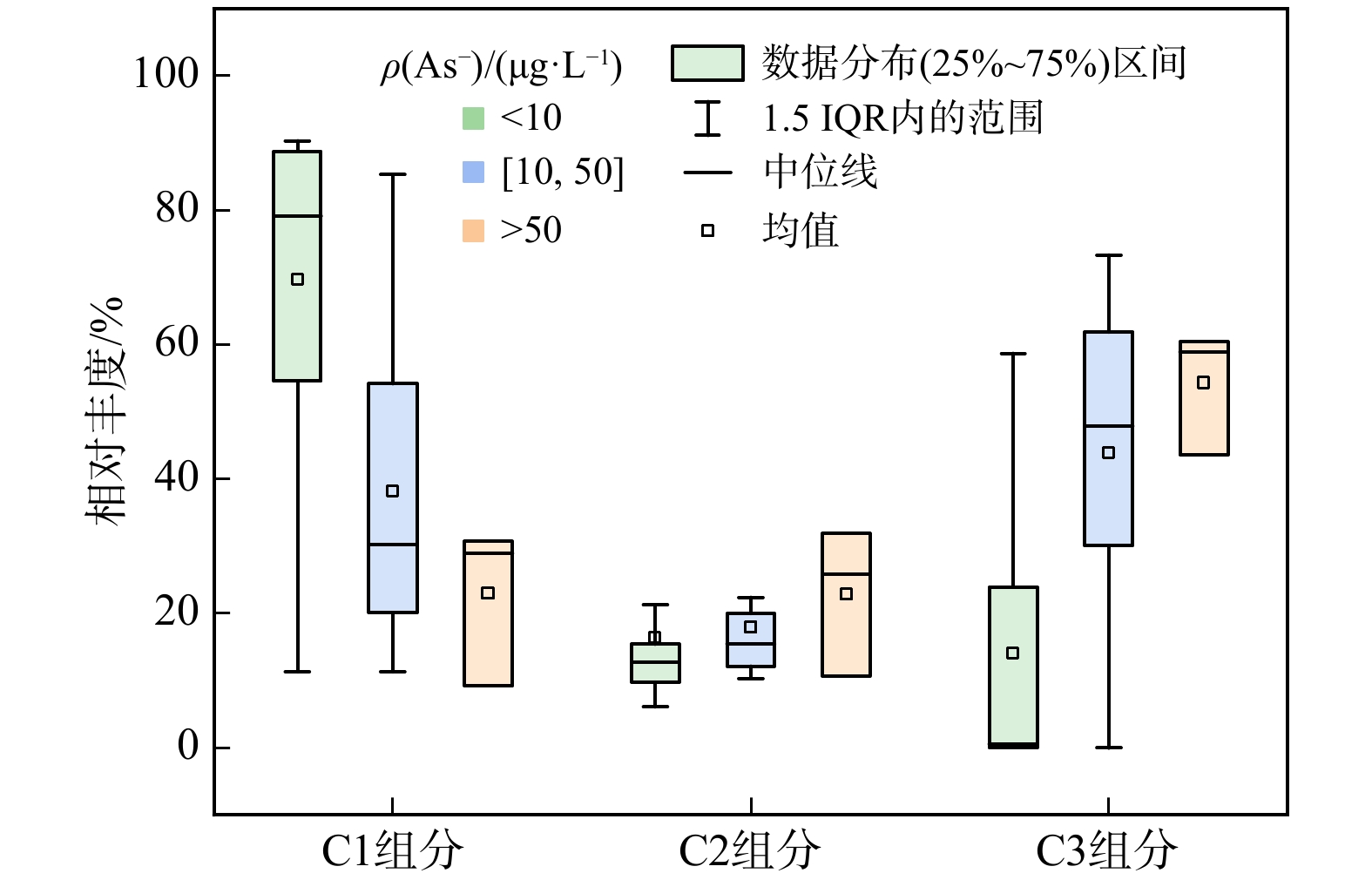
图 6 地下水中不同DOM组分的相对含量(IQR. 四分位距)
Figure 6. Relative contents of different dissolved organic matter (DOM) components in groundwater
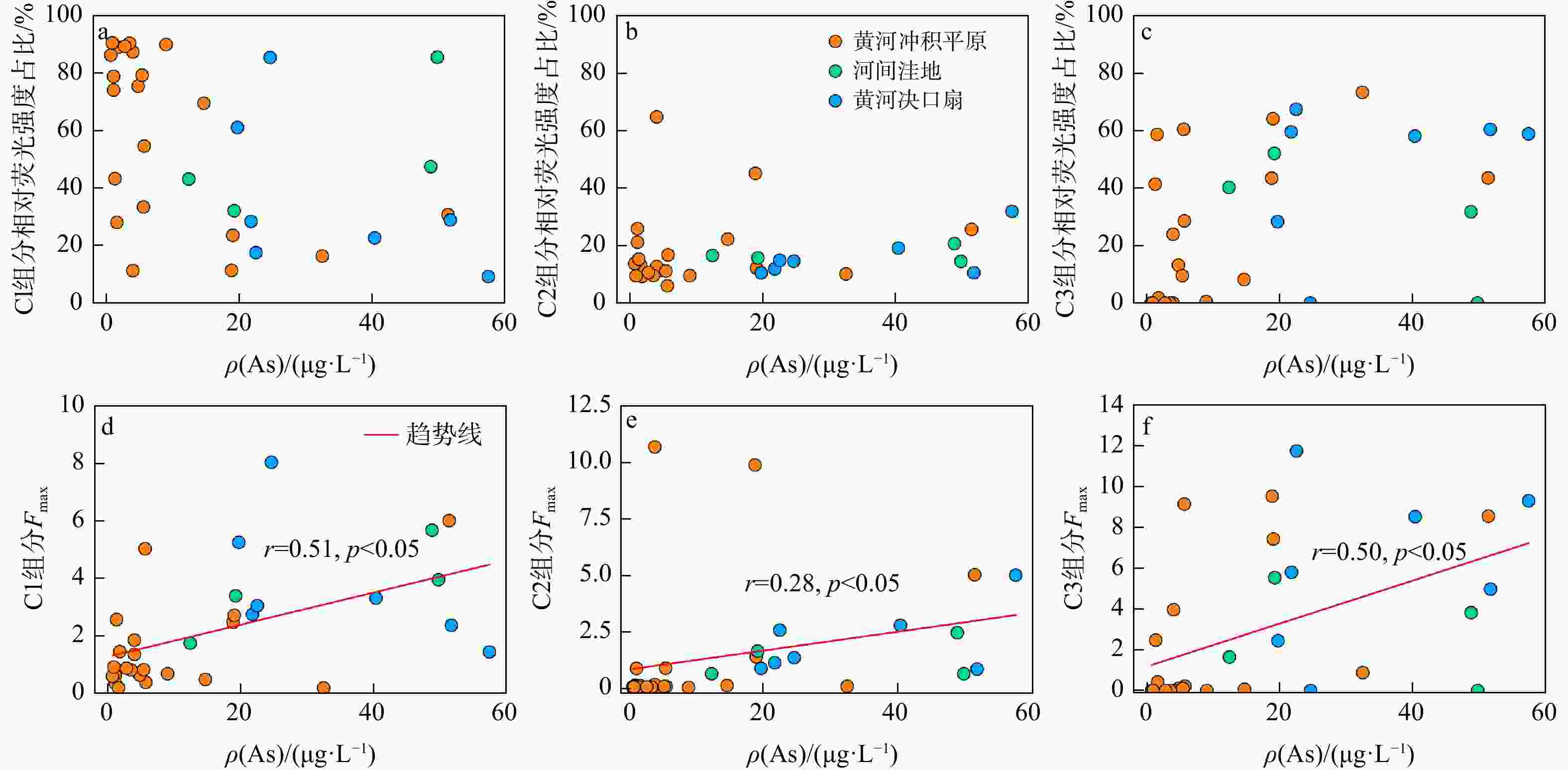
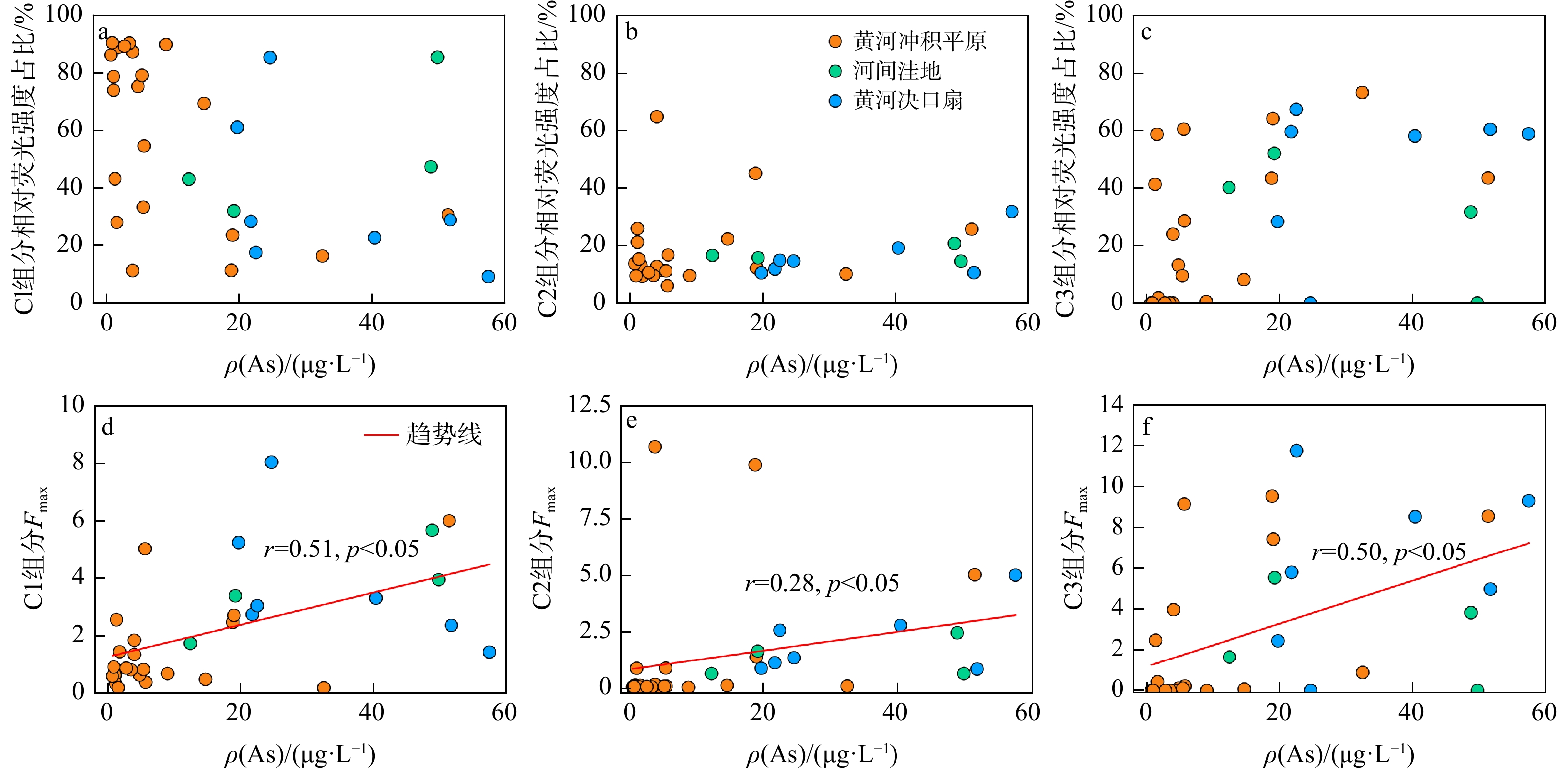
图 7 DOM各组分(C1, C2, C3)相对荧光强度占比(a~c)、最大荧光强度Fmax(d~f)与砷质量浓度的关系
Figure 7. Relationships of relative contents (a-c) and maximum fluorescence (Fmax) (d-f) intensity of dissolved organic matter (DOM) components (C1, C2, C3) with arsenic concentration
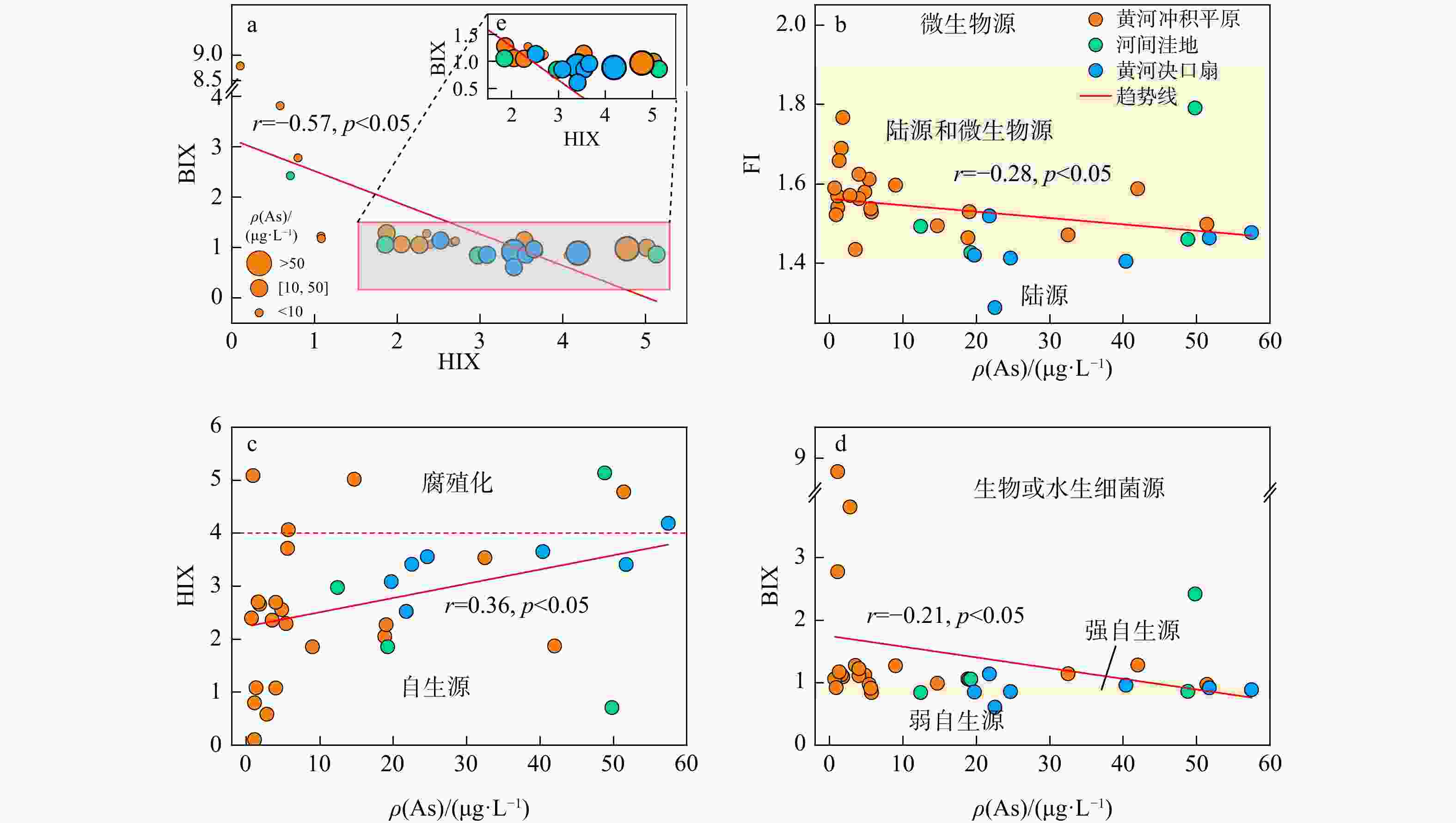
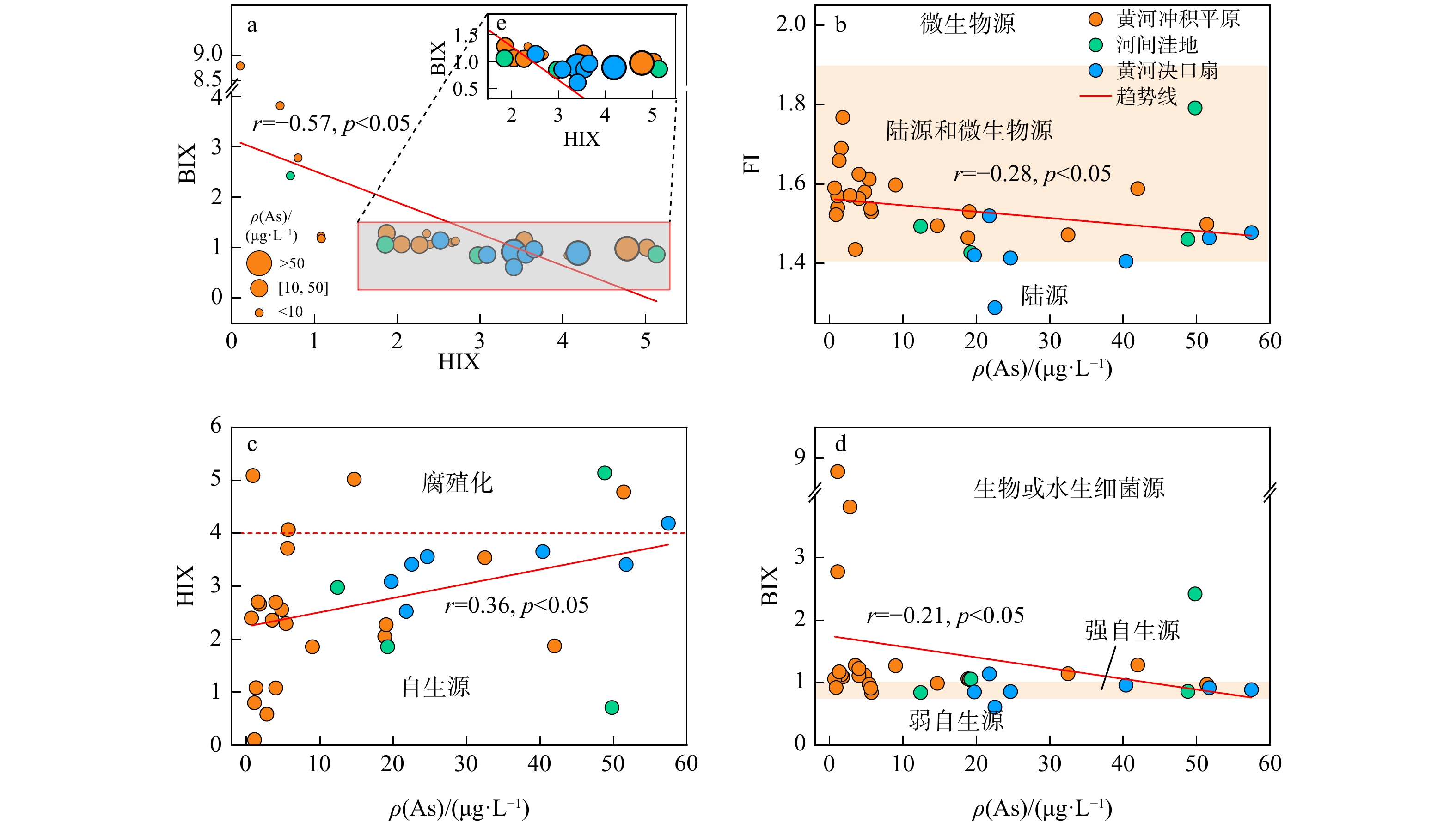
图 8 生物指数BIX与腐殖化指数HIX的关系(a, e)及各光学特征指标(荧光指数FI、HIX、BIX)与砷质量浓度的关系(b~d)
Figure 8. Relationships between HIX and BIX (a, e), between optical indices (FI, HIX, BIX) and arsenic concentration (b-d)
表 1 研究区中3个荧光组分特征及与先前研究的对比
Table 1. Characteristics of three fluorescence components in study area and comparison with previous studies
荧光
组分研究区
$(\lambda_{{\mathrm{Ex}}/{\mathrm{nm}}})/(\lambda_{{\mathrm{Em}}/{\mathrm{nm}}}) $描述 前人研究
$(\lambda_{{\mathrm{Ex}}/{\mathrm{nm}}})/(\lambda_{{\mathrm{Em}}/{\mathrm{nm}}}) $C1 <250/430 陆源腐殖质,小分子量 (237~260)/(400~500)[37];
250(325)/416[38]C2 300(<250)/350 微生物源类蛋白,类似
游离态和蛋白结合态氨
基酸色氨酸,内源输入(225~237)/(340~381)[37];
240/338[39]C3 <250/500 类腐殖质,黄腐酸样
成分,高分子量(237~260)/(400~500)[37];
255(345)/472[40]注:$\lambda_{\mathrm{Ex}} $. 激发波长;$\lambda_{\mathrm{Em}} $. 发射波长;下同  下载: 导出CSV
-
[1] HUGHES M F, BECK B D, CHEN Y, et al. Arsenic exposure and toxicology: A historical perspective[J]. Toxicological Sciences, 2011, 123(2): 305-332. doi: 10.1093/toxsci/kfr184 [2] FENDORF S, MICHAEL H A, VAN GEEN A. Spatial and temporal variations of groundwater arsenic in South and Southeast Asia[J]. Science, 2010, 328(5982): 1123-1127. doi: 10.1126/science.1172974 [3] FENG S, GUO H M, SUN X M, et al. Limited roles of anthropogenic activities on arsenic mobilization in groundwater from the Yinchuan Basin, China[J]. Journal of Hydrology, 2022, 610: 127910. doi: 10.1016/j.jhydrol.2022.127910 [4] GAN Y Q, WANG Y X, DUAN Y H, et al. Hydrogeochemistry and arsenic contamination of groundwater in the Jianghan Plain, Central China[J]. Journal of Geochemical Exploration, 2014, 138: 81-93. doi: 10.1016/j.gexplo.2013.12.013 [5] CAO W G, GUO H M, ZHANG Y L, et al. Controls of paleochannels on groundwater arsenic distribution in shallow aquifers of alluvial plain in the Hetao Basin, China[J]. Science of the Total Environment, 2018, 613/614: 958-968. [6] WANG Y X, SHVARTSEV S L, SU C L. Genesis of arsenic/fluoride-enriched soda water: A case study at Datong, northern China[J]. Applied Geochemistry, 2009, 24(4): 641-649. doi: 10.1016/j.apgeochem.2008.12.015 [7] GUO H M, WEN D G, LIU Z Y, et al. A review of high arsenic groundwater in Mainland and Taiwan, China: Distribution, characteristics and geochemical processes[J]. Applied Geochemistry, 2014, 41: 196-217. doi: 10.1016/j.apgeochem.2013.12.016 [8] MLADENOV N, ZHENG Y, MILLER M P, et al. Dissolved organic matter sources and consequences for iron and arsenic mobilization in Bangladesh aquifers[J]. Environmental Science & Technology, 2010, 44(1): 123-128. doi: 10.1021/es901472g [9] ROWLAND H A L, PEDERICK R L, POLYA D A, et al. The control of organic matter on microbially mediated iron reduction and arsenic release in shallow alluvial aquifers, Cambodia[J]. Geobiology, 2007, 5(3): 281-292. doi: 10.1111/j.1472-4669.2007.00100.x [10] QIAO W, GUO H M, HE C, et al. Unraveling roles of dissolved organic matter in high arsenic groundwater based on molecular and optical signatures[J]. Journal of Hazardous Materials, 2021, 406: 124702. doi: 10.1016/j.jhazmat.2020.124702 [11] WANG Y H, ZHANG G L, WANG H L, et al. Effects of different dissolved organic matter on microbial communities and arsenic mobilization in aquifers[J]. Journal of Hazardous Materials, 2021, 411: 125146. doi: 10.1016/j.jhazmat.2021.125146 [12] 于凯. 高砷地下水系统中有机质来源及其对砷动态变化的影响研究[D]. 武汉: 中国地质大学(武汉), 2016.YU K. The sources and influences of dissolved organic matter on temporal variations of groundwater arsenic concentrations: A case study in Jianghan Plain[D]. Wuhan: China University of Geosciences (Wuhan), 2016. (in Chinese with English abstract) [13] GAO Z P, ZHANG R S, ZHANG Z, et al. Groundwater irrigation induced variations in DOM fluorescence and arsenic mobility[J]. Journal of Hazardous Materials, 2024, 476: 135229. doi: 10.1016/j.jhazmat.2024.135229 [14] JIANG G, SU C L, LIU H F, et al. Mobilization and enrichment of geogenic iodine in a floodplain groundwater system: New insights from sources and characterization of dissolved organic matter[J]. Science of the Total Environment, 2024, 956: 177299. doi: 10.1016/j.scitotenv.2024.177299 [15] WANG M Z, SU C L, WANG X G, et al. Spatial pattern, hydrogeochemical controlling processes and non-carcinogenic risks of fluoride-enriched groundwater in the North Henan Plain, Northern China[J]. Applied Geochemistry, 2024, 163: 105934. doi: 10.1016/j.apgeochem.2024.105934 [16] 贾杰华, 石钦周, 王志刚, 等. 黄河冲积扇的形成及其水文地质环境[J]. 人民黄河, 2002, 24(2): 19-20. doi: 10.3969/j.issn.1000-1379.2002.02.009JIA J H, SHI Q Z, WANG Z G, et al. The formation of the alluvial fan of the Yellow River and its hydrogeological environment[J]. Yellow River, 2002, 24(2): 19-20. (in Chinese with English abstract) doi: 10.3969/j.issn.1000-1379.2002.02.009 [17] 张俊文, 马腾, 冯亮, 等. 微生物介导下高砷地下水系统的氧化还原分带性概念模型[J]. 地质科技情报, 2015, 34(5): 153-159.ZHANG J W, MA T, FENG L, et al. Conceptual model of redox zonation in high arsenic groundwater system under the effect of microorganisms[J]. Geological Science and Technology Information, 2015, 34(5): 153-159. (in Chinese with English abstract) [18] JIANG J Q, WANG X G, SU C L, et al. Unraveling the impact of dissolved organic matter on arsenic mobilization in alluvial aquifer of the lower Yellow River Basin, Northern China[J]. Applied Geochemistry, 2023, 158: 105781. doi: 10.1016/j.apgeochem.2023.105781 [19] MCKNIGHT D M, BOYER E W, WESTERHOFF P K, et al. Spectrofluorometric characterization of dissolved organic matter for indication of precursor organic material and aromaticity[J]. Limnology and Oceanography, 2001, 46(1): 38-48. doi: 10.4319/lo.2001.46.1.0038 [20] OHNO T. Fluorescence inner-filtering correction for determining the humification index of dissolved organic matter[J]. Environmental Science & Technology, 2002, 36(4): 742-746. doi: 10.1021/es0155276 [21] HUGUET A, VACHER L, RELEXANS S, et al. Properties of fluorescent dissolved organic matter in the Gironde Estuary[J]. Organic Geochemistry, 2009, 40(6): 706-719. doi: 10.1016/j.orggeochem.2009.03.002 [22] GUO J J, CAO W G, LI X Z, et al. Comparative study on genesis mechanism of high arsenic groundwater in typical alluvial plain of the upper and lower Yellow River, China[J]. Science of the Total Environment, 2024, 957: 177694. doi: 10.1016/j.scitotenv.2024.177694 [23] GUO H M, ZHANG Y, JIA Y F, et al. Dynamic behaviors of water levels and arsenic concentration in shallow groundwater from the Hetao Basin, Inner Mongolia[J]. Journal of Geochemical Exploration, 2013, 135: 130-140. doi: 10.1016/j.gexplo.2012.06.010 [24] 李谨丞, 曹文庚, 潘登, 等. 黄河冲积扇平原浅层地下水中氮循环对砷迁移富集的影响[J]. 岩矿测试, 2022, 41(1): 120-132. doi: 10.15898/j.cnki.11-2131/td.202110080140LI J C, CAO W G, PAN D, et al. Influences of nitrogen cycle on arsenic enrichment in shallow groundwater from the Yellow River alluvial fan plain[J]. Rock and Mineral Analysis, 2022, 41(1): 120-132. (in Chinese with English abstract) doi: 10.15898/j.cnki.11-2131/td.202110080140 [25] GUO H M, LI X M, XIU W, et al. Controls of organic matter bioreactivity on arsenic mobility in shallow aquifers of the Hetao Basin, P. R. China[J]. Journal of Hydrology, 2019, 571: 448-459. doi: 10.1016/j.jhydrol.2019.01.076 [26] PI K F, WANG Y X, XIE X J, et al. Geochemical effects of dissolved organic matter biodegradation on arsenic transport in groundwater systems[J]. Journal of Geochemical Exploration, 2015, 149: 8-21. doi: 10.1016/j.gexplo.2014.11.005 [27] KULKARNI H V, MLADENOV N, JOHANNESSON K H, et al. Contrasting dissolved organic matter quality in groundwater in Holocene and Pleistocene aquifers and implications for influencing arsenic mobility[J]. Applied Geochemistry, 2017, 77: 194-205. doi: 10.1016/j.apgeochem.2016.06.002 [28] NEIDHARDT H, BERNER Z A, FREIKOWSKI D, et al. Organic carbon induced mobilization of iron and manganese in a West Bengal aquifer and the muted response of groundwater arsenic concentrations[J]. Chemical Geology, 2014, 367: 51-62. doi: 10.1016/j.chemgeo.2013.12.021 [29] ZHI C S, CAO W G, WANG Z, et al. Genesis of as in the groundwater with extremely high salinity in the Yellow River Delta, China[J]. Applied Geochemistry, 2022, 139: 105229. doi: 10.1016/j.apgeochem.2022.105229 [30] 高杰, 郭静, 蔡爱民, 等. 长江中游河湖−地下水交互带地下水中氮素的时空分布特征及控制因素[J]. 地质科技通报, 2025, 44(5): 247-256. doi: 10.19509/j.cnki.dzkq.tb20240595GAO J, GUO J, CAI A M, et al. Spatial-temporal distribution characteristics and driving factors of nitrogen in groundwater of river-lake-groundwater interaction zone along middle reaches of the Yangtze River[J]. Bulletin of Geological Science and Technology, 2025, 44(5): 247-256. (in Chinese with English abstract) doi: 10.19509/j.cnki.dzkq.tb20240595 [31] HOU Q X, SUN J C, JING J H, et al. A regional scale investigation on groundwater arsenic in different types of aquifers in the Pearl River Delta, China[J]. Geofluids, 2018, 2018(1): 3471295. [32] 金戈, 邓娅敏, 杜尧, 等. 天鹅洲长江故道湿地地下水砷的时空分布特征及控制机理[J]. 地球科学, 2022, 47(11): 4161-4175.JIN G, DENG Y M, DU Y, et al. Spatial-temporal distribution of arsenic in groundwater system in Tian-E-Zhou wetland of the Yangtze River and its controlling mechanism[J]. Earth Science, 2022, 47(11): 4161-4175. (in Chinese with English abstract) [33] YANG Y J, YUAN X F, DENG Y M, et al. Seasonal dynamics of dissolved organic matter in high arsenic shallow groundwater systems[J]. Journal of Hydrology, 2020, 589: 125120. doi: 10.1016/j.jhydrol.2020.125120 [34] MCARTHUR J M, SIKDAR P K, HOQUE M A, et al. Waste-water impacts on groundwater: Cl/Br ratios and implications for arsenic pollution of groundwater in the Bengal Basin and Red River Basin, Vietnam[J]. Science of the Total Environment, 2012, 437: 390-402. doi: 10.1016/j.scitotenv.2012.07.068 [35] GHOSH D, KUMAR S, DONSELAAR M E, et al. Organic Carbon transport model of abandoned river channels: A motif for floodplain geomorphology influencing biogeochemical swaying of arsenic[J]. Science of the Total Environment, 2021, 762: 144400. doi: 10.1016/j.scitotenv.2020.144400 [36] 鲁宗杰, 邓娅敏, 杜尧, 等. 江汉平原高砷地下水中DOM三维荧光特征及其指示意义[J]. 地球科学, 2017, 42(5): 771-782.LU Z J, DENG Y M, DU Y, et al. EEMs characteristics of dissolved organic matter and their implication in high arsenic groundwater of Jianghan Plain[J]. Earth Science, 2017, 42(5): 771-782. (in Chinese with English abstract) [37] COBLE P G. Characterization of marine and terrestrial DOM in seawater using excitation-emission matrix spectroscopy[J]. Marine Chemistry, 1996, 51(4): 325-346. doi: 10.1016/0304-4203(95)00062-3 [38] STEDMON C A, MARKAGER S, BRO R. Tracing dissolved organic matter in aquatic environments using a new approach to fluorescence spectroscopy[J]. Marine Chemistry, 2003, 82(3/4): 239-254. doi: 10.1016/s0304-4203(03)00072-0 [39] MURPHY K R, STEDMON C A, WAITE T D, et al. Distinguishing between terrestrial and autochthonous organic matter sources in marine environments using fluorescence spectroscopy[J]. Marine Chemistry, 2008, 108(1/2): 40-58. doi: 10.1016/j.marchem.2007.10.003 [40] 王蓉, 杨逸君, 田书航, 等. 长江中游故道区地下水中有机质对钙富集的指示[J]. 地质科技通报, 2026, 45(2): 231-239. doi: 10.19509/j.cnki.dzkq.tb20240491WANG R, YANG Y J, TIAN S H, et al. Organic matter as an indicator of groundwater calcium enrichment in paleo-channel area along middle reaches of the Yangtze River[J]. Bulletin of Geological Science and Technology, 2026, 45(2): 231-239. (in Chinese with English abstract) doi: 10.19509/j.cnki.dzkq.tb20240491 [41] ISHII S K L, BOYER T H. Behavior of reoccurring PARAFAC components in fluorescent dissolved organic matter in natural and engineered systems: A critical review[J]. Environmental Science & Technology, 2012, 46(4): 2006-2017. doi: 10.1021/es2043504 [42] LI X M, GUO H M, ZHENG H, et al. Roles of different molecular weights of dissolved organic matter in arsenic enrichment in groundwater: Evidences from ultrafiltration and EEM-PARAFAC[J]. Applied Geochemistry, 2019, 104: 124-134. doi: 10.1016/j.apgeochem.2019.03.024 [43] SCOTT D T, MCKNIGHT D M, BLUNT-HARRIS E L, et al. Quinone moieties act as electron acceptors in the reduction of humic substances by humics-reducing microorganisms[J]. Environmental Science & Technology, 1998, 32(19): 2984-2989. doi: 10.1021/es980272q [44] KRACHLER R, KRACHLER R F. Northern high-latitude organic soils as a vital source of river-borne dissolved iron to the ocean[J]. Environmental Science & Technology, 2021, 55(14): 9672-9690. doi: 10.1021/acs.est.1c01439 [45] POURRET O, DAVRANCHE M, GRUAU G, et al. Rare earth elements complexation with humic acid[J]. Chemical Geology, 2007, 243(1/2): 128-141. doi: 10.1016/j.chemgeo.2007.05.018 -

 下载:
下载:

 点击查看大图
计量
- 文章访问数: 202
- PDF下载量: 37
- 被引次数: 0