投审稿入口
投审稿入口


Earthquake nucleation simulation:A case study of the 2023 MW 7.8 Kahramanmaraş earthquake, Turkey
-
摘要:
大陆转换断层系统中的次级断层在走滑地震中优先破裂是一个广泛讨论的问题,破译其潜在机制可以增强对地震物理和地震灾害的认识。本研究引入一种新的有限元框架来模拟断层成核,该框架根据背景构造应力和断层几何形状的相互作用来识别成核。该方法将断层视为2个块体之间的摩擦接触,采用准静态模拟得到的应力−应变条件作为动态破裂模拟的初始条件,并将静态摩擦突然转变为动态摩擦。其中,动态模拟的第一步得到的最大滑移区与准静态模型中最小静摩擦区相对应,即为地震成核区。使用简化的三维弹塑性模型研究了影响2023年土耳其卡赫拉曼马拉什7.8级地震成核位置的关键因素。研究结果表明,本研究提出的地震成核模拟方法具有极高的准确性,在2023年土耳其卡赫拉曼马拉什7.8级地震中,由于次级断层(努尔达伊断层)与主断层的几何结构发生了变化,其力学耦合表现出非线性特征。次级断层的明显挠曲,特别是沿垂向深度的挠曲,会显著加速地震成核,并导致成核位置从主断层向次级断层转移。本研究提出的断层成核研究方法,解决了有限元模型在平衡静岩石压力(预应力)和重力效应过程中的高自由度问题,提高了成核模拟的准确性。同时,基于物理的模拟成功地再现了由运动学有限断层反演得到的2023年土耳其卡赫拉曼马拉什同震滑动模式,为大型走滑断层为何起源于次级断层提供了合理解释。
Abstract:ObjectiveThe preferential rupture of splay faults in continental transform fault systems during strike-slip earthquakes remains a widely debated issue. Deciphering the underlying mechanism is crucial for advancing the understanding of earthquake physics and improving seismic hazard assessment.
MethodsThis study introduces a novel finite element framework to simulate fault nucleation, which identifies nucleation zones based on the interaction between background tectonic stress and fault geometry. Within this framework, faults are treated as frictional contact between two blocks. Stress-strain conditions derived from quasi-static simulations serve as initial conditions for dynamic rupture simulations, with the abrupt transition from static to dynamic friction modeled. The region of maximum slip obtained in the first step of the dynamic simulation corresponds to the area of minimum static friction in the quasi-static model, thereby defining the earthquake nucleation zone. Simultaneously, we investigate the key factors impacting the nucleation site of the 2023
M W 7.8 Kahramanmaraş earthquake using a simplified 3D elastic-plastic model.ResultsThe results show the high accuracy of the proposed earthquake nucleation simulation method and reveal that the mechanical coupling between the splay Nurdağı Fault (NF) and the main fault exhibits nonlinear characteristics, influenced by variations in the geometric structure of the NF. The pronounced deflection of the NF, especially with depth, significantly accelerates earthquake nucleation and leads to the shift of the nucleation location to the NF.
ConclusionsThis study addresses as the challenge of high degrees of freedom in finite element models when balancing static rock pressure (pre-stress) and gravitational effects, thereby improving the accuracy of nucleation simulation. Furthermore, our physics-based simulation successfully reproduces the coseismic slip pattern derived from kinematic finite fault inversion. This study provides a robust explanation for why large strike-slip earthquakes can nucleate on splay faults.
-
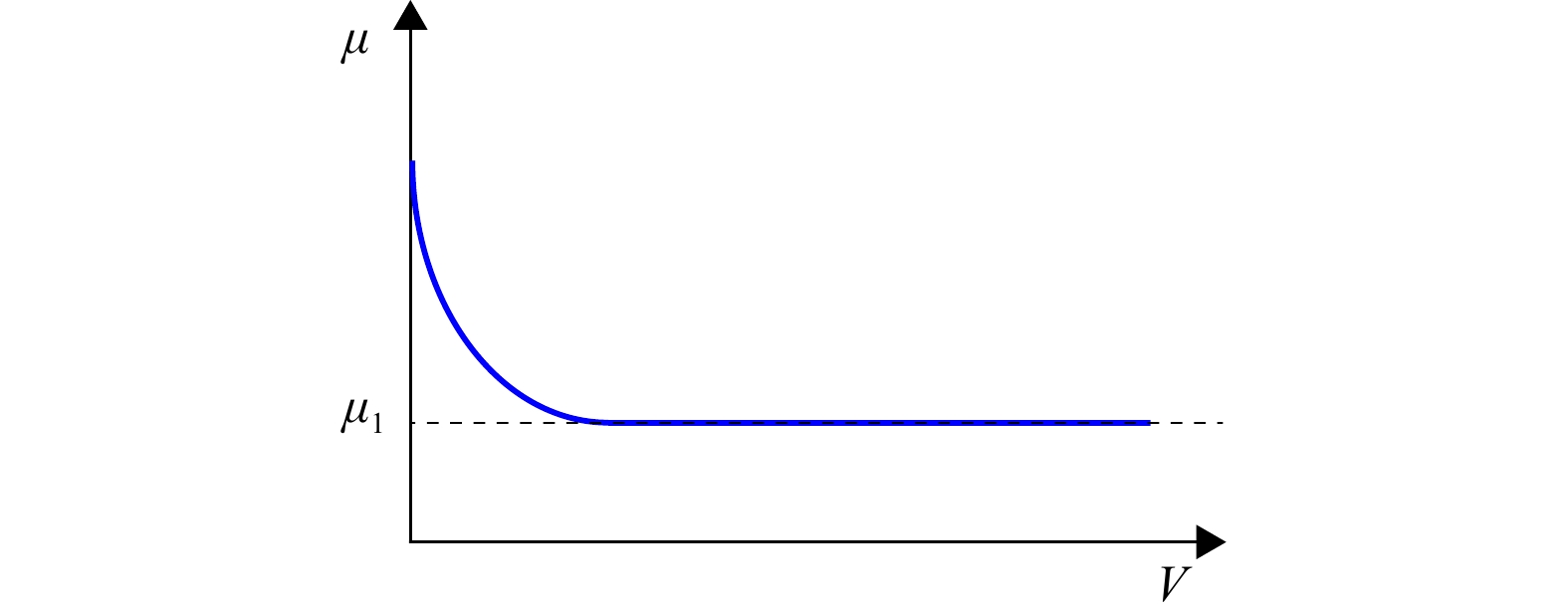
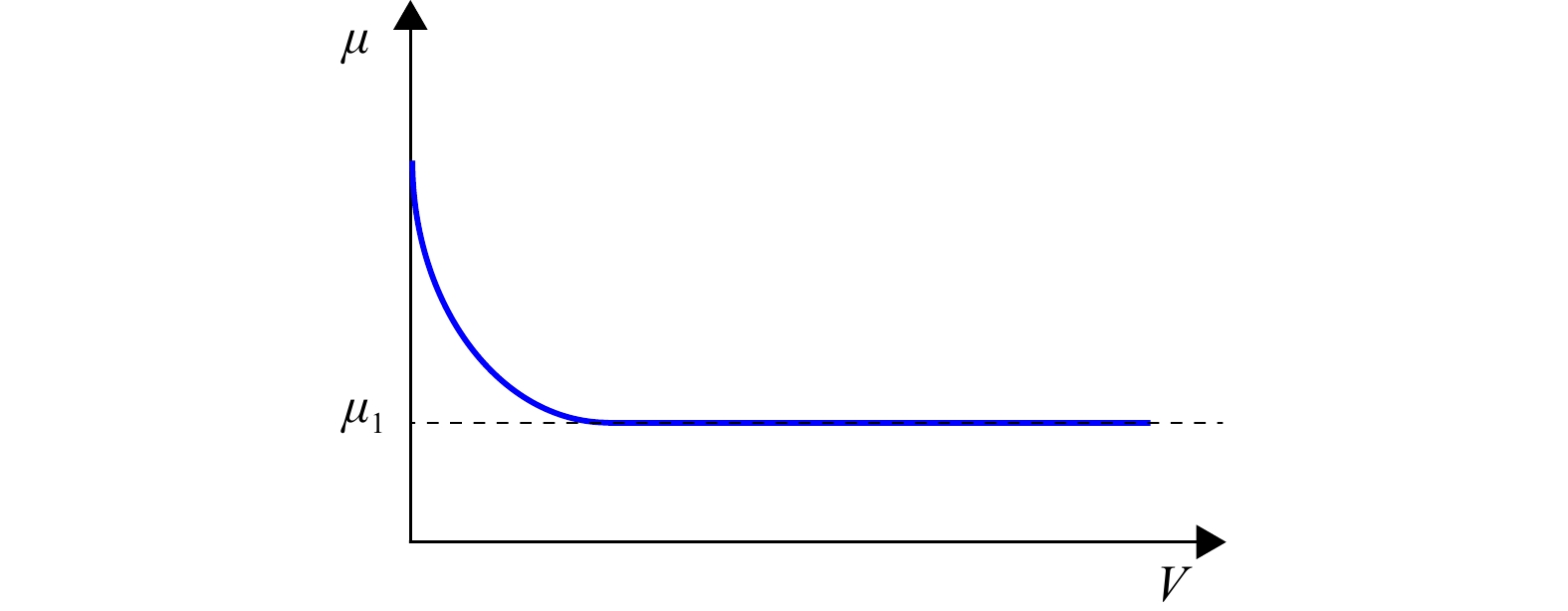
图 1 摩擦衰减和滑移速率关系示意图
$\mu $. 摩擦系数;$ {{{\mu}}}_{{1}} $. 动态摩擦系数;V. 程序计算的滑移速率
Figure 1. Diagram of the friction decay and slip rate

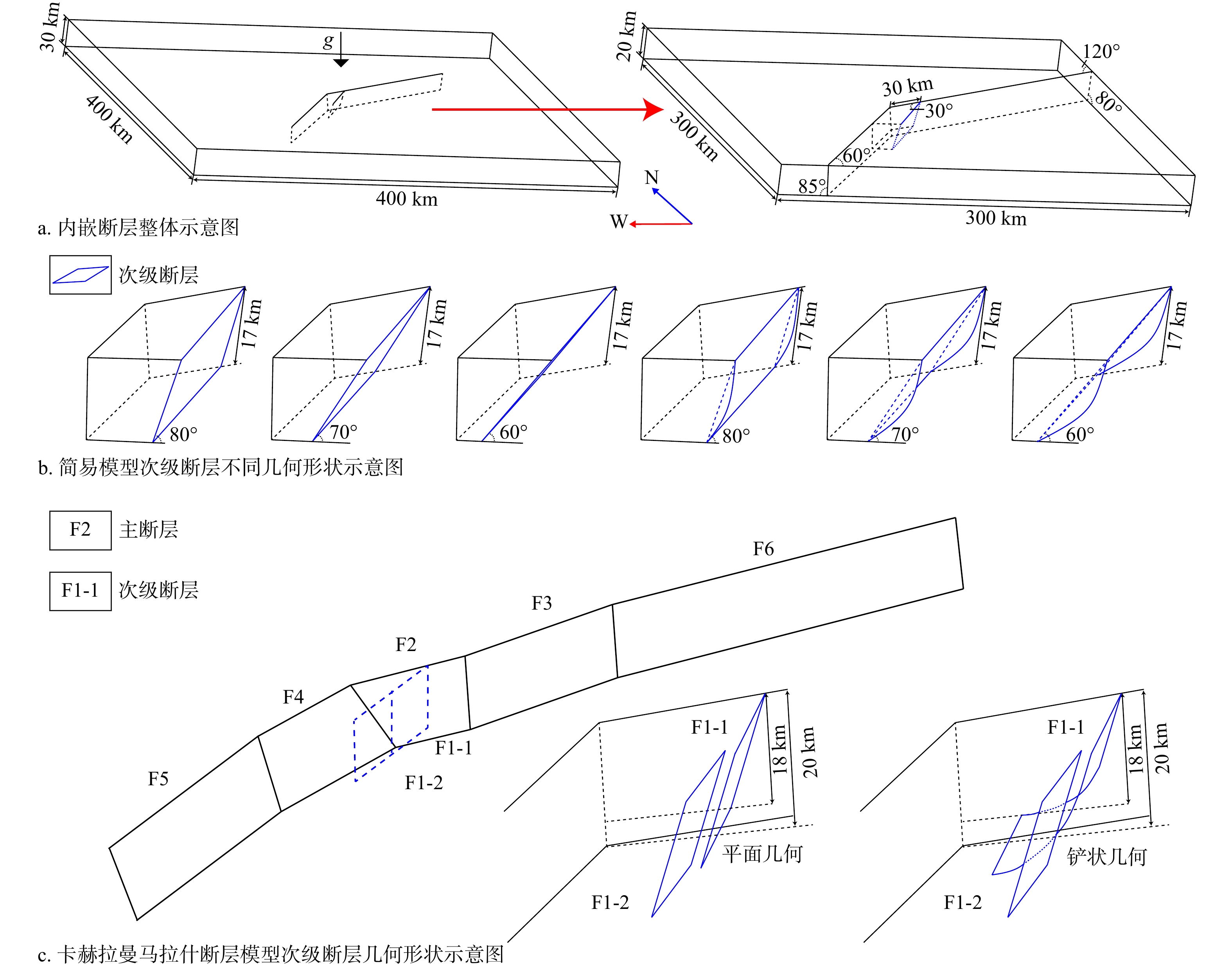
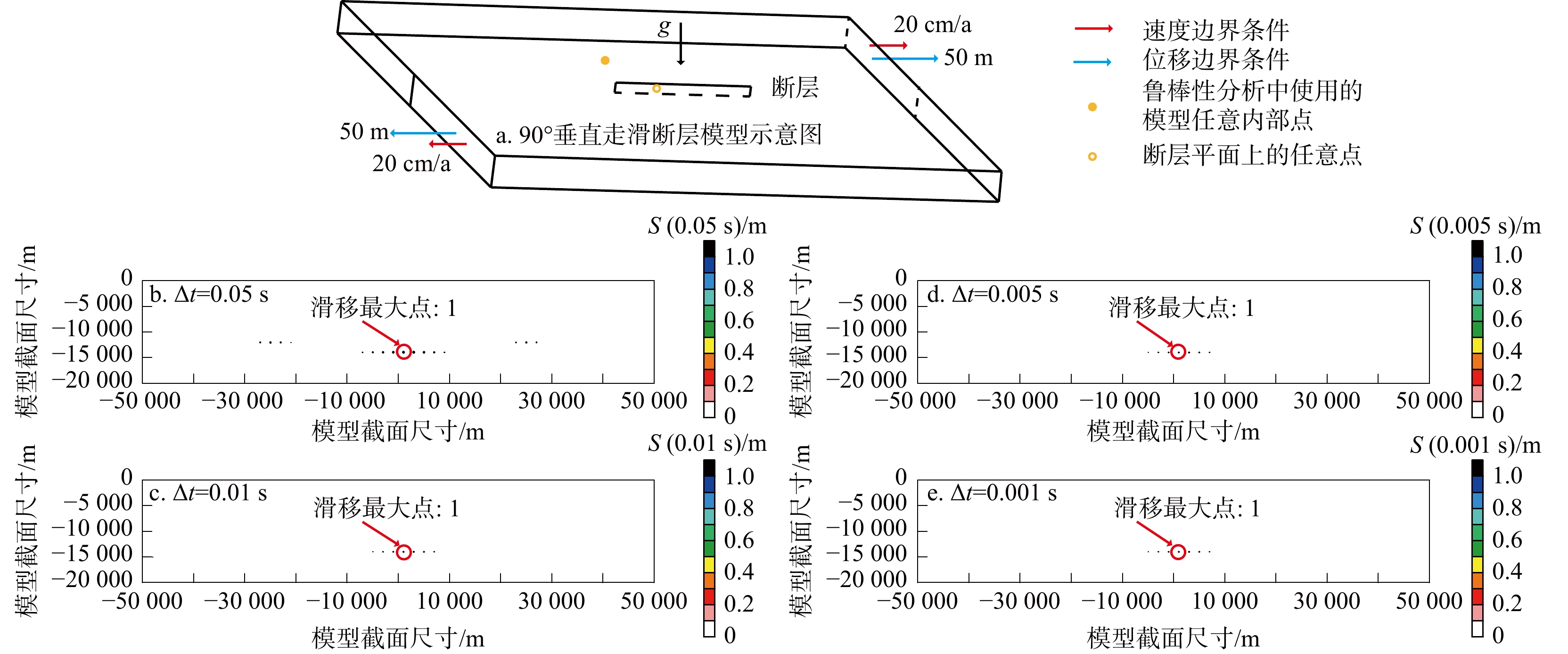
图 2 单一断层模型示意图(g为重力加速度,下同)
在准静态模型中,边界被设置为位移边界条件,而动态模型则采用速度边界条件。该模型顶部有自由边界,底部有横向自由边界
Figure 2. Conceptual schematic of the simple fault model
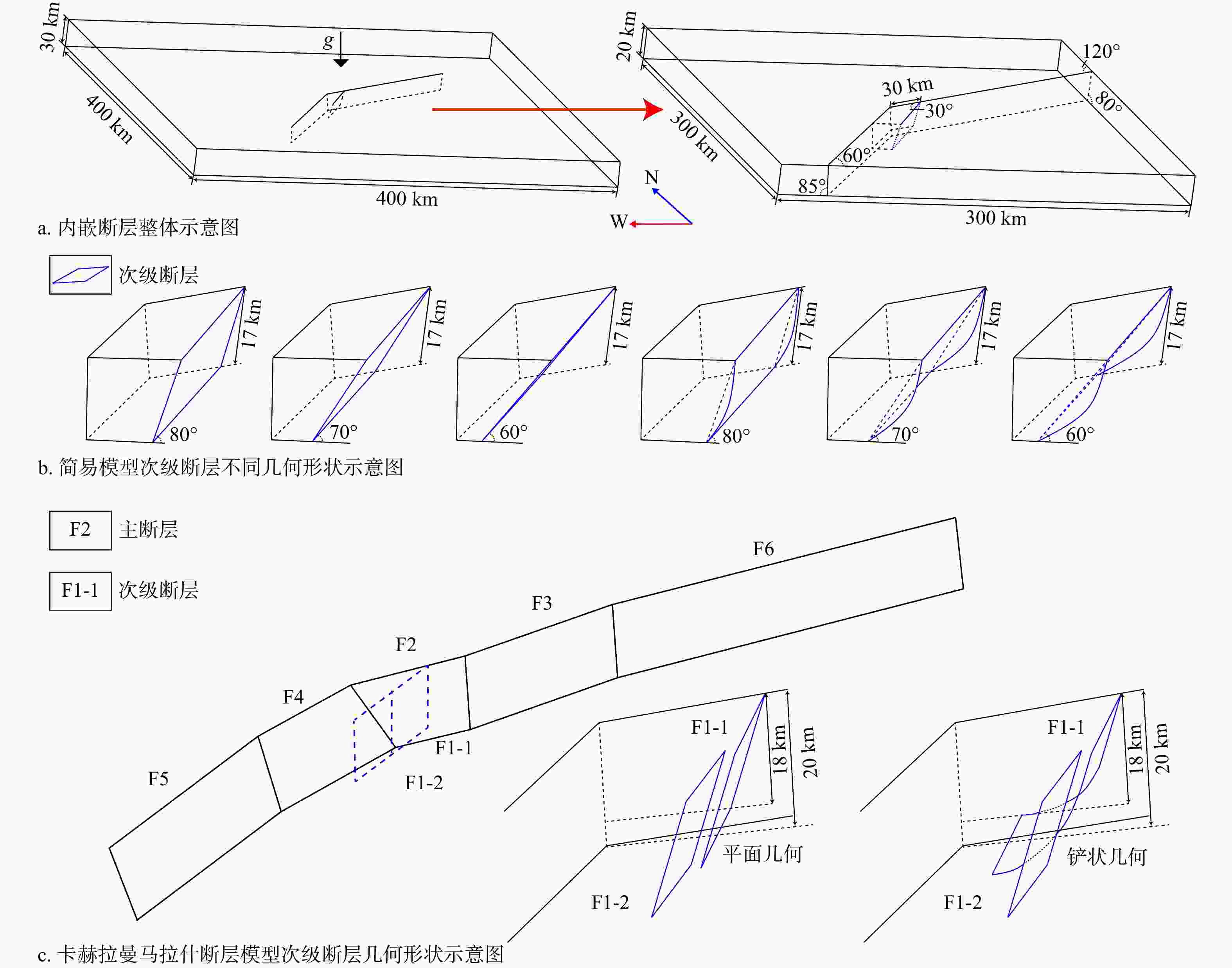
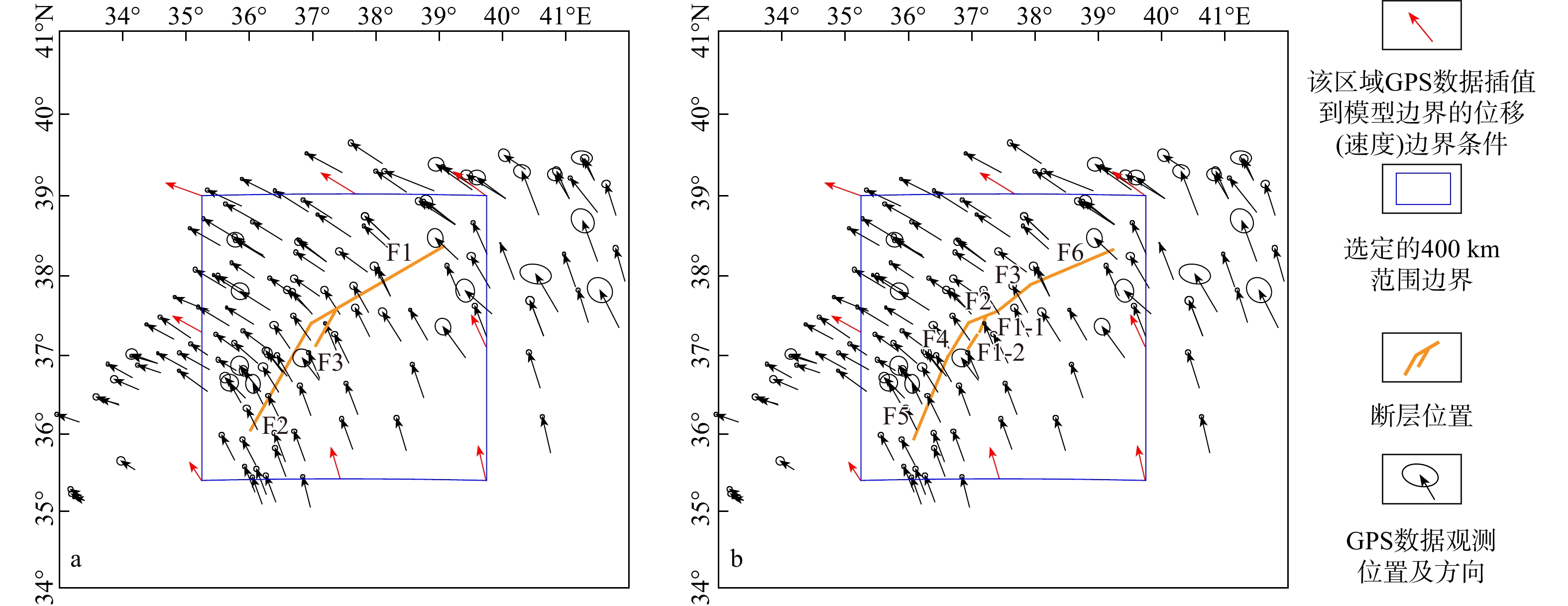
图 3 2023年土耳其卡赫拉曼马拉什 7.8 级地震中断层模型示意图
Figure 3. Conceptual schematic of the fault model for the 2023 MW 7.8 Kahramanmaraş earthquake
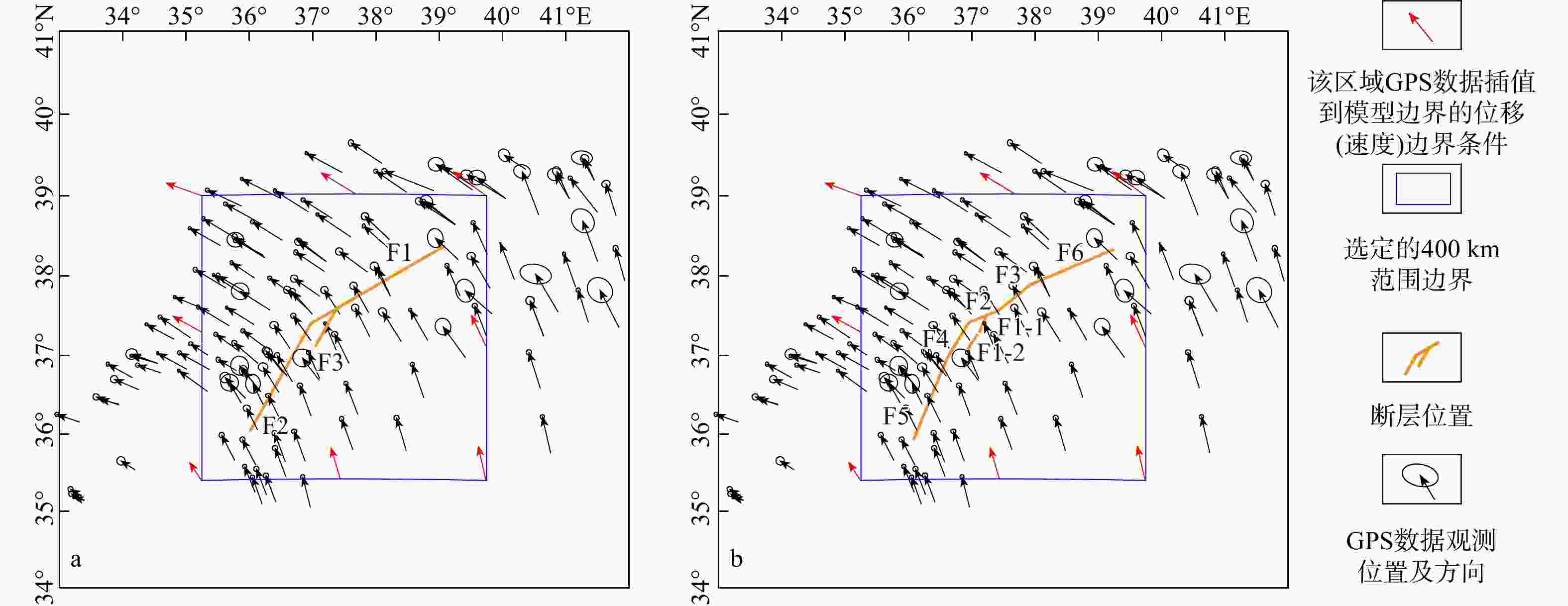
图 4 三维有限元断层模型的边界条件
Figure 4. Boundary condition applied to the three-dimensional finite element fault model
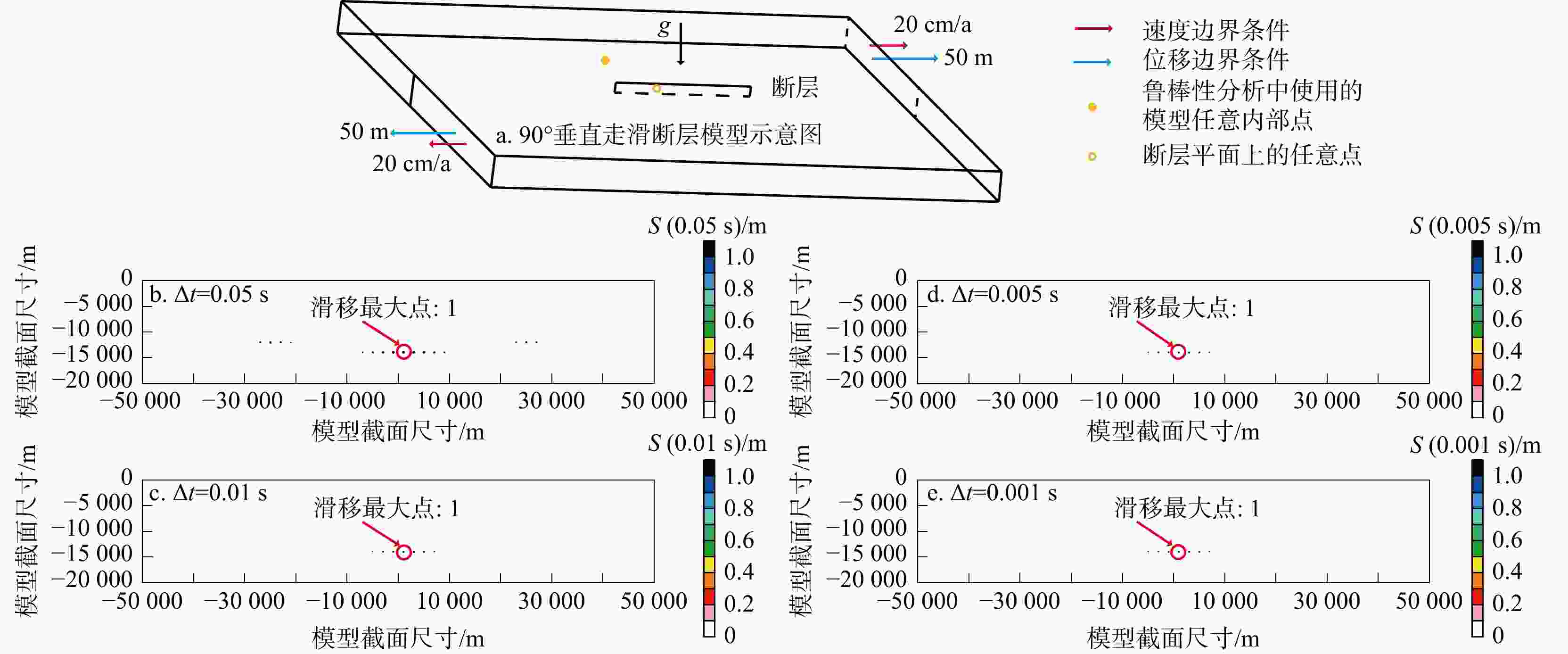
图 5 不同时间步长的第一步动态滑移分布
由于绝对震级在不同的Δt处相差几个数量级,因此对每个模型的峰值滑移(S)进行了归一化有助于直接比较,下同
Figure 5. Initial dynamic slip distribution at different time steps
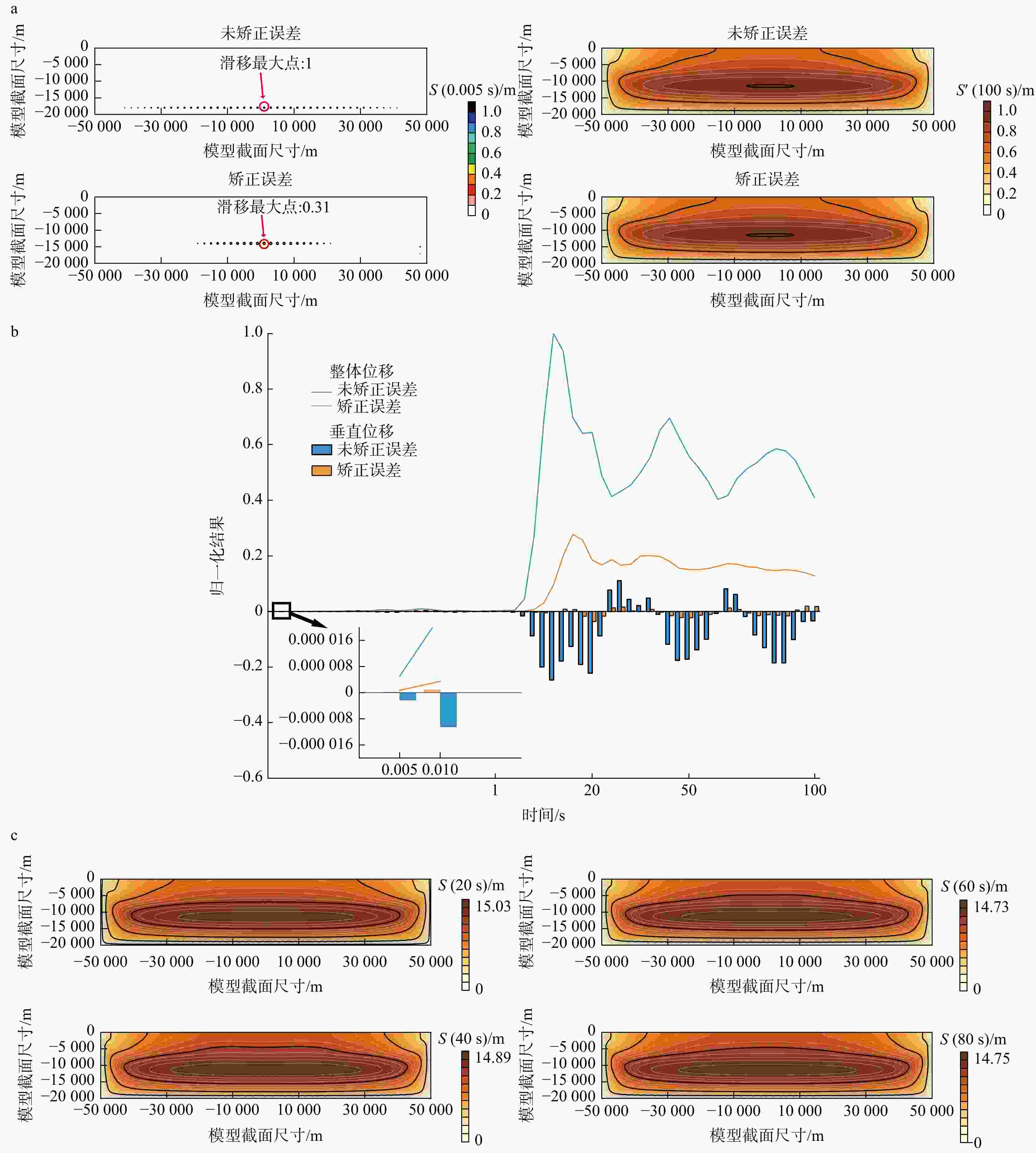
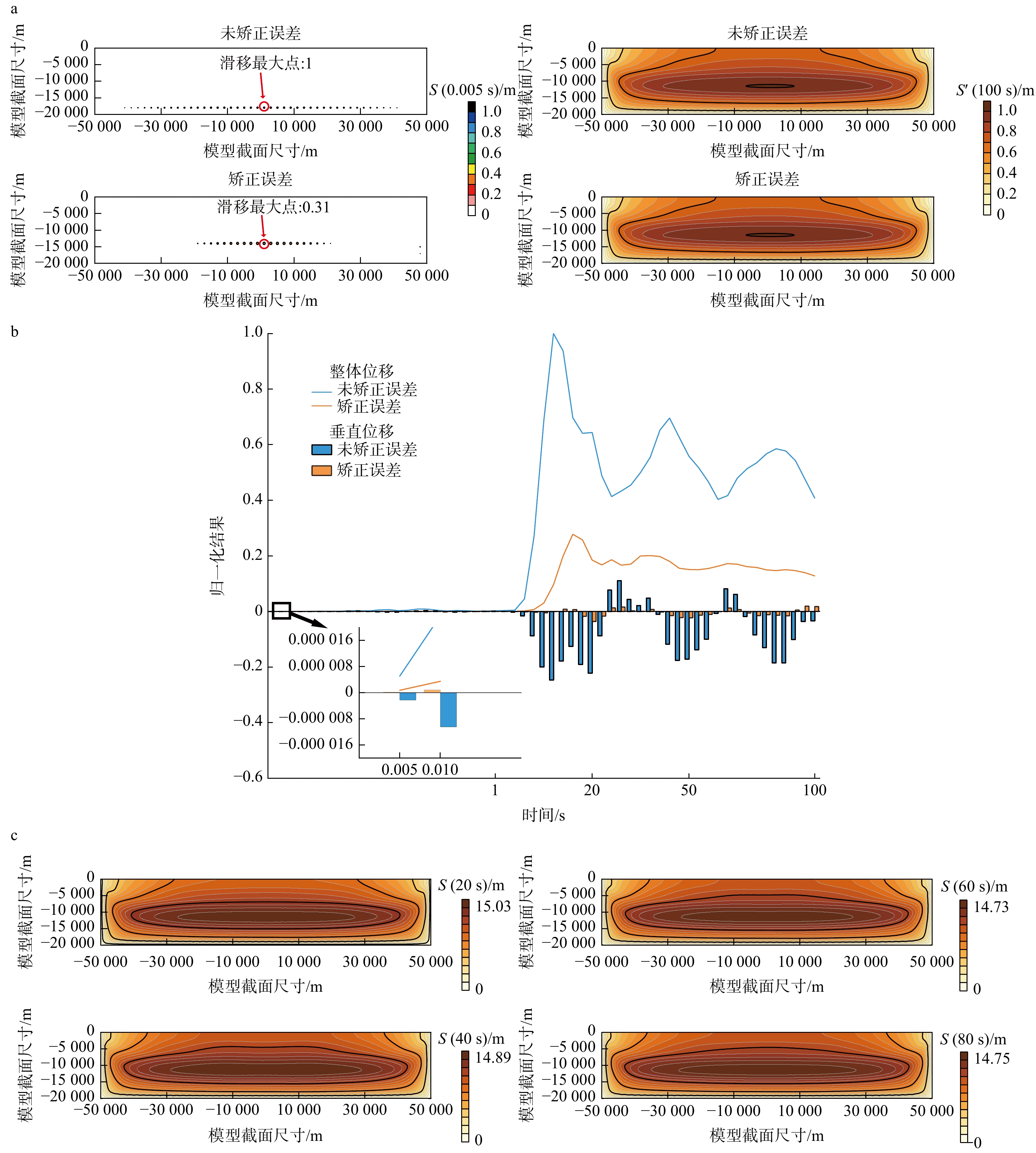
图 6 有无误差矫正的断层模型垂直位移和整体变形模式(S'. 模型稳定后100 s的滑移;下同)
a. 有无矫正误差动态模拟初始子步(0.005 s)的滑动量及稳定后(100 s)断层的右旋滑动分布;b. 断层模型内任意点有无矫正误差的垂直位移和整体位移变形模式曲线图,其中所有模型的滑移量和地表垂直变形量都进行了归一化处理;c. t = 20, 40, 60, 80 s时断面上的横向滑动
Figure 6. Vertical displacement and overall deformation pattern of fault model with and without error correction
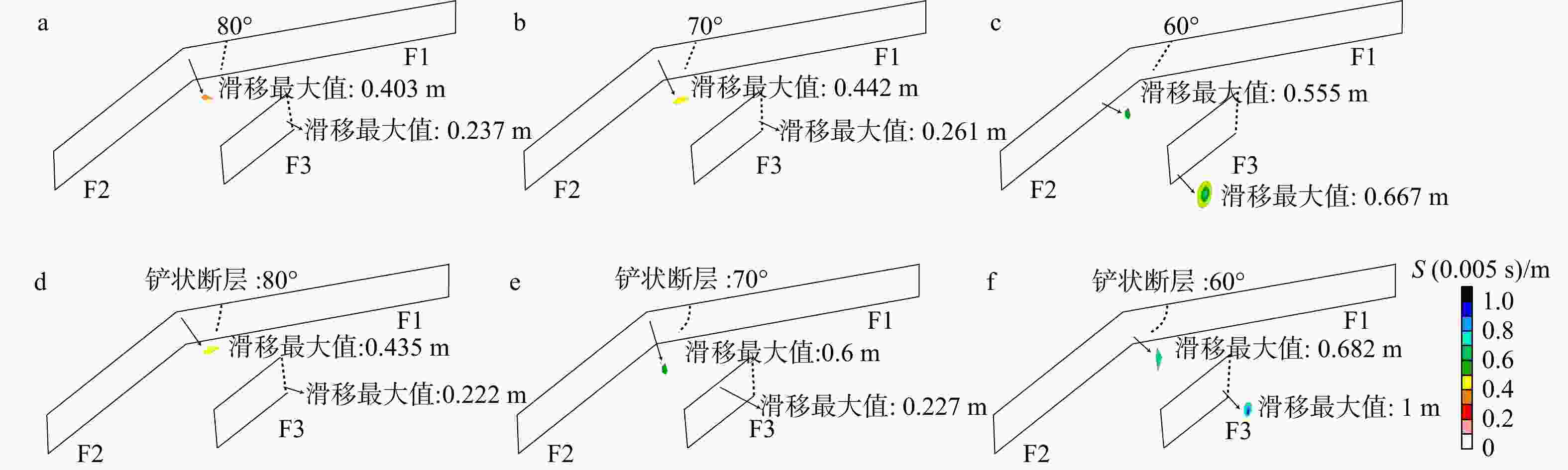
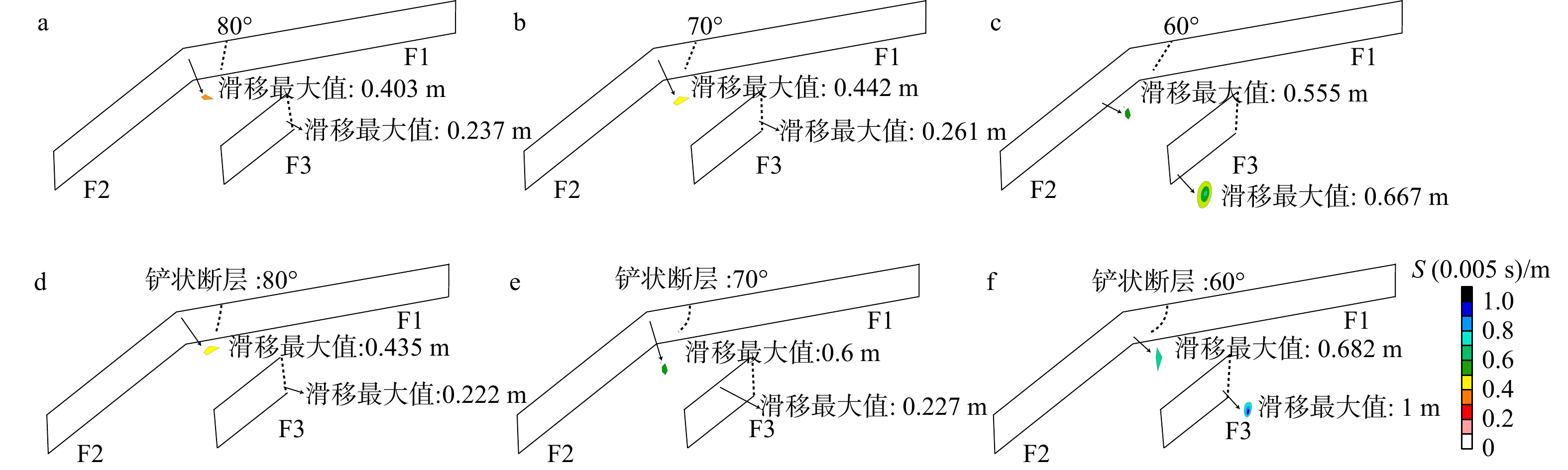
图 7 次级断层几何形态对地震成核的影响结果
a~c. 为断层倾角80°~60°时动态模拟初始子步的滑移;d~f. 为动态模拟初始子步不同断层挠度下的滑移
Figure 7. Effect of splay faults geometric on earthquake nucleation
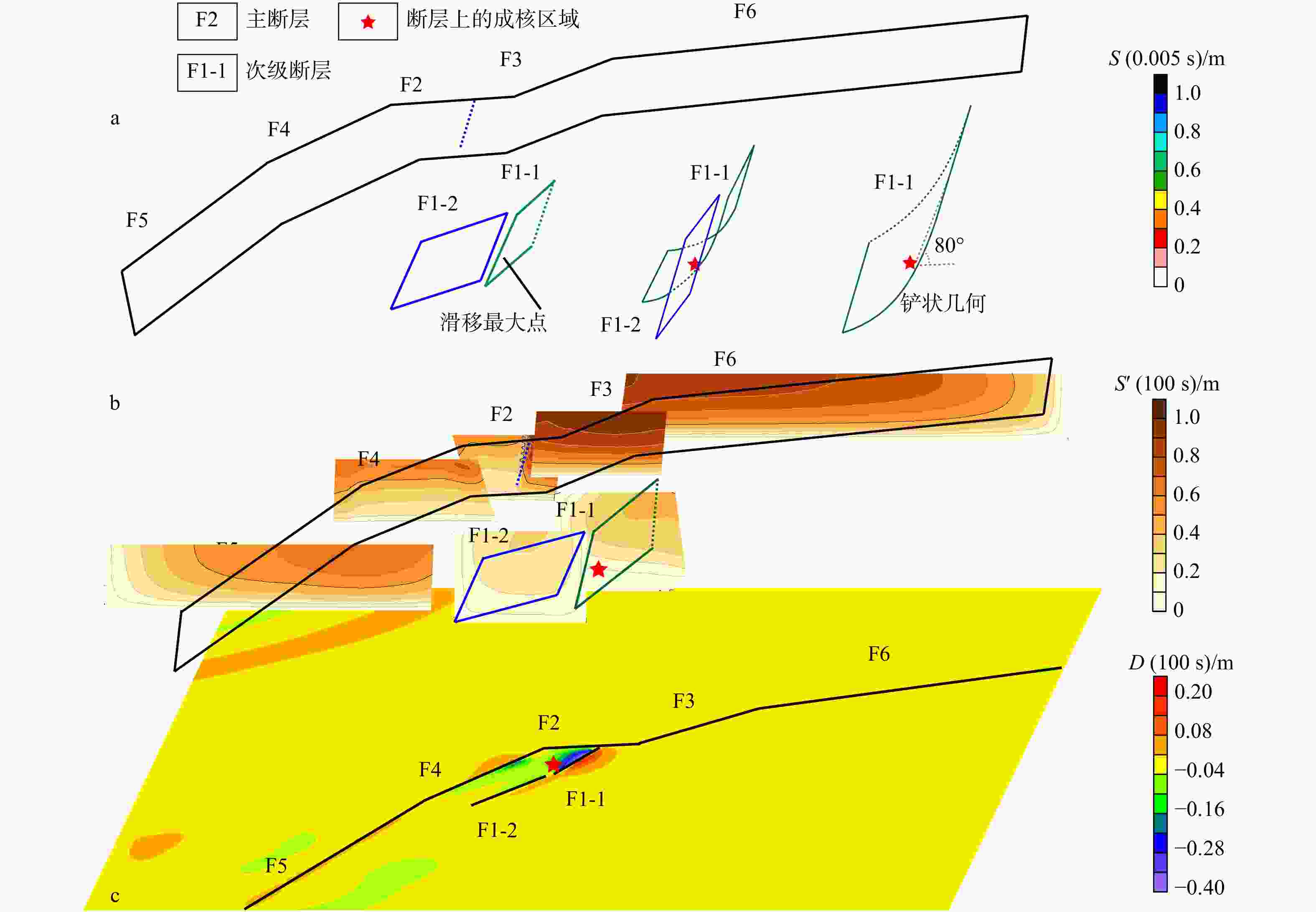
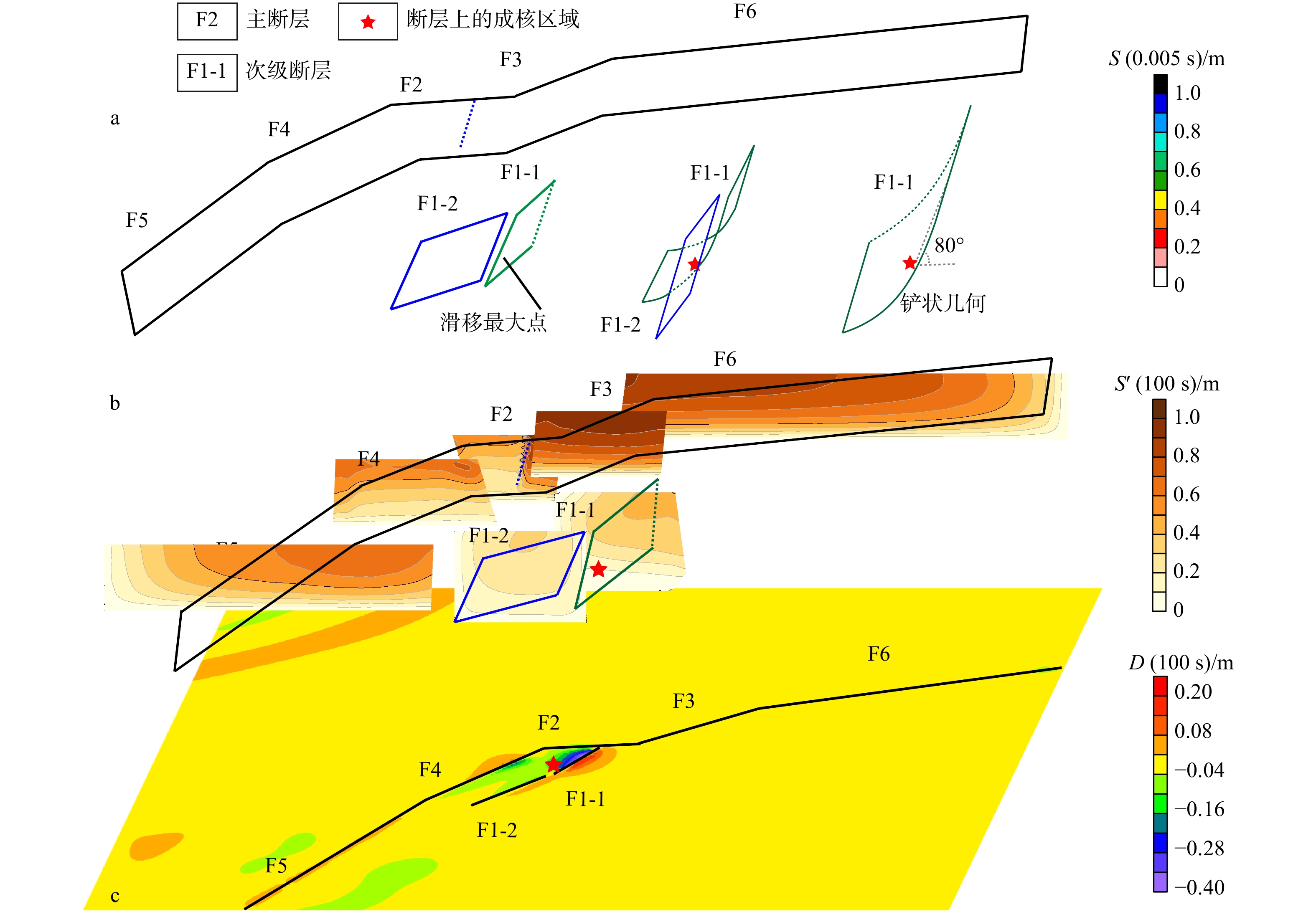
图 8 东安托那断层和努尔达伊断层系统的断层滑动和地表垂直变形(D. 模型稳定后100 s的垂向位移)
a. 动态模拟第一步(0.005 s)的滑移结果,即初始失稳时刻下的滑移;b. 模型稳定后(100 s)的滑移;c. 模型稳定后(100 s)的垂向位移
Figure 8. Fault slip and surface vertical deformation in the case of the EAFZ-NF system
表 1 2023年土耳其卡赫拉曼马拉什7.8级地震中断层几何参数[21,38]
Table 1. Fault geometry parameters of the 2023 MW 7.8 Kahramanmaraş earthquake
断层部位 F1-1 F1-2 F2 F3 F4 F5 F6 走向/(°) 202 210 248 231 31 23 247 倾向/(°) 80 铲状 80 80 80 80 70  下载: 导出CSV
表 2 模型参数
Table 2. Model parameters
模型参数及单位 取值 重力加速度g/(m·s−2) 9.81 密度ρ/(kg·m−3) 2700 杨氏模量E/Pa 3.40×10¹⁰ 泊松比r 0.3 时间子步/s 0.005 摩擦系数μ 0.6 $ \alpha $(逆冲型参数) 3 $ \alpha $(走滑型参数) 1.2 $ \alpha $(正断层型参数) 0.75
下载: 导出CSV
-
[1] KOSTROV B V, DAS S. Principles of earthquake source mechanics[M]. Cambridge: Cambridge University Press, 1988. [2] AKI K, RICHARDS P G. Quantitative seismology[M]. W. H: Univ Science Books, 2002. [3] ANDREWS D J. Rupture velocity of plane strain shear cracks[J]. Journal of Geophysical Research, 1976, 81(32): 5679-5687. doi: 10.1029/JB081i032p05679 [4] MADARIAGA R. Dynamics of an expanding circular fault[J]. Bulletin of the Seismological Society of America, 1976, 66(3): 639-666. doi: 10.1785/BSSA0660030639 [5] DAY S M. Three-dimensional finite difference simulation of fault dynamics: Rectangular faults with fixed rupture velocity[J]. Bulletin of the Seismological Society of America, 1982, 72(3): 705-727. [6] DAY S M. Three-dimensional simulation of spontaneous rupture: The effect of nonuniform prestress[J]. Bulletin of the Seismological Society of America, 1982, 72(6A): 1881-1902. doi: 10.1785/BSSA07206A1881 [7] OLSEN K B, MADARIAGA R, ARCHULETA R J. Three-dimensional dynamic simulation of the 1992 landers earthquake[J]. Science, 1997, 278: 834-838. doi: 10.1126/science.278.5339.834 [8] MADARIAGA R, OLSEN K, ARCHULETA R. Modeling dynamic rupture in a 3D earthquake fault model[J]. Bulletin of the Seismological Society of America, 1998, 88(5): 1182-1197. doi: 10.1785/BSSA0880051182 [9] DAY S M, DALGUER L A, LAPUSTA N, et al. Comparison of finite difference and boundary integral solutions to three-dimensional spontaneous rupture[J]. Journal of Geophysical Research (Solid Earth), 2005, 110(B12): 2005JB003813. doi: 10.1029/2005JB003813 [10] ZHANG H M, CHEN X F. Dynamic rupture on a planar fault in three-dimensional half space: I. Theory[J]. Geophysical Journal International, 2006, 164(3): 633-652. doi: 10.1111/j.1365-246X.2006.02887.x [11] AOCHI H, FUKUYAMA E, MATSU'URA M. Spontaneous rupture propagation on a non-planar fault in 3-D elastic medium[M]//Anon. Microscopic and macroscopic simulation: Towards predictive modelling of the earthquake process. Basel: Birkhäuser Basel, 2001: 2003-2027. [12] CHEN X F, ZHANG H M. Modelling rupture dynamics of a planar fault in 3-D half space by boundary integral equation method: An overview[J]. Pure and Applied Geophysics, 2006, 163(2): 267-299. [13] ZHANG H M, CHEN X F. Dynamic rupture on a planar fault in three-dimensional half-space: II. Validations and numerical experiments[J]. Geophysical Journal International, 2006, 167(2): 917-932. doi: 10.1111/j.1365-246X.2006.03102.x [14] AAGAARD B T, HALL J F, HEATON T H. Characterization of near-source ground motions with earthquake simulations[J]. Earthquake Spectra, 2001, 17(2): 177-207. doi: 10.1193/1.1586171 [15] OGLESBY D D, DAY S M, O'CONNELL D R H. Dynamic and static interaction of two thrust faults: A case study with general implications[J]. Journal of Geophysical Research (Solid Earth), 2003, 108(B10): 2002JB002228. doi: 10.1029/2002JB002228 [16] BARALL M. A grid-doubling finite-element technique for calculating dynamic three-dimensional spontaneous rupture on an earthquake fault[J]. Geophysical Journal International, 2009, 178(2): 845-859. doi: 10.1111/j.1365-246X.2009.04190.x [17] BENJEMAA M, GLINSKY-OLIVIER N, CRUZ-ATIENZA V M, et al. Dynamic non-planar crack rupture by a finite volume method[J]. Geophysical Journal International, 2007, 171(1): 271-285. doi: 10.1111/j.1365-246X.2006.03500.x [18] BENJEMAA M, GLINSKY-OLIVIER N, CRUZ-ATIENZA V M, et al. 3-D dynamic rupture simulations by a finite volume method[J]. Geophysical Journal International, 2009, 178(1): 541-560. doi: 10.1111/j.1365-246X.2009.04088.x [19] KLINGER Y. High-resolution satellite imagery mapping of the surface rupture and slip distribution of the MW 7.8, 14 November 2001 Kokoxili earthquake, Kunlun fault, northern Tibet, China[J]. Bulletin of the Seismological Society of America, 2005, 95(5): 1970-1987. doi: 10.1785/0120040233 [20] SHELLY D R. A high-resolution seismic catalog for the initial 2019 Ridgecrest earthquake sequence: Foreshocks, aftershocks, and faulting complexity[J]. Seismological Research Letters, 2020, 91(4): 1971-1978. doi: 10.1785/0220190309 [21] LIU C L, LAY T, WANG R J, et al. Complex multi-fault rupture and triggering during the 2023 earthquake doublet in southeastern Türkiye[J]. Nature Communications, 2023, 14: 5564. doi: 10.1038/s41467-023-41404-5 [22] DIETERICH J. A constitutive law for rate of earthquake production and its application to earthquake clustering[J]. Journal of Geophysical Research (Solid Earth), 1994, 99(B2): 2601-2618. doi: 10.1029/93JB02581 [23] SCHOLZ C H. The mechanics of earthquakes and faulting[M]. 3rd ed. Cambridge: Cambridge University Press, 2019. [24] PARSONS T. A hypothesis for delayed dynamic earthquake triggering[J]. Geophysical Research Letters, 2005, 32(4): 2004GL021811. doi: 10.1029/2004GL021811 [25] LAPUSTA N. The roller coaster of fault friction[J]. Nature Geoscience, 2009, 2(10): 676-677. doi: 10.1038/ngeo645 [26] SONE H, SHIMAMOTO T. Frictional resistance of faults during accelerating and decelerating earthquake slip[J]. Nature Geoscience, 2009, 2(10): 705-708. doi: 10.1038/ngeo637 [27] BIZZARRI A. On the deterministic description of earthquakes[J]. Reviews of Geophysics, 2011, 49(3): 2011RG000356. doi: 10.1029/2011RG000356 [28] ZHU S B. Why did the most severe seismic hazard occur in the Beichuan area in the 2008 Wenchuan earthquake, China? Insight from finite element modelling[J]. Physics of the Earth and Planetary Interiors, 2018, 281: 79-91. doi: 10.1016/j.pepi.2018.05.005 [29] GOMBERG J, REASENBERG P, COCCO M, et al. A frictional population model of seismicity rate change[J]. Journal of Geophysical Research (Solid Earth), 2005, 110(B5): 2004JB003404. doi: 10.1029/2004JB003404 [30] HELMSTETTER A, SHAW B E. Afterslip and aftershocks in the rate-and-state friction law[J]. Journal of Geophysical Research (Solid Earth), 2009, 114(B1): 2007JB005077. doi: 10.1029/2007JB005077 [31] KAME N, FUJITA S, NAKATANI M, et al. Effects of a revised rate- and state-dependent friction law on aftershock triggering model[J]. Tectonophysics, 2013, 600: 187-195. doi: 10.1016/j.tecto.2012.11.028 [32] WALTERS R J, GREGORY L C, WEDMORE L N J, et al. Dual control of fault intersections on stop-start rupture in the 2016 Central Italy seismic sequence[J]. Earth and Planetary Science Letters, 2018, 500: 1-14. doi: 10.1016/j.jpgl.2018.07.043 [33] TAYMAZ T, GANAS A, YOLSAL-ÇEVIKBILEN S, et al. Source mechanism and rupture process of the 24 January 2020 MW 6.7 Doğanyol-Sivrice earthquake obtained from seismological waveform analysis and space geodetic observations on the East Anatolian fault zone (Turkey)[J]. Tectonophysics, 2021, 804: 228745. doi: 10.1016/j.tecto.2021.228745 [34] İNCEÖZ M, BAYKARA O, AKSOY E, et al. Measurements of soil gas radon in active fault systems: A case study along the North and East Anatolian fault systems in Turkey[J]. Radiation Measurements, 2006, 41(3): 349-353. doi: 10.1016/j.radmeas.2005.07.024 [35] AKSOY E, İNCEÖZ M, KOÇYIĞIT A. Lake Hazar Basin: A negative flower structure on the East Anatolian fault system (EAFS), SE Turkey[J]. Turkish Journal of Earth Sciences, 2007, 16(3): 319-338. [36] ÇOLAK S, AKSOY E, KOÇYİĞİT A, et al. The palu-uluova strike-slip basin in the East Anatolian fault system, Turkey: Its transition from the Palaeotectonic to Neotectonic stage[J]. Turkish Journal of Earth Sciences, 2012, 21(4). [37] GÜVERCIN S E, KARABULUT H, KONCA A Ö, et al. Active seismotectonics of the East Anatolian fault[J]. Geophysical Journal International, 2022, 230(1): 50-69. doi: 10.1093/gji/ggac045 [38] PROVOST F, KARABACAK V, MALET J P, et al. High-resolution co-seismic fault offsets of the 2023 Türkiye earthquake ruptures using satellite imagery[J]. Scientific Reports, 2024, 14: 6834. doi: 10.1038/s41598-024-55009-5 [39] CARMICHAEL R S. Practical handbook of physical properties of rocks and minerals[M]. Boca Raton: CRC Press, 1989. [40] DRUCKER D C, PRAGER W, GREENBERG H J. Extended limit design theorems for continuous media[J]. Quarterly of Applied Mathematics, 1952, 9(4): 381-389. doi: 10.1090/qam/45573 [41] LIOTTA D, RANALLI G. Correlation between seismic reflectivity and rheology in extended lithosphere, southern Tuscany, inner Northern Apennines, Italy[J]. Tectonophysics, 1999, 315(1/2/3/4): 109-122. [42] WANG K, XIONG X, ZHOU Y M, et al. Three-dimensional thermo-rheological structure of the lithosphere in the North China Craton determined by integrating multiple observations: Implications for the formation of rifts[J]. Science China (Earth Sciences), 2020, 63(7): 969-984. doi: 10.1007/s11430-019-9566-1 [43] REILINGER R, MCCLUSKY S, VERNANT P, et al. GPS constraints on continental deformation in the Africa-Arabia-Eurasia continental collision zone and implications for the dynamics of plate interactions[J]. Journal of Geophysical Research (Solid Earth), 2006, 111(B5): 2005JB004051. doi: 10.1029/2005JB004051 [44] MCGARR A. On the state of lithospheric stress in the absence of applied tectonic forces[J]. Journal of Geophysical Research (Solid Earth), 1988, 93(B11): 13609-13617. doi: 10.1029/JB093iB11p13609 [45] LI Z, WANG K, XIONG X, et al. Convex-up style of deformation within grabens in regions of incomplete crossing conjugate normal faults: A numerical simulation investigation and case study[J]. Journal of Earth Science, 2024, 35(3): 839-849. doi: 10.1007/s12583-022-1709-y [46] FUKUYAMA E, OLSEN K B. A condition for super-shear rupture propagation in a heterogeneous stress field[J]. Pure and Applied Geophysics, 2002, 159(9): 2047-2056. doi: 10.1007/s00024-002-8722-y [47] KAMMER D S, SVETLIZKY I, COHEN G, et al. The equation of motion for supershear frictional rupture fronts[J]. Science Advances, 2018, 4(7): eaat5622. doi: 10.1126/sciadv.aat5622 [48] HARRIS R A, DAY S M. Dynamics of fault interaction: Parallel strike-slip faults[J]. Journal of Geophysical Research (Solid Earth), 1993, 98(B3): 4461-4472. doi: 10.1029/92JB02272 [49] DUAN B C, OGLESBY D D. Multicycle dynamics of nonplanar strike-slip faults[J]. Journal of Geophysical Research (Solid Earth), 2005, 110(B3): 2004JB003298. doi: 10.1029/2004JB003298 [50] KASE Y, DAY S M. Spontaneous rupture processes on a bending fault[J]. Geophysical Research Letters, 2006, 33(10): 2006GL025870. doi: 10.1029/2006GL025870 [51] BRUHAT L, FANG Z J, DUNHAM E M. Rupture complexity and the supershear transition on rough faults[J]. Journal of Geophysical Research (Solid Earth), 2016, 121(1): 210-224. doi: 10.1002/2015JB012512 [52] JIA Z, JIN Z Y, MARCHANDON M, et al. The complex dynamics of the 2023 Kahramanmaraş, Turkey, MW 7.8-7.7 earthquake doublet[J]. Science, 2023, 381: 985-990. doi: 10.1126/science.adi0685 [53] BULUT F, et al. Geothermal reservoir engineering of the East Anatolian fault system[C]//Anon. Proceedings of 43rd Workshop on Geothermal Reservoir Engineering Stanford University. [S. 1.]: [s. n.], 2018. [54] SHELTON J W. Listric normal faults: An illustrated summary[J]. AAPG Bulletin, 1984, 68: AD461426-16F7-11D7-8645000102C1865D. [55] YUAN X P, LEROY Y M, MAILLOT B. Control of fluid pressures on the formation of listric normal faults[J]. Earth and Planetary Science Letters, 2020, 529: 115849. doi: 10.1016/j.jpgl.2019.115849 [56] FOUNDATION T E, ERDIK M, TÜMSA M B D, et al. A preliminary report on the February 6, 2023 earthquakes in Türkiye[J]. Temblor, 2023. [57] ZHANG Y J, TANG X W, LIU D C, et al. Geometric controls on cascading rupture of the 2023 Kahramanmaraş earthquake doublet[J]. Nature Geoscience, 2023, 16(11): 1054-1060. doi: 10.1038/s41561-023-01283-3 [58] PETERSEN G M, BÜYÜKAKPINAR P, VERA SANHUEZA F O, et al. The 2023 Southeast Türkiye seismic sequence: Rupture of a complex fault network[J]. The Seismic Record, 2023, 3(2): 134-143. doi: 10.1785/0320230008 [59] MA Z F, LI C L, JIANG Y, et al. Space geodetic insights to the dramatic stress rotation induced by the February 2023 Turkey-Syria earthquake doublet[J]. Geophysical Research Letters, 2024, 51(6): e2023GL107788. doi: 10.1029/2023GL107788 [60] 许冲, 高明星, 薛智文, 等. 专栏评论: 高新技术赋能地震与地质灾害防治研究进展[J]. 地质科技通报, 2025, 44(4): 16-22.XU C, GAO M X, XUE Z W, et al. Column review: Advancements in earthquake and geological disaster mitigation empowered by advanced technologies[J]. Bulletin of Geological Science and Technology, 2025, 44(4): 16-22.(in Chinese with English abstract [61] 吴麒瑞, 田苗, 谢忠, 等. 融合多模态数据的地震灾害知识图谱构建及应用[J]. 地质科技通报, 2025, 44(4): 90-106.WU Q R, TIAN M, XIE Z, et al. Construction and application of earthquake disaster knowledge graph fusing with multimodal data[J]. Bulletin of Geological Science and Technology, 2025, 44(4): 90-106.(in Chinese with English abstract -

 下载:
下载:


 点击查看大图
计量
- 文章访问数: 509
- PDF下载量: 63
- 被引次数: 0