投审稿入口
投审稿入口


Sr and Nd isotopic compositions and their significance of surface sediments in the Yangtze River Estuary and its adjacent seas
-
摘要:
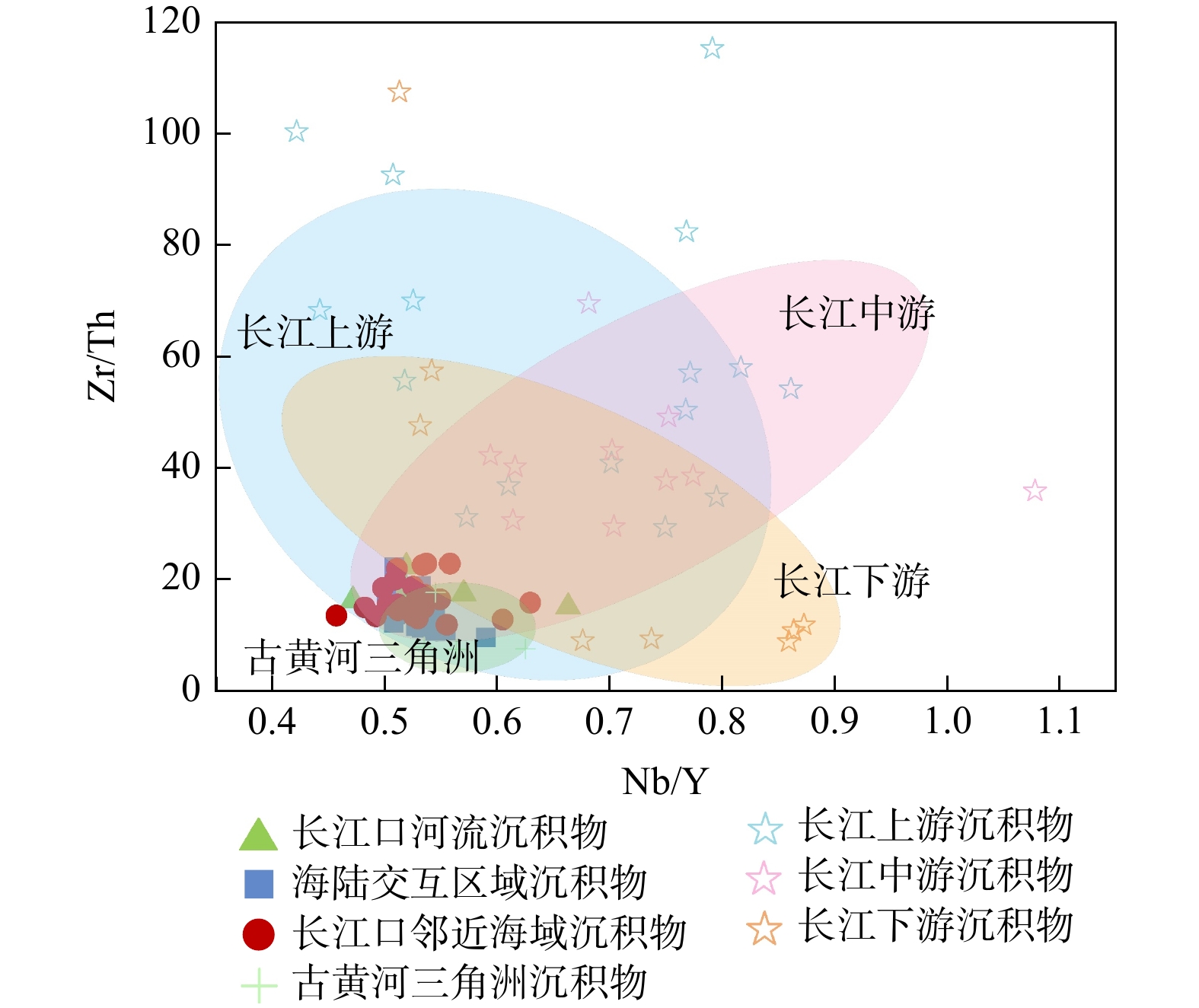
长江口是连接陆地和海洋的重要枢纽,因其复杂的地形、丰富的陆源物质以及与人类活动的紧密联系,受到学者们的广泛关注。以长江口及其邻近海域海底表层沉积物为研究对象,系统分析了Sr、Nd同位素以及微量元素的地球化学行为。结果表明,长江口及邻近海域沉积物主要由陆源物质构成,源自长江流域的沉积物占据主导地位,部分物质来自古黄河三角洲。海陆交互区域的Nd元素由于胶体凝聚现象显著富集,而复杂的水动力条件导致该区域的沉积物粒径较细,Sr元素则表现出明显的贫化。通过基于R语言的稳定同位素混合模型(SIMMR)分析,发现长江中下游对海陆交互区域表层沉积物的贡献有所增加。长江上游的物质由于大坝建设被大量截留,导致中下游河道从沉积的“汇”转变为泥沙供应的“源”,从而增加了中下游物质对河口及邻近海域沉积物的贡献。尽管如此,长江上游物质仍在长江口沉积物中占据主导地位。研究成果揭示了长江口及邻近海域的沉积环境和源汇过程,为揭示地表物质循环过程、探究海洋环境演化提供重要信息。
-
关键词:
- 长江口 /
- 表层沉积物 /
- Sr、Nd同位素 /
- 海陆交互作用 /
- 基于R语言的稳定同位素混合模型(SIMMR)
Abstract:The Yangtze River Estuary is a vital hub linking the land and the ocean. Due to its complex topography, abundant terrestrial materials, and close association with human activities, it has attracted extensive attention from researchers.
MethodsFocusing on the surface sediments in the Yangtze River Estuary and its adjacent seas, this study systematically analyzed the geochemical behavior of Sr and Nd isotopes as well as trace elements.
ResultsThe results showed that the sediments in the Yangtze River Estuary and its adjacent seas were mainly composed of terrestrial materials, dominated by sediments from the Yangtze River Basin, with a portion originating from the ancient Yellow River delta. In the river-sea mixing zone, Nd was significantly enriched due to colloidal coagulation, while complex hydrodynamic conditions resulted in finer sediment particle sizes, and Sr exhibited noticeable depletion. Through analysis using the stable isotope mixing model in R (SIMMR), it was found that the contribution of sediments from the middle and lower reaches of the Yangtze River to the surface sediments in the sea-land interaction zone increased. Sediments from the upper reaches of the Yangtze River have been largely trapped by dam construction, which has turned the river channels in the middle and lower reaches from a sediment "sink" into a sediment supply "source", thereby increasing their contribution to the sediments in the estuary and its adjacent seas. Nevertheless, sediments from the upper reaches of the Yangtze River still dominated the composition of sediments in the estuary.
Objective and ConclusionThe findings reveal the sedimentary environment and source-sink processes in the Yangtze River Estuary and its adjacent seas, providing crucial information for elucidating the surface material cycling process and exploring the evolution of the marine environment.
-

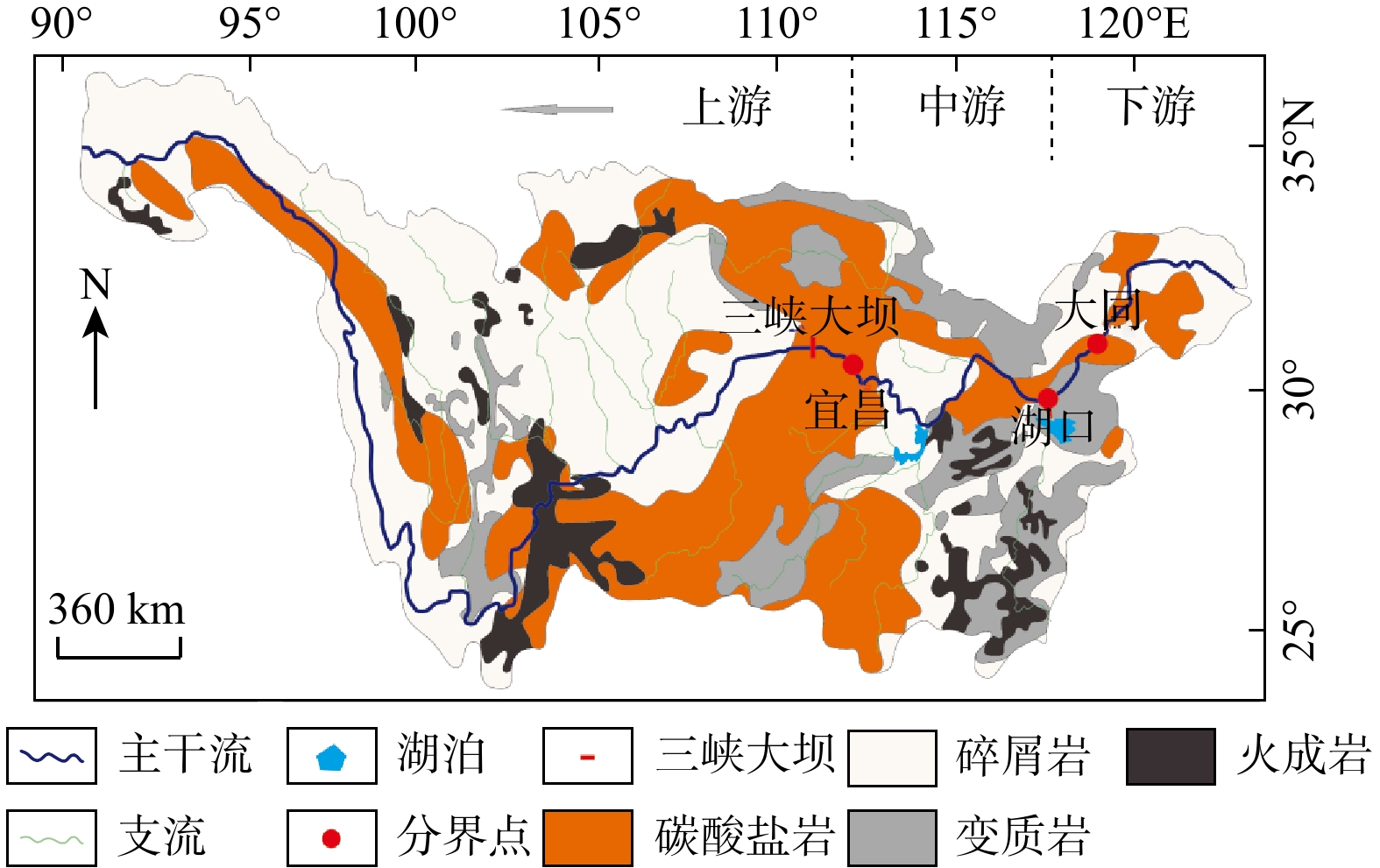
图 1 长江流域地质背景图(据文献[21]修改 )
Figure 1. Geological background map of the Yangtze River basin

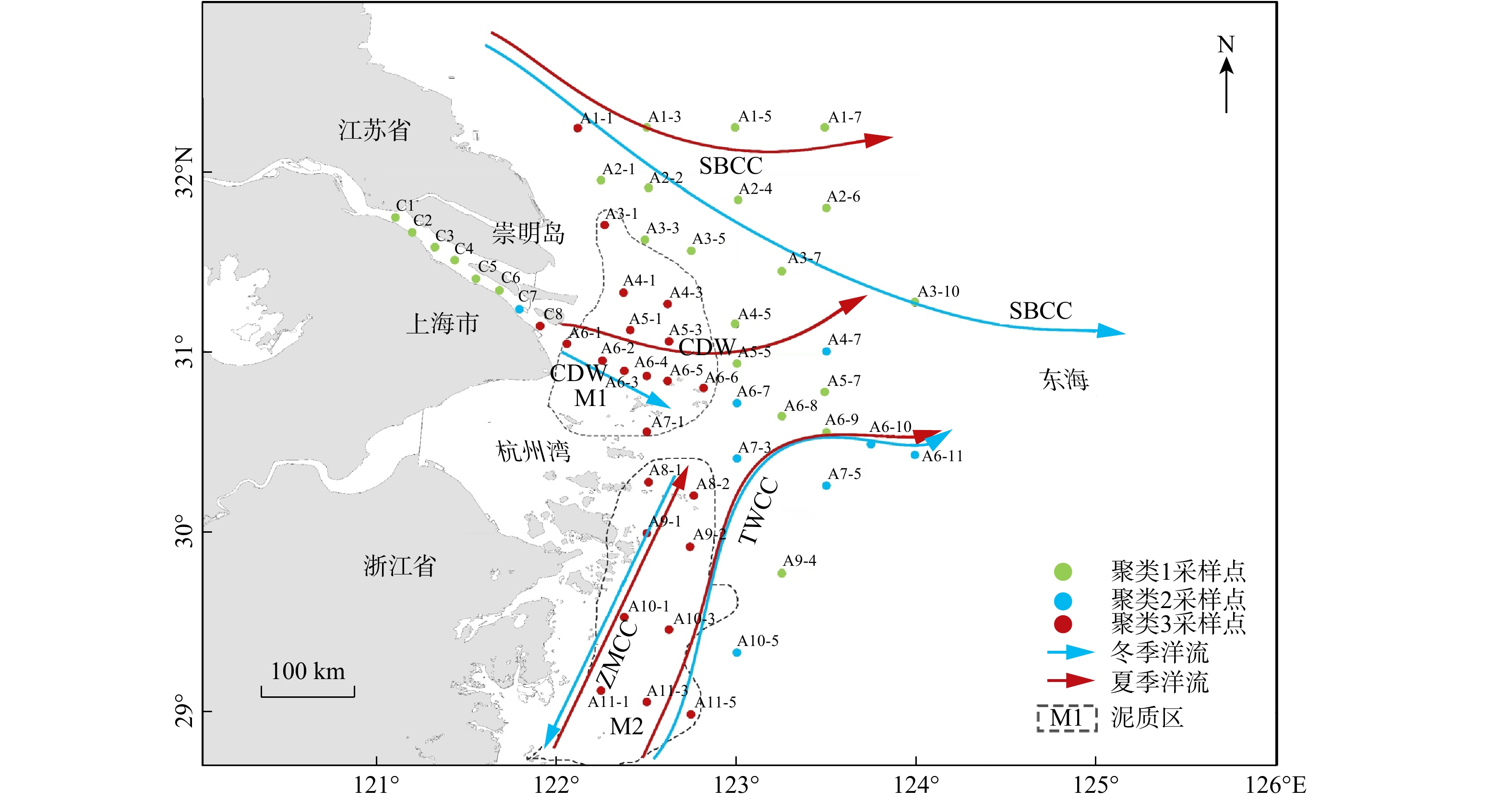
图 2 长江口及邻近海域采样点分布示意图(据文献[7])
SBCC. 苏北沿岸流;CDW. 长江冲淡水;TWCC. 台湾暖流;ZMCC. 浙闽沿岸流
Figure 2. Schematic diagram of sampling points distribution in Yangtze River Estuary and its adjacent seas

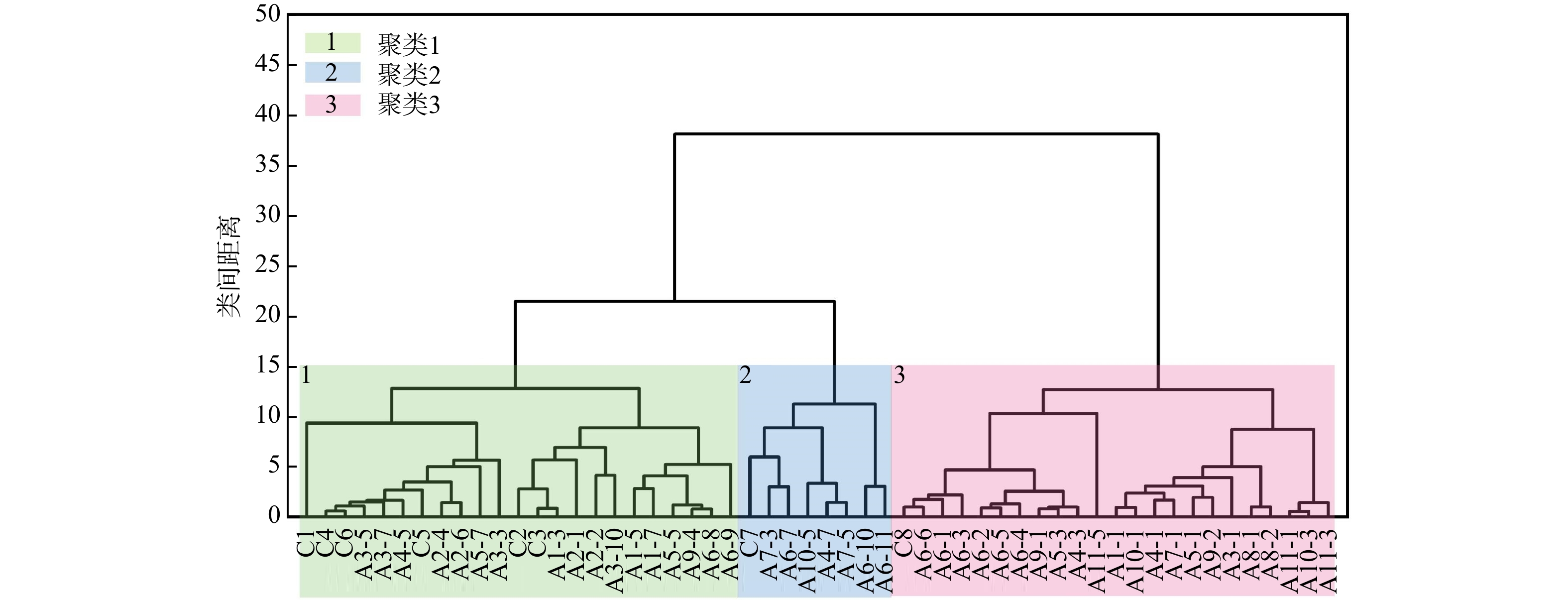
图 3 长江口及邻近海域沉积物样本聚类树状图
Figure 3. Dendrogram of sediment sample clustering from the Yangtze River Estuary and its adjacent seas

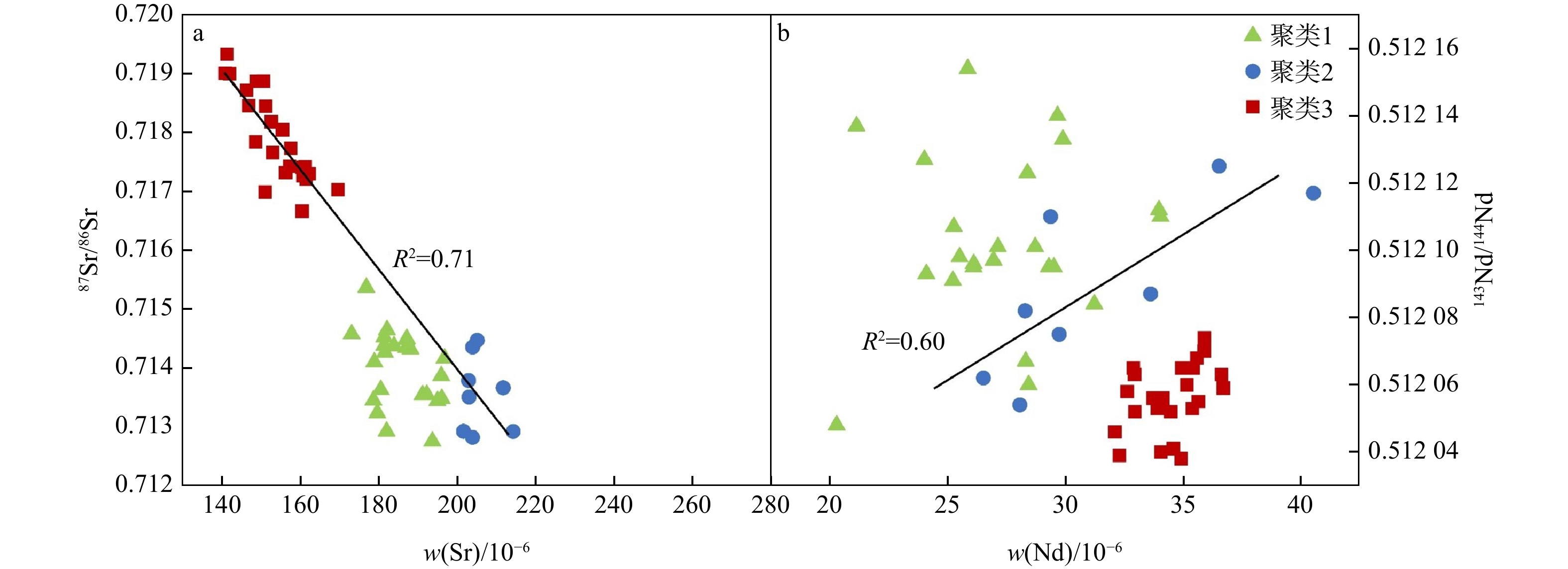
图 4 长江口及邻近海域表层沉积物87Sr/86Sr 与w(Sr)的关系图(a)和143Nd/144Nd与 w(Nd)关系图(b)
Figure 4. Plot of 87Sr/86Sr vs. w(Sr) (a) and plot of 143Nd/144Nd vs. w(Nd) (b) in surface sediments of the Yangtze River Estuary and its adjacent seas

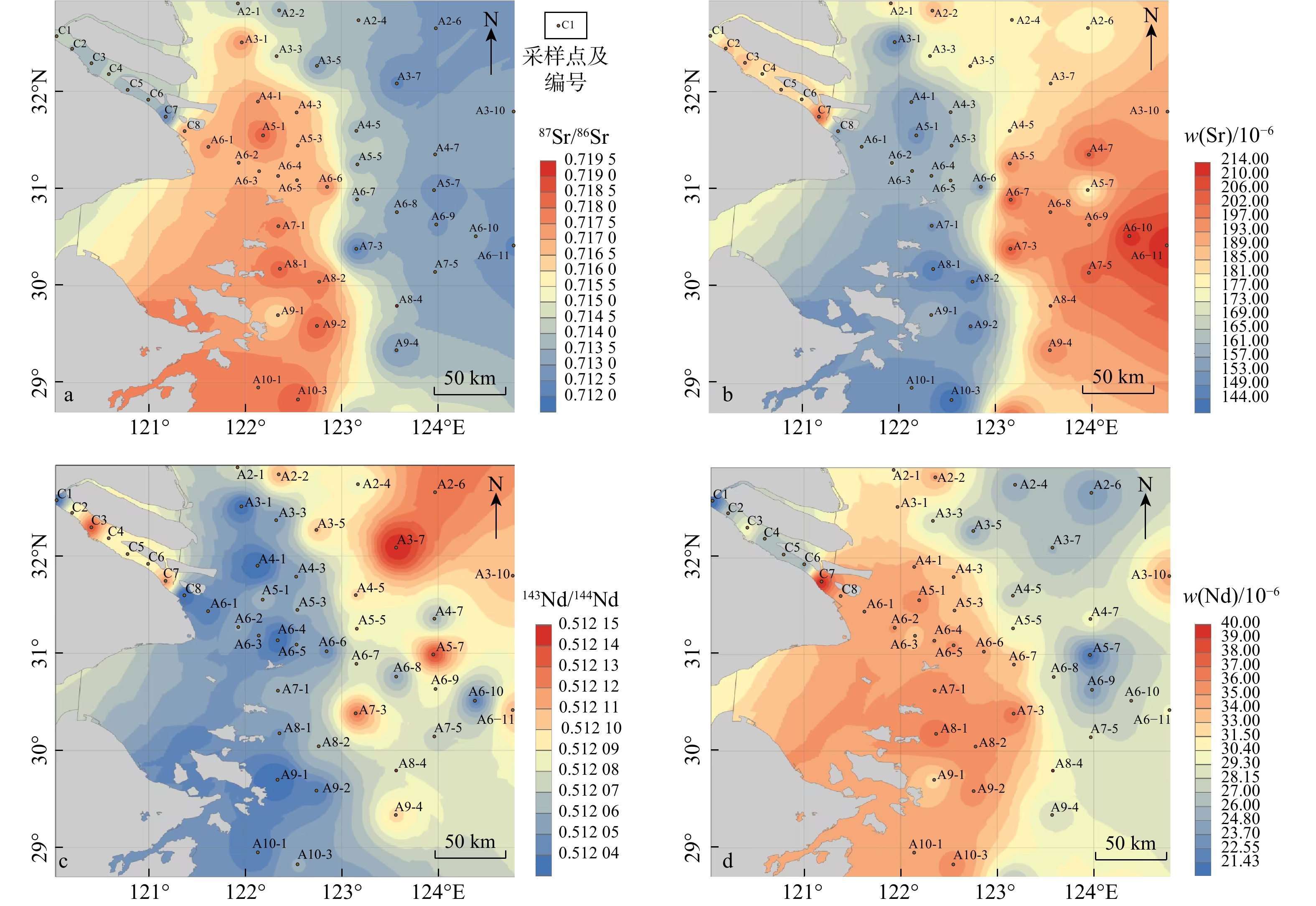
图 5 长江口及邻近海域表层沉积物中Sr、Nd同位素及元素的空间分布
Figure 5. Spatial distribution of Sr, Nd isotopes and elements in surface sediments of the Yangtze River Estuary and its adjacent seas

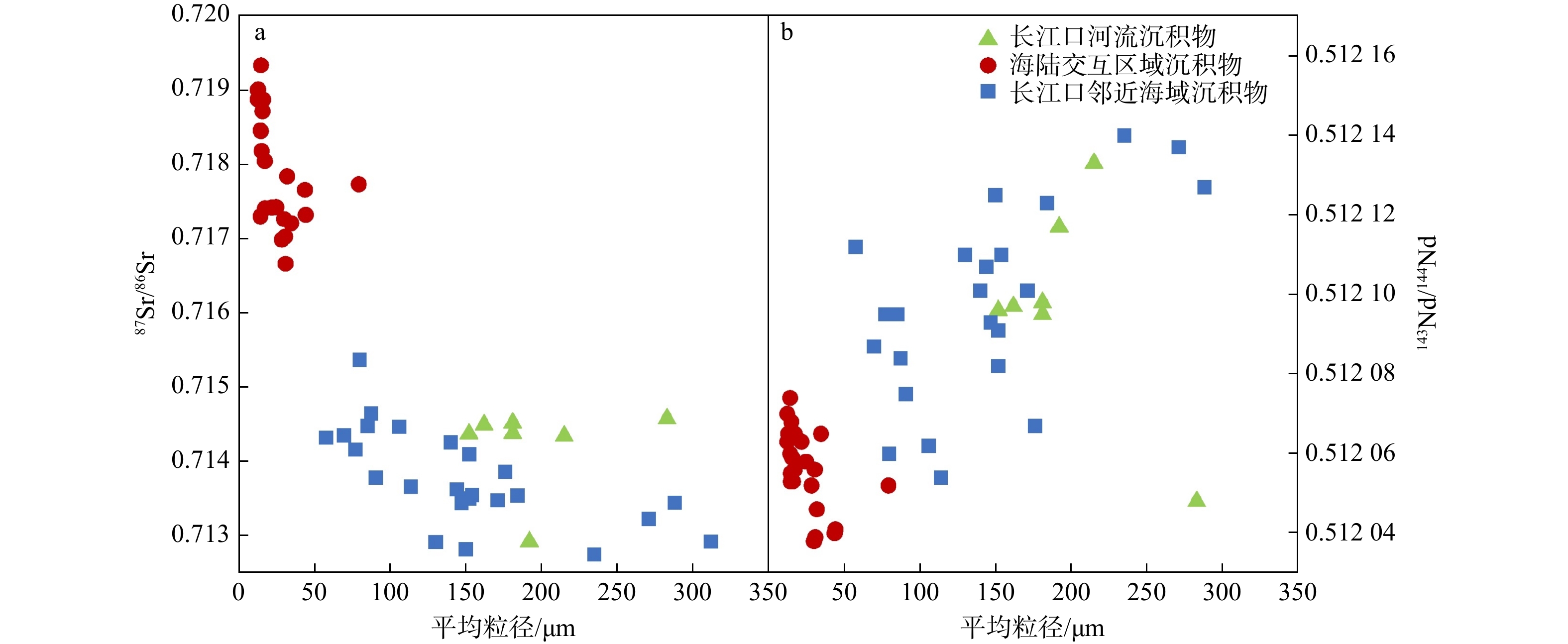
图 6 长江口及邻近海域表层沉积物中Sr同位素(a)和Nd同位素(b)与平均粒径的关系
Figure 6. Relationship between Sr isotopes and average particle size (a) and relationship between Nd isotopes and average particle size (b) in surface sediments of Yangtze River Estuary and adjacent seas


表 1 旋转因子载荷矩阵
Table 1. Rotated factor loading matrix
变量 因子1 因子2 因子3 因子4 87Sr/86Sr 0.79 0.29 0.33 0.38 143Nd/144Nd −0.53 −0.04 −0.76 −0.15 w(Li) 0.91 0.30 0.24 −0.01 w(Be) 0.88 0.39 0.10 0.10 w(Na) −0.91 −0.28 −0.23 0.04 w(Mg) 0.75 0.54 0.27 0.02 w(Al) 0.91 0.35 0.21 0.10 w(P) 0.49 0.75 0.18 0.23 w(K) 0.95 0.19 0.15 0.11 w(Ca) 0.38 0.24 0.53 −0.49 w(Sc) 0.84 0.50 0.21 0.06 w(Ti) 0.58 0.76 0.23 0.02 w(V) 0.83 0.52 0.11 0.16 w(Cr) 0.73 0.62 0.25 −0.02 w(Fe) 0.86 0.49 0.08 0.09 w(Co) −0.42 −0.15 −0.54 −0.14 w(Ni) 0.88 0.43 0.17 0.10 w(Cu) 0.82 0.41 0.29 0.22 w(Zn) 0.80 0.31 0.25 0.04 w(Ga) 0.89 0.39 0.20 0.09 w(Ge) 0.83 0.50 0.09 0.08 w(Rb) 0.93 0.26 0.21 0.10 w(Sr) −0.60 −0.24 −0.15 −0.66 w(Y) 0.55 0.71 0.38 0.14 w(Zr) 0.04 0.44 0.81 −0.23 w(Nb) 0.48 0.81 0.28 0.06 w(Mo) 0.81 0.45 0.12 0.17 w(Sn) 0.82 0.47 0.30 0.10 w(Cs) 0.90 0.31 0.27 0.06 w(Ba) 0.29 0.00 −0.16 0.79 w(La) 0.45 0.85 0.15 −0.09 w(Ce) 0.44 0.85 0.15 −0.11 w(Pr) 0.43 0.86 0.17 −0.07 w(Nd) 0.45 0.85 0.18 −0.06 w(Sm) 0.52 0.82 0.15 −0.01 w(Eu) 0.53 0.81 0.10 0.11 w(Gd) 0.51 0.81 0.25 0.06 w(Tb) 0.56 0.76 0.28 0.09 w(Dy) 0.57 0.73 0.32 0.11 w(Ho) 0.57 0.71 0.35 0.13 w(Er) 0.56 0.70 0.38 0.14 w(Tm) 0.58 0.69 0.37 0.12 w(Yb) 0.60 0.66 0.40 0.11 w(Lu) 0.58 0.65 0.43 0.11 w(Hf) 0.08 0.45 0.81 −0.21 w(Ta) −0.32 0.76 −0.06 0.10 w(Tl) 0.92 0.27 0.24 0.06 w(Pb) 0.81 0.39 −0.03 0.28 w(Th) 0.72 0.62 0.25 −0.04 w(U) 0.16 0.85 0.20 −0.01  下载: 导出CSV
-
[1] ALLEN P A. From landscapes into geological history[J]. Nature, 2008, 451(7176): 274-276. doi: 10.1038/nature06586 [2] YANG S L, MILLIMAN J D, LI P, et al. 50000 dams later: Erosion of the Yangtze River and its delta[J]. Global and Planetary Change, 2011, 75(1/2): 14-20.[3] MILLIMAN J D, FARNSWORTH K L. River discharge to the coastal ocean[M]. Cambridge: Cambridge University Press, 2011. [4] 杨守业, 蒋少涌, 凌洪飞, 等. 长江河流沉积物Sr-Nd同位素组成与物源示踪[J]. 中国科学: 地球科学, 2007, 37(5): 682-690. doi: 10.3969/j.issn.1674-7240.2007.05.013YANG S Y, JIANG S Y, LING H F, et al. Sr-Nd isotopic composition and provenance tracing of sediments in the Yangtze River[J]. Scientia Sinica(Terrae), 2007, 37(5): 682-690. (in Chinese with English abstract doi: 10.3969/j.issn.1674-7240.2007.05.013 [5] LUO C, ZHENG H B, TADA R, et al. Tracing Sr isotopic composition in space and time across the Yangtze River basin[J]. Chemical Geology, 2014, 388: 59-70. doi: 10.1016/j.chemgeo.2014.09.007 [6] WEI G J, LIU Y, MA J L, et al. Nd, Sr isotopes and elemental geochemistry of surface sediments from the South China Sea: Implications for provenance tracing[J]. Marine Geology, 2012, 319: 21-34. doi: 10.1016/j.margeo.2012.05.007 [7] BI L, YANG S Y, ZHAO Y, et al. Provenance study of the Holocene sediments in the Changjiang (Yangtze River) Estuary and inner shelf of the East China Sea[J]. Quaternary International, 2017, 441: 147-161. doi: 10.1016/j.quaint.2016.12.004 [8] HU B Q, LI J, ZHAO J T, et al. Sr-Nd isotopic geochemistry of Holocene sediments from the South Yellow Sea: Implications for provenance and monsoon variability[J]. Chemical Geology, 2018, 479: 102-112. doi: 10.1016/j.chemgeo.2017.12.033 [9] LIU J, SAITO Y, KONG X, et al. Sedimentary record of environmental evolution off the Yangtze River Estuary, East China Sea, during the last ~13 000 years, with special reference to the influence of the Yellow River on the Yangtze River delta during the last 600 years[J]. Quaternary Science Reviews, 2010, 29(17/18): 2424-2438. [10] LI T N, RAO W B, WANG S, et al. Identifying the clay-size sediment provenance of the radial sand ridges in the southwestern Yellow Sea using geochemical and Sr-Nd isotopic tracers[J]. Marine Geology, 2023, 455: 106957. doi: 10.1016/j.margeo.2022.106957 [11] RAO W B, MAO C P, WANG Y G, et al. Using Nd-Sr isotopes and rare earth elements to study sediment provenance of the modern radial sand ridges in the southwestern Yellow Sea[J]. Applied Geochemistry, 2017, 81: 23-35. doi: 10.1016/j.apgeochem.2017.03.011 [12] GU J W, CHEN J, SUN Q L, et al. China's Yangtze delta: Geochemical fingerprints reflecting river connection to the sea[J]. Geomorphology, 2014, 227: 166-173. [13] ZHUANG W, ZHOU F X. Distribution, source and pollution assessment of heavy metals in the surface sediments of the Yangtze River Estuary and its adjacent East China Sea[J]. Marine Pollution Bulletin, 2021, 164: 112002. doi: 10.1016/j.marpolbul.2021.112002 [14] GAO J J, SHI H H, DAI Z J, et al. Linkages between the spatial toxicity of sediments and sediment dynamics in the Yangtze River Estuary and neighboring East China Sea[J]. Environmental Pollution, 2018, 233: 1138-1146. doi: 10.1016/j.envpol.2017.10.023 [15] 胡寅秋, 邬斌, 任倩. 湖北庙垭杂岩体富硅碳酸岩成因及其对稀土成矿的指示意义[J]. 地质科技通报, 2023, 42(2): 41-59. doi: 10.19509/j.cnki.dzkq.tb20220183HU Y Q, WU B, REN Q. Genesis of silica-rich carbonatite in the Miaoya complex, Hubei Province and its implications for REE mineralization[J]. Bulletin of Geological Science and Technology, 2023, 42(2): 41-59. (in Chinese with English abstract doi: 10.19509/j.cnki.dzkq.tb20220183 [16] 张松涛, 谢浩, 梁永平, 等. 同位素技术在古堆泉岩溶水保护中的应用[J]. 地质科技通报, 2023, 42(4): 147-153. doi: 10.19509/j.cnki.dzkq.tb202302400ZHANG S T, XIE H, LIANG Y P, et al. Application of isotope technology to protecting karstic water in the Gudui spring area[J]. Bulletin of Geological Science and Technology, 2023, 42(4): 147-153. (in Chinese with English abstract doi: 10.19509/j.cnki.dzkq.tb202302400 [17] XU Z K, LIM D, LI T G, et al. REEs and Sr-Nd isotope variations in a 20 ky-sediment core from the middle Okinawa Trough, East China Sea: An in-depth provenance analysis of siliciclastic components[J]. Marine Geology, 2019, 415: 105970. doi: 10.1016/j.margeo.2019.105970 [18] TRIPATHI J K, BOCK B, RAJAMANI V. Nd and Sr isotope characteristics of Quaternary Indo-Gangetic plain sediments: Source distinctiveness in different geographic regions and its geological significance[J]. Chemical Geology, 2013, 344: 12-22. doi: 10.1016/j.chemgeo.2013.02.016 [19] BAYON G, TOUCANNE S, SKONIECZNY C, et al. Rare earth elements and neodymium isotopes in world river sediments revisited[J]. Geochimica et Cosmochimica Acta, 2015, 170: 17-38. doi: 10.1016/j.gca.2015.08.001 [20] HE M Y, ZHENG H B, CLIFT P D, et al. Geochemistry of fine-grained sediments in the Yangtze River and the implications for provenance and chemical weathering in East Asia[J]. Progress in Earth and Planetary Science, 2015, 2(1): 32. doi: 10.1186/s40645-015-0061-6 [21] DING T P, GAO J F, TIAN S H, et al. Chemical and isotopic characteristics of the water and suspended particulate materials in the Yangtze River and their geological and environmental implications[J]. Acta Geologica Sinica(English Edition), 2014, 88(1): 276-360. doi: 10.1111/1755-6724.12197 [22] KRABBENHÖFT A, FIETZKE J, EISENHAUER A, et al. Determination of radiogenic and stable strontium isotope ratios (87Sr/86Sr; δ88/86Sr) by thermal ionization mass spectrometry applying an 87Sr/84Sr double spike[J]. Journal of Analytical Atomic Spectrometry, 2009, 24(9): 1267-1271. doi: 10.1039/b906292k [23] XU A T, HATHORNE E, LAUKERT G, et al. Overlooked riverine contributions of dissolved neodymium and hafnium to the Amazon Estuary and oceans[J]. Nature Communications, 2023, 14: 4156. doi: 10.1038/s41467-023-39922-3 [24] SHOLKOVITZ E, SZYMCZAK R. The estuarine chemistry of rare earth elements: Comparison of the Amazon, Fly, Sepik and the Gulf of Papua systems[J]. Earth and Planetary Science Letters, 2000, 179(2): 299-309. [25] FRESLON N, BAYON G, TOUCANNE S, et al. Rare earth elements and neodymium isotopes in sedimentary organic matter[J]. Geochimica et Cosmochimica Acta, 2014, 140: 177-198. doi: 10.1016/j.gca.2014.05.016 [26] SINGH S P, SINGH S K, GOSWAMI V, et al. Spatial distribution of dissolved neodymium and $ \varepsilon_{\mathrm{Nd}} $ in the Bay of Bengal: Role of particulate matter and mixing of water masses[J]. Geochimica et Cosmochimica Acta, 2012, 94: 38-56. doi: 10.1016/j.gca.2012.07.017 [27] GARÇON M, CHAUVEL C, FRANCE-LANORD C, et al. Which minerals control the Nd-Hf-Sr-Pb isotopic compositions of river sediments?[J]. Chemical Geology, 2014, 364: 42-55. doi: 10.1016/j.chemgeo.2013.11.018 [28] WU W H, XU S J, YANG J D, et al. Isotopic characteristics of river sediments on the Tibetan Plateau[J]. Chemical Geology, 2010, 269(3/4): 406-413. doi: 10.1016/j.chemgeo.2009.10.015 [29] CHETELAT B, LIU C Q, ZHAO Z Q, et al. Geochemistry of the dissolved load of the Changjiang basin rivers: Anthropogenic impacts and chemical weathering[J]. Geochimica et Cosmochimica Acta, 2008, 72(17): 4254-4277. doi: 10.1016/j.gca.2008.06.013 [30] IIZUKA T, KOMIYA T, RINO S, et al. Detrital zircon evidence for Hf isotopic evolution of granitoid crust and continental growth[J]. Geochimica et Cosmochimica Acta, 2010, 74(8): 2450-2472. doi: 10.1016/j.gca.2010.01.023 [31] DENG F F, HELLMANN S, ZIMMERMANN T, et al. Using Sr-Nd-Pb isotope systems to trace sources of sediment and trace metals to the Weser River system (Germany) and assessment of input to the North Sea[J]. Science of the Total Environment, 2021, 791: 148127. doi: 10.1016/j.scitotenv.2021.148127 [32] 茅昌平, 陈骏, 袁旭音, 等. 长江下游悬浮物Sr-Nd同位素组成的季节性变化与物源示踪[J]. 科学通报, 2011, 56(31): 2591-2598.MAO C P, CHEN J, YUAN X Y, et al. Seasonal variation of Sr-Nd isotopic composition of suspended solids in the lower reaches of the Yangtze River and provenance tracing[J]. Chinese Science Bulletin, 2011, 56(31): 2591-2598. (in Chinese with English abstract [33] DENG K, YANG S Y, BI L, et al. Small dynamic mountainous rivers in Taiwan exhibit large sedimentary geochemical and provenance heterogeneity over multi-spatial scales[J]. Earth and Planetary Science Letters, 2019, 505: 96-109. doi: 10.1016/j.jpgl.2018.10.012 [34] DAI Z J, MEI X F, DARBY S E, et al. Fluvial sediment transfer in the Changjiang (Yangtze) River-Estuary depositional system[J]. Journal of Hydrology, 2018, 566: 719-734. doi: 10.1016/j.jhydrol.2018.09.019 [35] 冯晨, 梁杏. 500 a来自然与人为因素对洞庭湖区水环境演变的影响[J]. 地质科技通报, 2024, 43(5): 235-248.FENG C, LIANG X. Impact of human and natural factors on the water environment evolution of Dongting Lake area over the past 500 years[J]. Bulletin of Geological Science and Technology, 2024, 43(5): 235-248. (in Chinese with English abstract [36] 张洋, 陈孝康, 林旭, 等. 江汉盆地新生代早期河流演化研究: 来自地表河流和盆地钻孔碎屑锆石U-Pb年龄的约束[J]. 地质科技通报, 2023, 42(6): 106-117. doi: 10.19509/j.cnki.dzkq.tb20220154ZHANG Y, CHEN X K, LIN X, et al. Early Cenozoic drainage evolution in the Jianghan Basin: Constraints from detrital zircon U-Pb ages of surface rivers and cores in the basin[J]. Bulletin of Geological Science and Technology, 2023, 42(6): 106-117. (in Chinese with English abstract doi: 10.19509/j.cnki.dzkq.tb20220154 [37] WANG S, RAO W B, QIAN J, et al. Sr-Nd isotope and REE compositions of surface sediments from the Three Gorges Reservoir: Implications for source identification and apportionment[J]. Journal of Hydrology, 2021, 598: 126279. doi: 10.1016/j.jhydrol.2021.126279 [38] YANG Y P, ZHENG J H, ZHANG M J, et al. Sediment sink-source transitions in the middle and lower reaches of the Yangtze River Estuary[J]. Frontiers in Marine Science, 2023, 10: 1201533. doi: 10.3389/fmars.2023.1201533 [39] 杨守业, 王中波. 长江主要支流与干流沉积物的REE组成[J]. 矿物岩石地球化学通报, 2011, 30(1): 31-39. doi: 10.3969/j.issn.1007-2802.2011.01.005YANG S Y, WANG Z B. Rare earth element compositions of the sediments from the major tributaries and the main stream of the Changjiang River[J]. Bulletin of Mineralogy, Petrology and Geochemistry, 2011, 30(1): 31-39. (in Chinese with English abstract doi: 10.3969/j.issn.1007-2802.2011.01.005 [40] WU W H, ZHENG H B, XU S J, et al. Trace element geochemistry of riverbed and suspended sediments in the upper Yangtze River[J]. Journal of Geochemical Exploration, 2013, 124: 67-78. doi: 10.1016/j.gexplo.2012.08.005 [41] STOCK B C, JACKSON A L, WARD E J, et al. Analyzing mixing systems using a new generation of Bayesian tracer mixing models[J]. PeerJ, 2018, 6: e5096. doi: 10.7717/peerj.5096 [42] 李百蝉, 冯兰平, 王倩, 等. 稳定锶同位素在海洋地球化学循环中的研究进展[J]. 地质科技情报, 2018, 37(4): 100-105. doi: 10.19509/j.cnki.dzkq.2018.0412LI B C, FENG L P, WANG Q, et al. Advances of stable strontium isotopes (δ88/86Sr) in marine geochemical cycle[J]. Geological Science and Technology Information, 2018, 37(4): 100-105. (in Chinese with English abstract doi: 10.19509/j.cnki.dzkq.2018.0412 [43] BLUM J D, EREL Y. Rb-Sr isotope systematics of a granitic soil chronosequence: The importance of biotite weathering[J]. Geochimica et Cosmochimica Acta, 1997, 61(15): 3193-3204. doi: 10.1016/S0016-7037(97)00148-8 -

 下载:
下载:

 点击查看大图
计量
- 文章访问数: 452
- PDF下载量: 150
- 被引次数: 0