投审稿入口
投审稿入口


Preliminary exploration of river process monitoring and hydrological parameter inversion based on microseismic technology
-
摘要:
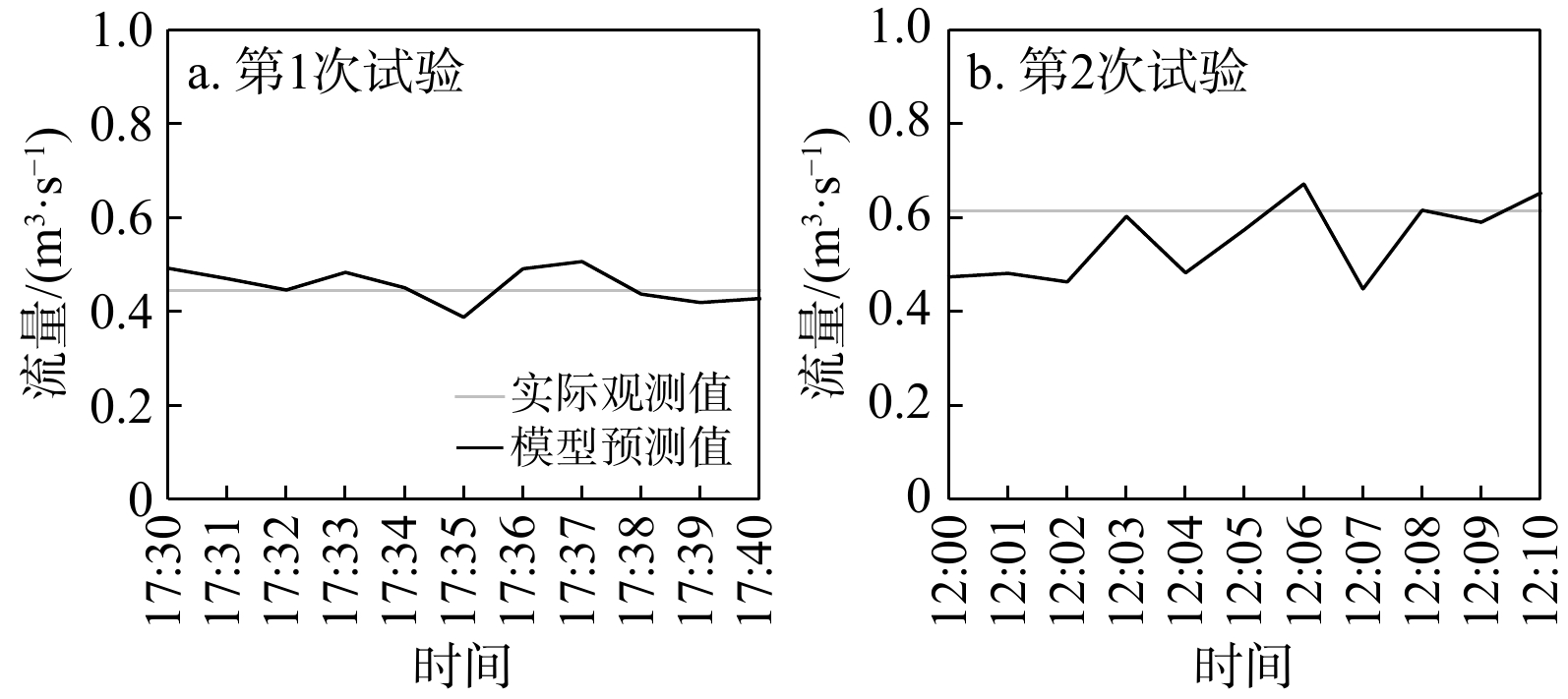
河流监测手段趋向遥感、智能化,传统河流监测技术费时费力,且在洪水期间面临仪器损坏和缺失数据的风险。国家地震台网分布广泛密集,微震技术具有远程无接触、低成本和24 h无间断监测的特点,正逐渐被用于河流监测中。通过野外河流微震监测试验,监测与分析河流过程的动态振动信号,获取河流湍流过程微震信号的物理特征。在此基础上,利用带通滤波的方法保留2~7 Hz频带的信号,采用Welch法计算出微震信号时频分析图上在2~7 Hz频带内1 min平均地震功率,将其转换为能量的形式,并与现场测得的河流水文数据相匹配,从而评估微震监测河流的潜力。为获取河流的水文参数,提出一个简单的线性回归模型量化平均功率谱密度(PSD)与河流湍流过程之间的关系,由此推导出反演计算河流流量的线性近似模型,模型反演结果在实测值附近波动,相对误差在10.29%以内,反演结果较为准确。本研究为野外河流微震监测试验的初步探索,研究成果可为依托国家高密度地震台站的河流洪水及常态水文遥感、智能化监测提供参考和理论依据。
Abstract:River monitoring tends to be adopt remote sensing and intelligent technologies. Traditional river monitoring techniques are time-consuming and labor-intensive, and face the risks of instrument damage and missing data during floods. Benefiting from the advantages of remote non-contact operation, low cost and 24-hour continuous monitoring, microseismic technology is increasingly applied in river monitoring. In this paper, field microseismic monitoring experiments on rivers were conducted to monitor and analyze the dynamic vibration signals of river processes. Thereby obtaining the physical characteristics of microseismic signals generated by river turbulence. On this basis, a band-pass filtering method was used to retain signals in the 2-7 Hz frequency band. The Welch method, was employed to calculate the 1-minute average seismic power within the 2-7 Hz frequency band from the time-frequency analysis diagram of microseismic signals, which was then converted energy form and matched with the field measured river hydrological data to evaluate the potential of microseismic technology in river monitoring. To acquire the hydrological parameters of the rivers, a simple linear regression model was proposed to quantify the relationship between the average power spectral density (PSD) and the river turbulence process. A linear approximation model for inverting river discharge was derived accordingly. The inversion results of the model fluctuated around the measured values with a relative errors within 10.29%, indicating high accuracy. This study is a preliminary exploration of field microseismic monitoring experiments on rivers. The research results can provide a reference and theoretical basis for remote sensing and intelligent monitoring of river floods and normal hydrology relying on the national high-density seismic network.
-
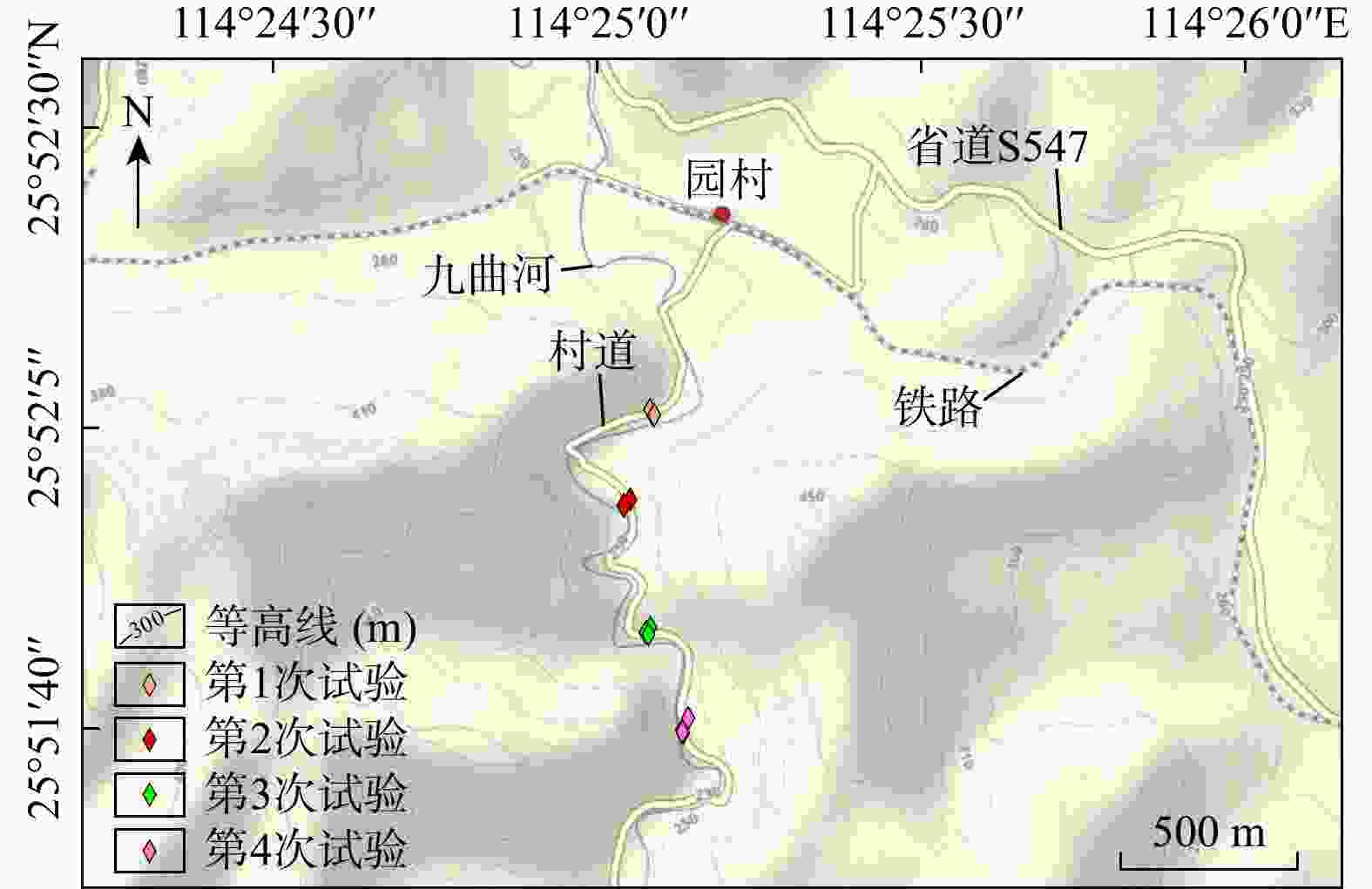
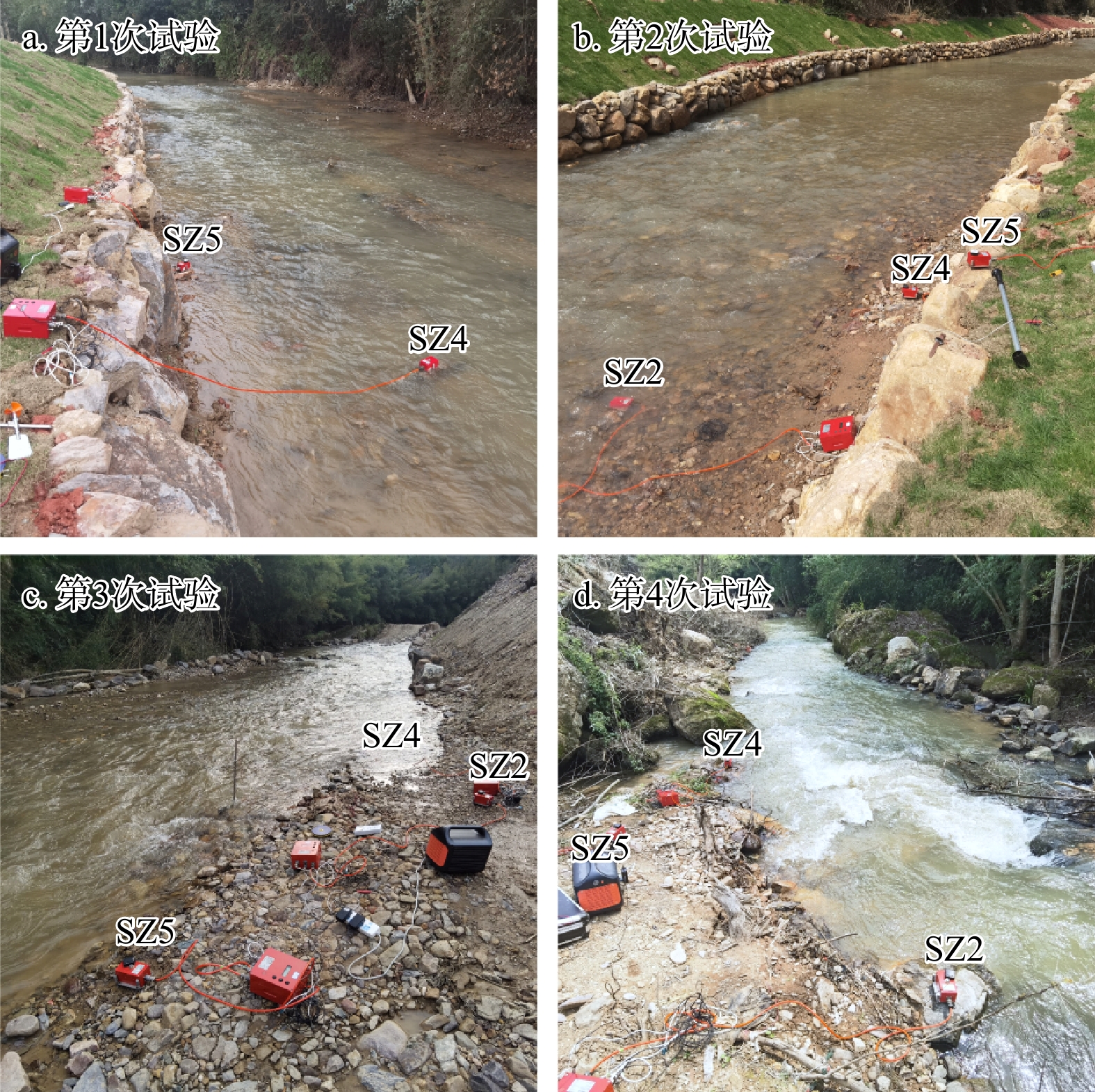
图 2 显示试验及台站位置的场地地形图
Figure 2. Topographic map of the study area showing the locations of the experiments and stations
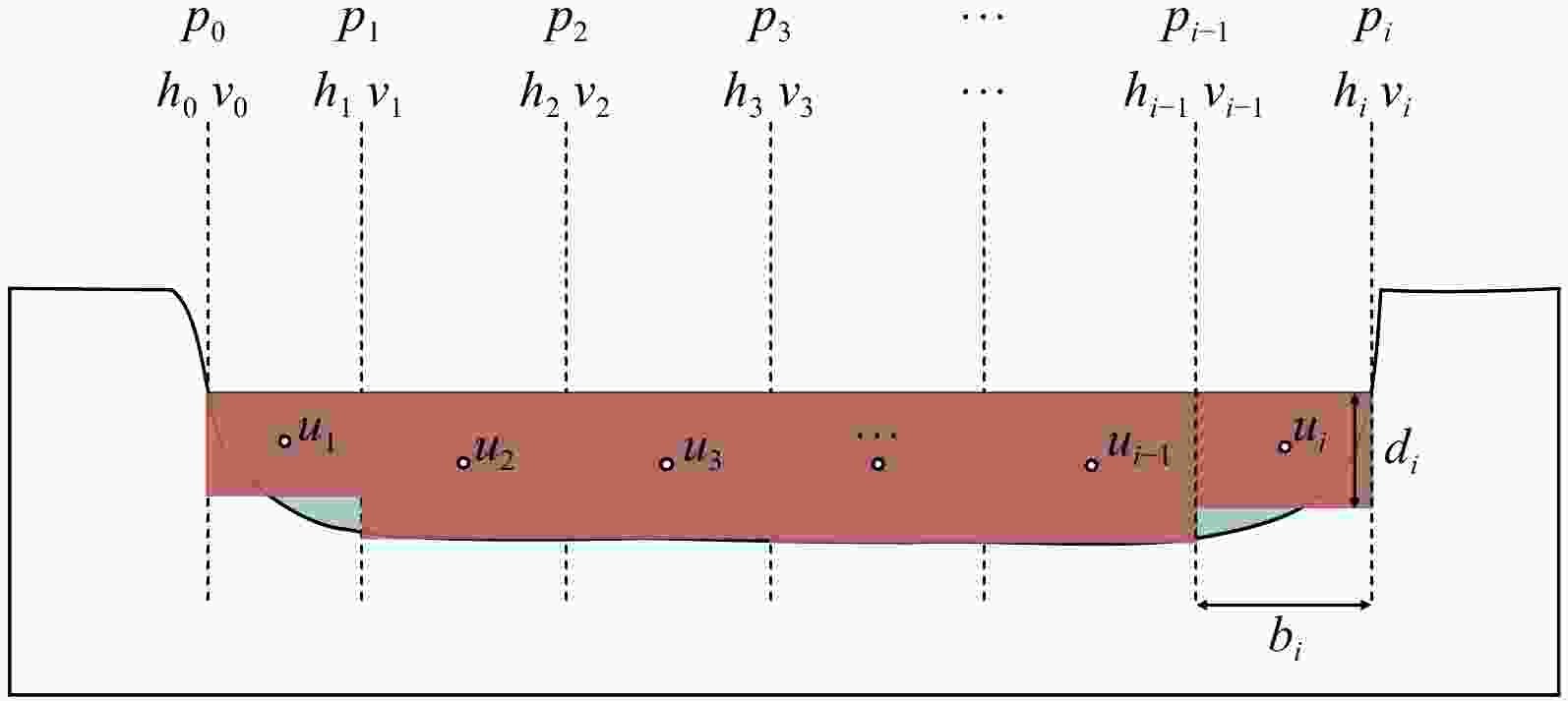
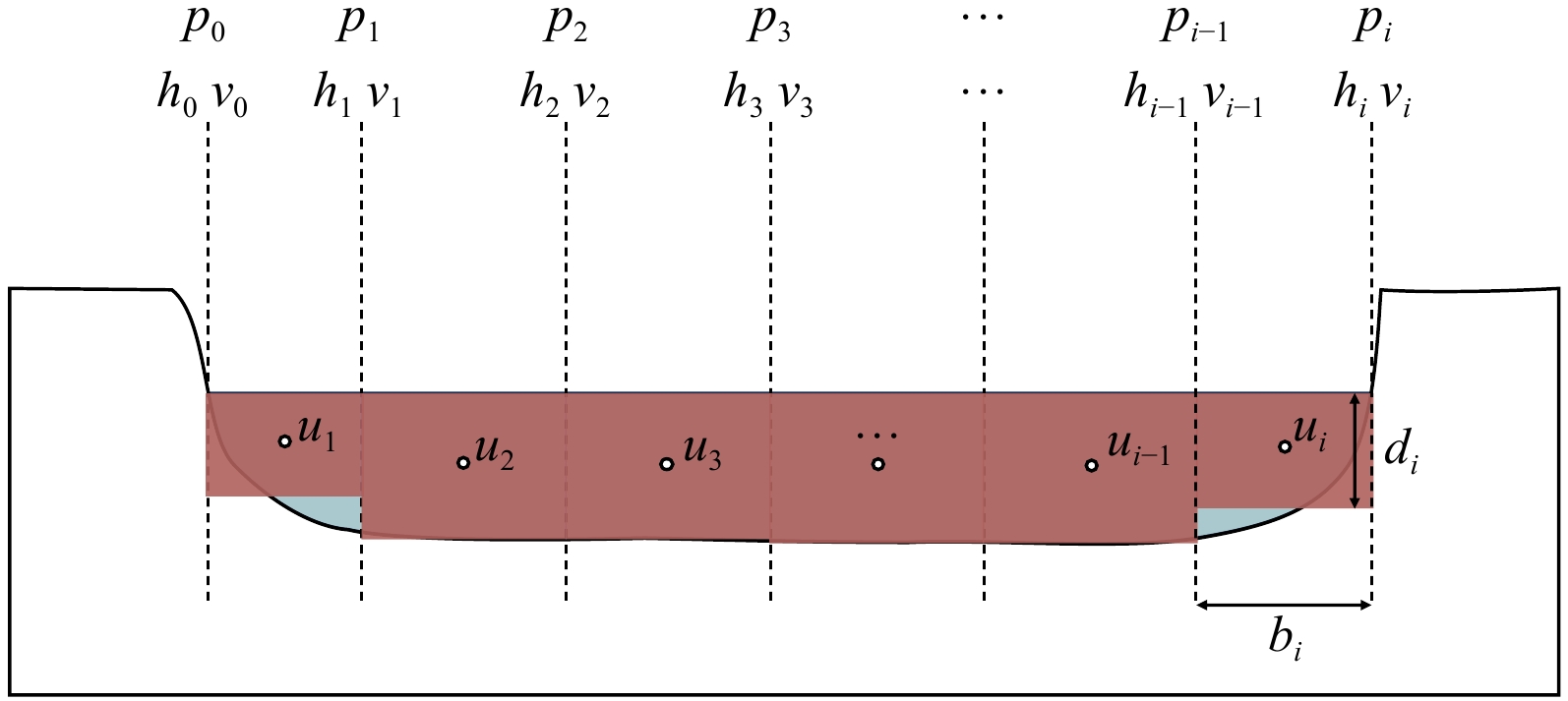
图 4 速度面积法估算河流流量示意图
p0. 河岸起点;pi. 第i个测量点;pip0. 测量点至河岸距离;hi. 测量点pi所测水位;vi. 测量点pi所测表面流速;ui. 切片流速;di. 切片深度;bi. 切片宽度
Figure 4. Schematic diagram of river discharge estimation by the velocity-area method
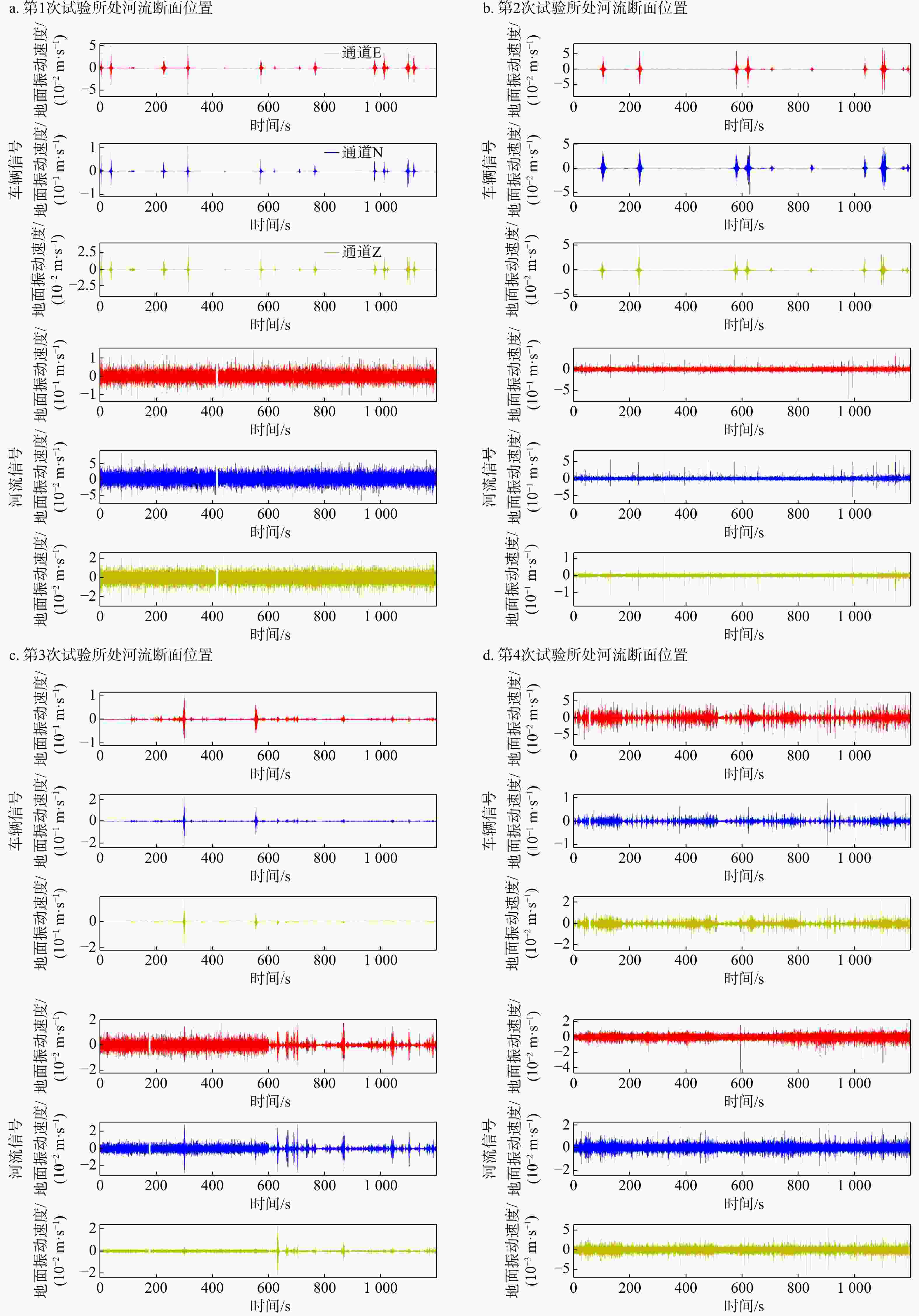
图 5 不同断面位置处河流信号和环境噪音中的车辆信号波形(通道E为微震设备EW方向接收到的信号;通道N为微震设备NS方向接收到的信号;通道Z为微震设备垂直方向接收到的信号;下同)
Figure 5. Waveforms of river signals and vehicle signals at different section locations
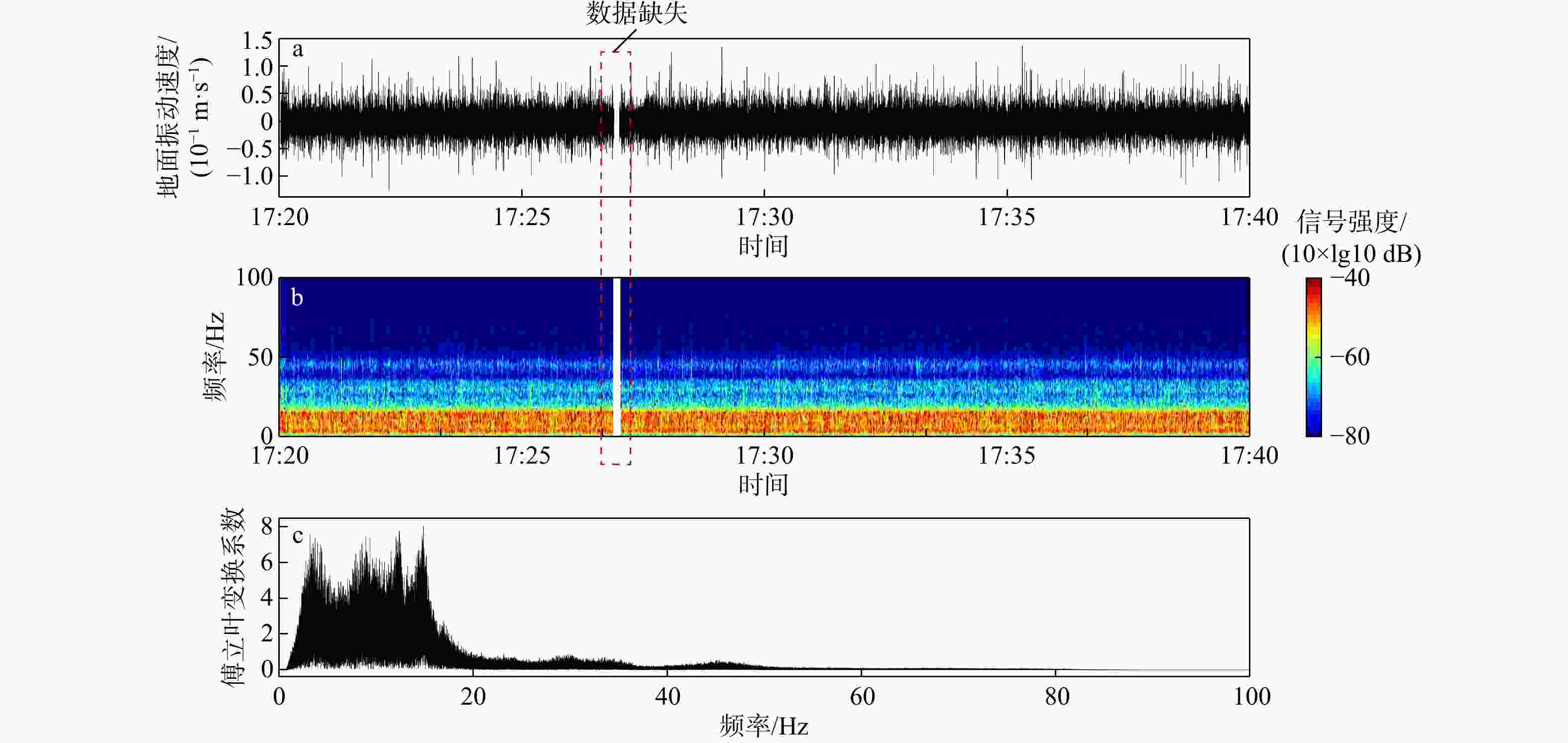
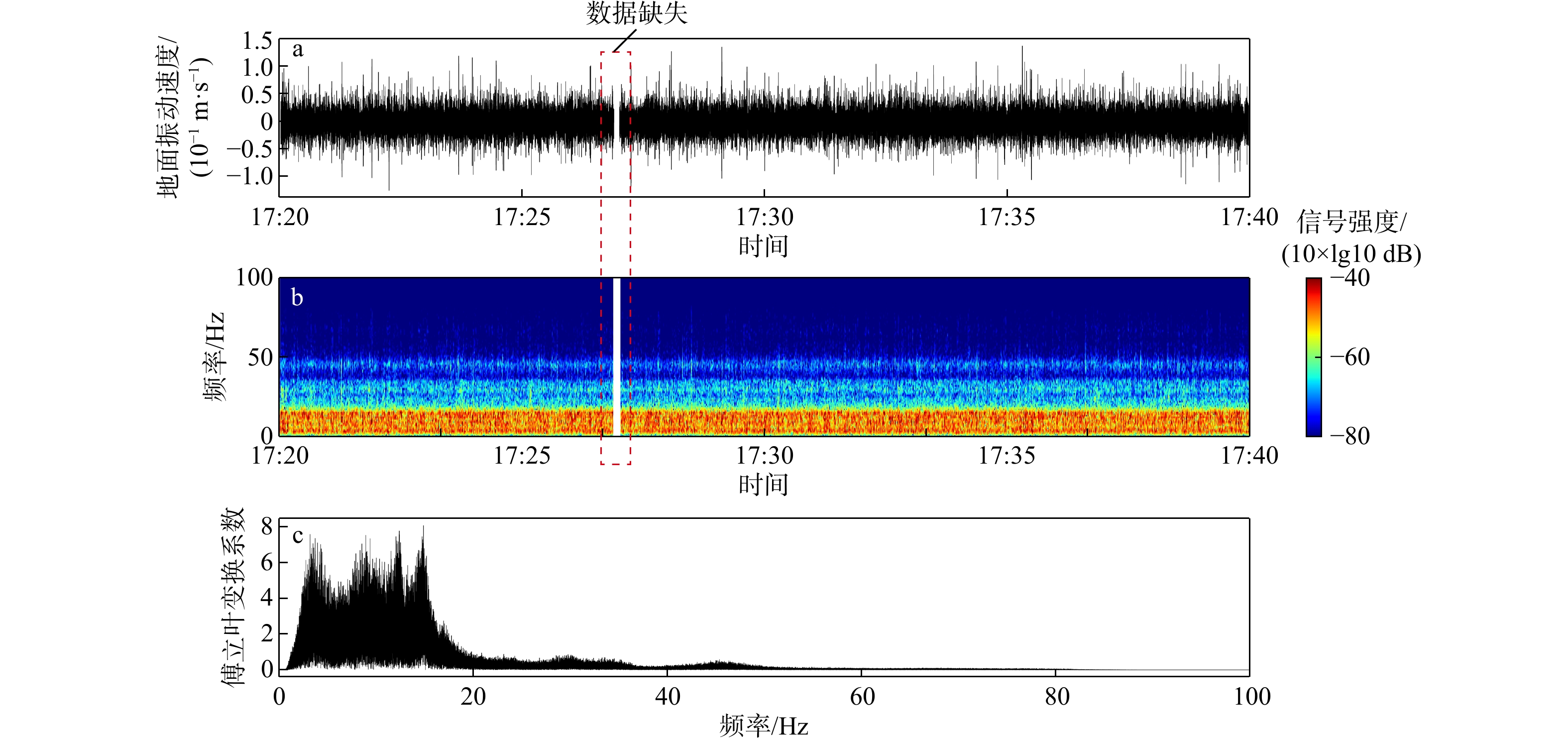
图 6 第1次试验位置SZ4微震基站通道E记录的河流产生的微震信号(a~b)及其频谱(c)特征
Figure 6. Microseismic signals generated by the river (a-b) and their spectral characteristics (c) recorded by Chamel E of the SZ4 microseismic station at the 1st experiment location
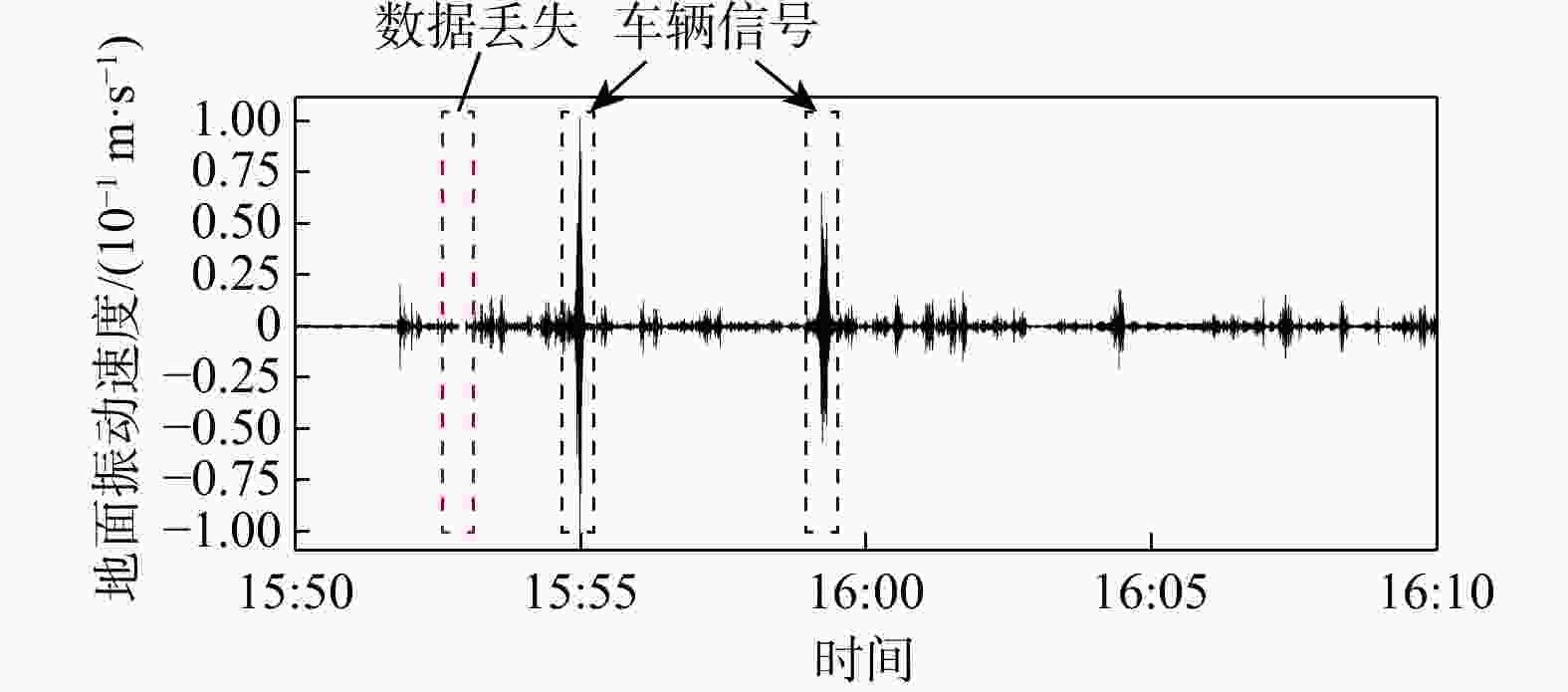
图 7 第3次试验位置处SZ3微震基站通道E记录波形图
Figure 7. Waveform diagram recorded by Channel E of the SZ3 microseismic station at the 3rd experiment station
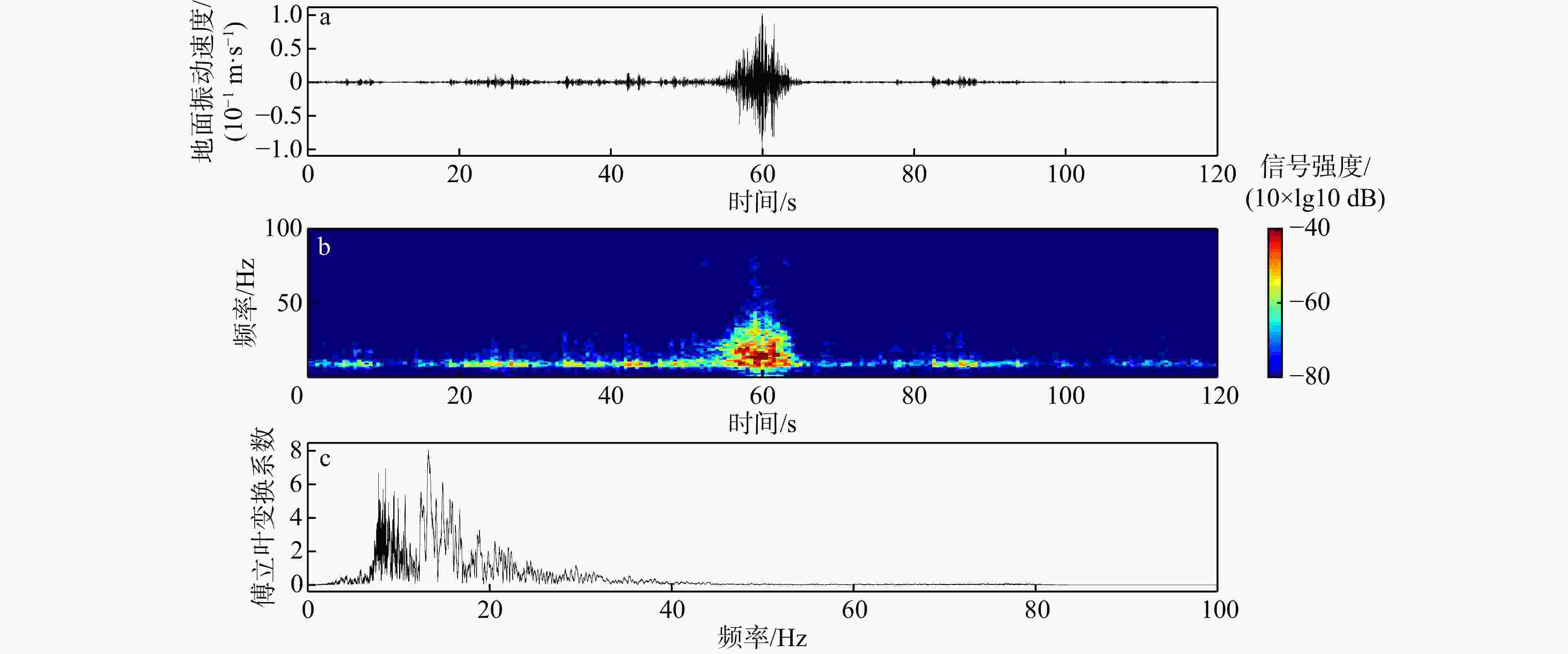
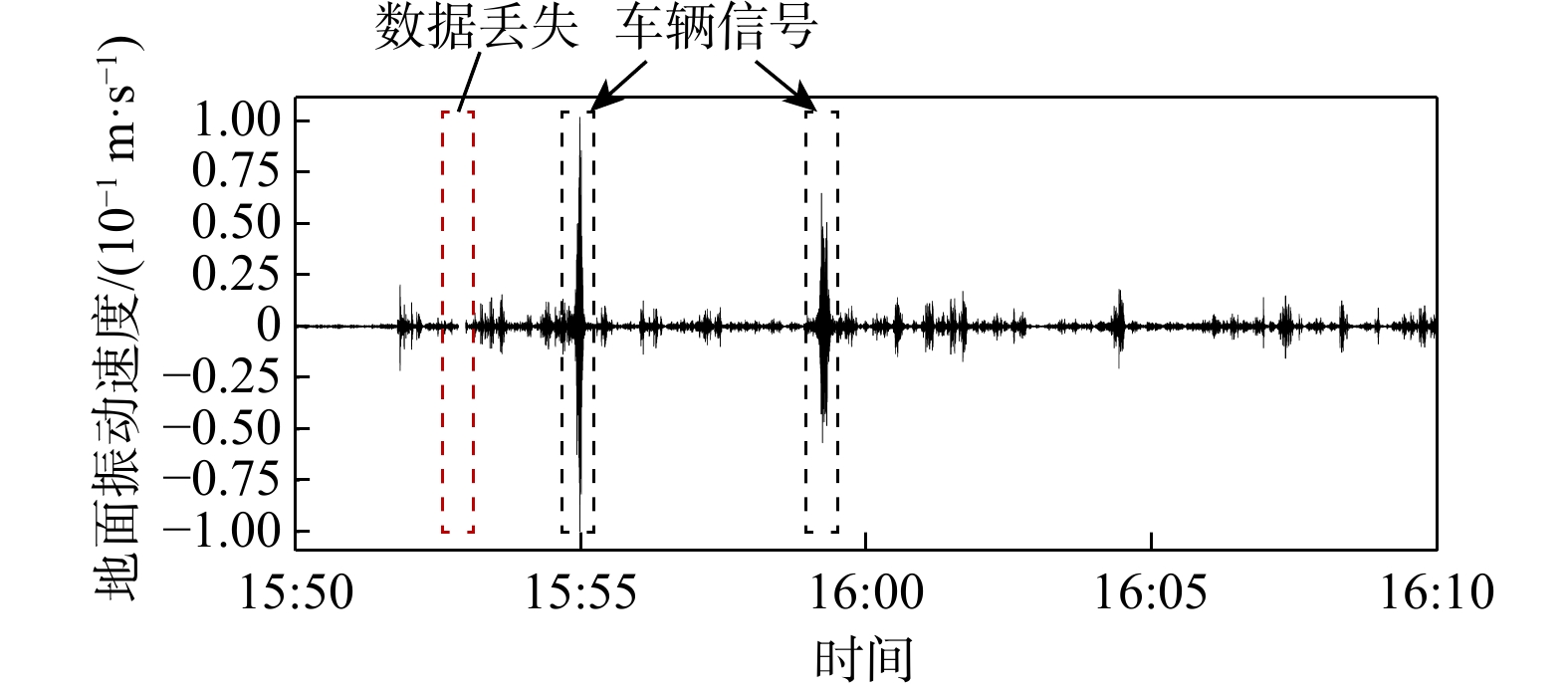
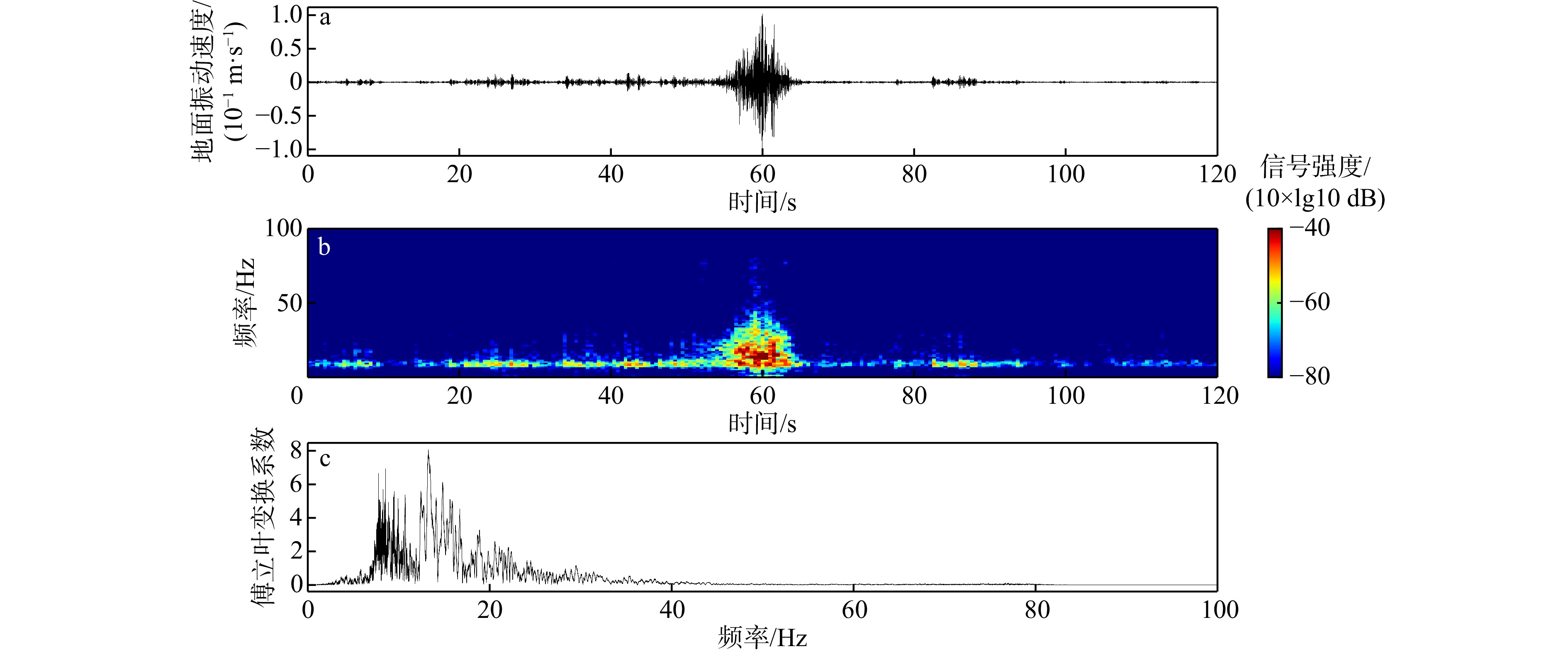
图 8 车辆产生的微震信号(a~b)及其频谱特征(c)(SZ3微震基站通道E 15:55记录的数据)
Figure 8. Microseismic signals generated by vehicles (a-b) and their spectral characteristics (c)
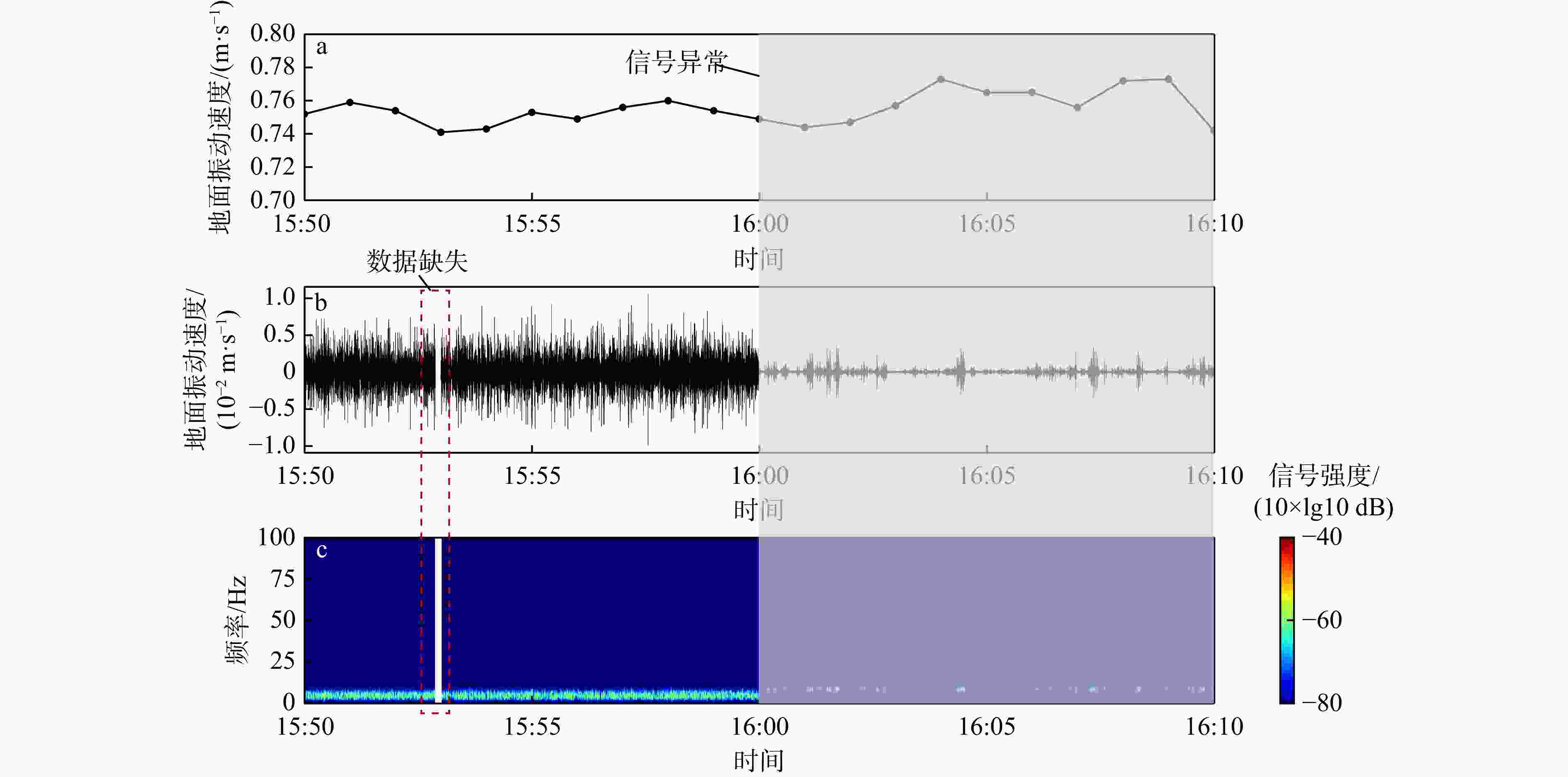
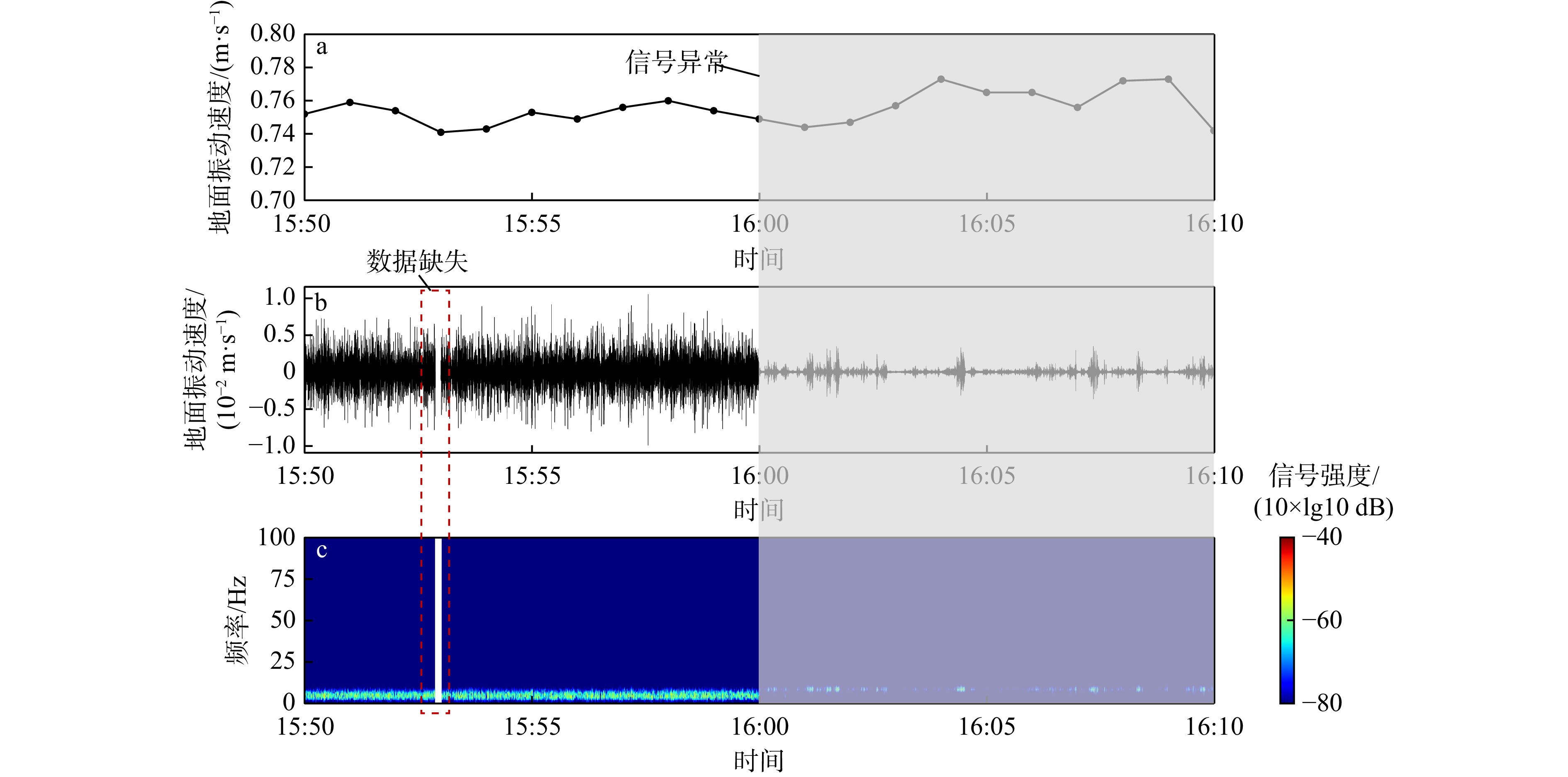
图 9 试验期间河流平均流速变化(a)与SZ4微震基站通道E记录的2~7 Hz频带上的波形图(b)及时频分析图(c)
Figure 9. Correlation between the average flow velocity changes of the river during the experiment (a), waveform diagram (b) and time-frequency analysis diagram (c) of signals in the 2-7 Hz frequency band recorded by Channel E of the SZ4 microseismic station
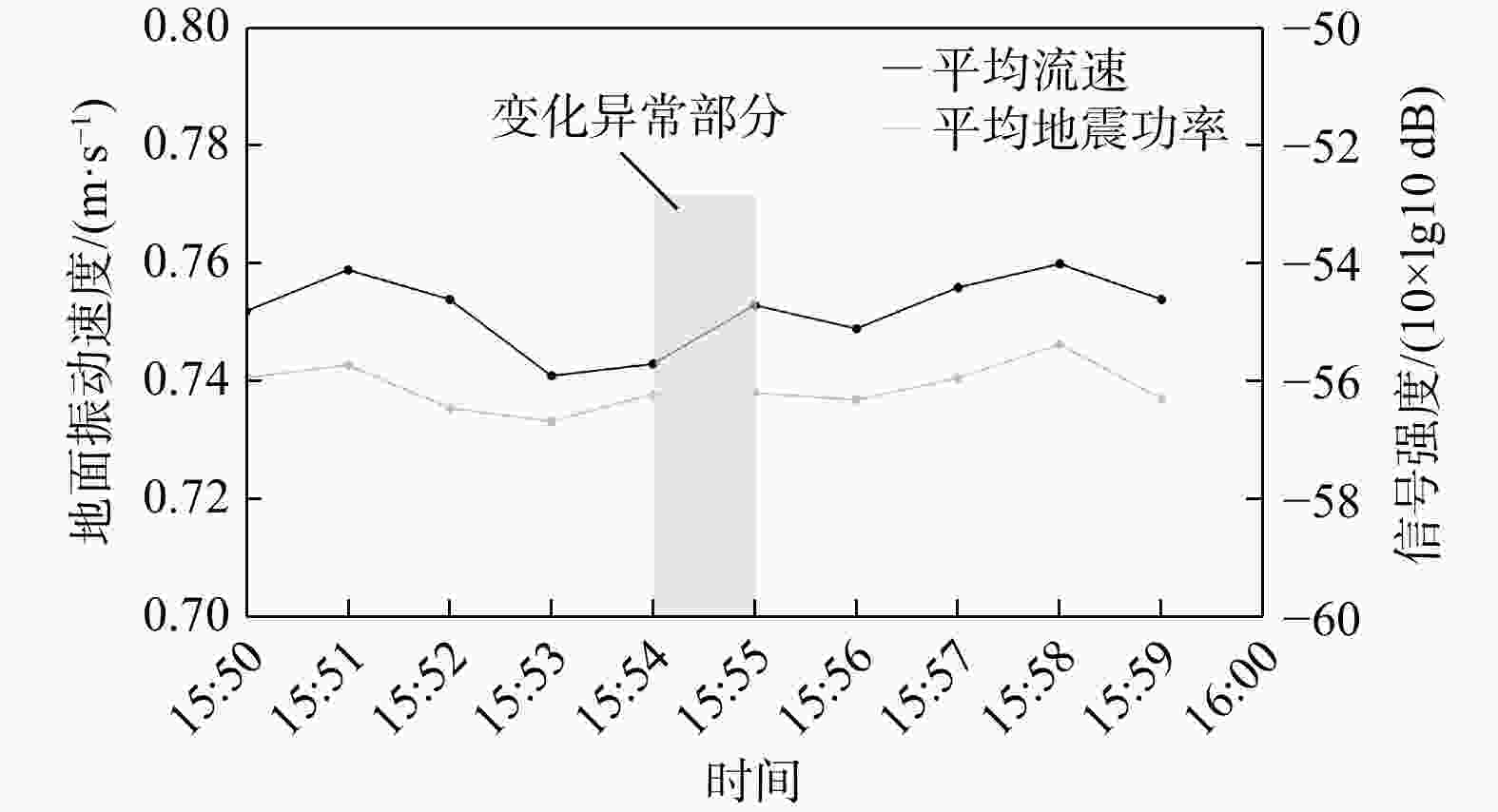
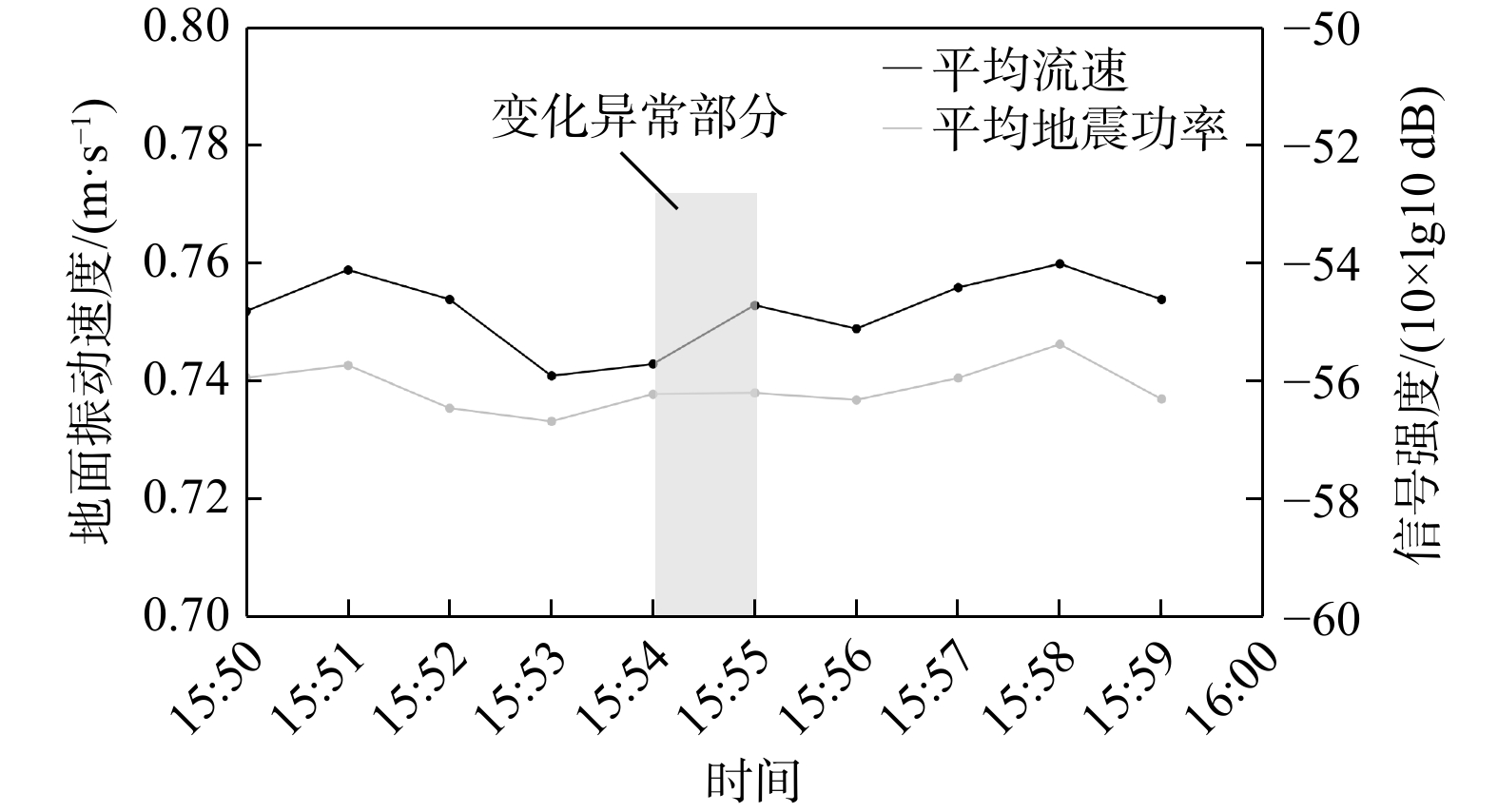
图 10 平均流速和平均地震功率变化对比图
Figure 10. Comparison between average flow velocity and average seismic power
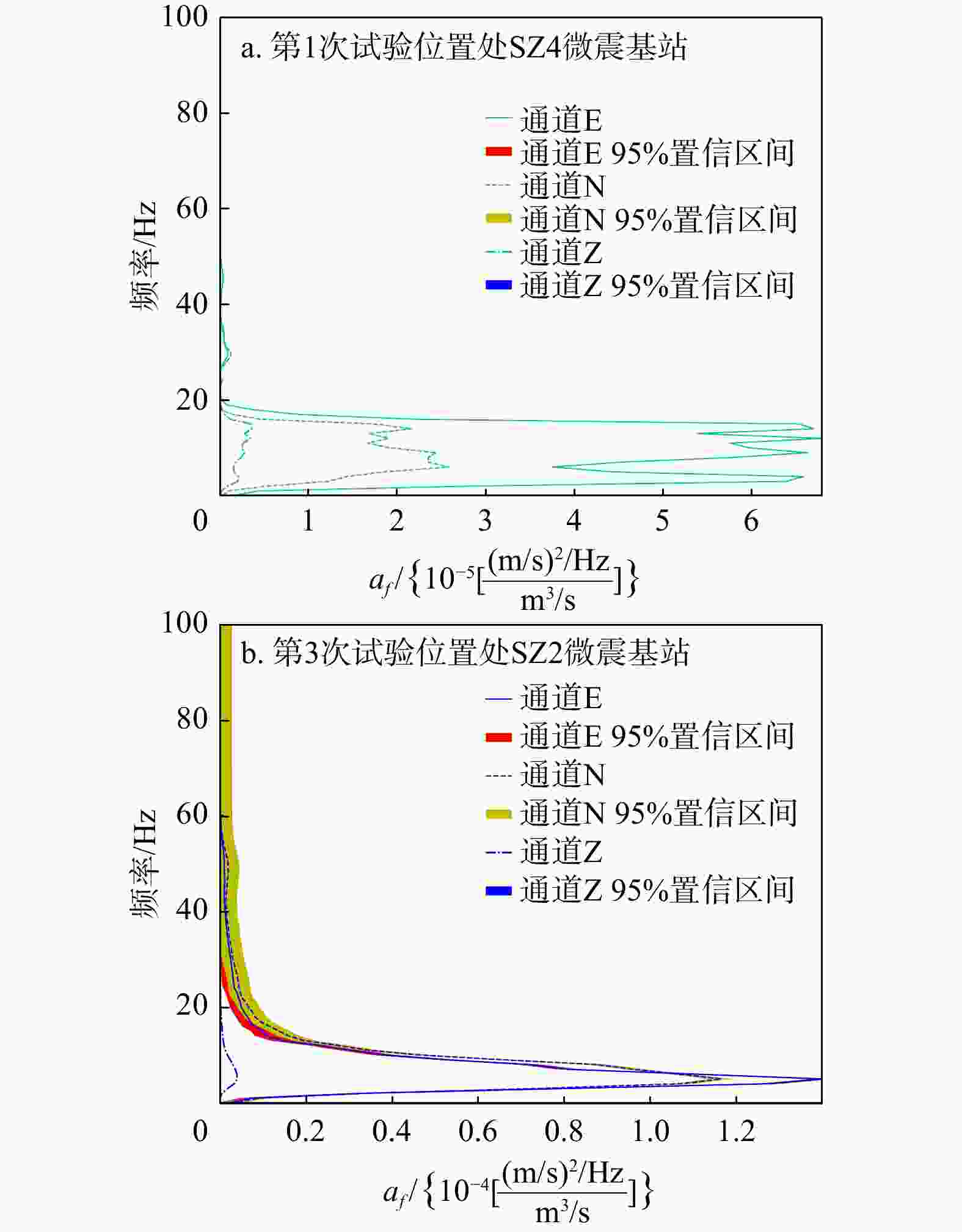
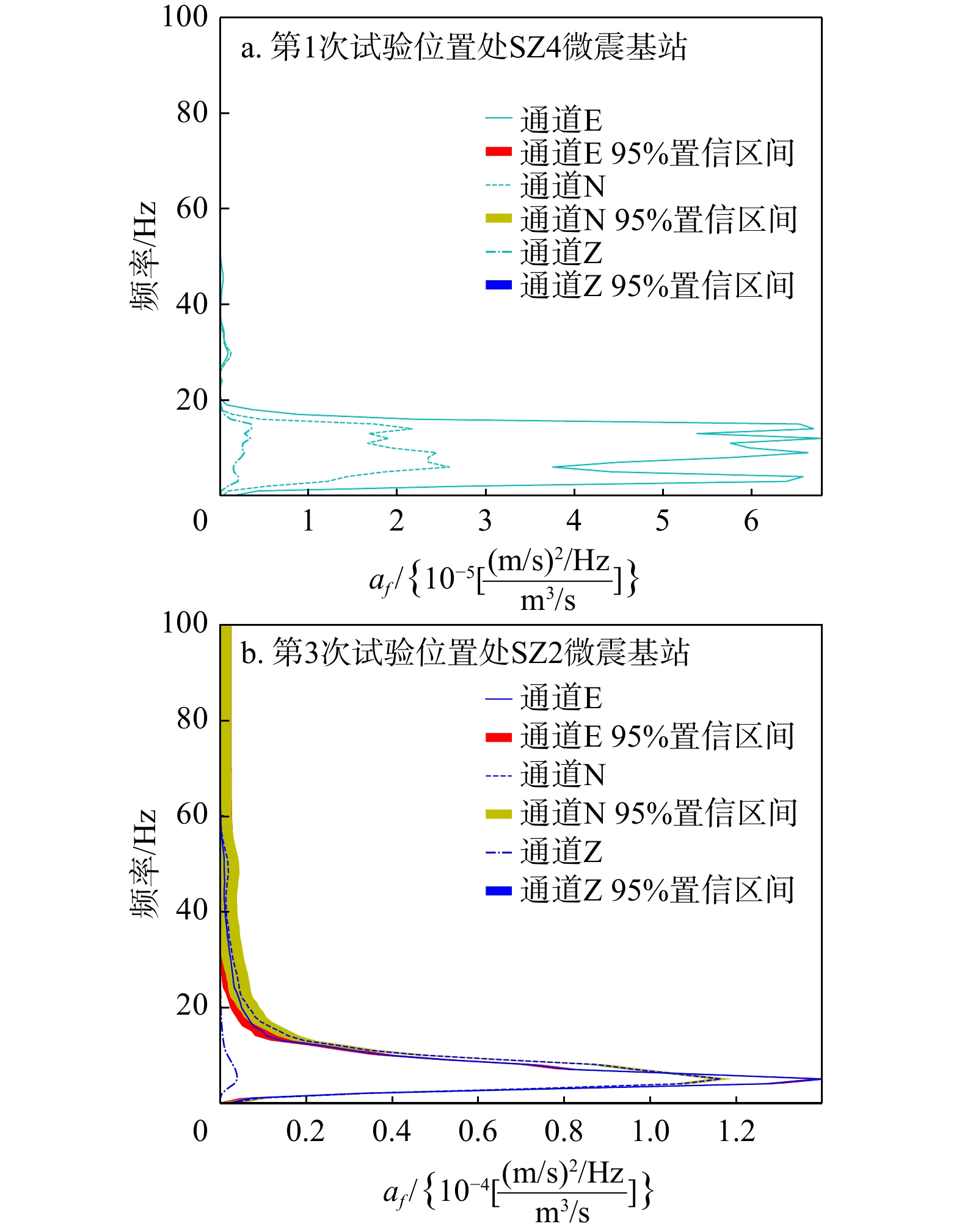
图 11 湍流过程在通道E、N、Z上的流量回归系数及95%置信区间
Figure 11. Flow regression coefficients and 95% confidence intervals of the turbulent flow process in the E, N, and Z Channels
-
[1] 梁以夫. 洪水成因及减灾对策[J]. 广西水利水电, 1992(1): 2-4. doi: 10.16014/j.cnki.1003-1510.1992.01.001LIANG Y F. Causes of flood and countermeasures for disaster reduction[J]. Guangxi Water Resources & Hydropower Engineering, 1992(1): 2-4. (in Chinese with English abstract doi: 10.16014/j.cnki.1003-1510.1992.01.001 [2] 田国珍, 刘新立, 王平, 等. 中国洪水灾害风险区划及其成因分析[J]. 灾害学, 2006, 21(2): 1-6. doi: 10.3969/j.issn.1000-811X.2006.02.001TIAN G Z, LIU X L, WANG P, et al. Flood risk zoning and causal analysis in China[J]. Journal of Catastrophology, 2006, 21(2): 1-6. (in Chinese with English abstract doi: 10.3969/j.issn.1000-811X.2006.02.001 [3] 曹厚光. 陕西省汉江、嘉陵江流域1981年洪水灾害的成因[J]. 西北大学学报(自然科学版), 1984, 14(2): 77-93.CAO H G. The origin of flood damage on the valleys of the Han and Jialing River of Shaanxi Province in 1981[J]. Journal of Northwest University (Natural Science Edition), 1984, 14(2): 77-93. (in Chinese with English abstract [4] 冯普林, 石长伟, 张广林. 渭河“2003” 洪水灾害及其减灾措施的分析[J]. 中国水利水电科学研究院学报, 2004, 2(1): 44-49. doi: 10.3969/j.issn.1672-3031.2004.01.007FENG P L, SHI C W, ZHANG G L. Analysis of “2003” Weihe River flood and its disaster mitigation measures[J]. Journal of China Institute of Water, 2004, 2(1): 44-49. (in Chinese with English abstract doi: 10.3969/j.issn.1672-3031.2004.01.007 [5] 罗志春. 西河“8.13” 洪水灾害成因分析[J]. 水利科技与经济, 2011, 17(3): 70-71.LUO Z C. Cause analysis of “8.13” flood disaster in Xihe River[J]. Water Conservancy Science and Technology and Economy, 2011, 17(3): 70-71. (in Chinese) [6] 李甲振, 郭新蕾, 巩同梁, 等. 无资料或少资料区河流流量监测与定量反演[J]. 水利学报, 2018, 49(11): 1420-1428.LI J Z, GUO X L, GONG T L, et al. A method estimating natural runoff in regions with none or less data[J]. Journal of Hydraulic Engineering, 2018, 49(11): 1420-1428. (in Chinese with English abstract [7] 彭勃, 强思远, 施小清. 基于贝叶斯实验设计优化跨孔高密度电阻率法监测四维水文地质过程[J]. 地质科技通报, 2025, 44(5): 293-301. doi: 10.19509/j.cnki.dzkq.tb20230600PENG B, QIANG S Y, SHI X Q. Optimizing 4D hydrogeological process monitoring using cross-hole electrical resistivity tomography(CHERT) via Bayesian experimental design[J]. Bulletin of Geological Science and Technology, 2025, 44(5): 293-301. (in Chinese with English abstract doi: 10.19509/j.cnki.dzkq.tb20230600 [8] BURTIN A, HOVIUS N, MCARDELL B W, et al. Seismic constraints on dynamic links between geomorphic processes and routing of sediment in a steep mountain catchment[J]. Earth Surface Dynamics, 2014, 2(1): 21-33. doi: 10.5194/esurf-2-21-2014 [9] EMANUEL K. Increasing destructiveness of tropical cyclones over the past 30 years[J]. Nature, 2005, 436(7051): 686-688. doi: 10.1038/nature03906 [10] GOVI M, MARAGA F, MOIA F. Seismic detectors for continuous bed load monitoring in a gravel stream[J]. Hydrological Sciences Journal, 1993, 38(2): 123-132. doi: 10.1080/02626669309492650 [11] BURTIN A, BOLLINGER L, VERGNE J, et al. Spectral analysis of seismic noise induced by rivers: A new tool to monitor spatiotemporal changes in stream hydrodynamics[J]. Journal of Geophysical Research: Solid Earth, 2008, 113(B5): 1-14. [12] ROTH D L, BRODSKY E E, FINNEGAN N J, et al. Bed load sediment transport inferred from seismic signals near a river[J]. Journal of Geophysical Research: Earth Surface, 2016, 121(4): 725-747. doi: 10.1002/2015JF003782 [13] ANTHONY R E, ASTER R C, RYAN S, et al. Measuring mountain river discharge using seismographs emplaced within the hyporheic zone[J]. Journal of Geophysical Research: Earth Surface, 2018, 123(2): 210-228. doi: 10.1002/2017JF004295 [14] COOK K L, REKAPALLI R, DIETZE M, et al. Detection and potential early warning of catastrophic flow events with regional seismic networks[J]. Science, 2021, 374(6563): 87-92. doi: 10.1126/science.abj1227 [15] FOULDS S A, GRIFFITHS H M, MACKLIN M G, et al. Geomorphological records of extreme floods and their relationship to decadal-scale climate change[J]. Geomorphology, 2014, 216: 193-207. doi: 10.1016/j.geomorph.2014.04.003 [16] GAEUMAN D. High-flow gravel injection for constructing designed in-channel features[J]. River Research and Applications, 2014, 30(6): 685-706. doi: 10.1002/rra.2662 [17] RAZAVI T, COULIBALY P. Streamflow prediction in ungauged basins: Review of regionalization methods[J]. Journal of Hydrologic Engineering, 2013, 18(8): 958-975. doi: 10.1061/(ASCE)HE.1943-5584.0000690 [18] POLI P, BOAGA J, MOLINARI I, et al. The 2020 coronavirus lockdown and seismic monitoring of anthropic activities in northern Italy[J]. Scientific Reports, 2020, 10: 9404. doi: 10.1038/s41598-020-66368-0 [19] HERSCHY R. The velocity-area method[J]. Flow Measurement and Instrumentation, 1993, 4(1): 7-10. doi: 10.1016/0955-5986(93)90004-3 [20] GENÇ O, ARDıÇLıOĞLU M, AĞıRALIOĞLU N. Calculation of mean velocity and discharge using water surface velocity in small streams[J]. Flow Measurement and Instrumentation, 2015, 41: 115-120. doi: 10.1016/j.flowmeasinst.2014.10.013 [21] WELCH P. The use of fast Fourier transform for the estimation of power spectra: A method based on time averaging over short, modified periodograms[J]. IEEE Transactions on Audio and Electroacoustics, 1967, 15(2): 70-73. doi: 10.1109/TAU.1967.1161901 [22] 柳云龙, 田有, 冯晅, 等. 微震技术与应用研究综述[J]. 地球物理学进展, 2013, 28(4): 1801-1808. doi: 10.6038/pg20130421LIU Y L, TIAN Y, FENG X, et al. Review of microseism technology and its application[J]. Progress in Geophysics, 2013, 28(4): 1801-1808. (in Chinese with English abstract doi: 10.6038/pg20130421 [23] 冯甜, 吴建平, 房立华. 微震研究与应用进展[J]. 中国地震, 2021, 37(2): 261-272. doi: 10.3969/j.issn.1001-4683.2021.02.002FENG T, WU J P, FANG L H. A review on research and application of microseismicity[J]. Earthquake Research in China, 2021, 37(2): 261-272. (in Chinese with English abstract doi: 10.3969/j.issn.1001-4683.2021.02.002 [24] ADERHOLD K, ANDERSON K E, REUSCH A M, et al. Data quality of collocated portable broadband seismometers using direct burial and vault emplacement[J]. Bulletin of the Seismological Society of America, 2015, 105(5): 2420-2432. doi: 10.1785/0120140352 [25] FARANDA D, BOURDIN S, GINESTA M, et al. A climate-change attribution retrospective of some impactful weather extremes of 2021[J]. Weather and Climate Dynamics, 2022, 3(4): 1311-1340. doi: 10.5194/wcd-3-1311-2022 [26] DÍAZ J, RUÍZ M, CRESCENTINI L, et al. Seismic monitoring of an alpine mountain river[J]. Journal of Geophysical Research: Solid Earth, 2014, 119(4): 3276-3289. doi: 10.1002/2014JB010955 [27] BAKKER M, GIMBERT F, GEAY T, et al. Field application and validation of a seismic bedload transport model[J]. Journal of Geophysical Research: Earth Surface, 2020, 125(5): 1-23. doi: 10.1029/2019JF005416 [28] GIMBERT F, TSAI V C, LAMB M P. A physical model for seismic noise generation by turbulent flow in rivers[J]. Journal of Geophysical Research: Earth Surface, 2014, 119(10): 2209-2238. doi: 10.1002/2014JF003201 [29] TSAI V C, MINCHEW B, LAMB M P, et al. A physical model for seismic noise generation from sediment transport in rivers[J]. Geophysical Research Letters, 2012, 39(2): 1-6. [30] BURTIN A, CATTIN R, BOLLINGER L, et al. Towards the hydrologic and bed load monitoring from high-frequency seismic noise in a braided river: The “torrent de St Pierre”, French Alps[J]. Journal of Hydrology, 2011, 408(1/2): 43-53. [31] HSU L, FINNEGAN N J, BRODSKY E E. A seismic signature of river bedload transport during storm events[J]. Geophysical Research Letters, 2011, 38(13): 1-6. [32] PICOZZI M, COVIELLO V, PALO M, et al. Seismic signature of an extreme hydro-meteorological event in Italy[J]. NPJ Natural Hazards, 2024, 1(1): 1-9. [33] CHIMENE C A, CAMPOS J N B. The design flood under two approaches: Synthetic storm hyetograph and observed storm hyetograph[J]. Journal of Applied Water Engineering and Research, 2020, 8(3): 171-182. doi: 10.1080/23249676.2020.1787242 [34] BARRIÈRE J, OTH A, HOSTACHE R, et al. Bed load transport monitoring using seismic observations in a low-gradient rural gravel bed stream[J]. Geophysical Research Letters, 2015, 42(7): 2294-2301. doi: 10.1002/2015GL063630 [35] LAROSE E, CARRIÈRE S, VOISIN C, et al. Environmental seismology: What can we learn on earth surface processes with ambient noise[J]. Journal of Applied Geophysics, 2015, 116: 62-74. doi: 10.1016/j.jappgeo.2015.02.001 [36] SCHMANDT B, ASTER R C, SCHERLER D, et al. Multiple fluvial processes detected by riverside seismic and infrasound monitoring of a controlled flood in the Grand Canyon[J]. Geophysical Research Letters, 2013, 40(18): 4858-4863. doi: 10.1002/grl.50953 [37] TUROWSKI J M, BADOUX A, RICKENMANN D. Start and end of bedload transport in gravel-bed streams[J]. Geophysical Research Letters, 2011, 38(4): 1-5. [38] TUROWSKI J M, BLOEM J P. The influence of sediment thickness on energy delivery to the bed by bedload impacts[J]. Geodinamica Acta, 2016, 28(3): 199-208. doi: 10.1080/09853111.2015.1047195 [39] VIPARELLI E, GAEUMAN D, WILCOCK P R, et al. A model to predict the evolution of a gravel bed river under an imposed cyclic hydrograph and its application to the Trinity River[J]. Water Resources Research, 2011, 47(2): 1-22. [40] 曹凯, 卢渊, 庞小龙, 等. 基于微震事件频次的采空区沉陷变形智能预警方法[J]. 地质科技通报, 2025, 44(4): 78-89. doi: 10.19509/j.cnki.dzkq.tb20240646CAO K, LU Y, PANG X L, et al. Intelligent early warning method for subsidence deformation in goaf based on the frequency of microseismic events[J]. Bulletin of Geological Science and Technology, 2025, 44(4): 78-89. (in Chinese with English abstract doi: 10.19509/j.cnki.dzkq.tb20240646 -

 下载:
下载:



 点击查看大图
计量
- 文章访问数: 354
- PDF下载量: 115
- 被引次数: 0